 Скачать презентацию Ages of DA DB Z White Dwarfs and Timescales of
24b84c0e4f55fed7fdc7c2f3782f4b58.ppt
- Количество слайдов: 22



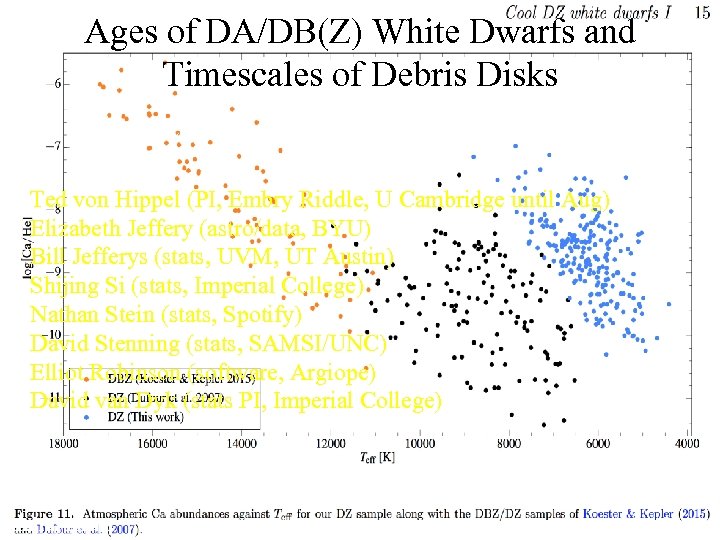
Ages of DA/DB(Z) White Dwarfs and Timescales of Debris Disks Planetary Systems Beyond the Main Sequence II Ted von Hippel (PI, Embry Riddle, U Cambridge until Aug) Elizabeth Jeffery (astro/data, BYU) Bill Jefferys (stats, UVM, UT Austin) Shijing Si (stats, Imperial College) Nathan Stein (stats, Spotify) David Stenning (stats, SAMSI/UNC) Elliot Robinson (software, Argiope) David van Dyk (stats PI, Imperial College) Haifa, Israel 7 March 2017
Importance of Quality Ages & Masses • Cooling Ages, WD masses • ZAMS masses, Total Stellar Ages – need Initial Final Mass Relation (IFMR) • Bayesian Analysis of Stellar Evolution • Mass & Age quality from Teff, log(g), and Gaia parallaxes
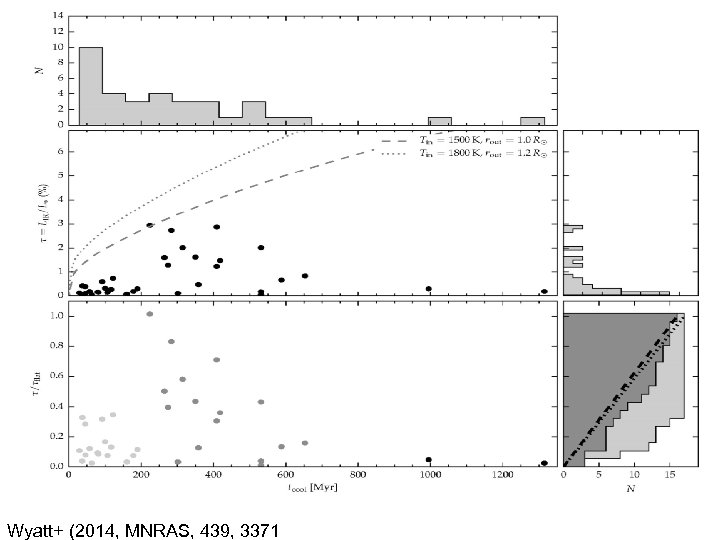
Wyatt+ (2014, MNRAS, 439, 3371
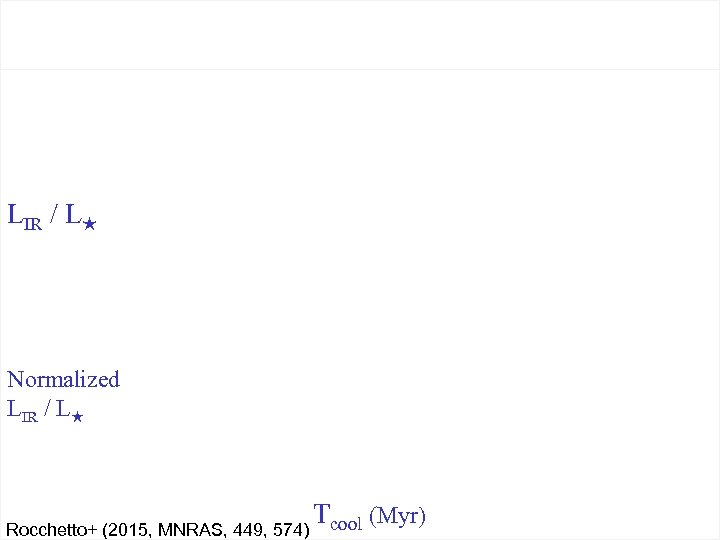
LIR / L★ Normalized LIR / L★ Rocchetto+ (2015, MNRAS, 449, 574) Tcool (Myr)
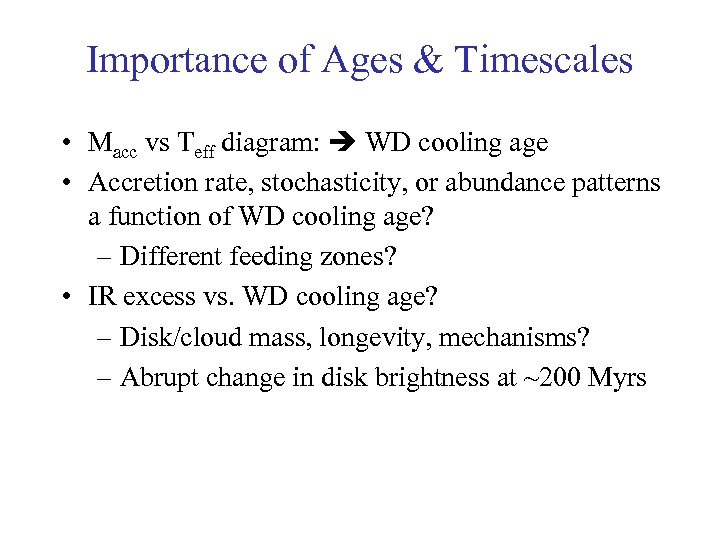
Importance of Ages & Timescales • Macc vs Teff diagram: WD cooling age • Accretion rate, stochasticity, or abundance patterns a function of WD cooling age? – Different feeding zones? • IR excess vs. WD cooling age? – Disk/cloud mass, longevity, mechanisms? – Abrupt change in disk brightness at ~200 Myrs
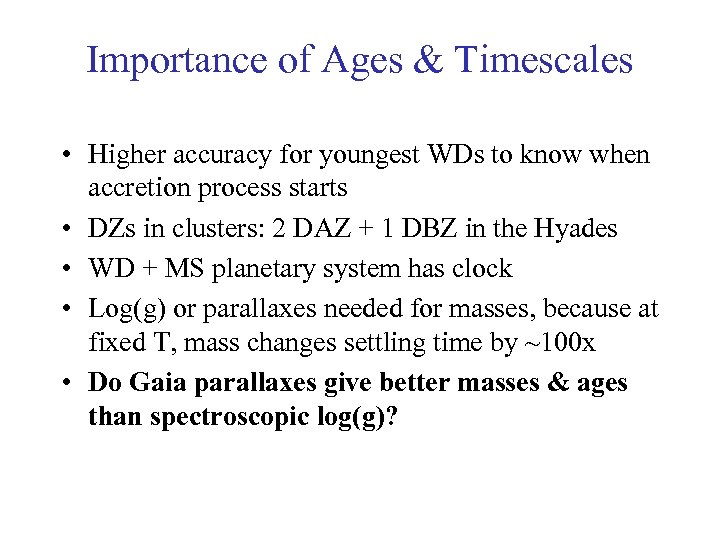
Importance of Ages & Timescales • Higher accuracy for youngest WDs to know when accretion process starts • DZs in clusters: 2 DAZ + 1 DBZ in the Hyades • WD + MS planetary system has clock • Log(g) or parallaxes needed for masses, because at fixed T, mass changes settling time by ~100 x • Do Gaia parallaxes give better masses & ages than spectroscopic log(g)?
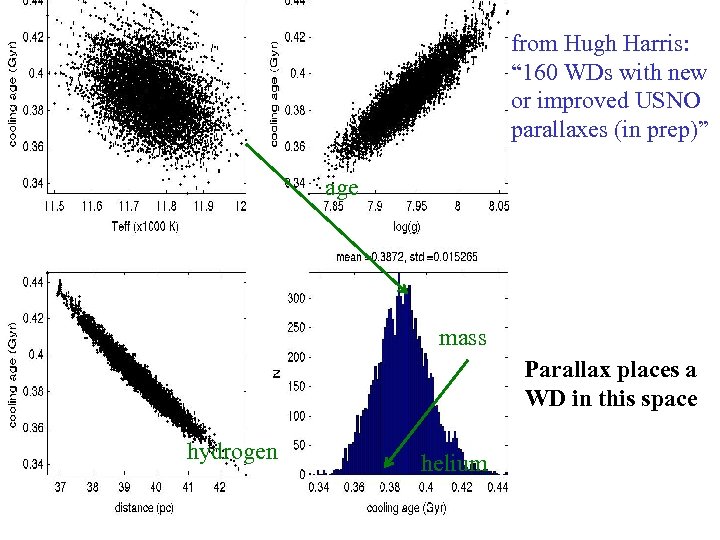
from Hugh Harris: “ 160 WDs with new or improved USNO parallaxes (in prep)” age mass Parallax places a WD in this space hydrogen helium
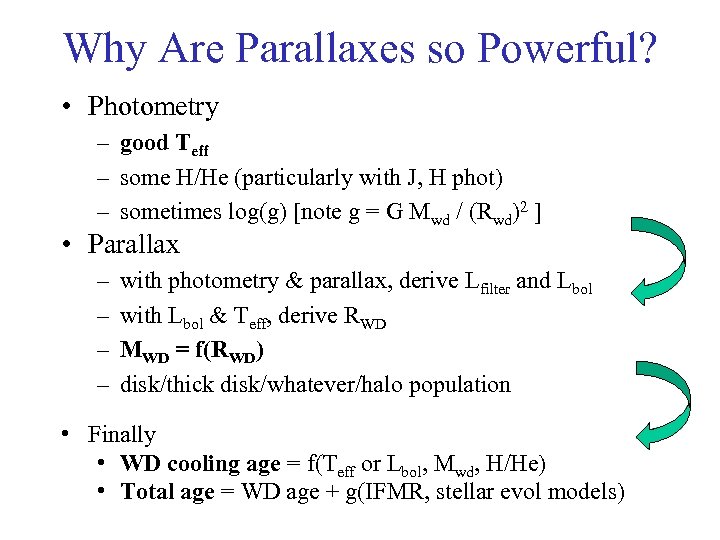
Why Are Parallaxes so Powerful? • Photometry – good Teff – some H/He (particularly with J, H phot) – sometimes log(g) [note g = G Mwd / (Rwd)2 ] • Parallax – – with photometry & parallax, derive Lfilter and Lbol with Lbol & Teff, derive RWD MWD = f(RWD) disk/thick disk/whatever/halo population • Finally • WD cooling age = f(Teff or Lbol, Mwd, H/He) • Total age = WD age + g(IFMR, stellar evol models)
Bayesian Analysis of Stellar Evolution (BASE-9) • MS through RGB models from Padova, DSED, Yale-Yonsei, … • Various IFMRs • WD interiors from Montgomery, Renedo & Althaus • WD atmospheres from Bergeron • Run under Bayesian framework against photometry & ancillary data/priors
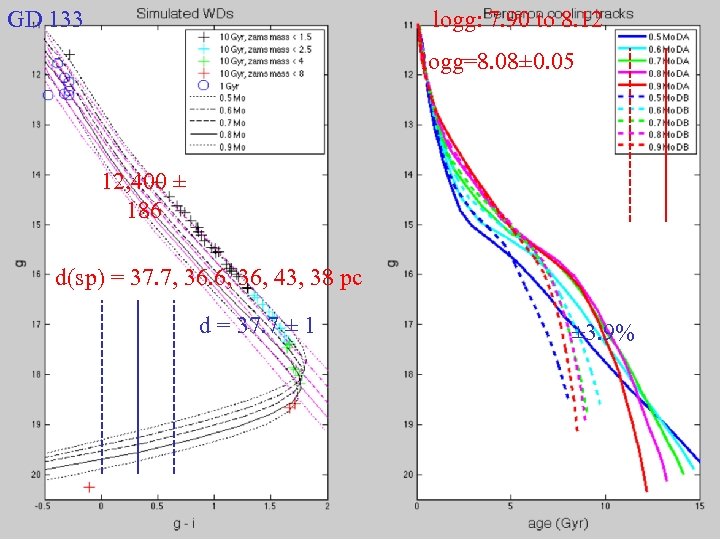
GD 133 logg: 7. 90 to 8. 12 logg=8. 08± 0. 05 12, 400 ± 186 d(sp) = 37. 7, 36. 6, 36, 43, 38 pc d = 37. 7 ± 1 ± 3. 9%
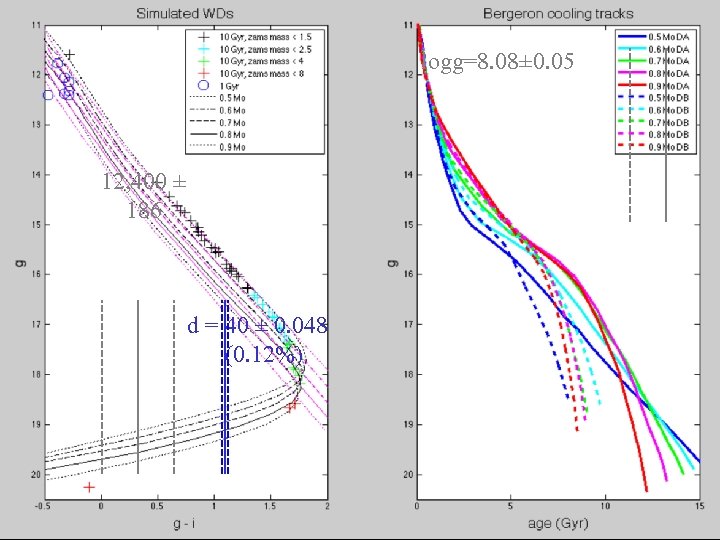
logg=8. 08± 0. 05 12, 400 ± 186 d = 40 ± 0. 048 (0. 12%)
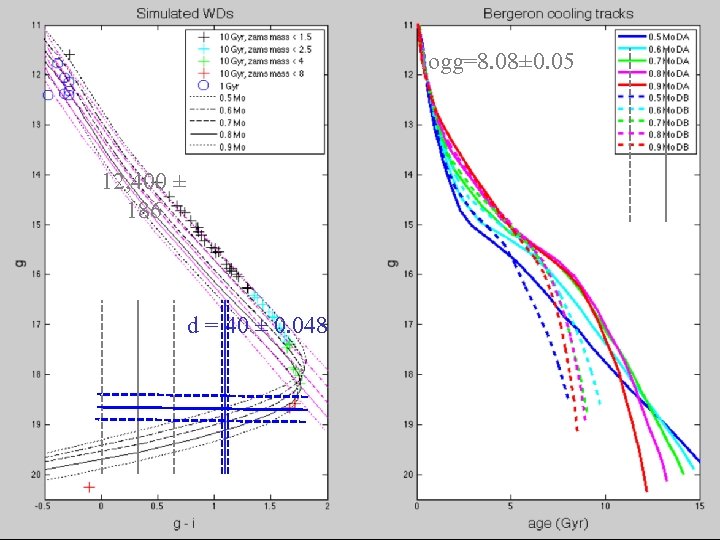
logg=8. 08± 0. 05 12, 400 ± 186 d = 40 ± 0. 048
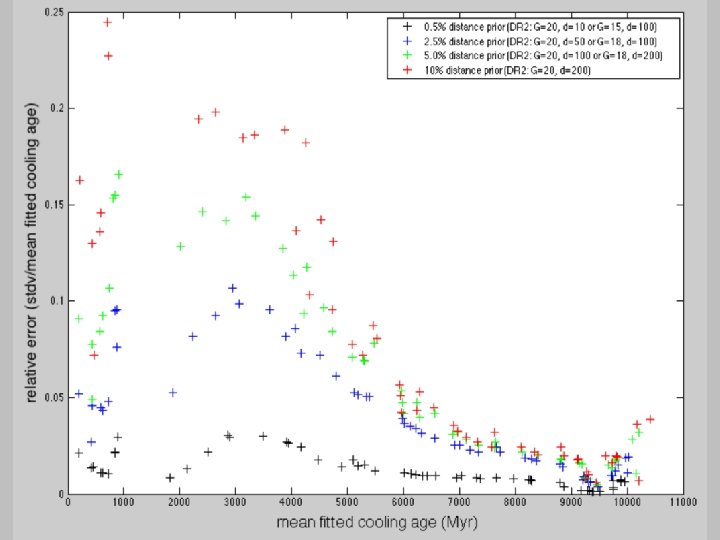
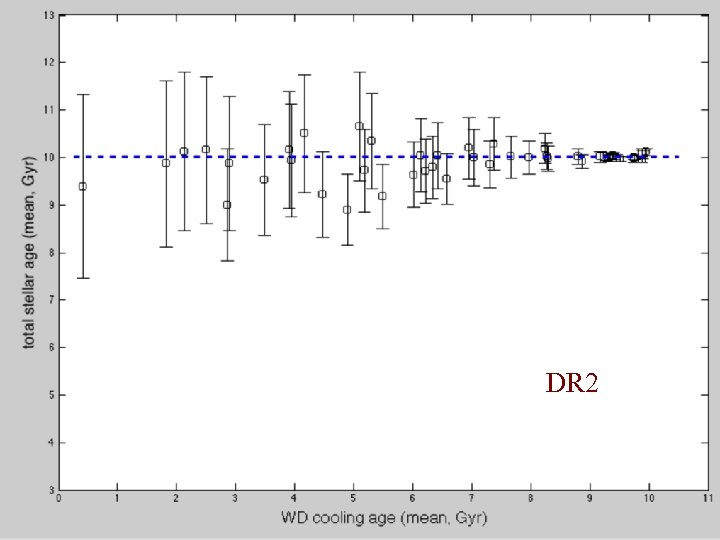
DR 2
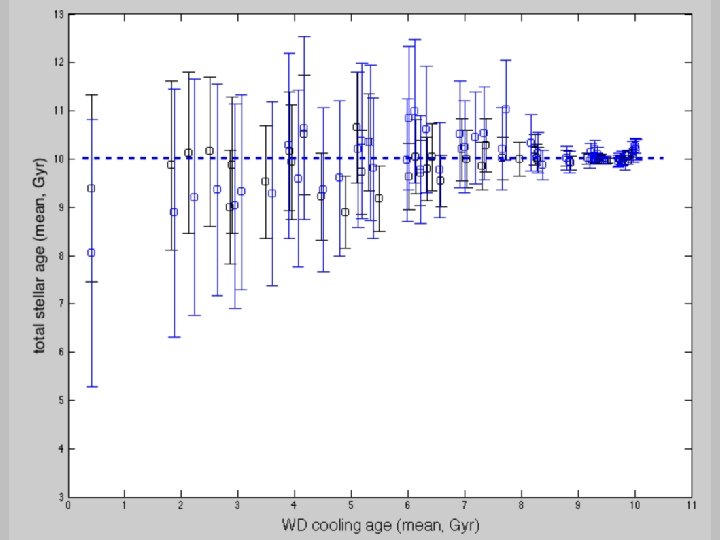
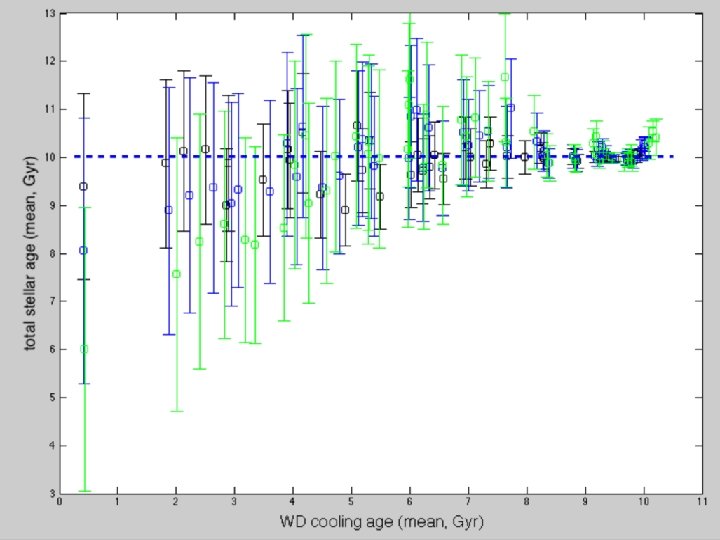
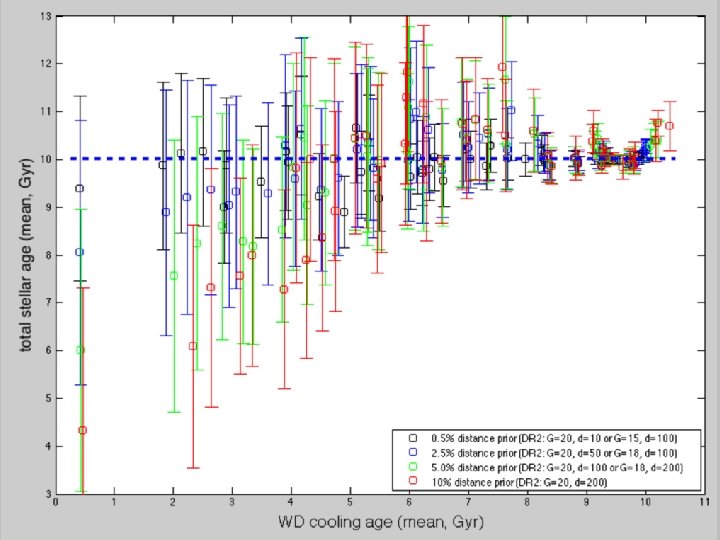
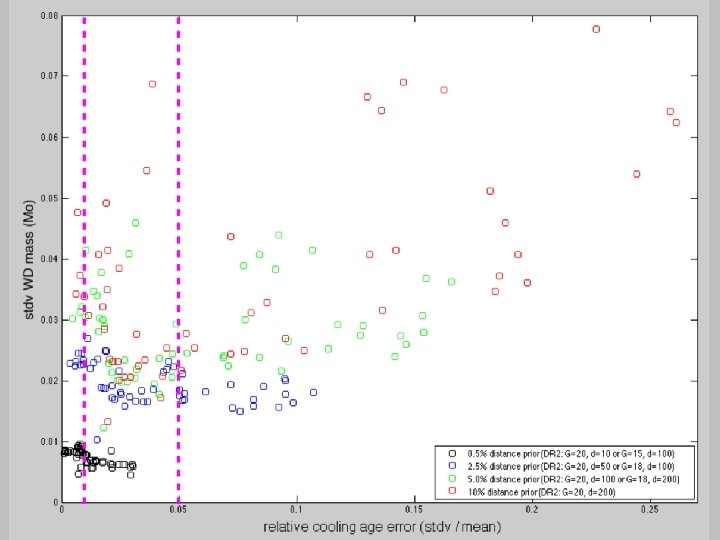
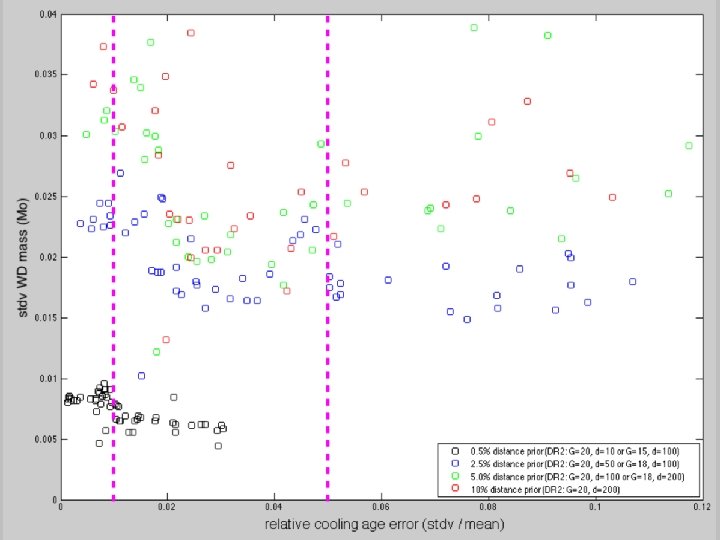

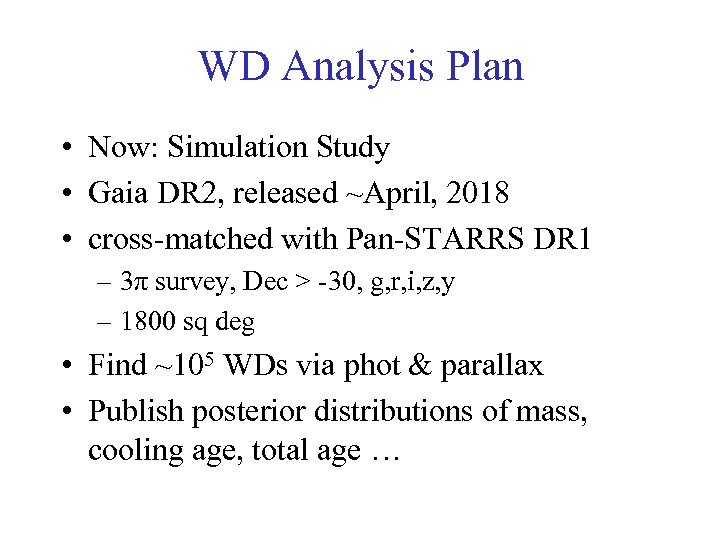
WD Analysis Plan • Now: Simulation Study • Gaia DR 2, released ~April, 2018 • cross-matched with Pan-STARRS DR 1 – 3π survey, Dec > -30, g, r, i, z, y – 1800 sq deg • Find ~105 WDs via phot & parallax • Publish posterior distributions of mass, cooling age, total age …
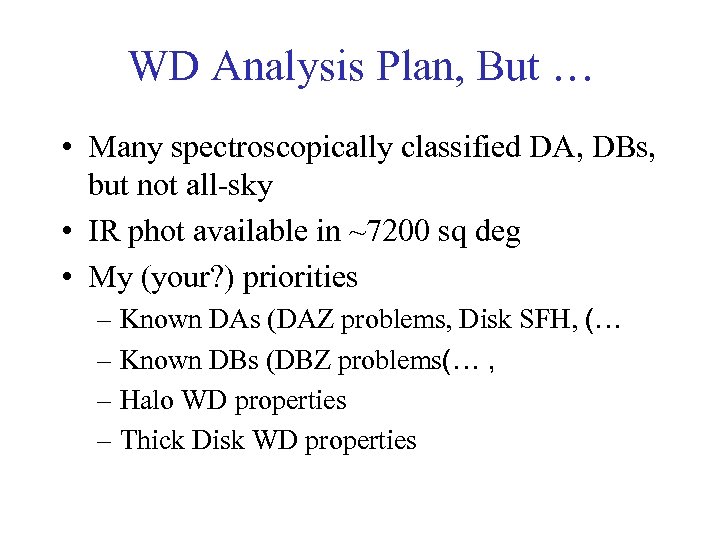
WD Analysis Plan, But … • Many spectroscopically classified DA, DBs, but not all-sky • IR phot available in ~7200 sq deg • My (your? ) priorities – Known DAs (DAZ problems, Disk SFH, (… – Known DBs (DBZ problems(… , – Halo WD properties – Thick Disk WD properties
Скачать презентацию Ages of DA DB Z White Dwarfs and Timescales of
24b84c0e4f55fed7fdc7c2f3782f4b58.ppt