


 Скачать презентацию Agenda Quiz on Current Reading If
ba5aba45287ee740de7540969e6bb765.ppt
- Количество слайдов: 23
 Agenda • Quiz on Current Reading • “If a Cable Giant Becomes Bigger” • Review of Monopolies • Homework • Intro to Chapter 11 • Figure 11. 1 • Test #2 • February 26 • Chapters 6 -8, 10 -11
 Quiz New York Times…”If a Cable Giant Becomes Bigger”
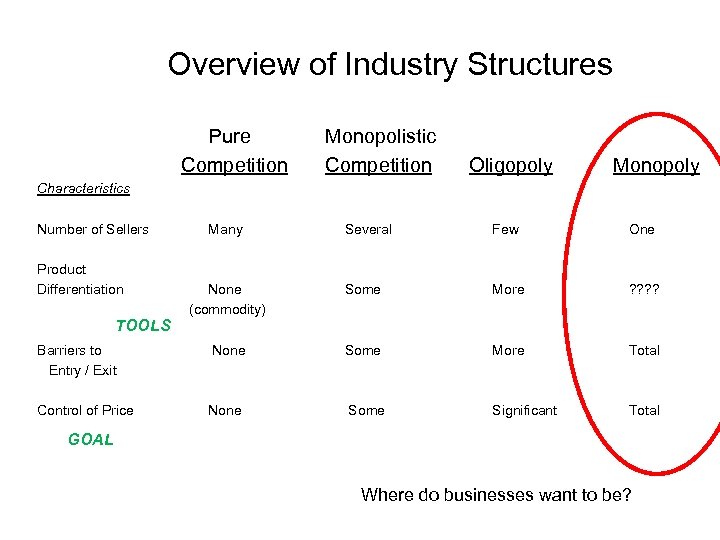 Overview of Industry Structures Pure Competition Monopolistic Competition Oligopoly Monopoly Characteristics Number of Sellers Several Few One None (commodity) Some More ? ? Barriers to Entry / Exit None Some More Total Control of Price None Some Significant Total Product Differentiation TOOLS Many GOAL Where do businesses want to be?
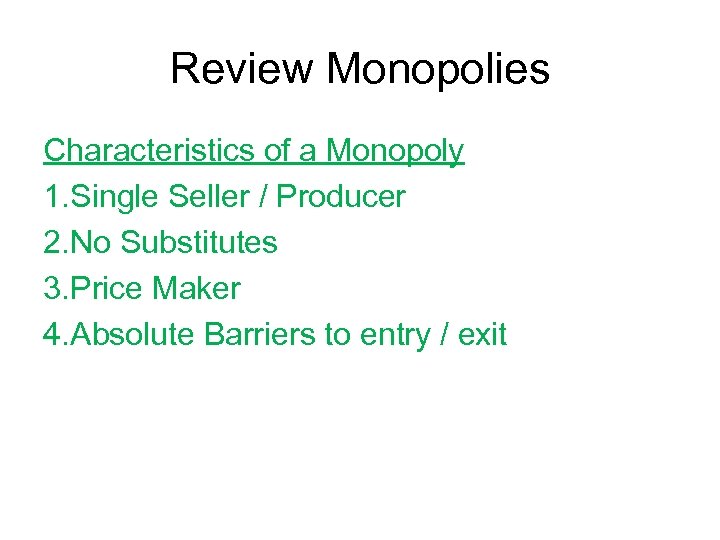 Review Monopolies Characteristics of a Monopoly 1. Single Seller / Producer 2. No Substitutes 3. Price Maker 4. Absolute Barriers to entry / exit
 Monopolies Types of Monopolies 1. Legal Monopoly – Patents 2. Geographic Monopolies – Public Schools 3. Natural Monopolies – Utilities 4. Technology - i. Pad
 worksheet another type of monopoly…low cost provider. The Wal-Mart strategy
 Monopolies Price Discrimination…charging different prices to different groups Expedia…. are there really only x tickets left?
 Monopolies Price Discrimination…Characteristics Needed 1. Monopolistic Power (or at least Oligopolistic Power) 2. No Resale 3. Market Segregation / Customer Segregation
 Monopolies Price Discrimination…Examples Airlines Electricity Hotels College Education
 HOMEWORK Chapter 10 Problems 1 & 2
 Three Minute Break
 Intro to Chapter 11 Oligopolies and Monopolistic Competition
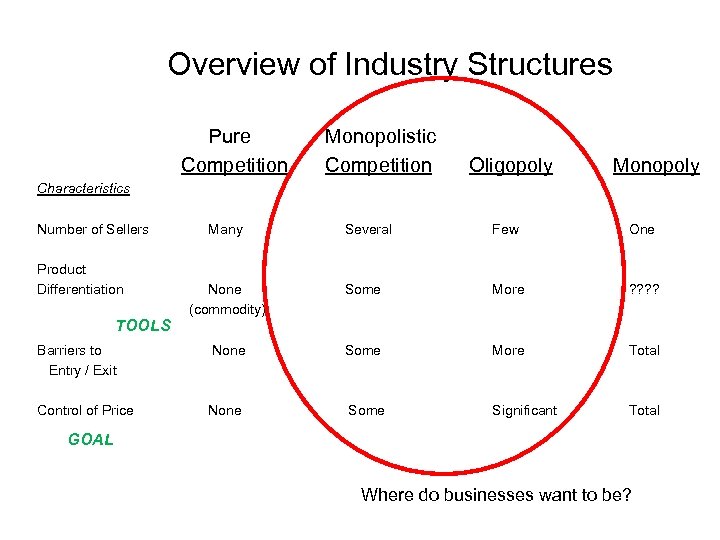 Overview of Industry Structures Pure Competition Monopolistic Competition Oligopoly Monopoly Characteristics Number of Sellers Several Few One None (commodity) Some More ? ? Barriers to Entry / Exit None Some More Total Control of Price None Some Significant Total Product Differentiation TOOLS Many GOAL Where do businesses want to be?
 Intro to Chapter 11 Oligopolies and Monopolistic Competition Why are 95% of industries in one of these categories?
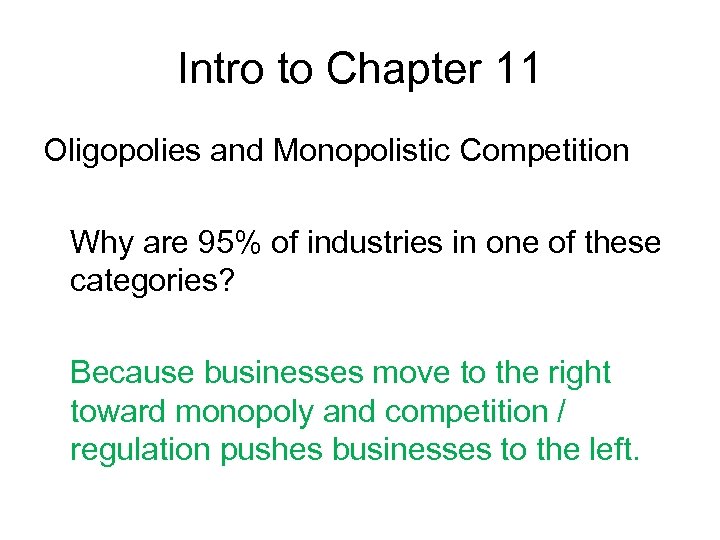 Intro to Chapter 11 Oligopolies and Monopolistic Competition Why are 95% of industries in one of these categories? Because businesses move to the right toward monopoly and competition / regulation pushes businesses to the left.
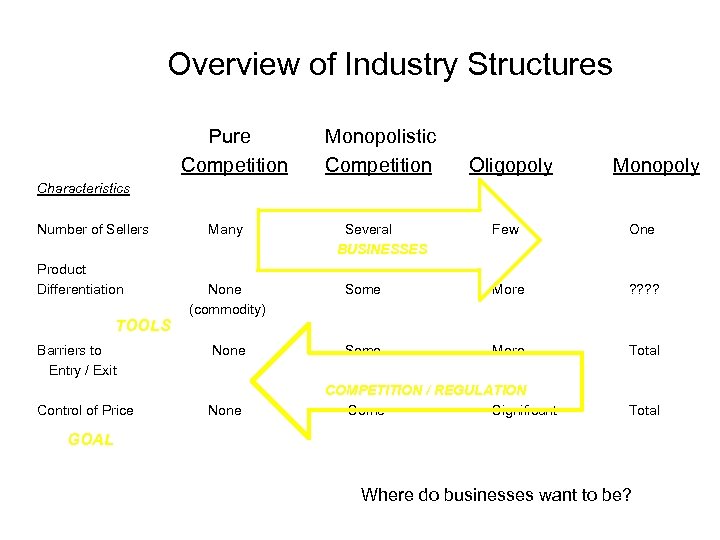 Overview of Industry Structures Pure Competition Monopolistic Competition Oligopoly Monopoly Characteristics Number of Sellers Product Differentiation TOOLS Barriers to Entry / Exit Control of Price Many Several BUSINESSES Few One None (commodity) Some More ? ? None Some More Total None COMPETITION / REGULATION Some Significant Total GOAL Where do businesses want to be?
 MR = MC Graph page 220
 The Government’s Role Chapter 11 Why does the government regulate an industry? When do the regulators step in? How regulators measure control of an industry?
 Concentration Ratio Page 218 40% is the magic number
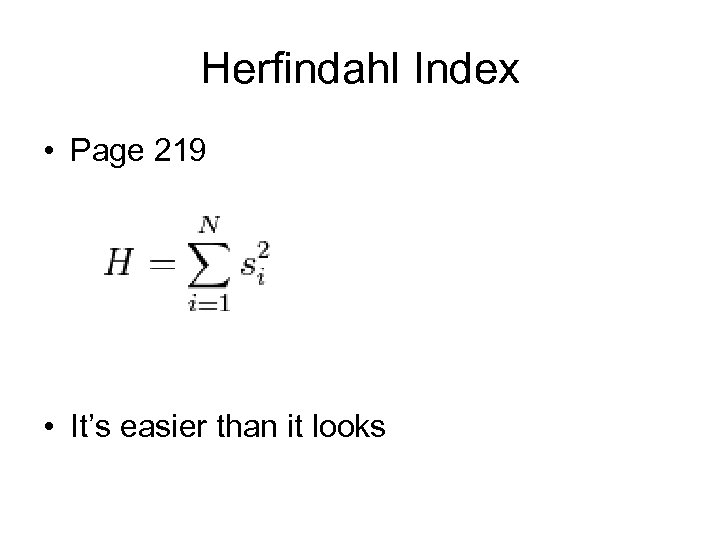 Herfindahl Index • Page 219 • It’s easier than it looks
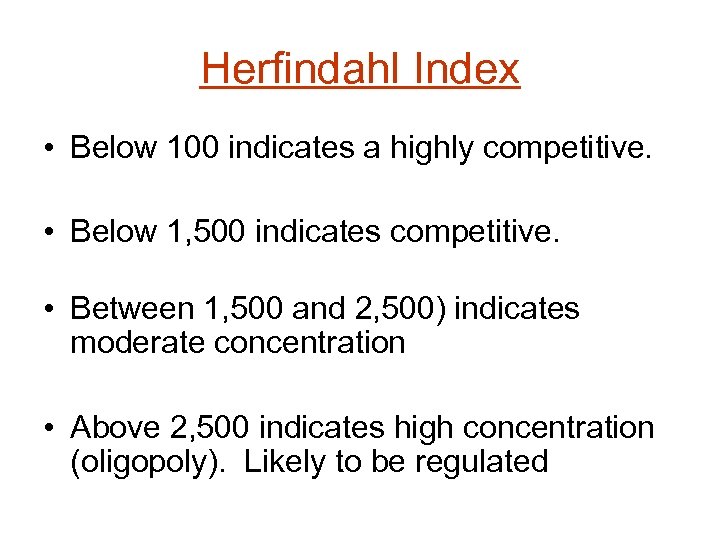 Herfindahl Index • Below 100 indicates a highly competitive. • Below 1, 500 indicates competitive. • Between 1, 500 and 2, 500) indicates moderate concentration • Above 2, 500 indicates high concentration (oligopoly). Likely to be regulated
 Chapter 11 questions • Q. 2, 7, 8
 Test #2 February 26 Chapters 6 -8, 10 -11