 Скачать презентацию AGENDA 1 WELCOME BACK 2 SEATING CHART 3
0f0b252488310197f6165554ea7773b3.ppt
- Количество слайдов: 72



AGENDA 1. WELCOME BACK!!! 2. SEATING CHART 3. MAINTENANCE ISSUES 4. ATTAINING SUCCESS IN ECONOMICS
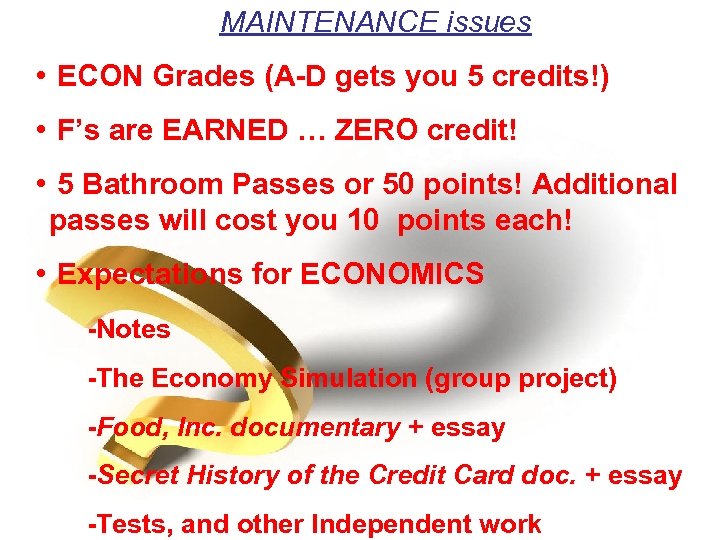
MAINTENANCE issues • ECON Grades (A-D gets you 5 credits!) • F’s are EARNED … ZERO credit! • 5 Bathroom Passes or 50 points! Additional passes will cost you 10 points each! • Expectations for ECONOMICS -Notes -The Economy Simulation (group project) -Food, Inc. documentary + essay -Secret History of the Credit Card doc. + essay -Tests, and other Independent work
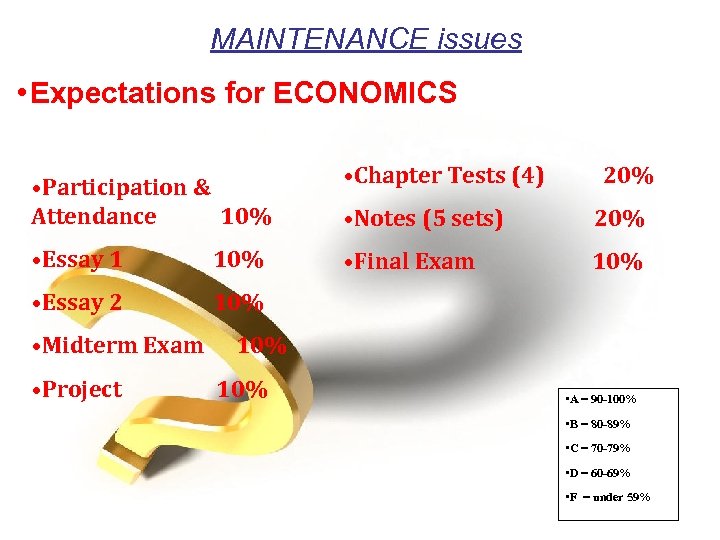
MAINTENANCE issues • Expectations for ECONOMICS • Participation & Attendance 10% • Chapter Tests (4) 20% • Essay 1 10% • Final Exam 10% • Notes (5 sets) 20% • Essay 2 10% • Midterm Exam 10% • Project 10% • A = 90 -100% • B = 80 -89% • C = 70 -79% • D = 60 -69% • F = under 59%
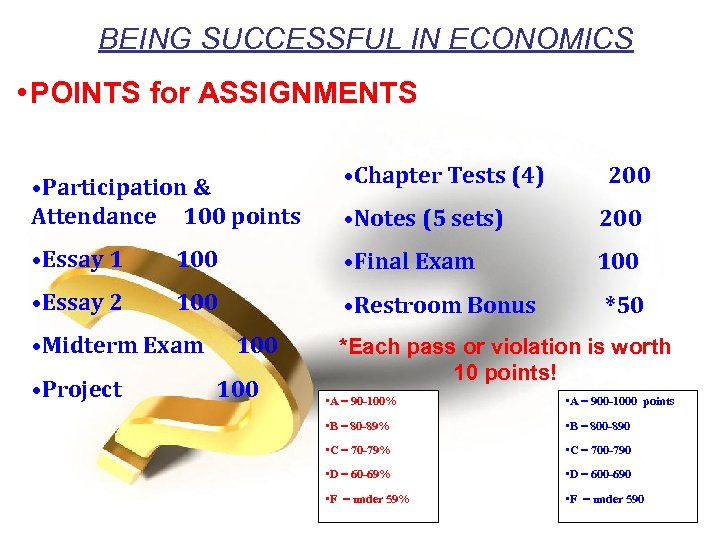
BEING SUCCESSFUL IN ECONOMICS • POINTS for ASSIGNMENTS • Participation & Attendance 100 points • Chapter Tests (4) 200 • Essay 1 100 • Final Exam 100 • Essay 2 100 • Restroom Bonus *50 • Midterm Exam 100 *Each pass or violation is worth 10 points! • Project 100 • Notes (5 sets) 200 • A = 90 -100% • A = 900 -1000 points • B = 80 -89% • B = 800 -890 • C = 70 -79% • C = 700 -790 • D = 60 -69% • D = 600 -690 • F = under 59% • F = under 590
INTRODUCTION TO ECONOMICS Welcome Fall 2015 Pineda
1. The Basics 2. Costs & Revenues 3. Comparative Economies 4. Labor Issues
Part 1: The Basics
WHAT IS ECONOMICS? ? ? • Economics – the study of how individuals and societies make decisions about ways to use scarce resources to fulfill wants and needs. • What does THAT mean? !!? ? !!
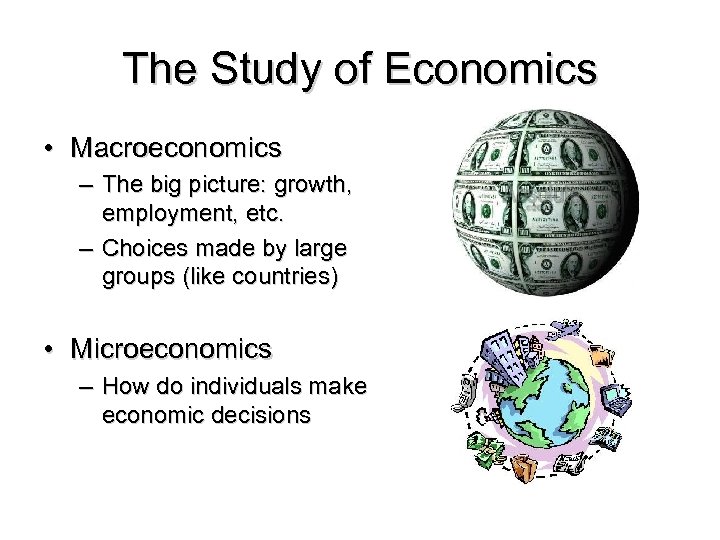
The Study of Economics • Macroeconomics – The big picture: growth, employment, etc. – Choices made by large groups (like countries) • Microeconomics – How do individuals make economic decisions
ECONOMICS: 5 Economic Questions Society (we) must figure out • WHAT to produce (make) • HOW MUCH to produce (quantity) • HOW to Produce it (manufacture) • FOR WHOM to Produce (who gets what) • WHO gets to make these decisions?
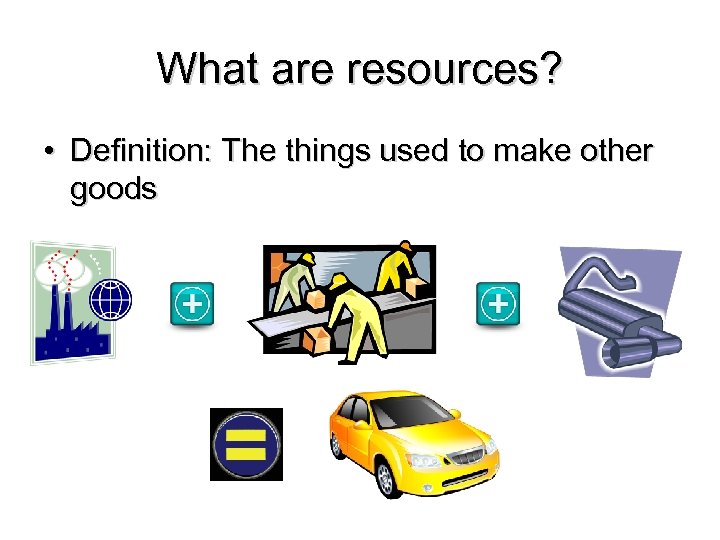
What are resources? • Definition: The things used to make other goods
BUT, there’s a Fundamental Problem: SCARCITY: unlimited wants and needs but limited resources
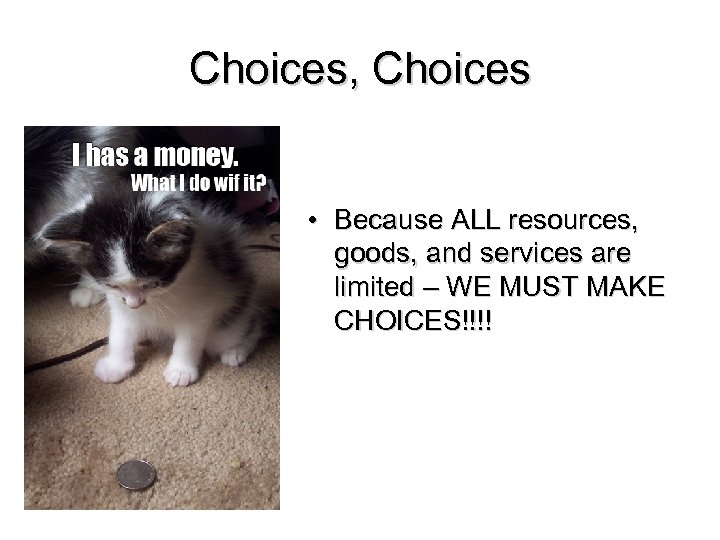
Choices, Choices • Because ALL resources, goods, and services are limited – WE MUST MAKE CHOICES!!!!
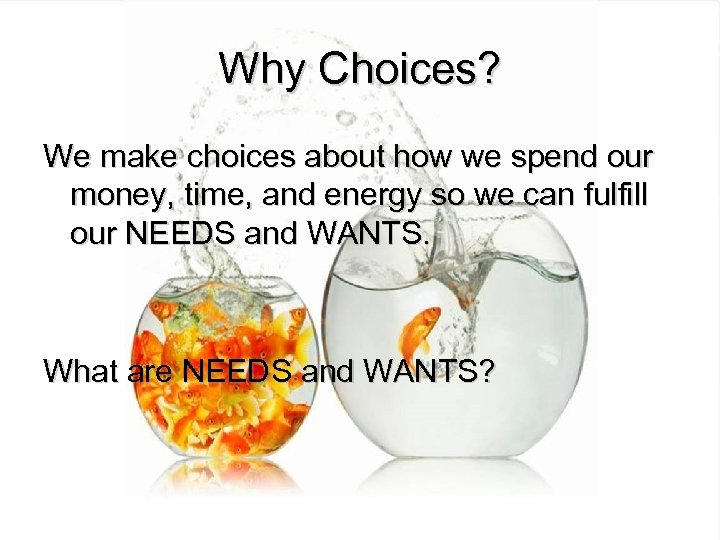
Why Choices? We make choices about how we spend our money, time, and energy so we can fulfill our NEEDS and WANTS. What are NEEDS and WANTS?
Wants and Needs, Needs and Wants • NEEDS – “stuff” we must have to survive, generally: food, shelter, clothing • WANTS – “stuff” we would really like to have (Fancy food, shelter, clothing, big screen TVs, jewelry, conveniences. . . aka LUXURIES
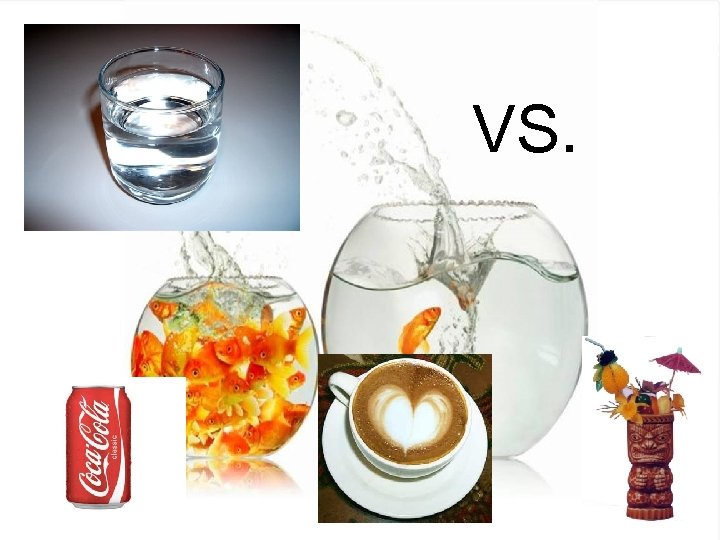
VS.
TRADE-OFFS You can’t have it all (SCARCITY – remember? ) so you have to choose how to spend your money, time, and energy. These decisions involve picking one thing over all the other possibilities – a TRADE-OFF!
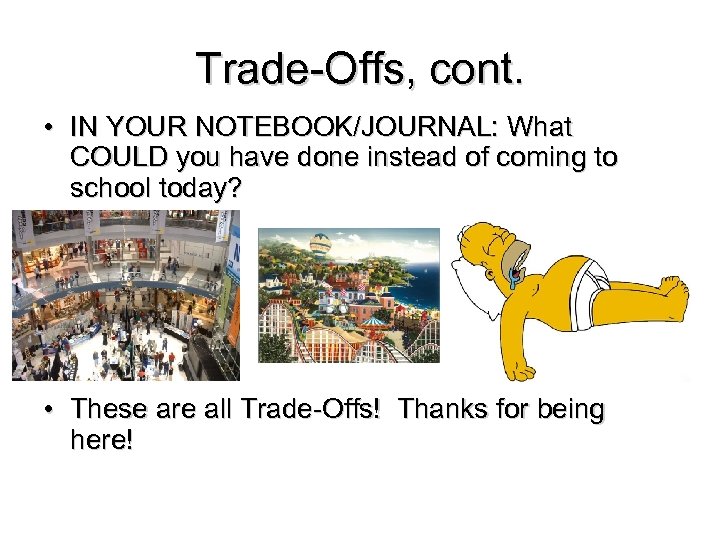
Trade-Offs, cont. • IN YOUR NOTEBOOK/JOURNAL: What COULD you have done instead of coming to school today? • These are all Trade-Offs! Thanks for being here!
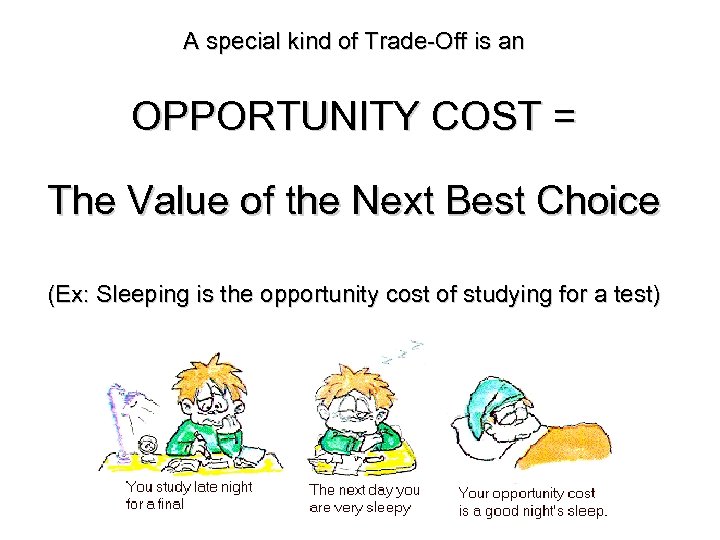
A special kind of Trade-Off is an OPPORTUNITY COST = The Value of the Next Best Choice (Ex: Sleeping is the opportunity cost of studying for a test)
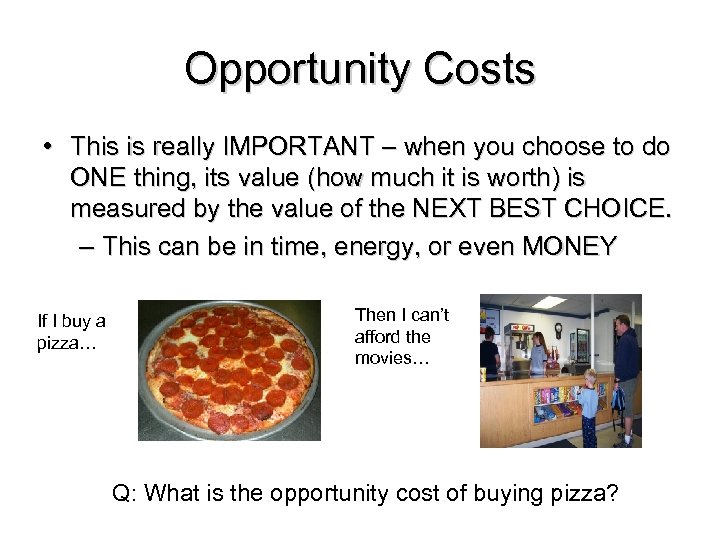
Opportunity Costs • This is really IMPORTANT – when you choose to do ONE thing, its value (how much it is worth) is measured by the value of the NEXT BEST CHOICE. – This can be in time, energy, or even MONEY If I buy a pizza… Then I can’t afford the movies… Q: What is the opportunity cost of buying pizza?
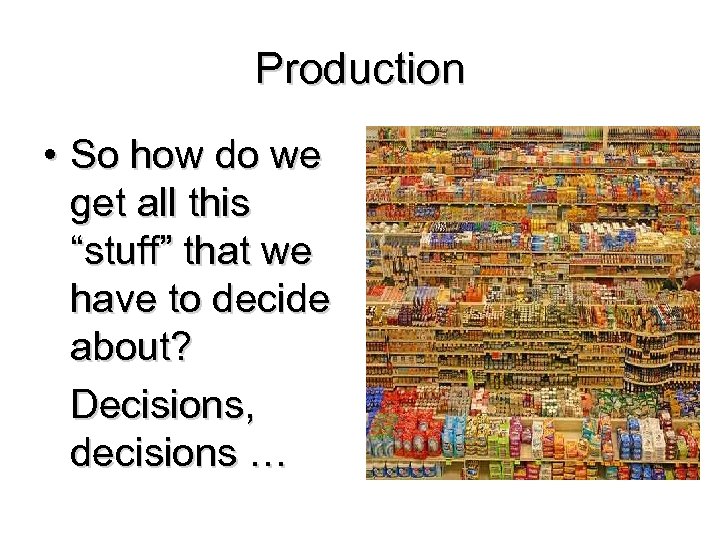
Production • So how do we get all this “stuff” that we have to decide about? Decisions, decisions …
PRODUCTION, cont. • Production is how much stuff an individual, business, country, even the WORLD makes. • STUFF – Goods and Services. • But what is “STUFF”? • Services – work that is performed for others • Goods – tangible (you can touch it) products we can buy
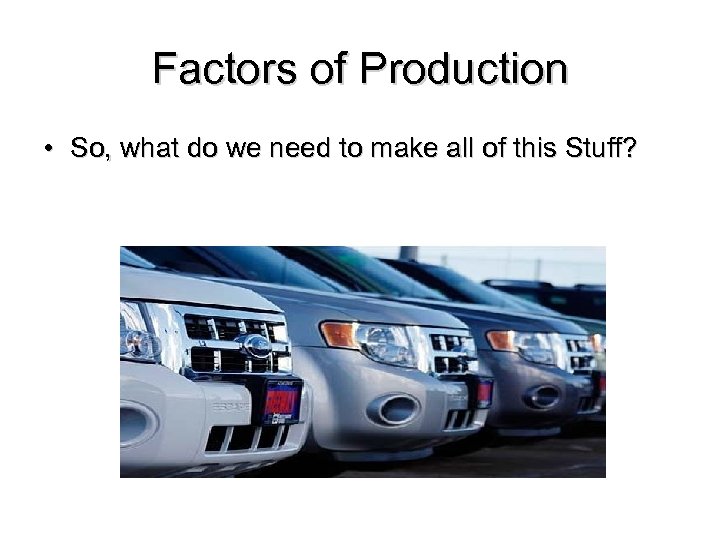
Factors of Production • So, what do we need to make all of this Stuff?
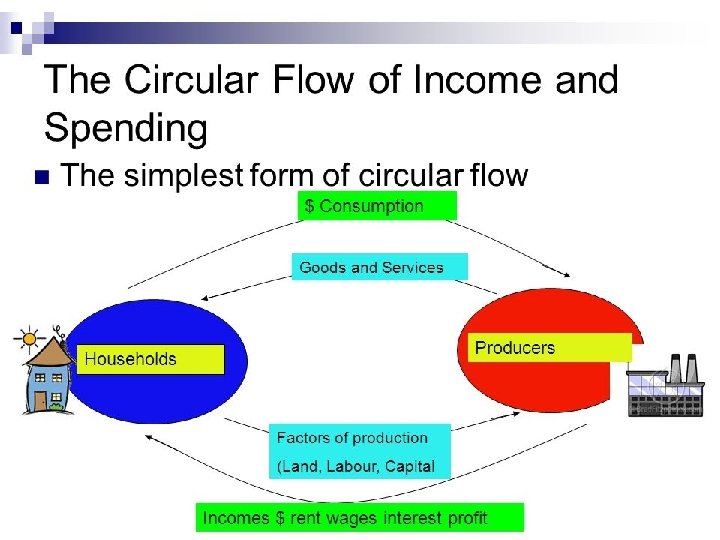
4 Factors of Production • LAND – Natural Resources – Water, natural gas, oil, trees (all the stuff we find on, in, and under the land) • LABOR – Physical and Intellectual – Labor is manpower • CAPITAL - Tools, Machinery, Factories – The things we use to make things – Human capital is brainpower, ideas, innovation • ENTREPRENEURSHIP – Investment $$$ – Investing time, natural resources, labor and capital are all risks associated with production
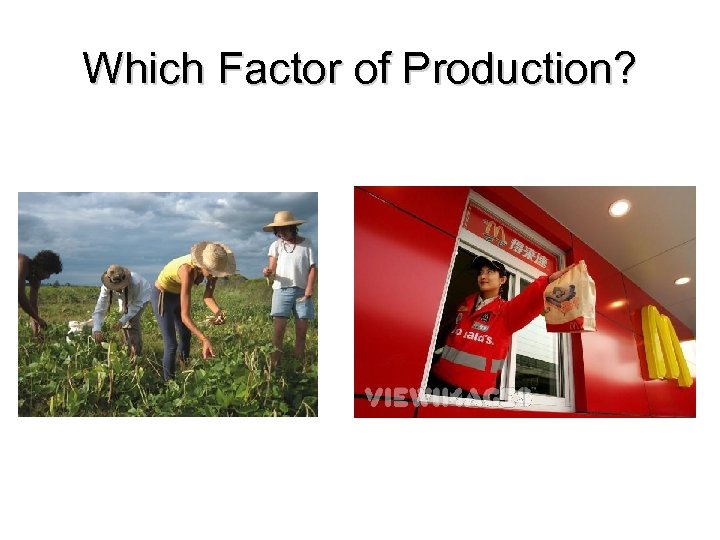
Which Factor of Production?
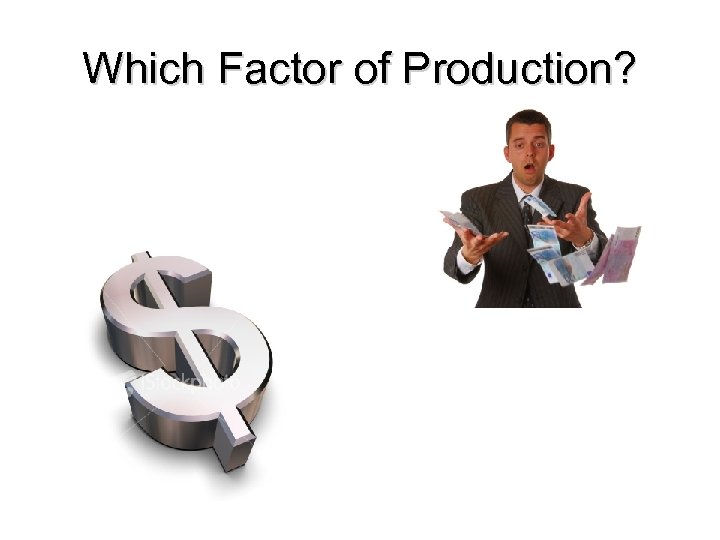
Which Factor of Production?
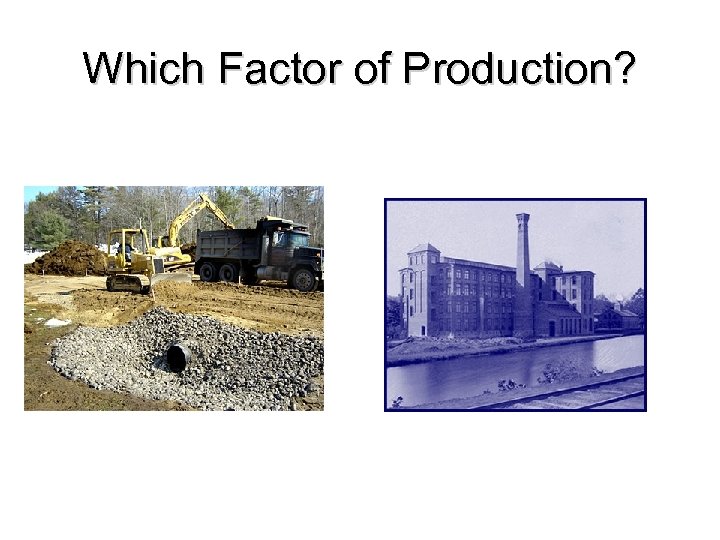
Which Factor of Production?
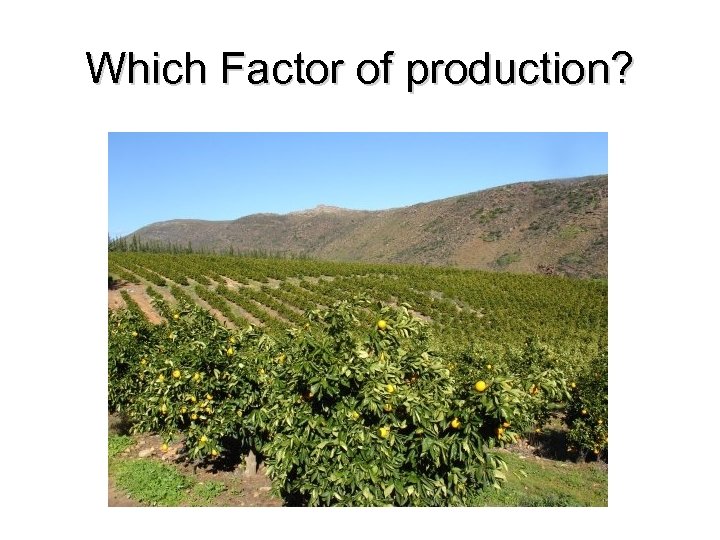
Which Factor of production?
THREE parts to the Production Process • Factors of Production – what we need to make goods and services • Producer – company that makes goods and/or delivers services • Consumer – people who buy goods and services (formerly known as “stuff”) Which Came First?
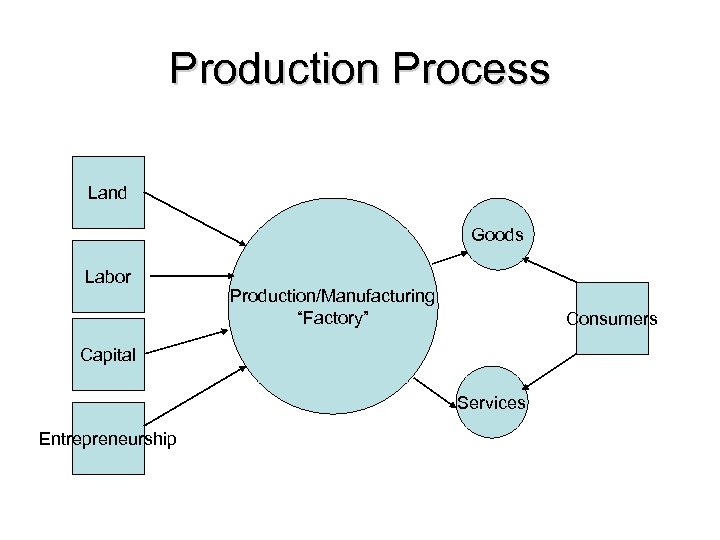
Production Process Land Goods Labor Production/Manufacturing “Factory” Consumers Capital Services Entrepreneurship
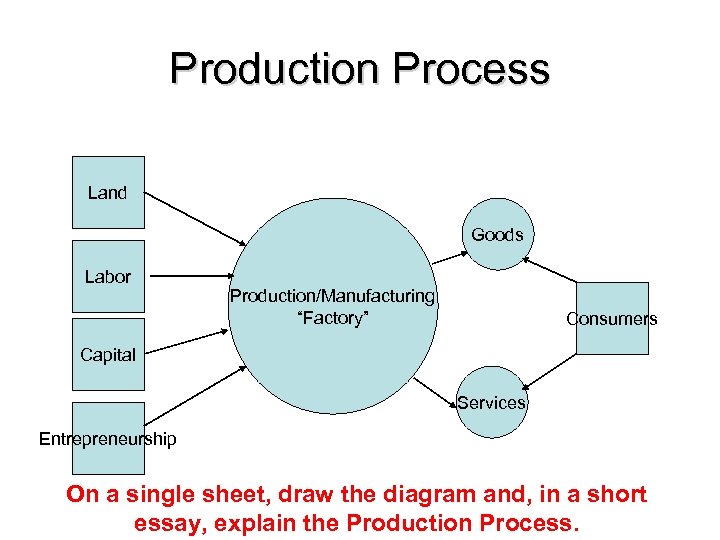
Production Process Land Goods Labor Production/Manufacturing “Factory” Consumers Capital Services Entrepreneurship On a single sheet, draw the diagram and, in a short essay, explain the Production Process.
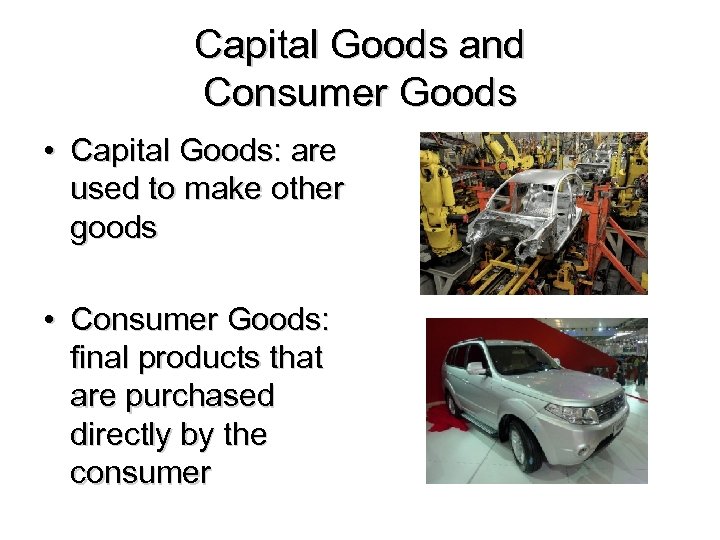
Capital Goods and Consumer Goods • Capital Goods: are used to make other goods • Consumer Goods: final products that are purchased directly by the consumer
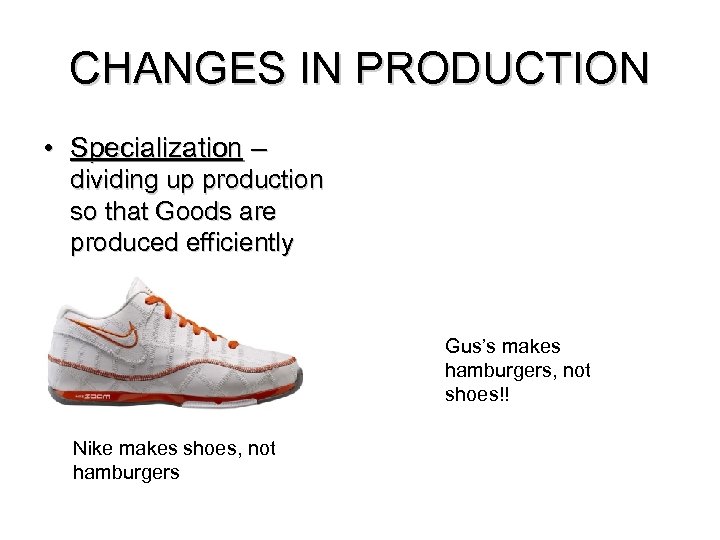
CHANGES IN PRODUCTION • Specialization – dividing up production so that Goods are produced efficiently Gus’s makes hamburgers, not shoes!! Nike makes shoes, not hamburgers
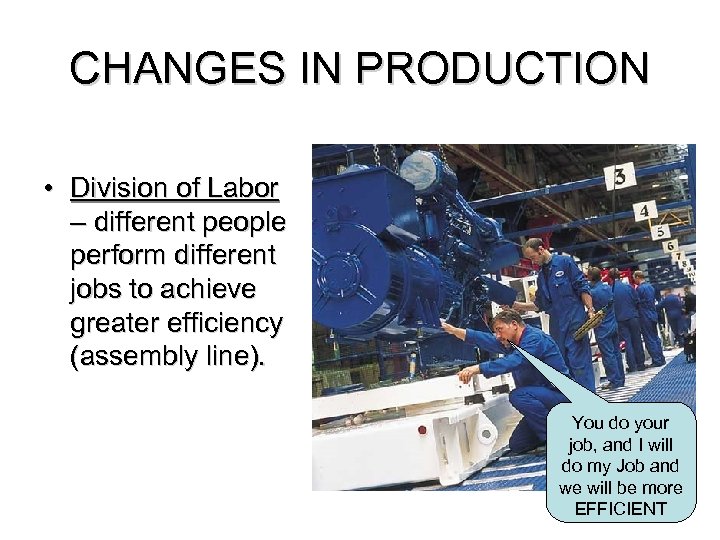
CHANGES IN PRODUCTION • Division of Labor – different people perform different jobs to achieve greater efficiency (assembly line). You do your job, and I will do my Job and we will be more EFFICIENT
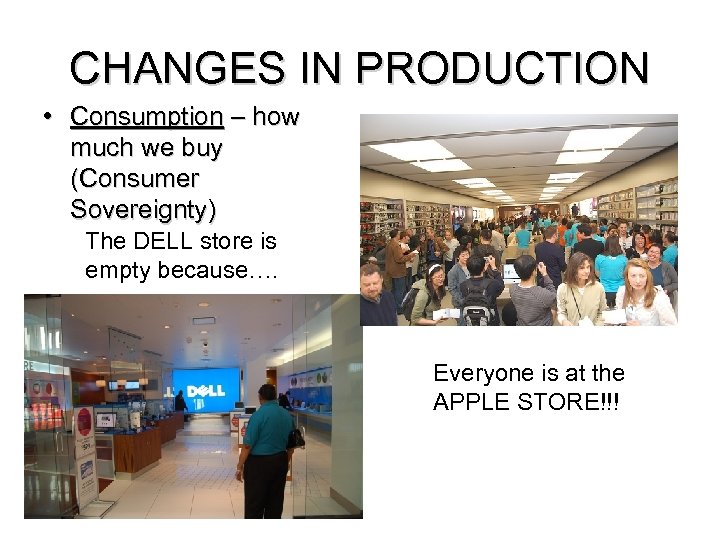
CHANGES IN PRODUCTION • Consumption – how much we buy (Consumer Sovereignty) The DELL store is empty because…. Everyone is at the APPLE STORE!!!
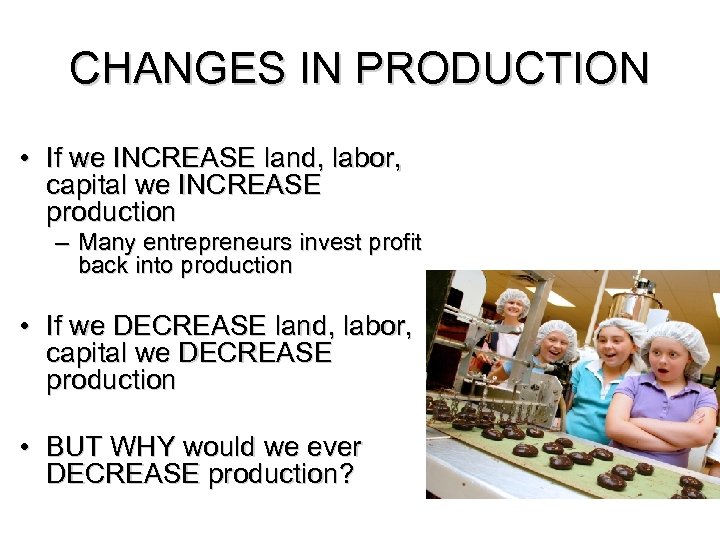
CHANGES IN PRODUCTION • If we INCREASE land, labor, capital we INCREASE production – Many entrepreneurs invest profit back into production • If we DECREASE land, labor, capital we DECREASE production • BUT WHY would we ever DECREASE production?
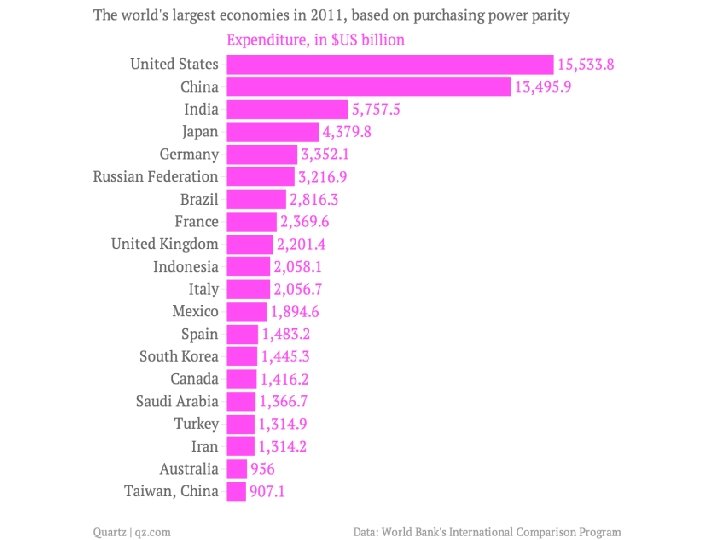
PRODUCTION, cont. again • A measure of the production of an entire country in one year is GDP The total $ value of ALL final Goods and Services produced in a country in a year. (GROSS DOMESTIC PRODUCT)
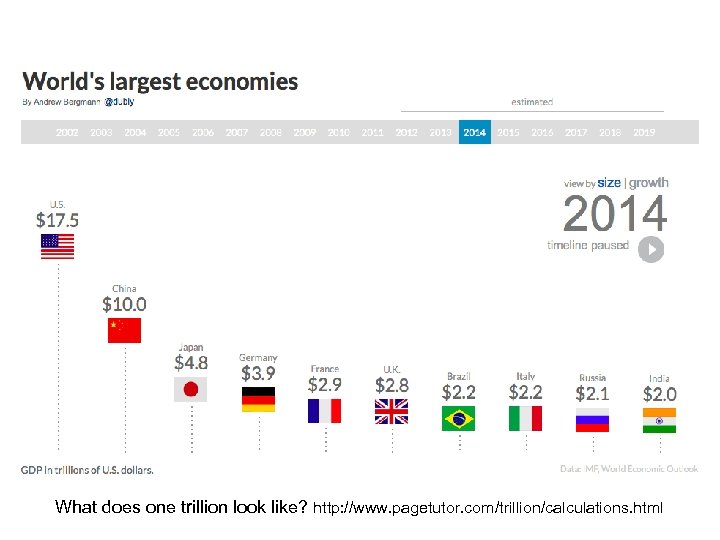
What does one trillion look like? http: //www. pagetutor. com/trillion/calculations. html
Part 2: Costs and Revenues
Costs and Revenues • Cost – the total amount of money it takes to produce an item (to pay for ALL Factors of Production).
Costs and Revenues • Revenues – the total amount of $ a company or the government takes in.
Costs and Revenues • Fixed Costs – the amount of money a business MUST pay each month or year (like rent and Capital expenses).
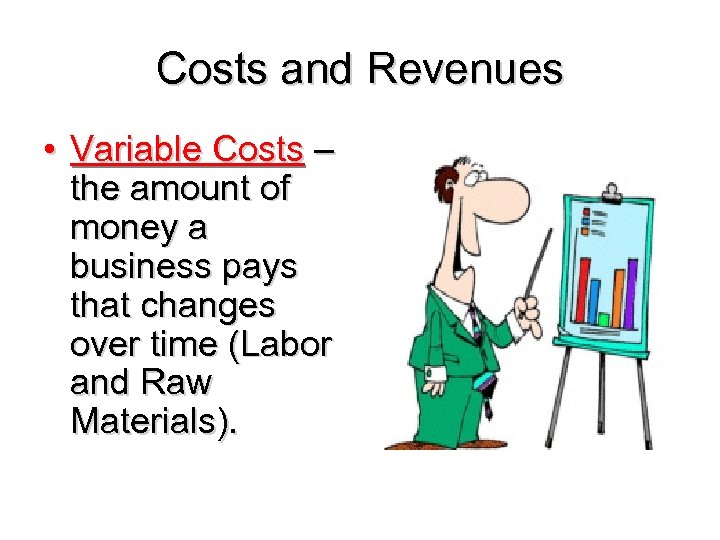
Costs and Revenues • Variable Costs – the amount of money a business pays that changes over time (Labor and Raw Materials).
Costs and Revenues • Total Costs = Fixed + Variable Costs.
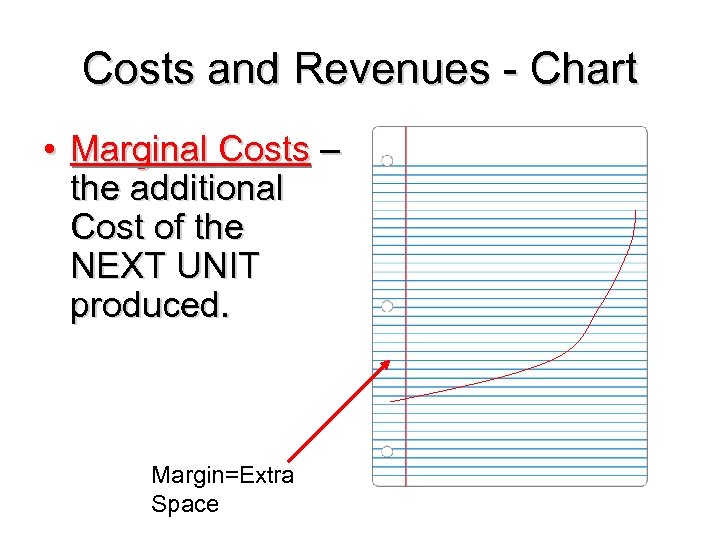
Costs and Revenues - Chart • Marginal Costs – the additional Cost of the NEXT UNIT produced. Margin=Extra Space
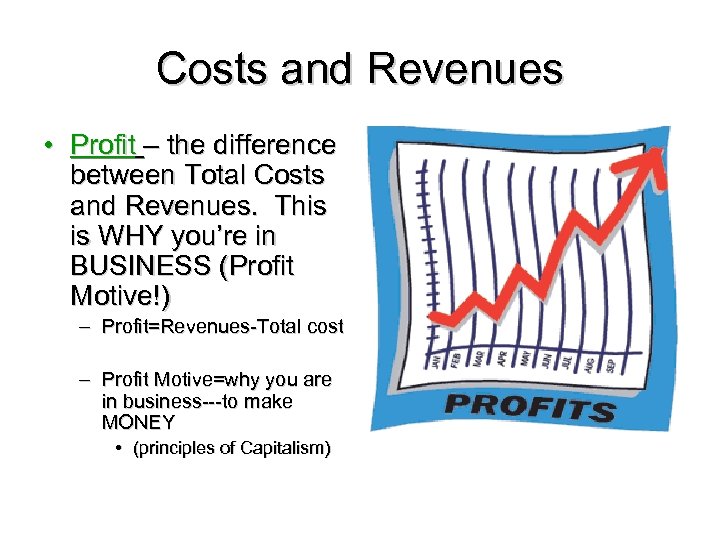
Costs and Revenues • Profit – the difference between Total Costs and Revenues. This is WHY you’re in BUSINESS (Profit Motive!) – Profit=Revenues-Total cost – Profit Motive=why you are in business---to make MONEY • (principles of Capitalism)
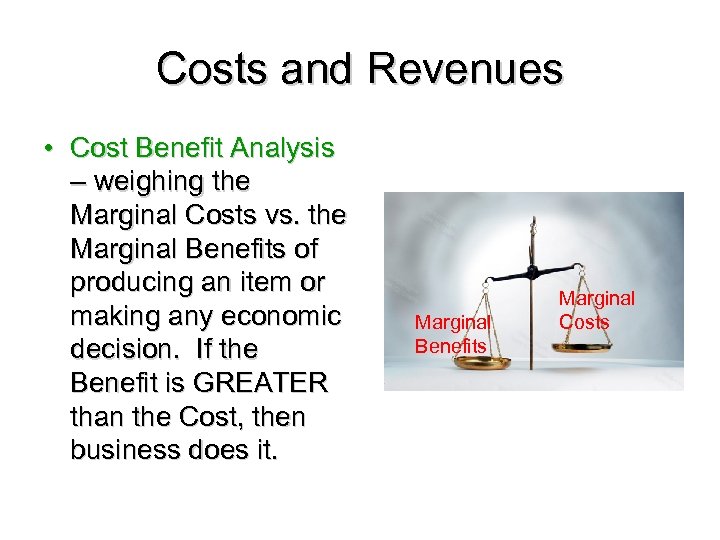
Costs and Revenues • Cost Benefit Analysis – weighing the Marginal Costs vs. the Marginal Benefits of producing an item or making any economic decision. If the Benefit is GREATER than the Cost, then business does it. Marginal Benefits Marginal Costs
Cost-Benefit Analysis • Immediate or short term satisfaction can lead to missing the long-term benefits. #7 For Example • Immediate spending on cheap stuff instead of long-term savings will lead to lower economic prosperity.
Part 3: Comparative Economics (4)
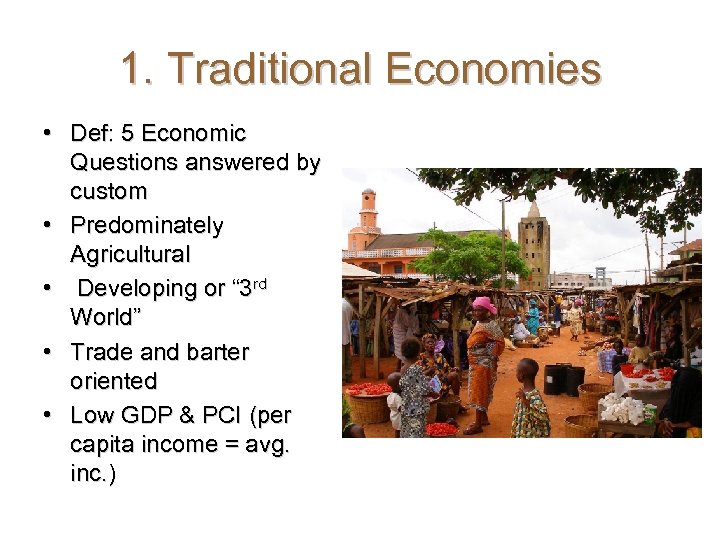
1. Traditional Economies • Def: 5 Economic Questions answered by custom • Predominately Agricultural • Developing or “ 3 rd World” • Trade and barter oriented • Low GDP & PCI (per capita income = avg. inc. )
2. Command Economies • Def: Economic questions answered by the government • Very little economic choice • No private ownership • Communism • Old Soviet Union, old Communist China, Cuba and North Korea
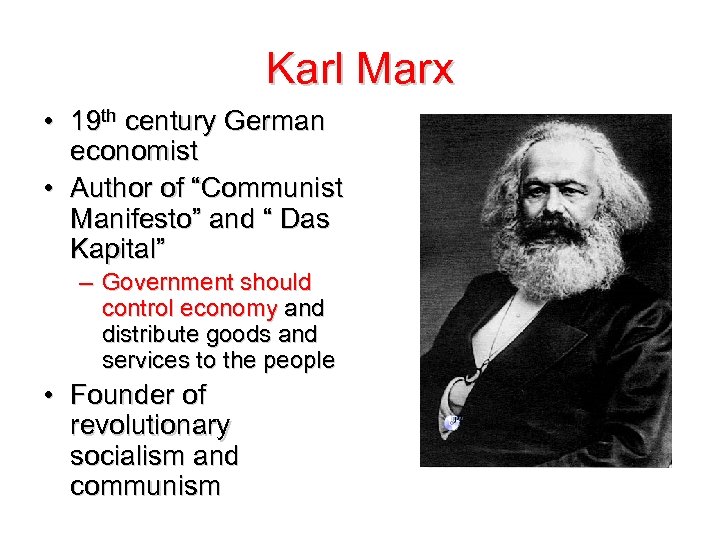
Karl Marx • 19 th century German economist • Author of “Communist Manifesto” and “ Das Kapital” – Government should control economy and distribute goods and services to the people • Founder of revolutionary socialism and communism
3. Free Market (Capitalist) Economies • Economic questions answered by producers and consumers • Limited government involvement • Private property rights • Wide variety of choices and products • U. S. , Japan
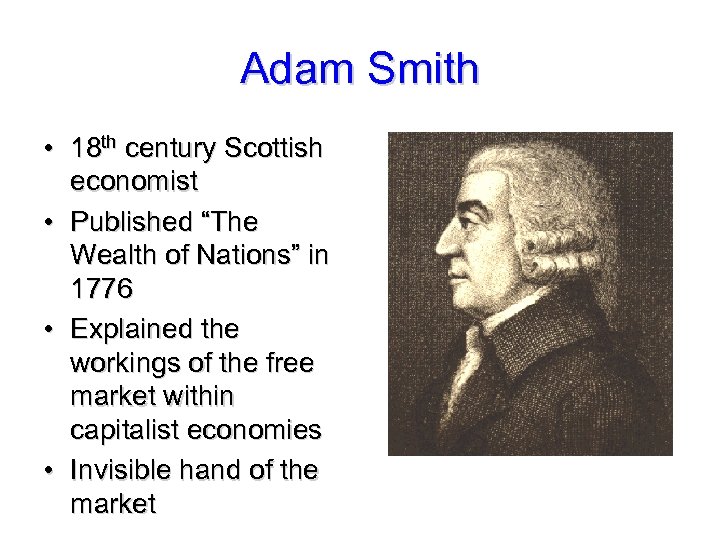
Adam Smith • 18 th century Scottish economist • Published “The Wealth of Nations” in 1776 • Explained the workings of the free market within capitalist economies • Invisible hand of the market
Adam Smith (cont. ) • Laissez-faire - Government stays out of business practices “hands off” to let the market place determine production, consumption and distribution. • Individual freedom and choice emphasized.
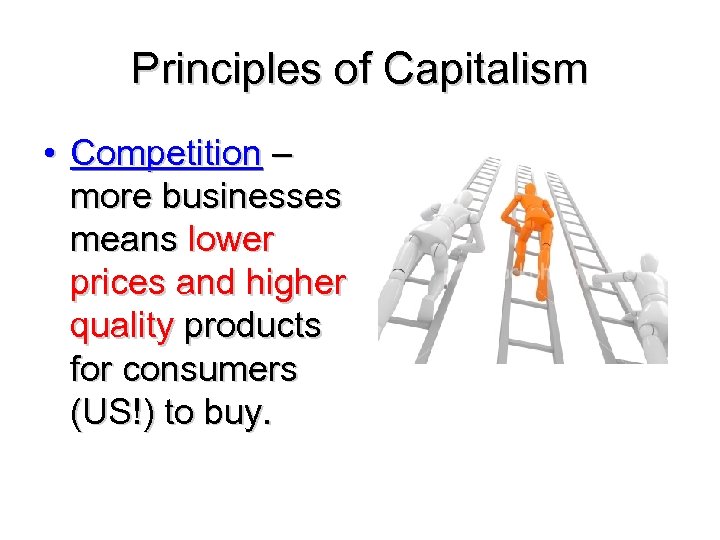
Principles of Capitalism • Competition – more businesses means lower prices and higher quality products for consumers (US!) to buy.
Principles of Capitalism • Voluntary Exchange – businesses and consumers MUST be free to buy or sell what and when they want.
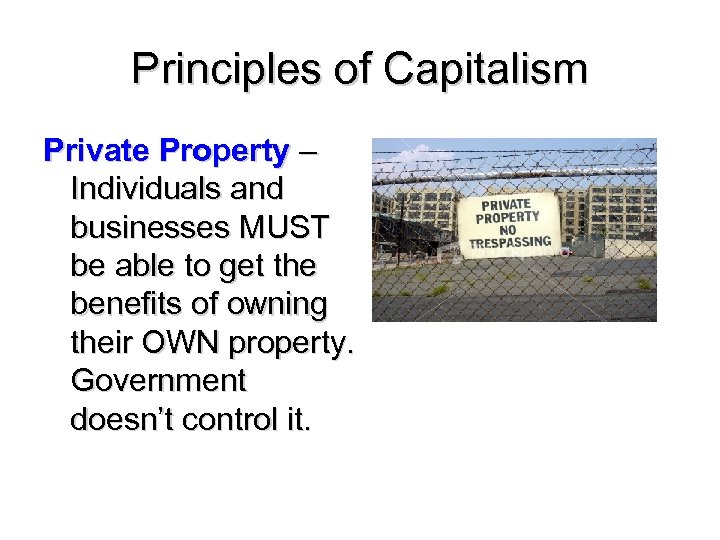
Principles of Capitalism Private Property – Individuals and businesses MUST be able to get the benefits of owning their OWN property. Government doesn’t control it.
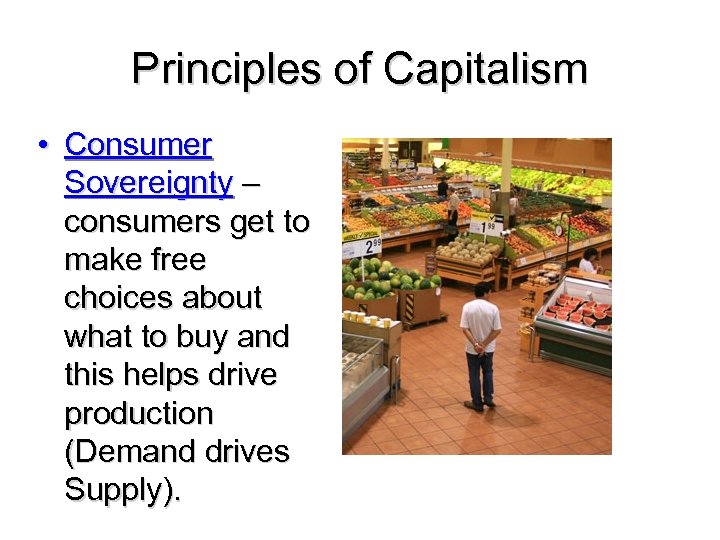
Principles of Capitalism • Consumer Sovereignty – consumers get to make free choices about what to buy and this helps drive production (Demand drives Supply).
Principles of Capitalism • Profit Motive – people want to make or save $$$$. Their “Self Interest” motivates Capitalism.
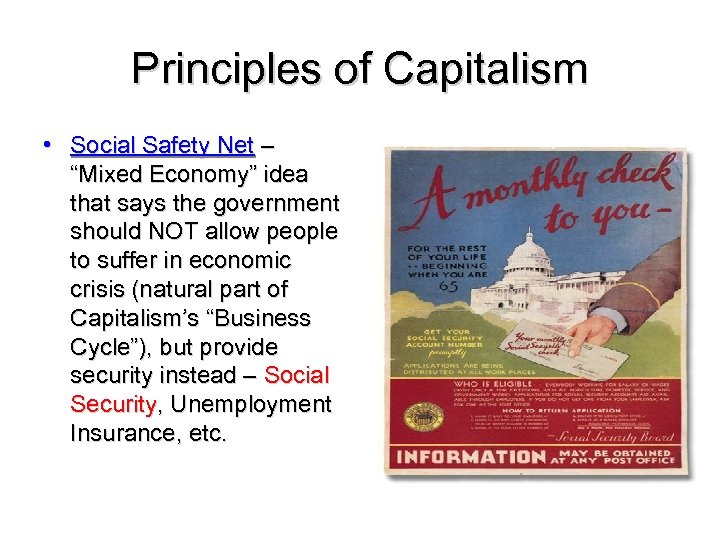
Principles of Capitalism • Social Safety Net – “Mixed Economy” idea that says the government should NOT allow people to suffer in economic crisis (natural part of Capitalism’s “Business Cycle”), but provide security instead – Social Security, Unemployment Insurance, etc.
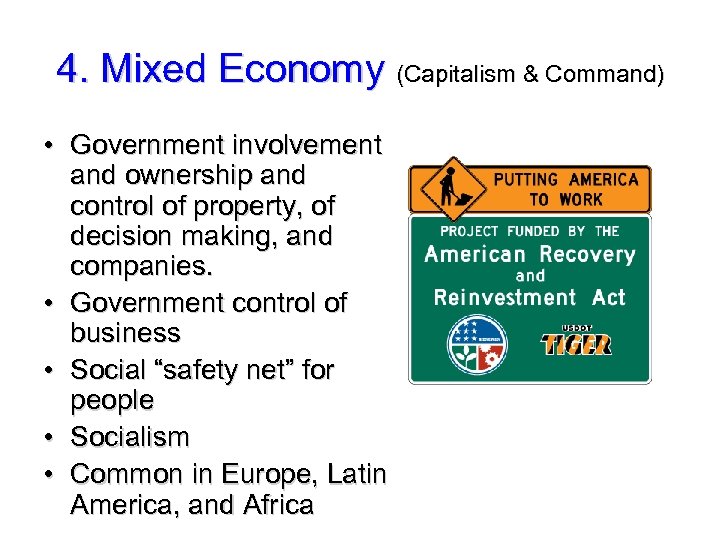
4. Mixed Economy (Capitalism & Command) • Government involvement and ownership and control of property, of decision making, and companies. • Government control of business • Social “safety net” for people • Socialism • Common in Europe, Latin America, and Africa
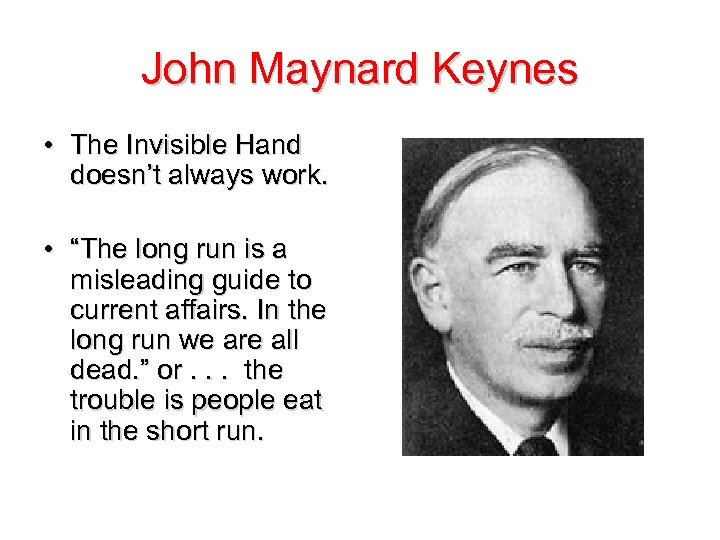
John Maynard Keynes • The Invisible Hand doesn’t always work. • “The long run is a misleading guide to current affairs. In the long run we are all dead. ” or. . . the trouble is people eat in the short run.
Keynesian Economics (cont. ) • Government should intervene in economic emergencies through tax and spending (Fiscal Policy) and changing the money supply (Monetary Policy). • This is done to smooth out the business cycle (expansion and recession) and keep inflation low.
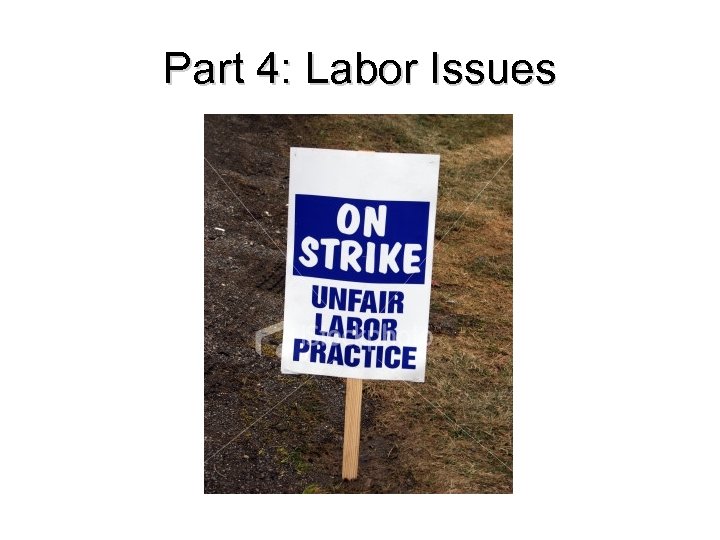
Part 4: Labor Issues
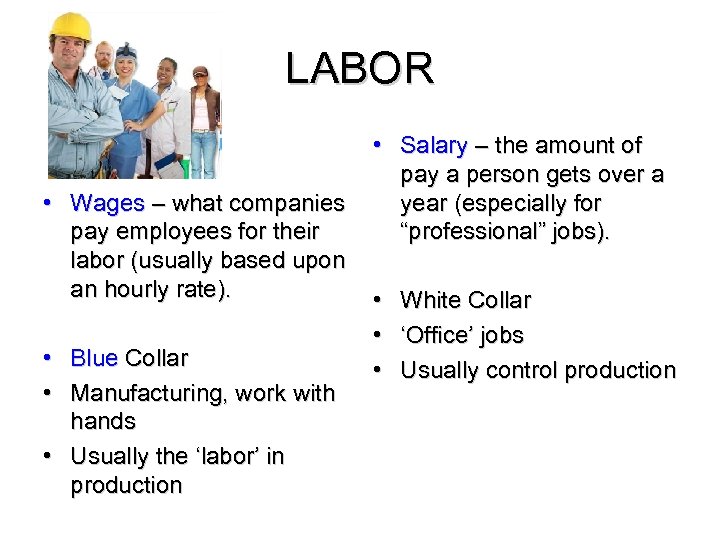
LABOR • Wages – what companies pay employees for their labor (usually based upon an hourly rate). • Blue Collar • Manufacturing, work with hands • Usually the ‘labor’ in production • Salary – the amount of pay a person gets over a year (especially for “professional” jobs). • White Collar • ‘Office’ jobs • Usually control production
When Production Decreases • Downsizing – laying off employees to save costs. • Outsourcing – sending jobs and manufacturing overseas or contracting to outside companies to save money. • Bankruptcy – government allows business to restructure it’s debt, but now all profits go to paying off debt rather than to the owners/investors. • Out of Business – lose all your business, money, and profits. • The current trend in the U. S. is that manufacturing jobs are declining
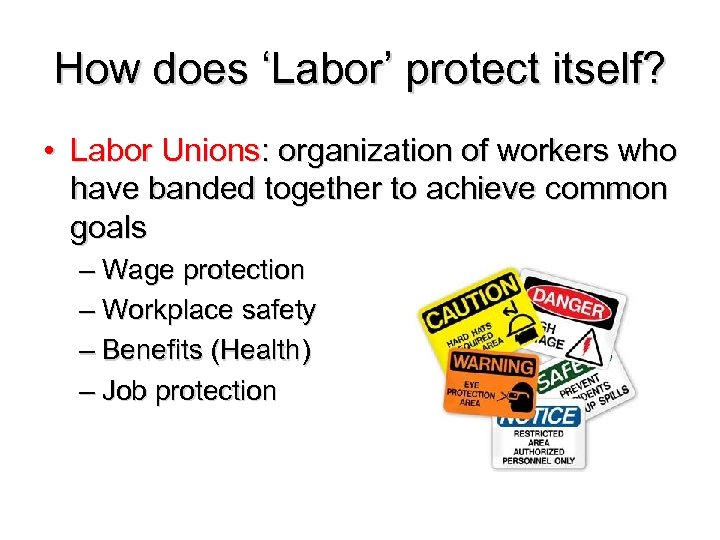
How does ‘Labor’ protect itself? • Labor Unions: organization of workers who have banded together to achieve common goals – Wage protection – Workplace safety – Benefits (Health) – Job protection
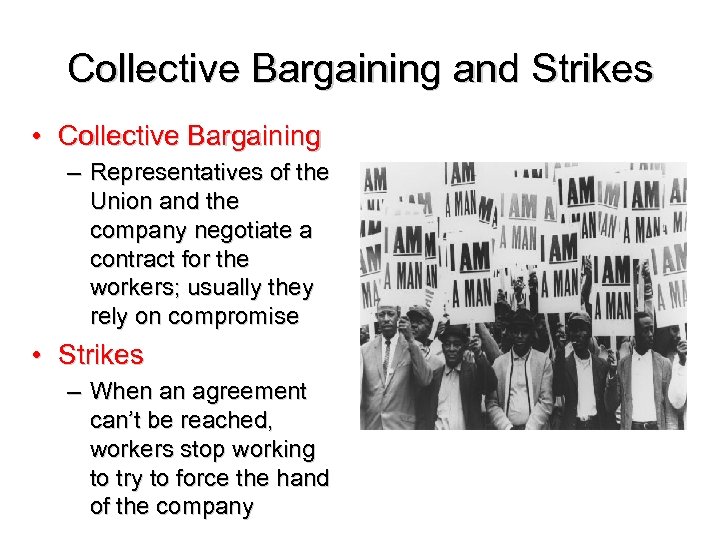
Collective Bargaining and Strikes • Collective Bargaining – Representatives of the Union and the company negotiate a contract for the workers; usually they rely on compromise • Strikes – When an agreement can’t be reached, workers stop working to try to force the hand of the company
Next: Comparative Economic Systems in about 20 mins. video • 3 -2 -1 Assignment – See Excel sheet
Скачать презентацию AGENDA 1 WELCOME BACK 2 SEATING CHART 3
0f0b252488310197f6165554ea7773b3.ppt