Скачать презентацию After many decades of satisfactory performance the steam
e43524186b6d3e9f3acc68c7b3f43bbb.ppt
- Количество слайдов: 76


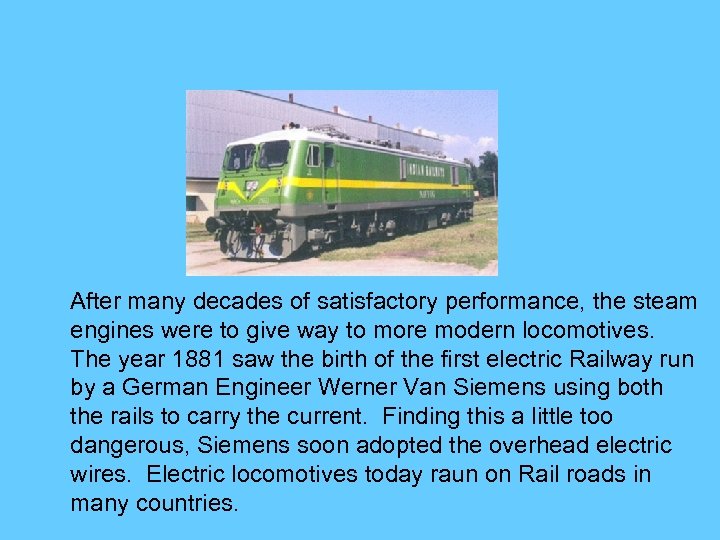 After many decades of satisfactory performance, the steam engines were to give way to more modern locomotives. The year 1881 saw the birth of the first electric Railway run by a German Engineer Werner Van Siemens using both the rails to carry the current. Finding this a little too dangerous, Siemens soon adopted the overhead electric wires. Electric locomotives today raun on Rail roads in many countries.
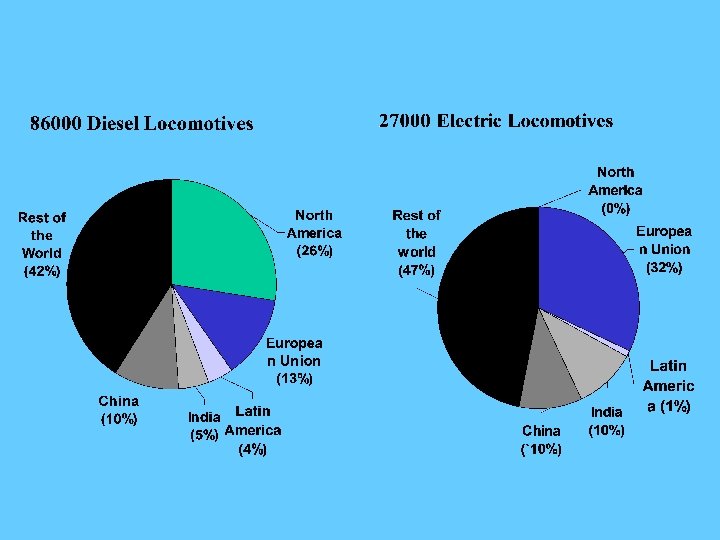
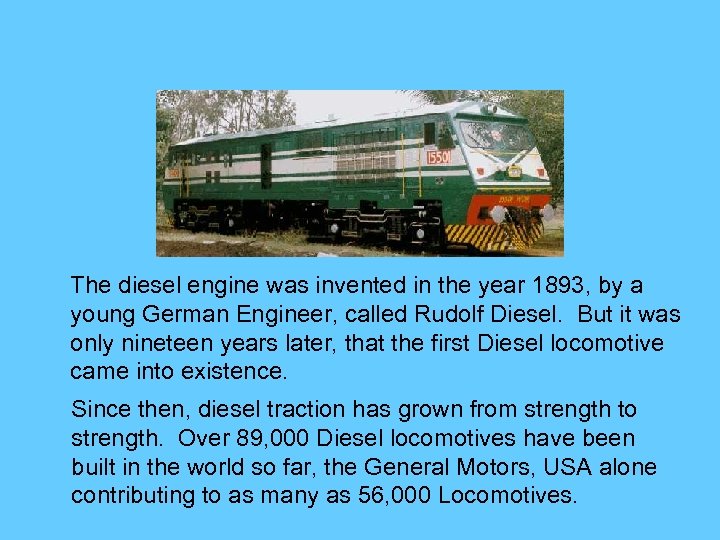 The diesel engine was invented in the year 1893, by a young German Engineer, called Rudolf Diesel. But it was only nineteen years later, that the first Diesel locomotive came into existence. Since then, diesel traction has grown from strength to strength. Over 89, 000 Diesel locomotives have been built in the world so far, the General Motors, USA alone contributing to as many as 56, 000 Locomotives.
 Diesel Traction is thus a far more recent technology, as compared to Electric traction. One reason why there are more diesels in the world than electric locos and why more and more are produced year after year. Railways in Europe and some other advanced countries had started Electrification many years before the modern Diesels came on the scene. In fact, Railways in modern economies like US, Australia, etc. are de-electrifying including Suburban services.
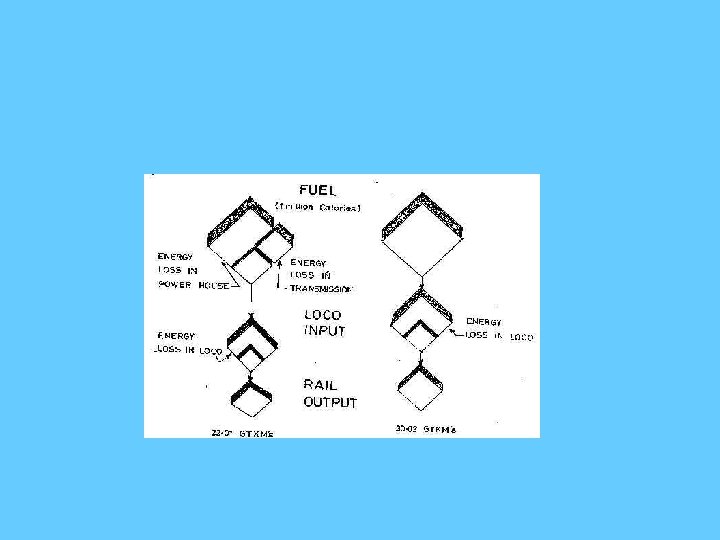
 Diesel locomotive is in fact an Electric Locomotive carrying its own powerhouse. Today’s modern Diesel locomotives with 6 KMs of Electrical wiring is much more Electric than an Electric locomotive with 4 KMs of wire. Electric locomotive provides an easy means of drawing larger units of power from the OHE for the same axle load. Development of Technology for Low weight energy efficient engine and its controls delayed the advent of modern diesel locomotives.
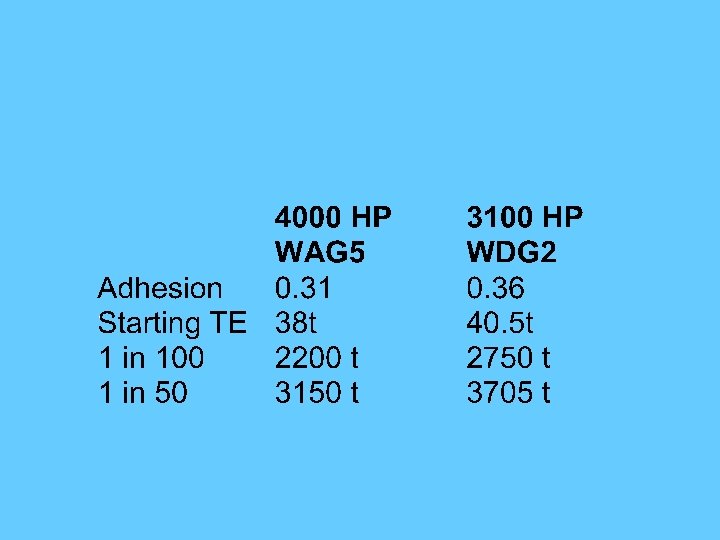
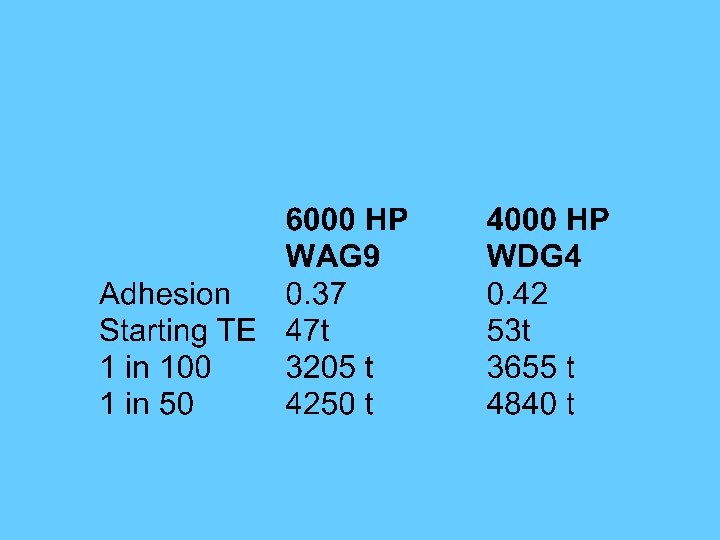
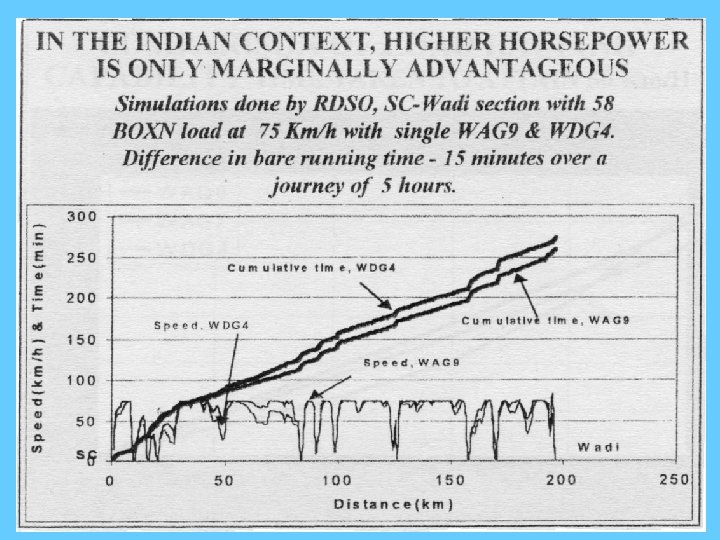
 Today, technological development in both tractions has levelled of. Diesel locos with Electric transmission have all the benefits of modern technology such as AC-AC transmission. And for the same weight, Diesel traction has 10% or higher load hauling capability. It is conceded that technology of high speed Passenger operation beyond 220 Kmph has advanced on Electric traction, but this is perhaps quite irrelevant to us today.
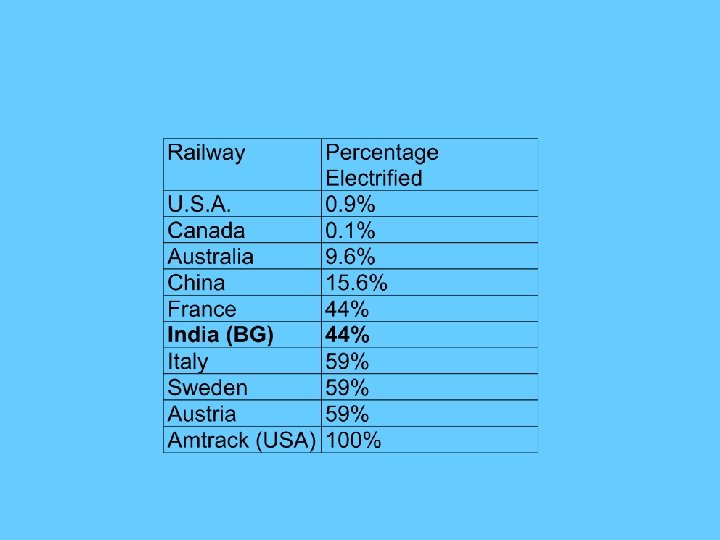




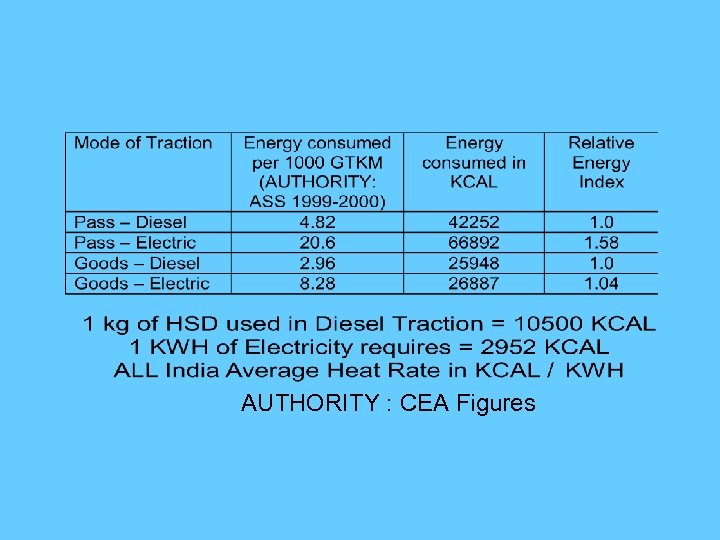 AUTHORITY : CEA Figures


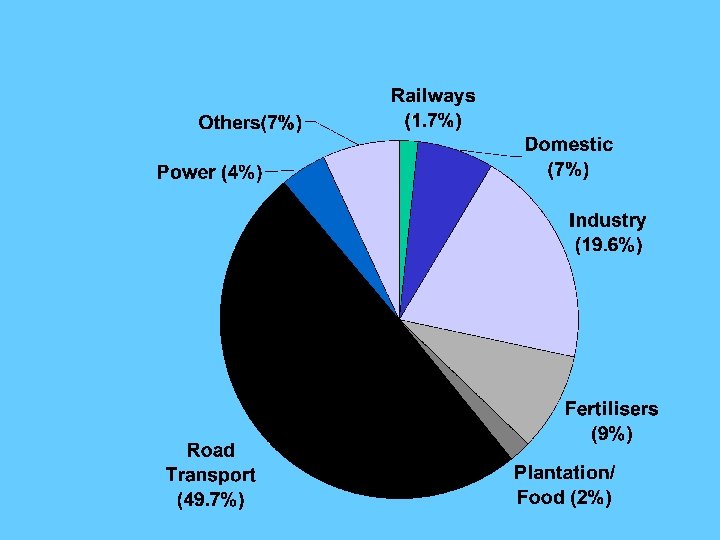


 As given by Dr. D. K. TULI, Chief Research Manager - IOC on 21 -08 -2002








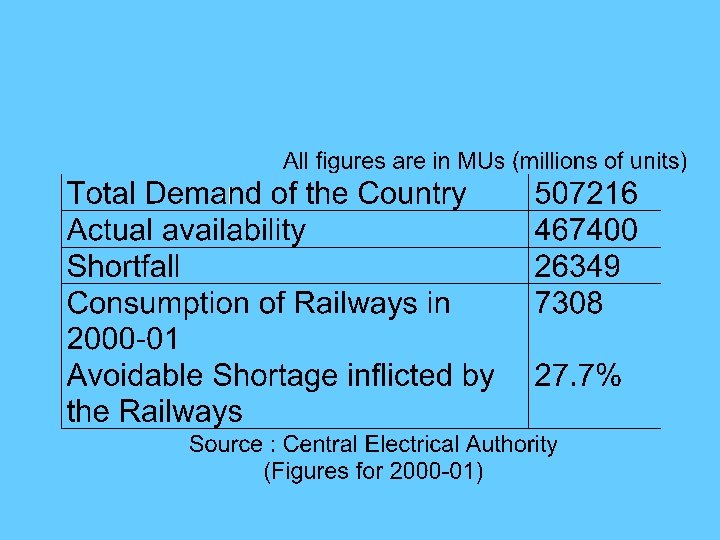
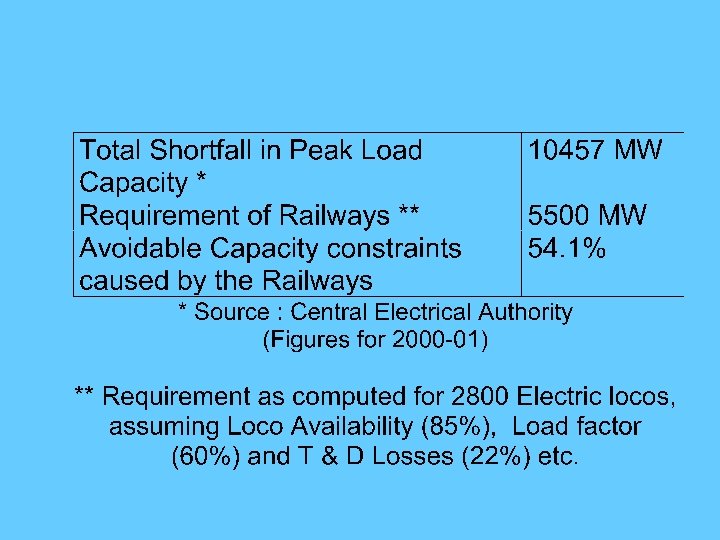


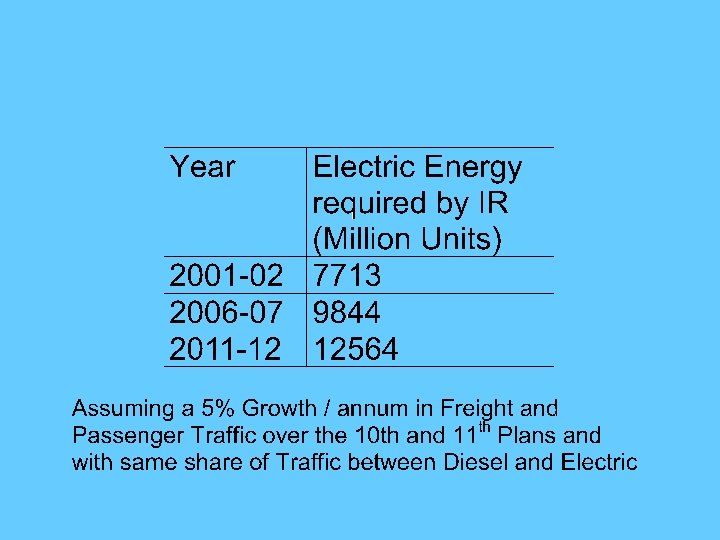
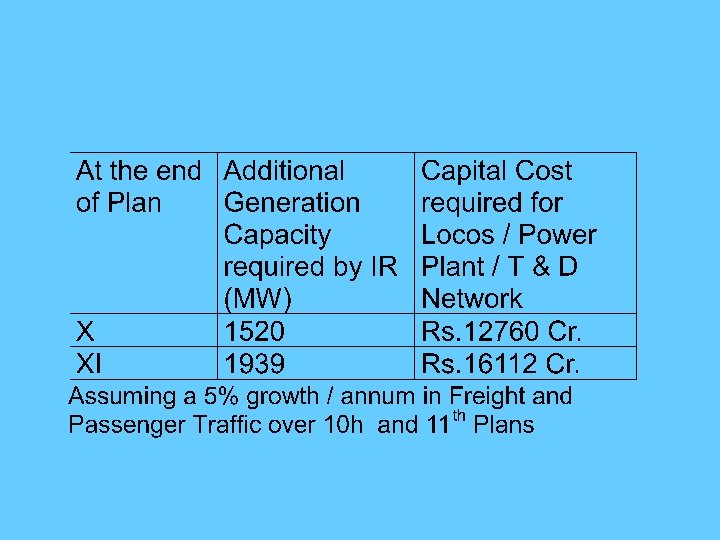




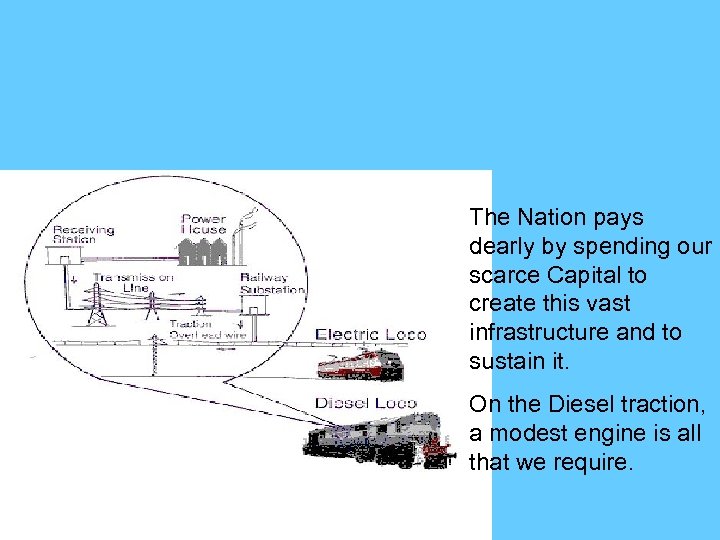 The Nation pays dearly by spending our scarce Capital to create this vast infrastructure and to sustain it. On the Diesel traction, a modest engine is all that we require.
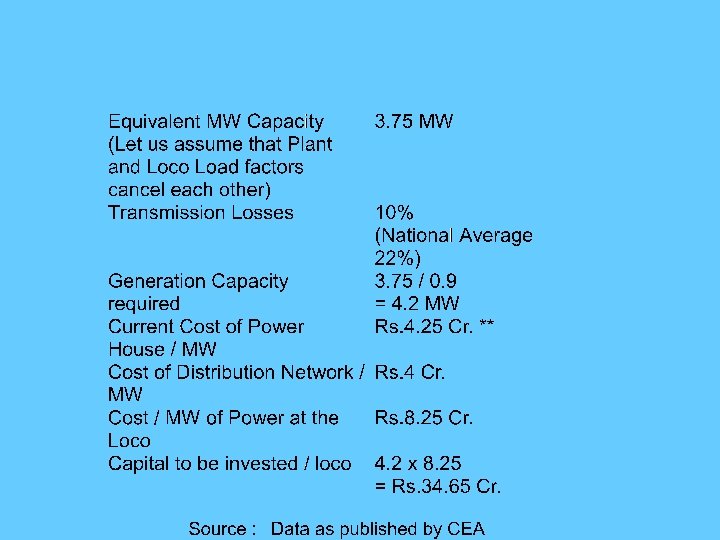
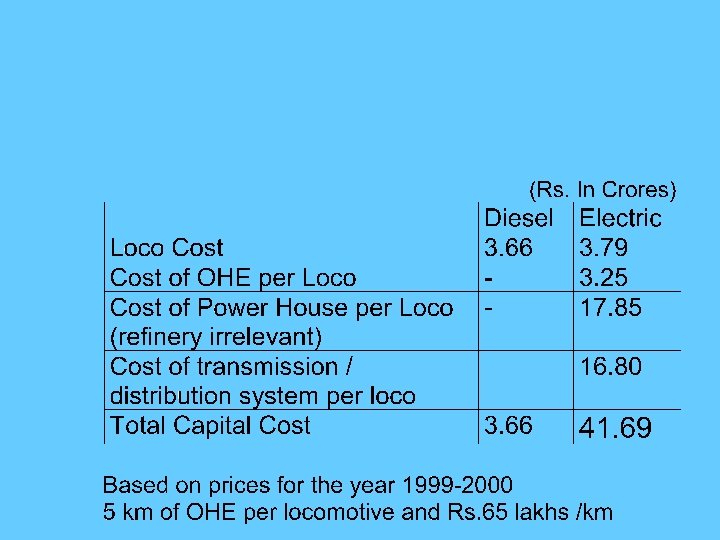
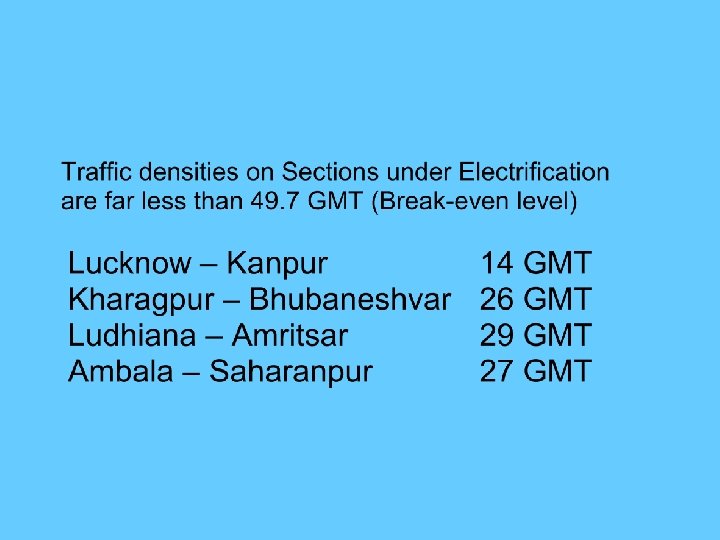
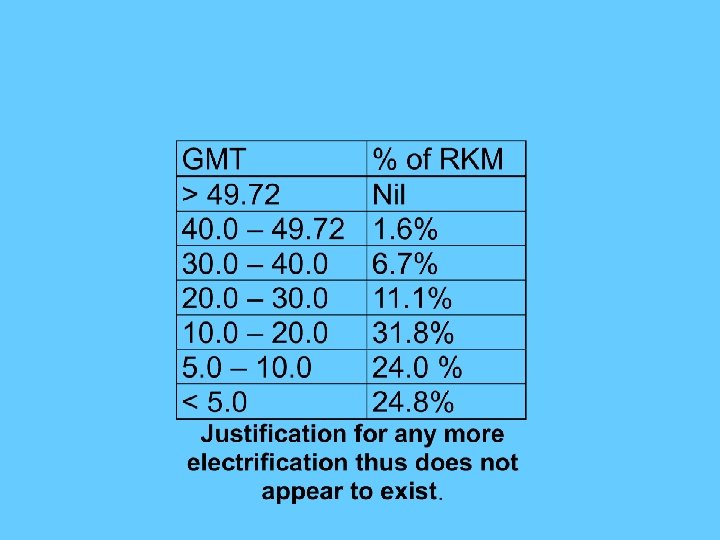







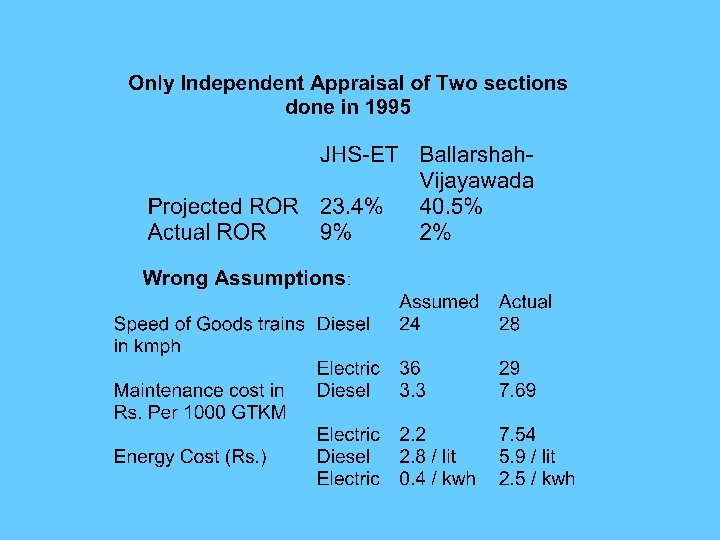

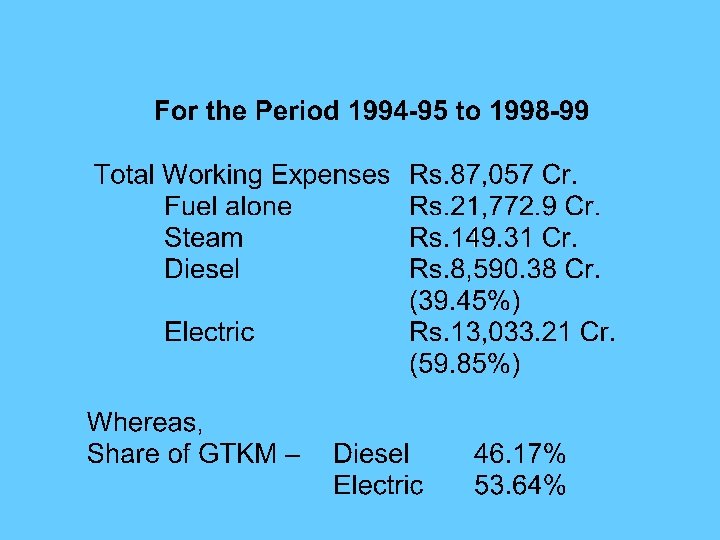


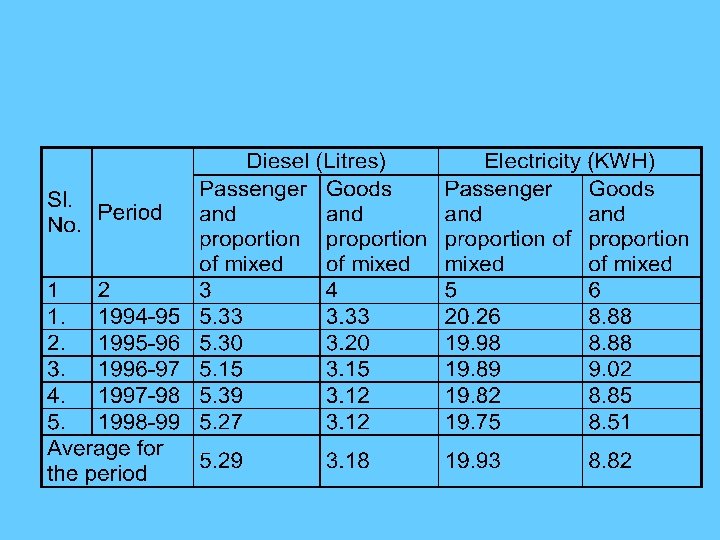



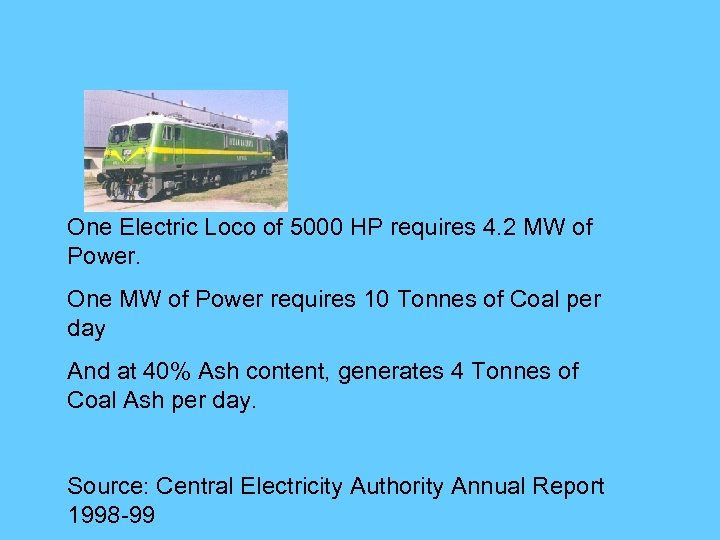 One Electric Loco of 5000 HP requires 4. 2 MW of Power. One MW of Power requires 10 Tonnes of Coal per day And at 40% Ash content, generates 4 Tonnes of Coal Ash per day. Source: Central Electricity Authority Annual Report 1998 -99