 Скачать презентацию AFRICA Done by Begalieva A Shansharbek A Stamzhan
исправленый от алиша.ppt
- Количество слайдов: 36



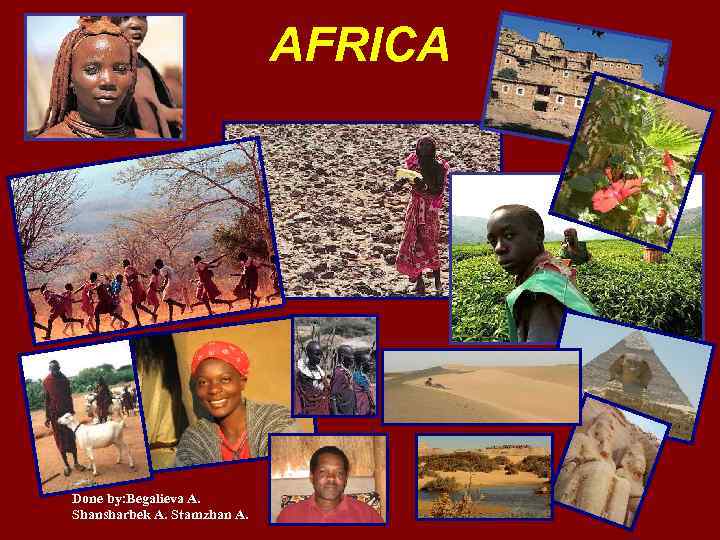
AFRICA Done by: Begalieva A. Shansharbek A. Stamzhan A.
The population of Africa - about 905 million. (2014) One of the fastest growing regions. The natural increase was 69. 3 million. Per year in 1960 -1980, and 70 mln. People - in 1980 -2000. Llife expectancy, Africa inferior to other regions. In 2000 -2005, it was for men, 47. 9 years (Asia - 65) and for women - 50 (the average for the population - 48. 9 in Asia - 68. 3)
• In the cultural-aesthetic and racially, the African population is very diverse. • The entire northern part is inhabited by people of Caucasian (25% of the population of the continent), Sub -Saharan Africa - the peoples of blacks - 53% of the population; a significant portion of the population are people of transition races - Caucasoid, Negroid, Ethiopian race (Somalia, Ethiopia). By the unique small nations are pygmies the Bushmen and Hottentots (South Africa), Malagasies (the population of Madagascar - Mongoloid, Polynesian, race) Languages: Swahili , Hamitic-Semitic , Malagasy, Afrikaner (Dutch), as well as languages of the former colonies: Portuguese, French and English.
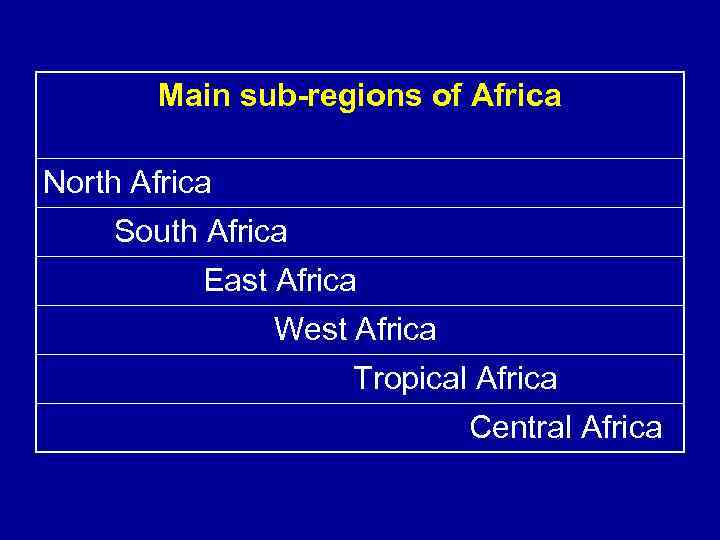
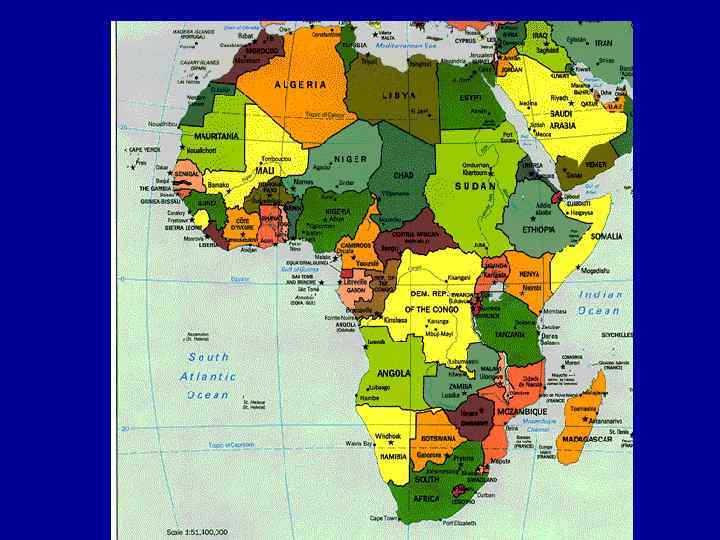
Main sub-regions of Africa North Africa South Africa East Africa West Africa Tropical Africa Central Africa
The foreign policy of the African States • South Africa - a parliamentary republic. Effective Constitution 1997. Administratively, the Republic of South Africa is divided into nine provinces (Eastern Cape, Central Cape, Western Cape, Gauteng, Free State, Kwa. Zulu-Natal, Limpopo, Mpumalanga, North West). Major cities: Pretoria, Johannesburg, Cape Town, Durban. • Most African states after independence to base its anti-imperialist foreign policy of the principle of non-alignment. African States are active members of the Non-Aligned Movement. However, their share of the Conference of Heads of State and Government of Non. Aligned countries is growing steadily.
• Domestic policy is aimed at preserving social and political stability. Particular attention is paid to the fight against crime, which took dangerous proportions. The latest statistics show a decrease in the intensity of crime in the country. Another problem is the government - growing corruption. In some aspects of internal policies (such as privatization) there was friction between the government and the main political allies of the ANC - the Communist Party and the trade unions. The most difficult problem for South Africa remains fraught with social explosion elimination of the gap between the living standards of Africans and whites. No significant change in the situation the government has not achieved, although some shifts in this direction there is, for example, the growth of the African "middle class. "
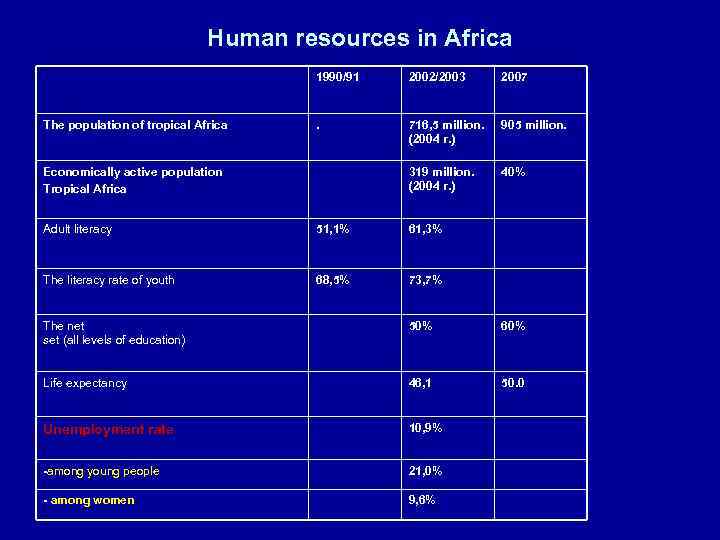
Human resources in Africa 1990/91 The population of tropical Africa 2002/2003 2007 . 716, 5 million. (2004 г. ) 905 million. 319 million. (2004 г. ) 40% Economically active population Tropical Africa Adult literacy 51, 1% 61, 3% The literacy rate of youth 68, 5% 73, 7% The net set (all levels of education) 50% 60% Life expectancy 46, 1 50. 0 Unemployment rate 10, 9% -among young people 21, 0% - among women 9, 6%
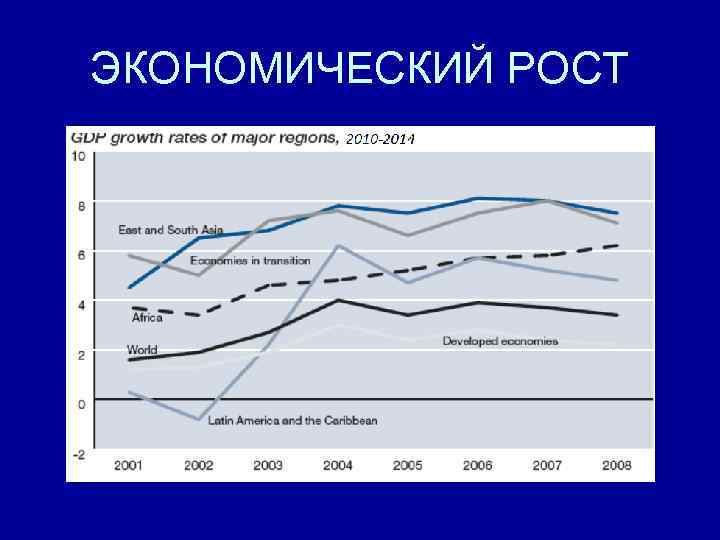
ЭКОНОМИЧЕСКИЙ РОСТ
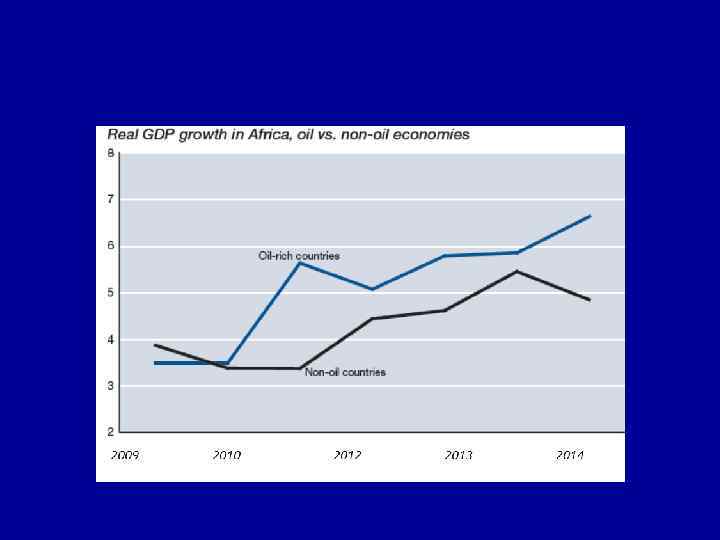
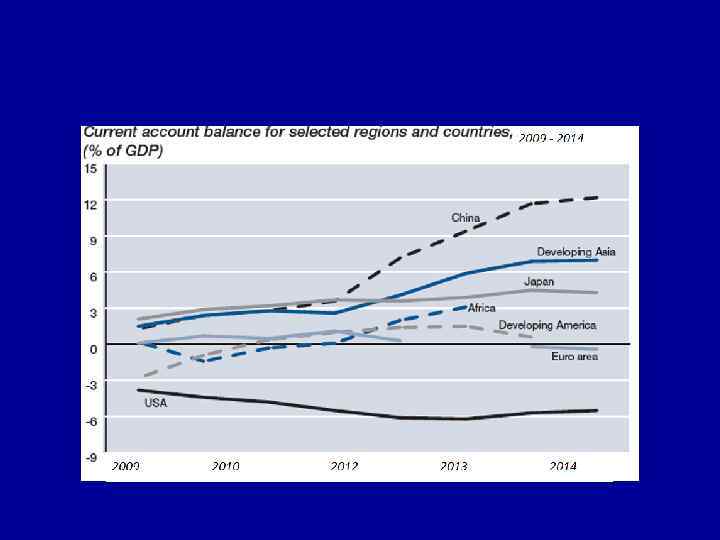

Tropical Africa in the global economy The number of countries 34 Share of global GDP, % 1, 5 Share of global population, % 11, 8 Share in global export, % 1, 9 Total GDP, the billion dollars. (2014 г. ) 709, 5 Total GNI PPP in the billion dollars. (2014 г. ) 842 Total GNI in the billion dollars 648, 3
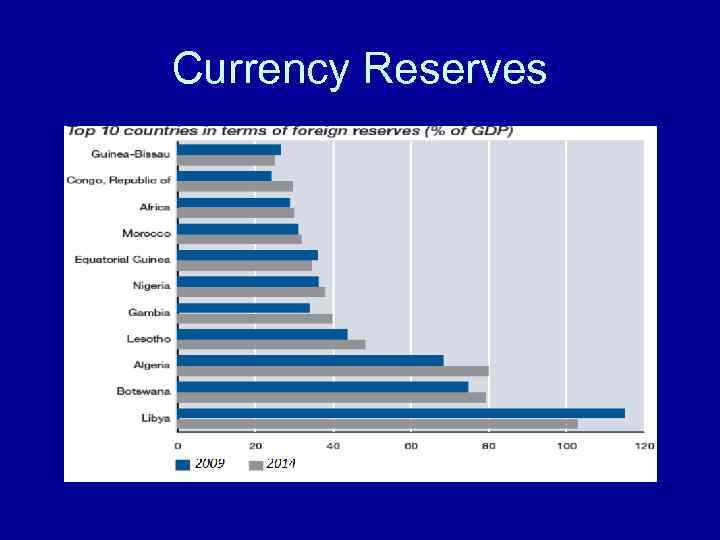
Currency Reserves
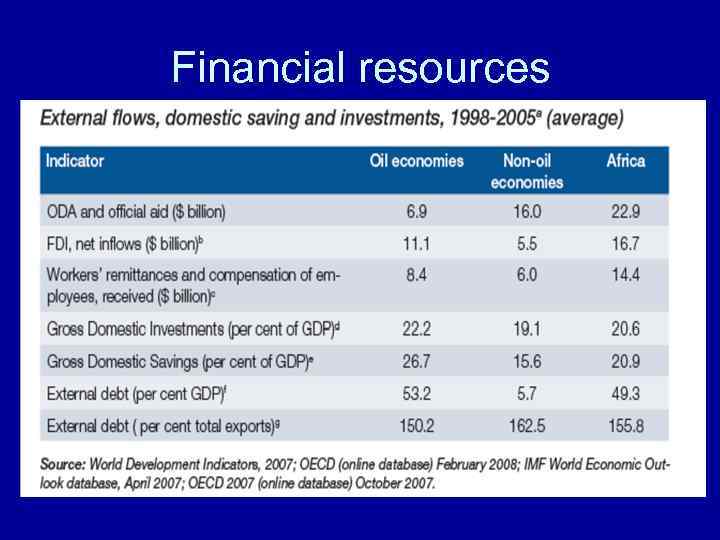
Financial resources
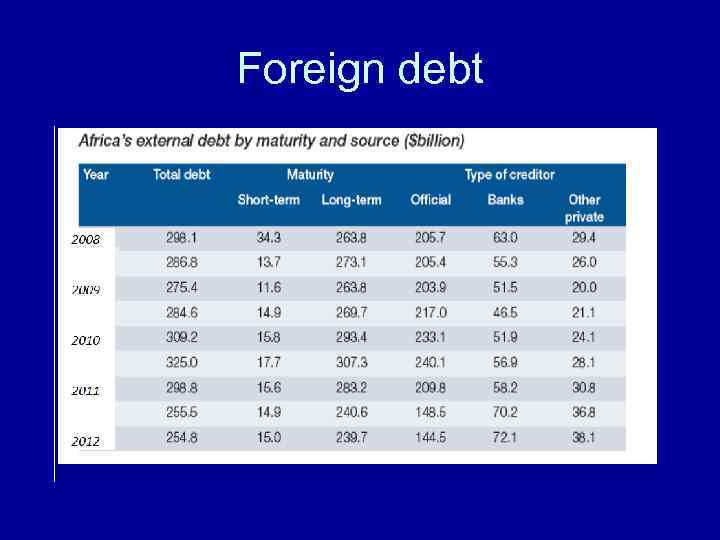
Foreign debt
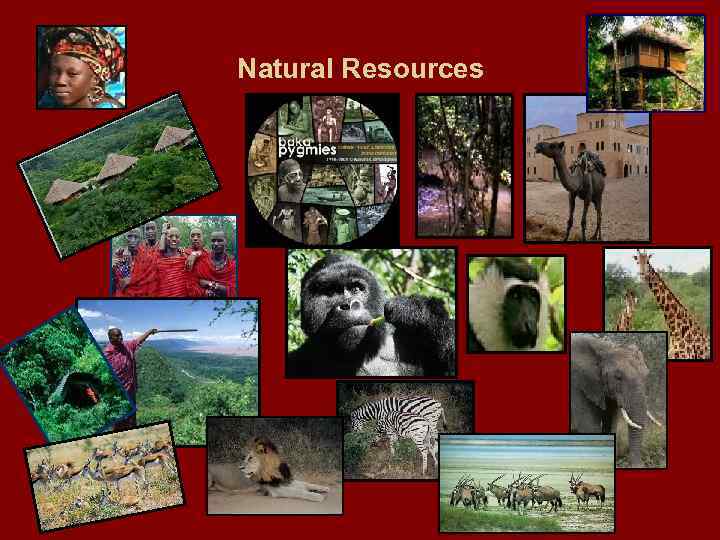
Natural Resources
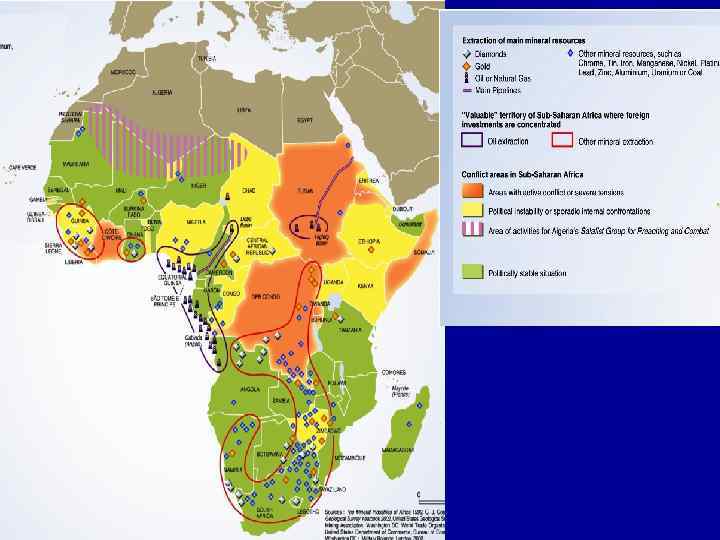
Plant Resources • A variety of the forest cover at least 1/10 of the area of the continent A lot of valuable species including mahogany, and a number of unique for its fruits and resins of trees and shrubs Savannah and subtropical Steppes - beautiful pasture Issues: In some areas, the demographic pressure on the land vegetation grows There is a process of desertification, reducing pasture and other agricultural land Fallow-and-burn agricultural practices in a number of areas in the savanna areas due to the growth of the population (and the reduction of the period of rest fields) contributes to the process of desertification Urbanization and industrial and biological pollution damages the land fund
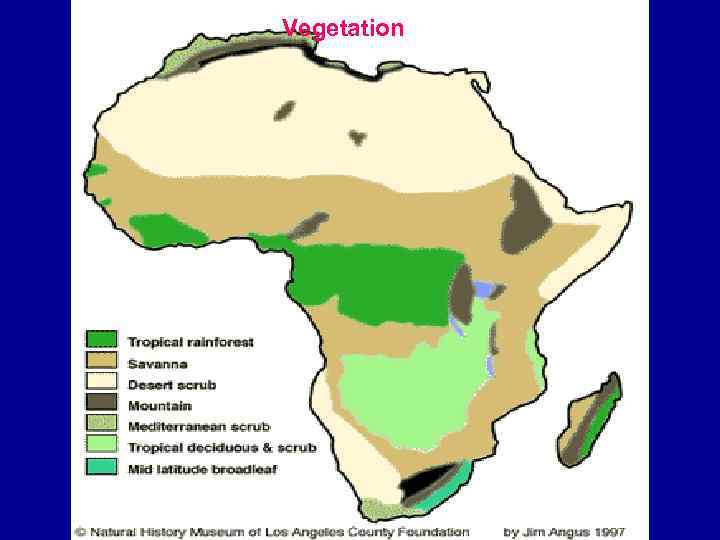
Vegetation
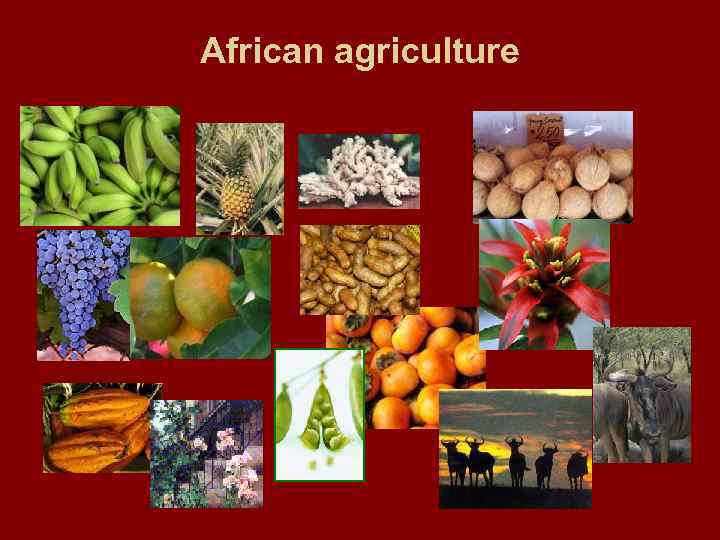
African agriculture
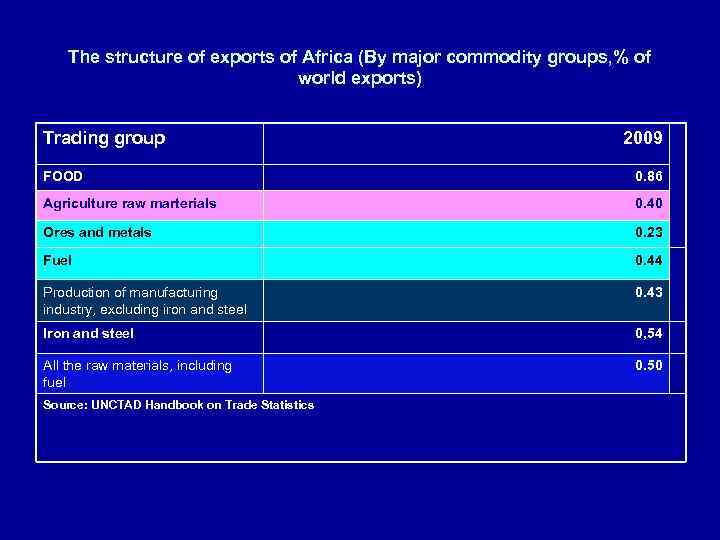
The structure of exports of Africa (By major commodity groups, % of world exports) Тrading group 2009 FOOD 0. 86 Agriculture raw marterials 0. 40 Ores and metals 0. 23 Fuel 0. 44 Production of manufacturing industry, excluding iron and steel 0. 43 Iron and steel 0, 54 All the raw materials, including fuel 0. 50 Source: UNCTAD Handbook on Trade Statistics
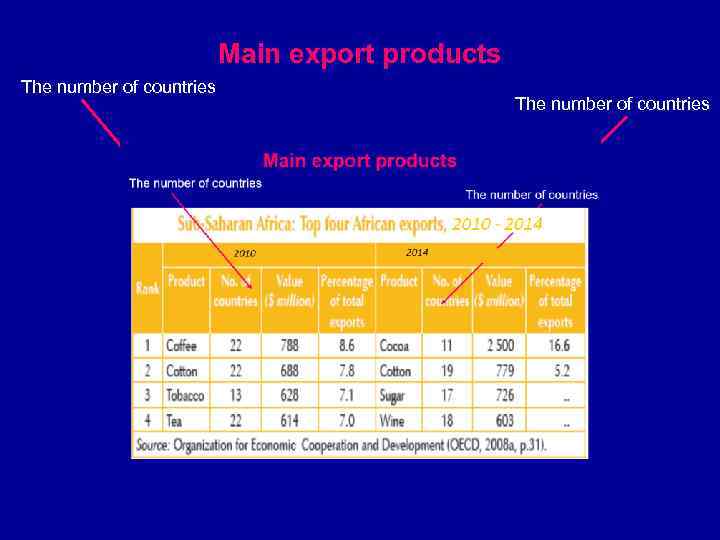
Main export products The number of countries
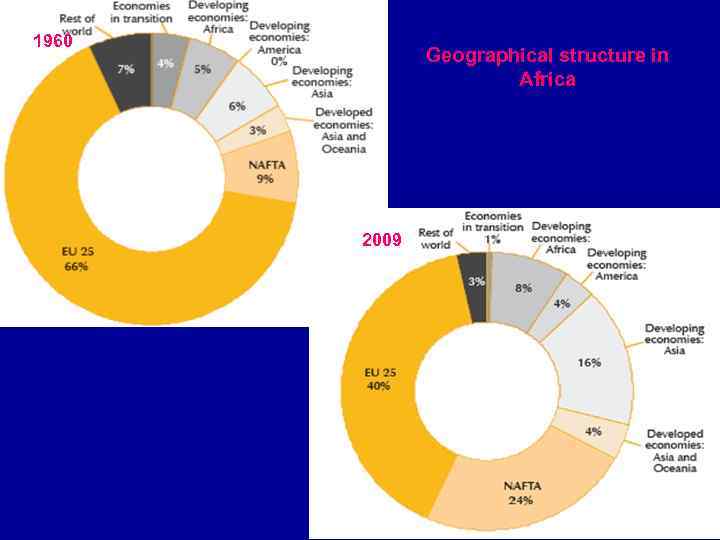
1960 Geographical structure in Africa 2009
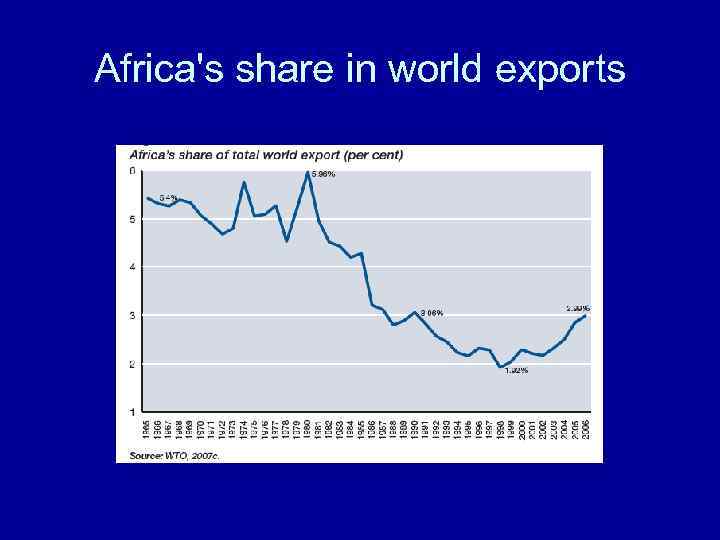
Africa's share in world exports
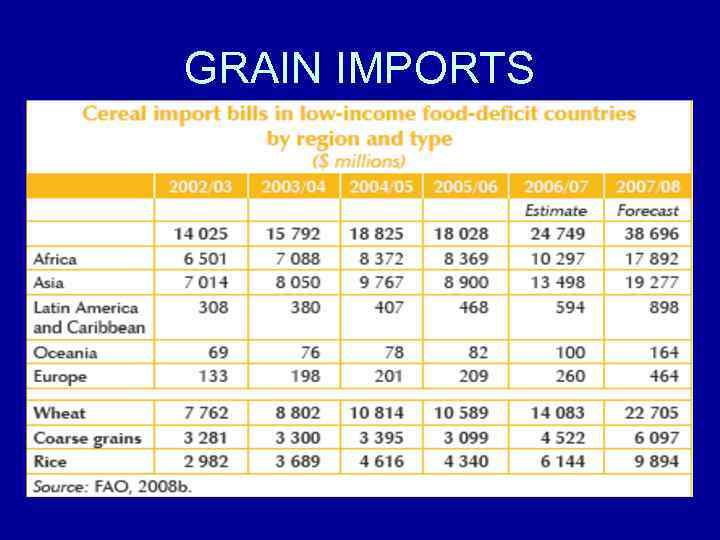
GRAIN IMPORTS
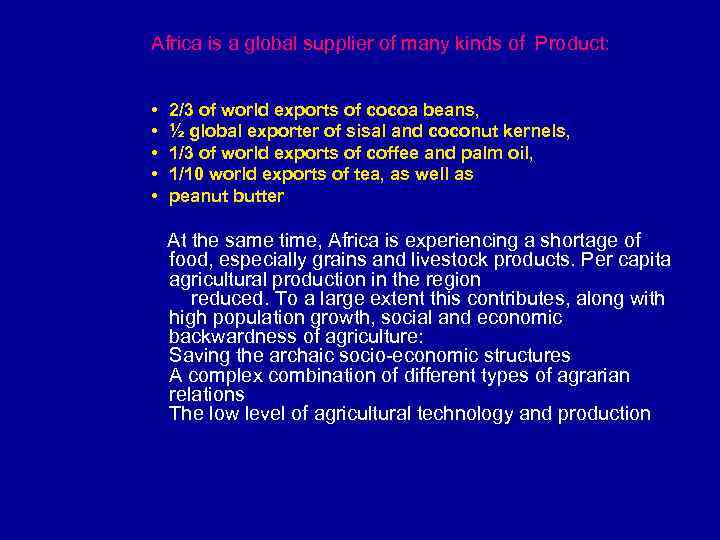
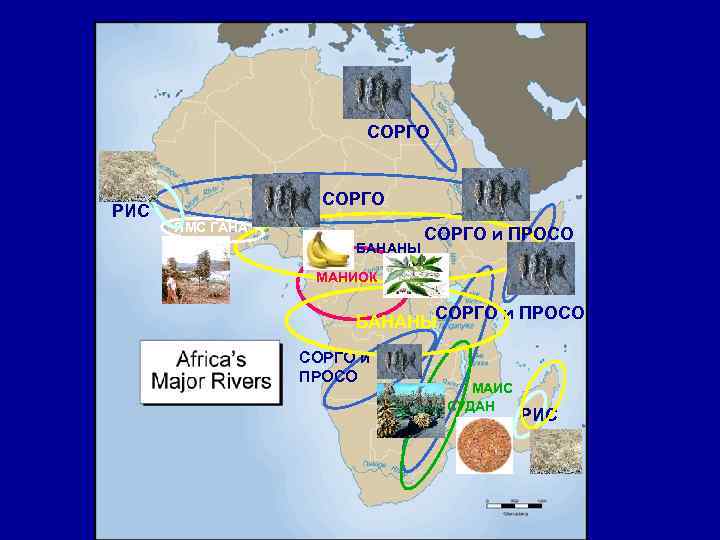
Africa is a global supplier of many kinds of Product: • • • 2/3 of world exports of cocoa beans, ½ global exporter of sisal and coconut kernels, 1/3 of world exports of coffee and palm oil, 1/10 world exports of tea, as well as peanut butter At the same time, Africa is experiencing a shortage of food, especially grains and livestock products. Per capita agricultural production in the region reduced. To a large extent this contributes, along with high population growth, social and economic backwardness of agriculture: Saving the archaic socio-economic structures A complex combination of different types of agrarian relations The low level of agricultural technology and production
СОРГО РИС СОРГО ЯМС ГАНА БАНАНЫ СОРГО и ПРОСО МАНИОК БАНАНЫСОРГО и ПРОСО МАИС СУДАН РИС
Transport and communication infrastructure
industry
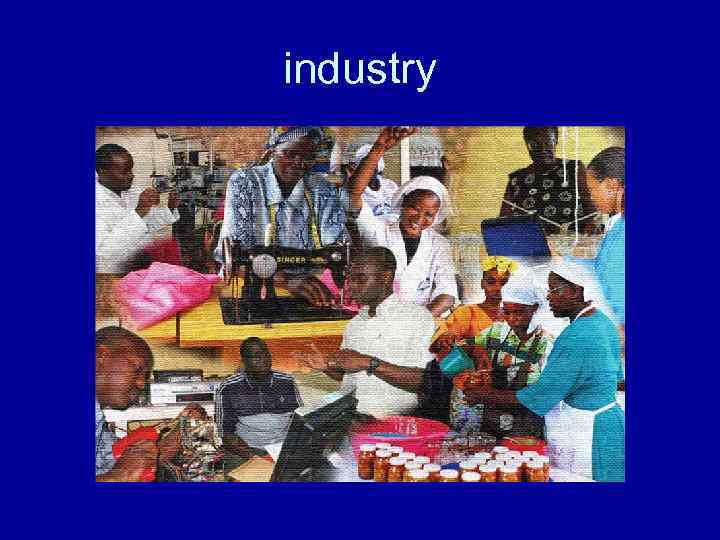
The most important industries of Africa The development of industrial production of African countries have the following factors: - Colonial policy and metropolitan areas, which was formed as a result of colonial exploitation, the specific role of Africa as a source of mineral and agricultural raw materials in international division of labor - The dependence of African economies on external funding Underdevelopment and poverty of the population (small market and resource base) The deficit of professionals and business resources. As a result, the main areas of industrial production in Africa is largely a product inverse vertical linkages with the production of the former metropolises, rather than local production.
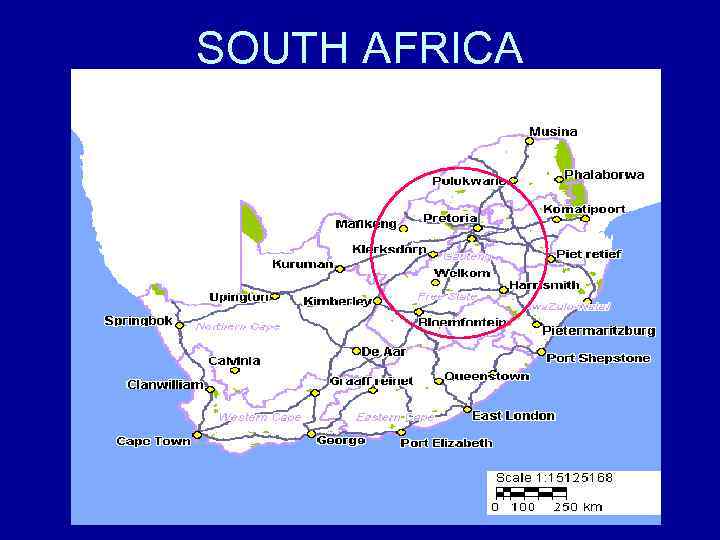
SOUTH AFRICA
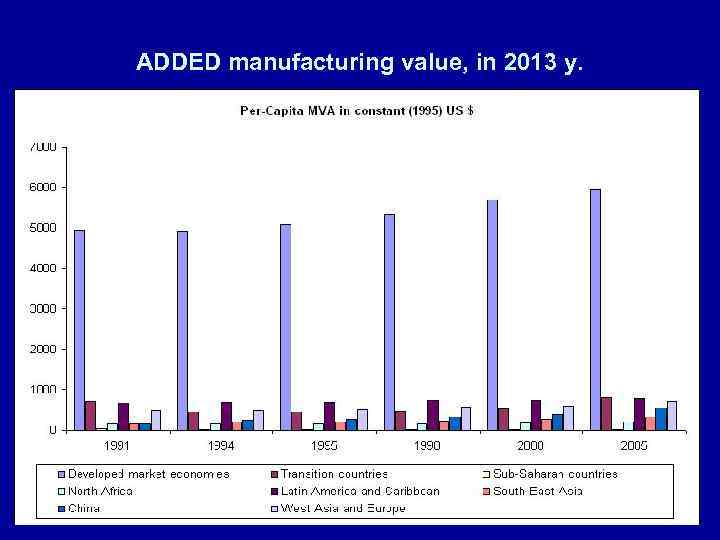
ADDED manufacturing value, in 2013 y.
Скачать презентацию AFRICA Done by Begalieva A Shansharbek A Stamzhan
исправленый от алиша.ppt