 Скачать презентацию Afi Lab The Tool for Ketosis OABP Meeting
359be5defd576566212957d41b357005.ppt
- Количество слайдов: 40



Afi. Lab The Tool for Ketosis OABP Meeting – November 14, 2012 Jeff Durkin, DVM Application Specialist afimilk USA jeff@afimilk. com 360 610 1554
Ketosis and Negative Energy Balance • Very common in high producing herds • High losses • Sub clinical ketosis (SCK) >>> Clinical ketosis (CK)
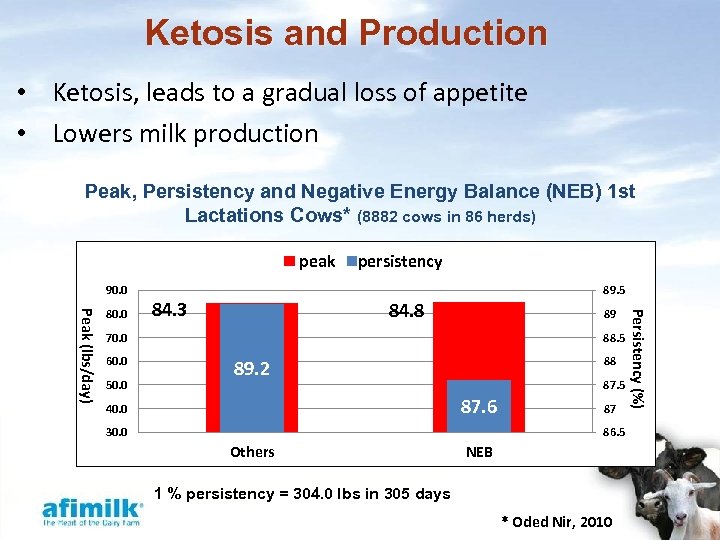
Ketosis and Production • Ketosis, leads to a gradual loss of appetite • Lowers milk production Peak, Persistency and Negative Energy Balance (NEB) 1 st Lactations Cows* (8882 cows in 86 herds) peak 90. 0 89. 5 84. 3 84. 8 89 70. 0 60. 0 50. 0 88. 5 88 89. 2 87. 5 87. 6 40. 0 30. 0 87 86. 5 Others NEB 1 % persistency = 304. 0 lbs in 305 days * Oded Nir, 2010 Persistency (%) Peak (lbs/day) 80. 0 persistency
Sub-Clinical Ketosis (SCK) - Losses • 100 herds average of 840 cows (range 265 -2770) • 2785 cows tested • Cows with Sub-clinical ketosis: o Reduction of 14%-18% of conception rate o Less 453 kg/lactation (305 days) o Increase culling rate Nydam, 2011
Sub-Clinical Ketosis - Treatment • 4 herds - 1717 cow tested o Sub clinical ketosis definition BHBA=1. 2 -2 mmole/L o 43% of the cows with SCK (range 26. 4 -55. 7%) o Propylene Glycol treatment – shorten time for recovery, decrease clinical ketosis and DA events, improve milk production and fertility Nydam, 2011
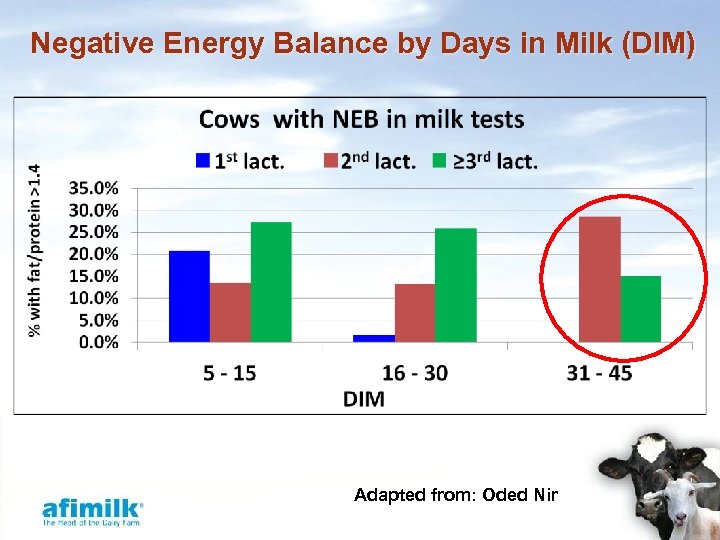
Negative Energy Balance by Days in Milk (DIM) Adapted from: Oded Nir
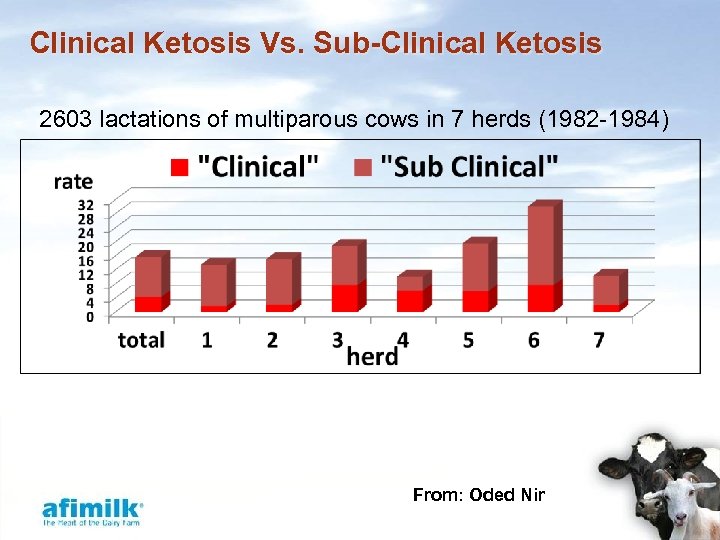
Clinical Ketosis Vs. Sub-Clinical Ketosis 2603 lactations of multiparous cows in 7 herds (1982 -1984) From: Oded Nir
Questions That Every Herdsman Must Ask • How do I find ketosis? • When do I check cows for ketosis? • What is the ketosis rate in my herd?
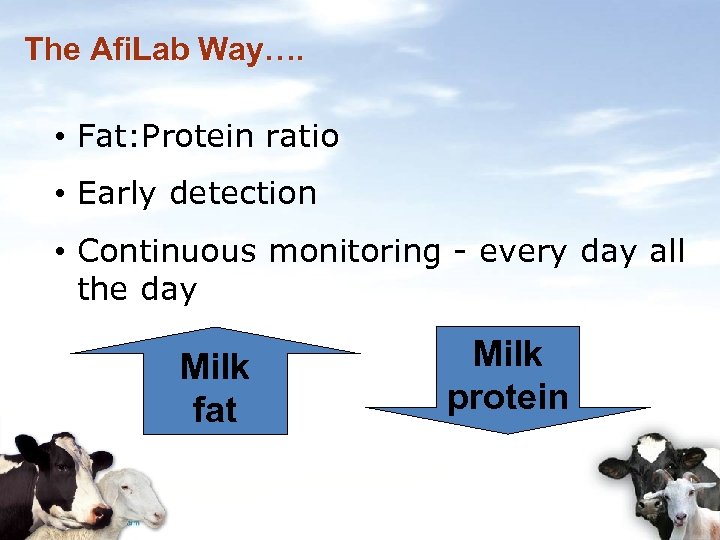
The Afi. Lab Way…. • Fat: Protein ratio • Early detection • Continuous monitoring - every day all the day Milk fat Milk protein
Fat: Protein Ratio • Correlation between metabolic diseases and milk components • Ketosis (NEB) – Fat/Protein Ratio (FPR)> 1. 351. 50 (Heuer et. al. , 1999)
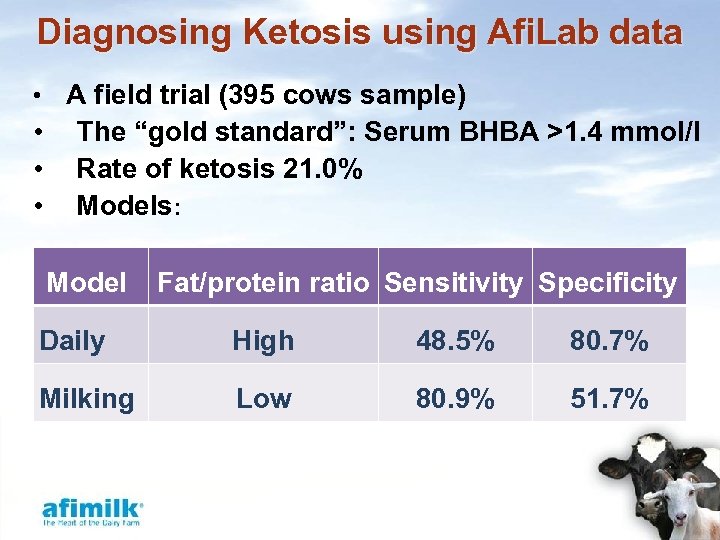
Diagnosing Ketosis using Afi. Lab data • A field trial (395 cows sample) • The “gold standard”: Serum BHBA >1. 4 mmol/l • Rate of ketosis 21. 0% • Models: Model Fat/protein ratio Sensitivity Specificity Daily High 48. 5% 80. 7% Milking Low 80. 9% 51. 7%
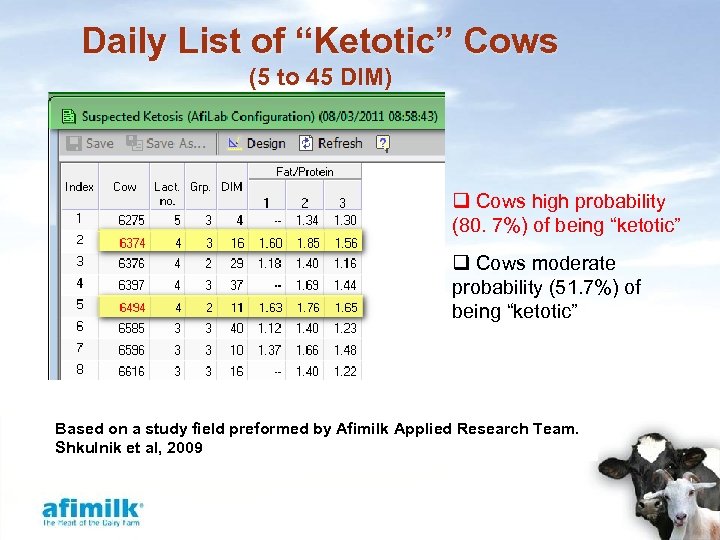
Daily List of “Ketotic” Cows (5 to 45 DIM) q Cows high probability (80. 7%) of being “ketotic” q Cows moderate probability (51. 7%) of being “ketotic” Based on a study field preformed by Afimilk Applied Research Team. Shkulnik et al, 2009
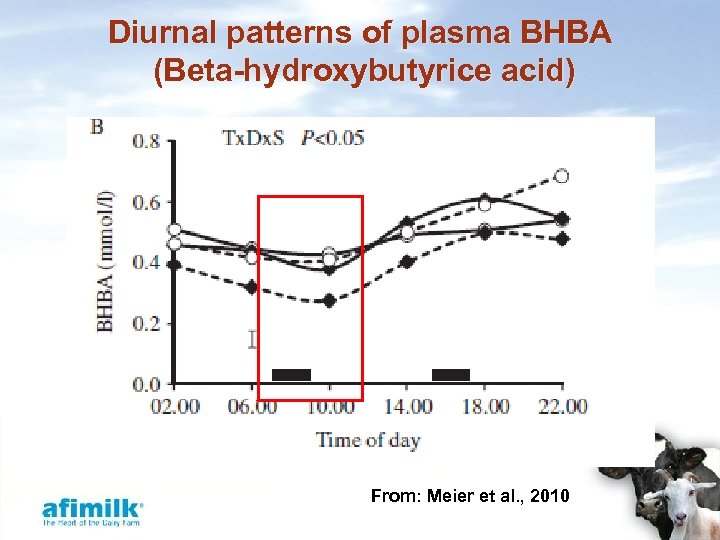
Diurnal patterns of plasma BHBA (Beta-hydroxybutyrice acid) From: Meier et al. , 2010
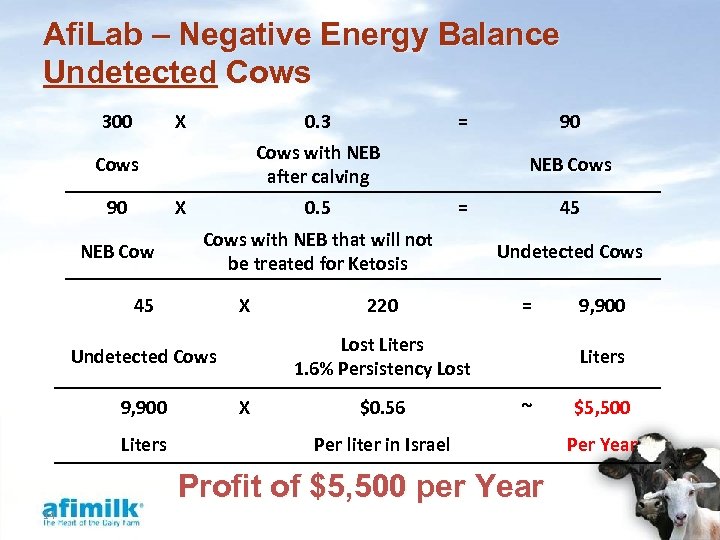
Afi. Lab – Negative Energy Balance Undetected Cows 300 X 0. 3 Cows with NEB after calving Cows 90 X NEB Cow 0. 5 X = 220 45 Undetected Cows = Lost Liters 1. 6% Persistency Lost Undetected Cows Liters 90 NEB Cows with NEB that will not be treated for Ketosis 45 9, 900 = X $0. 56 Liters ~ Per liter in Israel Profit of $5, 500 per Year 14 9, 900 $5, 500 Per Year
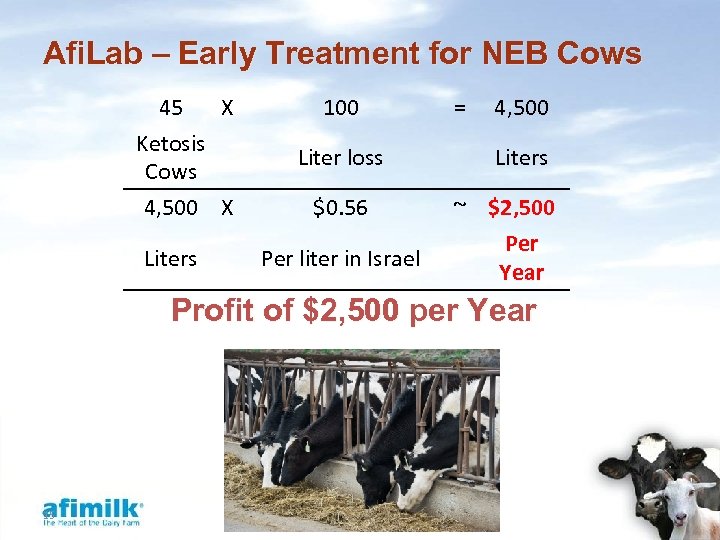
Afi. Lab – Early Treatment for NEB Cows 45 X Ketosis Cows 4, 500 X Liters 100 Liter loss $0. 56 Per liter in Israel = 4, 500 Liters ~ $2, 500 Per Year Profit of $2, 500 per Year 15
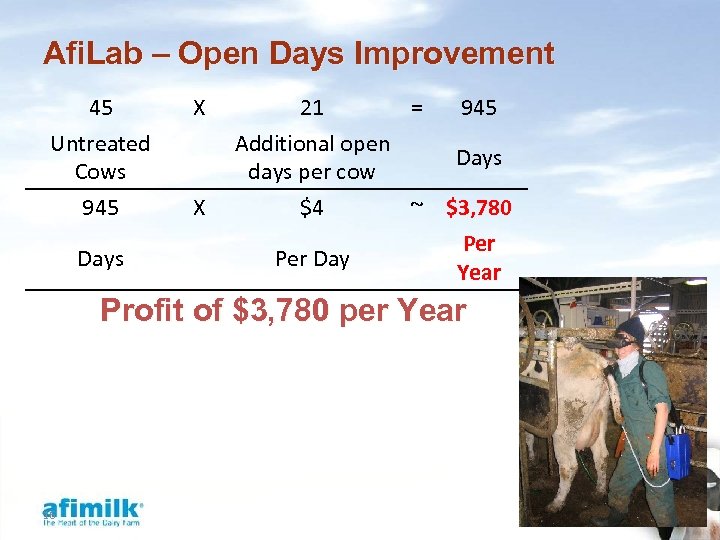
Afi. Lab – Open Days Improvement 45 Untreated Cows 945 Days X X 21 = 945 Additional open Days days per cow $4 ~ $3, 780 Per Day Year Profit of $3, 780 per Year 16
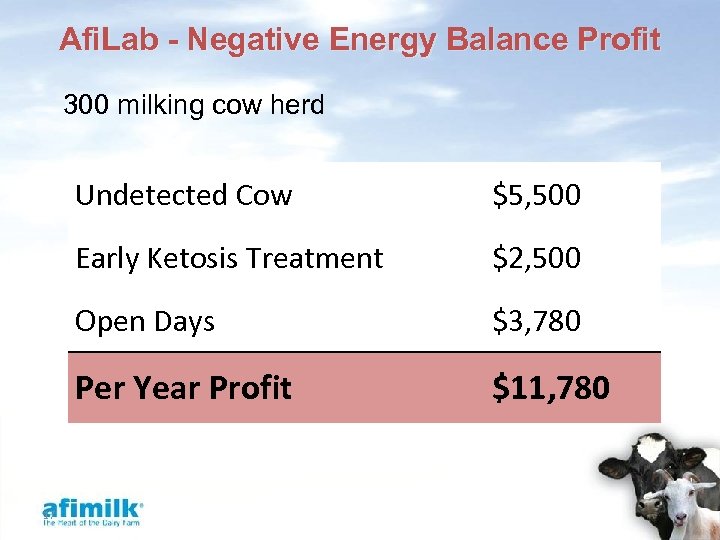
Afi. Lab - Negative Energy Balance Profit 300 milking cow herd Undetected Cow Early Ketosis Treatment $2, 500 Open Days $3, 780 Per Year Profit 17 $5, 500 $11, 780

Afilab The Tool for Ketosis • Ketosis – high impact on dairy cows production and fertility • Fat: Protein ratio indication for ketosis • AFi. Lab – continuous monitoring • Expected benefit - 40$/cow/year
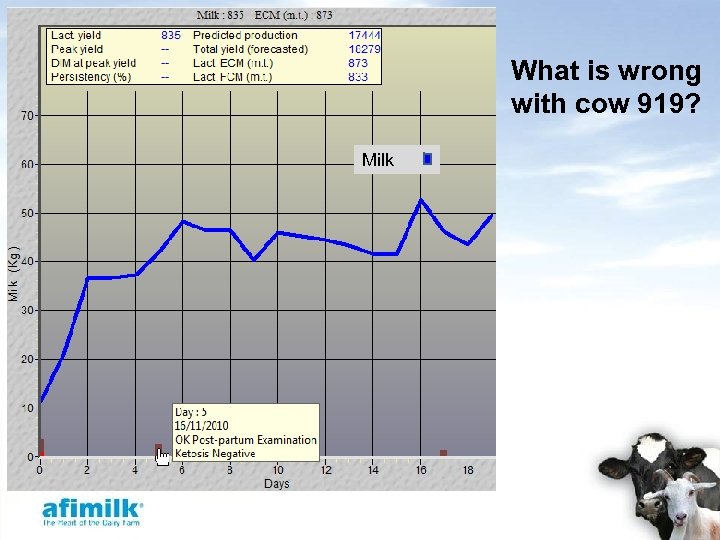
What is wrong with cow 919? Milk
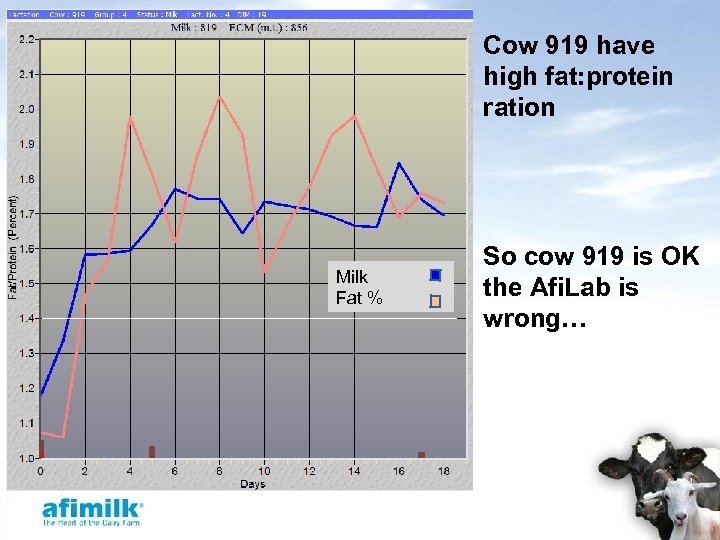
Cow 919 have high fat: protein ration Milk Fat % So cow 919 is OK the Afi. Lab is wrong…
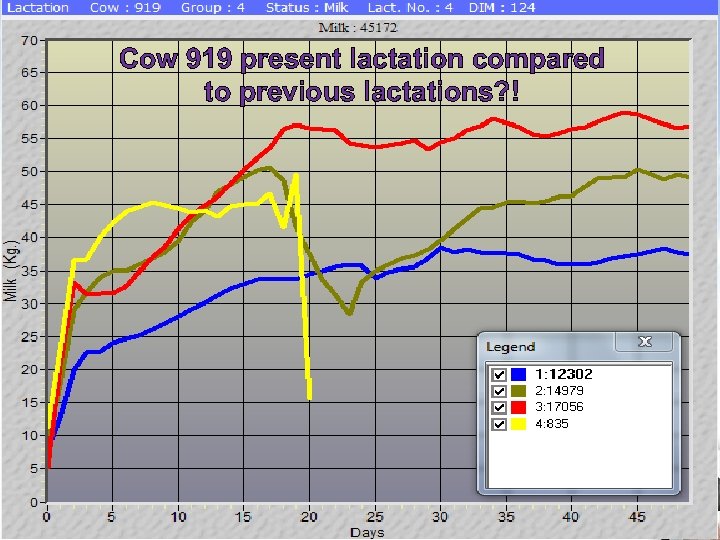
Cow 919 present lactation compared to previous lactations? !
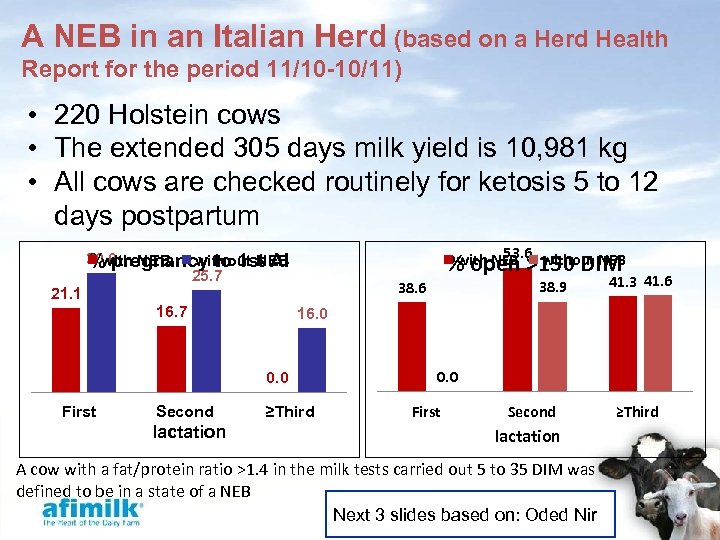
A NEB in an Italian Herd (based on a Herd Health Report for the period 11/10 -10/11) • 220 Holstein cows • The extended 305 days milk yield is 10, 981 kg • All cows are checked routinely for ketosis 5 to 12 days postpartum 53. 6 with NEB without NEB % open >150 DIM 30. 0 with NEB without NEB % pregnancy to 1 st AI 25. 7 21. 1 16. 7 Second lactation 41. 3 41. 6 16. 0 0. 0 First 38. 9 38. 6 ≥Third 0. 0 First Second lactation A cow with a fat/protein ratio >1. 4 in the milk tests carried out 5 to 35 DIM was defined to be in a state of a NEB Next 3 slides based on: Oded Nir ≥Third
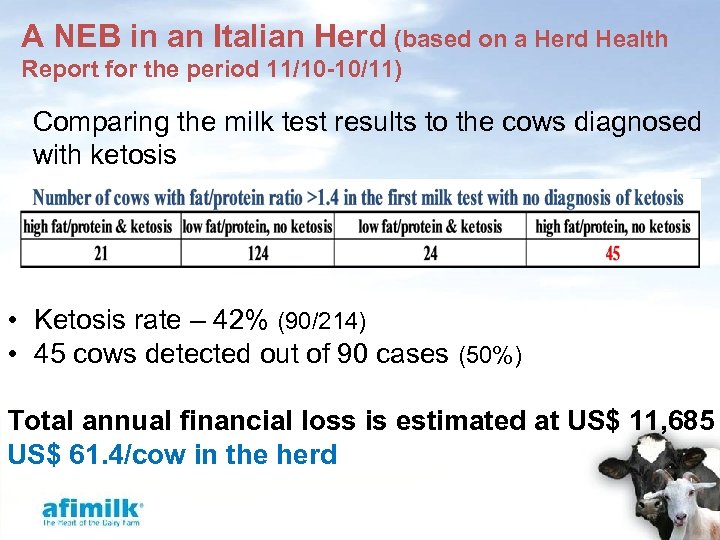
A NEB in an Italian Herd (based on a Herd Health Report for the period 11/10 -10/11) Comparing the milk test results to the cows diagnosed with ketosis • Ketosis rate – 42% (90/214) • 45 cows detected out of 90 cases (50%) Total annual financial loss is estimated at US$ 11, 685 US$ 61. 4/cow in the herd
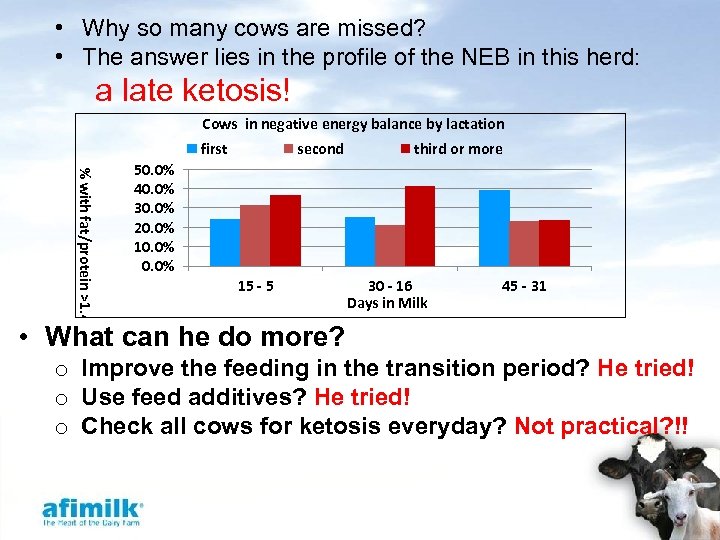
• Why so many cows are missed? • The answer lies in the profile of the NEB in this herd: a late ketosis! Cows in negative energy balance by lactation first second third or more % with fat/protein >1. 4 50. 0% 40. 0% 30. 0% 20. 0% 10. 0% 15 - 5 30 - 16 Days in Milk 45 - 31 • What can he do more? o Improve the feeding in the transition period? He tried! o Use feed additives? He tried! o Check all cows for ketosis everyday? Not practical? !!
Afilab Now let’s talk about feeding ….
Thank you
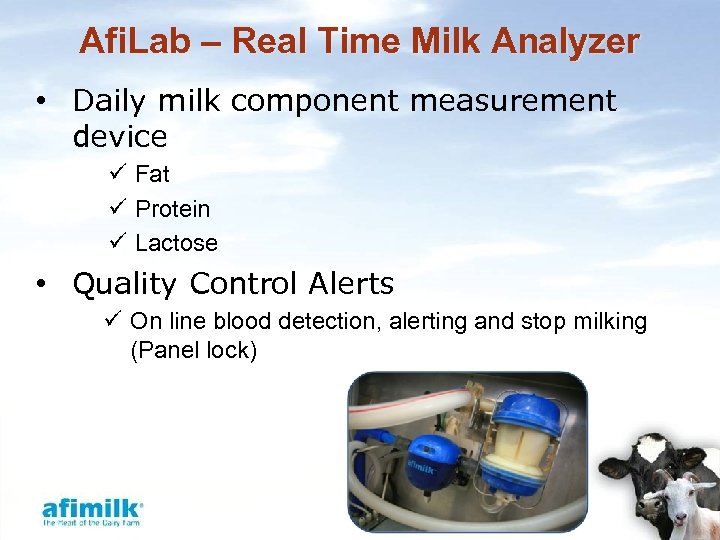
Afi. Lab – Real Time Milk Analyzer • Daily milk component measurement device ü Fat ü Protein ü Lactose • Quality Control Alerts ü On line blood detection, alerting and stop milking (Panel lock)
On Going Development SCC non labeled (clean) detection of four levels: I. Less than 200 K II. 200 -400 K III. 400 -800 K IV. More than 800
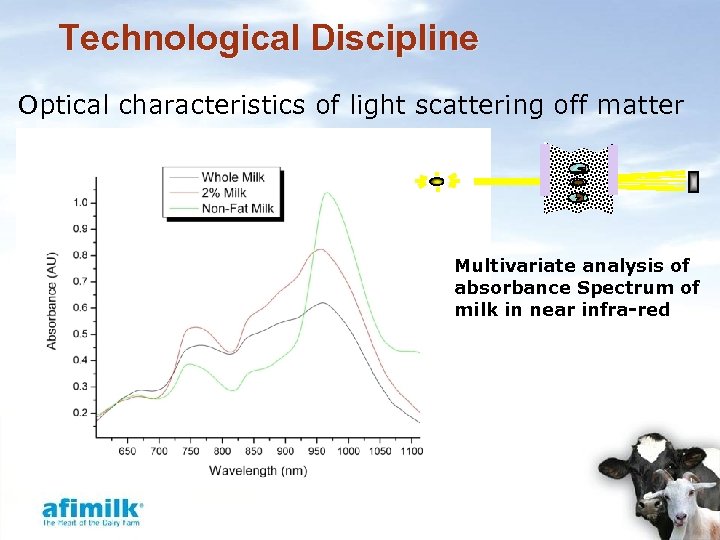
Technological Discipline Optical characteristics of light scattering off matter Multivariate analysis of absorbance Spectrum of milk in near infra-red
Afi. Lab Concept Automated coupling of the “lab” to each stall in real time • Free flow • Continuously measures milk components during milking • Provides daily milk analysis for animal health and performance • Easy maintenance • Part of the regular cleaning system in the milking parlor • Clean Measurement – No use of reagents needed • Affordable for every milking point
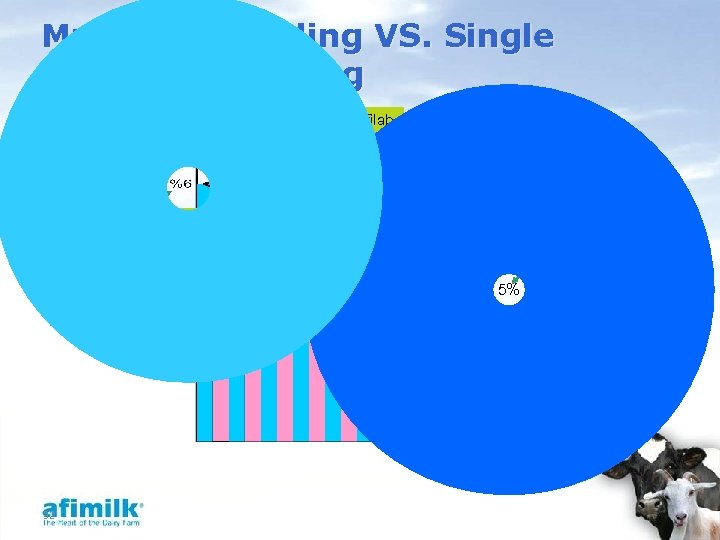
Multiple Sampling VS. Single Periodic Sampling Real Life Afilab Estimation… Periodic lab samplings 5% 32
Day-to-day Variation for Individual Cows • During a week’s time, is milk fat % for a given cow better determined using 14 measures (each milking) by Afi. Lab or 2 consecutive measures (1 day) by an Infra-red lab? o 30 Holstein Cows averaging 40. 7 kg/d of milk o Milk sampled for 14 consecutive milkings (7 days) o Milk composition analyzed by § AFI-lab § DHIA lab using Bentley NIR equipment (FL) o Milk sample collection began the day after recalibration of AFI University of Florida (Staples et al. , 2011)
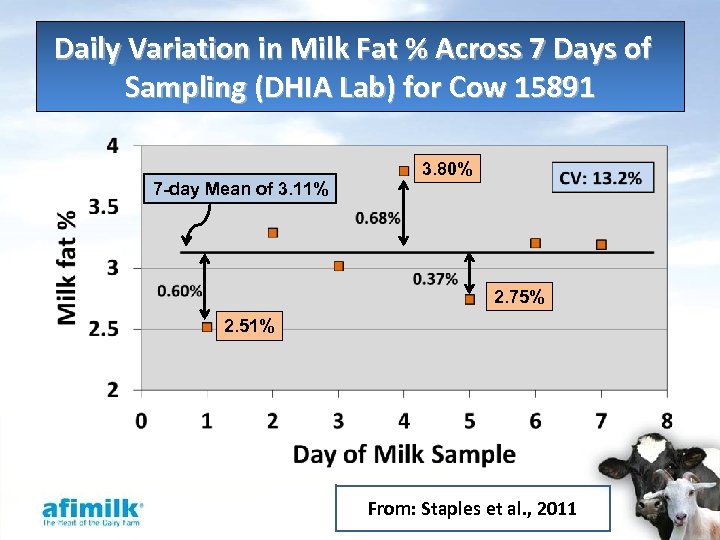
Daily Variation in Milk Fat % Across 7 Days of Sampling (DHIA Lab) for Cow 15891 7 -day Mean of 3. 11% 3. 80% 2. 75% 2. 51% From: Staples et al. , 2011
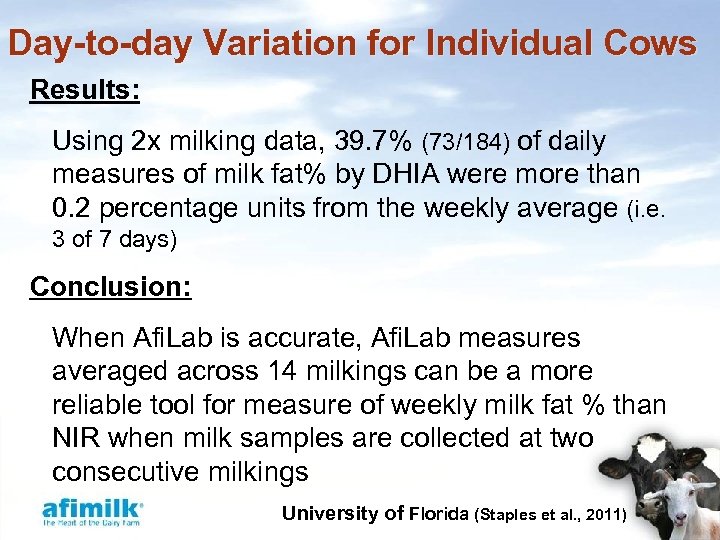
Day-to-day Variation for Individual Cows Results: Using 2 x milking data, 39. 7% (73/184) of daily measures of milk fat% by DHIA were more than 0. 2 percentage units from the weekly average (i. e. 3 of 7 days) Conclusion: When Afi. Lab is accurate, Afi. Lab measures averaged across 14 milkings can be a more reliable tool for measure of weekly milk fat % than NIR when milk samples are collected at two consecutive milkings University of Florida (Staples et al. , 2011)
Milk Quality
Mastitis Alert - Lactose • Sub-clinical mastitis detection and improve clinical mastitis detection § 15 -20% of milking cows are infected § Early treatment improve milk production • Concept: § Lactose sharply drops during clinical events § Some bacteria (sub-clinical) decrease lactose level
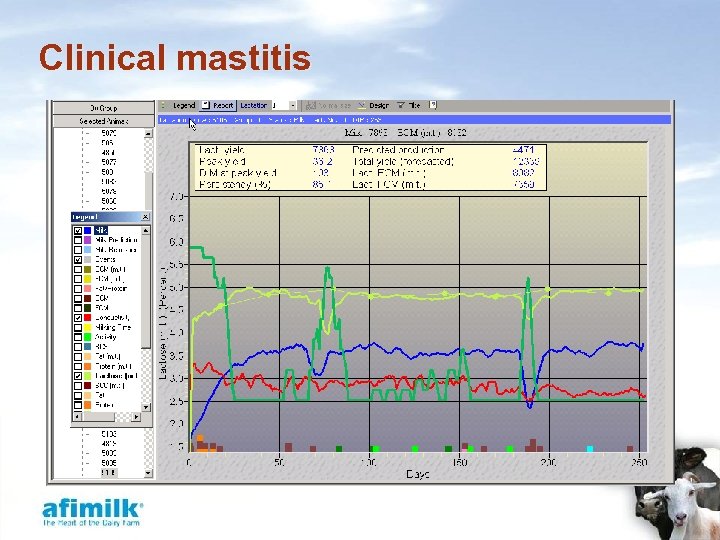
Clinical mastitis
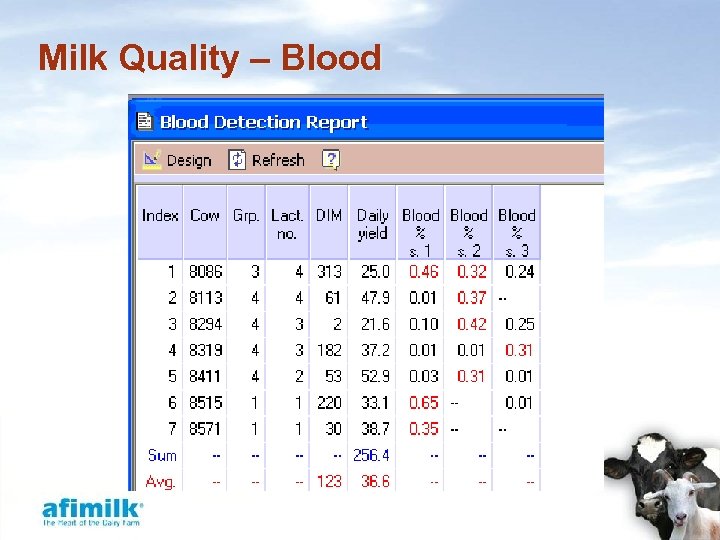
Milk Quality – Blood
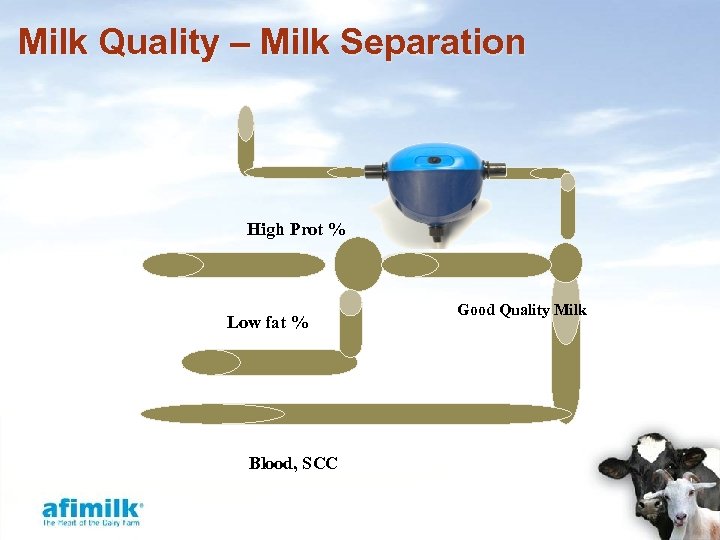
Milk Quality – Milk Separation High Prot % Low fat % Blood, SCC Good Quality Milk
Скачать презентацию Afi Lab The Tool for Ketosis OABP Meeting
359be5defd576566212957d41b357005.ppt