


 Скачать презентацию Advanced Scheduling and Optimization Cutting the Costs of
34bc8fa84c31ed31928d676e9254c621.ppt
- Количество слайдов: 54
 Advanced Scheduling and Optimization: Cutting the Costs of Manufacturing Brian Drabble Computational Intelligence Research Laboratory www. cirl. uoregon. edu drabble@cirl. uoregon. edu & On Time Systems, Inc www. otsys. com 26 th Nov 2001 Univ. Nebraska 1
 Overview • Constraint based scheduling • Algorithms – LDS and Schedule Pack – Squeaky Wheel Optimization • Applications – Aircraft assembly – Ship construction • Future Directions • Summary 26 th Nov 2001 Univ. Nebraska 2
 Constraint Based Scheduling • Problem characteristics • Search based techniques 26 th Nov 2001 Univ. Nebraska 3
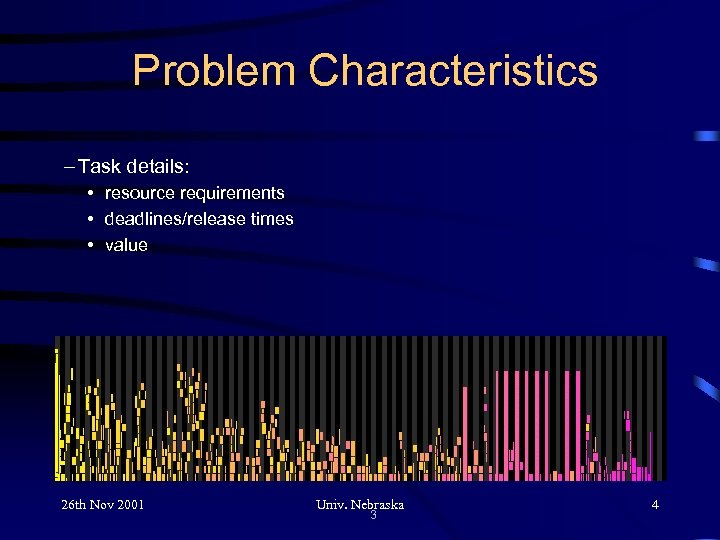 Problem Characteristics – Task details: • resource requirements • deadlines/release times • value 26 th Nov 2001 Univ. Nebraska 3 4
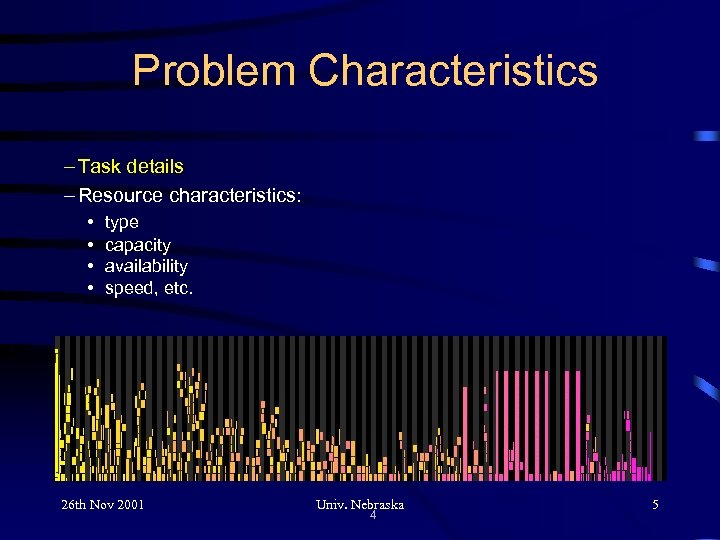 Problem Characteristics – Task details – Resource characteristics: • • type capacity availability speed, etc. 26 th Nov 2001 Univ. Nebraska 4 5
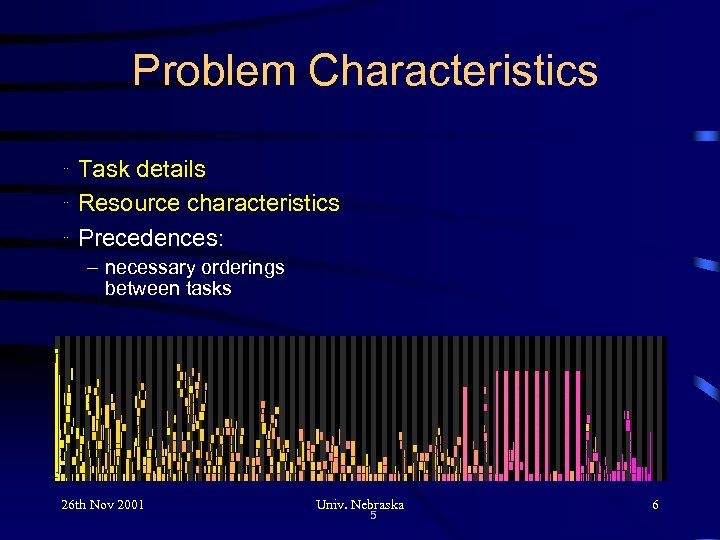 Problem Characteristics ¨ ¨ ¨ Task details Resource characteristics Precedences: – necessary orderings between tasks 26 th Nov 2001 Univ. Nebraska 5 6
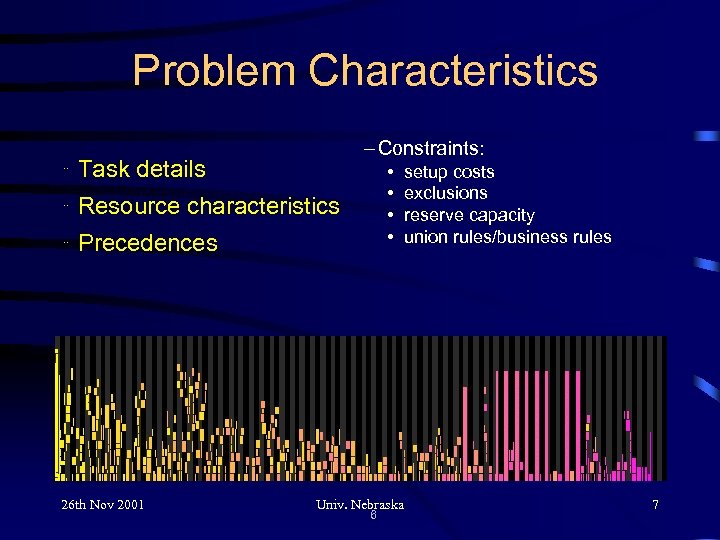 Problem Characteristics – Constraints: ¨ Task details ¨ Resource characteristics ¨ Precedences 26 th Nov 2001 • • Univ. Nebraska 6 setup costs exclusions reserve capacity union rules/business rules 7
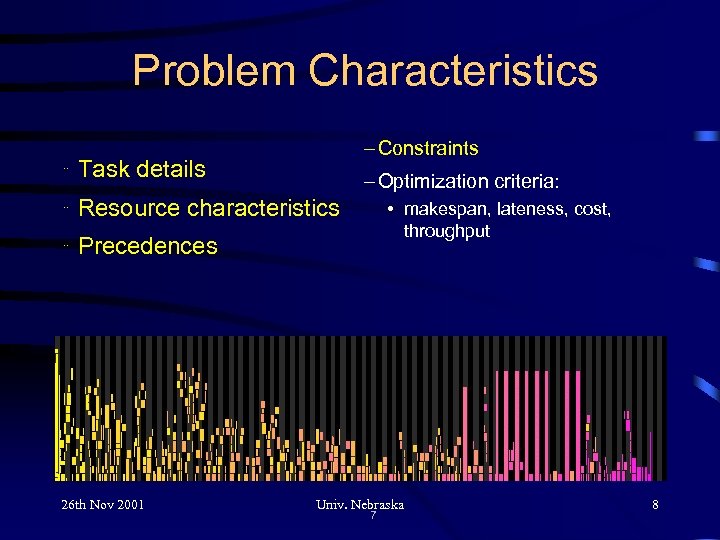 Problem Characteristics – Constraints ¨ Task details ¨ Resource characteristics ¨ Precedences 26 th Nov 2001 – Optimization criteria: • makespan, lateness, cost, throughput Univ. Nebraska 7 8
 Optimization Techniques • Operations Research (OR) – LP/IP solvers • seem to be near the limits of their potential • Artificial Intelligence (AI) – search-based solvers • performance increasing dramatically • surpassing OR techniques for many problems 26 th Nov 2001 Univ. Nebraska 8 9
 Search-based Techniques • Systematic – explore all possibilities • Depth-First Search • Limited Discrepancy Search • Nonsystematic – explore only “promising” possibilities • Walk. SAT • Schedule Packing 26 th Nov 2001 Univ. Nebraska 9 10
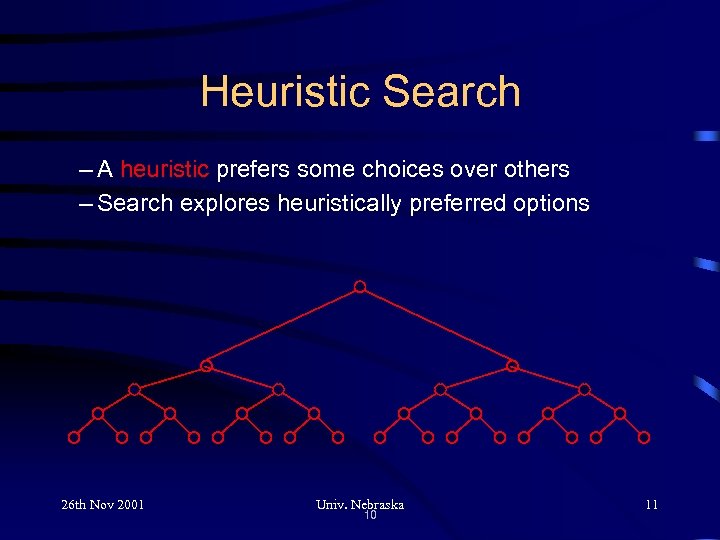 Heuristic Search – A heuristic prefers some choices over others – Search explores heuristically preferred options 26 th Nov 2001 Univ. Nebraska 10 11
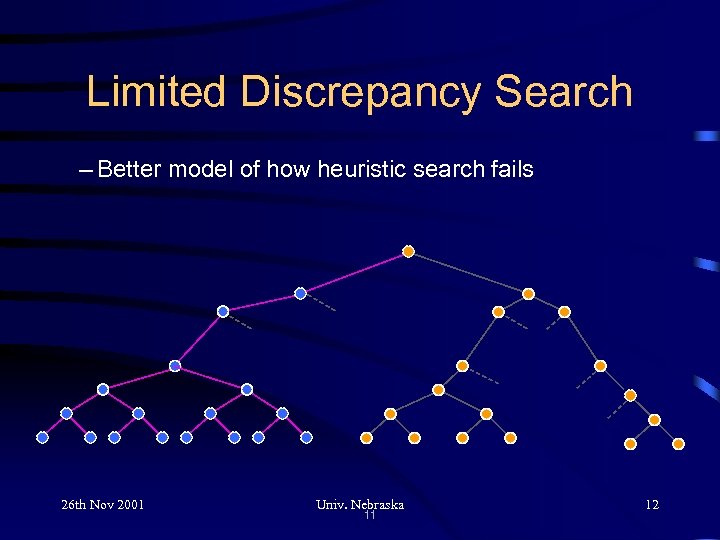 Limited Discrepancy Search – Better model of how heuristic search fails 26 th Nov 2001 Univ. Nebraska 11 12
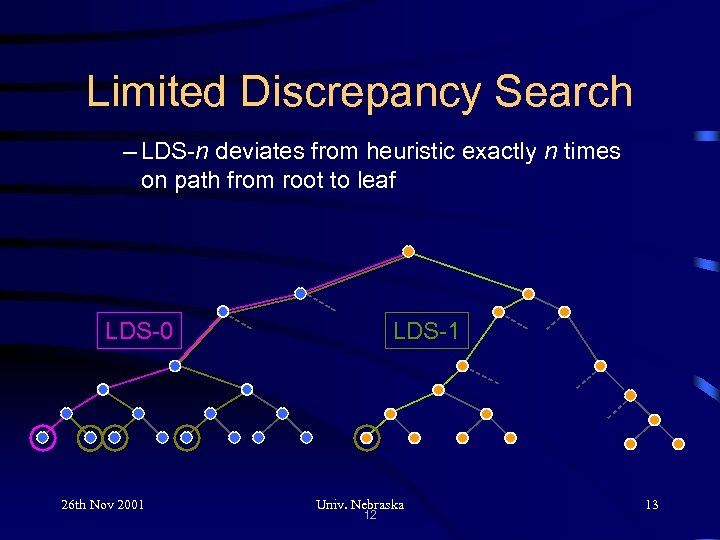 Limited Discrepancy Search – LDS-n deviates from heuristic exactly n times on path from root to leaf LDS-0 26 th Nov 2001 LDS-1 Univ. Nebraska 12 13
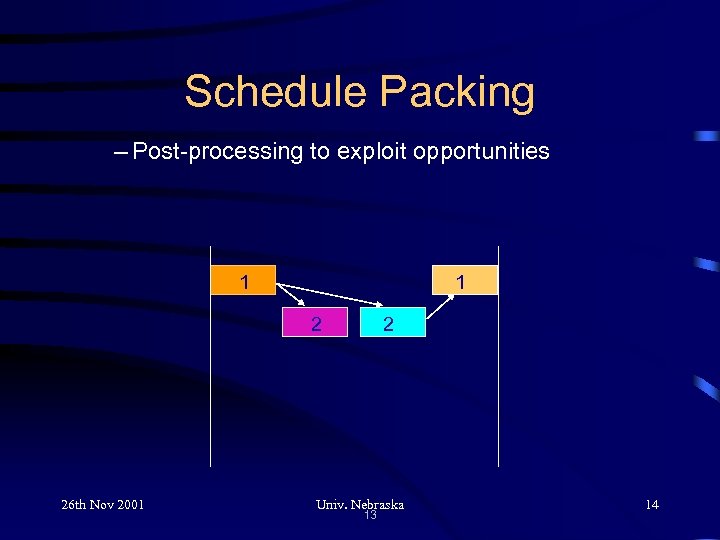 Schedule Packing – Post-processing to exploit opportunities 1 1 2 26 th Nov 2001 2 Univ. Nebraska 13 14
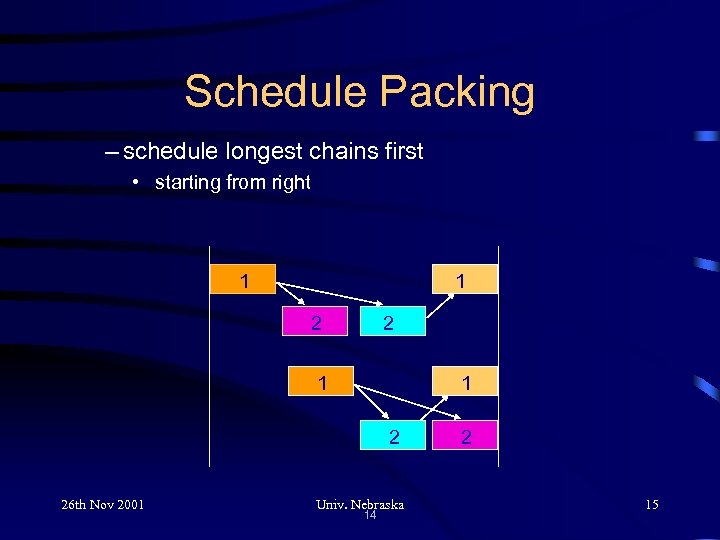 Schedule Packing – schedule longest chains first • starting from right 1 1 2 26 th Nov 2001 Univ. Nebraska 14 2 15
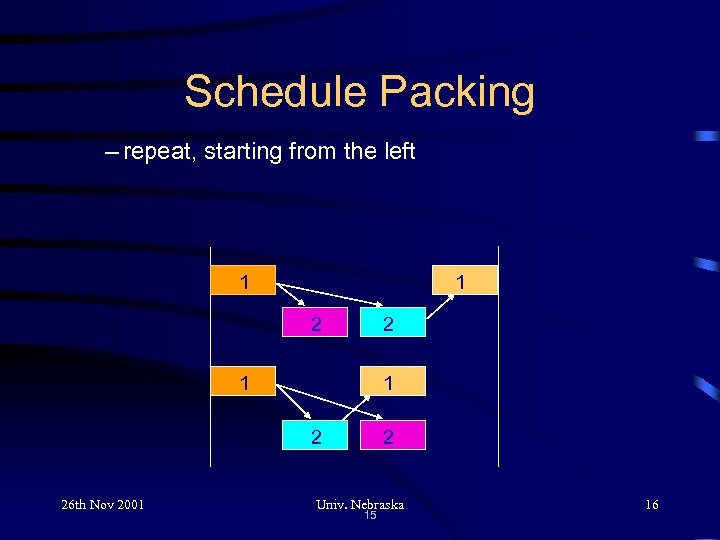 Schedule Packing – repeat, starting from the left 1 1 2 26 th Nov 2001 2 Univ. Nebraska 15 16
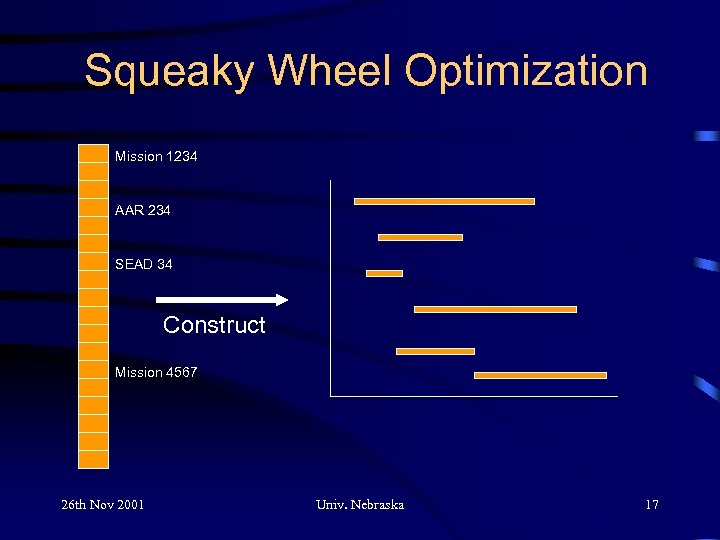 Squeaky Wheel Optimization Mission 1234 AAR 234 SEAD 34 Construct Mission 4567 26 th Nov 2001 Univ. Nebraska 17
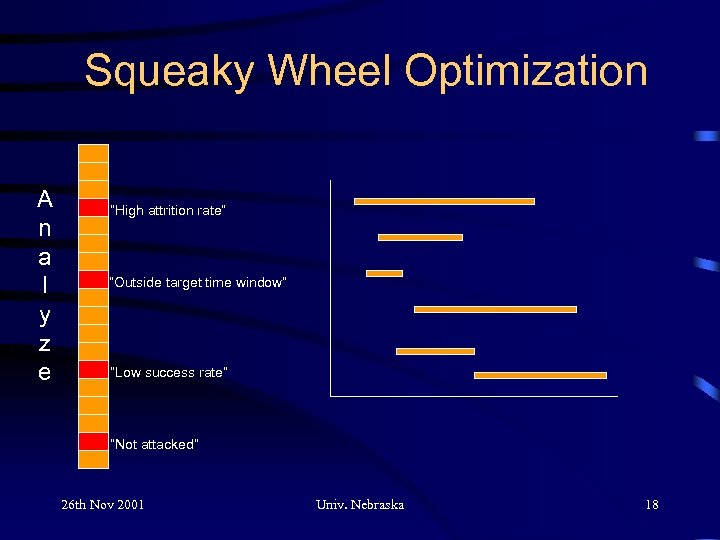 Squeaky Wheel Optimization A n a l y z e “High attrition rate” “Outside target time window” “Low success rate” “Not attacked” 26 th Nov 2001 Univ. Nebraska 18
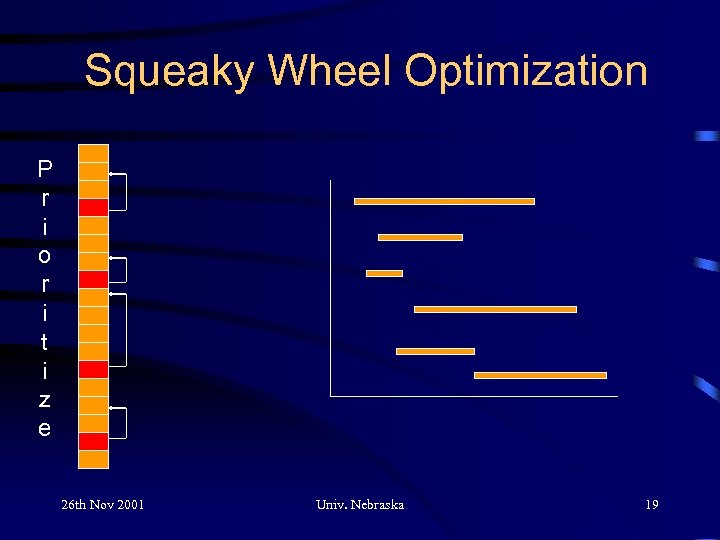 Squeaky Wheel Optimization P r i o r i t i z e 26 th Nov 2001 Univ. Nebraska 19
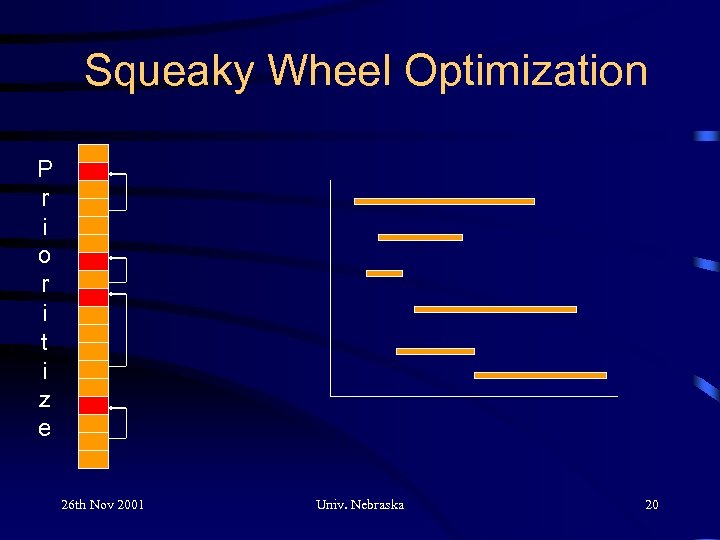 Squeaky Wheel Optimization P r i o r i t i z e 26 th Nov 2001 Univ. Nebraska 20
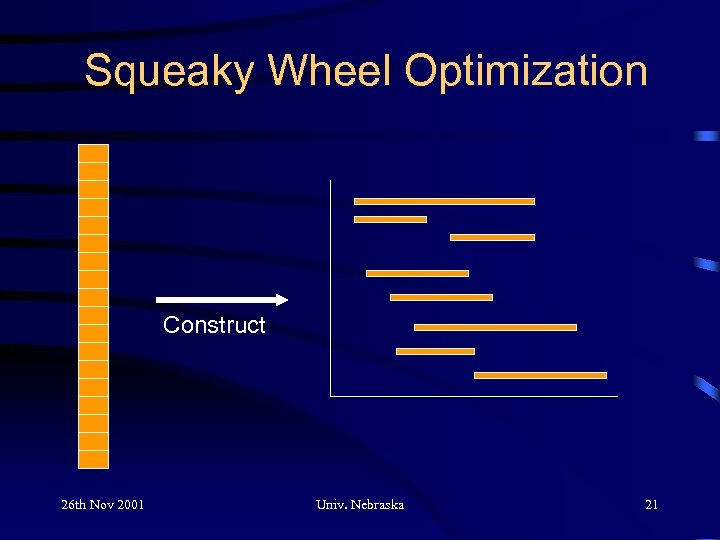 Squeaky Wheel Optimization Construct 26 th Nov 2001 Univ. Nebraska 21
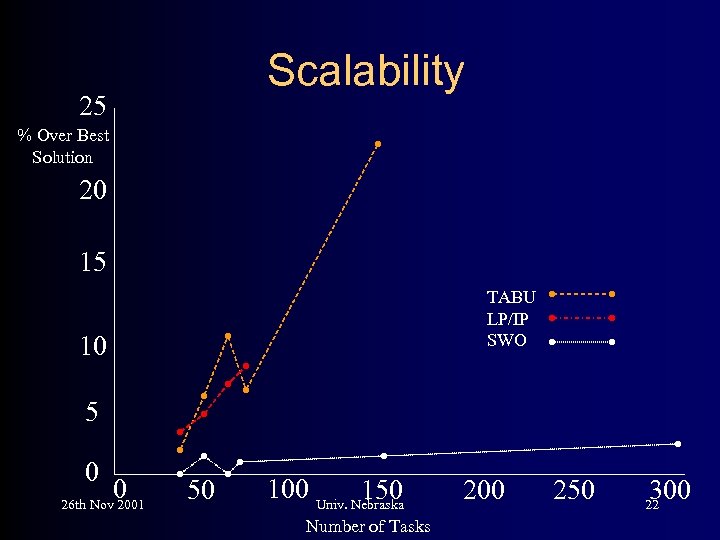 Scalability 25 % Over Best Solution 20 15 TABU LP/IP SWO 10 5 0 0 26 th Nov 2001 50 100 Univ. Nebraska 150 Number of Tasks 200 250 300 22
 Applications 26 th Nov 2001 Univ. Nebraska 16 23
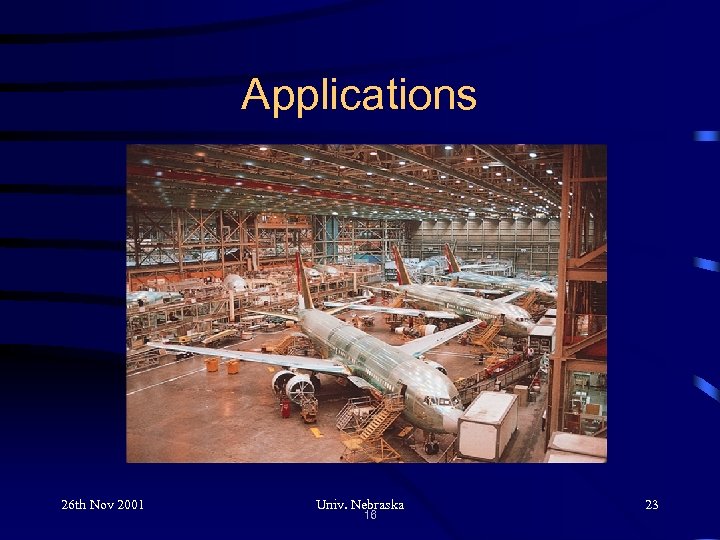
 Aircraft Assembly Mc. Donnell Douglas / Boeing – ~570 tasks, 17 resources, various capacities – MD’s scheduler took 2 days to schedule – needed: • better schedules (1 day worth $200 K–$1 M) • rescheduler that can get inside production cycles 26 th Nov 2001 Univ. Nebraska 17 24
 Problem Specification – Task/precedence specification • mostly already existed for regulatory reasons 26 th Nov 2001 Univ. Nebraska 18 25
 Problem Specification – Task/precedence specification • mostly already existed for regulatory reasons – Resource capacity profiles • labor profile available from staffing information • others determined from SOPs, etc. 26 th Nov 2001 Univ. Nebraska 19 26
 Problem Specification – Task/precedence specification • mostly already existed for regulatory reasons – Resource capacity profiles • labor profile available from staffing information • others determined from SOPs, etc. – Optimization criterion • simple makespan minimization 26 th Nov 2001 Univ. Nebraska 20 27
 Problem Specification – Task/precedence specification • mostly already existed for regulatory reasons – Resource capacity profiles • labor profile available from staffing information • others determined from SOPs, etc. – Optimization criterion • simple makespan minimization – Solution checker • available from in-house scheduling efforts 26 th Nov 2001 Univ. Nebraska 21 28
 The Optimizer • LDS to generate seed schedules • Schedule packing to optimize – intensification improves convergence speed • etc. 26 th Nov 2001 Univ. Nebraska 22 29
 Performance – ~570 tasks, 17 resources, various capacities • about 1 second to first solution • about 1 minute to within 2% of best known • about 30 minutes to best schedule known 26 th Nov 2001 Univ. Nebraska 23 30
 Performance – ~570 tasks, 17 resources, various capacities • about 1 second to first solution • about 1 minute to within 2% of best known • about 30 minutes to best schedule known – 10 -15% shorter makespan than best in-house • 4 to 6 days shorter schedules 26 th Nov 2001 Univ. Nebraska 24 31
 Performance – ~570 tasks, 17 resources, various capacities • about 1 second to first solution • about 1 minute to within 2% of best known • about 30 minutes to best schedule known – 10 -15% shorter makespan than best in-house • 4 to 6 days shorter schedules – 2 orders of magnitude faster scheduling • scheduler runs inside production cycle • less need for rescheduler 26 th Nov 2001 Univ. Nebraska 25 32
 Extensions Boeing: – – multi-unit assembly interruptible tasks persistent assignments multiple objectives • e. g. , time to first completion, average makespan, time to completion • fast enough to use for “what-iffing” – discovered improved PM schedule 26 th Nov 2001 Univ. Nebraska 26 33
 Submarine Construction General Dynamics / Electric Boat – 7000 activities per hull, approx 125 resources – Electric Boat’s scheduler takes 6 weeks – needed: • cheaper schedules • faster schedules of contingencies 26 th Nov 2001 Univ. Nebraska 27 34
 Problem Specification • reschedule shipyard operations to reduce wasted labor expenses • efficient management of labor profiles – reduce overtime and idle time – hiring and RIF costs 26 th Nov 2001 Univ. Nebraska 35
 Optimizer • ARGOS is new technology developed specifically with these goals in mind 26 th Nov 2001 Univ. Nebraska 36
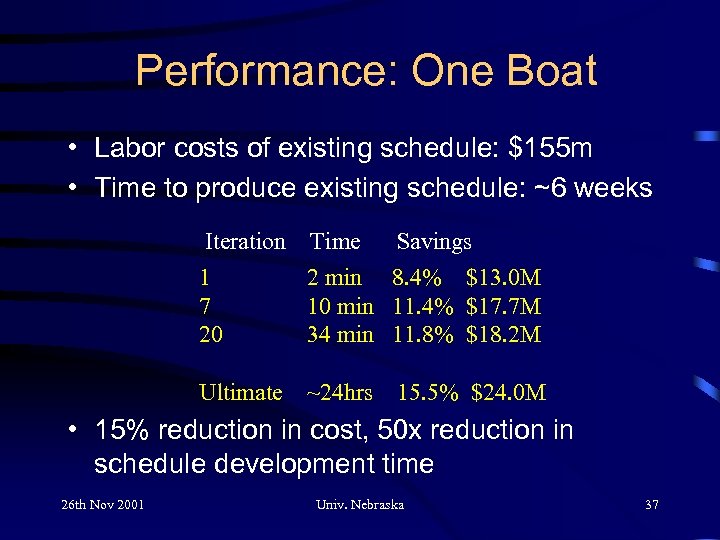 Performance: One Boat • Labor costs of existing schedule: $155 m • Time to produce existing schedule: ~6 weeks Iteration Time Savings 1 2 min 8. 4% $13. 0 M 7 10 min 11. 4% $17. 7 M 20 34 min 11. 8% $18. 2 M Ultimate ~24 hrs 15. 5% $24. 0 M • 15% reduction in cost, 50 x reduction in schedule development time 26 th Nov 2001 Univ. Nebraska 37
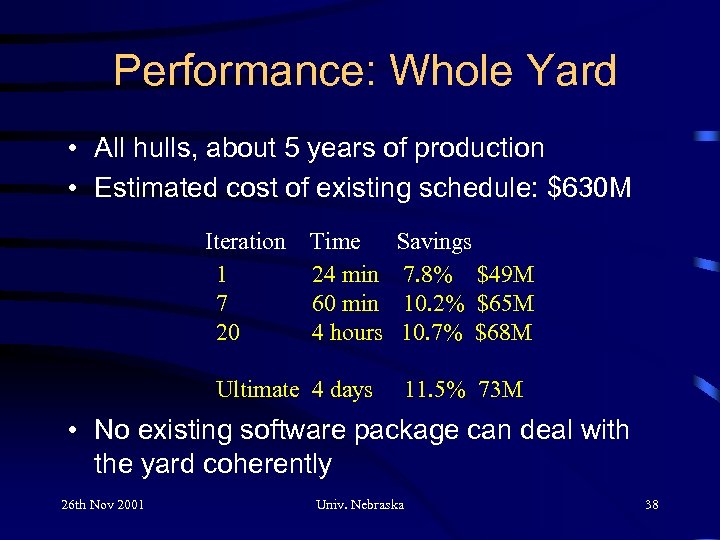 Performance: Whole Yard • All hulls, about 5 years of production • Estimated cost of existing schedule: $630 M Iteration 1 7 20 Time 24 min 60 min 4 hours Ultimate 4 days Savings 7. 8% $49 M 10. 2% $65 M 10. 7% $68 M 11. 5% 73 M • No existing software package can deal with the yard coherently 26 th Nov 2001 Univ. Nebraska 38
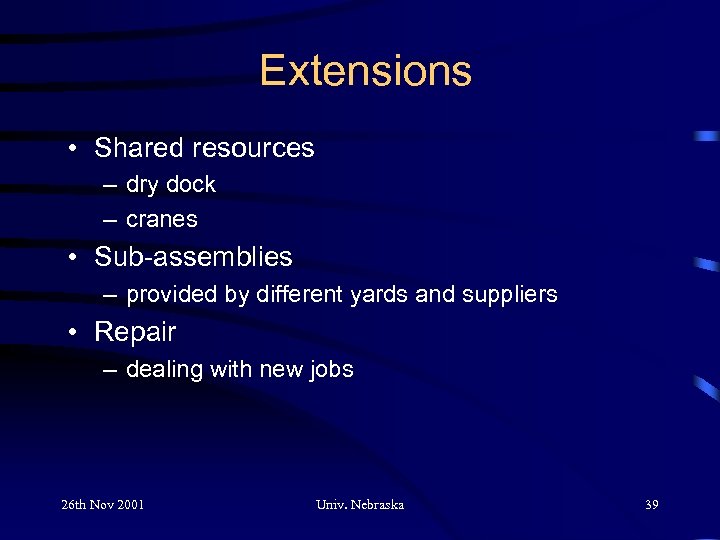 Extensions • Shared resources – dry dock – cranes • Sub-assemblies – provided by different yards and suppliers • Repair – dealing with new jobs 26 th Nov 2001 Univ. Nebraska 39
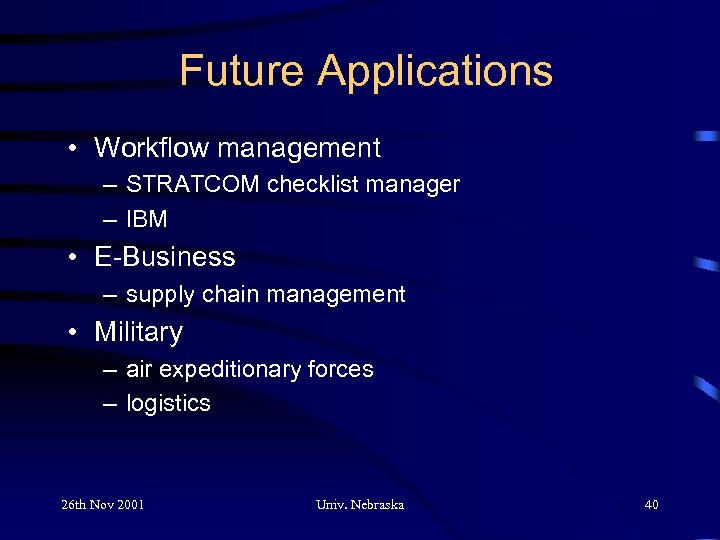 Future Applications • Workflow management – STRATCOM checklist manager – IBM • E-Business – supply chain management • Military – air expeditionary forces – logistics 26 th Nov 2001 Univ. Nebraska 40
 Future Work • Robustness • Distributed scheduling • Common task description 26 th Nov 2001 Univ. Nebraska 41
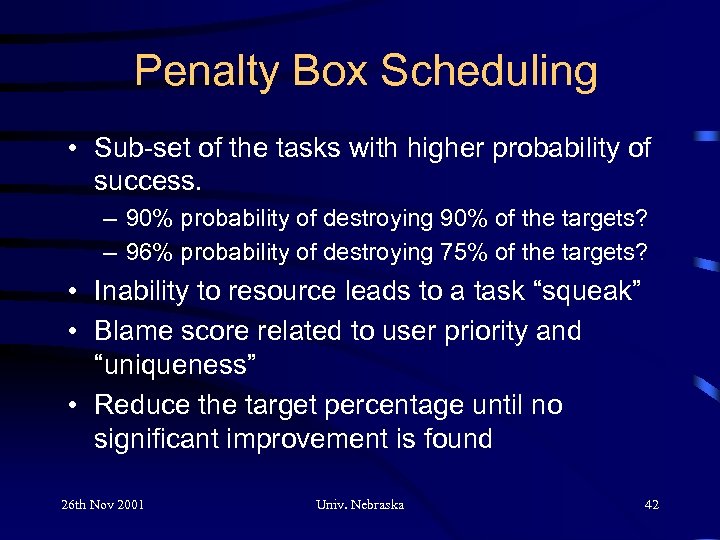 Penalty Box Scheduling • Sub-set of the tasks with higher probability of success. – 90% probability of destroying 90% of the targets? – 96% probability of destroying 75% of the targets? • Inability to resource leads to a task “squeak” • Blame score related to user priority and “uniqueness” • Reduce the target percentage until no significant improvement is found 26 th Nov 2001 Univ. Nebraska 42
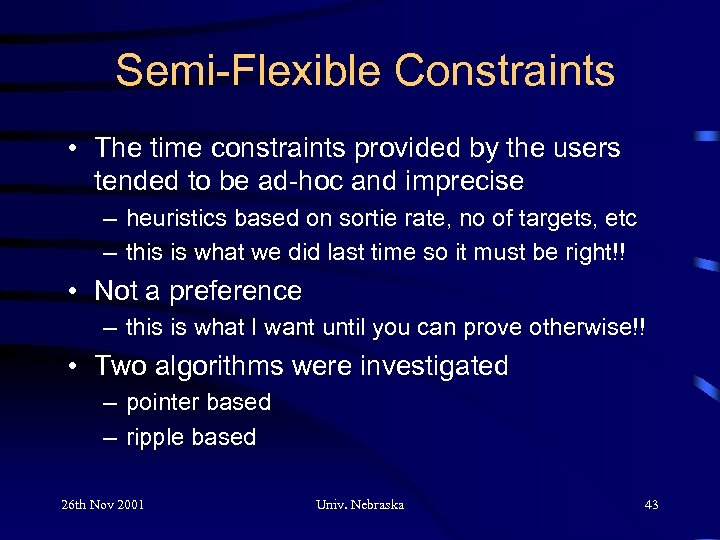 Semi-Flexible Constraints • The time constraints provided by the users tended to be ad-hoc and imprecise – heuristics based on sortie rate, no of targets, etc – this is what we did last time so it must be right!! • Not a preference – this is what I want until you can prove otherwise!! • Two algorithms were investigated – pointer based – ripple based 26 th Nov 2001 Univ. Nebraska 43
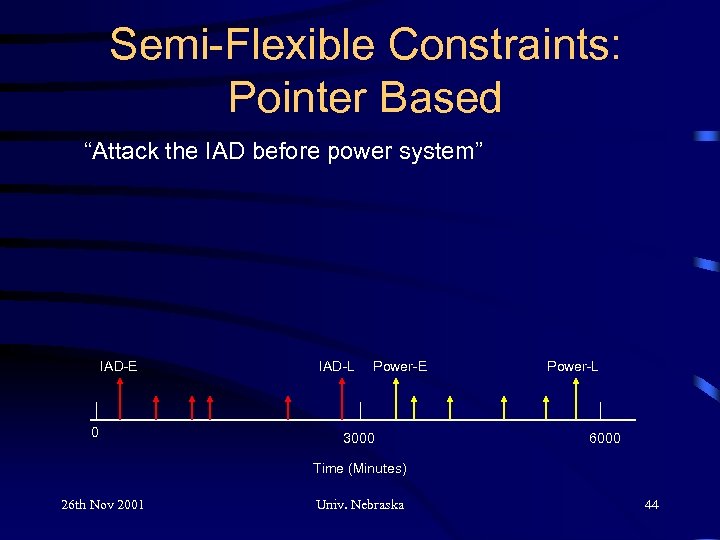 Semi-Flexible Constraints: Pointer Based “Attack the IAD before power system” IAD-E 0 IAD-L Power-E 3000 Power-L 6000 Time (Minutes) 26 th Nov 2001 Univ. Nebraska 44
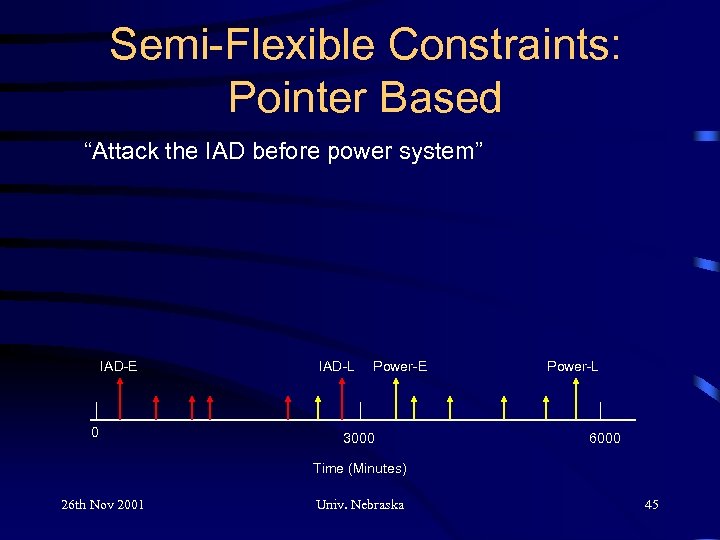 Semi-Flexible Constraints: Pointer Based “Attack the IAD before power system” IAD-E 0 IAD-L Power-E 3000 Power-L 6000 Time (Minutes) 26 th Nov 2001 Univ. Nebraska 45
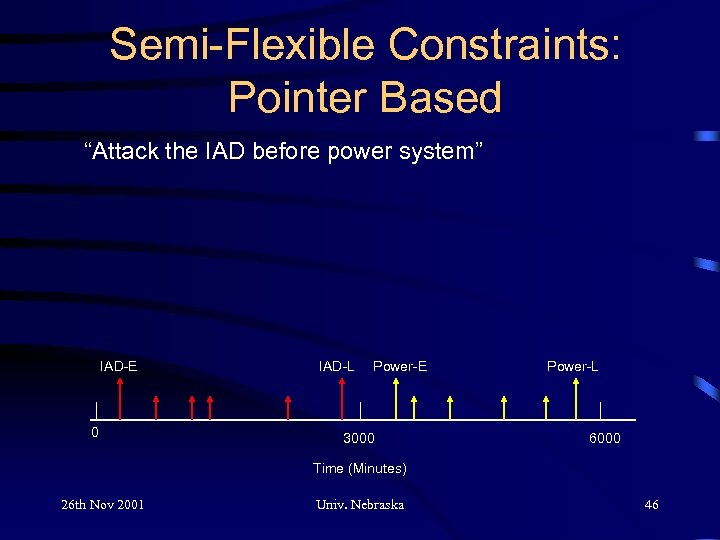 Semi-Flexible Constraints: Pointer Based “Attack the IAD before power system” IAD-E 0 IAD-L Power-E 3000 Power-L 6000 Time (Minutes) 26 th Nov 2001 Univ. Nebraska 46
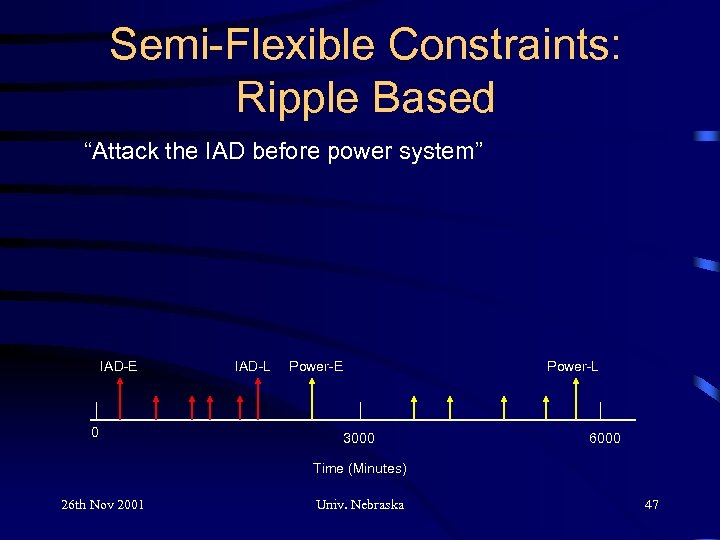 Semi-Flexible Constraints: Ripple Based “Attack the IAD before power system” IAD-E 0 IAD-L Power-E Power-L 3000 6000 Time (Minutes) 26 th Nov 2001 Univ. Nebraska 47
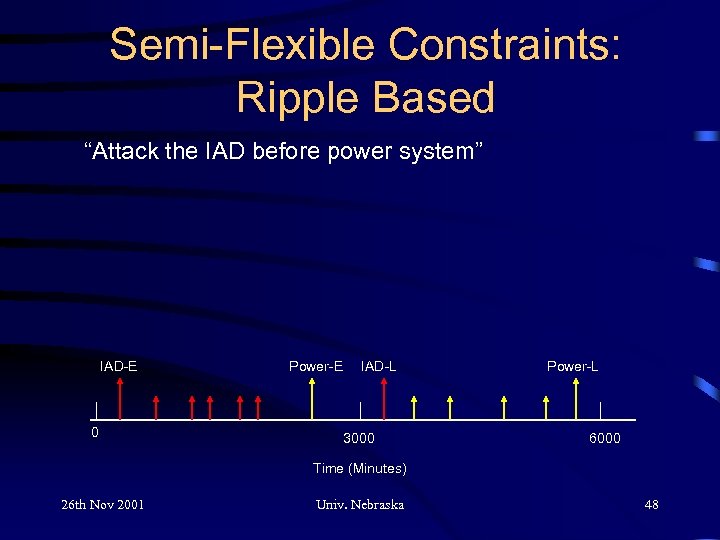 Semi-Flexible Constraints: Ripple Based “Attack the IAD before power system” IAD-E 0 Power-E IAD-L 3000 Power-L 6000 Time (Minutes) 26 th Nov 2001 Univ. Nebraska 48
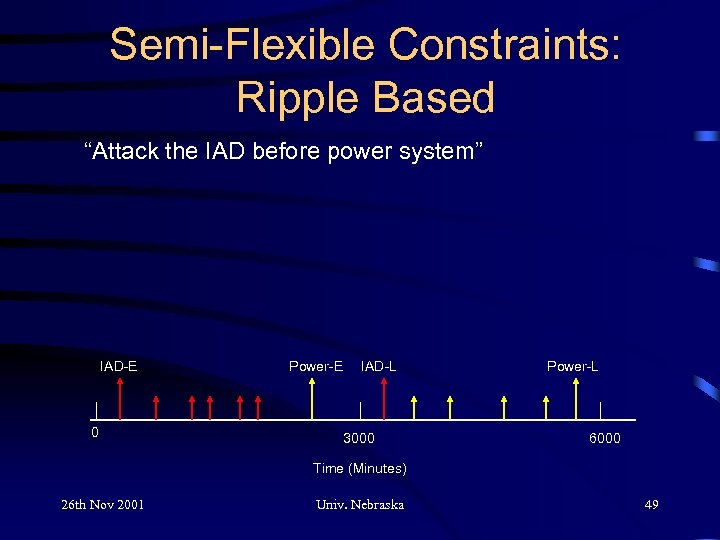 Semi-Flexible Constraints: Ripple Based “Attack the IAD before power system” IAD-E 0 Power-E IAD-L 3000 Power-L 6000 Time (Minutes) 26 th Nov 2001 Univ. Nebraska 49
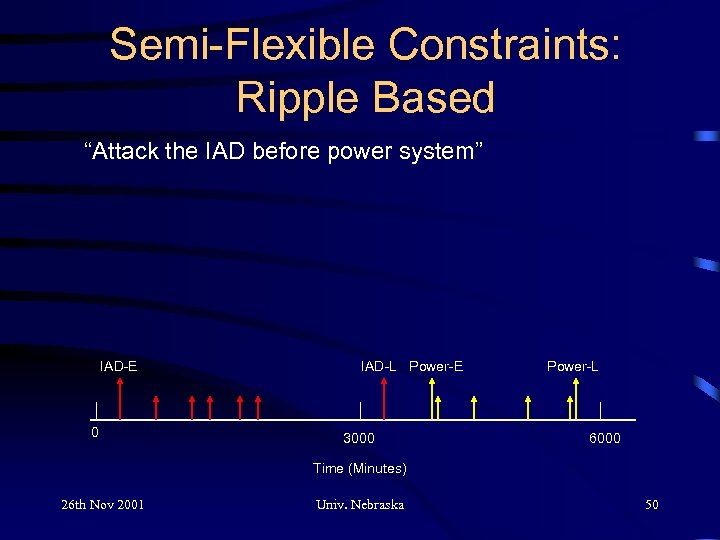 Semi-Flexible Constraints: Ripple Based “Attack the IAD before power system” IAD-E 0 IAD-L Power-E 3000 Power-L 6000 Time (Minutes) 26 th Nov 2001 Univ. Nebraska 50
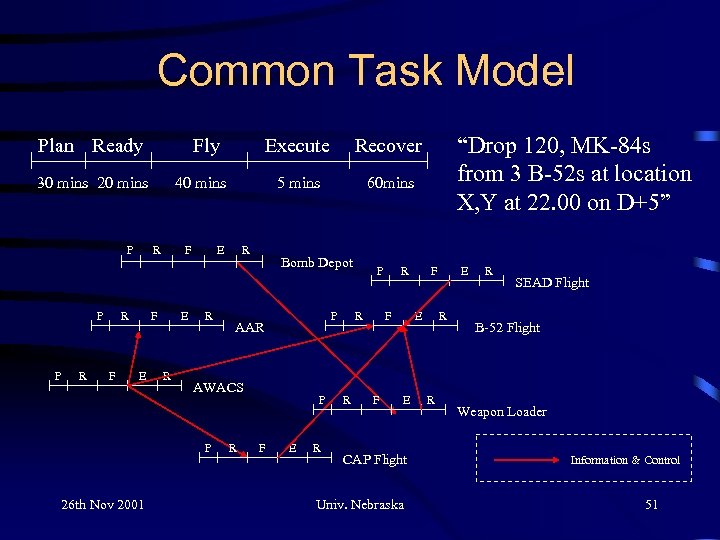 Common Task Model Plan Ready Fly 30 mins 20 mins P P P R F F F E E R 60 mins R Bomb Depot P AAR AWACS P 26 th Nov 2001 5 mins R “Drop 120, MK-84 s from 3 B-52 s at location X, Y at 22. 00 on D+5” Recover 40 mins R R Execute P F E R P R R R F F F E E CAP Flight Univ. Nebraska E R R R SEAD Flight B-52 Flight Weapon Loader Information & Control 51
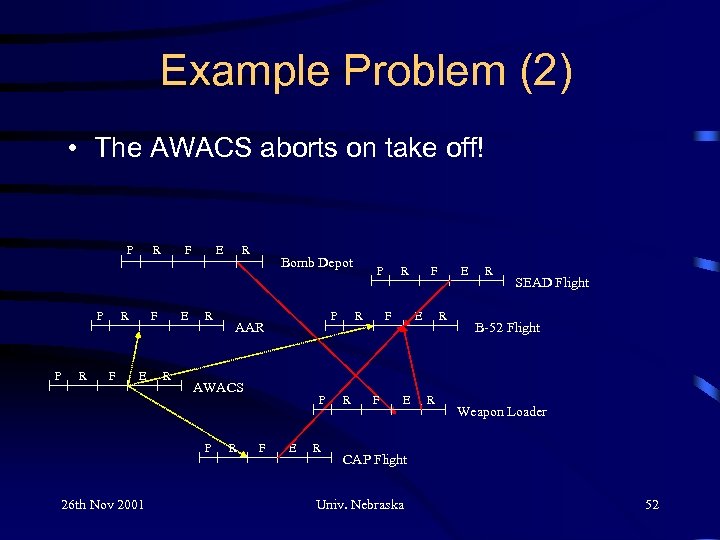 Example Problem (2) • The AWACS aborts on take off! P P P R R R F F F E E R Bomb Depot P AAR AWACS P 26 th Nov 2001 R R P F E R P R R R F F F E E E R R R SEAD Flight B-52 Flight Weapon Loader CAP Flight Univ. Nebraska 52
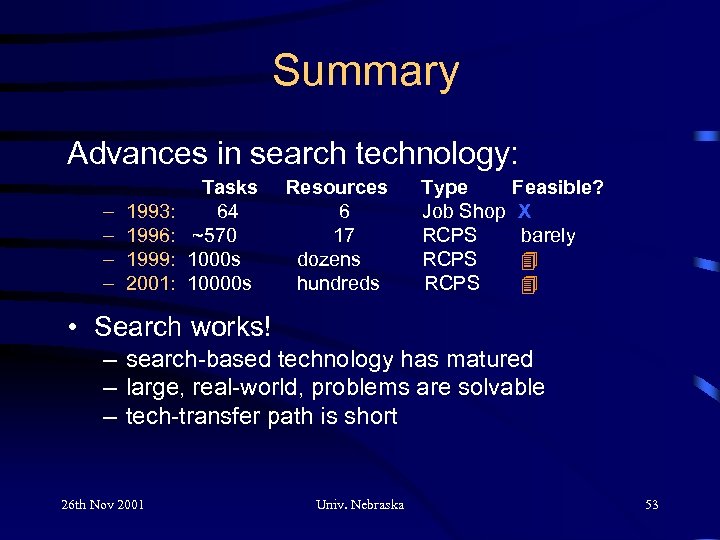 Summary Advances in search technology: – – 1993: 1996: 1999: 2001: Tasks 64 ~570 1000 s 10000 s Resources 6 17 dozens hundreds Type Job Shop RCPS Feasible? X barely • Search works! – search-based technology has matured – large, real-world, problems are solvable – tech-transfer path is short 26 th Nov 2001 Univ. Nebraska 53
 Questions ? 26 th Nov 2001 Univ. Nebraska 54