


 Скачать презентацию Advanced Principles in Programming Cal Dietz University of
9db7653a3393225a31c3bdaf6ed6ac93.ppt
- Количество слайдов: 31
 Advanced Principles in Programming Cal Dietz University of Minnesota
 Theories based on Advance Biochemical Programming • Intensity and Duration should be the focal point of the program for that day. • Specificity of exercise program is critical to adaptation 3
 Theories based on Advance Biochemical Programming • Train in a method so all Systems, Organs, Plastic Structures of the metabolism, Grouping of Cells and Cells Adapt to same Stress- Results are going to be deep adaptions with less negative stress response because of less stress on the functional reserves of adaption energy. • Pull the organism in multple directions is not optimal for the highest result. Ex-Triathalon and Powerlifting 3
 Theories Based on Advance Biochemical Programming • Training at high-speed, intensive loads is accompanied by the largest changes in the nervous system apparatus of muscle – CNS, myelination – sarcoplasmic reticulum (site of calcium release, facilitates muscular contraction, and the myoglobin and creatine phosphate contents – How? High Speed Methods • Since biochemical adaptive changes do not develop simultaneously, blocks of oxidative, lactic, and alactic work is needed. This can be done in the offseason 4
 Theories Based on Advance Biochemical Programming • Biochemical Control of your programming through - Intensity and Duration should be the focal point of the program for that day 4
 Theories Based on Advance Biochemical Programming • Control of your programming through - Intensity and Duration should be the focal point of the program for that day Intensity = Death Ground 100% Duration = Time Per Set 4
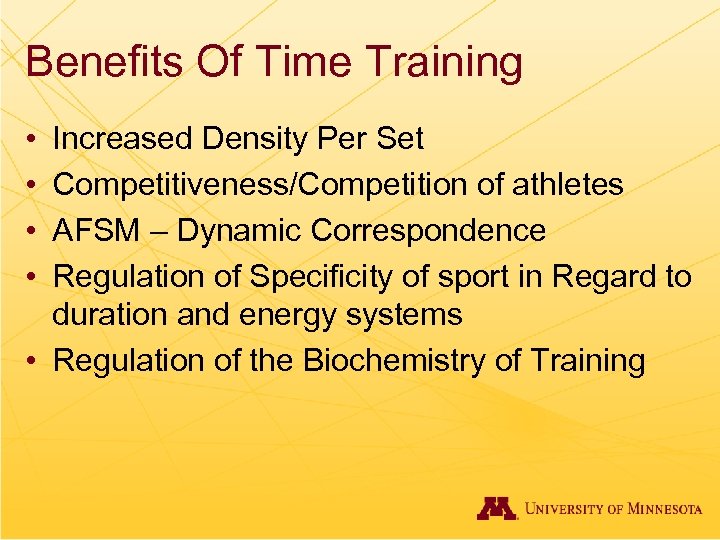 Benefits Of Time Training • • Increased Density Per Set Competitiveness/Competition of athletes AFSM – Dynamic Correspondence Regulation of Specificity of sport in Regard to duration and energy systems • Regulation of the Biochemistry of Training
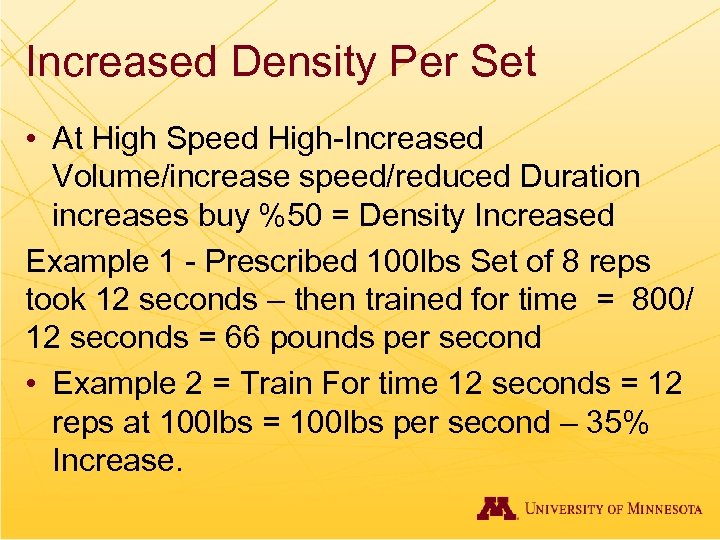 Increased Density Per Set • At High Speed High-Increased Volume/increase speed/reduced Duration increases buy %50 = Density Increased Example 1 - Prescribed 100 lbs Set of 8 reps took 12 seconds – then trained for time = 800/ 12 seconds = 66 pounds per second • Example 2 = Train For time 12 seconds = 12 reps at 100 lbs = 100 lbs per second – 35% Increase.
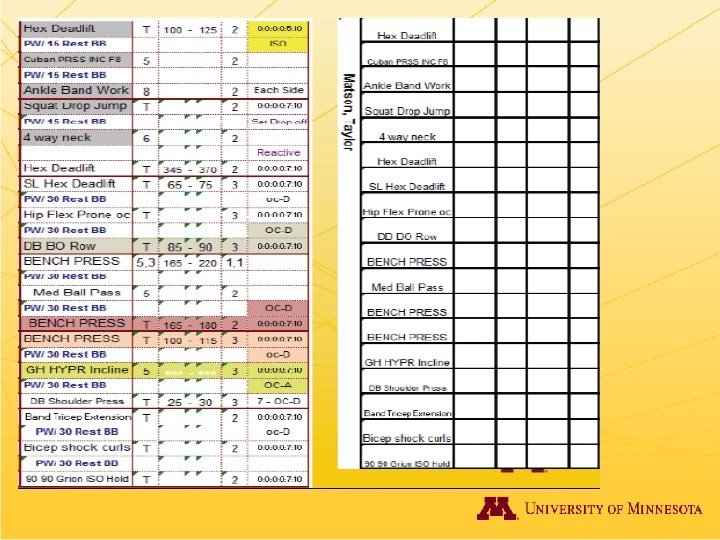
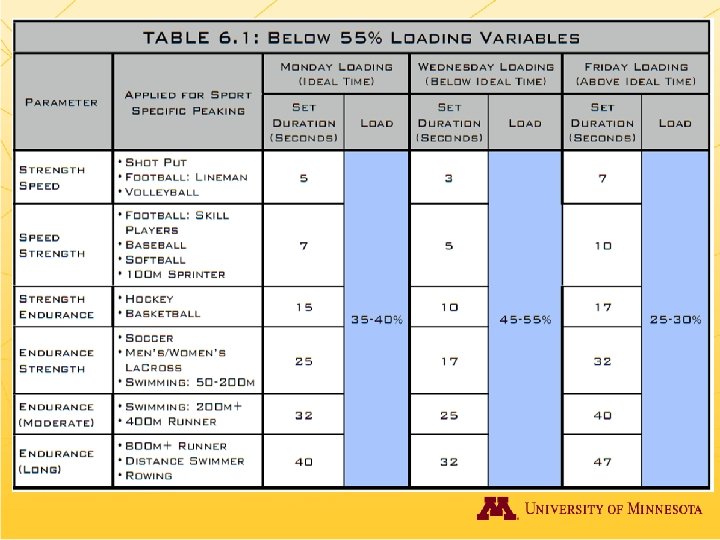
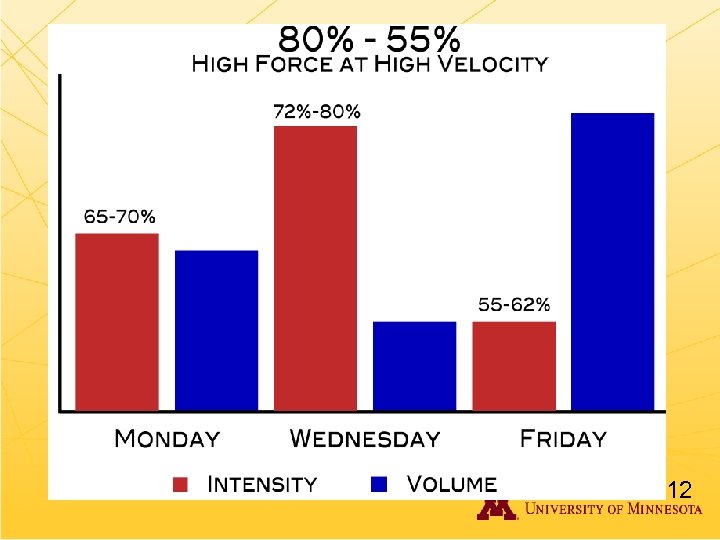
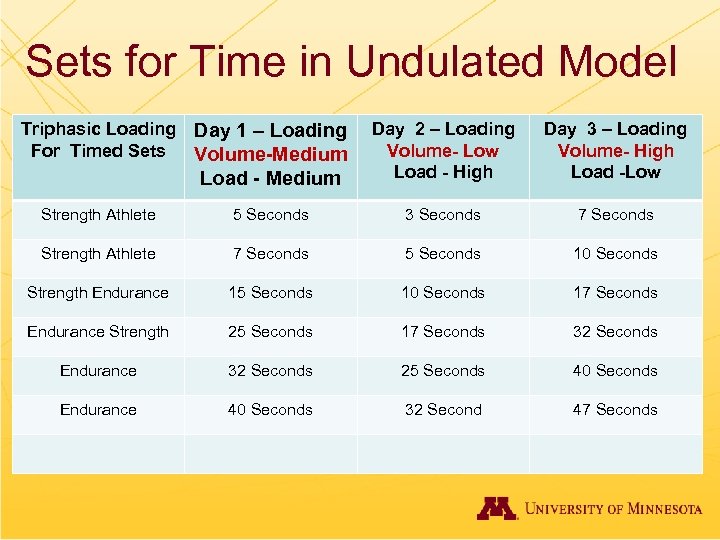 Sets for Time in Undulated Model Triphasic Loading Day 1 – Loading For Timed Sets Volume-Medium Load - Medium Day 2 – Loading Volume- Low Load - High Day 3 – Loading Volume- High Load -Low Strength Athlete 5 Seconds 3 Seconds 7 Seconds Strength Athlete 7 Seconds 5 Seconds 10 Seconds Strength Endurance 15 Seconds 10 Seconds 17 Seconds Endurance Strength 25 Seconds 17 Seconds 32 Seconds Endurance 32 Seconds 25 Seconds 40 Seconds Endurance 40 Seconds 32 Second 47 Seconds
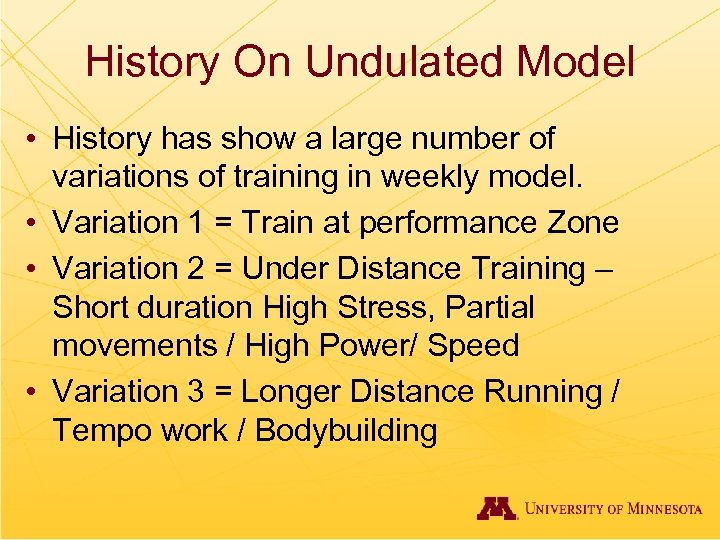 History On Undulated Model • History has show a large number of variations of training in weekly model. • Variation 1 = Train at performance Zone • Variation 2 = Under Distance Training – Short duration High Stress, Partial movements / High Power/ Speed • Variation 3 = Longer Distance Running / Tempo work / Bodybuilding
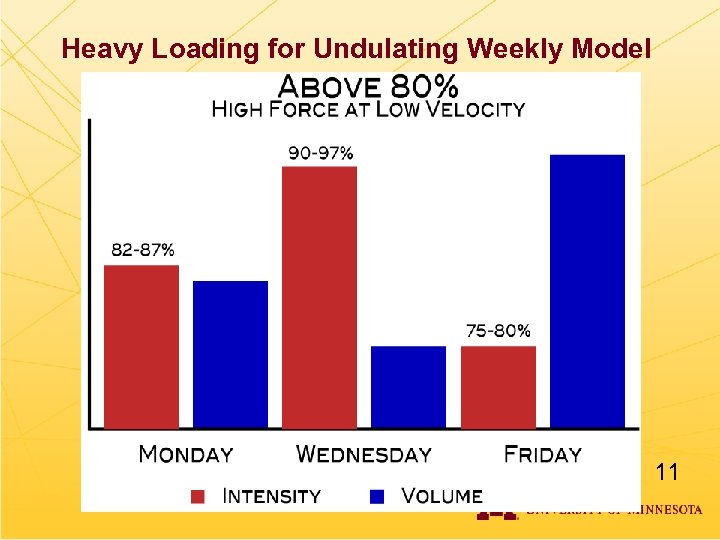 Heavy Loading for Undulating Weekly Model 11
 12
12
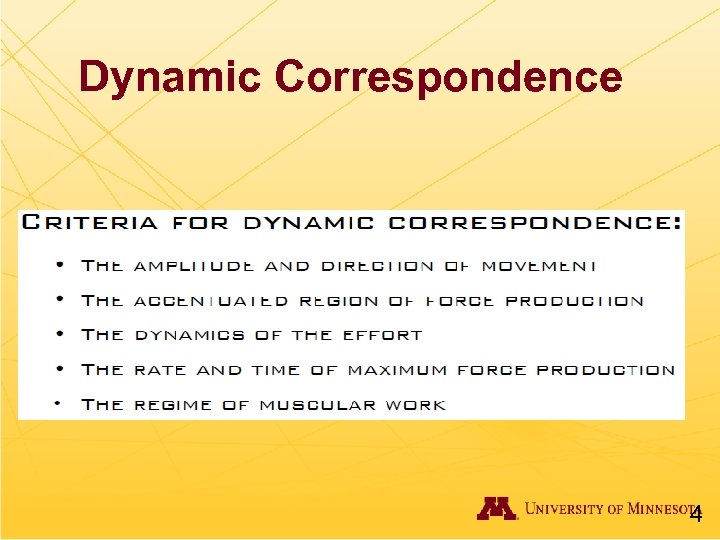 Dynamic Correspondence 4
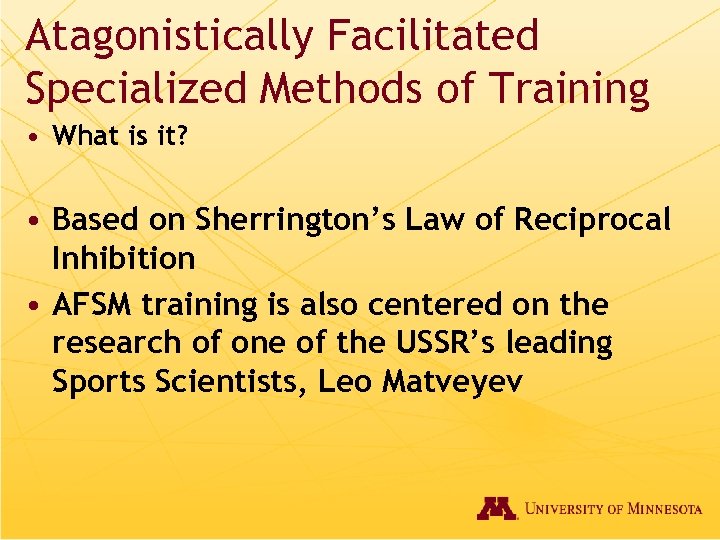 Atagonistically Facilitated Specialized Methods of Training • What is it? • Based on Sherrington’s Law of Reciprocal Inhibition • AFSM training is also centered on the research of one of the USSR’s leading Sports Scientists, Leo Matveyev
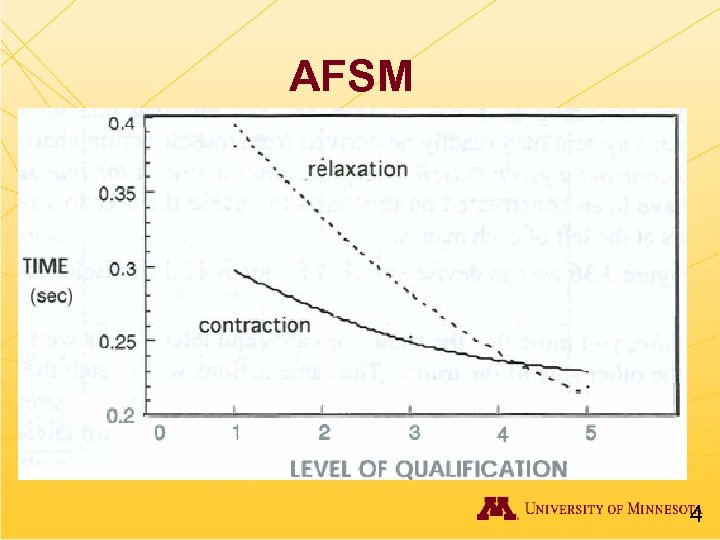
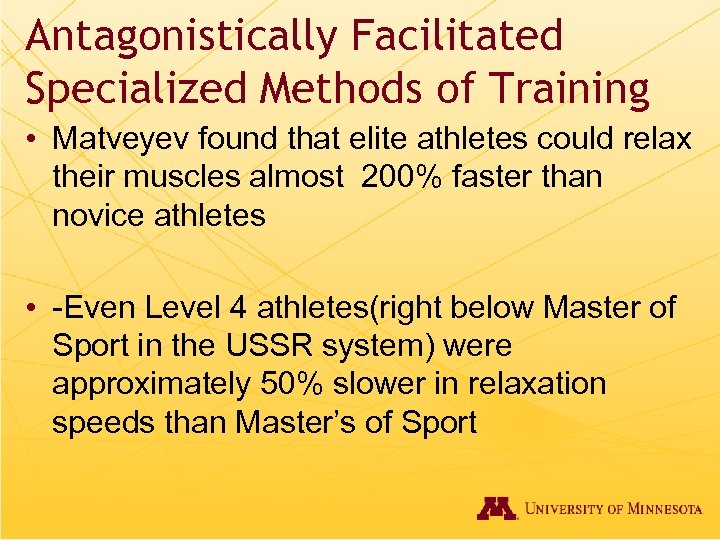 Antagonistically Facilitated Specialized Methods of Training • Matveyev found that elite athletes could relax their muscles almost 200% faster than novice athletes • -Even Level 4 athletes(right below Master of Sport in the USSR system) were approximately 50% slower in relaxation speeds than Master’s of Sport
 AFSM 4
 Antagonistically Facilitated Specialized Methods of Training • We must utilize the Stretch Shortening Cycle(SSC) • Why? Much higher levels of stored eccentric energy can be reapplied more forcefully towards the concentric movement • So what do we do? • Answer: AFSM Plyometrics • It simple – Push and Pull or Pull and Push
 AFSM Plyometrics • Similar to traditional plyometrics(i. e. Squat jump) • Key Difference: AFSM requires the forceful contraction of the antagonists, with simultaneous relaxation of the agonists prior to the movement's concentric action
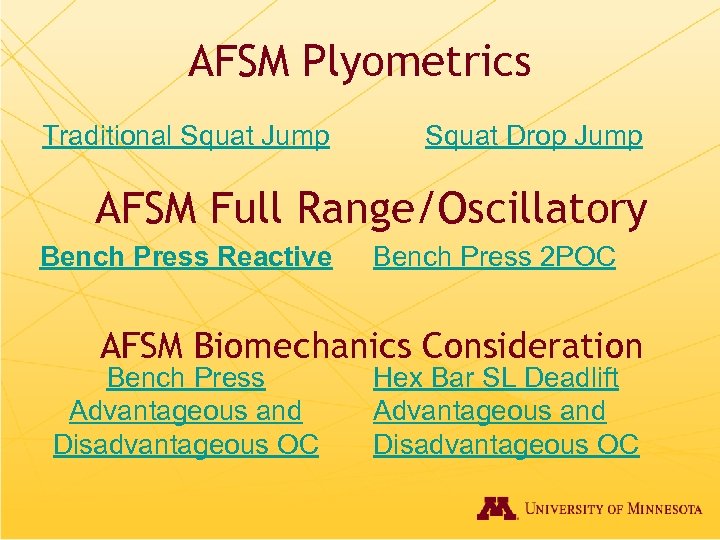 AFSM Plyometrics Traditional Squat Jump Squat Drop Jump AFSM Full Range/Oscillatory Bench Press Reactive Bench Press 2 POC AFSM Biomechanics Consideration Bench Press Advantageous and Disadvantageous OC Hex Bar SL Deadlift Advantageous and Disadvantageous OC
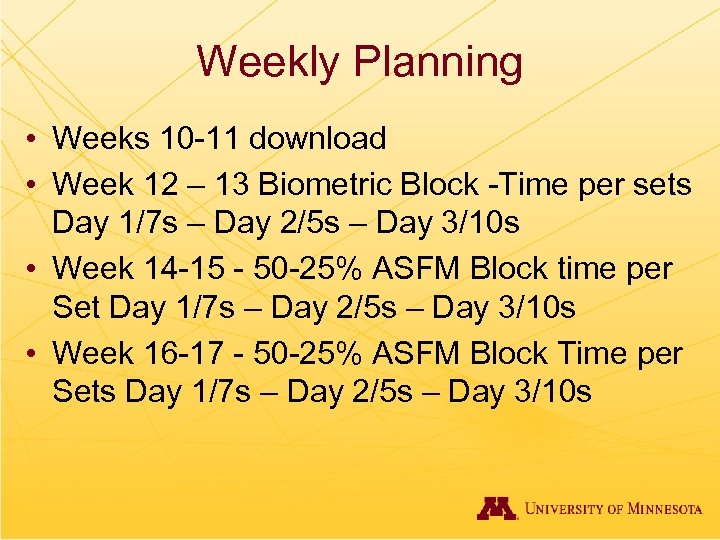 Weekly Planning • Weeks 10 -11 download • Week 12 – 13 Biometric Block -Time per sets Day 1/7 s – Day 2/5 s – Day 3/10 s • Week 14 -15 - 50 -25% ASFM Block time per Set Day 1/7 s – Day 2/5 s – Day 3/10 s • Week 16 -17 - 50 -25% ASFM Block Time per Sets Day 1/7 s – Day 2/5 s – Day 3/10 s
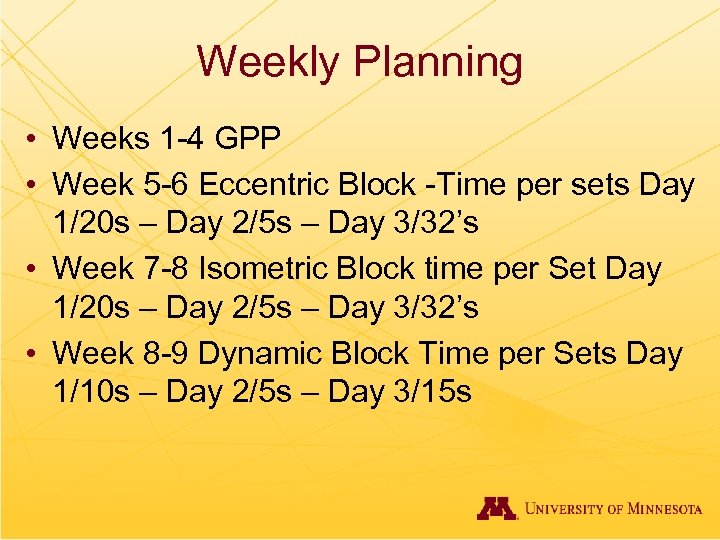 Weekly Planning • Weeks 1 -4 GPP • Week 5 -6 Eccentric Block -Time per sets Day 1/20 s – Day 2/5 s – Day 3/32’s • Week 7 -8 Isometric Block time per Set Day 1/20 s – Day 2/5 s – Day 3/32’s • Week 8 -9 Dynamic Block Time per Sets Day 1/10 s – Day 2/5 s – Day 3/15 s
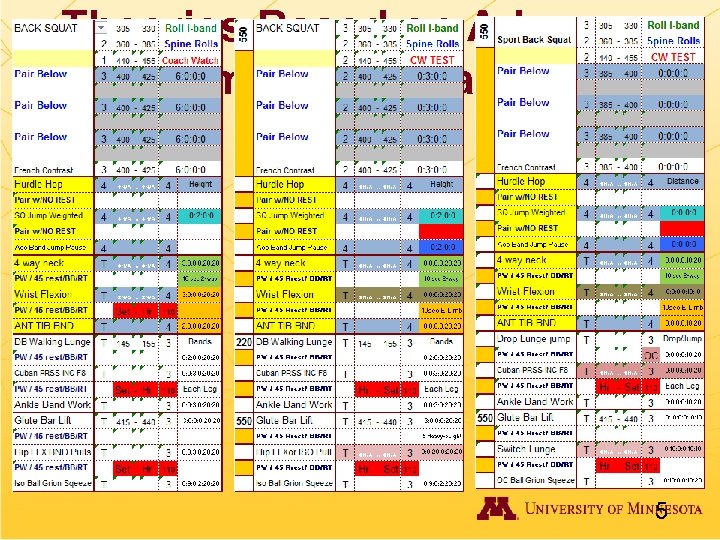 Theories Based on Advance Biochemical Programming 5
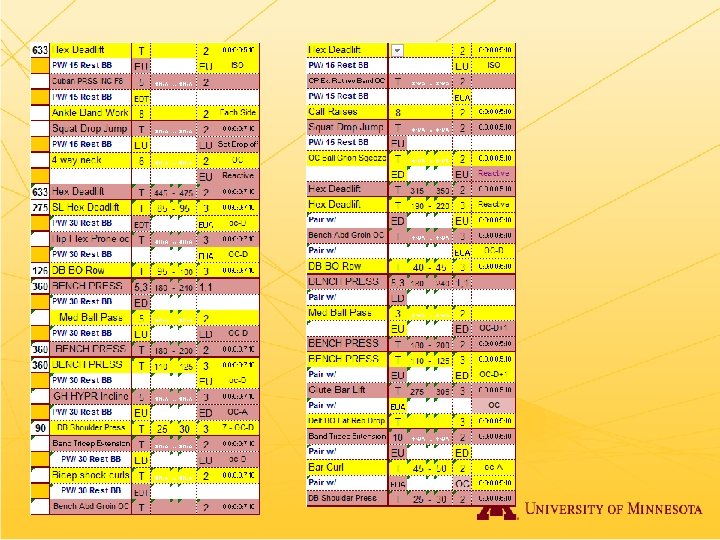
 Example of Exercise Sequencing • Example of Sequencings
 Bio. Metrics – Sample Of Program • Biometrics – Protocols • Parametric Biometrics - Protocols 49
 History of Biometrics • Formerly Called cybernetics soviet union 1959 • Changed into autoregulation by some.
 Biometrics – Protocols
 Parametric Biometrics - Protocols
 Thank You • Cal Dietz • dietz 011@umn. edu • Triphasic Traning