


 Скачать презентацию Advanced Metering Infrastructure AMI Project Update Mark Heintzelman
e84fa93c78dd11aaa71ea4286f462ce3.ppt
- Количество слайдов: 23
 Advanced Metering Infrastructure (AMI) Project Update Mark Heintzelman June 2010
 AMI System Requirements Demonstrated Ability @ Scale • Retrieve hourly energy consumption from all (480, 000) endpoints • Two-way communications to reset displayed Peak Demand or k. W, on command • Two-way communications to support direct load control – Meet NIST – Critical Infrastructure Protection requirements • Provide outage management process enhancements • Reduce operational costs related to meter reading and customer movement processes
 AMI Phased Approach • Phase I – Test the AMI technology – 2004 -2008 – Test hourly data retrieval – Pilot Data Management & time variant pricing – Develop a business case • Phase II – AMI Infrastructure Installation 2009 - 2011 – – Strategic Sourcing Regulatory Filing Infrastructure deployment O&M cost reduction • Phase III – AMI Full Implementation 2012 – Full data and system integration – System optimization – Additional Systems
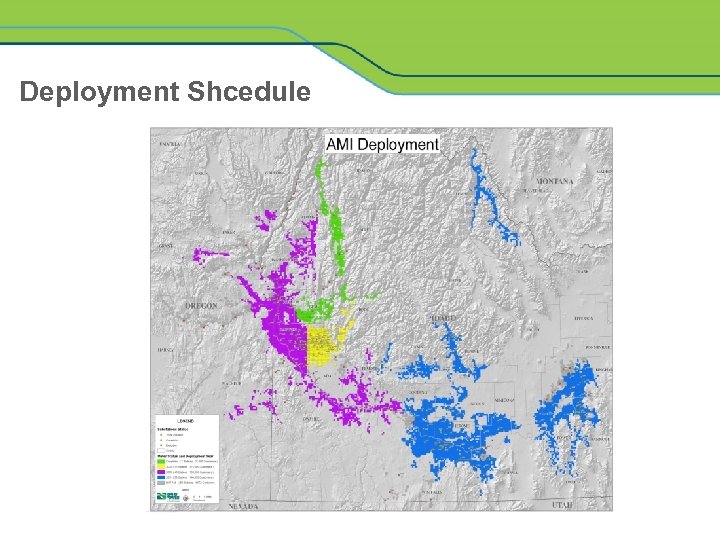 Deployment Shcedule
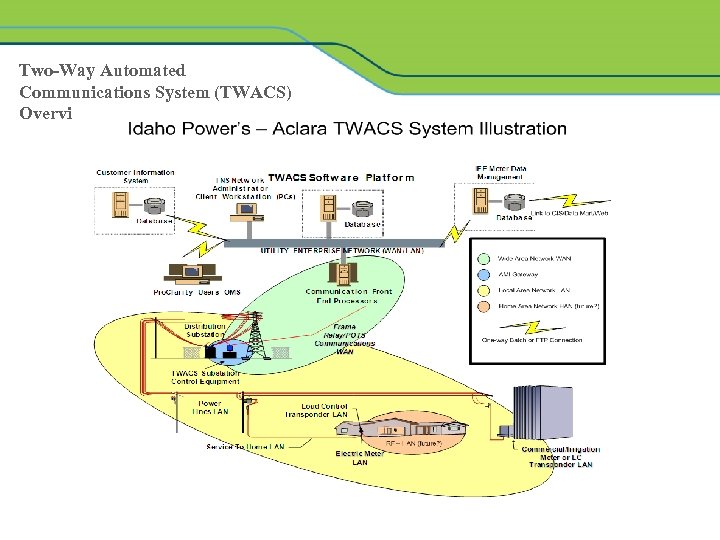 Two-Way Automated Communications System (TWACS) Overview
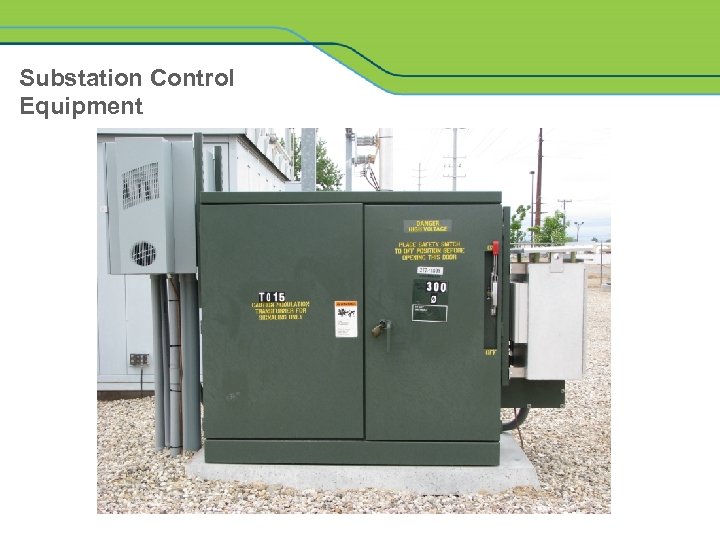 Substation Control Equipment
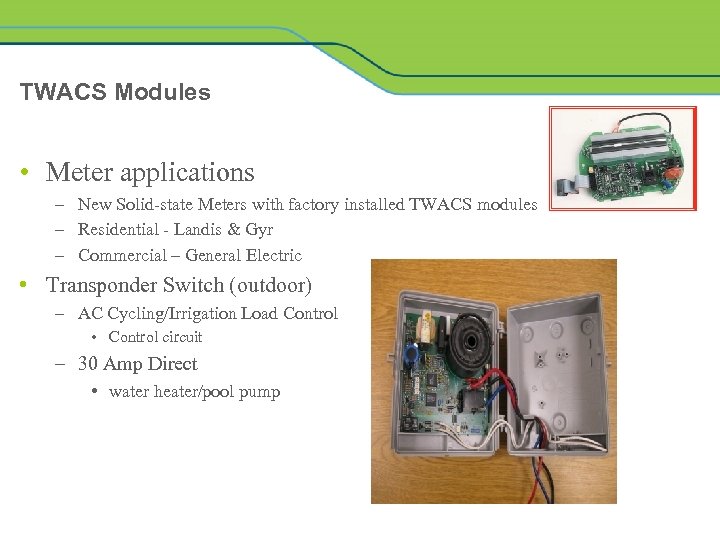 TWACS Modules • Meter applications – New Solid-state Meters with factory installed TWACS modules – Residential - Landis & Gyr – Commercial – General Electric • Transponder Switch (outdoor) – AC Cycling/Irrigation Load Control • Control circuit – 30 Amp Direct • water heater/pool pump
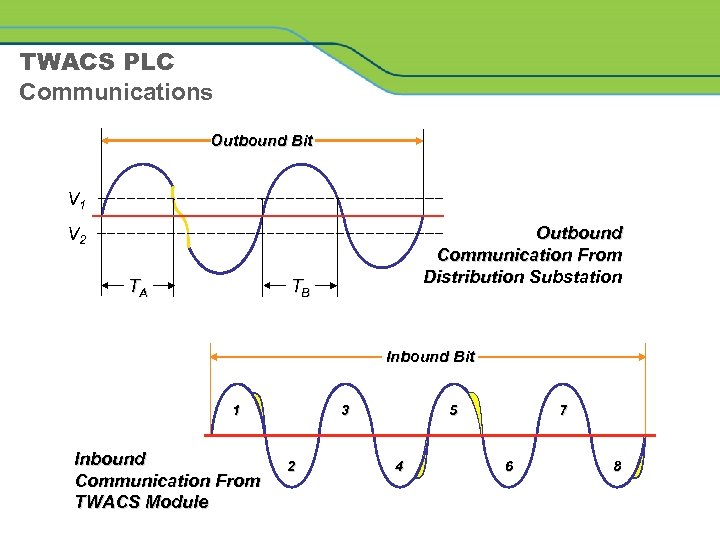 TWACS PLC Communications Outbound Bit V 1 Outbound Communication From Distribution Substation V 2 TA TB Inbound Bit 1 Inbound Communication From TWACS Module 3 2 5 4 7 6 8
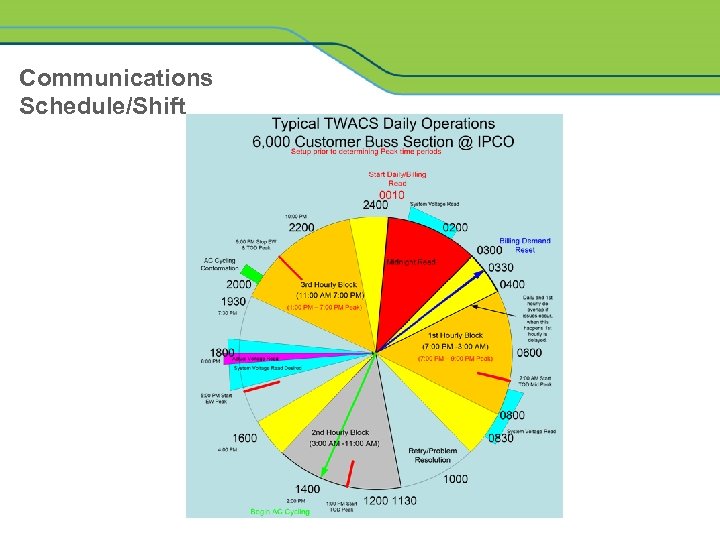 Communications Schedule/Shift
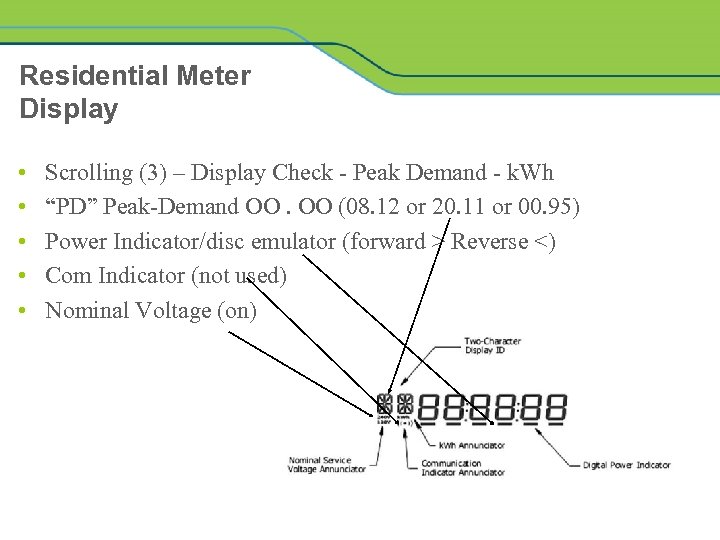 Residential Meter Display • • • Scrolling (3) – Display Check - Peak Demand - k. Wh “PD” Peak-Demand OO. OO (08. 12 or 20. 11 or 00. 95) Power Indicator/disc emulator (forward > Reverse <) Com Indicator (not used) Nominal Voltage (on)
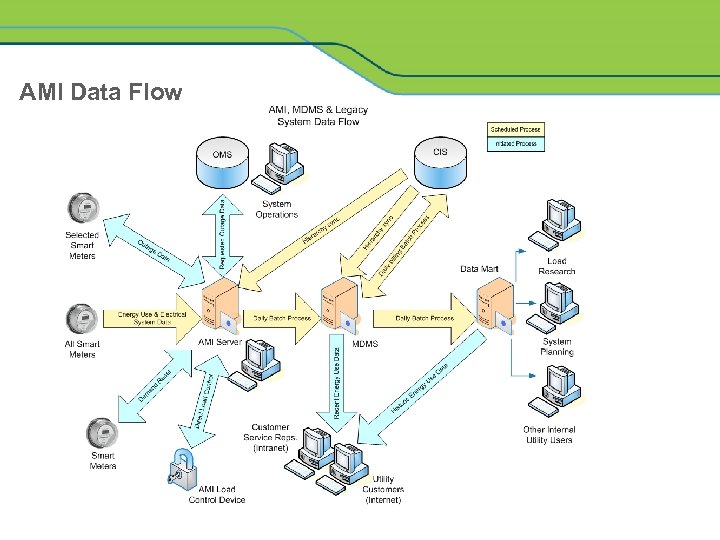 AMI Data Flow
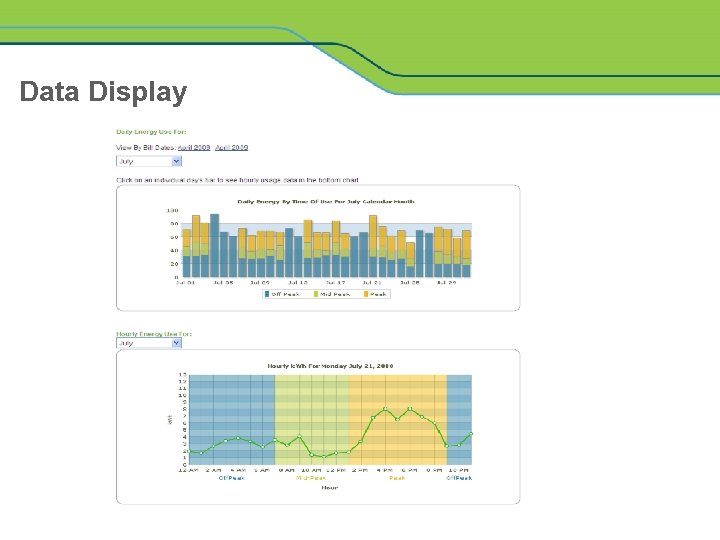 Data Display
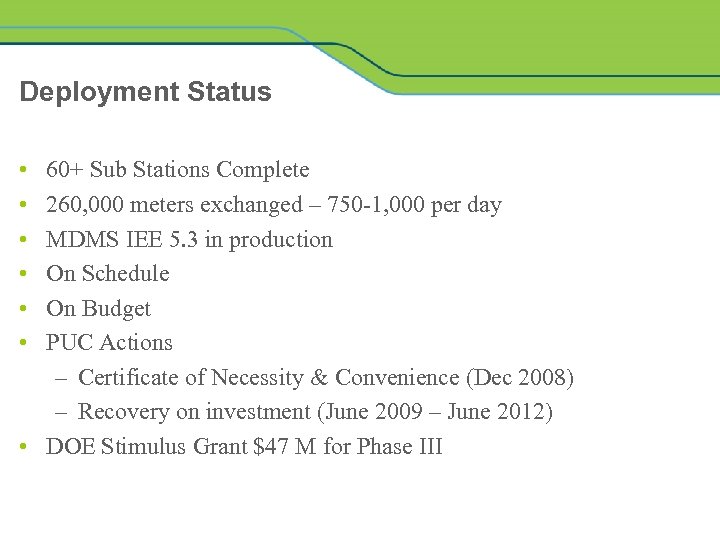 Deployment Status • • • 60+ Sub Stations Complete 260, 000 meters exchanged – 750 -1, 000 per day MDMS IEE 5. 3 in production On Schedule On Budget PUC Actions – Certificate of Necessity & Convenience (Dec 2008) – Recovery on investment (June 2009 – June 2012) • DOE Stimulus Grant $47 M for Phase III
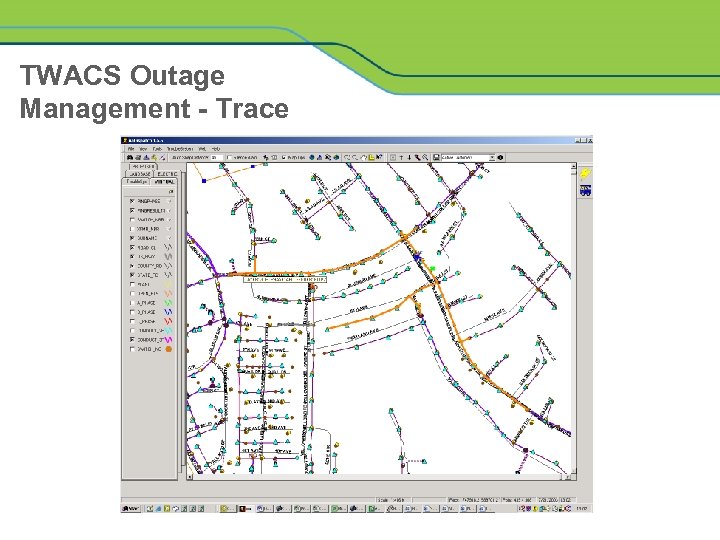 TWACS Outage Management - Trace
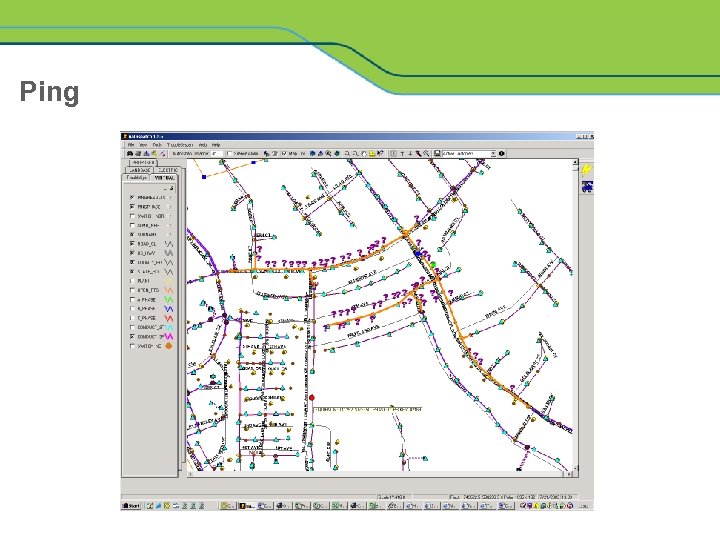 Ping
Ping
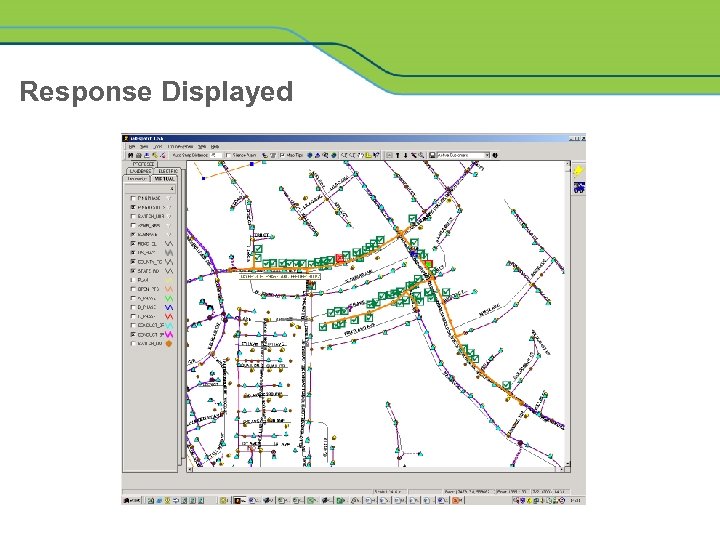 Response Displayed
 Added Value • Billing Error & High Bill complaint reductions • Customer Satisfaction • Access issues, Digital meters, Data availability - Web • Enhance DSM (Green) • Enable Time Variant Rates (Green) • Enhanced C 2 T/GIS/OMS data • Reduction In Vehicle Use (Green) • Distribution Control? – Capacitors? • System Monitoring & Reporting/Data Acquisition • Voltage, Load, PQ, Energy use, Outage, Electrical location
 Data Volume • Monthly reading of 500, 000 meters X 12 months = 6, 000 meter reads annually • 250, 000 AMI meters X 26 reads daily = 6, 500, 000 meter reads daily (24 hourly reads + daily k. Wh & k. W reads = 26 reads daily) • 500, 000 AMI meters X 26 reads daily = 13, 000 meter reads daily • 13, 000 daily reads X 365 = 4, 745, 000 meter reads annually • Additional reads (future) – Voltage – Power Quality – Transponder cycle counts • Meter Data Management System (MDMS) – Bleeding edge
 Hard AMI Cost Reductions (the business case) • 99% of Meter Reading Costs ($5. 5 M annually) • 90% of Customer Movement Costs ($1. 5 M annually) • Reduction in outage scoping & restoration conformation costs ($363 k annually)
 Approximate Cost • 3 Years • $74, 000 – $1. 2 M - IT – Systems & Interfaces – $13. 3 M - 142 Station + growth & Communications Equipment Installed – $55. 5 M – 500, 000 Meters Exchanged or installed – 10% contingency and loading • $126 to $140 per endpoint
 AMI Phase III (2012) • Implementation of “Mass” Time-Variant-Rates, this will require additional investment (CIS) (stimulus) • DSM Implementation (stimulus) – Direct load control – Indirect load reduction – price signals - TOU – Data analysis • Other Value Added Services (stimulus) – Monitoring – Reporting – Control
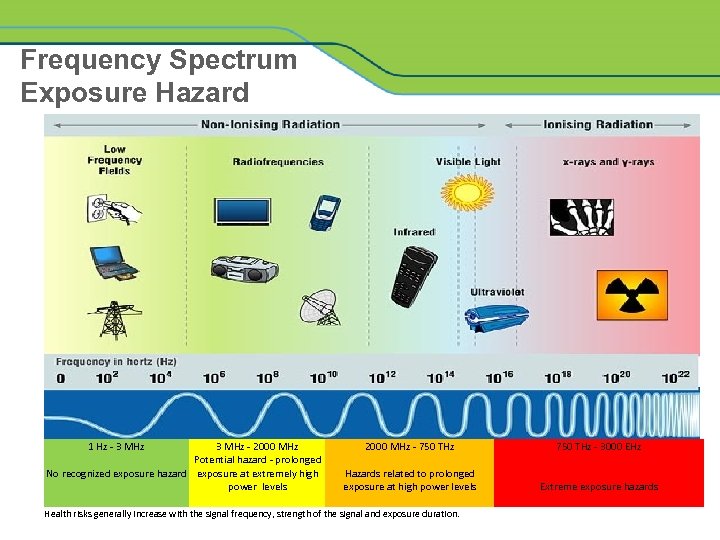 Frequency Spectrum Exposure Hazard 1 Hz - 3 MHz - 2000 MHz Potential hazard - prolonged No recognized exposure hazard exposure at extremely high power levels 2000 MHz - 750 THz - 3000 EHz Hazards related to prolonged exposure at high power levels Extreme exposure hazards Health risks generally increase with the signal frequency, strength of the signal and exposure duration.
 Questions