 Скачать презентацию Advanced Computational Research Laboratory ACRL Virendra C Bhavsar
5d39163ce78f46d7ad5c4a99a3f4c0be.ppt
- Количество слайдов: 32



Advanced Computational Research Laboratory (ACRL) Virendra C. Bhavsar Faculty of Computer Science University of New Brunswick Fredericton, NB, E 3 B 5 A 3 Canada
OUTLINE ACRL Research Groups Introduction to Parallel Processing ACRL Research Groups Conclusion
ARCL Advanced Computational Research Laboratory High Performance Computational Problem-Solving Environment and Visualization Environment Computational Experiments in multiple disciplines: Computer Science, Science and Engineering Located in the Information Technology Center (ITC)
ACRL: Researchers and Groups Faculty of Computer Science Artificial Intelligence Group - Dr. Spencer, Dr. Nickerson Parallel/Distributed Processing Group - Dr. Bhavsar, Dr. Du, Dr. Ghorbani Dr. Kaser, Dr. Shaw Computational Geometry Group - Dr. Bremner, Dr. Itturiaga Automated Reasoning Group - Dr. Spencer, Dr. Horton Bioinformatics Group
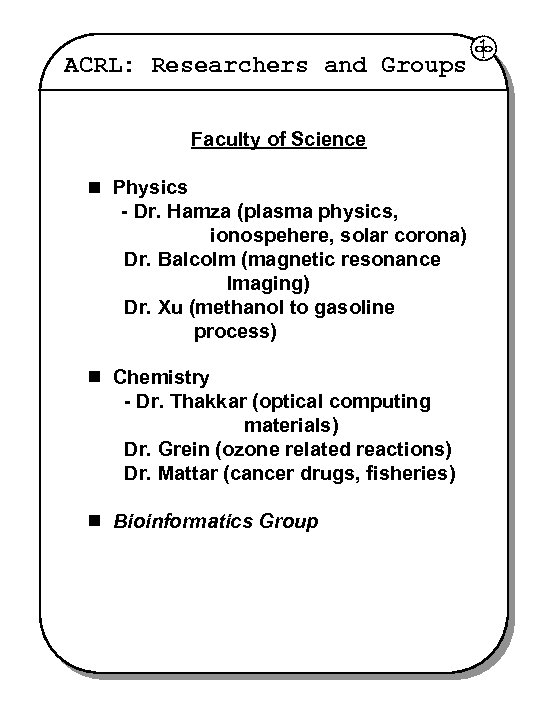
ACRL: Researchers and Groups Faculty of Science Physics - Dr. Hamza (plasma physics, ionospehere, solar corona) Dr. Balcolm (magnetic resonance Imaging) Dr. Xu (methanol to gasoline process) Chemistry - Dr. Thakkar (optical computing materials) Dr. Grein (ozone related reactions) Dr. Mattar (cancer drugs, fisheries) Bioinformatics Group
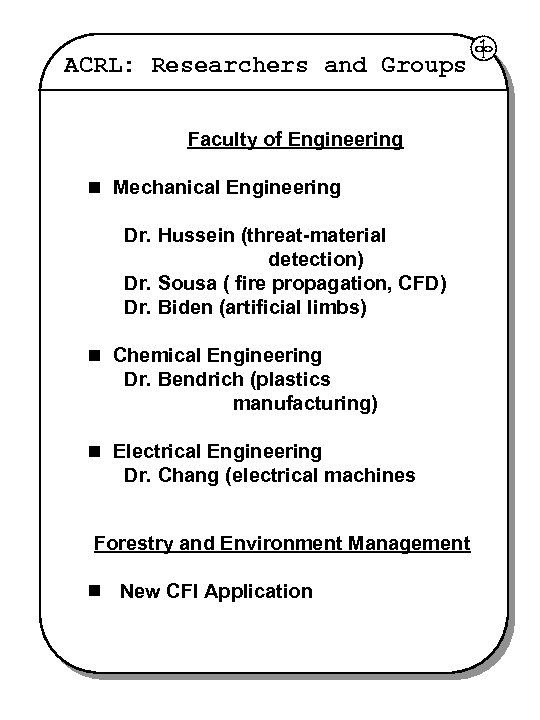
ACRL: Researchers and Groups Faculty of Engineering Mechanical Engineering Dr. Hussein (threat-material detection) Dr. Sousa ( fire propagation, CFD) Dr. Biden (artificial limbs) Chemical Engineering Dr. Bendrich (plastics manufacturing) Electrical Engineering Dr. Chang (electrical machines Forestry and Environment Management New CFI Application
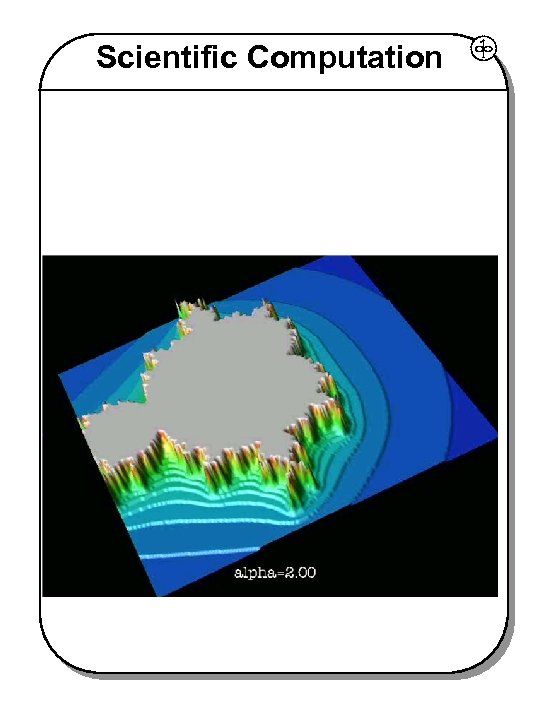
Scientific Computation
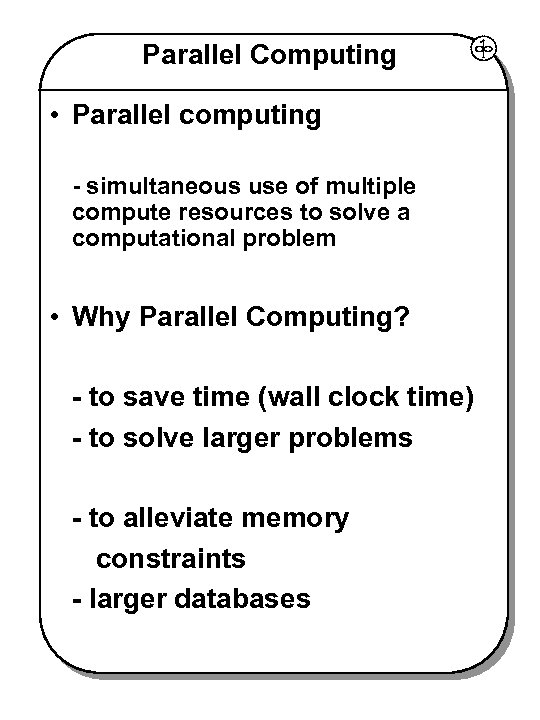
Parallel Computing • Parallel computing - simultaneous use of multiple compute resources to solve a computational problem • Why Parallel Computing? - to save time (wall clock time) - to solve larger problems - to alleviate memory constraints - larger databases
Parallel Computing • Grand Challenge Problems” - weather and climate - mechanical devices - from prosthetics to spacecraft - electronic circuits - manufacturing processes - geological, seismic activity - biological, human genome - chemical and nuclear reactions
Parallel Computing • Commercial applications - parallel databases, data mining - oil exploration - computer-aided diagnosis in medicine - management of national and multinational corporations - advanced graphics and virtual reality, particularly in the entertainment industry - networked video and multi-media technologies - collaborative work environments
Parallel Computing Ultimately, parallel computing is an attempt to maximize the infinite but seemingly scarce commodity called time
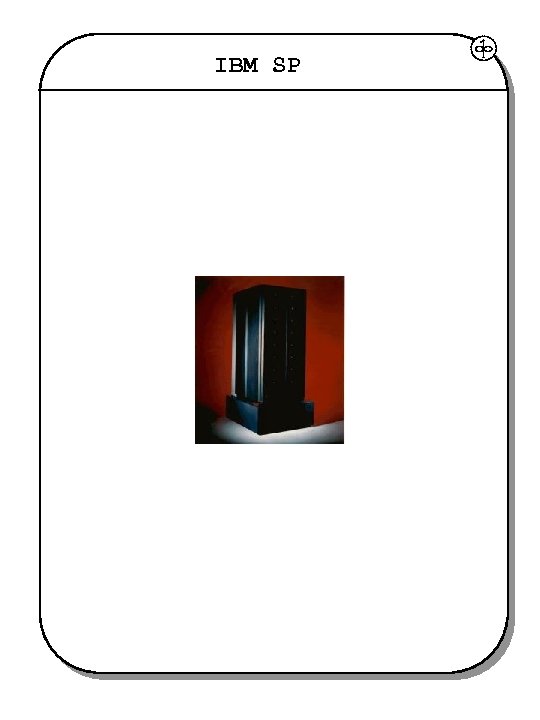
IBM SP
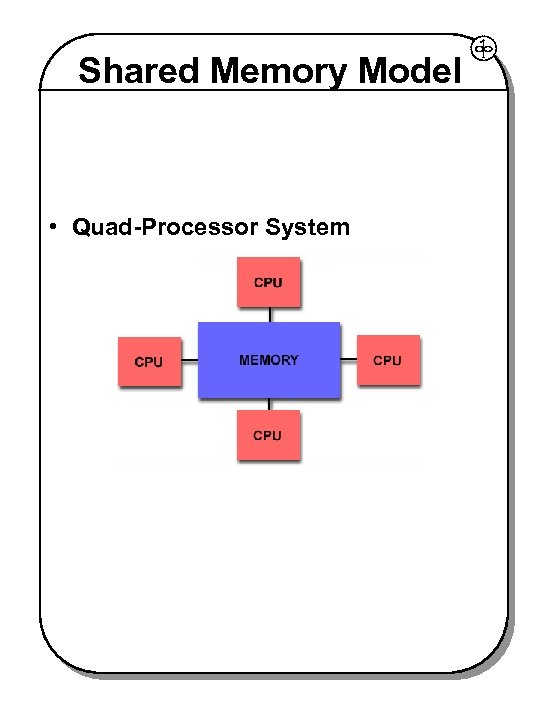
Shared Memory Model • Quad-Processor System
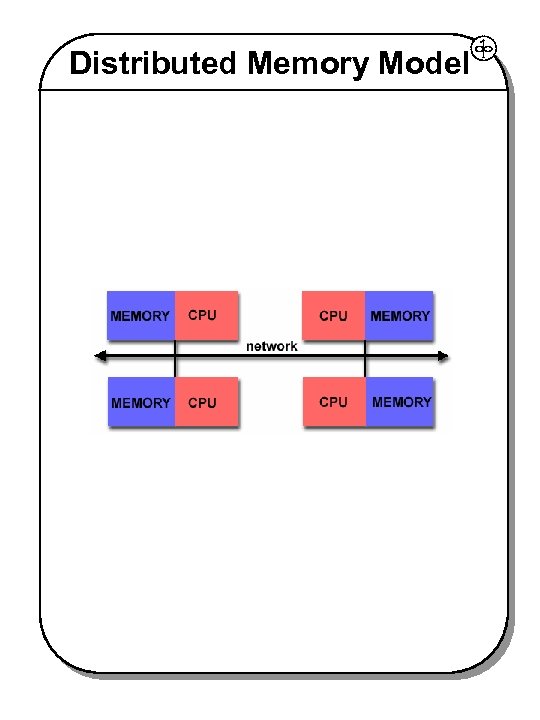
Distributed Memory Model
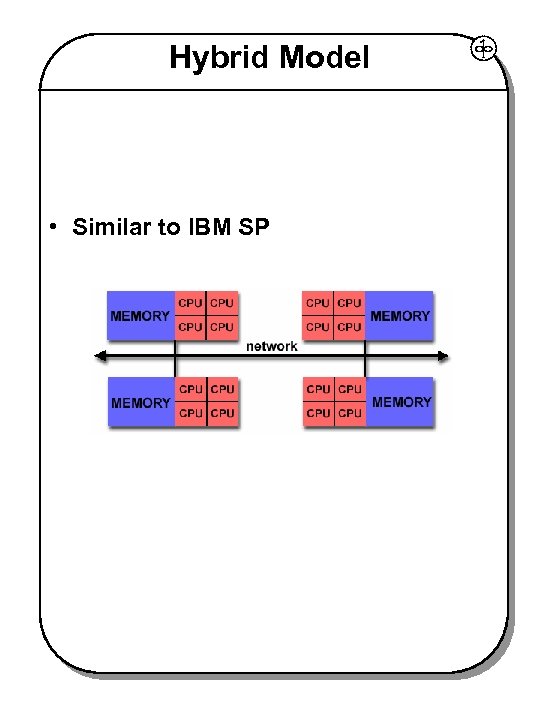
Hybrid Model • Similar to IBM SP
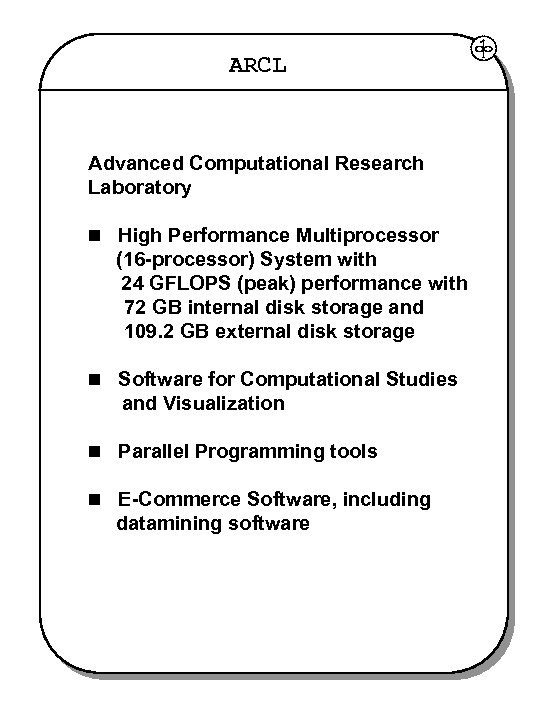
ARCL Advanced Computational Research Laboratory High Performance Multiprocessor (16 -processor) System with 24 GFLOPS (peak) performance with 72 GB internal disk storage and 109. 2 GB external disk storage Software for Computational Studies and Visualization Parallel Programming tools E-Commerce Software, including datamining software
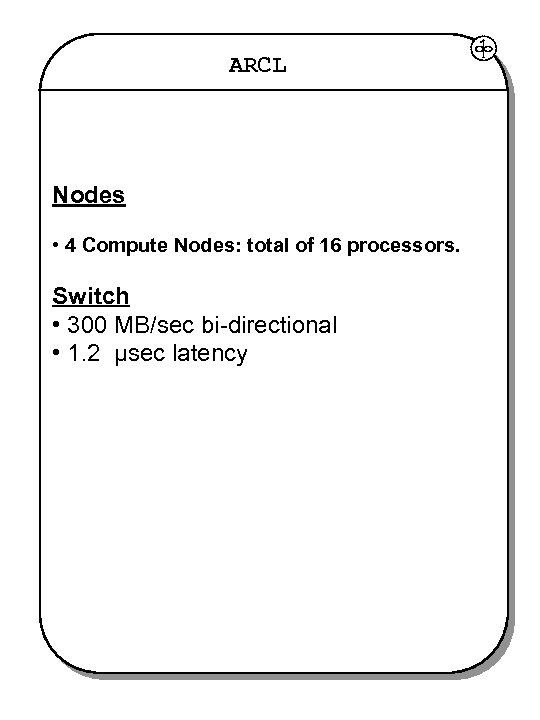
ARCL Nodes • 4 Compute Nodes: total of 16 processors. Switch • 300 MB/sec bi-directional • 1. 2 µsec latency
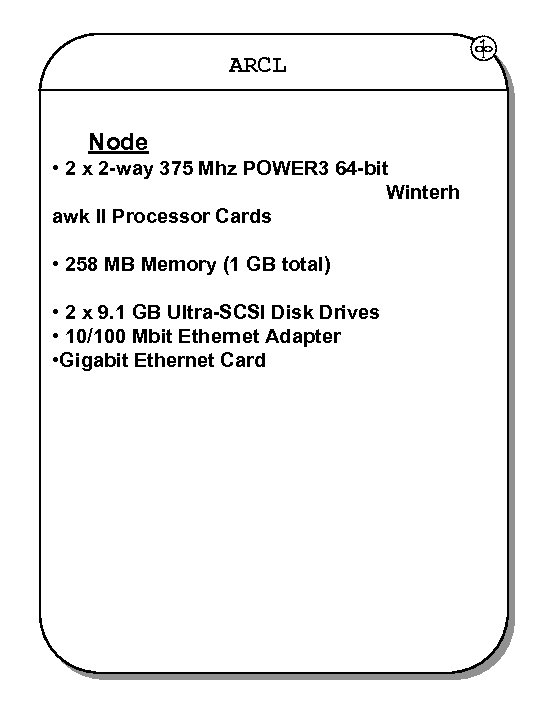
ARCL Node • 2 x 2 -way 375 Mhz POWER 3 64 -bit Winterh awk II Processor Cards • 258 MB Memory (1 GB total) • 2 x 9. 1 GB Ultra-SCSI Disk Drives • 10/100 Mbit Ethernet Adapter • Gigabit Ethernet Card
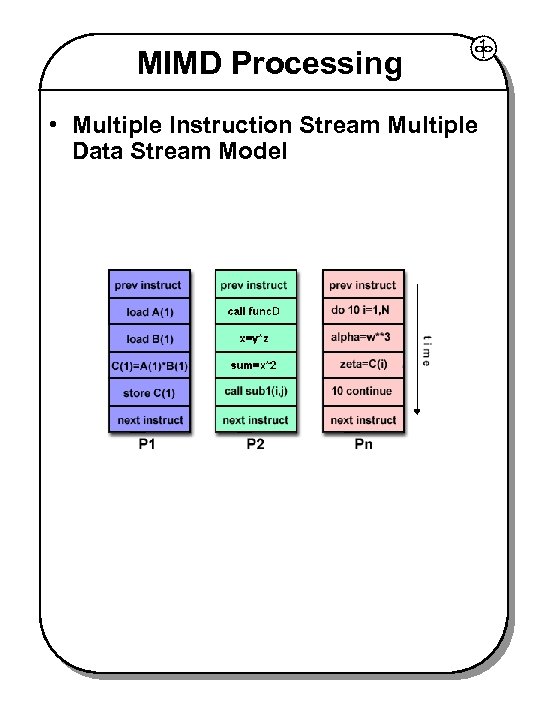
MIMD Processing • Multiple Instruction Stream Multiple Data Stream Model
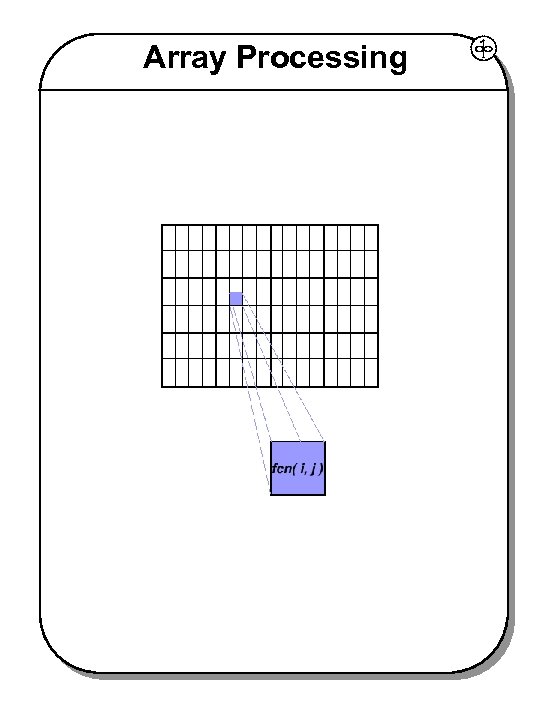
Array Processing
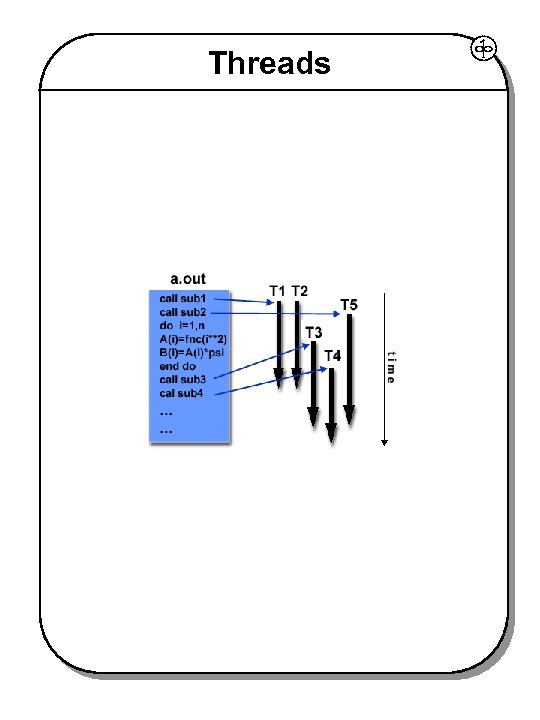
Threads
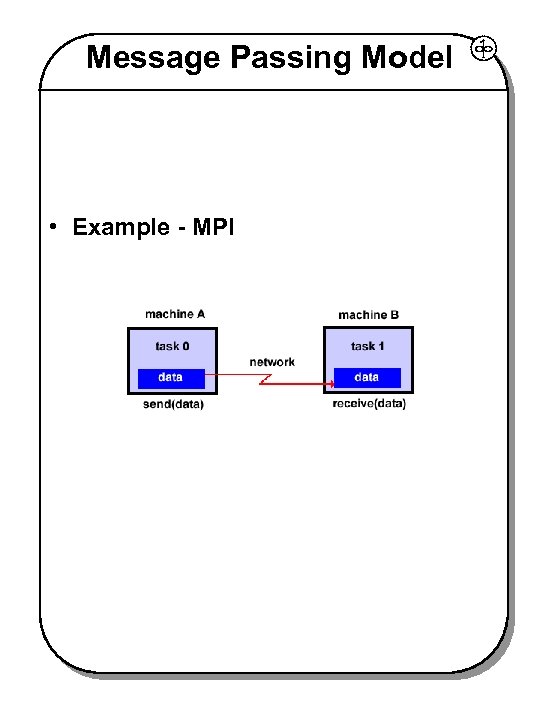
Message Passing Model • Example - MPI
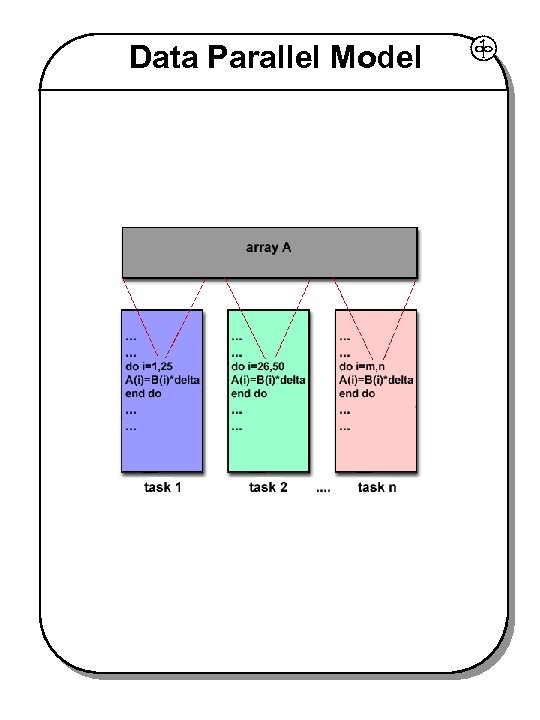
Data Parallel Model
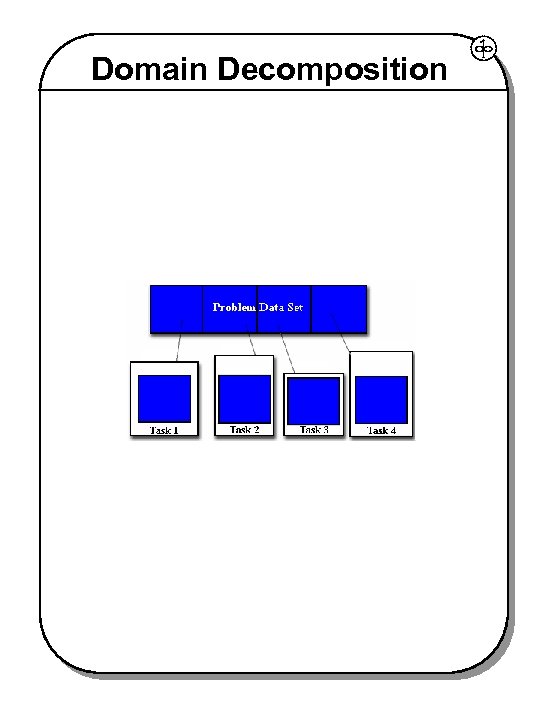
Domain Decomposition
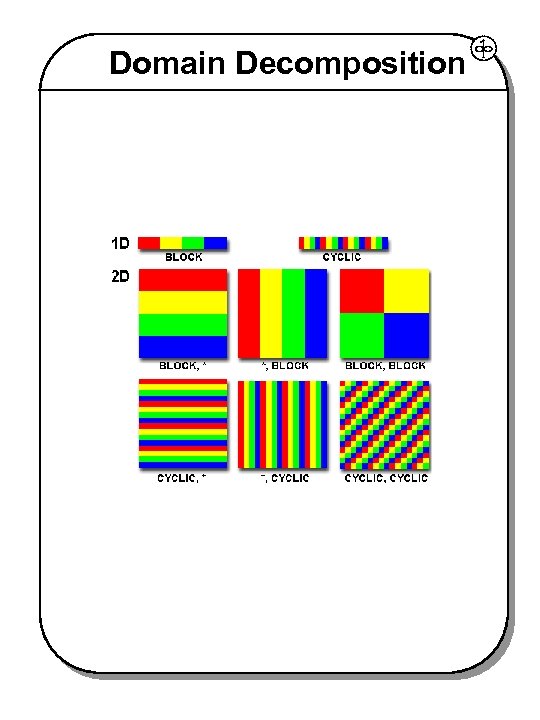
Domain Decomposition
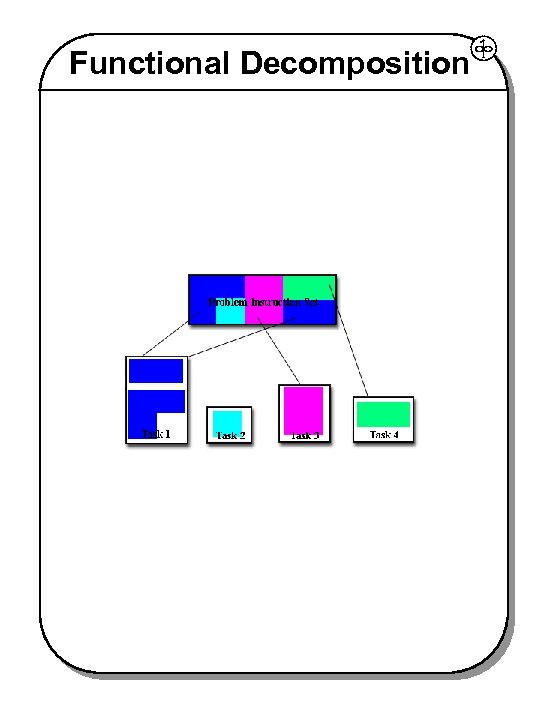
Functional Decomposition
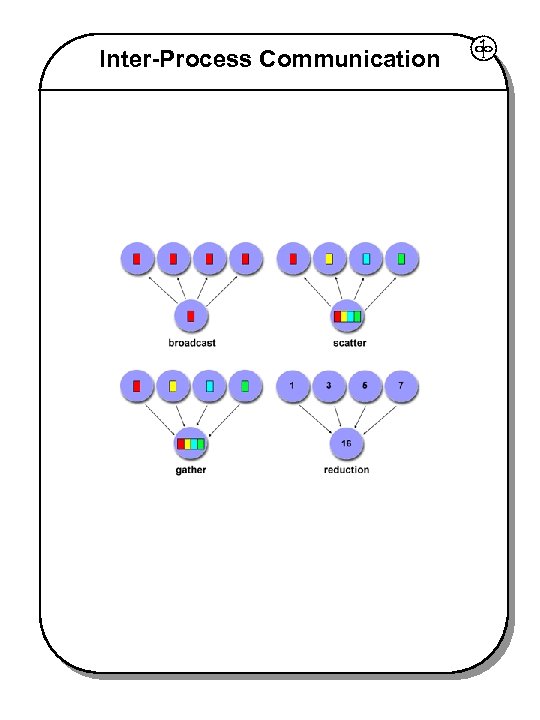
Inter-Process Communication
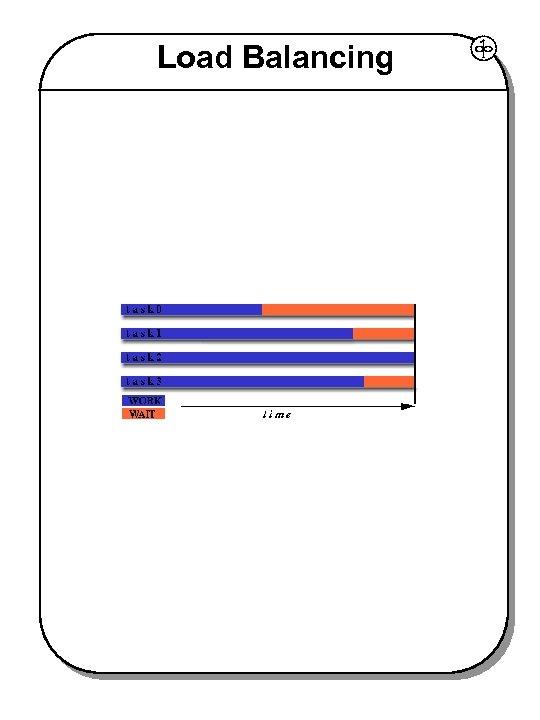
Load Balancing
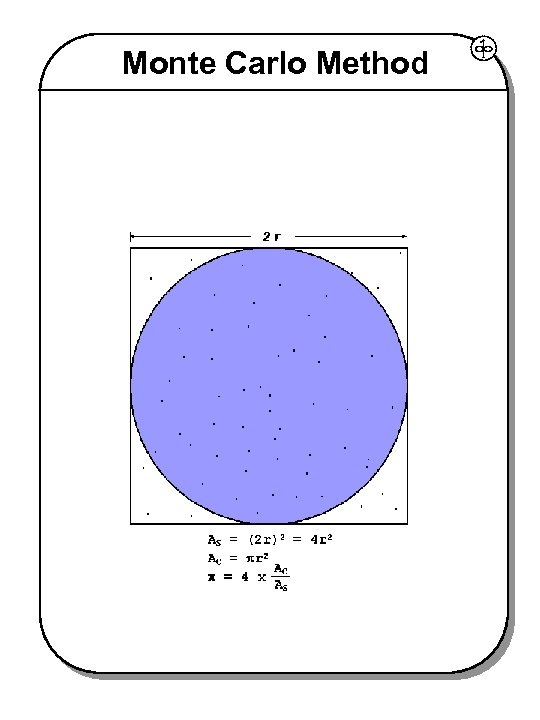
Monte Carlo Method
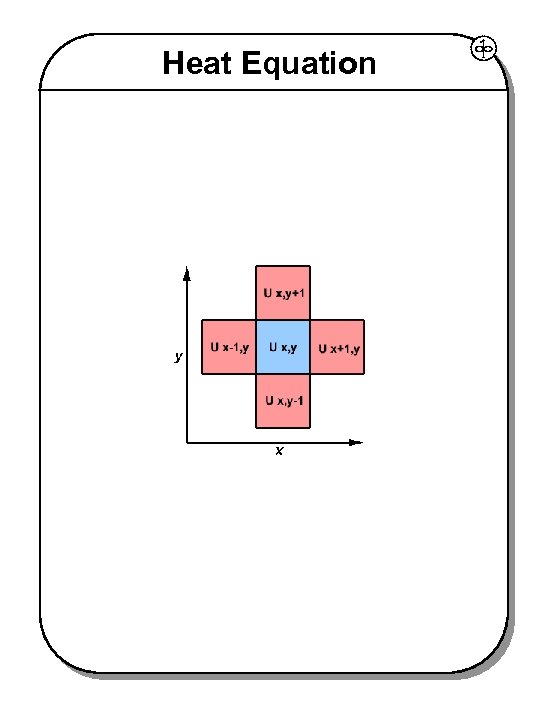
Heat Equation
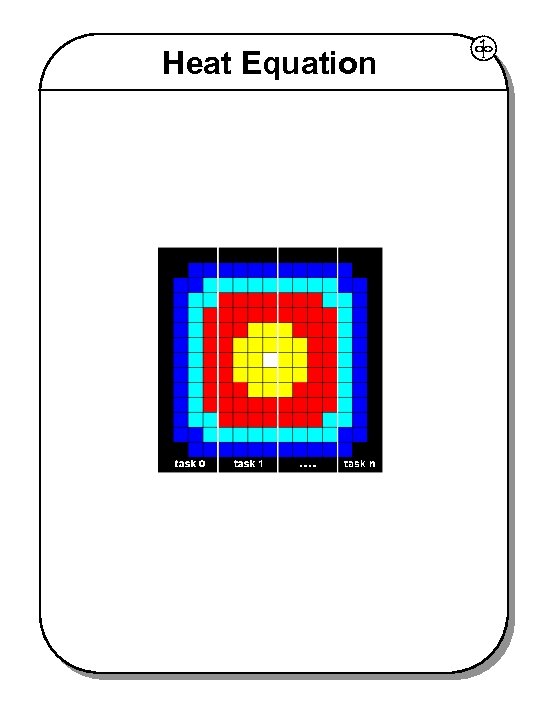
Heat Equation
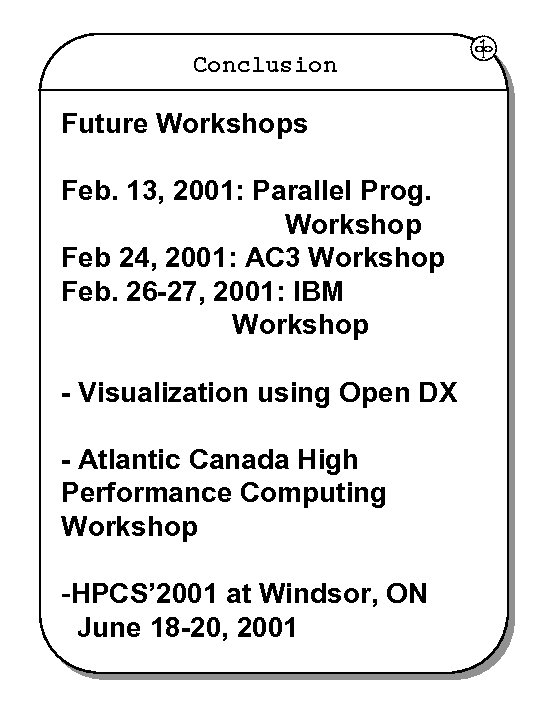
Conclusion Future Workshops Feb. 13, 2001: Parallel Prog. Workshop Feb 24, 2001: AC 3 Workshop Feb. 26 -27, 2001: IBM Workshop - Visualization using Open DX - Atlantic Canada High Performance Computing Workshop -HPCS’ 2001 at Windsor, ON June 18 -20, 2001
Скачать презентацию Advanced Computational Research Laboratory ACRL Virendra C Bhavsar
5d39163ce78f46d7ad5c4a99a3f4c0be.ppt