 Скачать презентацию ADULT POTENTIALLY PREVENTABLE HOSPITALIZATIONS IN TEXAS House Public
c630ed6b94af5e4320e5ebf855c08bd2.ppt
- Количество слайдов: 9



ADULT POTENTIALLY PREVENTABLE HOSPITALIZATIONS IN TEXAS House Public Health Committee May 10, 2010 Mike Gilliam, Jr. , M. S. W. , M. P. H. Assessment & Benchmarking Specialist Centers for Program Coordination, Policy & Innovation Texas Department of State Health Services
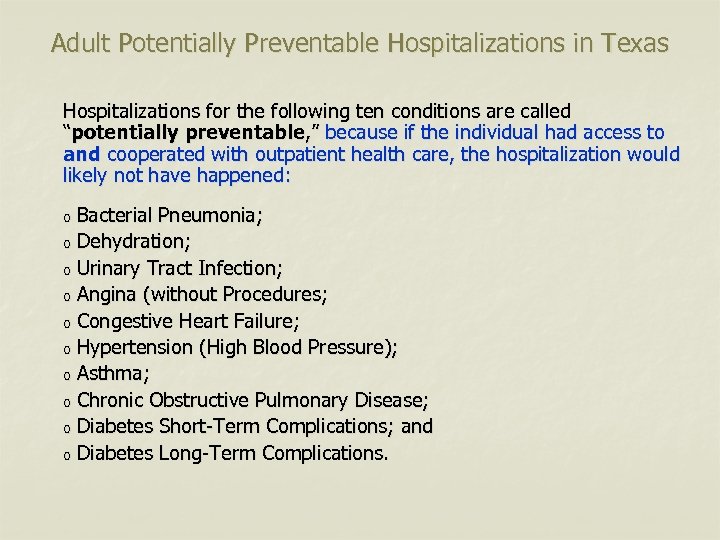
Adult Potentially Preventable Hospitalizations in Texas Hospitalizations for the following ten conditions are called “potentially preventable, ” because if the individual had access to and cooperated with outpatient health care, the hospitalization would likely not have happened: Bacterial Pneumonia; o Dehydration; o Urinary Tract Infection; o Angina (without Procedures; o Congestive Heart Failure; o Hypertension (High Blood Pressure); o Asthma; o Chronic Obstructive Pulmonary Disease; o Diabetes Short-Term Complications; and o Diabetes Long-Term Complications. o
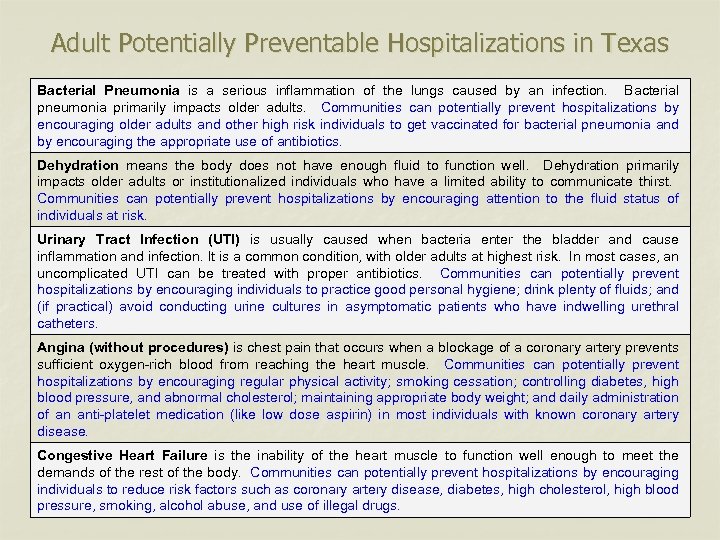
Adult Potentially Preventable Hospitalizations in Texas Bacterial Pneumonia is a serious inflammation of the lungs caused by an infection. Bacterial pneumonia primarily impacts older adults. Communities can potentially prevent hospitalizations by encouraging older adults and other high risk individuals to get vaccinated for bacterial pneumonia and by encouraging the appropriate use of antibiotics. Dehydration means the body does not have enough fluid to function well. Dehydration primarily impacts older adults or institutionalized individuals who have a limited ability to communicate thirst. Communities can potentially prevent hospitalizations by encouraging attention to the fluid status of individuals at risk. Urinary Tract Infection (UTI) is usually caused when bacteria enter the bladder and cause inflammation and infection. It is a common condition, with older adults at highest risk. In most cases, an uncomplicated UTI can be treated with proper antibiotics. Communities can potentially prevent hospitalizations by encouraging individuals to practice good personal hygiene; drink plenty of fluids; and (if practical) avoid conducting urine cultures in asymptomatic patients who have indwelling urethral catheters. Angina (without procedures) is chest pain that occurs when a blockage of a coronary artery prevents sufficient oxygen-rich blood from reaching the heart muscle. Communities can potentially prevent hospitalizations by encouraging regular physical activity; smoking cessation; controlling diabetes, high blood pressure, and abnormal cholesterol; maintaining appropriate body weight; and daily administration of an anti-platelet medication (like low dose aspirin) in most individuals with known coronary artery disease. Congestive Heart Failure is the inability of the heart muscle to function well enough to meet the demands of the rest of the body. Communities can potentially prevent hospitalizations by encouraging individuals to reduce risk factors such as coronary artery disease, diabetes, high cholesterol, high blood pressure, smoking, alcohol abuse, and use of illegal drugs.
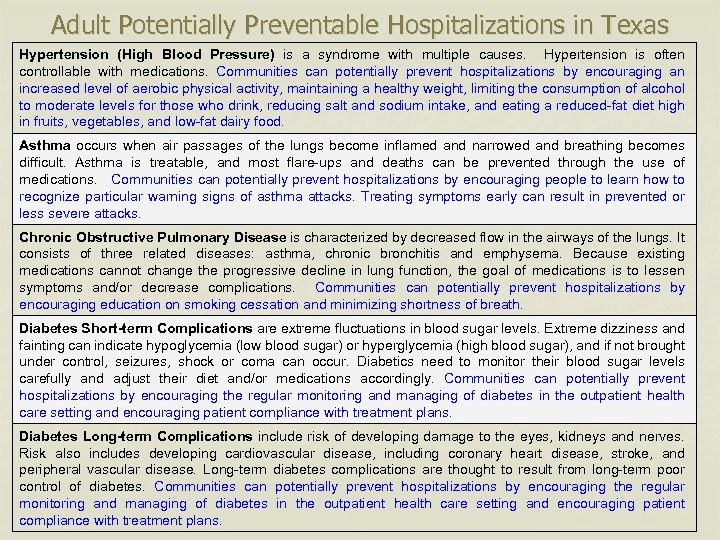
Adult Potentially Preventable Hospitalizations in Texas Hypertension (High Blood Pressure) is a syndrome with multiple causes. Hypertension is often controllable with medications. Communities can potentially prevent hospitalizations by encouraging an increased level of aerobic physical activity, maintaining a healthy weight, limiting the consumption of alcohol to moderate levels for those who drink, reducing salt and sodium intake, and eating a reduced-fat diet high in fruits, vegetables, and low-fat dairy food. Asthma occurs when air passages of the lungs become inflamed and narrowed and breathing becomes difficult. Asthma is treatable, and most flare-ups and deaths can be prevented through the use of medications. Communities can potentially prevent hospitalizations by encouraging people to learn how to recognize particular warning signs of asthma attacks. Treating symptoms early can result in prevented or less severe attacks. Chronic Obstructive Pulmonary Disease is characterized by decreased flow in the airways of the lungs. It consists of three related diseases: asthma, chronic bronchitis and emphysema. Because existing medications cannot change the progressive decline in lung function, the goal of medications is to lessen symptoms and/or decrease complications. Communities can potentially prevent hospitalizations by encouraging education on smoking cessation and minimizing shortness of breath. Diabetes Short-term Complications are extreme fluctuations in blood sugar levels. Extreme dizziness and fainting can indicate hypoglycemia (low blood sugar) or hyperglycemia (high blood sugar), and if not brought under control, seizures, shock or coma can occur. Diabetics need to monitor their blood sugar levels carefully and adjust their diet and/or medications accordingly. Communities can potentially prevent hospitalizations by encouraging the regular monitoring and managing of diabetes in the outpatient health care setting and encouraging patient compliance with treatment plans. Diabetes Long-term Complications include risk of developing damage to the eyes, kidneys and nerves. Risk also includes developing cardiovascular disease, including coronary heart disease, stroke, and peripheral vascular disease. Long-term diabetes complications are thought to result from long-term poor control of diabetes. Communities can potentially prevent hospitalizations by encouraging the regular monitoring and managing of diabetes in the outpatient health care setting and encouraging patient compliance with treatment plans.
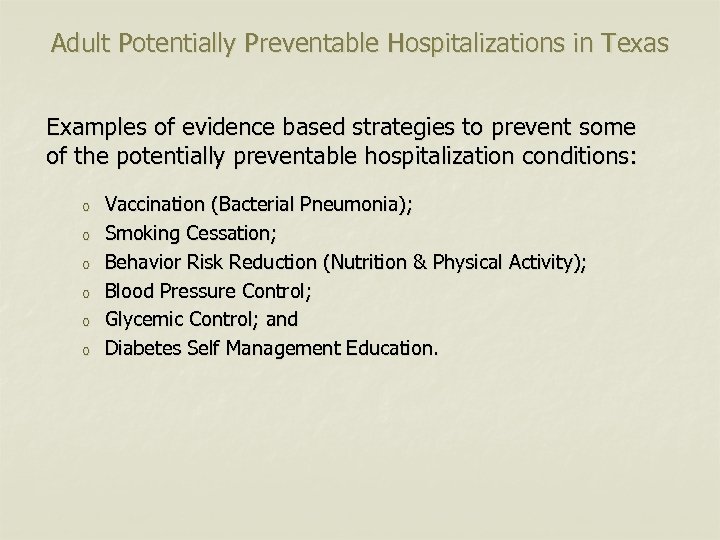
Adult Potentially Preventable Hospitalizations in Texas Examples of evidence based strategies to prevent some of the potentially preventable hospitalization conditions: o o o Vaccination (Bacterial Pneumonia); Smoking Cessation; Behavior Risk Reduction (Nutrition & Physical Activity); Blood Pressure Control; Glycemic Control; and Diabetes Self Management Education.
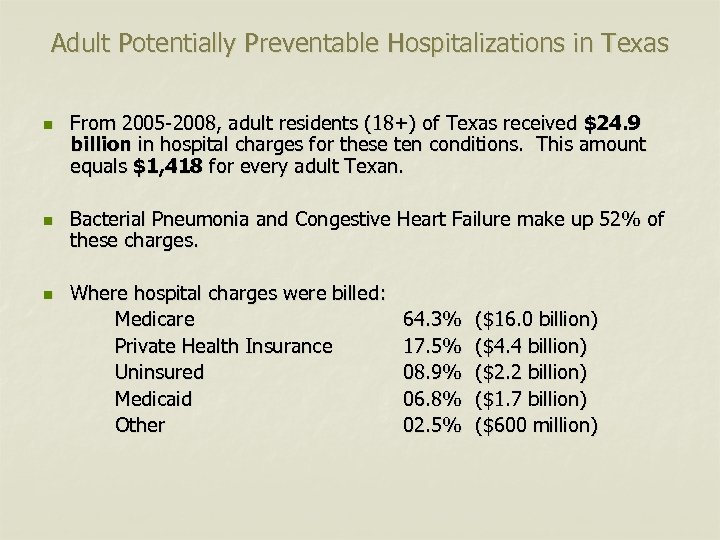
Adult Potentially Preventable Hospitalizations in Texas n n n From 2005 -2008, adult residents (18+) of Texas received $24. 9 billion in hospital charges for these ten conditions. This amount equals $1, 418 for every adult Texan. Bacterial Pneumonia and Congestive Heart Failure make up 52% of these charges. Where hospital charges were billed: Medicare Private Health Insurance Uninsured Medicaid Other 64. 3% 17. 5% 08. 9% 06. 8% 02. 5% ($16. 0 billion) ($4. 4 billion) ($2. 2 billion) ($1. 7 billion) ($600 million)
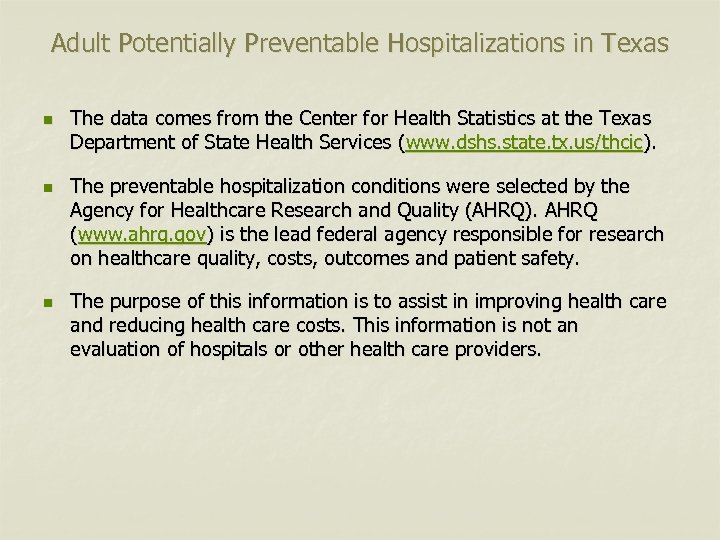
Adult Potentially Preventable Hospitalizations in Texas n n n The data comes from the Center for Health Statistics at the Texas Department of State Health Services (www. dshs. state. tx. us/thcic). The preventable hospitalization conditions were selected by the Agency for Healthcare Research and Quality (AHRQ). AHRQ (www. ahrq. gov) is the lead federal agency responsible for research on healthcare quality, costs, outcomes and patient safety. The purpose of this information is to assist in improving health care and reducing health care costs. This information is not an evaluation of hospitals or other health care providers.
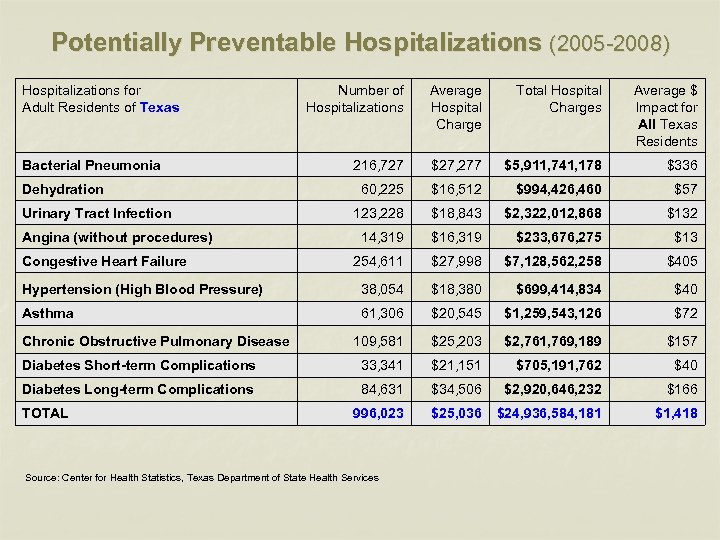
Potentially Preventable Hospitalizations (2005 -2008) Hospitalizations for Adult Residents of Texas Number of Hospitalizations Average Hospital Charge Total Hospital Charges Average $ Impact for All Texas Residents 216, 727 $27, 277 $5, 911, 741, 178 $336 60, 225 $16, 512 $994, 426, 460 $57 123, 228 $18, 843 $2, 322, 012, 868 $132 14, 319 $16, 319 $233, 676, 275 $13 254, 611 $27, 998 $7, 128, 562, 258 $405 Hypertension (High Blood Pressure) 38, 054 $18, 380 $699, 414, 834 $40 Asthma 61, 306 $20, 545 $1, 259, 543, 126 $72 109, 581 $25, 203 $2, 761, 769, 189 $157 Diabetes Short-term Complications 33, 341 $21, 151 $705, 191, 762 $40 Diabetes Long-term Complications 84, 631 $34, 506 $2, 920, 646, 232 $166 996, 023 $25, 036 $24, 936, 584, 181 $1, 418 Bacterial Pneumonia Dehydration Urinary Tract Infection Angina (without procedures) Congestive Heart Failure Chronic Obstructive Pulmonary Disease TOTAL Source: Center for Health Statistics, Texas Department of State Health Services
Adult Potentially Preventable Hospitalizations in Texas n n n For more information on adult preventable hospitalizations in Texas, please go to www. dshs. state. tx. us/ph. This website includes profiles on all 254 counties in Texas. The state profile and the following 16 county profiles are attached as examples: Angelina, Brazos, Cherokee, Collin, Fort Bend, Galveston, Harris, Hidalgo, Liberty, Lubbock, Montgomery, Nueces, Tarrant, Taylor, Travis and Washington. A recent map titled “Potentially Preventable Hospitalizations for Adult Non-Medicare Texans (2005 -2008)” is also attached.
Скачать презентацию ADULT POTENTIALLY PREVENTABLE HOSPITALIZATIONS IN TEXAS House Public
c630ed6b94af5e4320e5ebf855c08bd2.ppt