 Скачать презентацию Administrative vs Judicial Interlock Programs A Roundtable
0d262677bac231a77934afc373a4d67a.ppt
- Количество слайдов: 9



Administrative vs. Judicial Interlock Programs A Roundtable & Debate on Pros and Cons Presenters: Robert Voas, Ph. D. Richard Roth, Ph. D. Participants: Jim Mosher, J. D. Ian Marples, LL. B. Jim Frank, Ph. D. Robyn Robertson, M. A. Bill Rauch, D. A. International Ignition Interlock Symposium, October 22 -24, 2006 October 22, 2006 Administrative vs Judicial 1
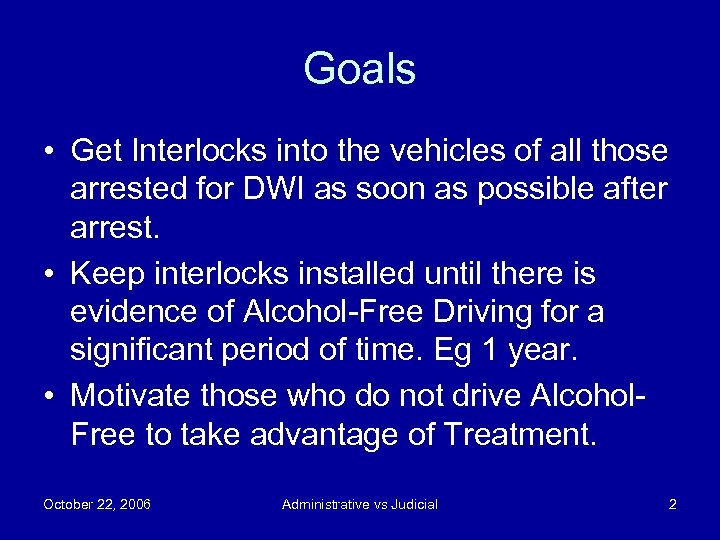
Goals • Get Interlocks into the vehicles of all those arrested for DWI as soon as possible after arrest. • Keep interlocks installed until there is evidence of Alcohol-Free Driving for a significant period of time. Eg 1 year. • Motivate those who do not drive Alcohol. Free to take advantage of Treatment. October 22, 2006 Administrative vs Judicial 2
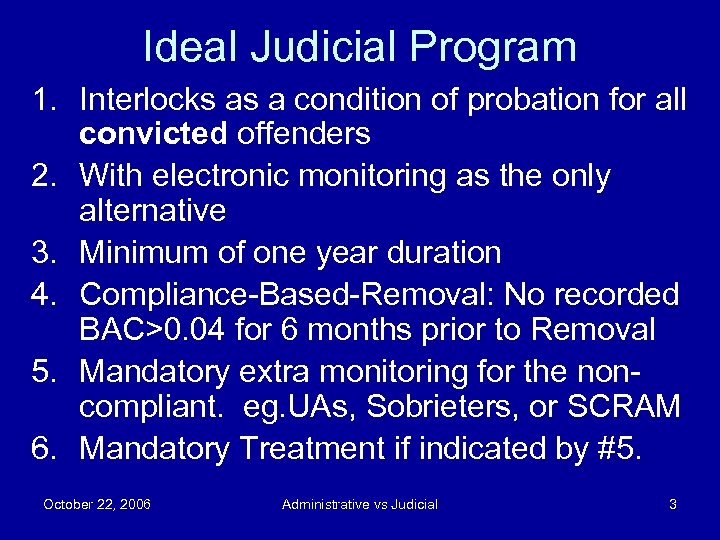
Ideal Judicial Program 1. Interlocks as a condition of probation for all convicted offenders 2. With electronic monitoring as the only alternative 3. Minimum of one year duration 4. Compliance-Based-Removal: No recorded BAC>0. 04 for 6 months prior to Removal 5. Mandatory extra monitoring for the noncompliant. eg. UAs, Sobrieters, or SCRAM 6. Mandatory Treatment if indicated by #5. October 22, 2006 Administrative vs Judicial 3
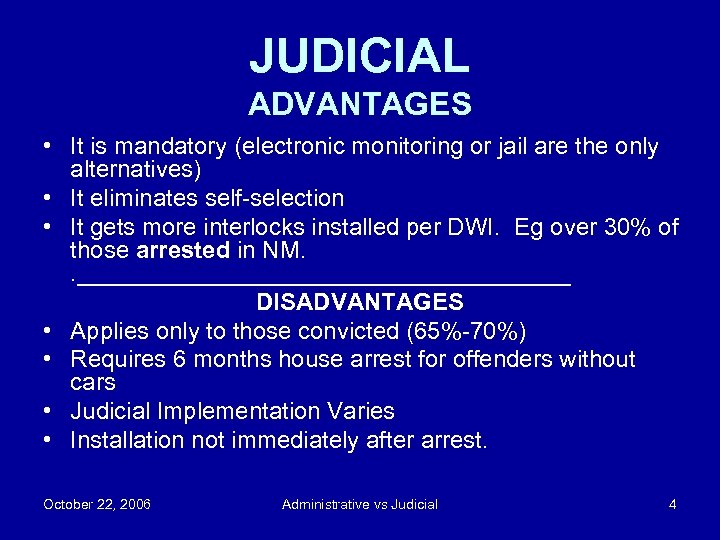
JUDICIAL ADVANTAGES • It is mandatory (electronic monitoring or jail are the only alternatives) • It eliminates self-selection • It gets more interlocks installed per DWI. Eg over 30% of those arrested in NM. . ___________________ DISADVANTAGES • Applies only to those convicted (65%-70%) • Requires 6 months house arrest for offenders without cars • Judicial Implementation Varies • Installation not immediately after arrest. October 22, 2006 Administrative vs Judicial 4
Ideal Administrative Program Upon arrest DMV suspends under ALR but offers free interlock program Upon conviction court orders electronic house arrest, or other electronic monitoring unless offender has installed interlock and begins to pay for it. DWI fines raised to cover interlock costs Compliance based removal and referral to treatment. October 22, 2006 Administrative vs Judicial 5
ADMINISTRATIVE ADVANTAGES • • Centralized authority and criteria Prompt Installation after arrest Allows changed offenders to drive legally Applicable to all arrested DWI offenders. DISADVANTAGES • • • Large self-selection component Avoided by those who need it most Doesn’t get many interlocks installed per DWI Doesn’t reduce over-all recidivism by much. Many more Administrative Appeal Hearings October 22, 2006 Administrative vs Judicial 6
Question and Discussion Period October 22, 2006 Administrative vs Judicial 7
Goals • Get Interlocks into the vehicles of all those arrested for DWI as soon as possible after arrest. • Keep interlocks installed until there is evidence of Alcohol-Free Driving for a significant period of time. Eg 1 year. • Motivate those who do not drive Alcohol. Free to take advantage of Treatment. October 22, 2006 Administrative vs Judicial 8
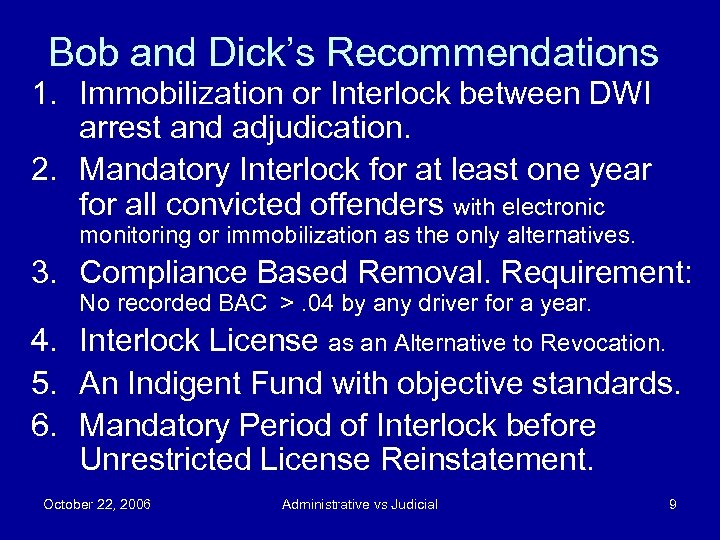
Bob and Dick’s Recommendations 1. Immobilization or Interlock between DWI arrest and adjudication. 2. Mandatory Interlock for at least one year for all convicted offenders with electronic monitoring or immobilization as the only alternatives. 3. Compliance Based Removal. Requirement: No recorded BAC >. 04 by any driver for a year. 4. Interlock License as an Alternative to Revocation. 5. An Indigent Fund with objective standards. 6. Mandatory Period of Interlock before Unrestricted License Reinstatement. October 22, 2006 Administrative vs Judicial 9
Скачать презентацию Administrative vs Judicial Interlock Programs A Roundtable
0d262677bac231a77934afc373a4d67a.ppt