


 Скачать презентацию ADJUSTING THE FORAGE HARVESTER FOR CORN SILAGE PARTICLE
ac7eaf791eaf1eeb9ab310563db9f149.ppt
- Количество слайдов: 33
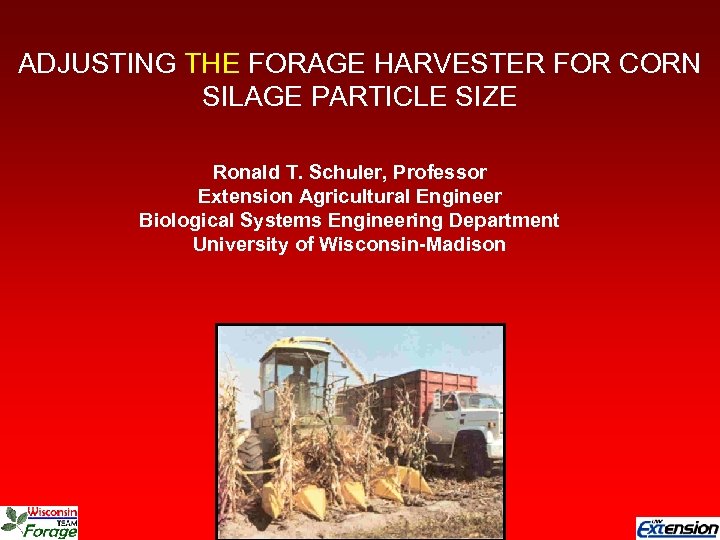 ADJUSTING THE FORAGE HARVESTER FOR CORN SILAGE PARTICLE SIZE Ronald T. Schuler, Professor Extension Agricultural Engineer Biological Systems Engineering Department University of Wisconsin-Madison Team Forage
 Corn Silage Particle Size-Factors § Machine Adjustment h. Feed roll and cutterhead h. Crop processor § Crop maturity § Storage § Animal
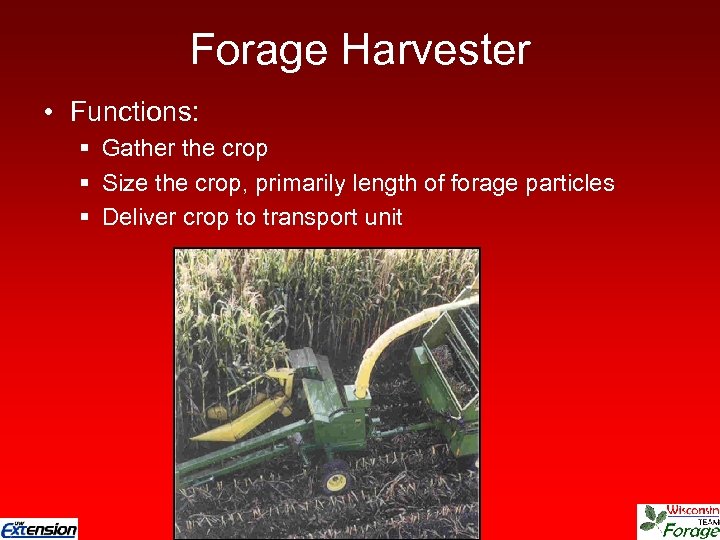 Forage Harvester • Functions: § Gather the crop § Size the crop, primarily length of forage particles § Deliver crop to transport unit
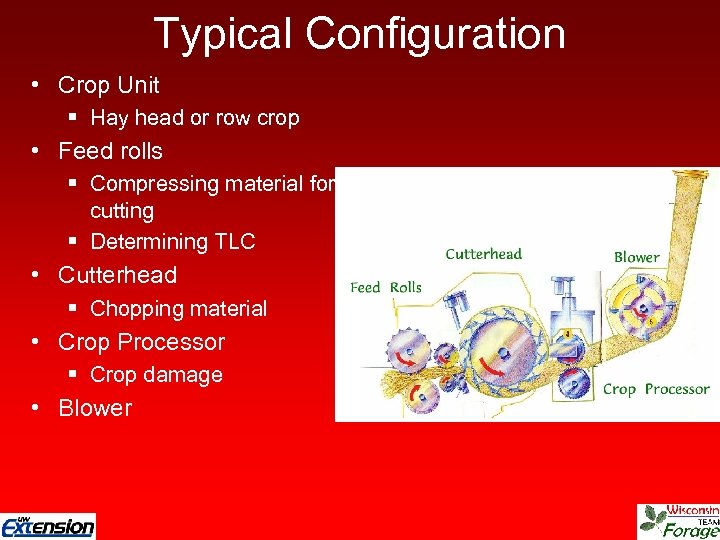 Typical Configuration • Crop Unit § Hay head or row crop • Feed rolls § Compressing material for cutting § Determining TLC • Cutterhead § Chopping material • Crop Processor § Crop damage • Blower
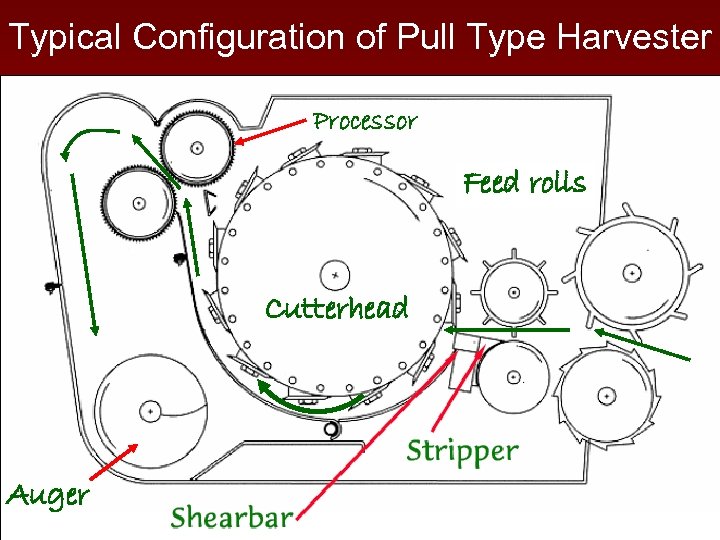 Typical Configuration of Pull Type Harvester Processor Feed rolls Cutterhead Auger
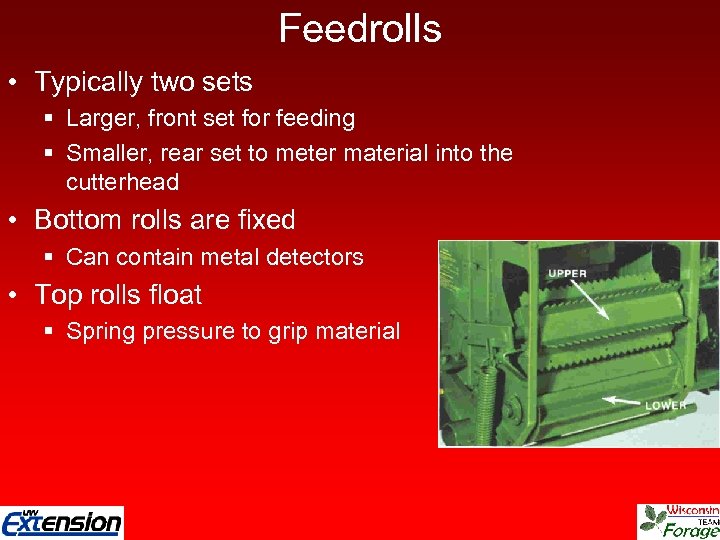 Feedrolls • Typically two sets § Larger, front set for feeding § Smaller, rear set to meter material into the cutterhead • Bottom rolls are fixed § Can contain metal detectors • Top rolls float § Spring pressure to grip material
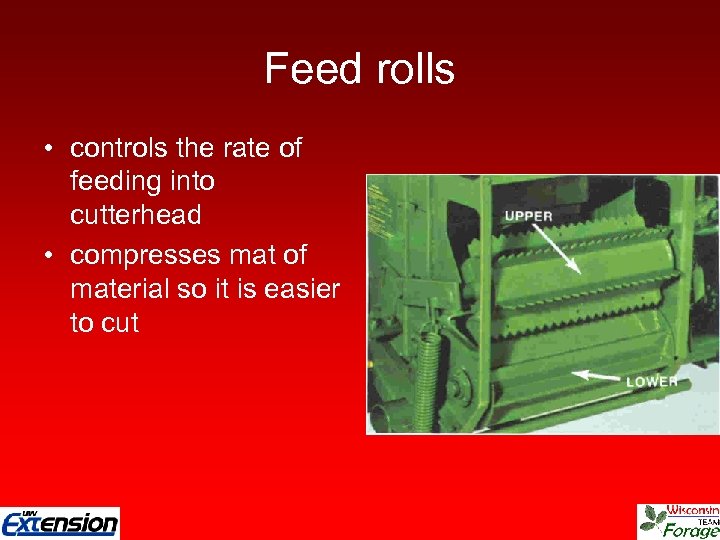 Feed rolls • controls the rate of feeding into cutterhead • compresses mat of material so it is easier to cut
 Theoretical Length of Cut • Definition - feed roll travel per knife • Recommendations § Dependent on • Animals • Feed handling equipment • Crops § Corn silage - 3/8 in. (no crop processor) § Corn silage - 3/4 in. (crop processor)
 Theoretical Length of Cut • Adjusting theoretical length of cut § Feed roll speed § Number of knives § Cutterhead speed • Not practical
 Actual Length of Cut • Longer than the TLC • Windrowed crops longer than row crops § Alfalfa feeds in a tangled mat of material § Corn stalks feed mostly straight
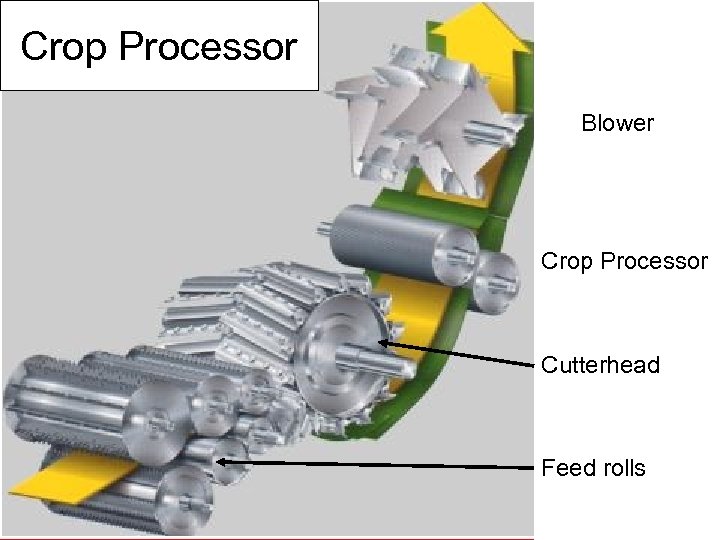 Crop Processor Blower Crop Processor Cutterhead Feed rolls
 Crop Processing • Used only for whole plant corn silage • Kernels are difficult to digest § Contain starch and energy • Damaging the kernel shell allows the rumen bacteria to digest the starch • Breakup cob pieces (avoid hockey pucks)
 Crop Processing • In the past, very short lengths of cut were used to damage more kernels § Recutter screens also used • Increased power requirements drastically • Shortened fiber length too much
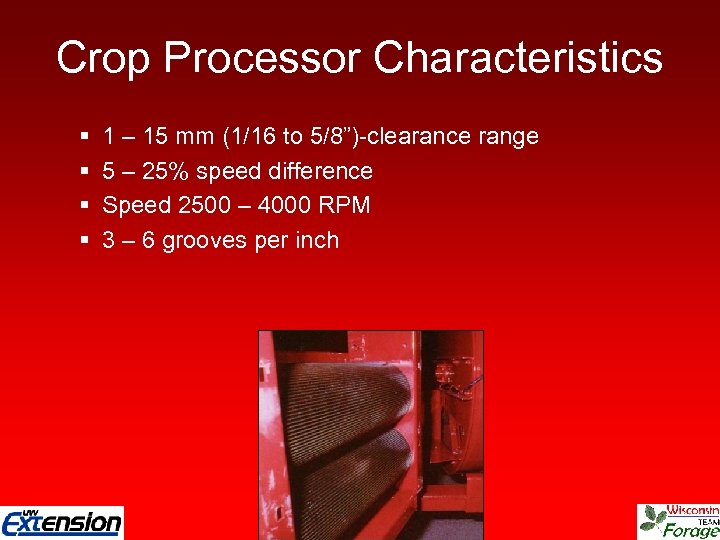 Crop Processor Characteristics § § 1 – 15 mm (1/16 to 5/8”)-clearance range 5 – 25% speed difference Speed 2500 – 4000 RPM 3 – 6 grooves per inch
 Crop Processing A properly adjusted kernel processor § Damages more than 90% of the kernels § Pulverize cob pieces • Minimizes waste in the feed bunk § Allows for longer length of cut • Longer fiber • Less power consumption
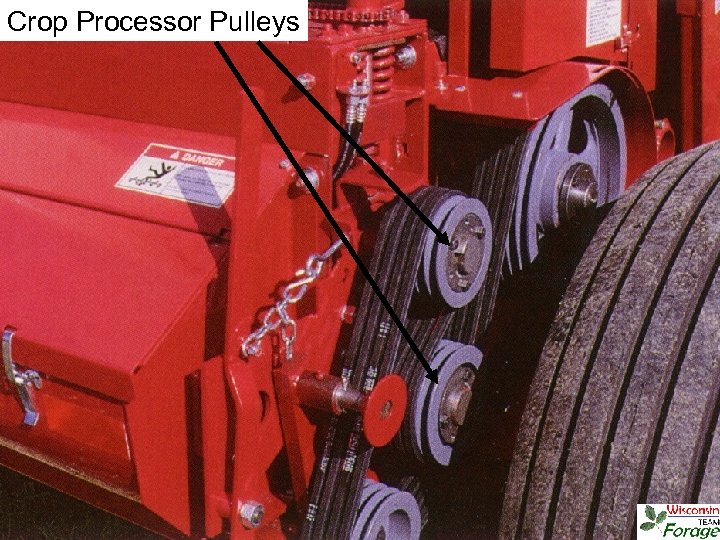 Crop Processor Pulleys
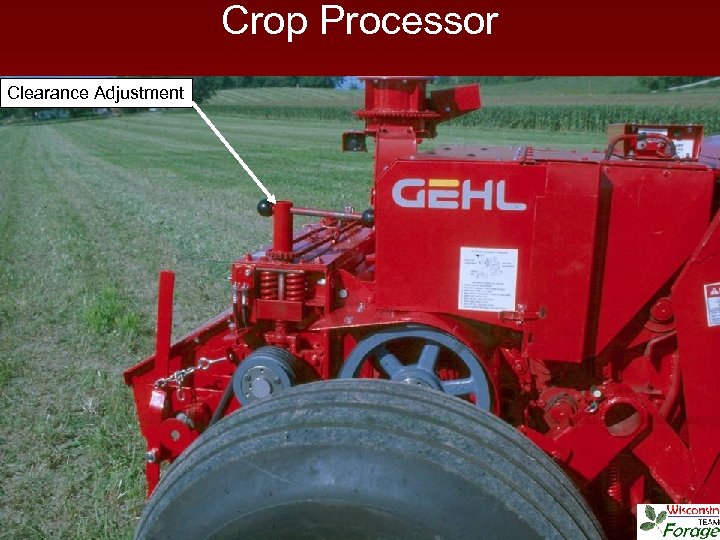 Crop Processor Clearance Adjustment
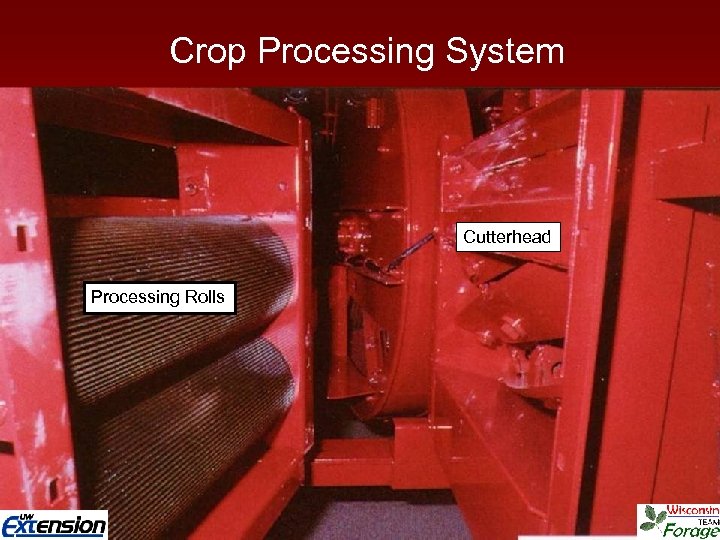 Crop Processing System Cutterhead Processing Rolls
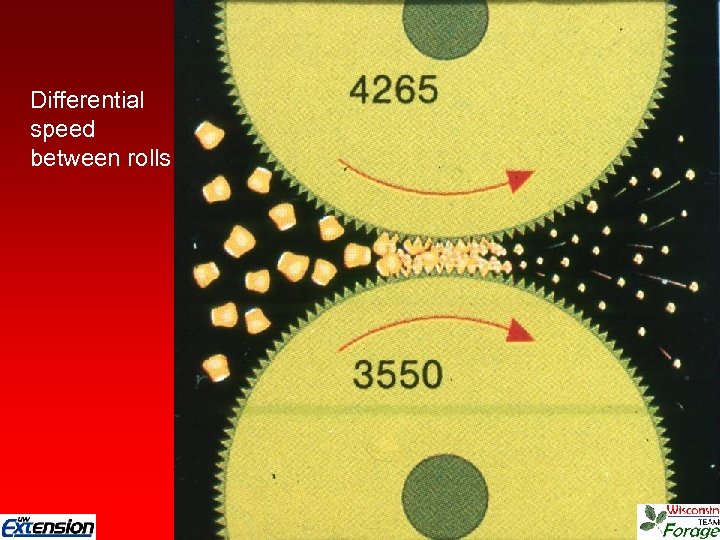 Differential speed between rolls
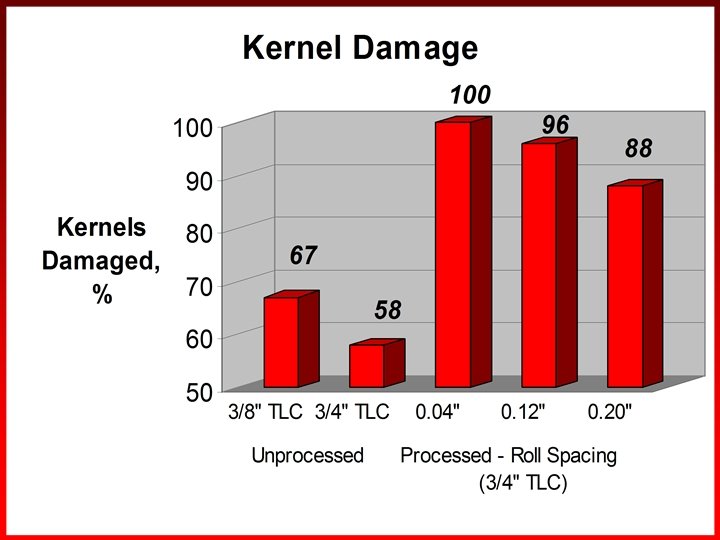
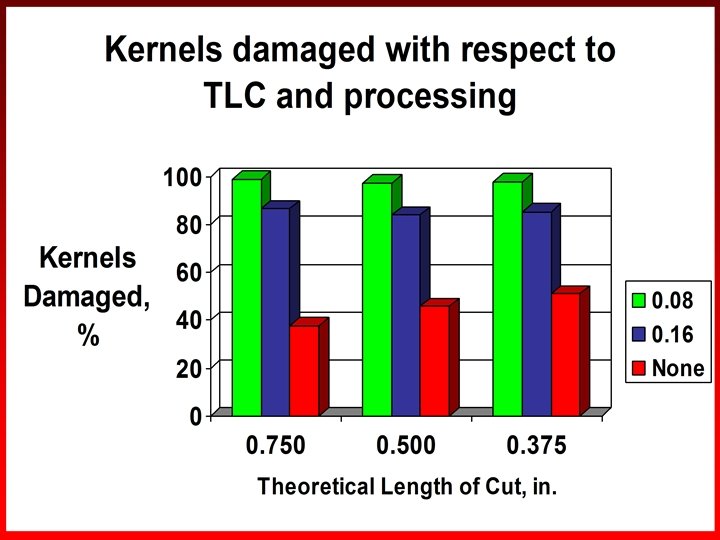
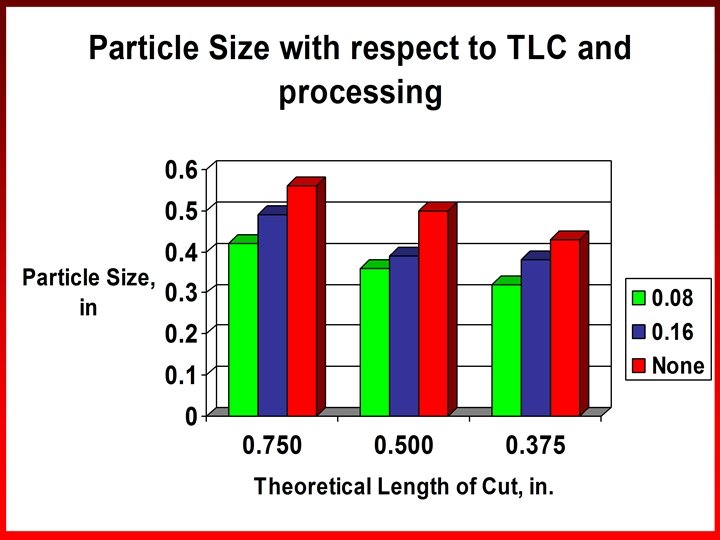
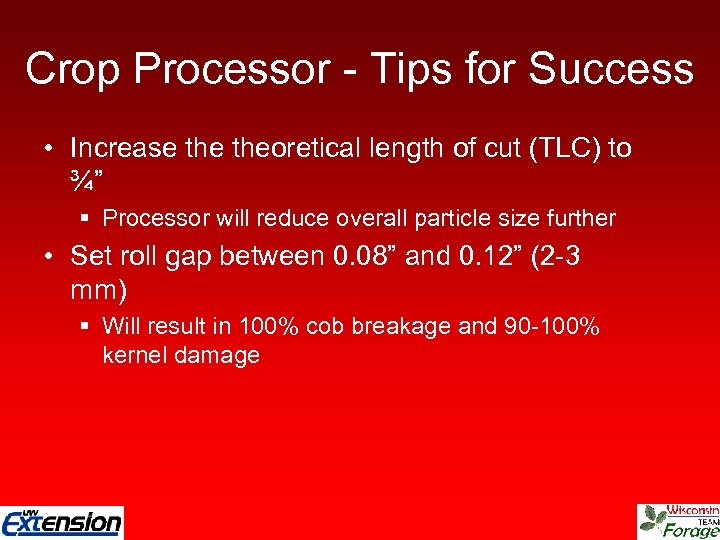 Crop Processor - Tips for Success • Increase theoretical length of cut (TLC) to ¾” § Processor will reduce overall particle size further • Set roll gap between 0. 08” and 0. 12” (2 -3 mm) § Will result in 100% cob breakage and 90 -100% kernel damage
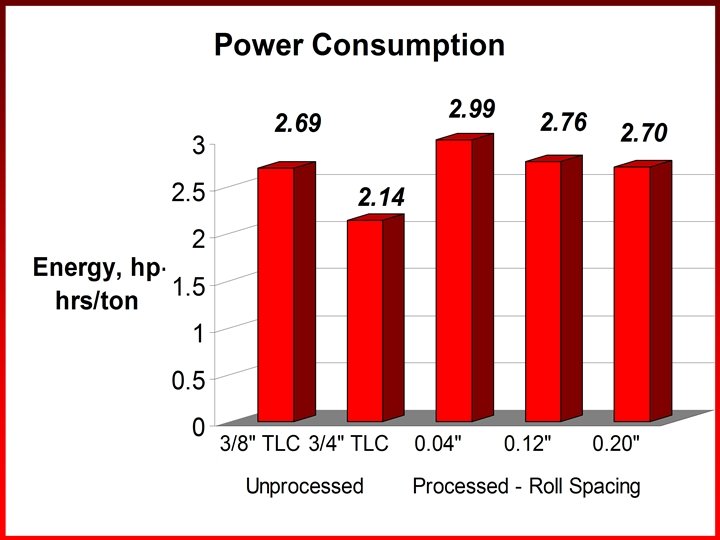
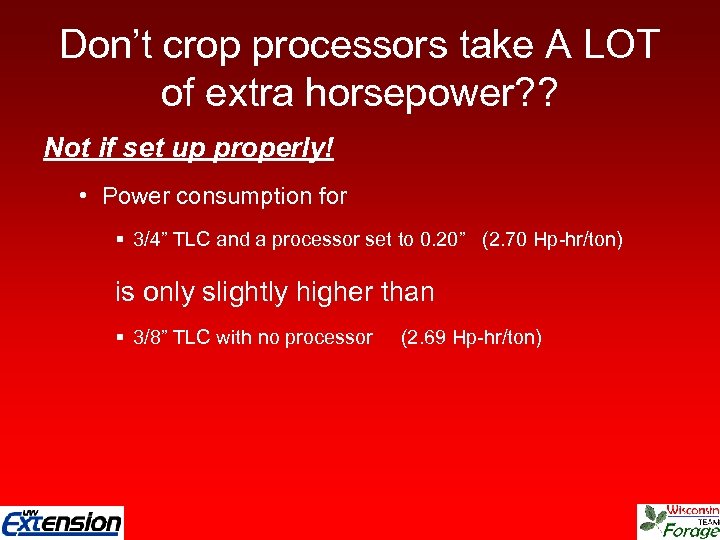 Don’t crop processors take A LOT of extra horsepower? ? Not if set up properly! • Power consumption for § 3/4” TLC and a processor set to 0. 20” (2. 70 Hp-hr/ton) is only slightly higher than § 3/8” TLC with no processor (2. 69 Hp-hr/ton)
 Roll Wear § PTFH - Rolls Wear At Center § SPFH - Rolls Wear At Edges § Helical Knives - Uneven Wear § As Teeth Wear: • Capacity Is Reduced • Plugging More Likely • Processing More Difficult
 Dealing with Worn Rolls § Replacement ~ $1, 500 per Roll § Re-Grooving ~ 1/3 to 1/2 Cost of New § Re-Grooving Considerations: h Won’t Last As Long As Original h Can Only Be Done Once h Tolerances Not As Good
 WHAT TO LOOK FOR IN A CROP PROCESSOR § Roll Diameter § Tooth Pitch § Ease of Checking and Adjusting Roll Clearance § Ease of Unplugging § Ease of Switching Between Corn silage and Haylage
 Machine Power Consumption § Gathering and feeding • 20% of total § Cutterhead and processor • 40 – 50% of total § Blowing into wagon / truck • 30 – 40% of total
 Reducing Power Loss § § Maintain sharp knives Keep close knife to shearbar clearance Properly adjust processor Keep blower band clearance small
 Concluding Remarks § No Processor-TLC=0. 375 in. § Processor-TLC = 0. 75 in and roll clearance= 0. 8 to 0. 12 in.
 Questions
 QUESTIONS