 Скачать презентацию Addressing Tobacco A Recovery-Oriented Integrated Systems Approach NAADAC
5aa305c3ccb2715d4495d59a4b0dbe87.ppt
- Количество слайдов: 37



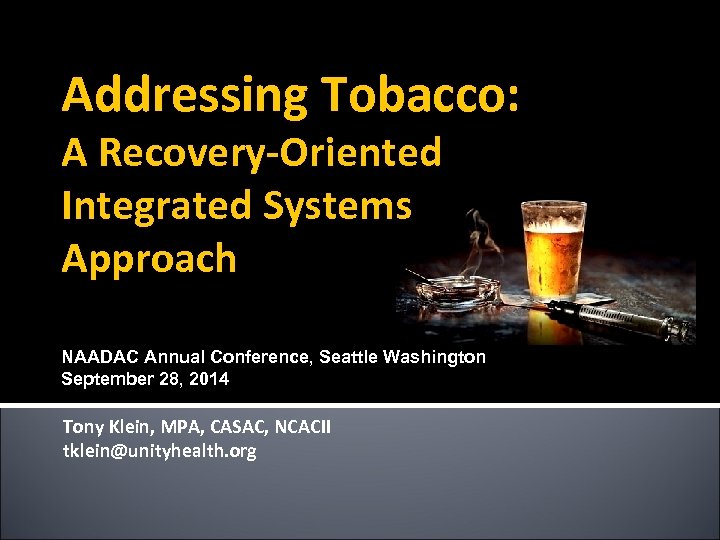
Addressing Tobacco: A Recovery-Oriented Integrated Systems Approach NAADAC Annual Conference, Seattle Washington September 28, 2014 Tony Klein, MPA, CASAC, NCACII tklein@unityhealth. org
Discussion § Individuals with SUD/COD are more vulnerable to § § tobacco use disorder. Tobacco use behavior is most often fundamental to the use rituals of other substances. Fully integrated tobacco interventions in addiction services improves treatment outcomes. Effective implementation strategy must include provision to denormalize tobacco use in the treatment and recovery culture. Behavioral Health providers have highly developed clinical competencies to treat tobacco addiction.
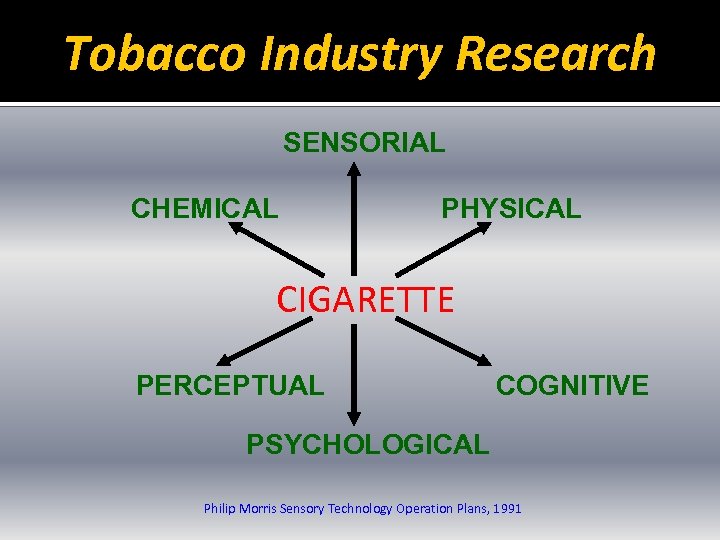
Tobacco Industry Research SENSORIAL CHEMICAL PHYSICAL CIGARETTE PERCEPTUAL COGNITIVE PSYCHOLOGICAL Philip Morris Sensory Technology Operation Plans, 1991
Tobacco Industry Research Philip Morris Behavioral Research Lab Project 1620 “…to study the basic dimensions of the cigarette as they relate to cigarette acceptability…[and] to record and interpret changes in smoke inhalation patterns [and nicotine retention] in response to changes in smoke composition”, and “to develop a better understanding of the actions of nicotine and other smoke compounds, especially those which reinforce the smoking act. ” Nicotine & Tobacco Research, Volume 6, Number 6, December 2004
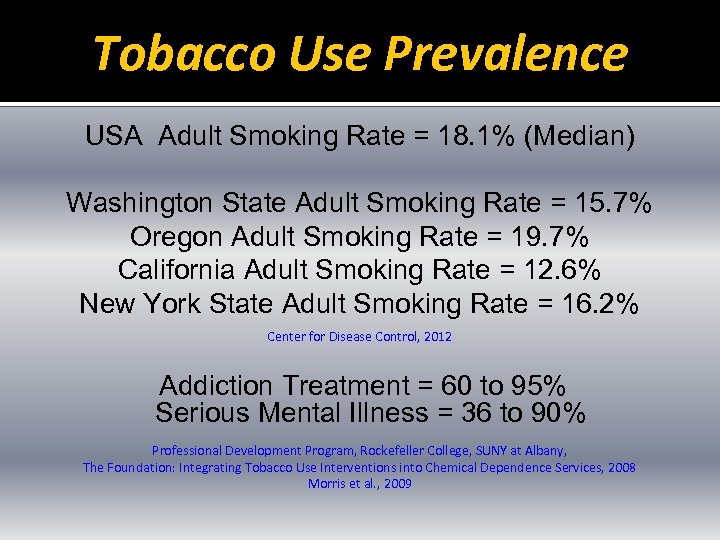
Tobacco Use Prevalence USA Adult Smoking Rate = 18. 1% (Median) Washington State Adult Smoking Rate = 15. 7% Oregon Adult Smoking Rate = 19. 7% California Adult Smoking Rate = 12. 6% New York State Adult Smoking Rate = 16. 2% Center for Disease Control, 2012 Addiction Treatment = 60 to 95% Serious Mental Illness = 36 to 90% Professional Development Program, Rockefeller College, SUNY at Albany, The Foundation: Integrating Tobacco Use Interventions into Chemical Dependence Services, 2008 Morris et al. , 2009
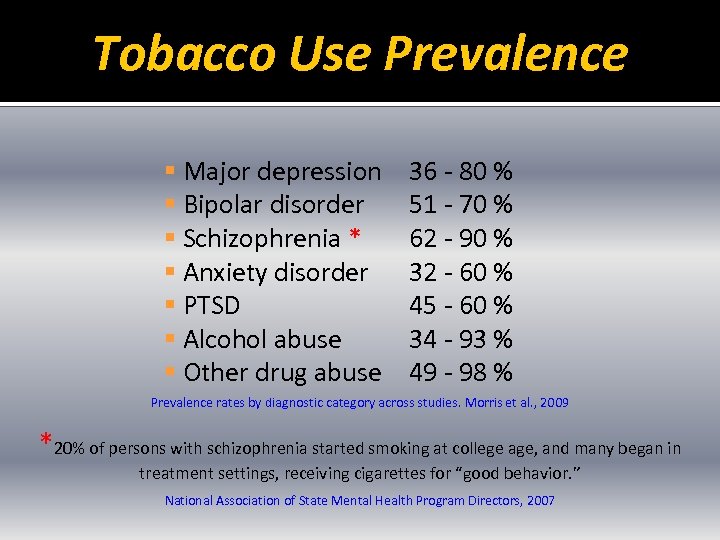
Tobacco Use Prevalence § Major depression § Bipolar disorder § Schizophrenia * § Anxiety disorder § PTSD § Alcohol abuse § Other drug abuse 36 - 80 % 51 - 70 % 62 - 90 % 32 - 60 % 45 - 60 % 34 - 93 % 49 - 98 % Prevalence rates by diagnostic category across studies. Morris et al. , 2009 *20% of persons with schizophrenia started smoking at college age, and many began in treatment settings, receiving cigarettes for “good behavior. ” National Association of State Mental Health Program Directors, 2007
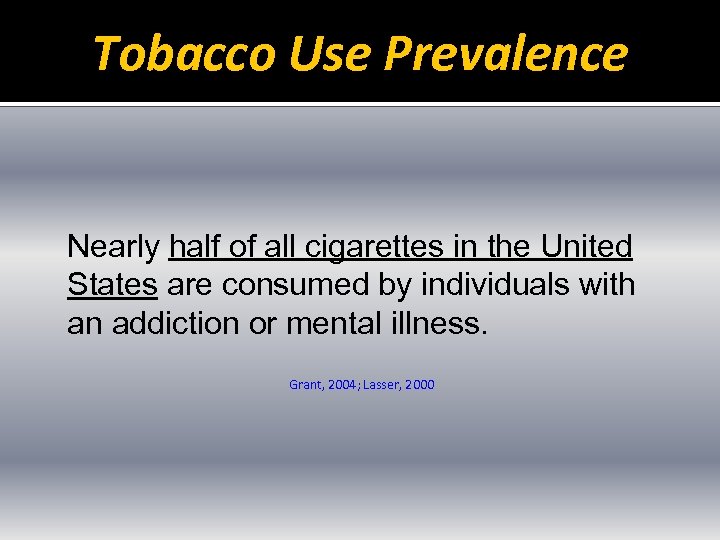
Tobacco Use Prevalence Nearly half of all cigarettes in the United States are consumed by individuals with an addiction or mental illness. Grant, 2004; Lasser, 2000
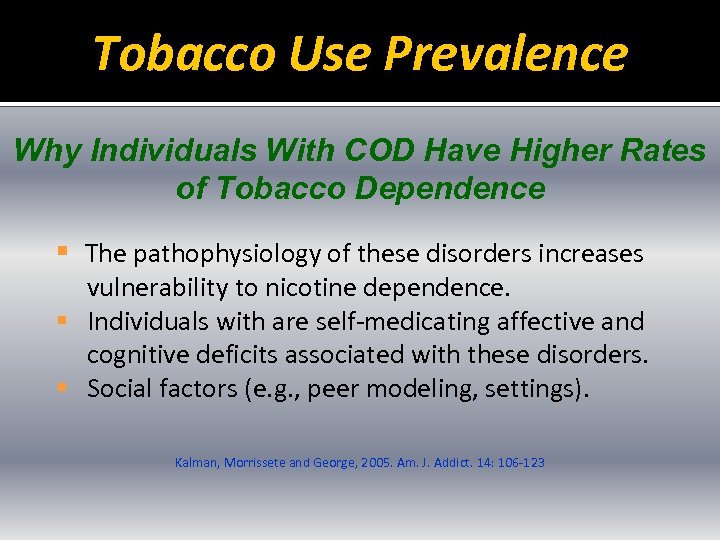
Tobacco Use Prevalence Why Individuals With COD Have Higher Rates of Tobacco Dependence § The pathophysiology of these disorders increases vulnerability to nicotine dependence. § Individuals with are self-medicating affective and cognitive deficits associated with these disorders. § Social factors (e. g. , peer modeling, settings). Kalman, Morrissete and George, 2005. Am. J. Addict. 14: 106 -123
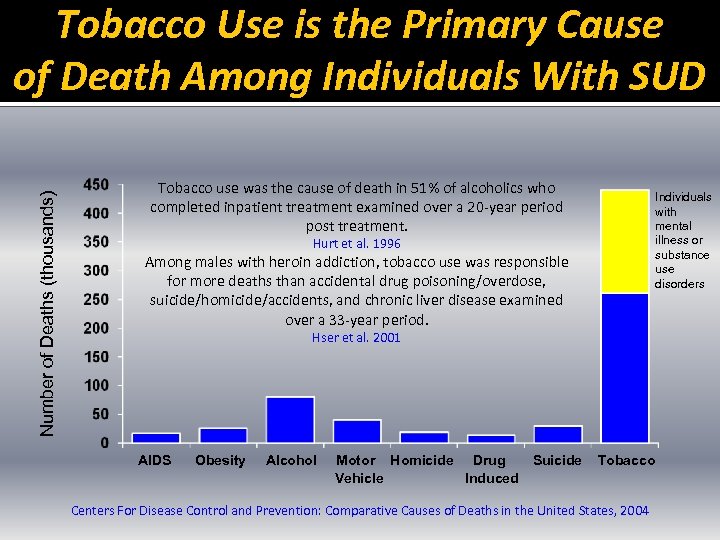
Number of Deaths (thousands) Tobacco Use is the Primary Cause of Death Among Individuals With SUD Tobacco use was the cause of death in 51% of alcoholics who completed inpatient treatment examined over a 20 -year period post treatment. Individuals with mental illness or substance use disorders Hurt et al. 1996 Among males with heroin addiction, tobacco use was responsible for more deaths than accidental drug poisoning/overdose, suicide/homicide/accidents, and chronic liver disease examined over a 33 -year period. Hser et al. 2001 AIDS Obesity Alcohol Motor Homicide Drug Suicide Vehicle Induced Tobacco Centers For Disease Control and Prevention: Comparative Causes of Deaths in the United States, 2004
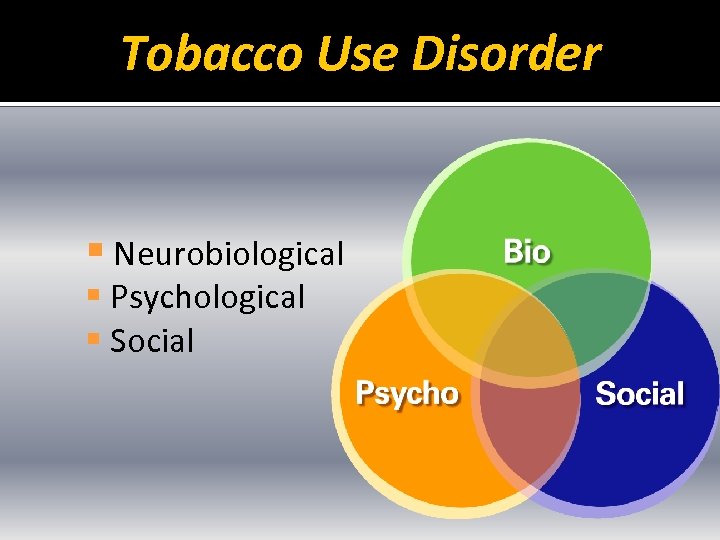
Tobacco Use Disorder § Neurobiological § Psychological § Social
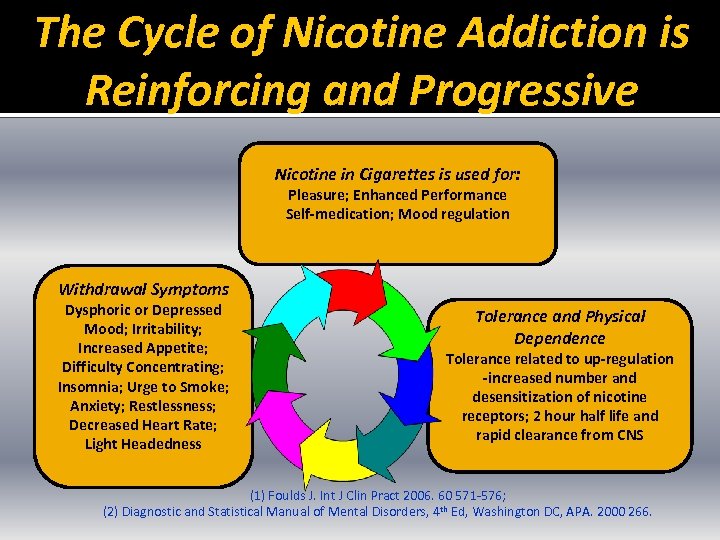
The Cycle of Nicotine Addiction is Reinforcing and Progressive Nicotine in Cigarettes is used for: Pleasure; Enhanced Performance Self-medication; Mood regulation Withdrawal Symptoms Dysphoric or Depressed Mood; Irritability; Increased Appetite; Difficulty Concentrating; Insomnia; Urge to Smoke; Anxiety; Restlessness; Decreased Heart Rate; Light Headedness Tolerance and Physical Dependence Tolerance related to up-regulation -increased number and desensitization of nicotine receptors; 2 hour half life and rapid clearance from CNS (1) Foulds J. Int J Clin Pract 2006. 60 571 -576; (2) Diagnostic and Statistical Manual of Mental Disorders, 4 th Ed, Washington DC, APA. 2000 266.
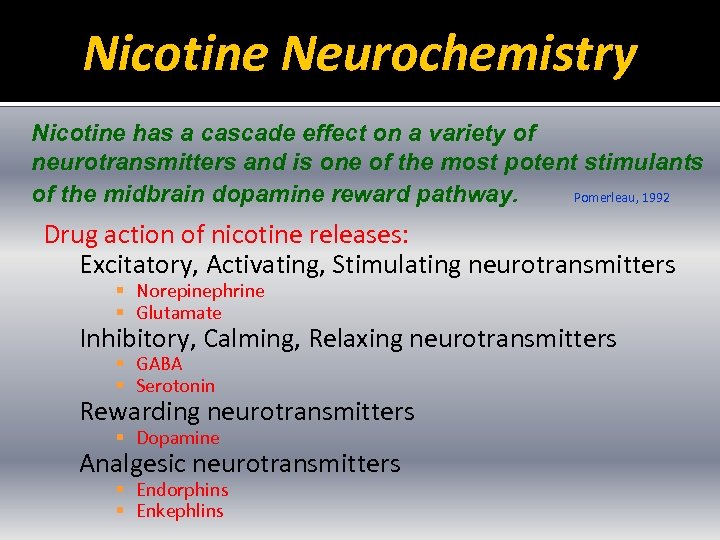
Nicotine Neurochemistry Nicotine has a cascade effect on a variety of neurotransmitters and is one of the most potent stimulants of the midbrain dopamine reward pathway. Pomerleau, 1992 Drug action of nicotine releases: Excitatory, Activating, Stimulating neurotransmitters § Norepinephrine § Glutamate Inhibitory, Calming, Relaxing neurotransmitters § GABA § Serotonin Rewarding neurotransmitters § Dopamine Analgesic neurotransmitters § Endorphins § Enkephlins
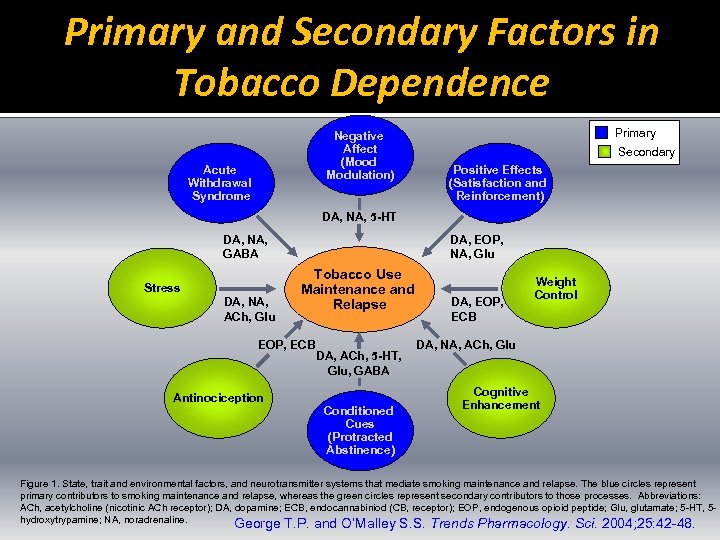
Primary and Secondary Factors in Tobacco Dependence Negative Affect (Mood Modulation) Acute Withdrawal Syndrome Primary Secondary Positive Effects (Satisfaction and Reinforcement) DA, NA, 5 -HT DA, NA, GABA Stress DA, NA, ACh, Glu DA, EOP, NA, Glu Tobacco Use Maintenance and Relapse EOP, ECB Antinociception DA, ACh, 5 -HT, Glu, GABA Conditioned Cues (Protracted Abstinence) DA, EOP, ECB Weight Control DA, NA, ACh, Glu Cognitive Enhancement Figure 1. State, trait and environmental factors, and neurotransmitter systems that mediate smoking maintenance and relapse. The blue circles represent primary contributors to smoking maintenance and relapse, whereas the green circles represent secondary contributors to those processes. Abbreviations: ACh, acetylcholine (nicotinic ACh receptor); DA, dopamine; ECB, endocannabiniod (CB, receptor); EOP, endogenous opioid peptide; Glu, glutamate; 5 -HT, 5 hydroxytrypamine; NA, noradrenaline. George T. P. and O’Malley S. S. Trends Pharmacology. Sci. 2004; 25: 42 -48.
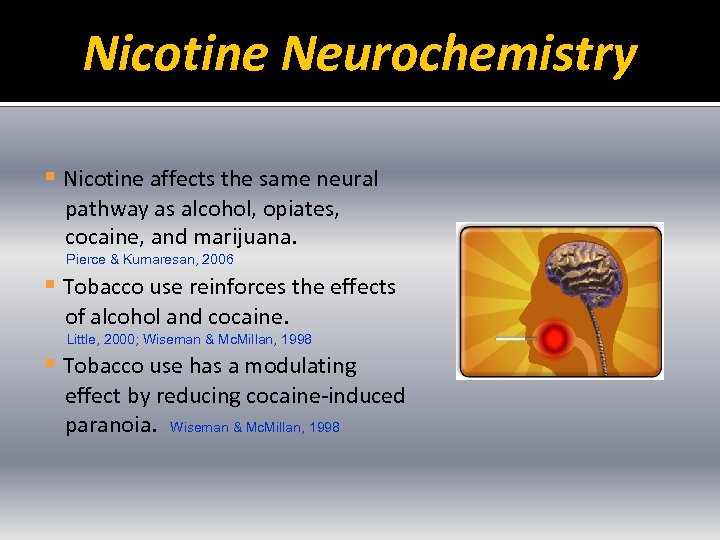
Nicotine Neurochemistry § Nicotine affects the same neural pathway as alcohol, opiates, cocaine, and marijuana. Pierce & Kumaresan, 2006 § Tobacco use reinforces the effects of alcohol and cocaine. Little, 2000; Wiseman & Mc. Millan, 1998 § Tobacco use has a modulating effect by reducing cocaine-induced paranoia. Wiseman & Mc. Millan, 1998
Social Factors Tobacco use in an population with SUD maintains… § rituals and social norms that serve to reinforce substance abuse coping beliefs § drug dealing behavior and lifestyle § a rationale for manipulative and secretive behavior
The Paradox § As one walks through a drug recovery process, the cigarette is often the last thread of a tangible link to one’s old (person active in addiction) identity while developing a new (person in recovery) identity. § Tobacco use provides a sense of familiar comfort, yet often inhibits growth to key objectives of recovery: cognitive and behavioral change to redefine self and lifestyle.
Case Example 1 § Therapeutic Community § Harlem NYC § 45 – 50 Adult Males § Community Meeting § Tobacco Awareness Group Odyssey House
Tobacco Interventions Two Fundamental Goals: 1. “Denormalize” tobacco use within the treatment & recovering community culture. 2. Provide treatment to assist clients to establish and maintain tobacco abstinence as part of “a day at a time” recovery.
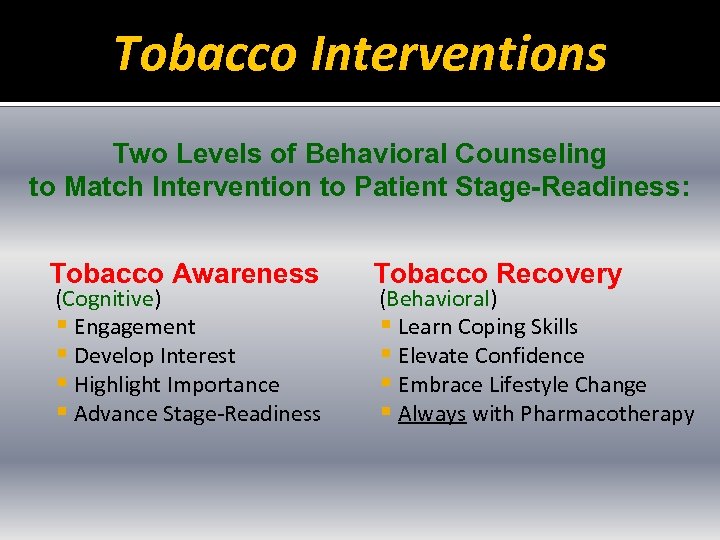
Tobacco Interventions Two Levels of Behavioral Counseling to Match Intervention to Patient Stage-Readiness: Tobacco Awareness (Cognitive) § Engagement § Develop Interest § Highlight Importance § Advance Stage-Readiness Tobacco Recovery (Behavioral) § Learn Coping Skills § Elevate Confidence § Embrace Lifestyle Change § Always with Pharmacotherapy
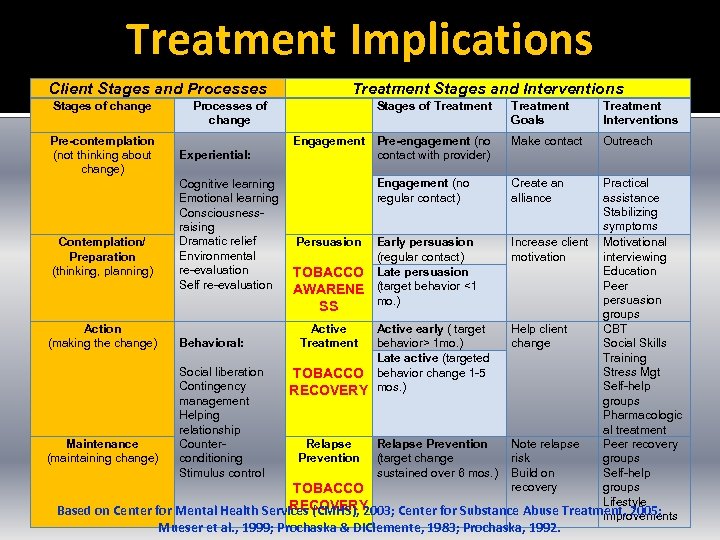
Treatment Implications Client Stages and Processes Stages of change Pre-contemplation (not thinking about change) Processes of change Experiential: Treatment Stages and Interventions Stages of Treatment Engagement Pre-engagement (no contact with provider) Treatment Interventions Make contact Outreach Practical assistance Stabilizing symptoms Contemplation/ Persuasion Early persuasion Increase client Motivational Preparation (regular contact) motivation interviewing (thinking, planning) Education Late persuasion TOBACCO Peer AWARENE (target behavior <1 persuasion mo. ) SS groups Action Active early ( target Help client CBT (making the change) Behavioral: Treatment behavior> 1 mo. ) change Social Skills Training Late active (targeted Social liberation Stress Mgt TOBACCO behavior change 1 -5 Contingency Self-help mos. ) RECOVERY management groups Helping Pharmacologic relationship al treatment Counter. Maintenance Relapse Prevention Note relapse Peer recovery conditioning (maintaining change) Prevention (target change risk groups sustained over 6 mos. ) Build on Self-help Stimulus control recovery groups TOBACCO Lifestyle RECOVERY Based on Center for Mental Health Services (CMHS), 2003; Center for Substance Abuse Treatment, 2005; improvements Cognitive learning Emotional learning Consciousnessraising Dramatic relief Environmental re-evaluation Self re-evaluation Engagement (no regular contact) Treatment Goals Create an alliance Mueser et al. , 1999; Prochaska & Di. Clemente, 1983; Prochaska, 1992.
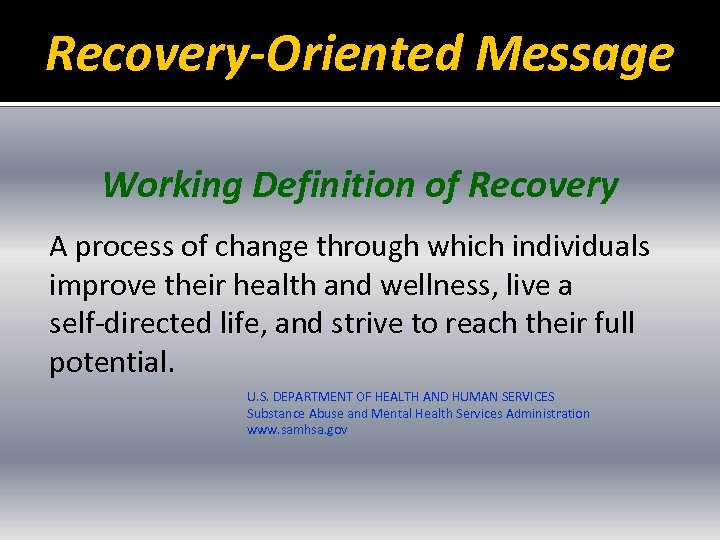
Recovery-Oriented Message Working Definition of Recovery A process of change through which individuals improve their health and wellness, live a self-directed life, and strive to reach their full potential. U. S. DEPARTMENT OF HEALTH AND HUMAN SERVICES Substance Abuse and Mental Health Services Administration www. samhsa. gov

Embrace Recovery! Be Alcohol, Tobacco & Drug-Free
![Addressing Tobacco Improves Treatment Outcomes § Alcoholics provided [tobacco dependence treatment] during addictions treatment](https://present5.com/presentation/5aa305c3ccb2715d4495d59a4b0dbe87/image-23.jpg "Addressing Tobacco Improves Treatment Outcomes § Alcoholics provided [tobacco dependence treatment] during addictions treatment")
Addressing Tobacco Improves Treatment Outcomes § Alcoholics provided [tobacco dependence treatment] during addictions treatment was associated with a 25% increased likelihood of long-term abstinence from alcohol and illicit drugs. Prochaska et al. , Journal of Consulting and Clinical Psychology, 2004 Meta Analysis of 19 Randomized Control Trials with Individuals in Current Treatment or Recovery. § All smokers with psychiatric disorders, including substance use disorders, should be offered tobacco dependence treatment, and clinicians must overcome their reluctance to treat this population. Clinical Practice Guideline, 2008 Update, p 154.
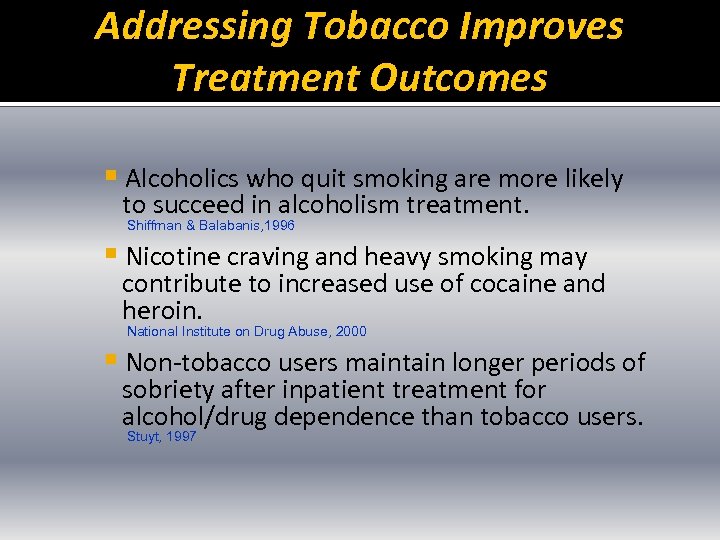
Addressing Tobacco Improves Treatment Outcomes § Alcoholics who quit smoking are more likely to succeed in alcoholism treatment. Shiffman & Balabanis, 1996 § Nicotine craving and heavy smoking may contribute to increased use of cocaine and heroin. National Institute on Drug Abuse, 2000 § Non-tobacco users maintain longer periods of sobriety after inpatient treatment for alcohol/drug dependence than tobacco users. Stuyt, 1997
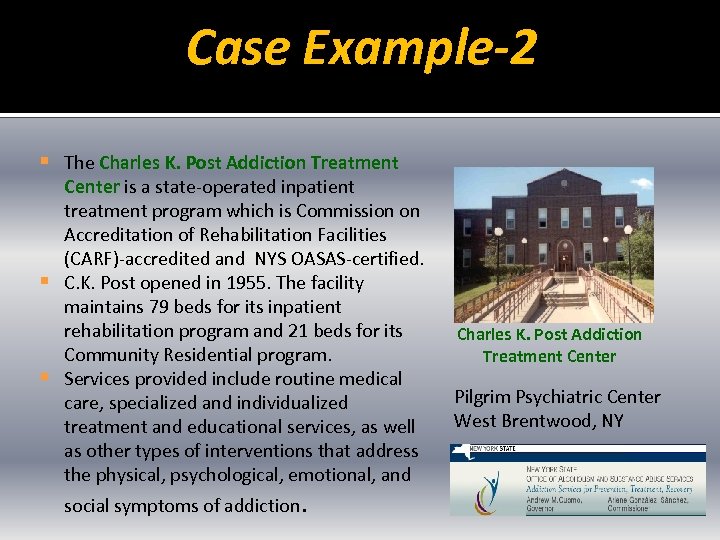
Case Example-2 § The Charles K. Post Addiction Treatment § § Center is a state-operated inpatient treatment program which is Commission on Accreditation of Rehabilitation Facilities (CARF)-accredited and NYS OASAS-certified. C. K. Post opened in 1955. The facility maintains 79 beds for its inpatient rehabilitation program and 21 beds for its Community Residential program. Services provided include routine medical care, specialized and individualized treatment and educational services, as well as other types of interventions that address the physical, psychological, emotional, and social symptoms of addiction. Charles K. Post Addiction Treatment Center Pilgrim Psychiatric Center West Brentwood, NY
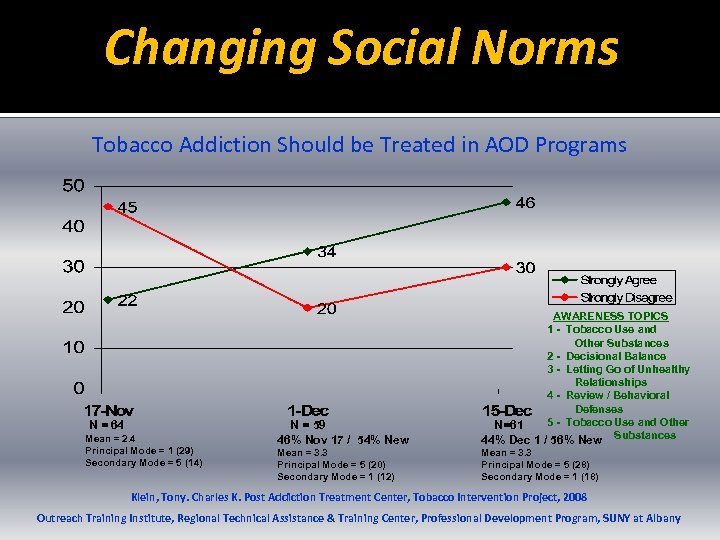
Changing Social Norms Tobacco Addiction Should be Treated in AOD Programs N = 64 Mean = 2. 4 Principal Mode = 1 (29) Secondary Mode = 5 (14) N = 59 46% Nov 17 / 54% New AWARENESS TOPICS 1 - Tobacco Use and Other Substances 2 - Decisional Balance 3 - Letting Go of Unhealthy Relationships 4 - Review / Behavioral Defenses 5 - Tobacco Use and Other N=61 44% Dec 1 / 56% New Substances Mean = 3. 3 Principal Mode = 5 (20) Secondary Mode = 1 (12) Mean = 3. 3 Principal Mode = 5 (28) Secondary Mode = 1 (18) Klein, Tony. Charles K. Post Addiction Treatment Center, Tobacco Intervention Project, 2008 Outreach Training Institute, Regional Technical Assistance & Training Center, Professional Development Program, SUNY at Albany
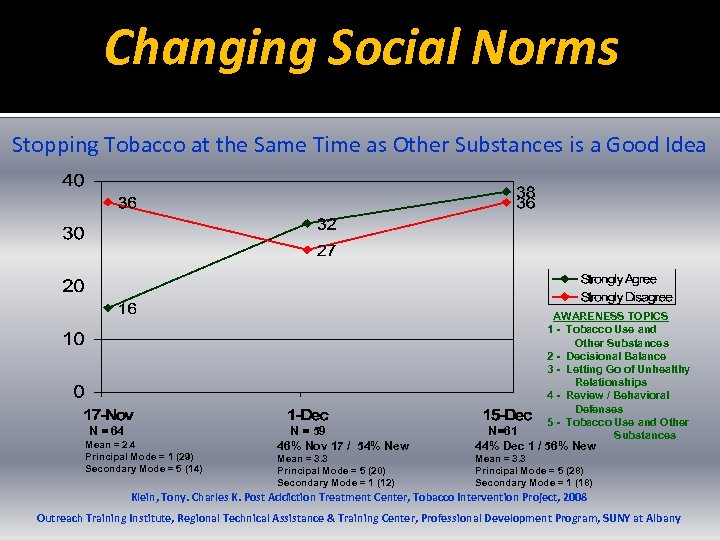
Changing Social Norms Stopping Tobacco at the Same Time as Other Substances is a Good Idea N = 64 Mean = 2. 4 Principal Mode = 1 (29) Secondary Mode = 5 (14) AWARENESS TOPICS 1 - Tobacco Use and Other Substances 2 - Decisional Balance 3 - Letting Go of Unhealthy Relationships 4 - Review / Behavioral Defenses 5 - Tobacco Use and Other Substances N = 59 46% Nov 17 / 54% New N=61 44% Dec 1 / 56% New Mean = 3. 3 Principal Mode = 5 (20) Secondary Mode = 1 (12) Mean = 3. 3 Principal Mode = 5 (28) Secondary Mode = 1 (18) Klein, Tony. Charles K. Post Addiction Treatment Center, Tobacco Intervention Project, 2008 Outreach Training Institute, Regional Technical Assistance & Training Center, Professional Development Program, SUNY at Albany
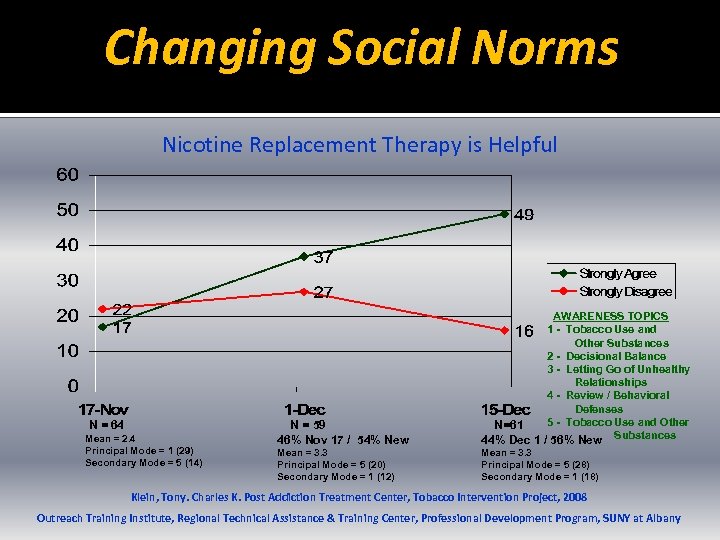
Changing Social Norms Nicotine Replacement Therapy is Helpful N = 64 Mean = 2. 4 Principal Mode = 1 (29) Secondary Mode = 5 (14) N = 59 46% Nov 17 / 54% New AWARENESS TOPICS 1 - Tobacco Use and Other Substances 2 - Decisional Balance 3 - Letting Go of Unhealthy Relationships 4 - Review / Behavioral Defenses 5 - Tobacco Use and Other N=61 44% Dec 1 / 56% New Substances Mean = 3. 3 Principal Mode = 5 (20) Secondary Mode = 1 (12) Mean = 3. 3 Principal Mode = 5 (28) Secondary Mode = 1 (18) Klein, Tony. Charles K. Post Addiction Treatment Center, Tobacco Intervention Project, 2008 Outreach Training Institute, Regional Technical Assistance & Training Center, Professional Development Program, SUNY at Albany
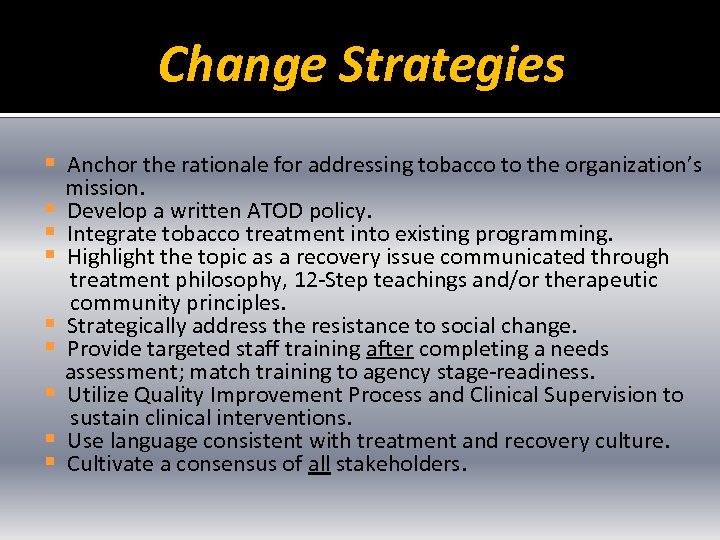
Change Strategies § Anchor the rationale for addressing tobacco to the organization’s § § § § mission. Develop a written ATOD policy. Integrate tobacco treatment into existing programming. Highlight the topic as a recovery issue communicated through treatment philosophy, 12 -Step teachings and/or therapeutic community principles. Strategically address the resistance to social change. Provide targeted staff training after completing a needs assessment; match training to agency stage-readiness. Utilize Quality Improvement Process and Clinical Supervision to sustain clinical interventions. Use language consistent with treatment and recovery culture. Cultivate a consensus of all stakeholders.
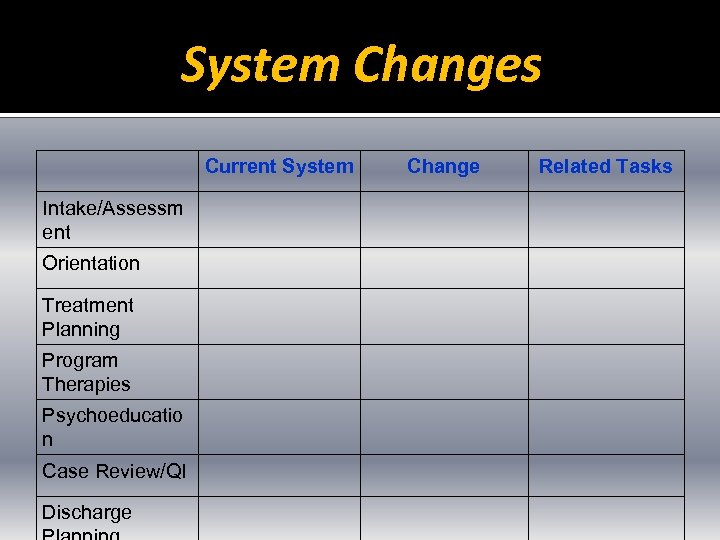
System Changes Current System Intake/Assessm ent Orientation Treatment Planning Program Therapies Psychoeducatio n Case Review/QI Discharge Change Related Tasks
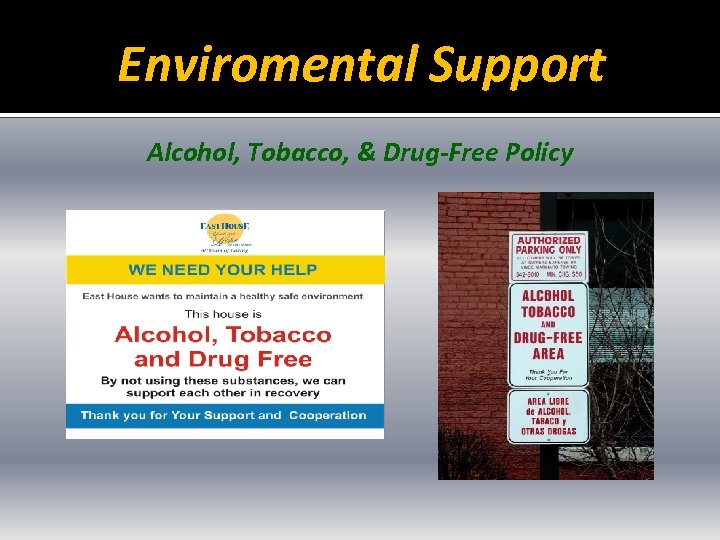
Enviromental Support Alcohol, Tobacco, & Drug-Free Policy
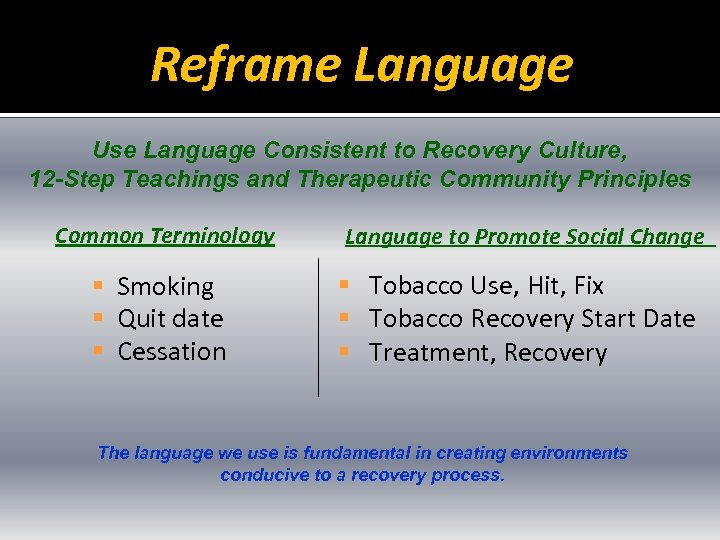
Reframe Language Use Language Consistent to Recovery Culture, 12 -Step Teachings and Therapeutic Community Principles Common Terminology § Smoking § Quit date § Cessation Language to Promote Social Change § Tobacco Use, Hit, Fix § Tobacco Recovery Start Date § Treatment, Recovery The language we use is fundamental in creating environments conducive to a recovery process.
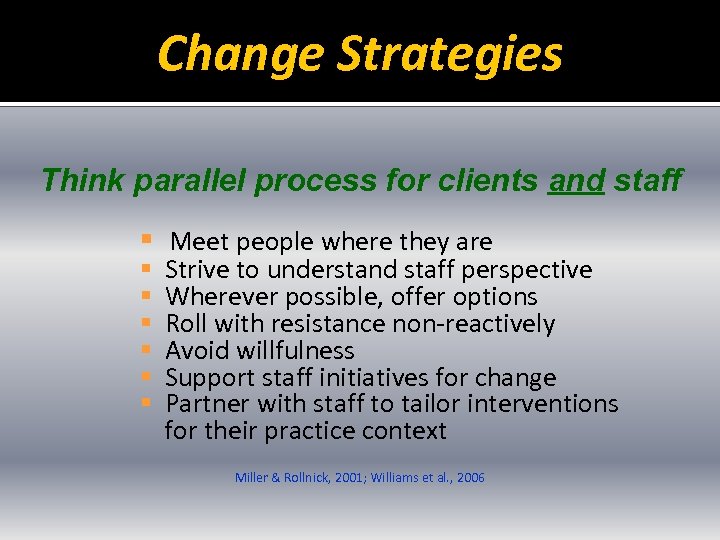
Change Strategies Think parallel process for clients and staff § Meet people where they are § § § Strive to understand staff perspective Wherever possible, offer options Roll with resistance non-reactively Avoid willfulness Support staff initiatives for change Partner with staff to tailor interventions for their practice context Miller & Rollnick, 2001; Williams et al. , 2006
Free Education & Training Videos www. oasas. ny. gov/tobacco/index. cfm Training Tools to Support Your Tobacco-Free Efforts. These FREE training videos are designed to reinforce the importance of addressing tobacco with counselors and clients COUNSELOR VIDEO CLIENT VIDEO This poster has been designed to reinforce the importance of an alcohol, drug and tobacco-free life in recovery. DOWNLOAD POSTER
tobaccorecovery. org Find the free, downloadable files you need to implement the curriculum in your education or training program: Trainer Manuals Participant Manuals Power. Point slides Integrating Tobacco Use Interventions into Chemical Dependence Services is a comprehensive, state-of-the-art modular curriculum that motivates, educates, and empowers addiction and allied health professionals to integrate evidence-based tobacco interventions into prevention, treatment, and recovery programs.
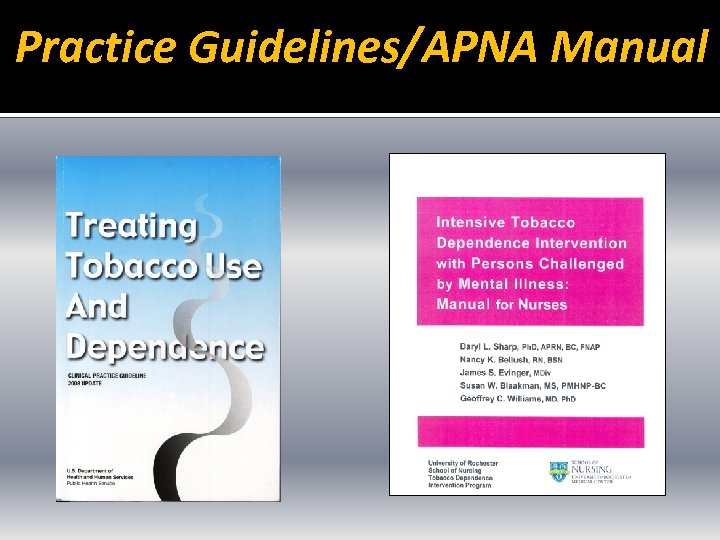
Practice Guidelines/APNA Manual
Thank You When I stopped living in the problem and began living in the answer, the problem went away. Big Book of Alcoholics Anonymous Page 449 tklein@unityhealth. org 585. 368. 4718
Скачать презентацию Addressing Tobacco A Recovery-Oriented Integrated Systems Approach NAADAC
5aa305c3ccb2715d4495d59a4b0dbe87.ppt