 Скачать презентацию Adaptive Support using Cognitive Models of Trust Robbert-Jan
5e9d1c8658afd25403bb6cb08dcdaeb6.ppt
- Количество слайдов: 25



Adaptive Support using Cognitive Models of Trust Robbert-Jan Beun (UU), Jurriaan van Diggelen (TNO), Mark Hoogendoorn (VU), Syed Waqar Jaffry (VU), Peter-Paul van Maanen (TNO), Francien Wisse (UU)
Overview of talk • • Introduction and motivation Adaptive support based on cognitive models of trust General methodology Part I: Validation and verification of trust models • Independent vs. relative trust model • Method • Results • Conclusions • Part II: Evaluation of adaptive support based on trust models • Reliance support by advising vs. adaptive autonomy • Method • Results • Conclusions • General discussion AI Seminar October 2010
Introduction and motivation • Trends in military / homeland security / incident management / … : • More complex situations • More different situations • More information • Reduced manning / less human assistance • Less experience • Less specific training possible • Increased computer intelligence • … • Challenge: Human error in the appropriate reliance on information from humans and computers is evident • Possible solution: Let support systems take into account human limitations in reliance decision making: Trust-aware adaptive systems AI Seminar October 2010
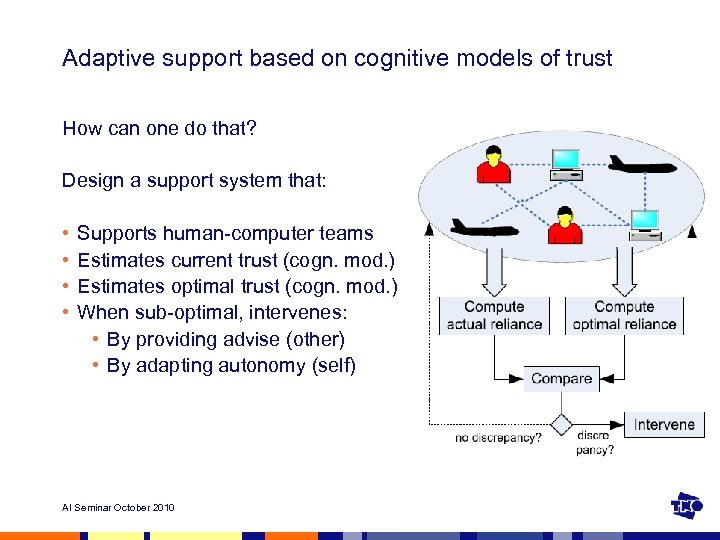
Adaptive support based on cognitive models of trust How can one do that? Design a support system that: • • Supports human-computer teams Estimates current trust (cogn. mod. ) Estimates optimal trust (cogn. mod. ) When sub-optimal, intervenes: • By providing advise (other) • By adapting autonomy (self) AI Seminar October 2010
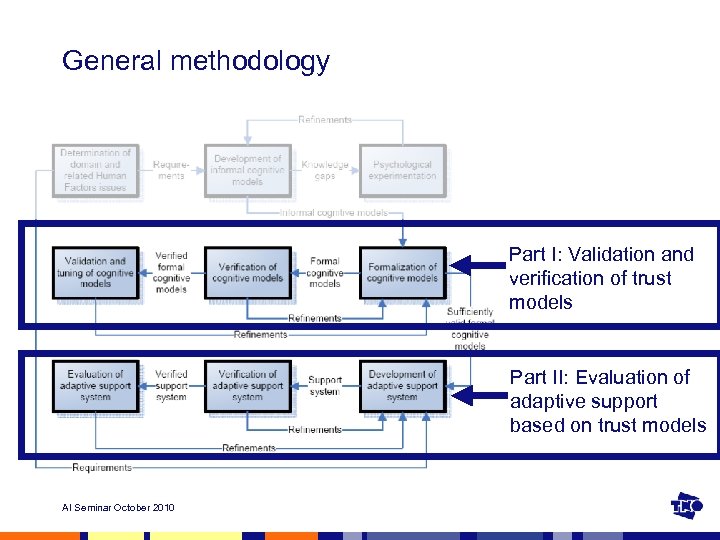
General methodology Part I: Validation and verification of trust models Part II: Evaluation of adaptive support based on trust models AI Seminar October 2010
Part I: Validation and verification of trust models AI Seminar October 2010
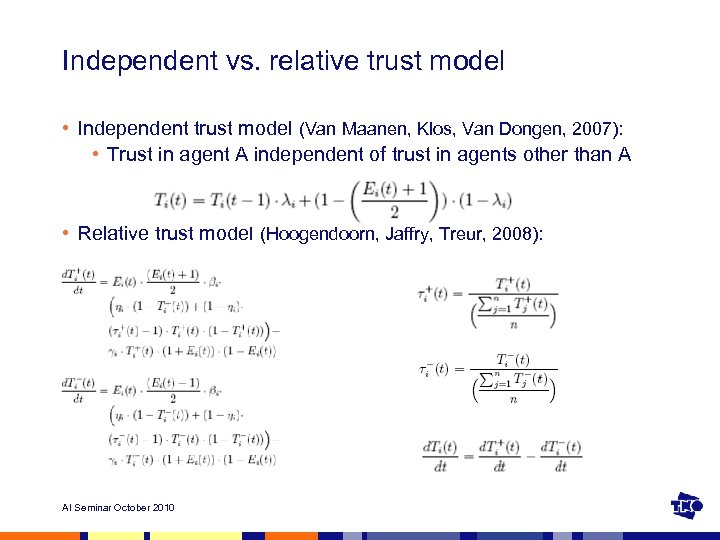
Independent vs. relative trust model • Independent trust model (Van Maanen, Klos, Van Dongen, 2007): • Trust in agent A independent of trust in agents other than A • Relative trust model (Hoogendoorn, Jaffry, Treur, 2008): AI Seminar October 2010
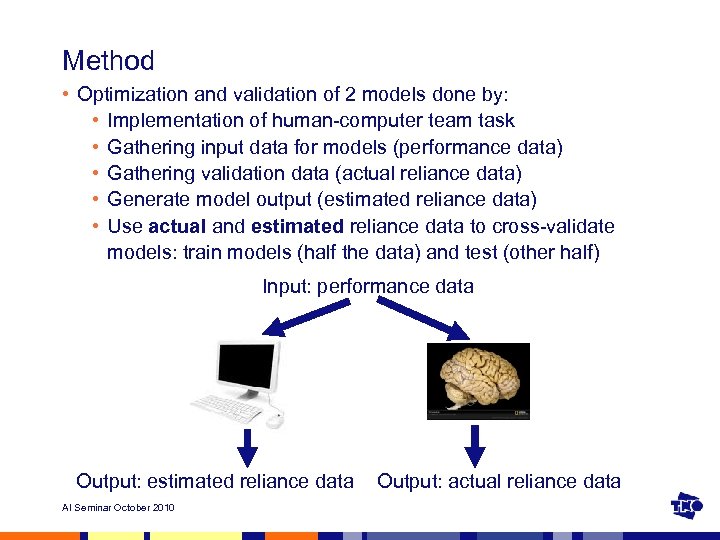
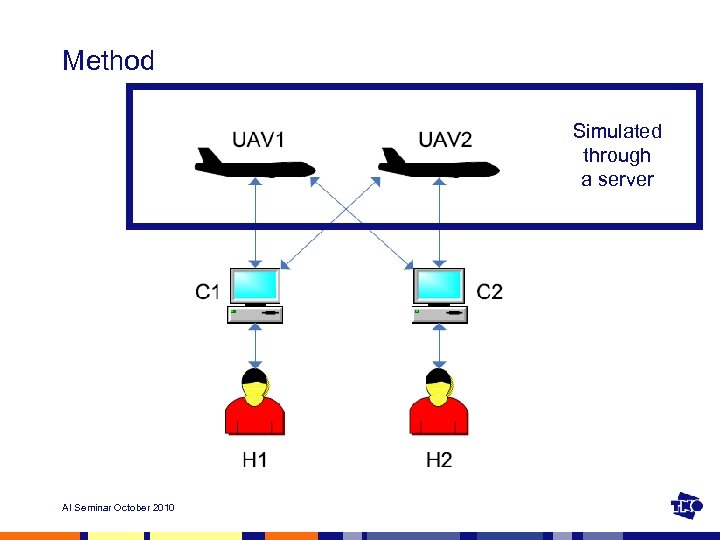
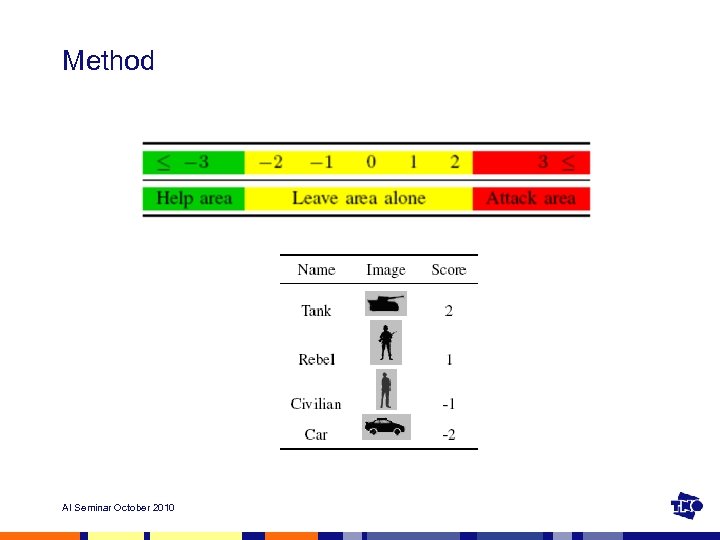
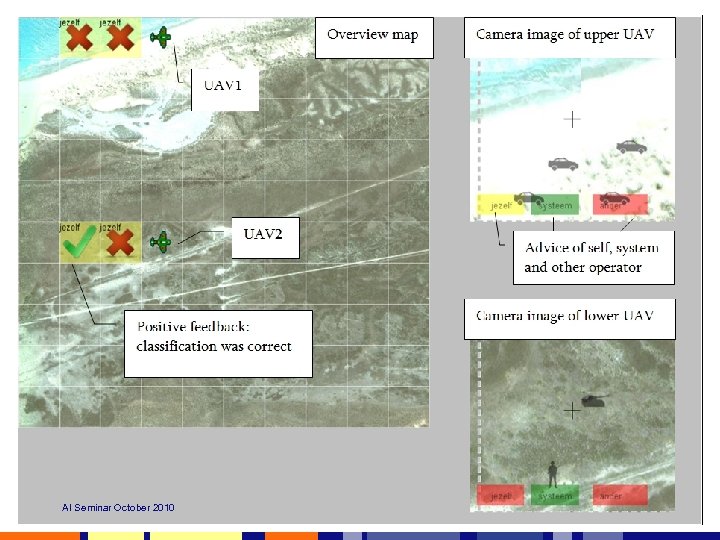
Method • Optimization and validation of 2 models done by: • Implementation of human-computer team task • Gathering input data for models (performance data) • Gathering validation data (actual reliance data) • Generate model output (estimated reliance data) • Use actual and estimated reliance data to cross-validate models: train models (half the data) and test (other half) Input: performance data Output: estimated reliance data AI Seminar October 2010 Output: actual reliance data
Method Simulated through a server AI Seminar October 2010
Method AI Seminar October 2010
AI Seminar October 2010
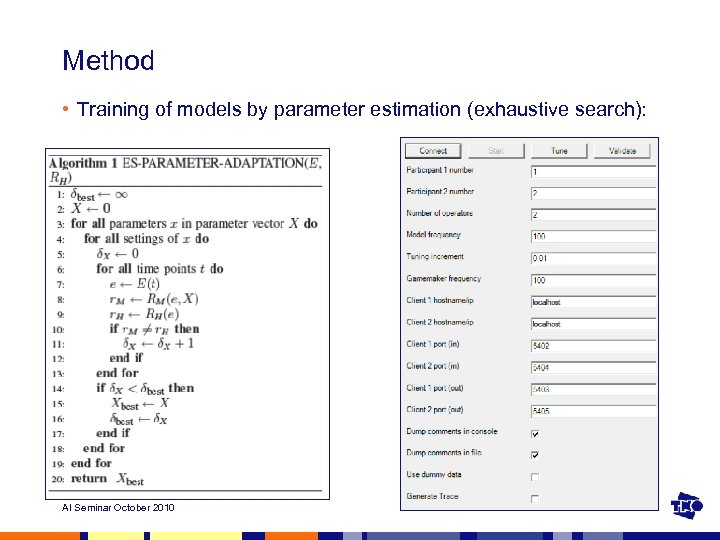
Method • Training of models by parameter estimation (exhaustive search): AI Seminar October 2010
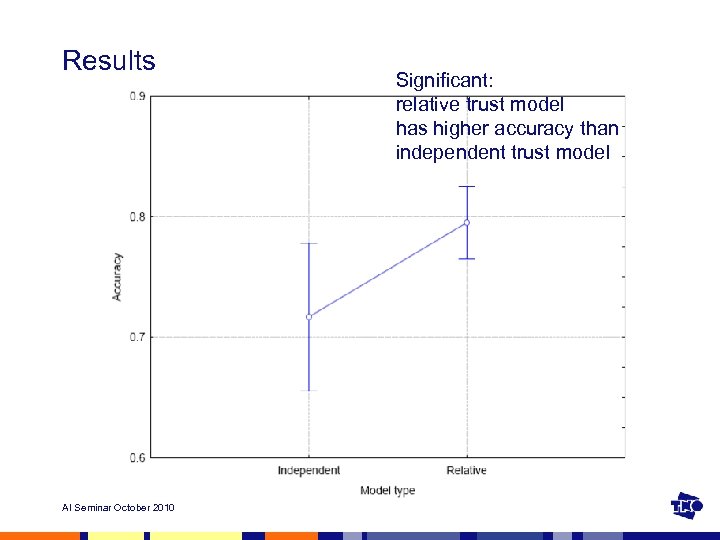
Results AI Seminar October 2010 Significant: relative trust model has higher accuracy than independent trust model
Conclusions • Trust models were optimized an attempt was made to see what model structure is best for the specific task • The relative trust model improves reliance decision estimation over the independent trust model • Future research could focus on: • improved models and • model verification and validation techniques • and for other domains/tasks AI Seminar October 2010
Part II: Evaluation of adaptive support based on trust models AI Seminar October 2010
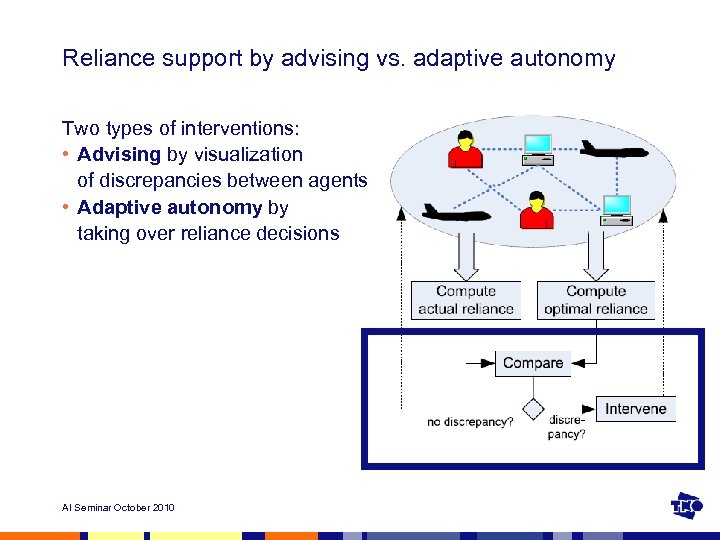
Reliance support by advising vs. adaptive autonomy Two types of interventions: • Advising by visualization of discrepancies between agents • Adaptive autonomy by taking over reliance decisions AI Seminar October 2010
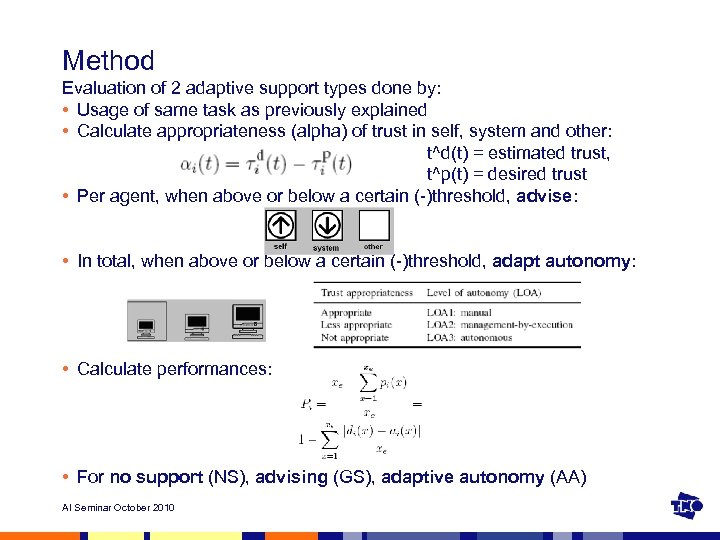
Method Evaluation of 2 adaptive support types done by: • Usage of same task as previously explained • Calculate appropriateness (alpha) of trust in self, system and other: t^d(t) = estimated trust, t^p(t) = desired trust • Per agent, when above or below a certain (-)threshold, advise: • In total, when above or below a certain (-)threshold, adapt autonomy: • Calculate performances: • For no support (NS), advising (GS), adaptive autonomy (AA) AI Seminar October 2010
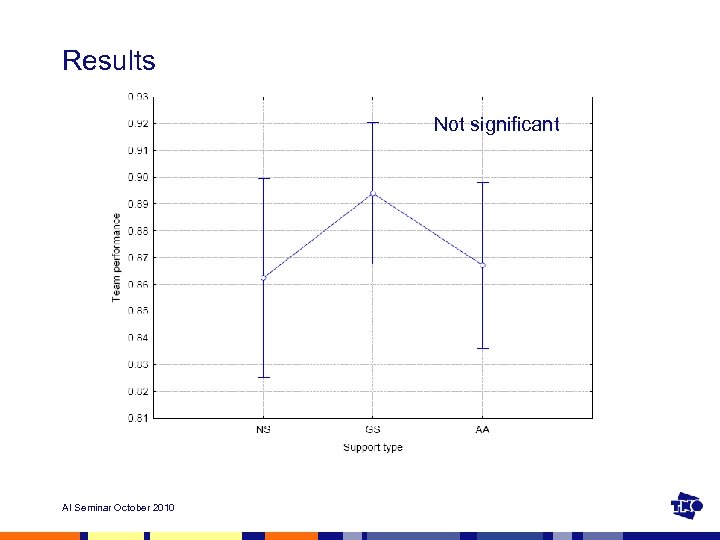
Results Not significant AI Seminar October 2010
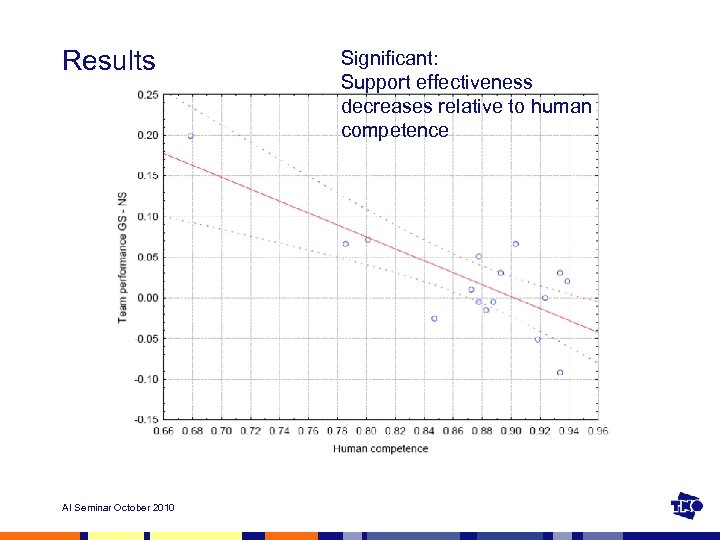
Results AI Seminar October 2010 Significant: Support effectiveness decreases relative to human competence
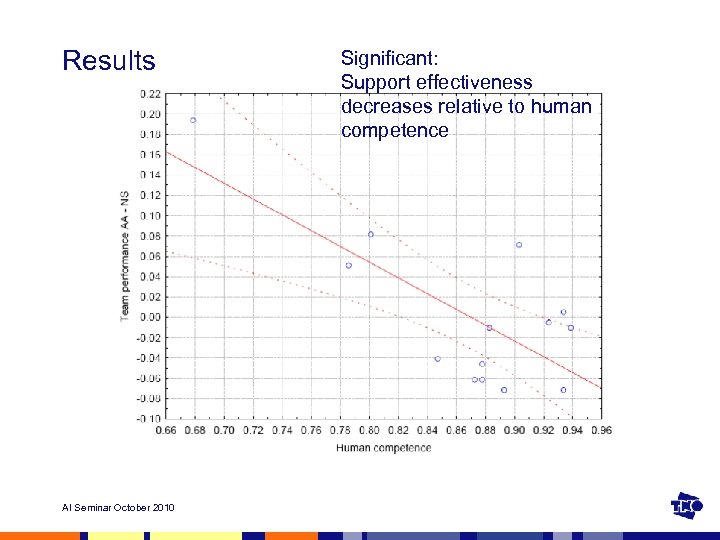
Results AI Seminar October 2010 Significant: Support effectiveness decreases relative to human competence
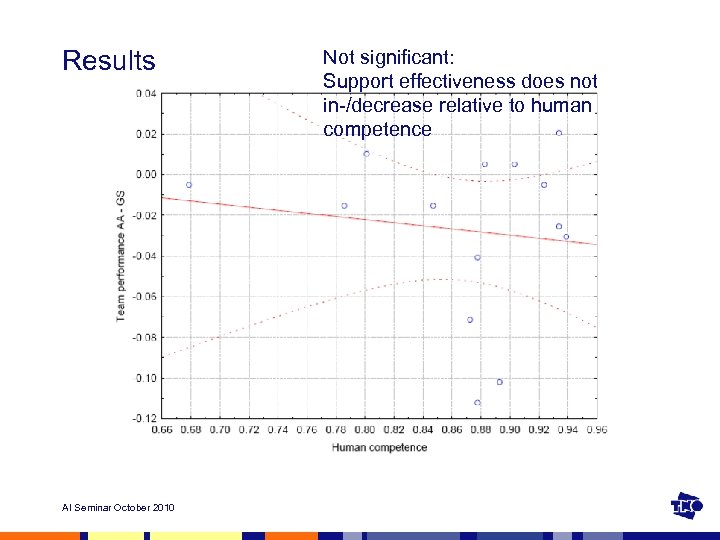
Results AI Seminar October 2010 Not significant: Support effectiveness does not in-/decrease relative to human competence
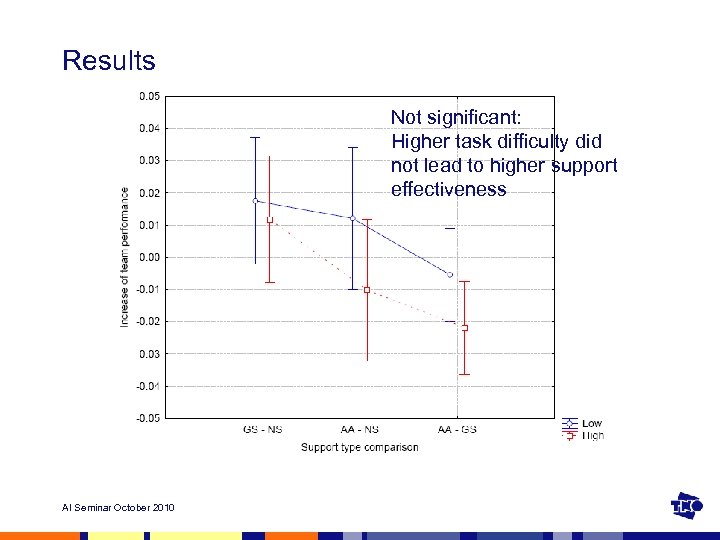
Results Not significant: Higher task difficulty did not lead to higher support effectiveness AI Seminar October 2010
Results • Finally: GS was more satisfactory than AA (significant) AI Seminar October 2010
Conclusions • Proof of concept: It is indeed possible to implement adaptive support using cognitive optimized and validated models of trust • Results show no significant effect of the support types for the current task • Future work: • Effect of validity on the effectiveness of support • Effect of intrusiveness of support • Improvements of satisfaction and acceptance of support • Improvement of reliance decisions of system (in case of adaptive autonomy) • Other domains, tasks, support types AI Seminar October 2010
General discussion Questions that can be raised: • Can the proposed methodology be used for the development of adaptive support using cognitive models? • Are there other cognitive models that can be used? • How would machines that take over tasks or manipulate the human mind be perceived by humans? Are they accepted? • What would future human-aware machines be like? Would they augment the human mind, cooperating with humans, or would they be better of without humans? AI Seminar October 2010
Скачать презентацию Adaptive Support using Cognitive Models of Trust Robbert-Jan
5e9d1c8658afd25403bb6cb08dcdaeb6.ppt