 Скачать презентацию Adapting the Africa Array Model Building Capacity
efeeff8d114be568d4139a68614861ca.ppt
- Количество слайдов: 13



Adapting the Africa. Array Model – Building Capacity Around the World Organized by Andy Nyblade, Pennsylvania State University Art Lerner-Lam, Columbia University Ray Willemann, IRIS Consortium
Adapting the Africa. Array Model – Building Capacity Around the World Special thanks to Libby Lyons, NSF Office of International Sci. & Engr. Jim Whitcomb, NSF Earth Sciences Division Lindsay Wood, IRIS Consortium
Workshop Goals Enumerate leading regional science objectives that require long time series of high-fidelity seismological waveform records, Identify broader regional social benefits from improved seismological capacity and sophisticated data products, Suggest mechanisms for assessment of technical capacities and performance of new and existing regional and national networks, Introduce development experts and aid providers to the need for integrated network solutions.
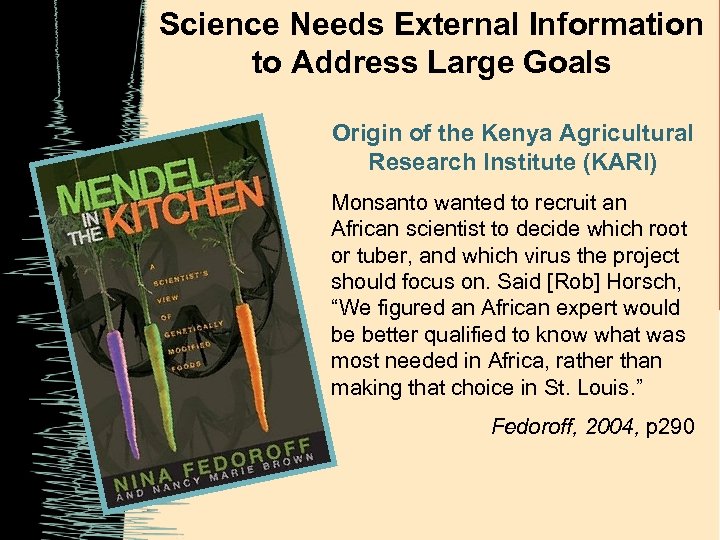
Science Needs External Information to Address Large Goals Origin of the Kenya Agricultural Research Institute (KARI) Monsanto wanted to recruit an African scientist to decide which root or tuber, and which virus the project should focus on. Said [Rob] Horsch, “We figured an African expert would be better qualified to know what was most needed in Africa, rather than making that choice in St. Louis. ” Fedoroff, 2004, p 290
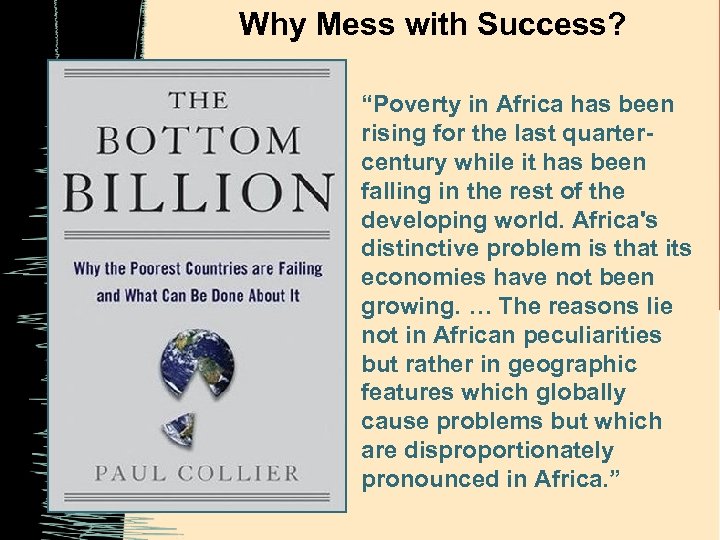
Why Mess with Success? “Poverty in Africa has been rising for the last quartercentury while it has been falling in the rest of the developing world. Africa's distinctive problem is that its economies have not been growing. … The reasons lie not in African peculiarities but rather in geographic features which globally cause problems but which are disproportionately pronounced in Africa. ”
Each Case Has Numerous Unique Circumstances • Existing capacities • Societal needs • Trust mechanisms • Scientific traditions • International collaborations • Public/Private partnerships
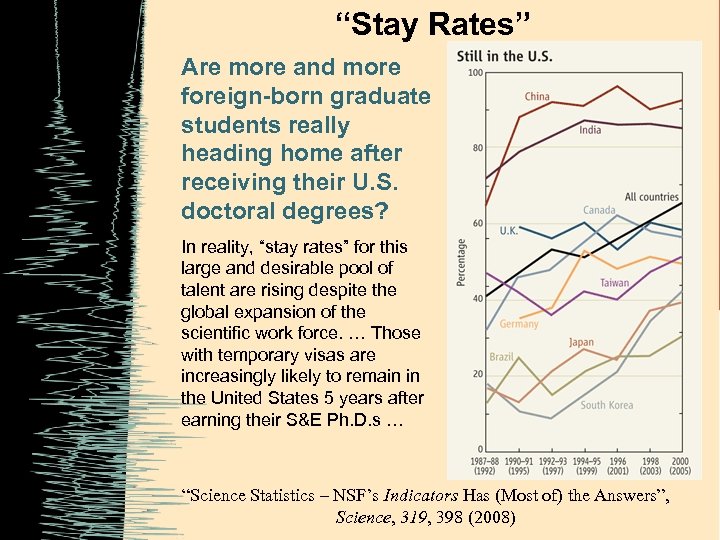
“Stay Rates” Are more and more foreign-born graduate students really heading home after receiving their U. S. doctoral degrees? In reality, “stay rates” for this large and desirable pool of talent are rising despite the global expansion of the scientific work force. … Those with temporary visas are increasingly likely to remain in the United States 5 years after earning their S&E Ph. D. s … “Science Statistics – NSF’s Indicators Has (Most of) the Answers”, Science, 319, 398 (2008)
Agenda Sunday Building Capacity with Linked Observing Systems: Seismological Perspectives Roger Bilham Earthquake Risk in Developing Countries Paul Dirks Building Capacity for Africa’s Natural resources sector Gerardo Suarez The FDSN and Sustainable Regional Seismic Networks
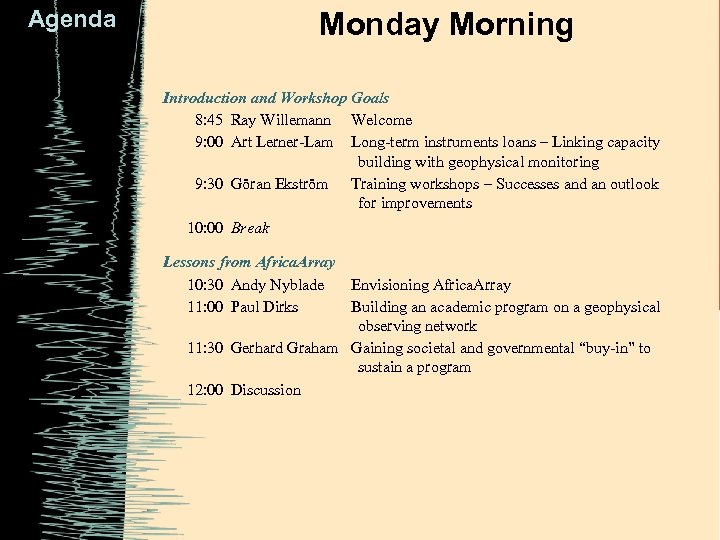
Agenda Monday Morning Introduction and Workshop Goals 8: 45 Ray Willemann Welcome 9: 00 Art Lerner-Lam Long-term instruments loans – Linking capacity building with geophysical monitoring 9: 30 Göran Ekström Training workshops – Successes and an outlook for improvements 10: 00 Break Lessons from Africa. Array 10: 30 Andy Nyblade Envisioning Africa. Array 11: 00 Paul Dirks Building an academic program on a geophysical observing network 11: 30 Gerhard Graham Gaining societal and governmental “buy-in” to sustain a program 12: 00 Discussion
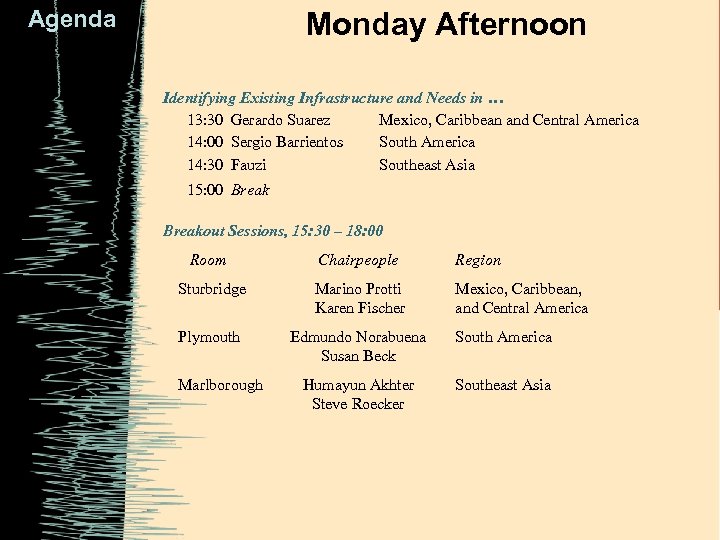
Agenda Monday Afternoon Identifying Existing Infrastructure and Needs in … 13: 30 Gerardo Suarez Mexico, Caribbean and Central America 14: 00 Sergio Barrientos South America 14: 30 Fauzi Southeast Asia 15: 00 Breakout Sessions, 15: 30 – 18: 00 Room Chairpeople Sturbridge Marino Protti Karen Fischer Plymouth Edmundo Norabuena Susan Beck South America Humayun Akhter Steve Roecker Southeast Asia Marlborough Region Mexico, Caribbean, and Central America
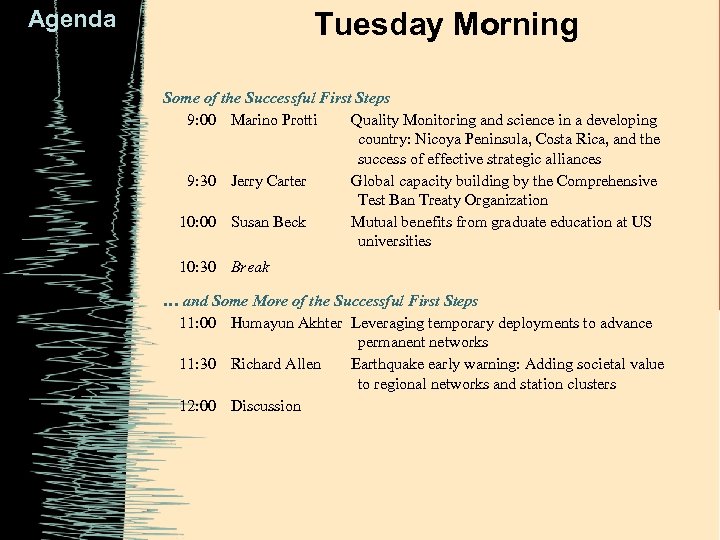
Agenda Tuesday Morning Some of the Successful First Steps 9: 00 Marino Protti Quality Monitoring and science in a developing country: Nicoya Peninsula, Costa Rica, and the success of effective strategic alliances 9: 30 Jerry Carter Global capacity building by the Comprehensive Test Ban Treaty Organization 10: 00 Susan Beck Mutual benefits from graduate education at US universities 10: 30 Break … and Some More of the Successful First Steps 11: 00 Humayun Akhter Leveraging temporary deployments to advance permanent networks 11: 30 Richard Allen Earthquake early warning: Adding societal value to regional networks and station clusters 12: 00 Discussion
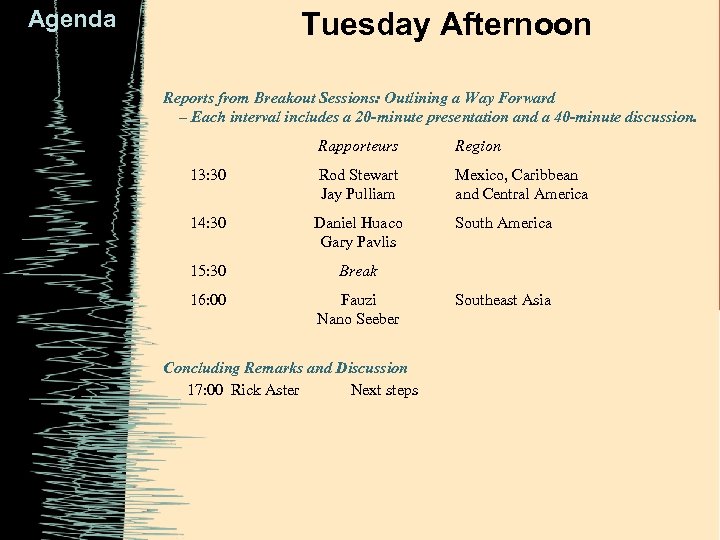
Agenda Tuesday Afternoon Reports from Breakout Sessions: Outlining a Way Forward – Each interval includes a 20 -minute presentation and a 40 -minute discussion. Rapporteurs Region 13: 30 Rod Stewart Jay Pulliam Mexico, Caribbean and Central America 14: 30 Daniel Huaco Gary Pavlis South America 15: 30 Break 16: 00 Fauzi Nano Seeber Concluding Remarks and Discussion 17: 00 Rick Aster Next steps Southeast Asia
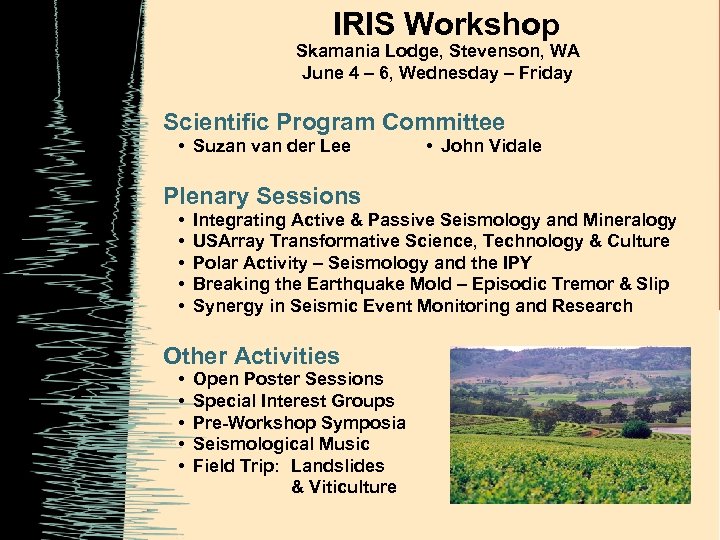
IRIS Workshop Skamania Lodge, Stevenson, WA June 4 – 6, Wednesday – Friday Scientific Program Committee • Suzan van der Lee • John Vidale Plenary Sessions • • • Integrating Active & Passive Seismology and Mineralogy USArray Transformative Science, Technology & Culture Polar Activity – Seismology and the IPY Breaking the Earthquake Mold – Episodic Tremor & Slip Synergy in Seismic Event Monitoring and Research Other Activities • • • Open Poster Sessions Special Interest Groups Pre-Workshop Symposia Seismological Music Field Trip: Landslides & Viticulture
Скачать презентацию Adapting the Africa Array Model Building Capacity
efeeff8d114be568d4139a68614861ca.ppt