


 Скачать презентацию Acute Respiratory Failure Respiratory System Consists
0a121c2c315e9cd24c4e7fb0c11a5517.ppt
- Количество слайдов: 65
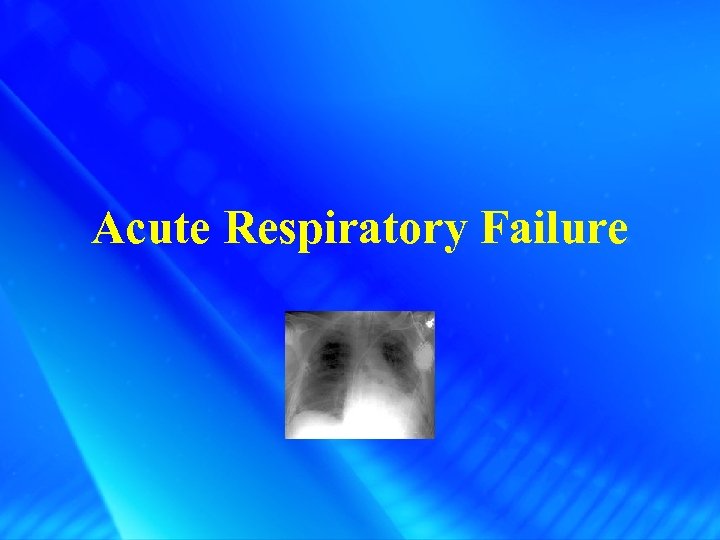 Acute Respiratory Failure
 Respiratory System • Consists of two parts: • Gas exchange organ (lung): responsible for OXYGENATION • Pump (respiratory muscles and respiratory control mechanism): responsible for VENTILATION NB: Alteration in function of gas exchange unit (oxygenation) OR of the pump mechanism (ventilation) can result in respiratory failure
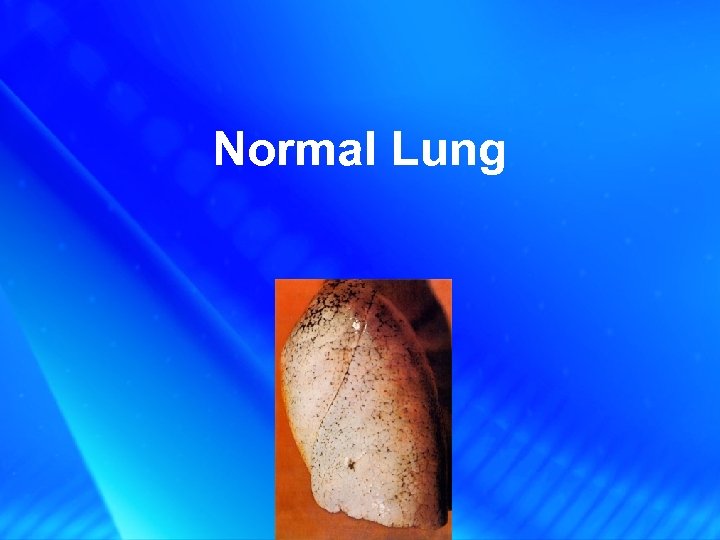 Normal Lung
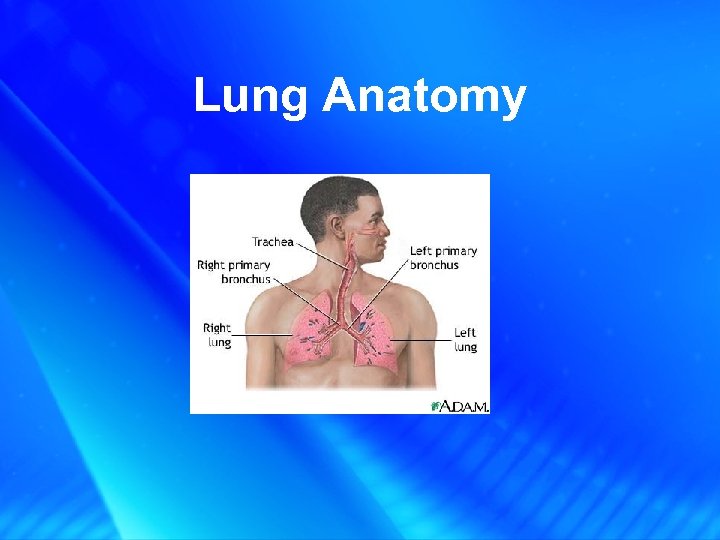 Lung Anatomy
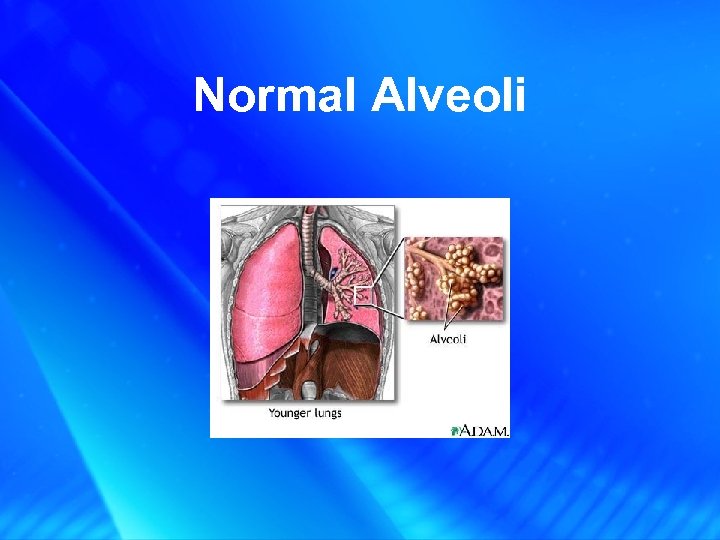 Normal Alveoli
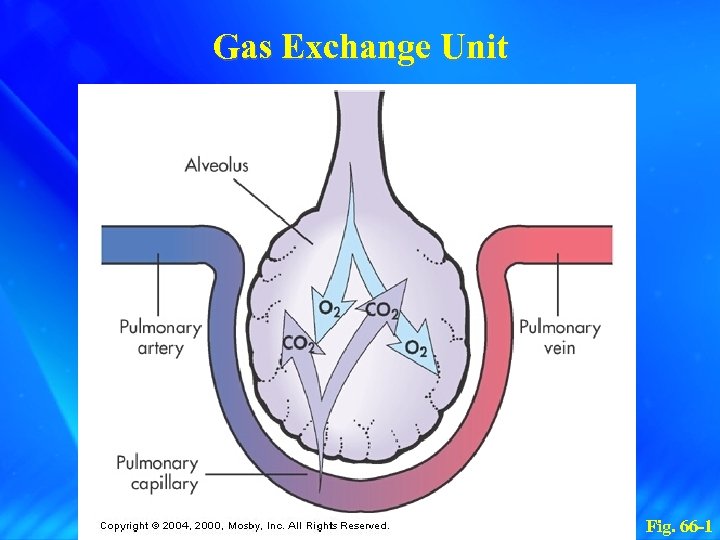 Gas Exchange Unit Fig. 66 -1
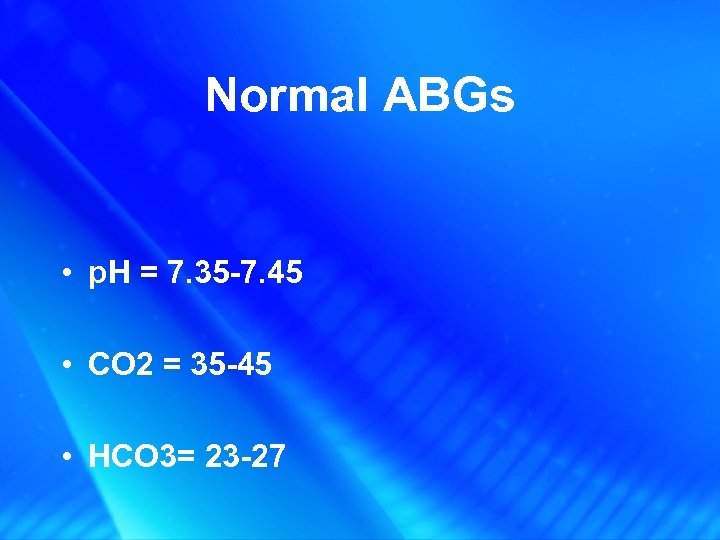 Normal ABGs • p. H = 7. 35 -7. 45 • CO 2 = 35 -45 • HCO 3= 23 -27
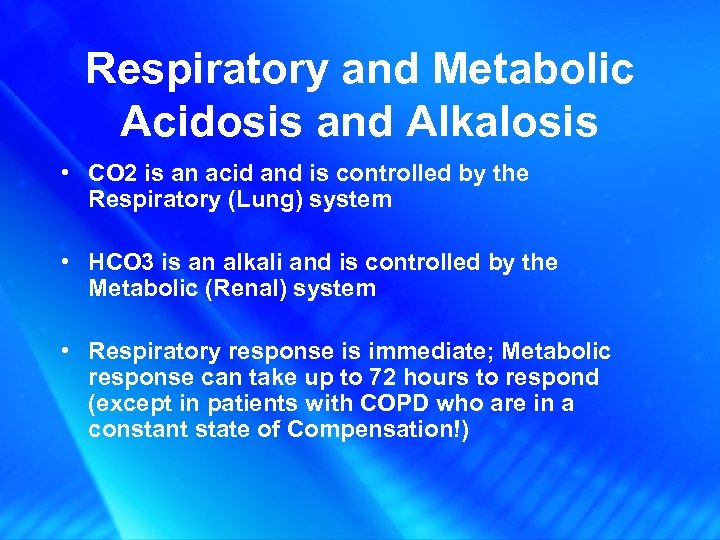 Respiratory and Metabolic Acidosis and Alkalosis • CO 2 is an acid and is controlled by the Respiratory (Lung) system • HCO 3 is an alkali and is controlled by the Metabolic (Renal) system • Respiratory response is immediate; Metabolic response can take up to 72 hours to respond (except in patients with COPD who are in a constant state of Compensation!)
 ABG Interpretation Step 1: Check the p. H: Is it acidotic or alkalotic or normal? p. H below 7. 35 is acidotic; p. H above 7. 45 is alkalotic If p. H is normal, then the ABG is compensated; if p. H not normal, then the ABG is uncompensated
 ABG Interpretation (cont’d) Step 2. Check the CO 2 and HCO 3: § If the CO 2 (acid) is above 45, the pt is acidotic; if the CO 2 is below 35, the pt is alkalotic § If the HCO 3 is above 27, the patient is alkalotic; if the HCO 3 is below 23, the patient is acidotic
 ABG Interpretation (cont’d) Step 3 If the CO 2 is high (above 45), then the patient is in Respiratory Acidosis; if the CO 2 is low (below 35), then the patients is in Respiratory Alkalosis. If the HCO 3 is high (above 27), then the patient is in Metabolic Alkalosis; if the HCO 3 is low (below 23), then the patient is in Metabolic Acidosis.
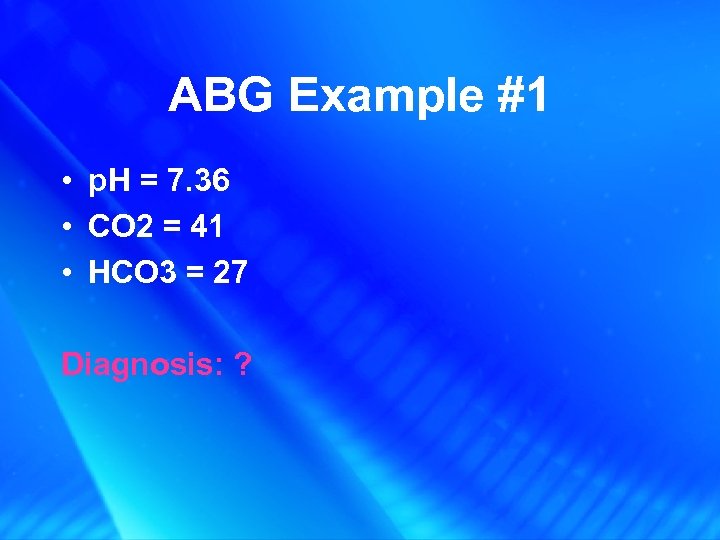 ABG Example #1 • p. H = 7. 36 • CO 2 = 41 • HCO 3 = 27 Diagnosis: ?
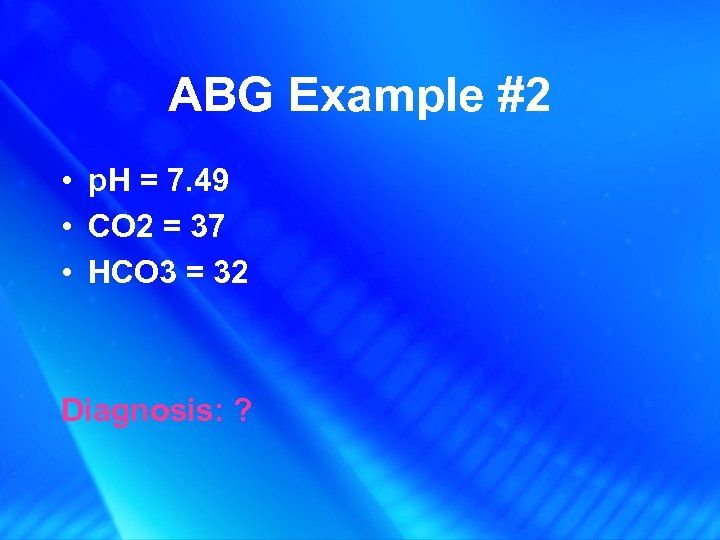 ABG Example #2 • p. H = 7. 49 • CO 2 = 37 • HCO 3 = 32 Diagnosis: ?
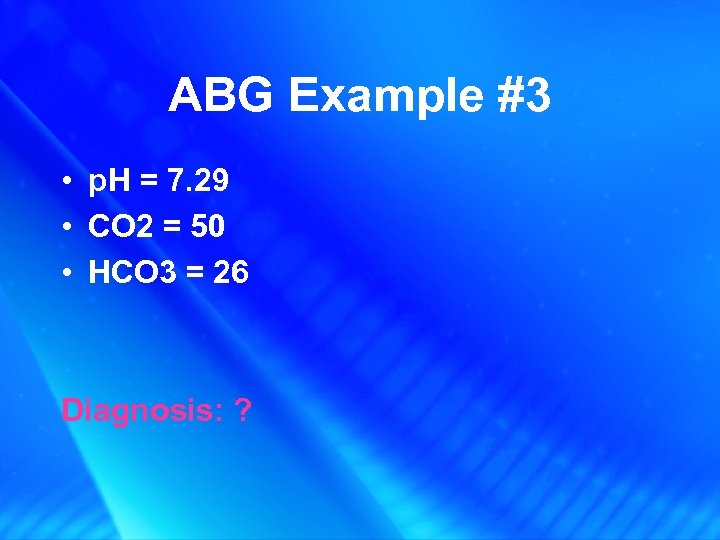 ABG Example #3 • p. H = 7. 29 • CO 2 = 50 • HCO 3 = 26 Diagnosis: ?
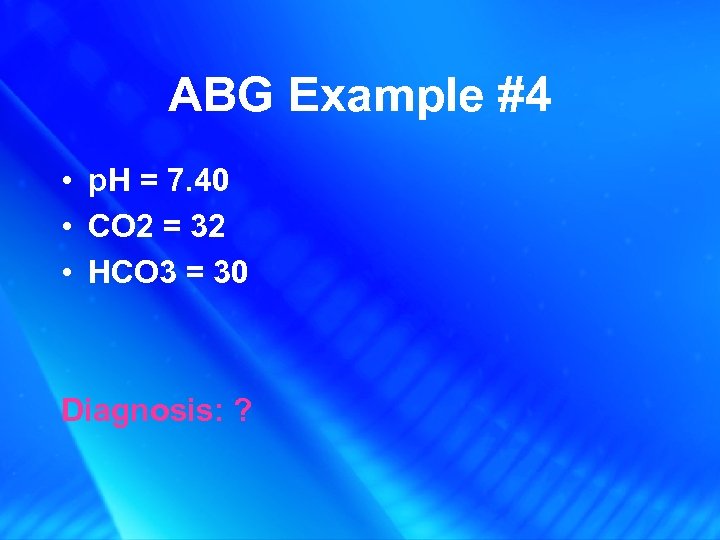 ABG Example #4 • p. H = 7. 40 • CO 2 = 32 • HCO 3 = 30 Diagnosis: ?
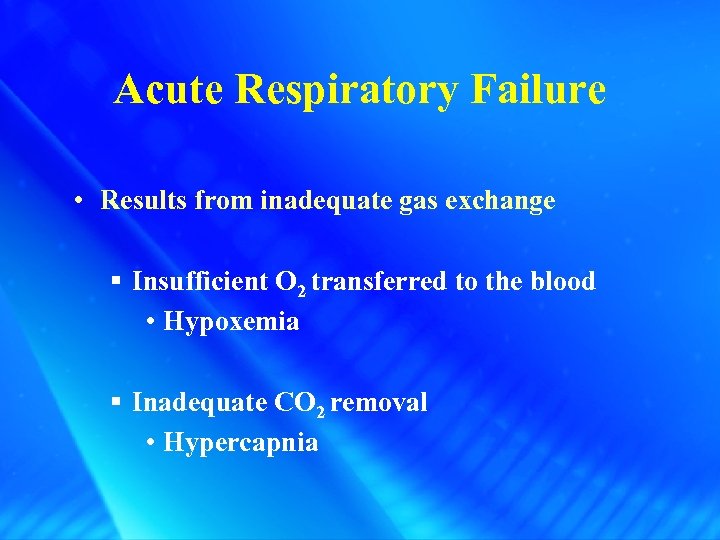 Acute Respiratory Failure • Results from inadequate gas exchange § Insufficient O 2 transferred to the blood • Hypoxemia § Inadequate CO 2 removal • Hypercapnia
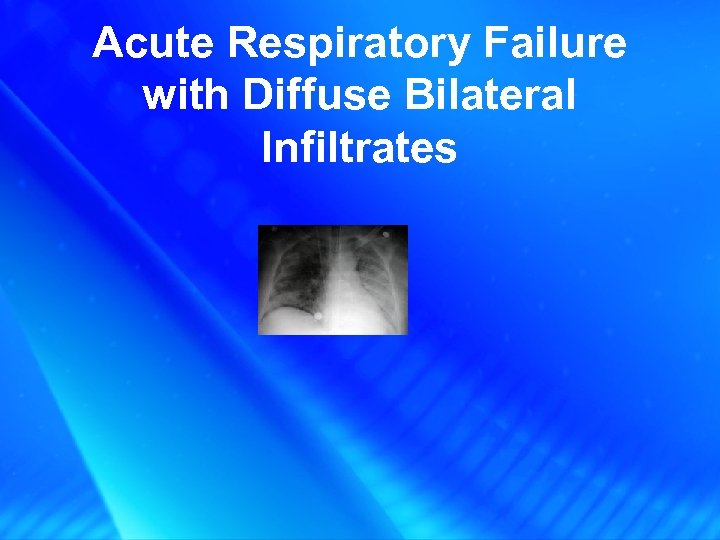 Acute Respiratory Failure with Diffuse Bilateral Infiltrates
 Acute Respiratory Failure • Not a disease but a condition • Result of one or more diseases involving the lungs or other body systems • NB: Acute Respiratory Failure: when oxygenation and/or ventilation is inadequate to meet the body’s needs
 Acute Respiratory Failure • Classification: – Hypoxemic respiratory failure (Failure of oxygenation) – Hypercapnic respiratory failure (Failure of ventilation)
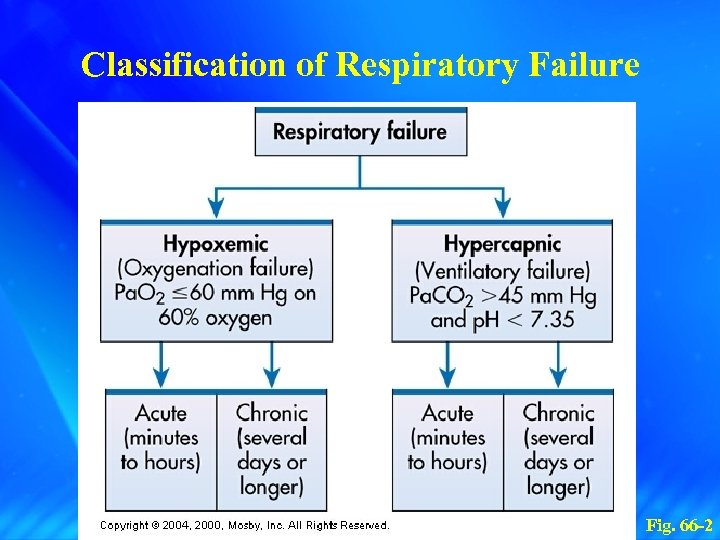 Classification of Respiratory Failure Fig. 66 -2
 Acute Respiratory Failure • Hypoxemic Respiratory Failure – Pa. O 2 of 60 mm Hg or less (Normal = 80 - 100 mm Hg) – Inspired O 2 concentration of 60% or greater
 Acute Respiratory Failure • Hypercapnic Respiratory Failure – Pa. CO 2 above normal (>45 mm Hg) – Acidemia (p. H <7. 35)
 Hypoxemic Respiratory Failure Etiology and Pathophysiology • Causes: – Ventilation-perfusion (V/Q) mismatch – Shunt – Diffusion limitation – Alveolar hypoventilation
 V-Q Mismatching I) V/Q mismatch • Normal ventilation of alveoli is comparable to amount of perfusion • Normal V/Q ratio is 0. 8 (more perfusion than ventilation) • Mismatch d/t: § Inadequate ventilation § Poor perfusion
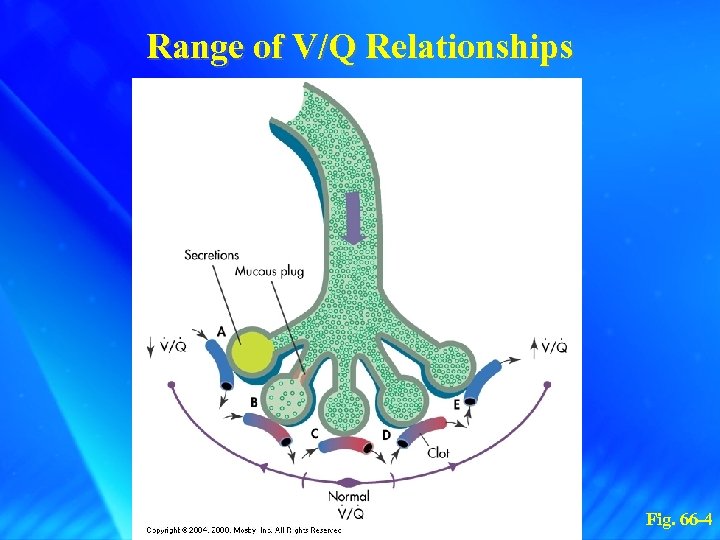 Range of V/Q Relationships Fig. 66 -4
 Hypoxemic Respiratory Failure Etiology and Pathophysiology Causes V/Q mismatch – COPD – Pneumonia – Asthma – Atelectasis – Pulmonary embolus
 Hypoxemic Respiratory Failure Etiology and Pathophysiology II) Shunt – An extreme V/Q mismatch – Blood passes through parts of respiratory system that receives no ventilation • d/t obstruction OR fluid accumulation • Not Correctable with 100% O 2
 Diffusion Limitations III) Diffusion Limitations • Distance between alveoli and pulmonary capillary is one- two cells thick • With diffusion abnormalities: there is an increased distance between alveoli (may be d/t fluid) • Correctable with 100% O 2
 Hypoxemic Respiratory Failure Etiology and Pathophysiology Causes Diffusion limitations – Severe emphysema – Recurrent pulmonary emboli – Pulmonary fibrosis – Hypoxemia present during exercise
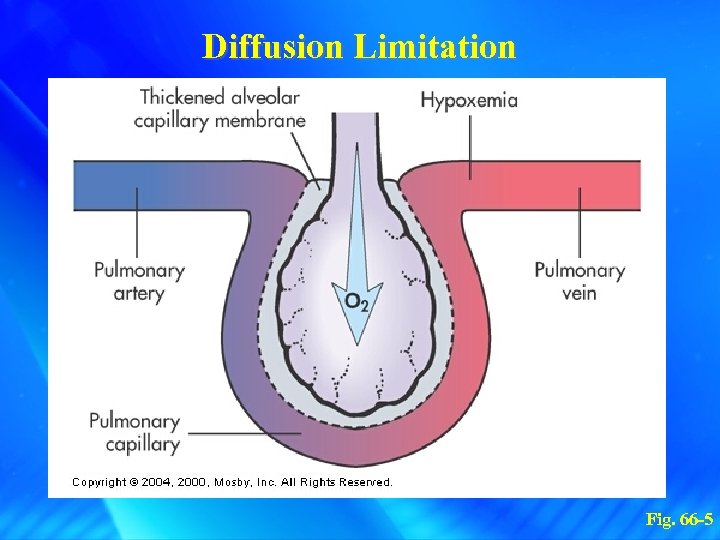 Diffusion Limitation Fig. 66 -5
 Alveolar Hypoventilation IV) Alveolar Hypoventilation • Is a generalized decrease in ventilation of lungs and resultant buildup of CO 2
 Hypoxemic Respiratory Failure Etiology and Pathophysiology Causes Alveolar hypoventilation – Restrictive lung disease – CNS disease – Chest wall dysfunction – Neuromuscular disease
 Hypoxemic Respiratory Failure Etiology and Pathophysiology • Interrelationship of mechanisms – Hypoxemic respiratory failure is frequently caused by a combination of two or more of these four mechanisms • Effects of hypoxemia – – Build up of lactic acid → metabolic acidosis → cell death CNS depression Heart tries to compensate → ↑ HR and CO If no compensation: ↓ O 2, ↑ acid, heart fails, shock, multisystem organ failure
 Hypercapnic Respiratory Failure Etiology and Pathophysiology • Imbalance between ventilatory supply and demand • Occurs when CO 2 is increased
 Causes Hypercapnic Respiratory Failure I) Alveolar Hypoventilation and VQ Mismatch: – Ventilation not adequate to eliminate CO 2 – Leads to respiratory acidosis – Eg. Narcotic OD; Guillian-Barre, ALS, COPD, asthma
 Causes Hypercapnic Respiratory Failure II) VQ Mismatch: - Leads to increased work of breathing - Insufficient energy to overcome resistance; ventilation falls; ↑PCO 2; respiratory acidosis
 Hypercapnic Respiratory Failure Categories of Causative Conditions • I) Airways and alveoli – Asthma – Emphysema – Chronic bronchitis – Cystic fibrosis
 Hypercapnic Respiratory Failure Categories of Causative Conditions • II) Central nervous system – Drug overdose – Brainstem infarction – Spinal cord injuries
 Hypercapnic Respiratory Failure Categories of Causative Conditions • III) Chest wall – Flail chest – Fractures – Mechanical restriction – Muscle spasm
 Hypercapnic Respiratory Failure Categories of Causative Conditions • IV) Neuromuscular conditions – Muscular dystrophy – Multiple sclerosis
 Respiratory Failure Tissue Oxygen Needs • Major threat is the inability of the lungs to meet the oxygen demands of the tissues
 Respiratory Failure Clinical Manifestations • Sudden or gradual onset • A sudden in Pa. O 2 or rapid in Pa. CO 2 is a serious condition
 Respiratory Failure Clinical Manifestations • When compensatory mechanisms fail, respiratory failure occurs • Signs may be specific or nonspecific
 Respiratory Failure Clinical Manifestations • Severe morning headache • Cyanosis – Late sign • Tachycardia and mild hypertension – Early signs
 Respiratory Failure Clinical Manifestations • Consequences of hypoxemia and hypoxia – Metabolic acidosis and cell death – Cardiac output – Impaired renal function
 Respiratory Failure Clinical Manifestations • Specific clinical manifestations – Rapid, shallow breathing pattern – Sitting upright – Dyspnea
 Respiratory Failure Clinical Manifestations • Specific clinical manifestations – Pursed-lip breathing – Retractions – Change in Inspiratory: Expiratory ratio
 Respiratory Failure Diagnostic Studies • • • Physical assessment ABG analysis Chest x-ray CBC ECG
 Respiratory Failure Diagnostic Studies • • Serum electrolytes Urinalysis V/Q lung scan Pulmonary artery catheter (severe cases)
 Acute Respiratory Failure Nursing and Collaborative Management • Nursing Assessment – Past health history – Medications – Surgery – Tachycardia
 Acute Respiratory Failure Nursing and Collaborative Management • Nursing Assessment – Fatigue – Sleep pattern changes – Headache – Restlessness
 Acute Respiratory Failure Nursing and Collaborative Management • Nursing Diagnoses – Ineffective airway clearance – Ineffective breathing pattern – Risk for imbalanced fluid volume – Anxiety
 Acute Respiratory Failure Nursing and Collaborative Management • Nursing Diagnoses – Impaired gas exchange – Imbalanced nutrition: less than body requirements
 Acute Respiratory Failure Nursing and Collaborative Management • Planning – Overall goals: • ABGs and breath sounds within baseline • No dyspnea • Effective cough
 Acute Respiratory Failure Nursing and Collaborative Management • Prevention – Thorough physical assessment – History
 Acute Respiratory Failure Nursing and Collaborative Management • Respiratory Therapy – Oxygen therapy – Mobilization of secretions • Effective coughing and positioning
 Acute Respiratory Failure Nursing and Collaborative Management • Respiratory Therapy – Mobilization of secretions • Hydration and humidification • Chest physical therapy • Airway suctioning
 Acute Respiratory Failure Nursing and Collaborative Management • Respiratory Therapy – Positive pressure ventilation (PPV)
 Acute Respiratory Failure Nursing and Collaborative Management • Drug Therapy – Relief of bronchospasm • Bronchodilators
 Acute Respiratory Failure Nursing and Collaborative Management • Drug Therapy – Reduction of airway inflammation • Corticosteroids
 Acute Respiratory Failure Nursing and Collaborative Management • Drug Therapy – Reduction of pulmonary congestion • IV diuretics
 Acute Respiratory Failure Nursing and Collaborative Management • Drug Therapy – Treatment of pulmonary infections • IV antibiotics
 Acute Respiratory Failure Nursing and Collaborative Management • Drug Therapy – Reduction of severe anxiety, pain, and agitation • Benzodiazepines • Narcotics
 Acute Respiratory Failure Nursing and Collaborative Management • Medical Supportive Therapy – Treat the underlying cause – Maintain adequate cardiac output and hemoglobin concentration – Monitor BP, O 2 saturation, urine output
 Acute Respiratory Failure Nursing and Collaborative Management • Nutritional Therapy – Maintain protein and energy stores – Enteral or parenteral nutrition – Supplements