


 Скачать презентацию Acute Renal Replacement Therapy for the Infant Dr
4395cb6f4f80279cf4221c9bee92b617.ppt
- Количество слайдов: 34
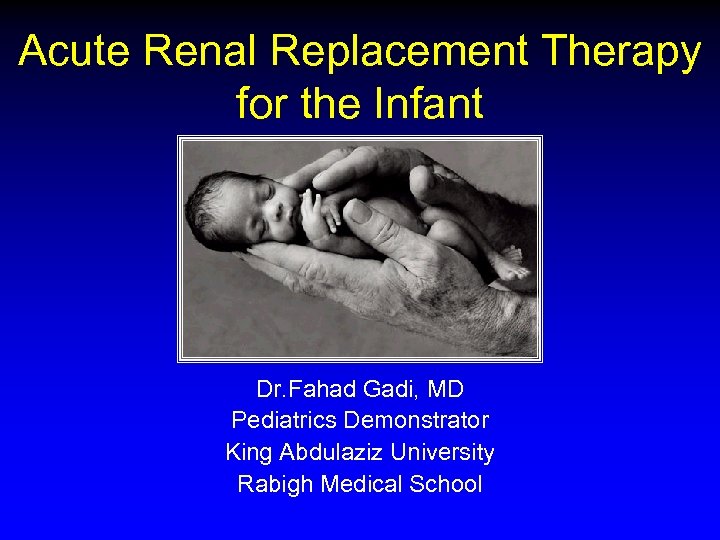 Acute Renal Replacement Therapy for the Infant Dr. Fahad Gadi, MD Pediatrics Demonstrator King Abdulaziz University Rabigh Medical School
 Objectives • Indications and goals for acute renal replacement therapy • Modalities for renal replacement therapy – Peritoneal dialysis – Intermittent hemodialysis – Continuous renal replacement therapy (CRRT) • Special issues related to the infant
 Indications for Renal Replacement • • Volume overload Metabolic imbalance Toxins (endogenous or exogenous) Inability to provide needed daily fluids due to insufficient urinary excretion
 Goals of Renal Replacement • Restore fluid, electrolyte and metabolic balance • Remove endogenous or exogenous toxins as rapidly as possible • Permit needed therapy and nutrition • Limit complications
 Renal Replacement for the Infant: A Set of Special Challenges • Small size of the patient • Equipment designed for larger people • Small blood volume will magnify effects of any errors • Achieving access may be difficult • Staff may have infrequent experience
 Modalities for Renal Replacement • Peritoneal dialysis • Intermittent hemodialysis • Continuous renal replacement therapy (CRRT)
 Modalities for Renal Replacement • Peritoneal dialysis • Intermittent hemodialysis • Continuous renal replacement therapy (CRRT)
 PD: Considerations for Infants • • • ADVANTAGES Experience in the chronic setting No vascular access No extracorporeal perfusion Simplicity ? Preferred modality for cardiac patients? • • • DISADVANTAGES Infectious risk Leak ? Respiratory compromise? Sodium sieving Dead space in tubing
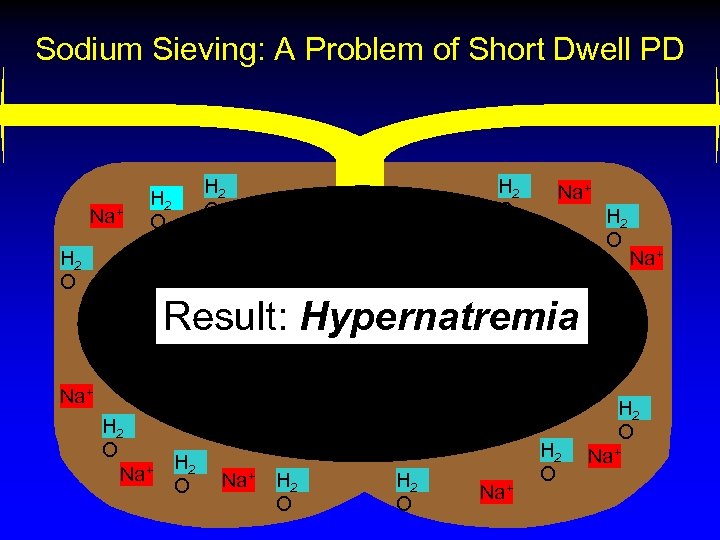 Sodium Sieving: A Problem of Short Dwell PD Na+ H 2 O Na+ H 2 O Na+ Result: Hypernatremia Na+ H 2 O H 2 O Na+
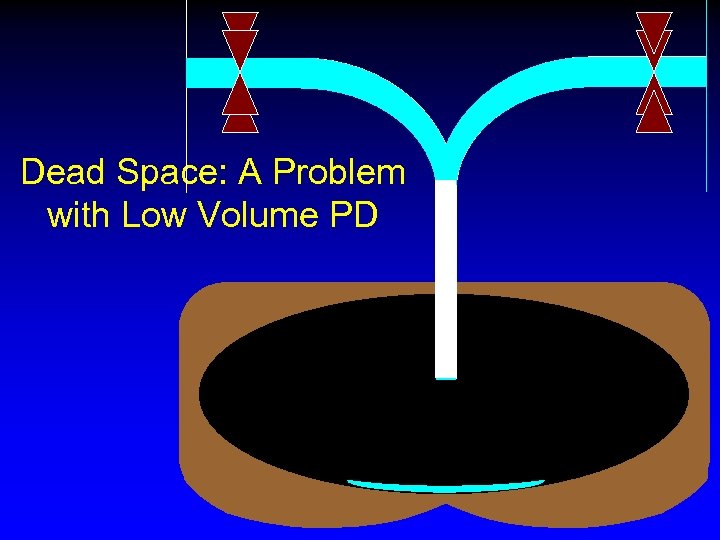 Dead Space: A Problem with Low Volume PD
 Modalities for Renal Replacement • Peritoneal dialysis • Intermittent hemodialysis • Continuous renal replacement therapy (CRRT)
 IHD: Considerations for Infants ADVANTAGES • Rapid particle and fluid removal; most efficient modality • Does not require anticoagulation 24 h/d • • • DISADVANTAGES Vascular access Complicated Large extracorporeal volume Adapted equipment ? Poorly tolerated
 Modalities for Renal Replacement • Peritoneal dialysis • Intermittent hemodialysis • Continuous renal replacement therapy (CRRT)
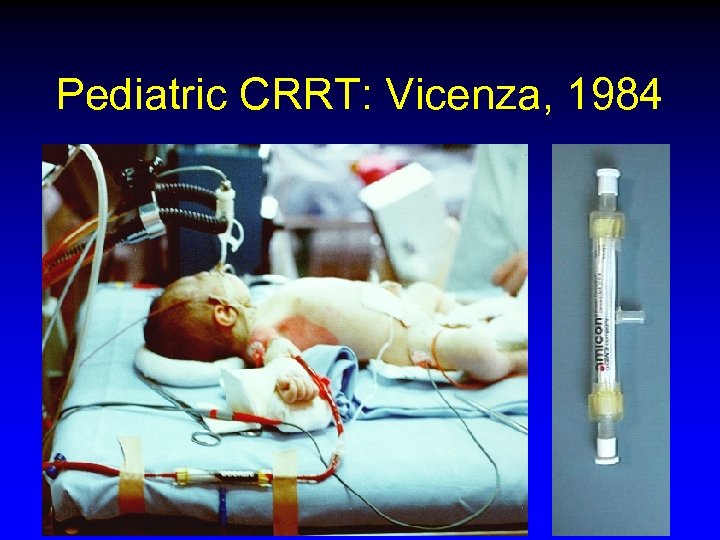 Pediatric CRRT: Vicenza, 1984
 CRRT for Infants: A Series of Challenges • • • Small patient with small blood volume Equipment designed for bigger people No specific protocols Complications may be magnified No clear guidelines Limited outcome data
 Potential Complications of Infant CRRT • • • Volume related problems Biochemical and nutritional problems Hemorrhage, infection Thermic loss Technical problems Logistical problems
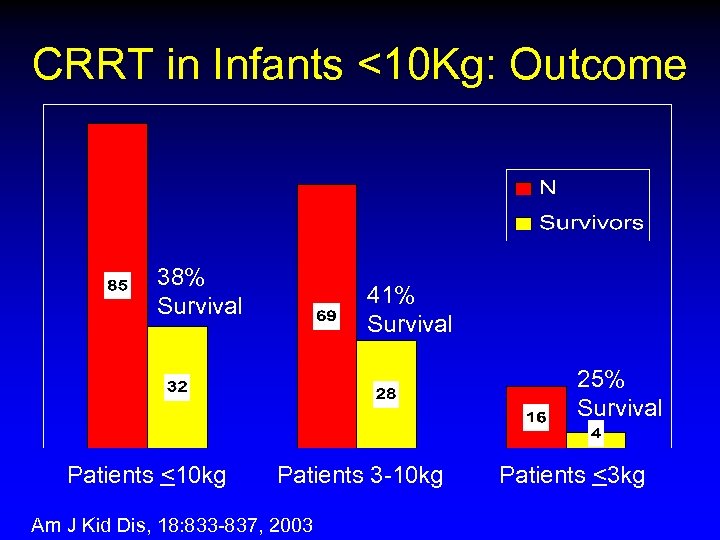 CRRT in Infants <10 Kg: Outcome 38% Survival 41% Survival 25% Survival Patients <10 kg Patients 3 -10 kg Am J Kid Dis, 18: 833 -837, 2003 Patients <3 kg
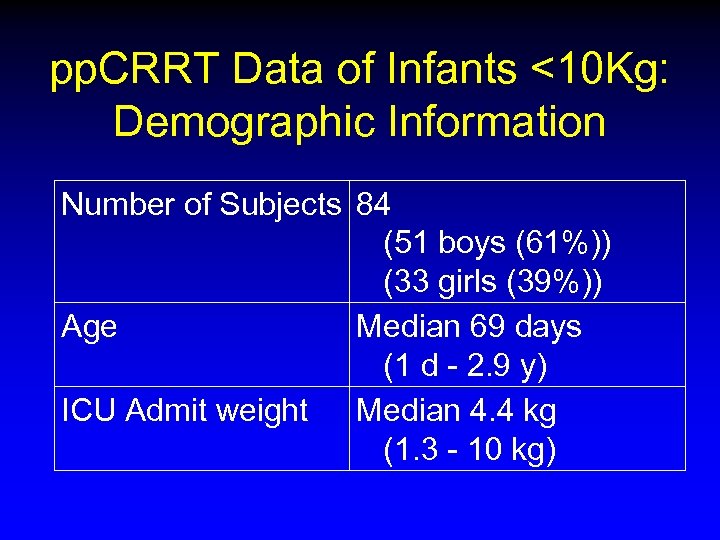 pp. CRRT Data of Infants <10 Kg: Demographic Information Number of Subjects 84 (51 boys (61%)) (33 girls (39%)) Age Median 69 days (1 d - 2. 9 y) ICU Admit weight Median 4. 4 kg (1. 3 - 10 kg)
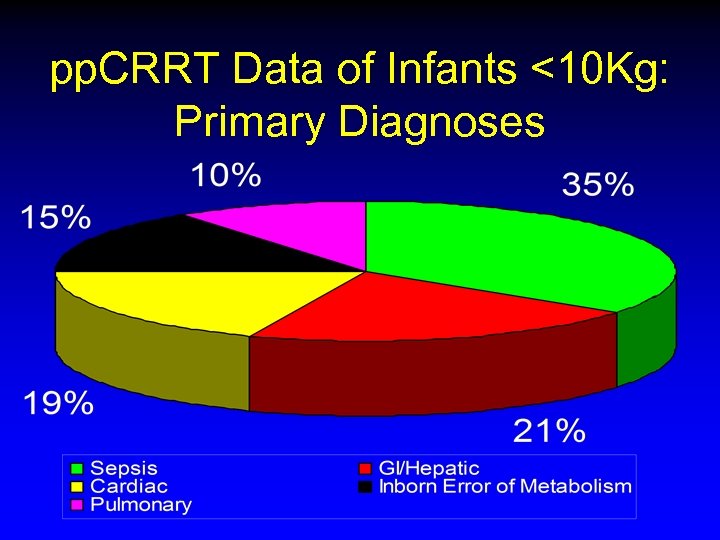 pp. CRRT Data of Infants <10 Kg: Primary Diagnoses
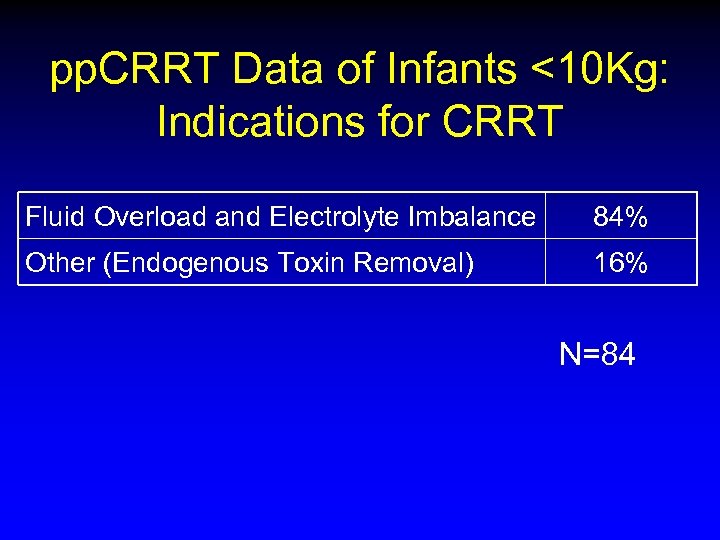 pp. CRRT Data of Infants <10 Kg: Indications for CRRT Fluid Overload and Electrolyte Imbalance 84% Other (Endogenous Toxin Removal) 16% N=84
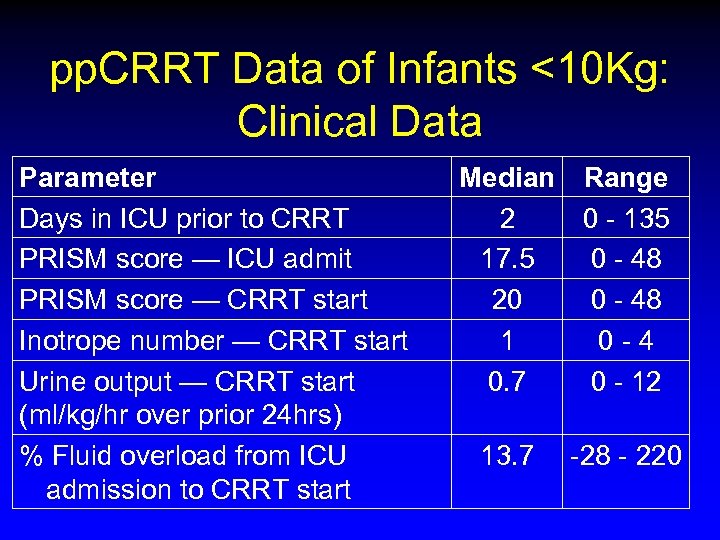 pp. CRRT Data of Infants <10 Kg: Clinical Data Parameter Days in ICU prior to CRRT PRISM score — ICU admit PRISM score — CRRT start Inotrope number — CRRT start Urine output — CRRT start (ml/kg/hr over prior 24 hrs) % Fluid overload from ICU admission to CRRT start Median Range 2 0 - 135 17. 5 0 - 48 20 0 - 48 1 0 -4 0. 7 0 - 12 13. 7 -28 - 220
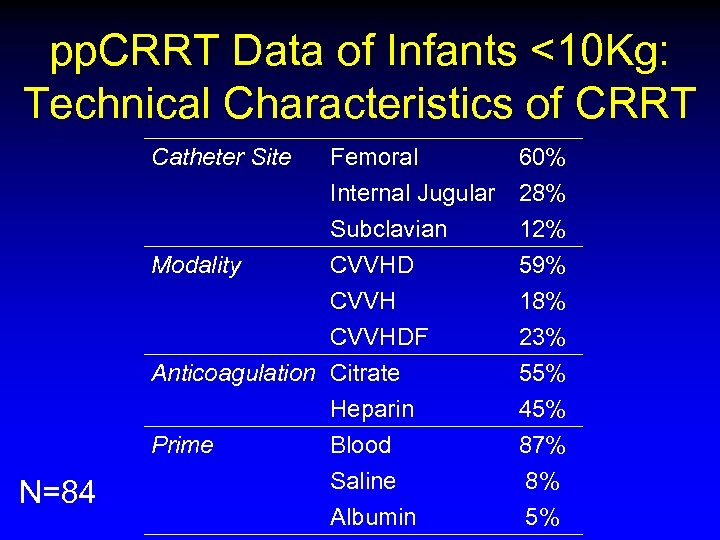 pp. CRRT Data of Infants <10 Kg: Technical Characteristics of CRRT Catheter Site Modality N=84 Femoral Internal Jugular Subclavian CVVHDF Anticoagulation Citrate Heparin Prime Blood Saline Albumin 60% 28% 12% 59% 18% 23% 55% 45% 87% 8% 5%
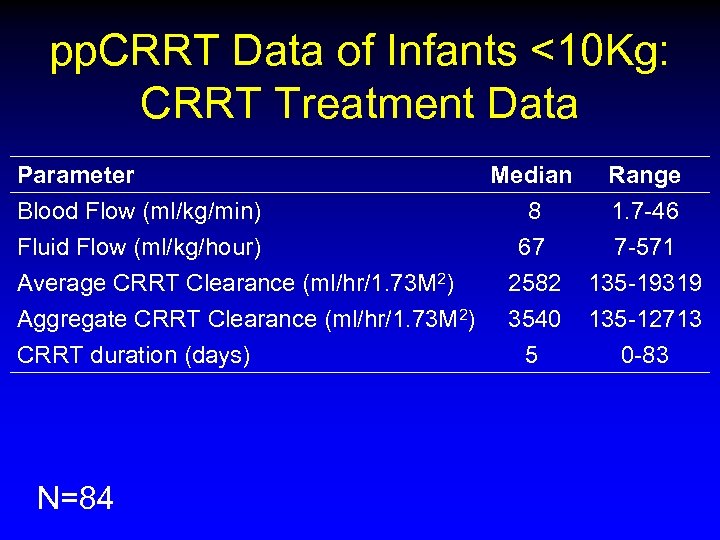 pp. CRRT Data of Infants <10 Kg: CRRT Treatment Data Parameter Blood Flow (ml/kg/min) Fluid Flow (ml/kg/hour) Average CRRT Clearance (ml/hr/1. 73 M 2) Aggregate CRRT Clearance (ml/hr/1. 73 M 2) CRRT duration (days) N=84 Median Range 8 1. 7 -46 67 7 -571 2582 135 -19319 3540 5 135 -12713 0 -83
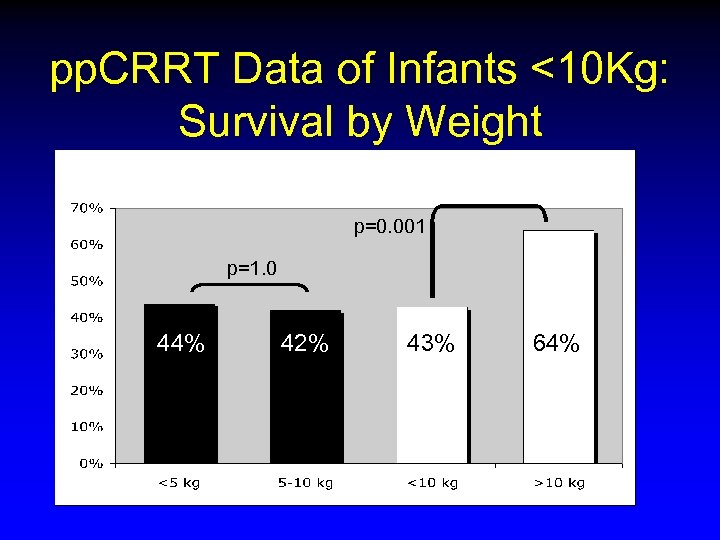 pp. CRRT Data of Infants <10 Kg: Survival by Weight p=0. 001 p=1. 0 44% 42% 43% 64%
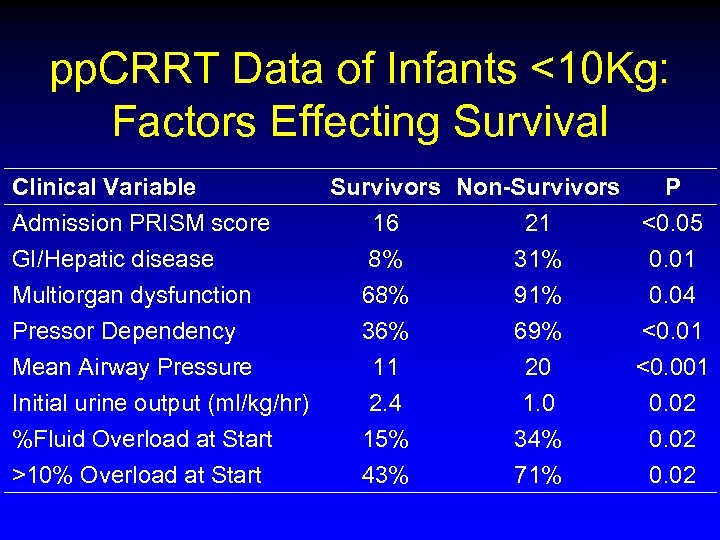 pp. CRRT Data of Infants <10 Kg: Factors Effecting Survival Clinical Variable Admission PRISM score GI/Hepatic disease Multiorgan dysfunction Pressor Dependency Mean Airway Pressure Initial urine output (ml/kg/hr) %Fluid Overload at Start >10% Overload at Start Survivors Non-Survivors P 16 21 <0. 05 8% 31% 0. 01 68% 91% 0. 04 36% 11 2. 4 15% 43% 69% 20 1. 0 34% 71% <0. 01 <0. 001 0. 02
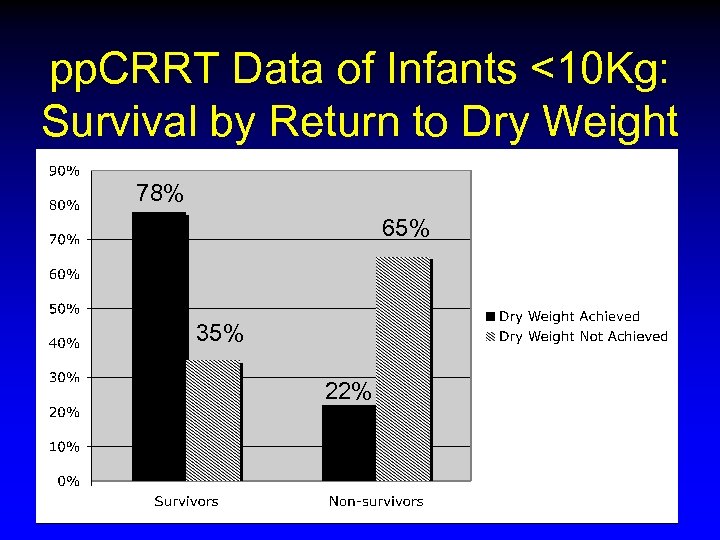 pp. CRRT Data of Infants <10 Kg: Survival by Return to Dry Weight 78% 65% 35% 22%
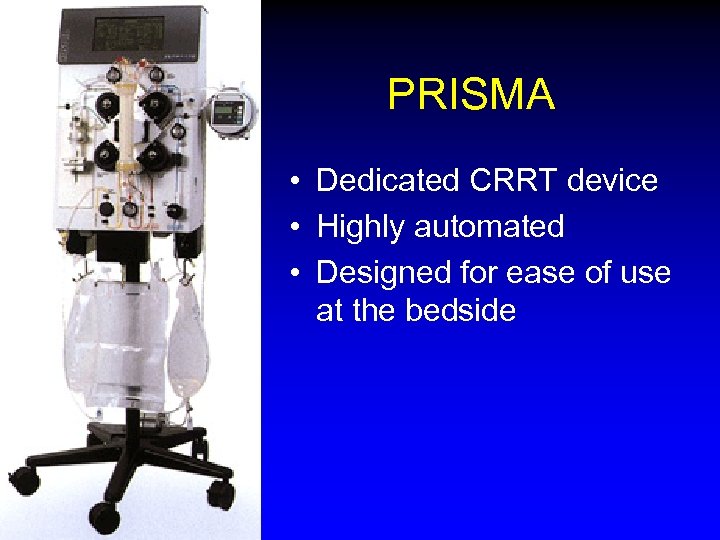 PRISMA • Dedicated CRRT device • Highly automated • Designed for ease of use at the bedside
 Bradykinin Release Syndrome • Mucosal congestion, bronchospasm, hypotension at start of CRRT • Resolves with discontinuation of CRRT • Thought to be related to bradykinin release when patient’s blood contacts hemofilter • Exquisitely p. H sensitive
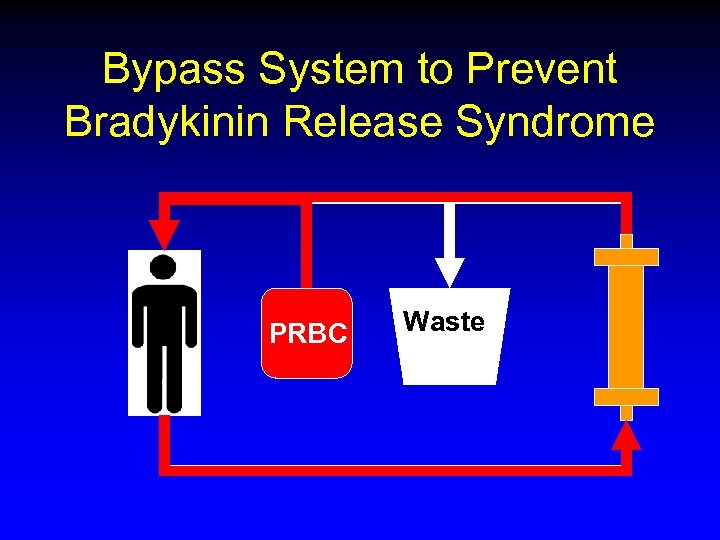 Bypass System to Prevent Bradykinin Release Syndrome PRBC Waste
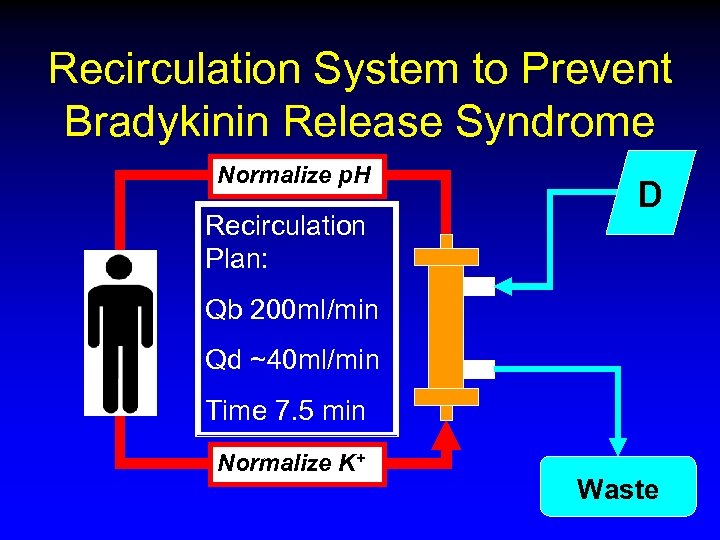 Recirculation System to Prevent Bradykinin Release Syndrome Normalize p. H Recirculation Plan: D Qb 200 ml/min Qd ~40 ml/min Time 7. 5 min Normalize K+ Waste
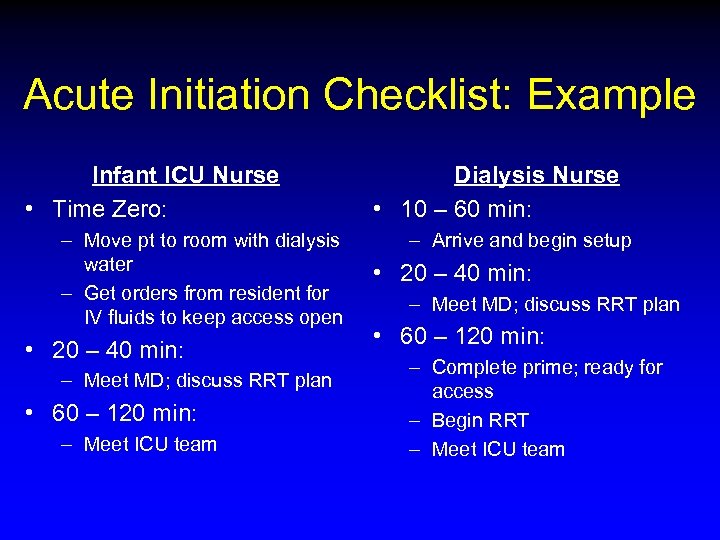 Acute Initiation Checklist: Example Infant ICU Nurse • Time Zero: – Move pt to room with dialysis water – Get orders from resident for IV fluids to keep access open • 20 – 40 min: – Meet MD; discuss RRT plan • 60 – 120 min: – Meet ICU team Dialysis Nurse • 10 – 60 min: – Arrive and begin setup • 20 – 40 min: – Meet MD; discuss RRT plan • 60 – 120 min: – Complete prime; ready for access – Begin RRT – Meet ICU team
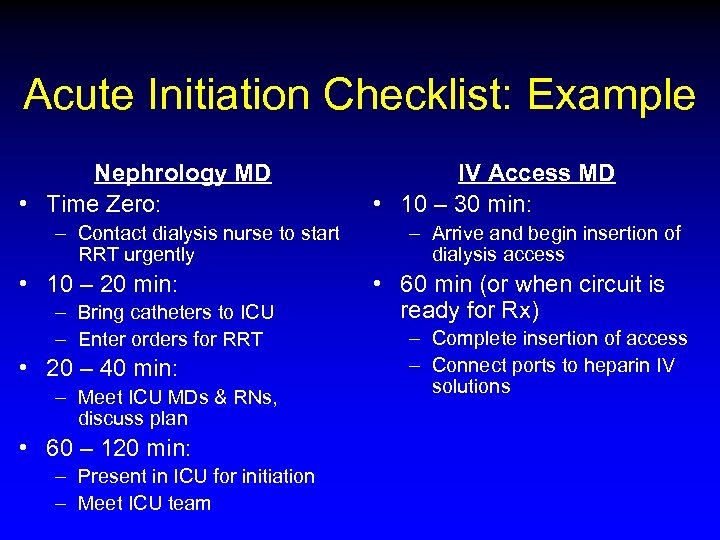 Acute Initiation Checklist: Example Nephrology MD • Time Zero: – Contact dialysis nurse to start RRT urgently • 10 – 20 min: – Bring catheters to ICU – Enter orders for RRT • 20 – 40 min: – Meet ICU MDs & RNs, discuss plan • 60 – 120 min: – Present in ICU for initiation – Meet ICU team IV Access MD • 10 – 30 min: – Arrive and begin insertion of dialysis access • 60 min (or when circuit is ready for Rx) – Complete insertion of access – Connect ports to heparin IV solutions
 Infant RRT: Summary • • All modalities of RRT possible for infants No modality is perfect Technical challenges can be met Careful planning with institution, program, and individuals improves care • Cooperation, communication, and collaboration will increase our success
 Thanks!