


 Скачать презентацию Acts of the Apostles 1 1 6 1
9494a6dcc946db89692361ddf1636e7e.ppt
- Количество слайдов: 34
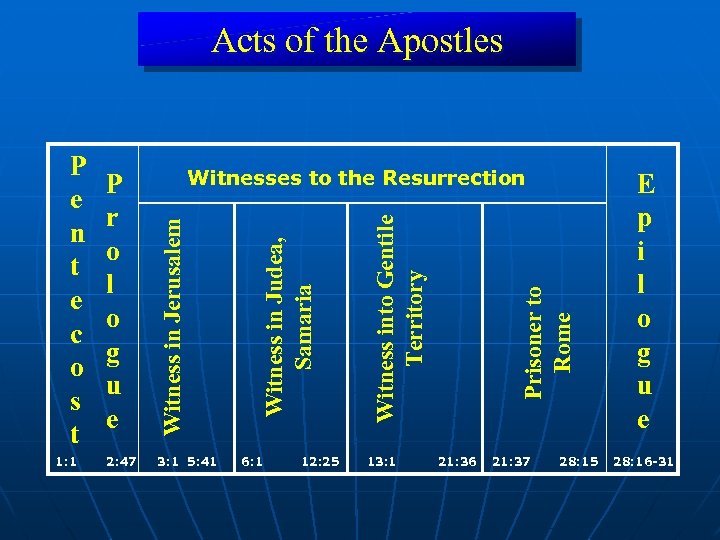 Acts of the Apostles 1: 1 6: 1 12: 25 13: 1 Prisoner to Rome 3: 1 5: 41 Witness into Gentile Territory 2: 47 Witness in Judea, Samaria Witnesses to the Resurrection P r o l o g u e Witness in Jerusalem P e n t e c o s t 21: 36 21: 37 28: 15 E p i l o g u e 28: 16 -31
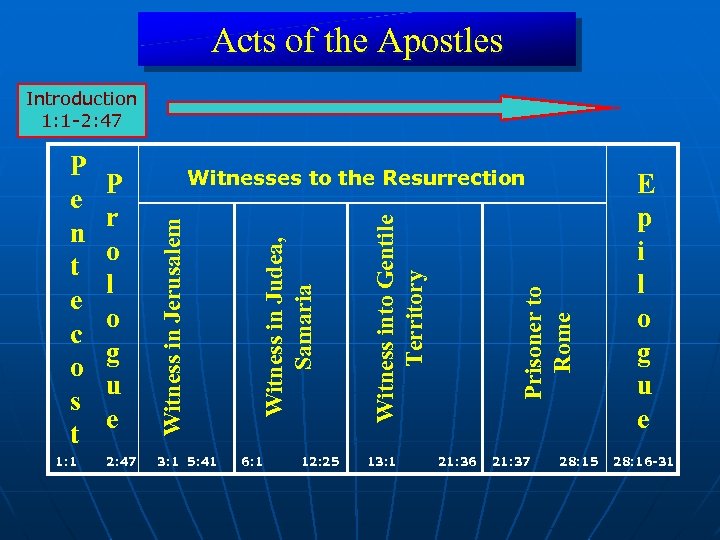 Acts of the Apostles Introduction 1: 1 -2: 47 1: 1 6: 1 12: 25 13: 1 Prisoner to Rome 3: 1 5: 41 Witness into Gentile Territory 2: 47 Witness in Judea, Samaria Witnesses to the Resurrection P r o l o g u e Witness in Jerusalem P e n t e c o s t 21: 36 21: 37 28: 15 E p i l o g u e 28: 16 -31
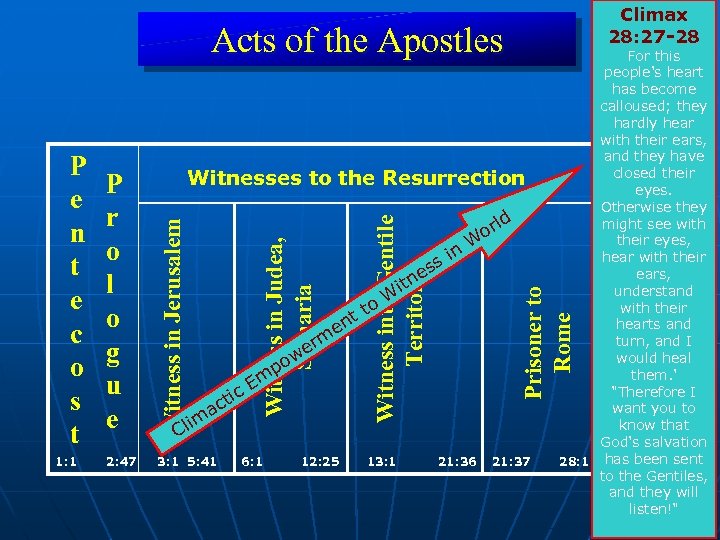 Climax 28: 27 -28 Acts of the Apostles 1: 1 ac lim C 6: 1 12: 25 s ne it W 13: 1 n si ld W or Prisoner to Rome 3: 1 5: 41 po m E ic t o tt n e m er w Witness into Gentile Territory 2: 47 Witness in Judea, Samaria Witnesses to the Resurrection P r o l o g u e Witness in Jerusalem P e n t e c o s t For this people's heart has become calloused; they hardly hear with their ears, and they have closed their eyes. Otherwise they might see with their eyes, hear with their ears, understand with their hearts and turn, and I would heal them. ' "Therefore I want you to know that God's salvation 28: 15 has been sent 28: 16 -31 to the Gentiles, and they will listen!" 21: 36 21: 37 E p i l o g u e
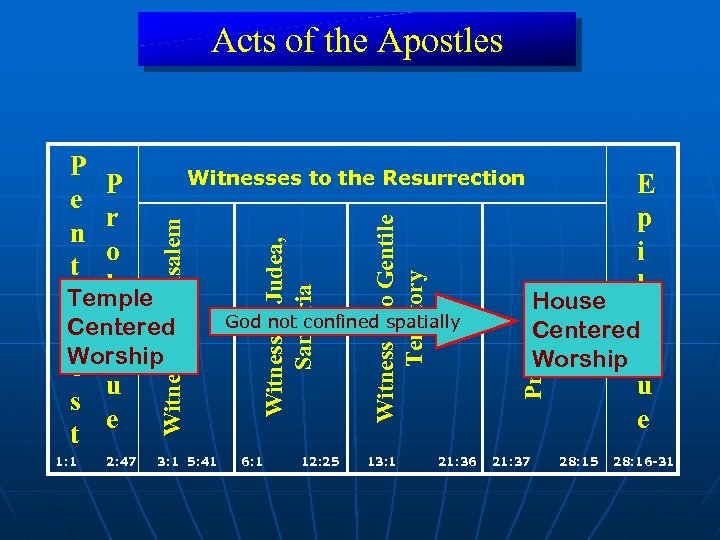 Acts of the Apostles 1: 1 2: 47 3: 1 5: 41 God not confined spatially 6: 1 12: 25 13: 1 21: 36 E p i l House Centeredo Worship g u e Prisoner to Rome Witness into Gentile Territory Witness in Judea, Samaria Witnesses to the Resurrection Witness in Jerusalem P P e r n o t l Temple e o Centered c g Worship o u s e t 21: 37 28: 15 28: 16 -31
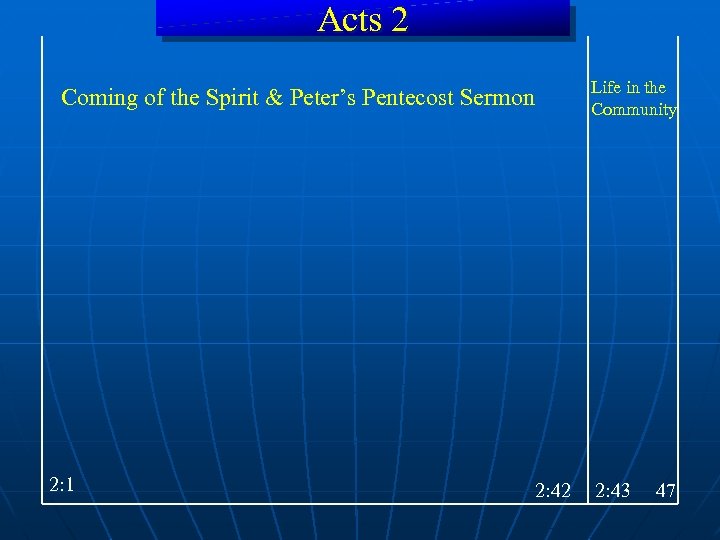 Acts 2 2 Acts Life in the Community Coming of the Spirit & Peter’s Pentecost Sermon 2: 1 2: 42 2: 43 47
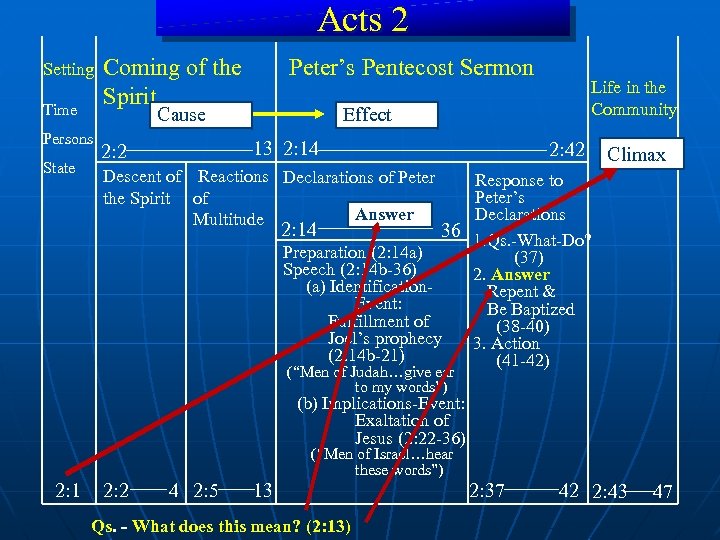 Acts 2 2 Acts Setting Time Peter’s Pentecost Sermon Cause Persons State Coming of the Spirit Effect 13 2: 14 2: 2 Life in the Community 2: 42 Climax Descent of Reactions Declarations of Peter the Spirit of Answer Multitude Response to Peter’s Declarations 2: 14 36 1. Qs. -What-Do? Preparation (2: 14 a) (37) Speech (2: 14 b-36) 2. Answer (a) Identification. Repent & Event: Be Baptized Fulfillment of (38 -40) Joel’s prophecy 3. Action (2: 14 b-21) (41 -42) (“Men of Judah…give ear to my words”) (b) Implications-Event: Exaltation of Jesus (2: 22 -36) (“Men of Israel…hear these words”) 2: 1 2: 2 4 2: 5 13 Qs. - What does this mean? (2: 13) 2: 37 42 2: 43 47
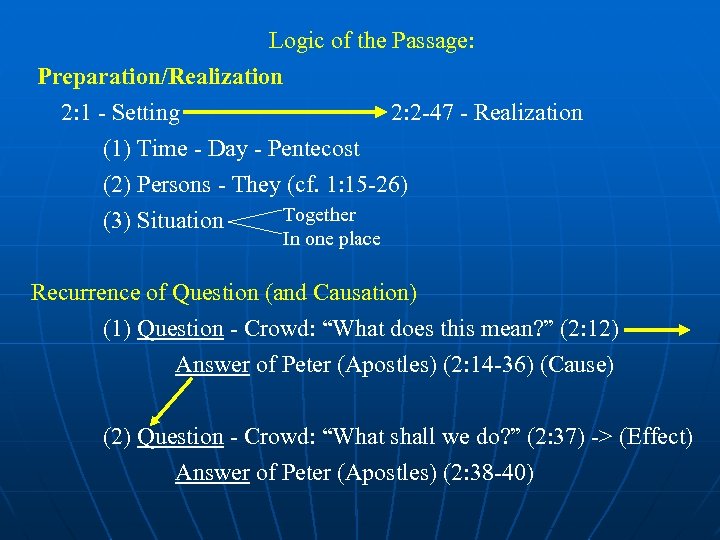 Logic of the Passage: Preparation/Realization 2: 1 - Setting 2: 2 -47 - Realization (1) Time - Day - Pentecost (2) Persons - They (cf. 1: 15 -26) Together (3) Situation In one place Recurrence of Question (and Causation) (1) Question - Crowd: “What does this mean? ” (2: 12) Answer of Peter (Apostles) (2: 14 -36) (Cause) (2) Question - Crowd: “What shall we do? ” (2: 37) -> (Effect) Answer of Peter (Apostles) (2: 38 -40)
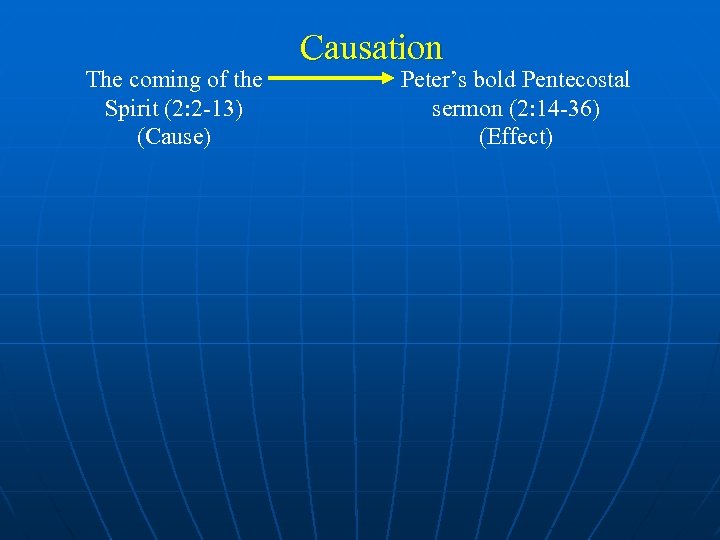 The coming of the Spirit (2: 2 -13) (Cause) Causation Peter’s bold Pentecostal sermon (2: 14 -36) (Effect)
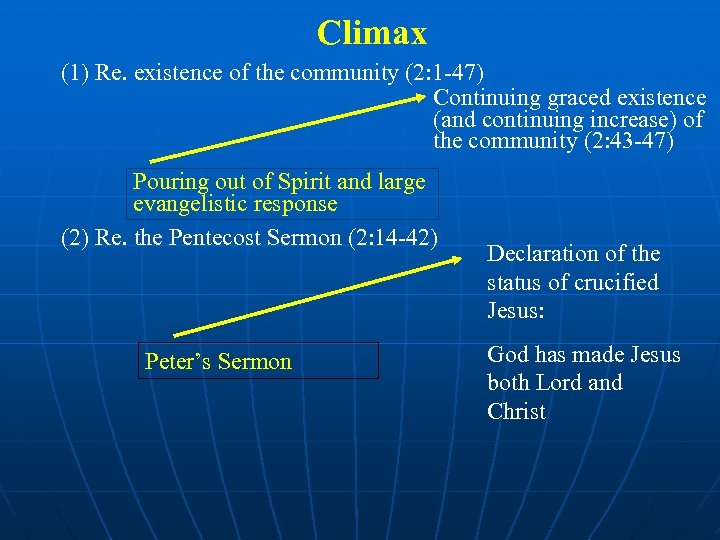 Climax (1) Re. existence of the community (2: 1 -47) Continuing graced existence (and continuing increase) of the community (2: 43 -47) Pouring out of Spirit and large evangelistic response (2) Re. the Pentecost Sermon (2: 14 -42) Peter’s Sermon Declaration of the status of crucified Jesus: God has made Jesus both Lord and Christ
 Acts 2 – Thought Flow and Interp n The following slides describe in detail a thought flow through the material in Acts 2 (similar to working at detailed observation)
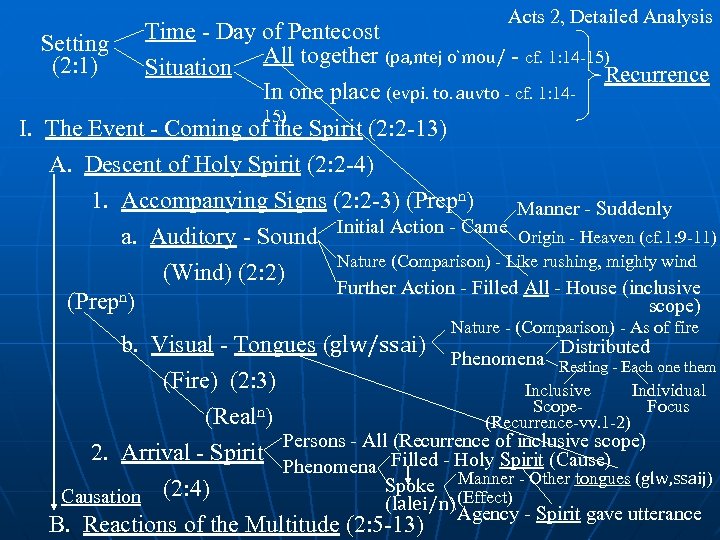 Acts 2, Detailed Analysis Setting (2: 1) Time - Day of Pentecost Situation All together (pa, ntej o`mou/ - cf. 1: 14 -15) Recurrence In one place (evpi. to. auvto - cf. 1: 1415) I. The Event - Coming of the Spirit (2: 2 -13) A. Descent of Holy Spirit (2: 2 -4) 1. Accompanying Signs (2: 2 -3) (Prepn) Manner - Suddenly a. Auditory - Sound Initial Action - Came Origin - Heaven (cf. 1: 9 -11) Nature (Comparison) - Like rushing, mighty wind (Wind) (2: 2) Further Action - Filled All - House (inclusive n) (Prep scope) Nature - (Comparison) - As of fire b. Visual - Tongues (glw/ssai) Distributed Phenomena Resting - Each one them (Fire) (2: 3) Inclusive Individual Scope. Focus n) (Real (Recurrence-vv. 1 -2) Persons - All (Recurrence of inclusive scope) 2. Arrival - Spirit Phenomena Filled - Holy Spirit (Cause) Spoke Manner - Other tongues (glw, ssaij) (Effect) Causation (2: 4) (lalei/n) Agency - Spirit gave utterance B. Reactions of the Multitude (2: 5 -13)
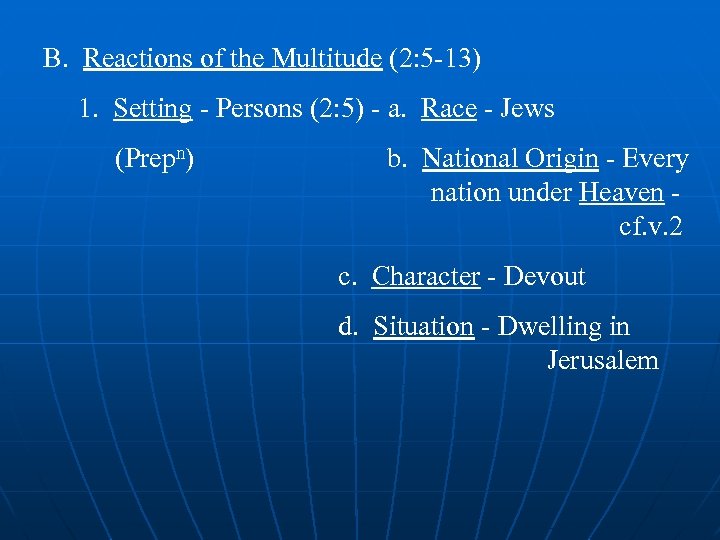 B. Reactions of the Multitude (2: 5 -13) 1. Setting - Persons (2: 5) - a. Race - Jews (Prepn) b. National Origin - Every nation under Heaven cf. v. 2 c. Character - Devout d. Situation - Dwelling in Jerusalem
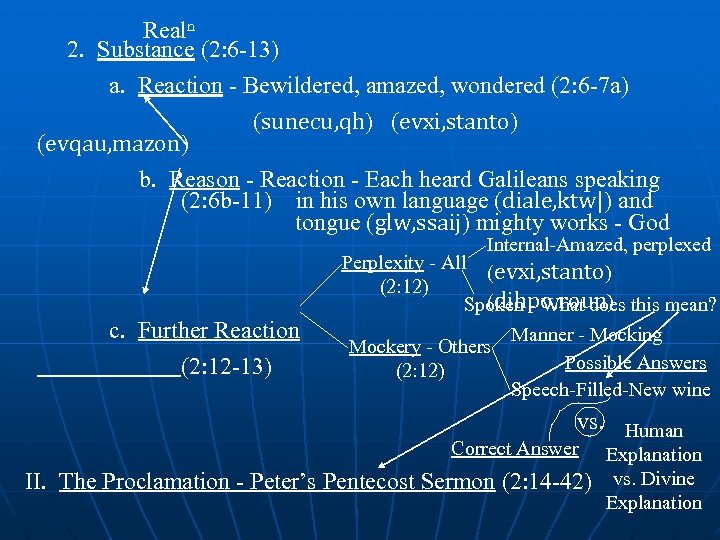 Realn 2. Substance (2: 6 -13) a. Reaction - Bewildered, amazed, wondered (2: 6 -7 a) (evqau, mazon) (sunecu, qh) (evxi, stanto) b. Reason - Reaction - Each heard Galileans speaking (2: 6 b-11) in his own language (diale, ktw|) and tongue (glw, ssaij) mighty works - God Internal-Amazed, perplexed Perplexity - All (evxi, stanto) (2: 12) (dihpo, roun) Spoken - What does this mean? c. Further Reaction (2: 12 -13) Mockery - Others (2: 12) Manner - Mocking Possible Answers Speech-Filled-New wine vs. Human Correct Answer II. The Proclamation - Peter’s Pentecost Sermon (2: 14 -42) Explanation vs. Divine Explanation
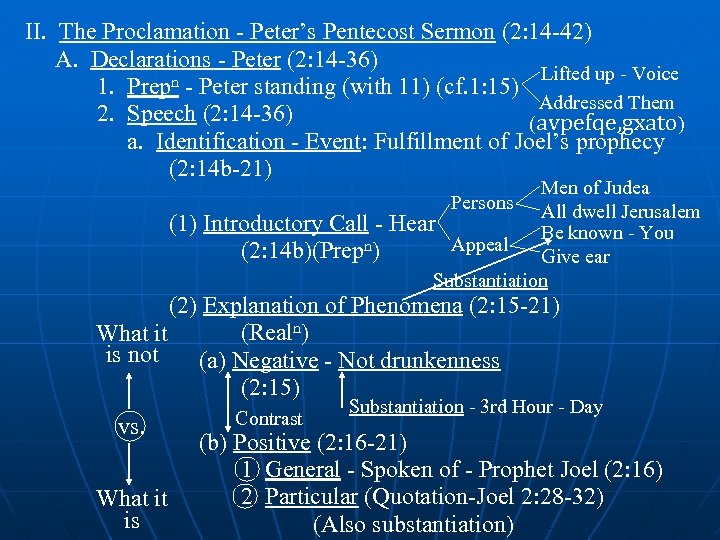 II. The Proclamation - Peter’s Pentecost Sermon (2: 14 -42) A. Declarations - Peter (2: 14 -36) n - Peter standing (with 11) (cf. 1: 15) Lifted up - Voice 1. Prep Addressed Them 2. Speech (2: 14 -36) (avpefqe, gxato) a. Identification - Event: Fulfillment of Joel’s prophecy (2: 14 b-21) (1) Introductory Call (2: 14 b)(Prepn) Men of Judea Persons All dwell Jerusalem Hear Be known - You Appeal Give ear Substantiation (2) Explanation of Phenomena (2: 15 -21) (Realn) What it is not (a) Negative - Not drunkenness (2: 15) vs. What it is Contrast Substantiation - 3 rd Hour - Day (b) Positive (2: 16 -21) 1 General - Spoken of - Prophet Joel (2: 16) 2 Particular (Quotation-Joel 2: 28 -32) (Also substantiation)
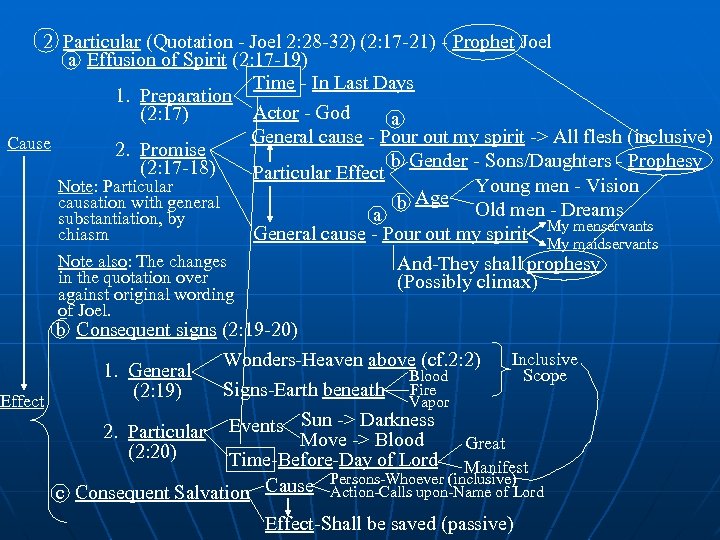 2 Particular (Quotation - Joel 2: 28 -32) (2: 17 -21) - Prophet Joel a Effusion of Spirit (2: 17 -19) Time - In Last Days 1. Preparation Actor - God (2: 17) a General cause - Pour out my spirit -> All flesh (inclusive) Cause 2. Promise b Gender - Sons/Daughters - Prophesy (2: 17 -18) Particular Effect Note: Particular Young men - Vision Age causation with general b Old men - Dreams a substantiation, by General cause - Pour out my spirit My menservants chiasm My maidservants Note also: The changes in the quotation over against original wording of Joel. And-They shall prophesy (Possibly climax) b Consequent signs (2: 19 -20) Inclusive Wonders-Heaven above (cf. 2: 2) 1. General Scope Blood Fire Signs-Earth beneath (2: 19) Effect Vapor Sun -> Darkness 2. Particular Events Move -> Blood Great (2: 20) Time-Before-Day of Lord Manifest Persons-Whoever (inclusive) c Consequent Salvation Cause Action-Calls upon-Name of Lord Effect-Shall be saved (passive)
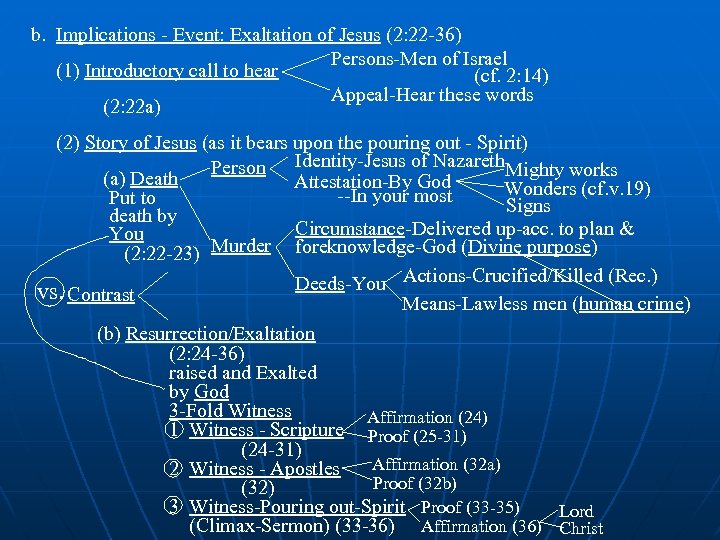 b. Implications - Event: Exaltation of Jesus (2: 22 -36) Persons-Men of Israel (1) Introductory call to hear (cf. 2: 14) Appeal-Hear these words (2: 22 a) (2) Story of Jesus (as it bears upon the pouring out - Spirit) Person Identity-Jesus of Nazareth. Mighty works (a) Death Attestation-By God Wonders (cf. v. 19) --In your most Put to Signs death by Circumstance-Delivered up-acc. to plan & You (2: 22 -23) Murder foreknowledge-God (Divine purpose) vs. Contrast Deeds-You Actions-Crucified/Killed (Rec. ) Means-Lawless men (human crime) (b) Resurrection/Exaltation (2: 24 -36) raised and Exalted by God 3 -Fold Witness Affirmation (24) 1 Witness - Scripture Proof (25 -31) (24 -31) Affirmation (32 a) 2 Witness - Apostles Proof (32 b) (32) 3 Witness-Pouring out-Spirit Proof (33 -35) Lord (Climax-Sermon) (33 -36) Affirmation (36) Christ
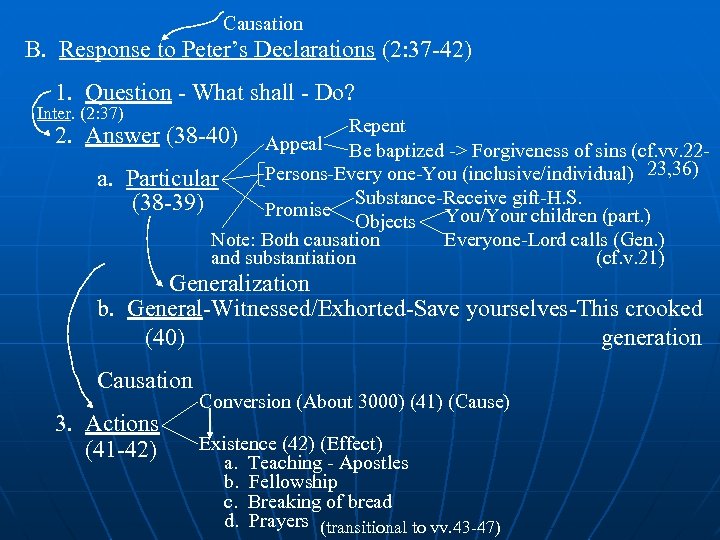 Causation B. Response to Peter’s Declarations (2: 37 -42) 1. Question - What shall - Do? Inter. (2: 37) Repent Appeal Be baptized -> Forgiveness of sins (cf. vv. 22 Persons-Every one-You (inclusive/individual) 23, 36) Particular Substance-Receive gift-H. S. (38 -39) Promise Objects You/Your children (part. ) Note: Both causation Everyone-Lord calls (Gen. ) and substantiation (cf. v. 21) 2. Answer (38 -40) a. Generalization b. General-Witnessed/Exhorted-Save yourselves-This crooked (40) generation Causation 3. Actions (41 -42) Conversion (About 3000) (41) (Cause) Existence (42) (Effect) a. Teaching - Apostles b. Fellowship c. Breaking of bread d. Prayers (transitional to vv. 43 -47)
 Acts 2 – Historical-Cultural and Interpretative Work n n The following is a study of background work on Acts 2; Trying to answer the question, “What does this mean? ” It ends with a study regarding the “Fullness of the Spirit” in Acts.
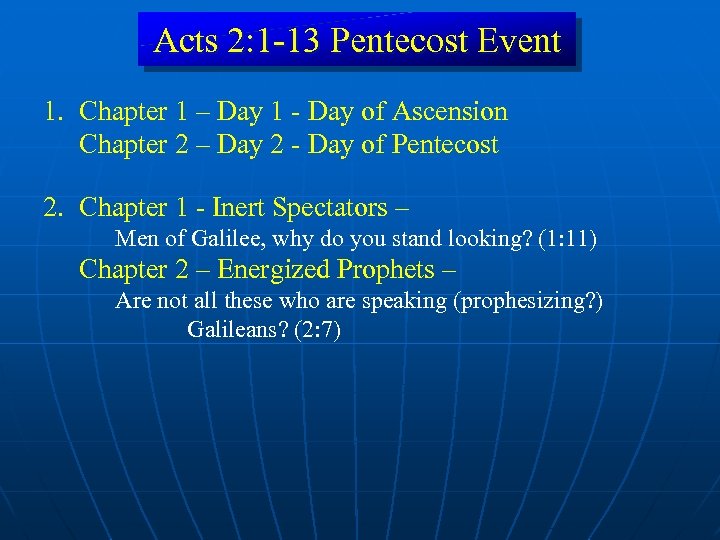 Acts 2: 1 -13 Pentecost Event 1. Chapter 1 – Day 1 - Day of Ascension Chapter 2 – Day 2 - Day of Pentecost 2. Chapter 1 - Inert Spectators – Men of Galilee, why do you stand looking? (1: 11) Chapter 2 – Energized Prophets – Are not all these who are speaking (prophesizing? ) Galileans? (2: 7)
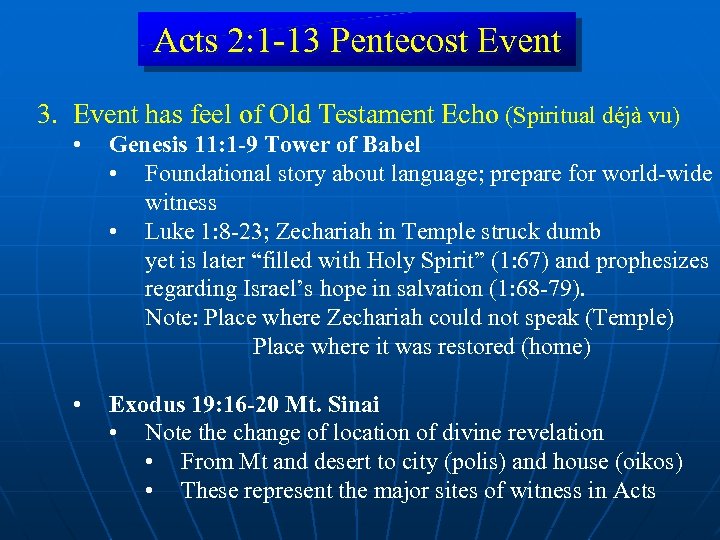 Acts 2: 1 -13 Pentecost Event 3. Event has feel of Old Testament Echo (Spiritual déjà vu) • Genesis 11: 1 -9 Tower of Babel • Foundational story about language; prepare for world-wide witness • Luke 1: 8 -23; Zechariah in Temple struck dumb yet is later “filled with Holy Spirit” (1: 67) and prophesizes regarding Israel’s hope in salvation (1: 68 -79). Note: Place where Zechariah could not speak (Temple) Place where it was restored (home) • Exodus 19: 16 -20 Mt. Sinai • Note the change of location of divine revelation • From Mt and desert to city (polis) and house (oikos) • These represent the major sites of witness in Acts
 Acts 2: 1 -13 Pentecost Event 3. Event has feel of Old Testament Echo (Spiritual déjà vu) • Isaiah 6 Temple of the Lord • Note change of spatial dimension • Theophany in Temple vs. private residence • Joel 2: 16 -21 • Hold till later
 Acts 2: 1 -13 Pentecost Event 4. The Galilean Issue • • Not just what they were hearing but who was speaking (2: 7) Luke-Acts treats Galilee 3 ways: 1. Part of the larger nation of Israel (Luke 4: 44; 23: 5, Acts 10: 37) 2. Inferior regional distinction (Acts 4: 13, John 1: 46, 7: 15) 3. Not to mention the closer association with the gentile world (Mt 4: 15, Luke 6: 17, 7: 1 -10) 5. The Global Scope • • Every nation under heaven All nations may be represented by no ethnic diversity (all appear to be Diaspora Jews
 Acts 2: 14 -36 Pentecost Interpreted What Does This Mean? (2: 12) • • Peter’s Joel 2 quotation is programmatic for Acts Much as Jesus’ Isaiah 61 quotation is programmatic for Luke (4: 16 -19; see also 7: 21 -22) • Peter’s sharp temporal change • Joel 2: 28 “Afterward” • Joel 3: 1 (LXX) “In those days and at that time” • Acts 2: 17 “In the last days I will pour out my Spirit” • The indeterminate “times or seasons” known only to the Father in Acts 1: 7 is now made known as God declares (2: 17)
 Acts 2: 14 -36 Pentecost Interpreted What Does This Mean? (2: 12) • God will dissolve (suspend? ) heaven-earth Spatial Dimensions “I will show wonders from heaven above and signs on the earth below” (2: 19) Via… 1. Visions and dreams (2: 17) • Young men. . . old men is reversed in Acts from Joel • Elderly Zechariah (1: 8 -20) and Simeon (2: 25 -35) but from that point on in Luke-Acts younger men see and hear. • Apostles see heaven opened in 1: 9 -11, so expect to see further revelations
 Acts 2: 14 -36 Pentecost Interpreted What Does This Mean? (2: 12) • God will dissolve (suspend? ) heaven-earth Spatial Dimensions “I will show wonders from heaven above and signs on the earth below” (2: 19) Via… 1. Visions and dreams (2: 17) 2. Wonders and signs (2: 19 -20) • For the most part in Luke-Acts signs-wonders are acts of mercy to relieve the suffering of humanity from disease, demons and death…only occasionally does Jesus manipulate the forces of nature
 Acts 2: 14 -36 Pentecost Interpreted What Does This Mean? (2: 12) • God will dissolve (suspend? ) heaven-earth Spatial Dimensions “I will show wonders from heaven above and signs on the earth below” (2: 19) Via… 1. Visions and dreams (2: 17) 2. Wonders and signs (2: 19 -20) 3. Prophecy (2: 18) • In addition to signs and wonders…the Spirit will anoint men and women to prophesy. The stage is set for Peter to prophesy but also for sons and daughters also.
 Acts 2: 14 -36 Pentecost Interpreted What Does This Mean? (2: 12) • God will dissolve (suspend? ) gender and class bias “I will pour out my Spirit on all people. Your sons and daughters will prophesy, your young men will see visions, your old men will dreams. Even on my servants, both men and women, I will pour out my Spirit in those days” (2: 17 -18) • • Luke 1 -2, Elizabeth, Mary, Anna • Luke 8: 1 -5 Do note the andocentric words of Peter’s speech • Men of Judea (2: 14) • Men of Israel (2: 22) • men-brothers (2: 29) • But notice the regional expansion move to familial. The next move may incorporate households (see Luke 8: 21)
 Acts 2: 14 -36 Pentecost Interpreted What Does This Mean? (2: 12) • The last line of the Joel prophecy (Acts 2: 21) raises another interesting question: “And everyone who calls on the name of the Lord (ku, rioj) will be saved. ' 1. Who is the Lord? • God (qeo, j) used 8 x’s in 2: 22 -36 • Yet the definition is being reoriented through Jesus’ • Life (2: 22) • Death (2: 23) • Resurrection (2: 24, 32) • Exaltation (2: 32, 36)
 Acts 2: 14 -36 Pentecost Interpreted What Does This Mean? (2: 12) • The last line of the Joel prophecy (Acts 2: 21) raises another interesting question: “And everyone who calls on the name of the Lord will be saved. ' 1. Who is the Lord? 2. Who needs to be saved? • Jesus…whom YOU crucified and killed. • Peter ignores the specific Jewish groups who were involved in the trial and death (chief priests, scribes, temple elite and Judas) plus the functional involvement of the Romans. • Rather Peter puts the full blame on the listening audience and the “entire house of Israel” (2: 36) • The fate of the entire nation of Israel hangs in the balance because the people have rejected God’s saving purpose.
 Acts 2: 14 -36 Pentecost Interpreted What Does This Mean? (2: 12) • The last line of the Joel prophecy (Acts 2: 21) raises another interesting set of questions: “And everyone who calls on the name of the Lord will be saved. ' 1. Who is the Lord? 2. Who needs to be saved? 3. Why? • Salvation is no longer found in the security of ethnicity but or in the Old Covenant but In the name of Jesus (2: 38 -39)
 The Kerygma in Acts 1. The age of fulfillment, or the coming of the Kingdom of God is at hand (vv. 16 -21) 2. This coming of the kingdom has taken place thru the ministry, death, and resurrection of Jesus (vv. 22 -23) 3. By virtue of the resurrection, Jesus is exalted at the right hand of God as the Messianic head of the new Israel (vv. 24 -36) 4. The H. S. in the church is the sign of Christ’s present power and glory (v. 33) 5. The Messianic age will shortly reach its consummation in the second coming of Christ. (vv. 34 -35) 6. Forgiveness, the H. S. , and salvation come w/ repentance (vv. 38 -39) - C. H. Dodd, Apostolic Preaching and Its Development
 Acts 2 - Fullness of the Spirit 1 Arguments for Subsequent Experience a. In Acts 8 the Samaritans “receive” the Spirit some time after they believe and are baptized. b. In Acts 19: 2 the aorist participle is employed, possibly translated: “Have you received the H. S. after you (cf. Acts 10: 29) believed? ” c. In all the Gospels (including Luke) the disciples are pictured as believers (e. g. , Lk 9: 1 -2; 10: 20; Mt. 12: 4650; Jn. 15 -17) d. In John 20: 20, on the evening of Easter, Jesus breathes on the disciples and exhorts them to receive the Spirit Conclusion: At Pentecost the disciples were fully converted and already had an initial experience w. the Spirit - Pentecost a subsequent experience w. the Spirit
 Acts 2 - Fullness of the Spirit 2 Arguments for Initial Experience a. In Acts the phrases “fullness/filled w/. The Spirit, ” “receive the Spirit, ” “baptized w/. the H. S. , ” “the Spirit” “poured out, ” etc. seem to be used interchangeably, and to refer to the same experience (see references throughout). All of these are first experiences w. the Spirit, and they are often clearly linked to conversion (e. g. , 10: 44 -47; 15: 8). b. Acc. to context, scriptural testimony, and grammarians, the aorist participle. often indicates contemporaneous action vs. antecedent action; this is esp. true in Luke/Acts when the participle follows the finite verb, as it does in Acts 19: 2.
 Acts 2 - Fullness of the Spirit, cont. 2 Arguments for Initial Experience c. In Luke (and in all the Gospels) the disciples do not have any experience of the Spirit during Jesus’ earthly ministry. The Spirit in Lk is restricted to the person of Jesus (Lk. 11: 13; 12: 12; Acts 10: 2122; 17: 20 -21). In Jn, the “counselor” comes only after Jesus is gone (14: 17, 25 -26; 16: 7). d. The accounts of Acts 2 and 8 represent unique events in salvation history, and ought therefore not to be pressed as normative. Conclusion: The fullness of the Spirit involves the initial reception of the Spirit, normally experienced as part of conversion.