


 Скачать презентацию Active Modeling ENGI 9496 Proper Modeling Spring
d5f8a8c35eb37d35cda43187a5efef17.ppt
- Количество слайдов: 20
 Active Modeling ENGI 9496 – Proper Modeling Spring 2011
 Motivation • Proper model may vary throughout a simulation maneuver – e. g. , truck mobility model with varying terrain • Element activity hierarchy in a model changes with time • Can we adjust model complexity “on the fly”?
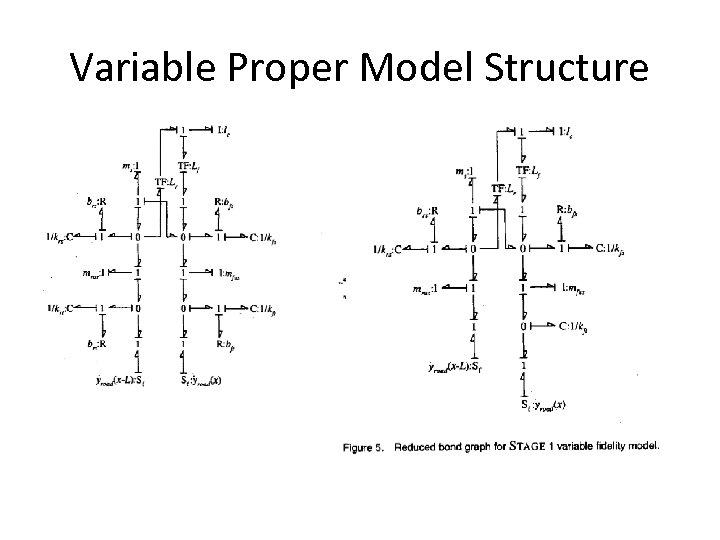
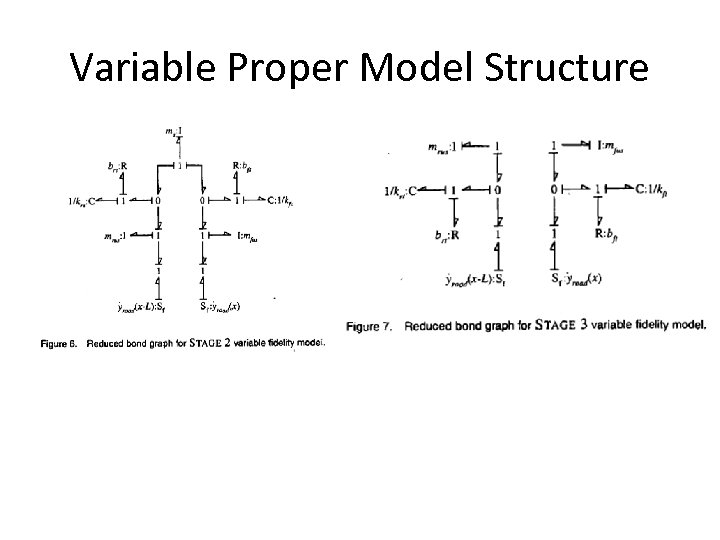
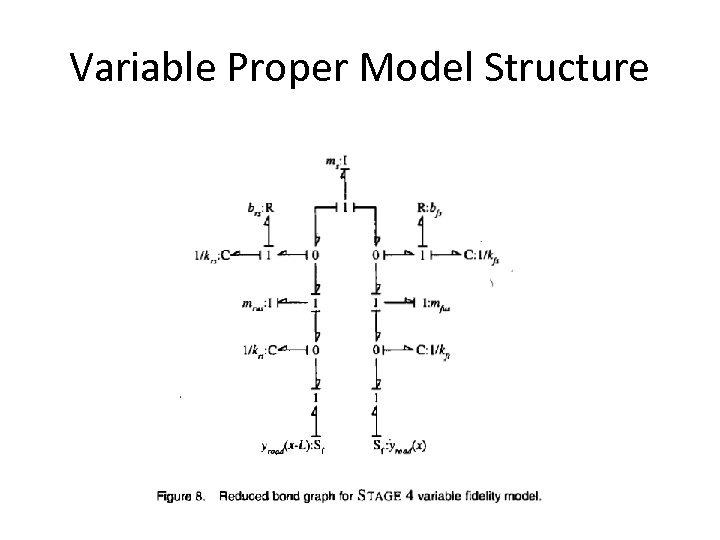
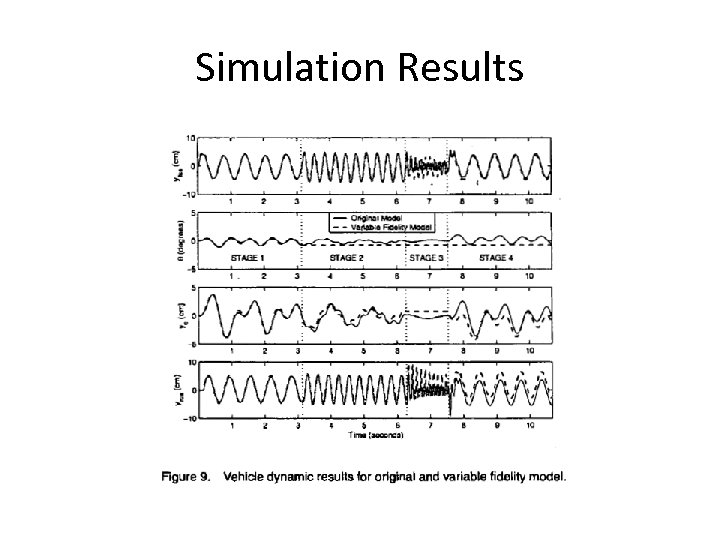
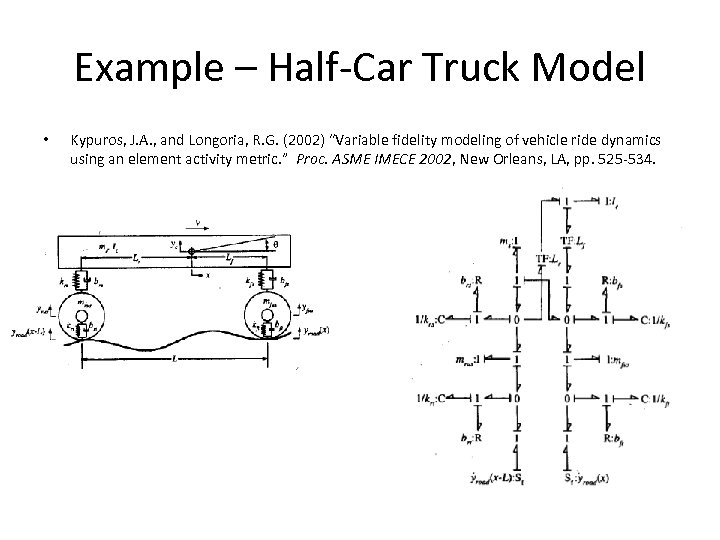 Example – Half-Car Truck Model • Kypuros, J. A. , and Longoria, R. G. (2002) “Variable fidelity modeling of vehicle ride dynamics using an element activity metric. ” Proc. ASME IMECE 2002, New Orleans, LA, pp. 525 -534.
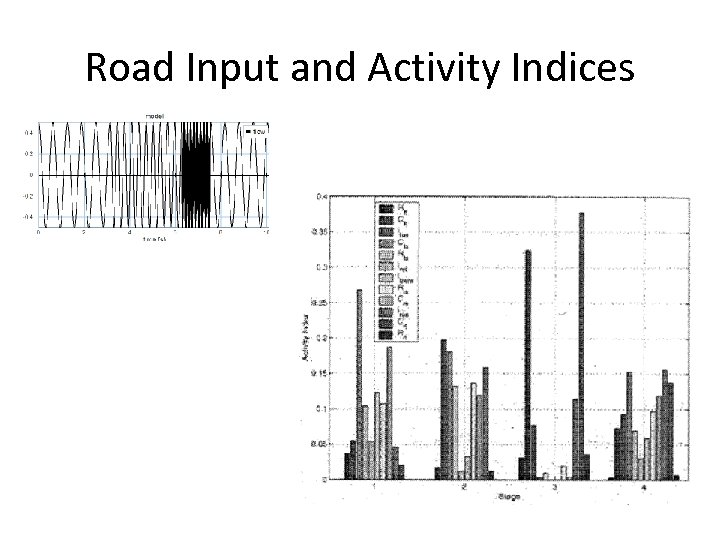 Road Input and Activity Indices
 Variable Proper Model Structure
 Variable Proper Model Structure
 Variable Proper Model Structure
 Simulation Results
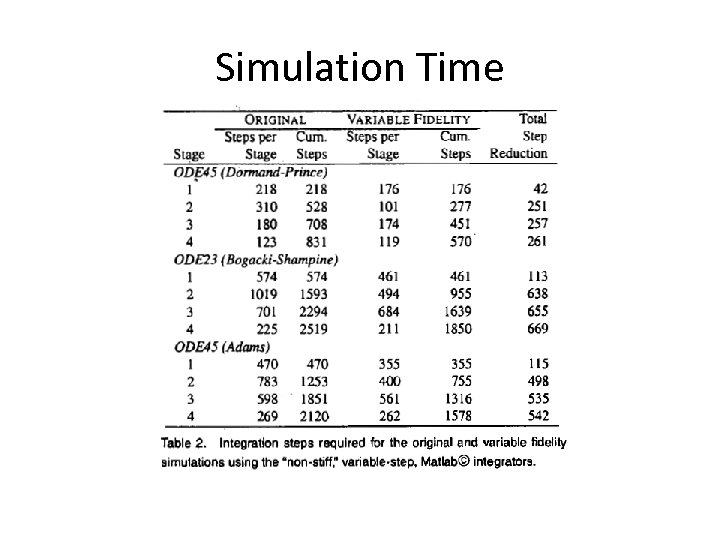 Simulation Time
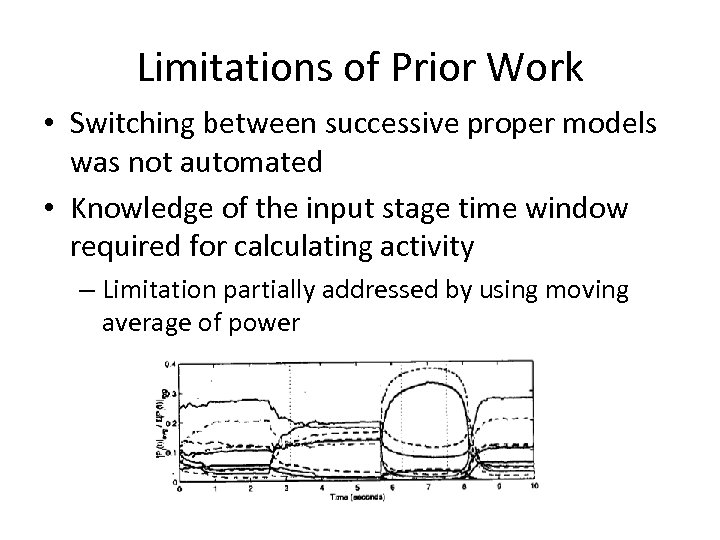 Limitations of Prior Work • Switching between successive proper models was not automated • Knowledge of the input stage time window required for calculating activity – Limitation partially addressed by using moving average of power
 New Approach • Turning off elements that become low-activity – easy • Turning on elements that would have significant activity if they were in the model – hard • We need a means of calculating activity of an element that does not provide a casual input to the system
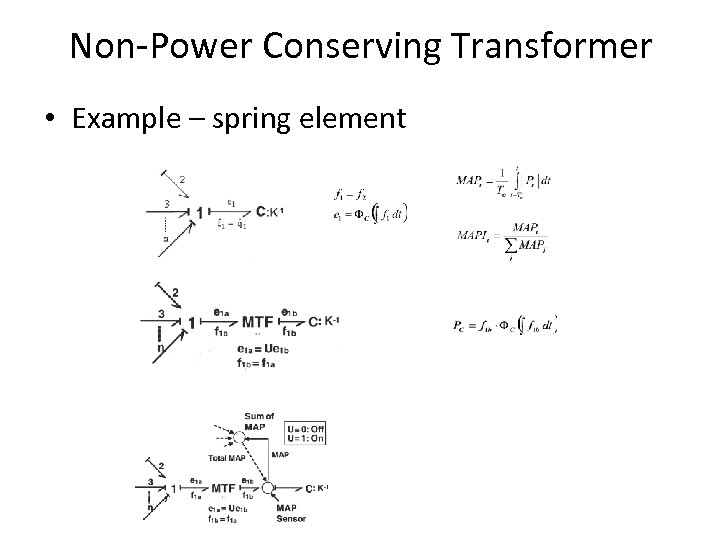 Non-Power Conserving Transformer • Example – spring element
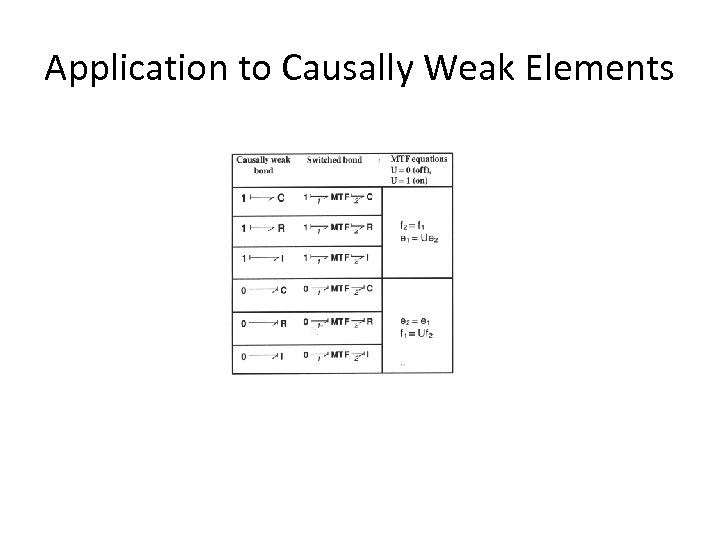 Application to Causally Weak Elements
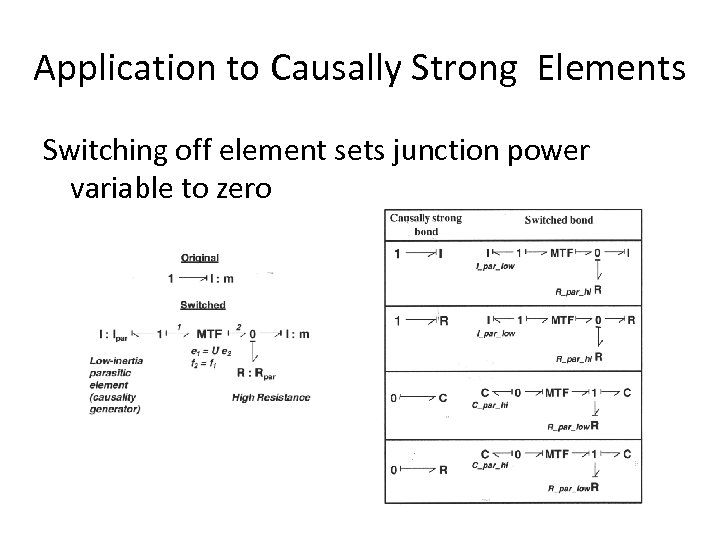 Application to Causally Strong Elements Switching off element sets junction power variable to zero
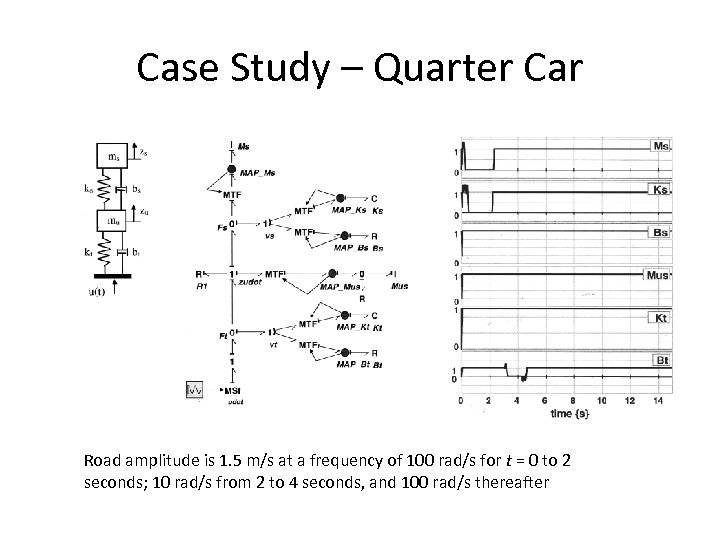 Case Study – Quarter Car Road amplitude is 1. 5 m/s at a frequency of 100 rad/s for t = 0 to 2 seconds; 10 rad/s from 2 to 4 seconds, and 100 rad/s thereafter
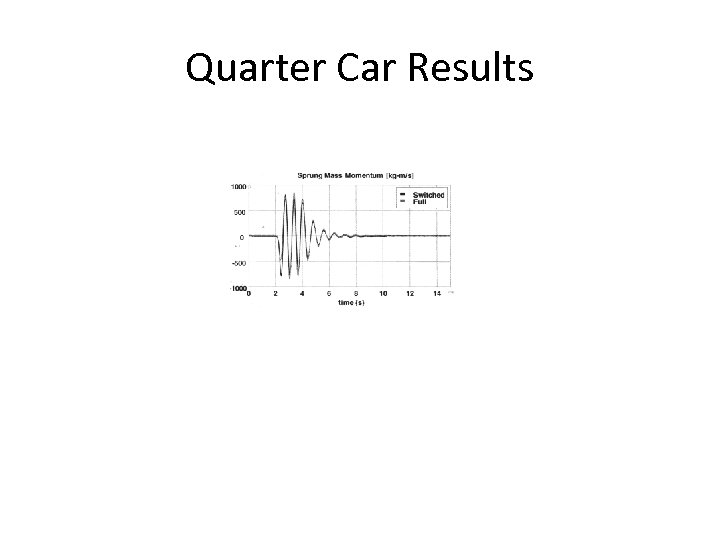 Quarter Car Results
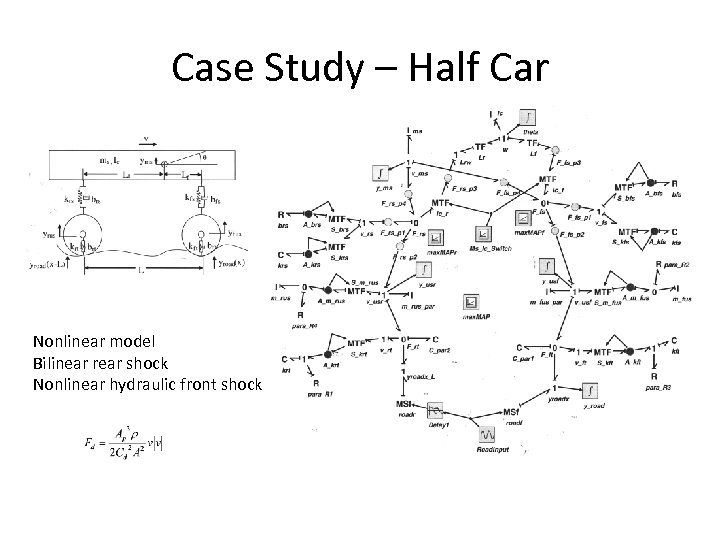 Case Study – Half Car Nonlinear model Bilinear rear shock Nonlinear hydraulic front shock
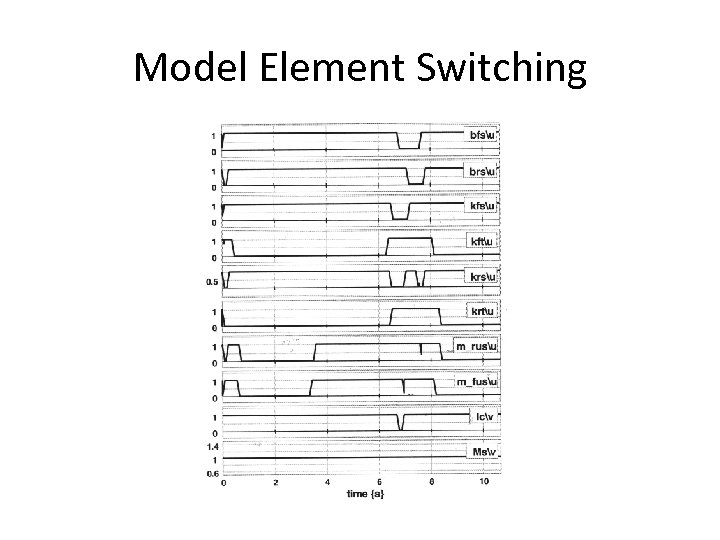 Model Element Switching
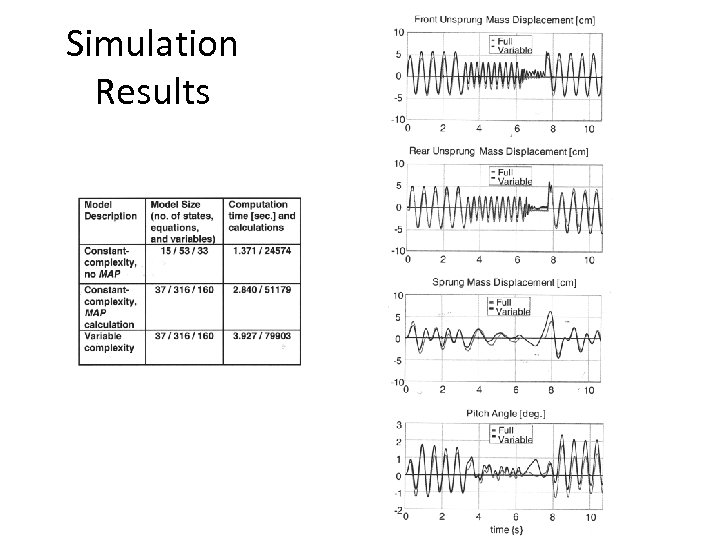 Simulation Results
 Conclusions • Active modeling using MAPI and non-power conserving transformers allows the modeler to: – predict proper model at any instant, without prior knowledge of input changes – synthesize a sequence of proper models and determine the time windows in which to use them – save time by running the models sequentially – predict simulation discrepancies from variable-complexity models – Reference: Rideout, D. G. , and Haq, K. T. (2010) "Active Modelling: A Method for Creating and Simulating Variable-Complexity Models. " ASME Paper DS-08 -1290, Journal of Dynamic Systems, Measurement and Control Special Issue on Physical System Modeling, 132(6), November 2010. ASME, New York, NY.