


 Скачать презентацию Active Clinical Decision Support in a RHIO
60543b817e281f593582aad4d9090d56.ppt
- Количество слайдов: 32
 Active Clinical Decision Support in a RHIO
 Introduction The Clinical Document Architecture has emerged as a means of making systems interoperable. Clinical data can cross barriers. We are approaching an era of Computable Semantic Interoperability. Decision Support works when complex information is available. It works for a community when that data is available across systems so that patients can be treated with quality wherever they are seen. Active decision support provides guidance and recommendations at the point of care. In a RHIO, decision support will support evidence based care using standards to obtain and manipulate information.
 What is Active Decision Support? • Decision support: any means of helping get the right thing done • Passive Decision Support: documents or systems that can be searched or browsed to get answers • Active Decision Support: can reason with its knowledge and likely can communicate or act on its recommendations
 CDA Enables Active Decision Support 1. Active Decision Support dependsyon access to ilit ‘ 06 rab eabout patients. clinical and administrative rdata ad, ope ie M nte c. I rl Cha - 2. CDA documents carrytiinformation that can be an em understood across systems. le S tab pu om C 3. So, Decision Support is enabled by CDA. Knowledge systems can operate in RHIOs, and as services in cooperation with clinical data systems.
 “A collaborative project to develop a universal framework for sharing health knowledge in the form of computable clinical practice guidelines”
 The SAGE Project An R&D consortium to develop the technology infrastructure to enable computable clinical guidelines, that will be shareable and interoperable across multiple clinical information system platforms. • A 5 -year, industry-academic research collaboration • Led by IDX Systems, now GE Healthcare • In partnership with: – Apelon, Inc. – Intermountain Healthcare – Mayo Clinic – Stanford Medical Informatics – University of Nebraska Medical Center
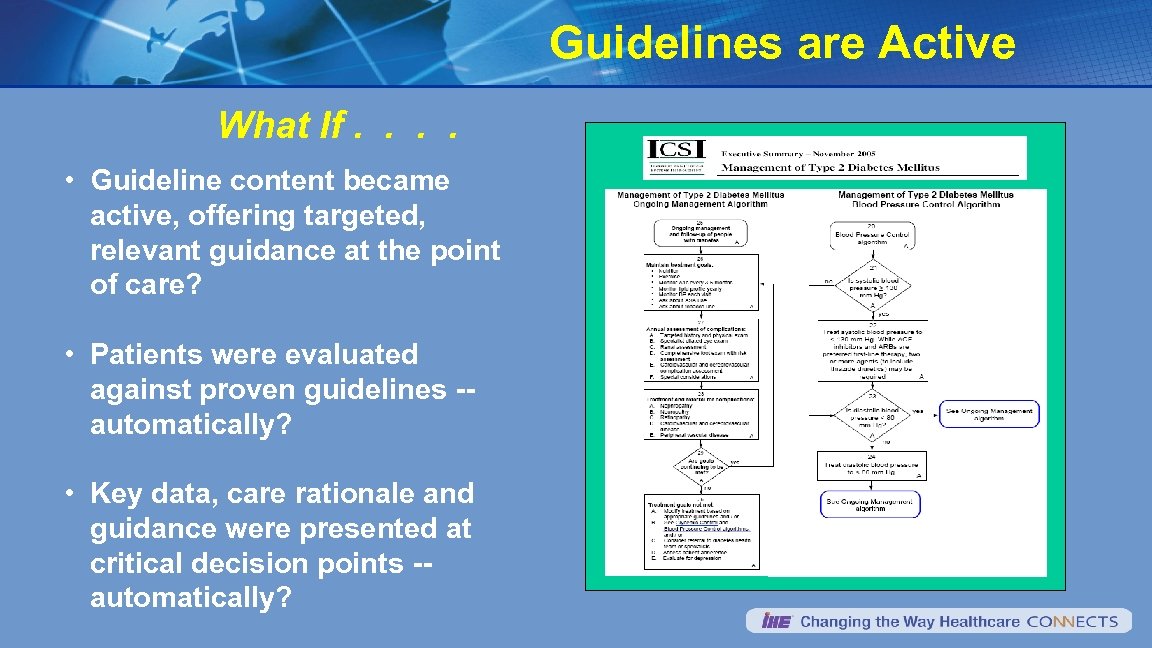 Guidelines are Active What If. . • Guideline content became active, offering targeted, relevant guidance at the point of care? • Patients were evaluated against proven guidelines -automatically? • Key data, care rationale and guidance were presented at critical decision points -automatically?
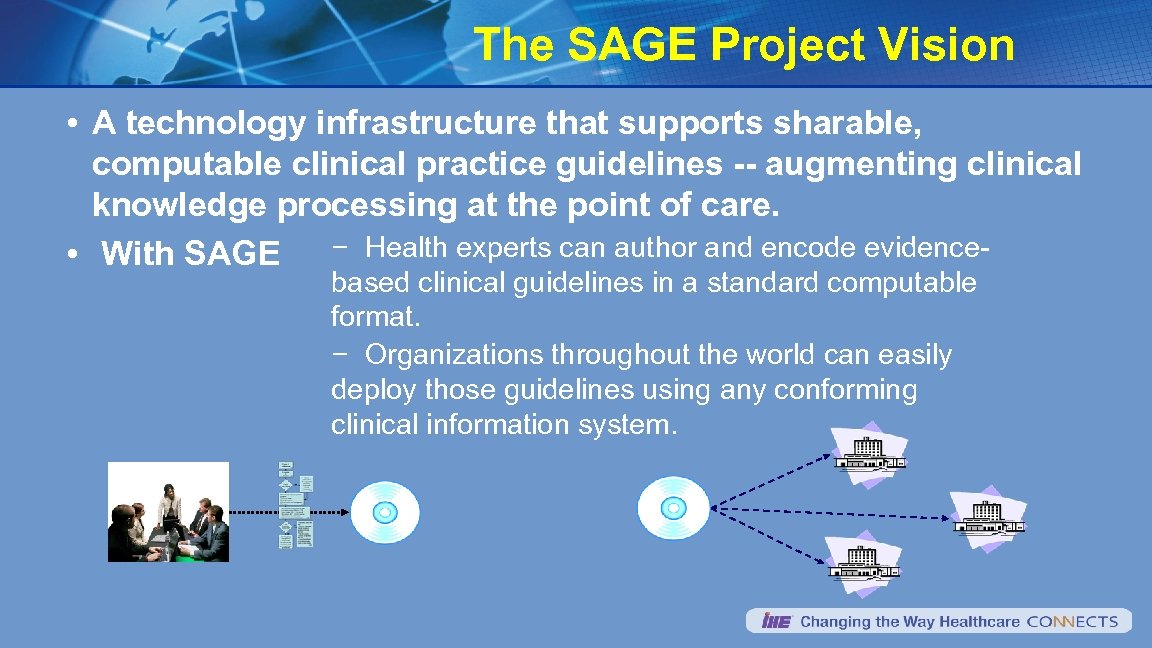 The SAGE Project Vision • A technology infrastructure that supports sharable, computable clinical practice guidelines -- augmenting clinical knowledge processing at the point of care. • With SAGE − Health experts can author and encode evidencebased clinical guidelines in a standard computable format. − Organizations throughout the world can easily deploy those guidelines using any conforming clinical information system.
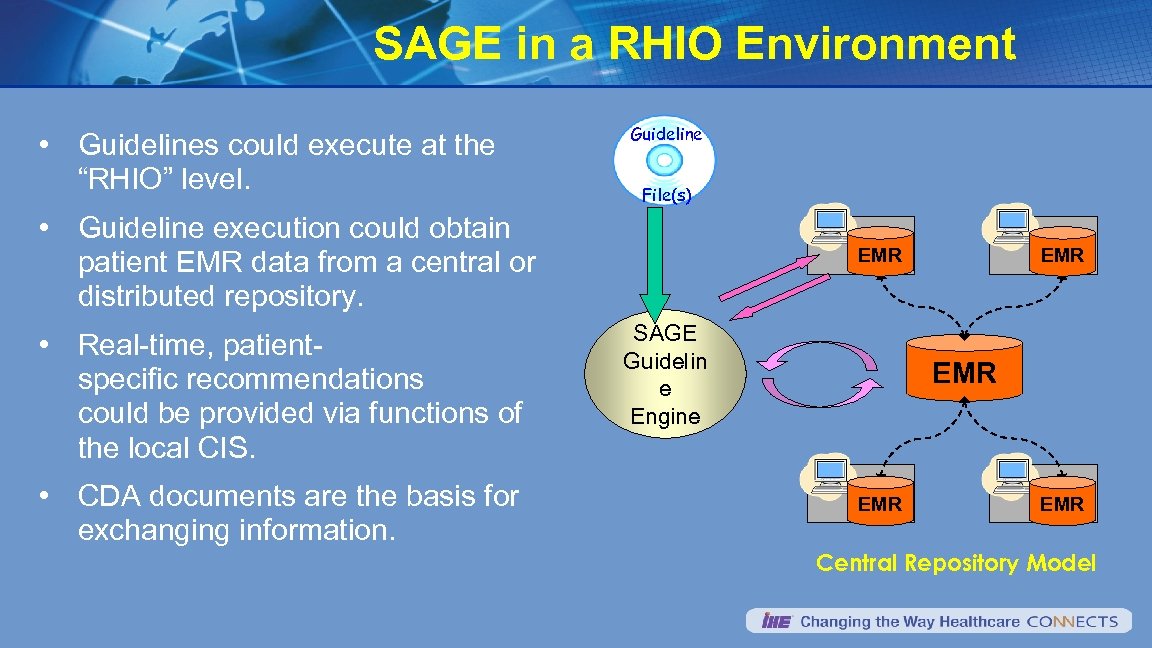 SAGE in a RHIO Environment • Guidelines could execute at the “RHIO” level. Guideline File(s) • Guideline execution could obtain patient EMR data from a central or distributed repository. • Real-time, patientspecific recommendations could be provided via functions of the local CIS. • CDA documents are the basis for exchanging information. EMR SAGE Guidelin e Engine EMR EMR Central Repository Model
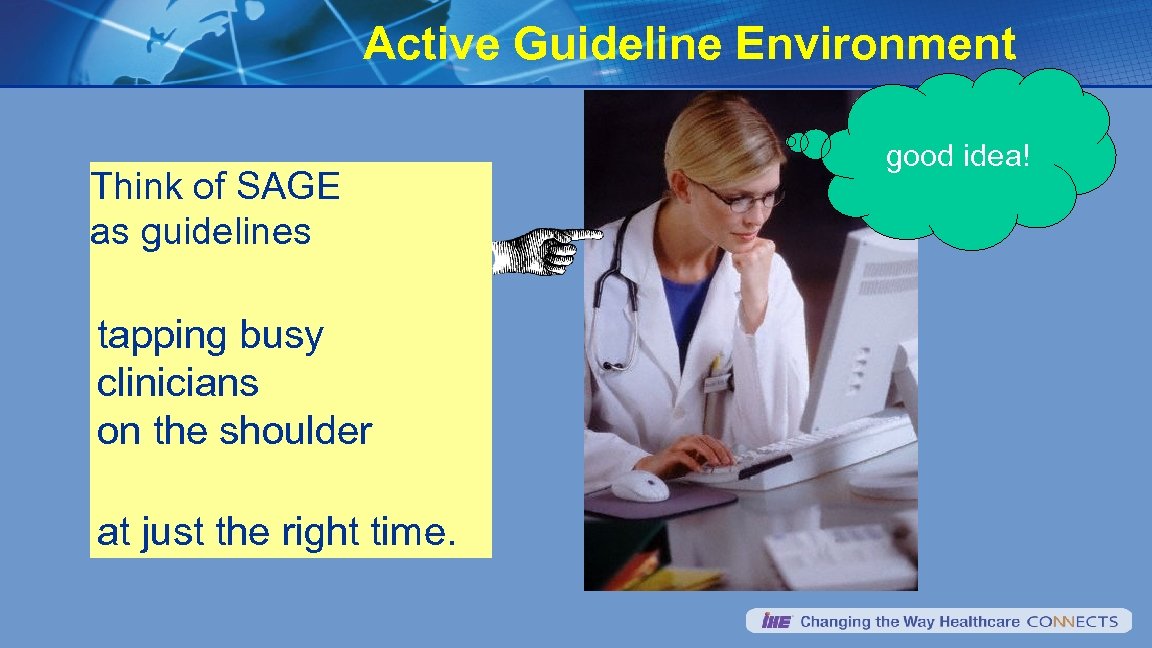 Active Guideline Environment Think of SAGE as guidelines tapping busy clinicians on the shoulder at just the right time. good idea!
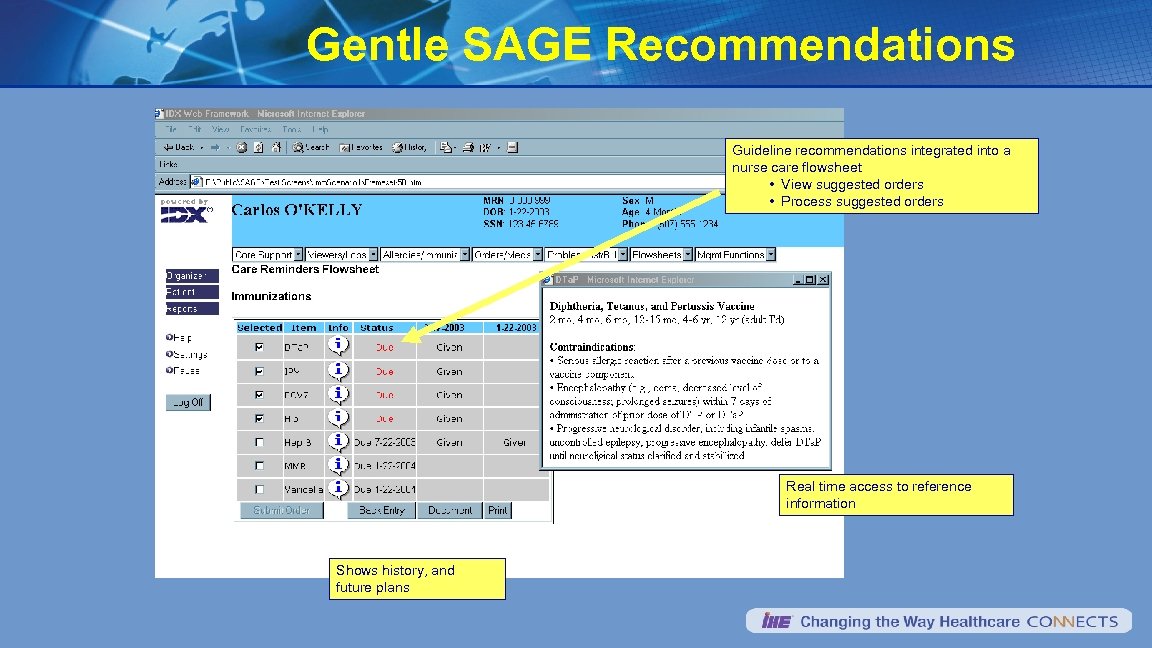 Gentle SAGE Recommendations Guideline recommendations integrated into a nurse care flowsheet • View suggested orders • Process suggested orders Real time access to reference information Shows history, and future plans
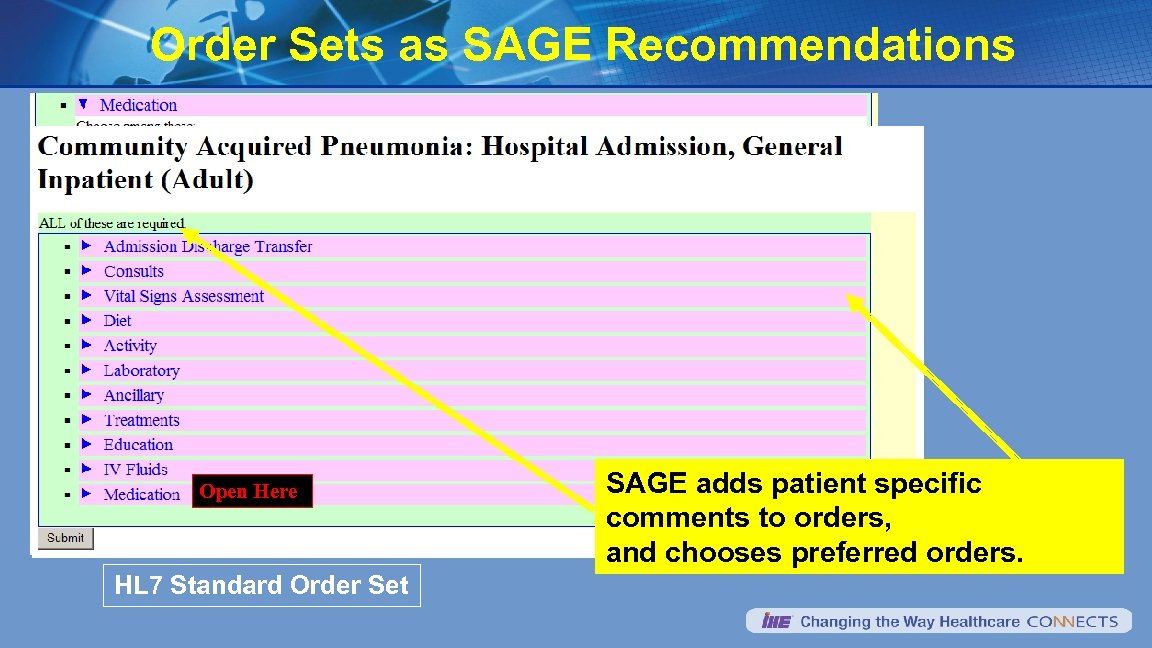 Order Sets as SAGE Recommendations Open Here HL 7 Standard Order Set SAGE adds patient specific comments to orders, and chooses preferred orders.
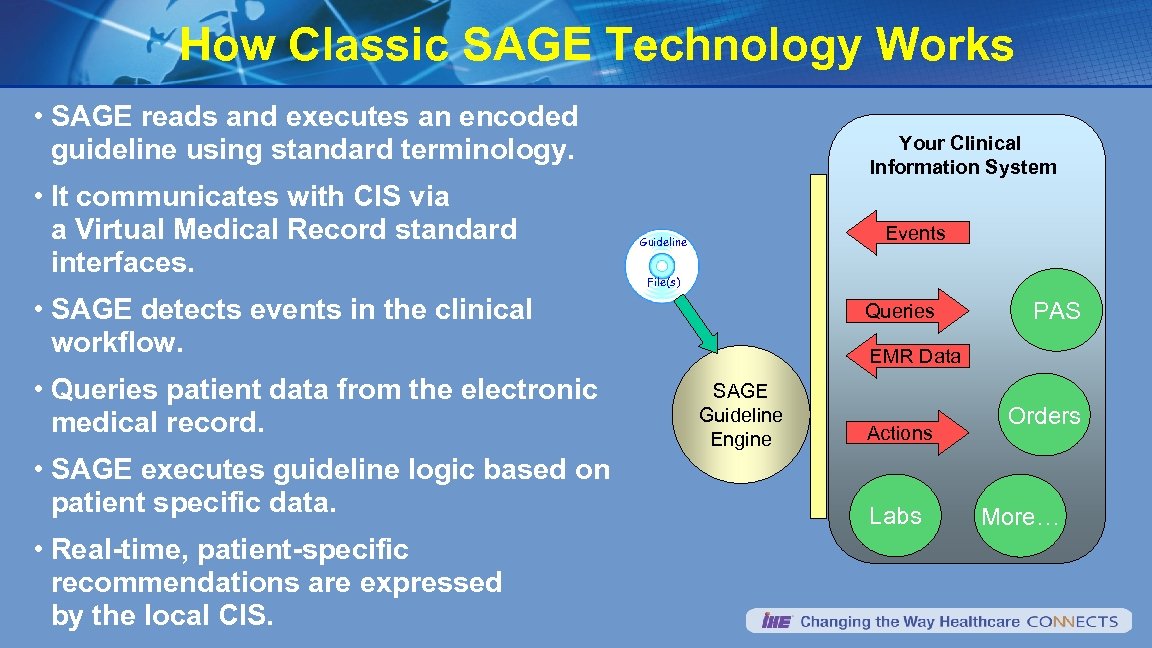 How Classic SAGE Technology Works • SAGE reads and executes an encoded guideline using standard terminology. • It communicates with CIS via a Virtual Medical Record standard interfaces. Your Clinical Information System Events Guideline File(s) • SAGE detects events in the clinical workflow. • Queries patient data from the electronic medical record. • SAGE executes guideline logic based on patient specific data. • Real-time, patient-specific recommendations are expressed by the local CIS. Queries PAS EMR Data SAGE Guideline Engine Actions Labs Orders More…
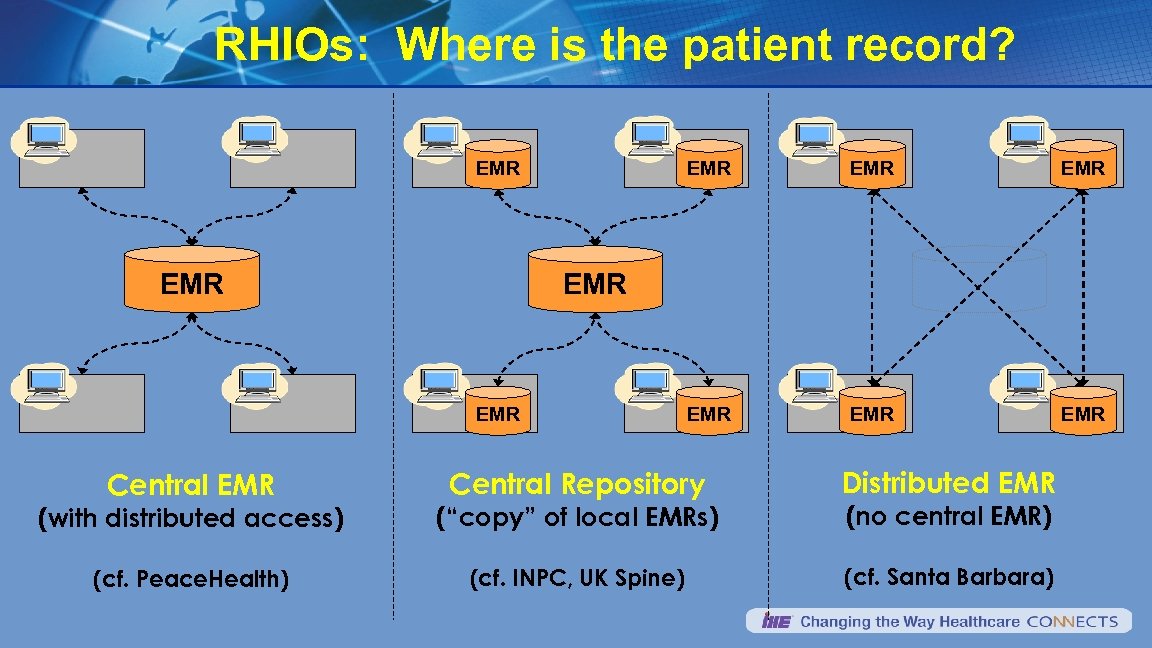 RHIOs: Where is the patient record? EMR EMR EMR Central Repository Distributed EMR (with distributed access) (“copy” of local EMRs) (no central EMR) (cf. Peace. Health) (cf. INPC, UK Spine) (cf. Santa Barbara) Central EMR
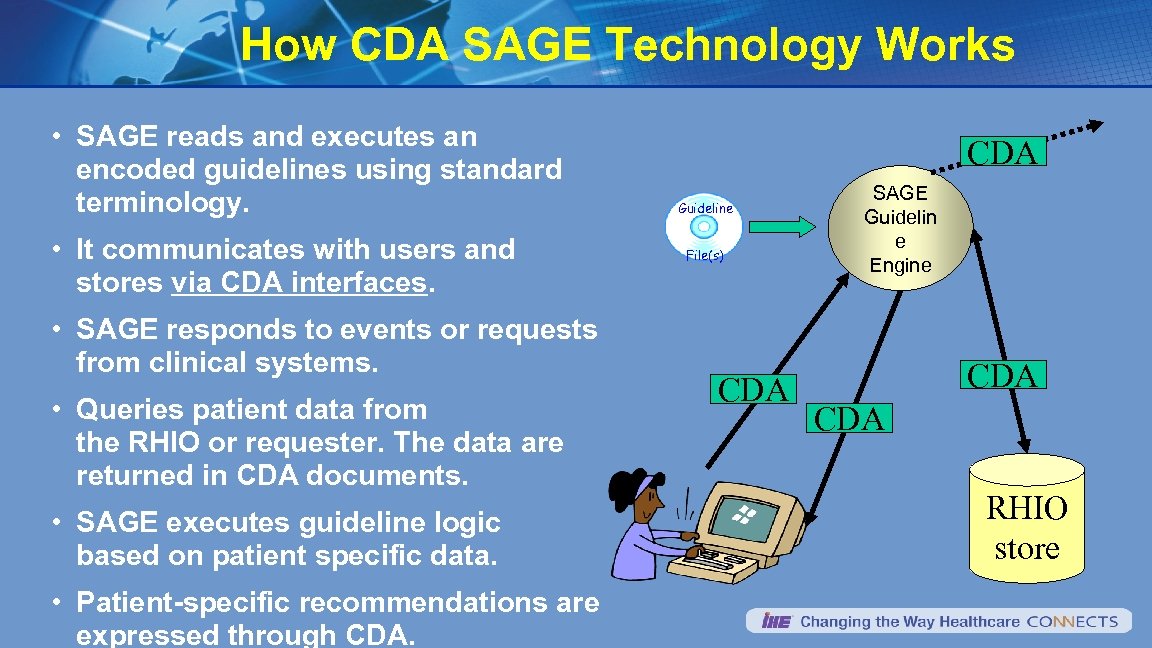 How CDA SAGE Technology Works • SAGE reads and executes an encoded guidelines using standard terminology. • It communicates with users and stores via CDA interfaces. • SAGE responds to events or requests from clinical systems. • Queries patient data from the RHIO or requester. The data are returned in CDA documents. • SAGE executes guideline logic based on patient specific data. • Patient-specific recommendations are expressed through CDA Guideline File(s) CDA SAGE Guidelin e Engine CDA RHIO store
 Clinical Document Architecture • CDA defines a document structure that contains medical information. • CDA docs (XML) cross the wire. • In CDA v 2, coded admin and clinical data may be present for use by decision support systems.
 XML Body: two types of content • Human readable (usually HTML) - required • Machine readable which can drive automated processes including decision support - optional except when doing decision support
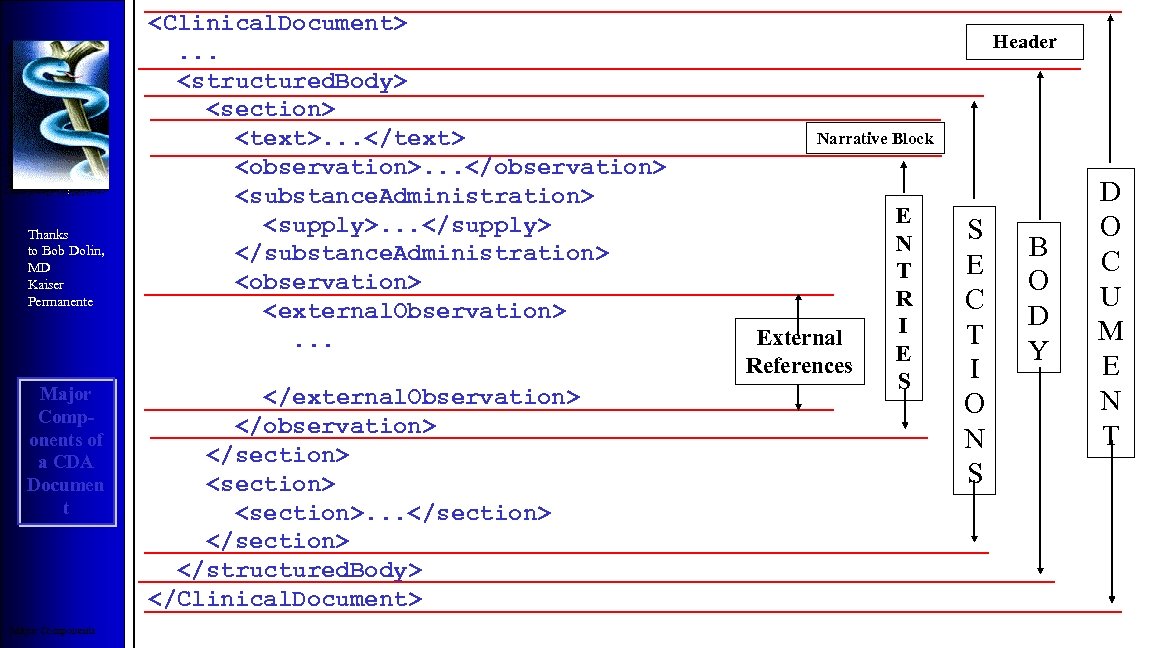 Thanks to Bob Dolin, MD Kaiser Permanente Major Components of a CDA Documen t Major Components
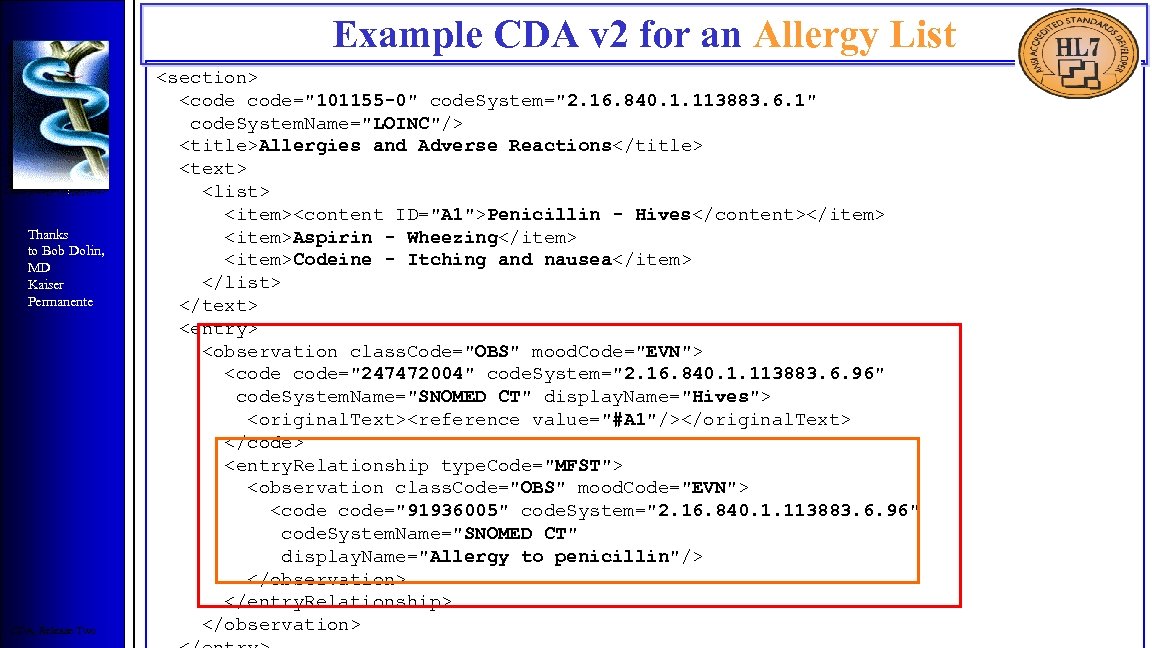 Example CDA v 2 for an Allergy List Thanks to Bob Dolin, MD Kaiser Permanente CDA, Release Two
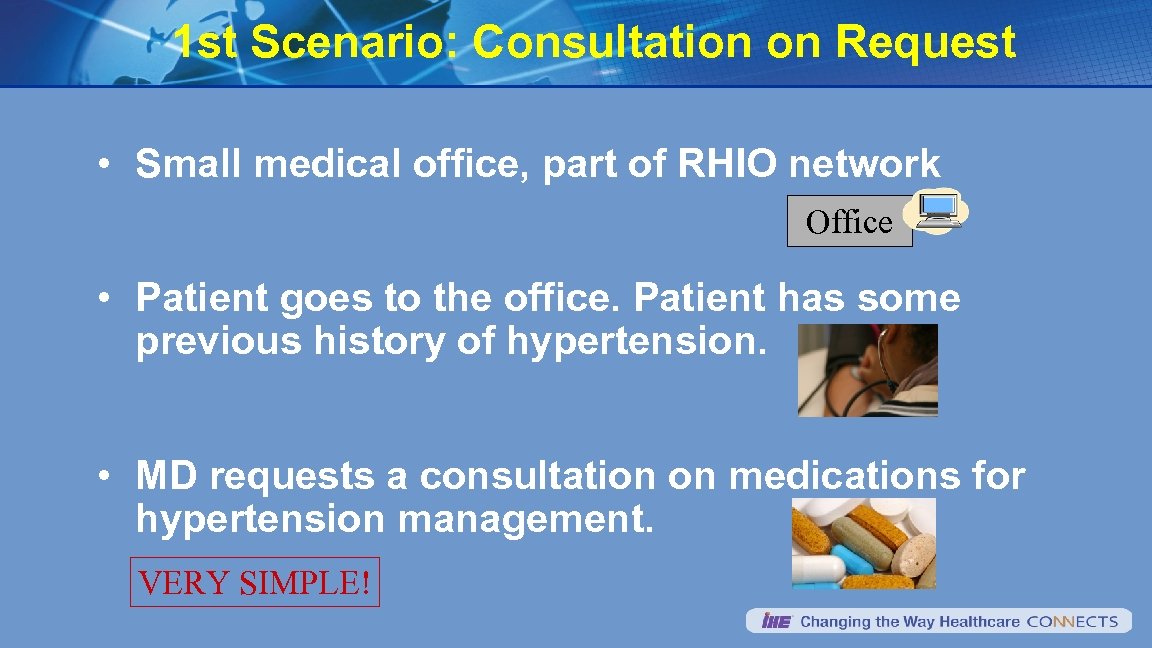 1 st Scenario: Consultation on Request • Small medical office, part of RHIO network Office • Patient goes to the office. Patient has some previous history of hypertension. • MD requests a consultation on medications for hypertension management. VERY SIMPLE!
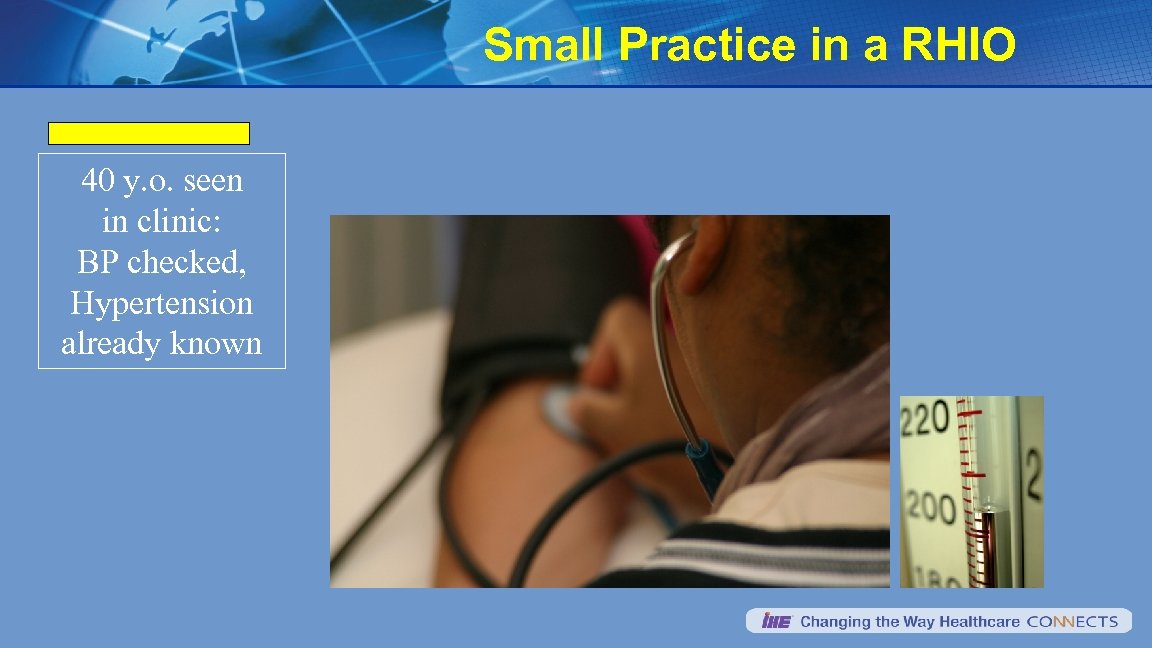 Small Practice in a RHIO 40 y. o. seen in clinic: BP checked, Hypertension already known
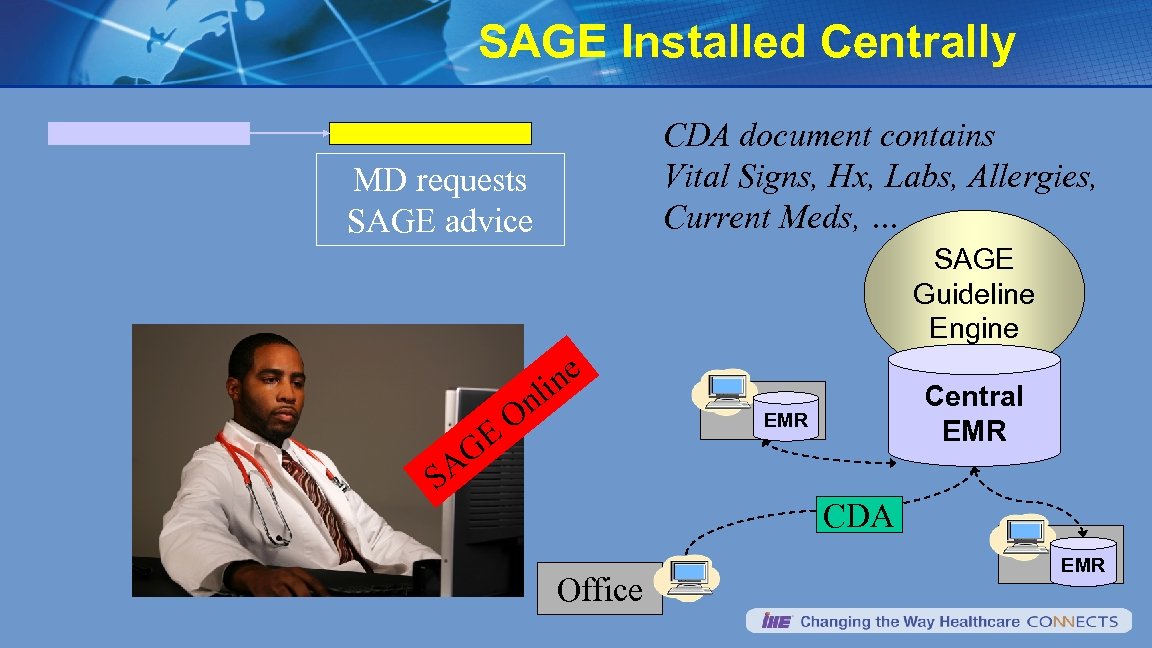 SAGE Installed Centrally CDA document contains Vital Signs, Hx, Labs, Allergies, Current Meds, … MD requests SAGE advice SAGE Guideline Engine ne li GE A n O S Central EMR CDA Office EMR
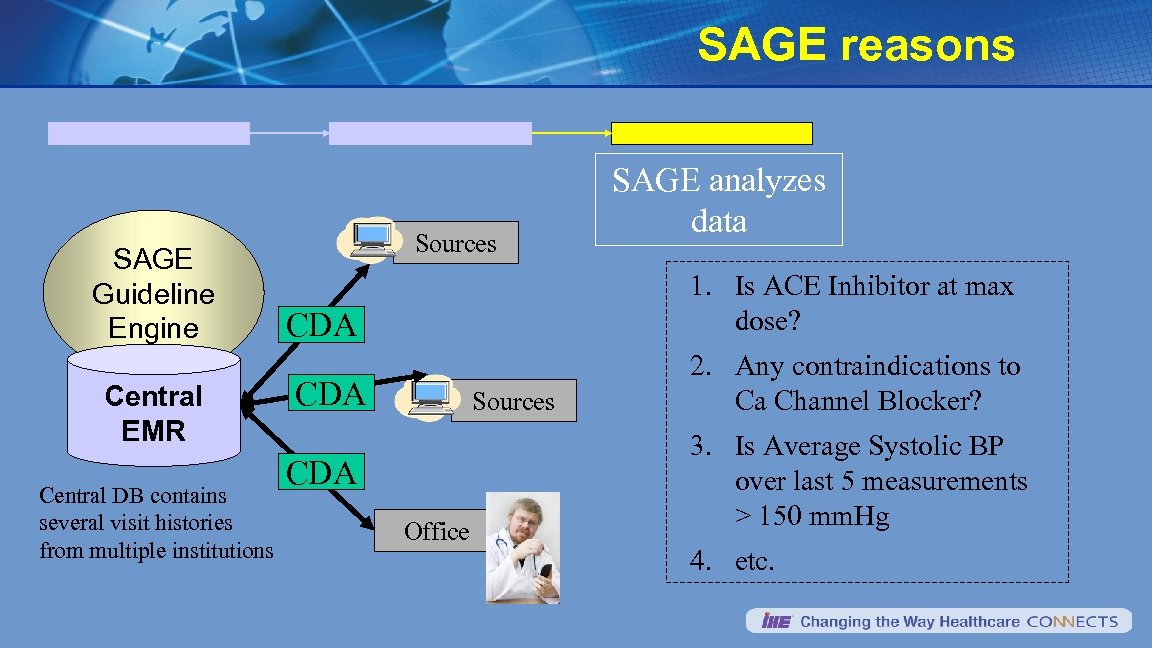 SAGE reasons SAGE Guideline Engine Central EMR Central DB contains several visit histories from multiple institutions Sources SAGE analyzes data 1. Is ACE Inhibitor at max dose? CDA Sources CDA Office 2. Any contraindications to Ca Channel Blocker? 3. Is Average Systolic BP over last 5 measurements > 150 mm. Hg 4. etc.
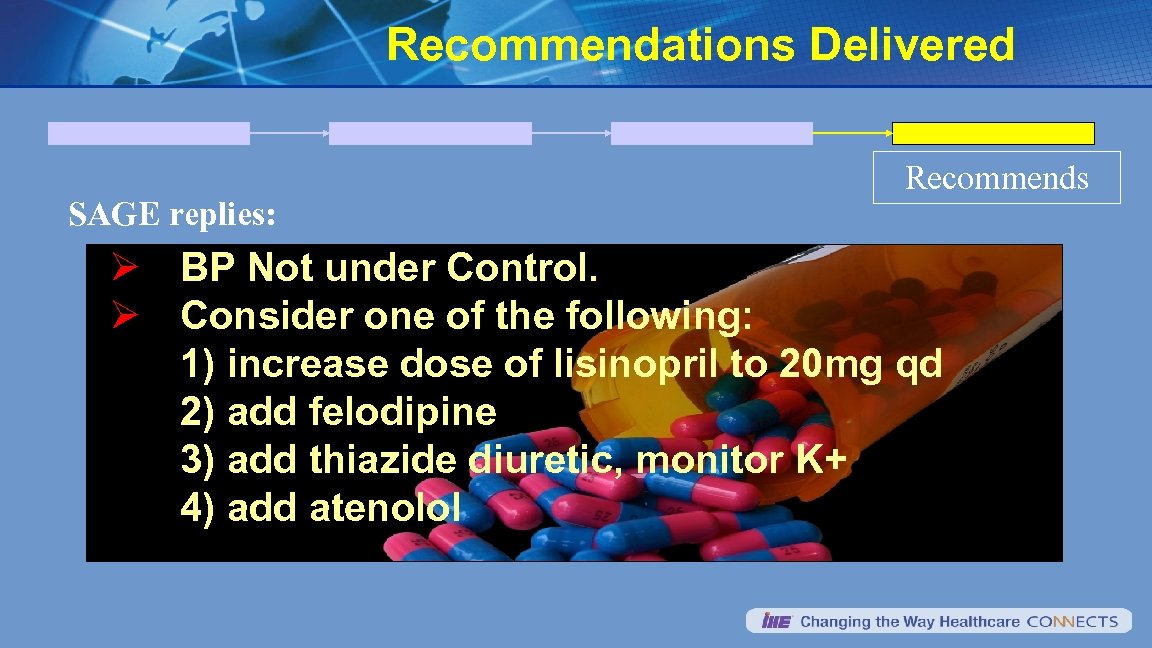 Recommendations Delivered SAGE replies: Recommends Ø BP Not under Control. Ø Consider one of the following: 1) increase dose of lisinopril to 20 mg qd 2) add felodipine 3) add thiazide diuretic, monitor K+ 4) add atenolol
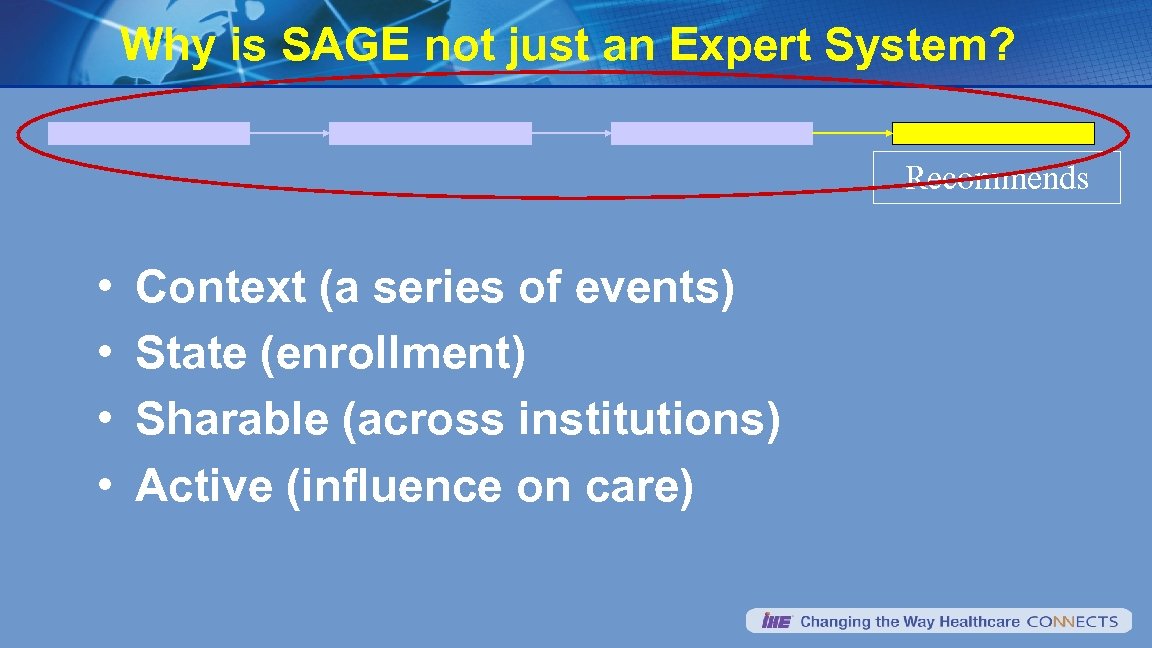 Why is SAGE not just an Expert System? Recommends • • Context (a series of events) State (enrollment) Sharable (across institutions) Active (influence on care)
 Where are the data? • SAGE uses – CDA data submitted with consultation request, AND – Stored centrally in RHIO for this patient • Central store is CDA XML documents – Past history, Problem list, Allergies, Current Meds, History of Meds, Vital Signs, Laboratory work, etc.
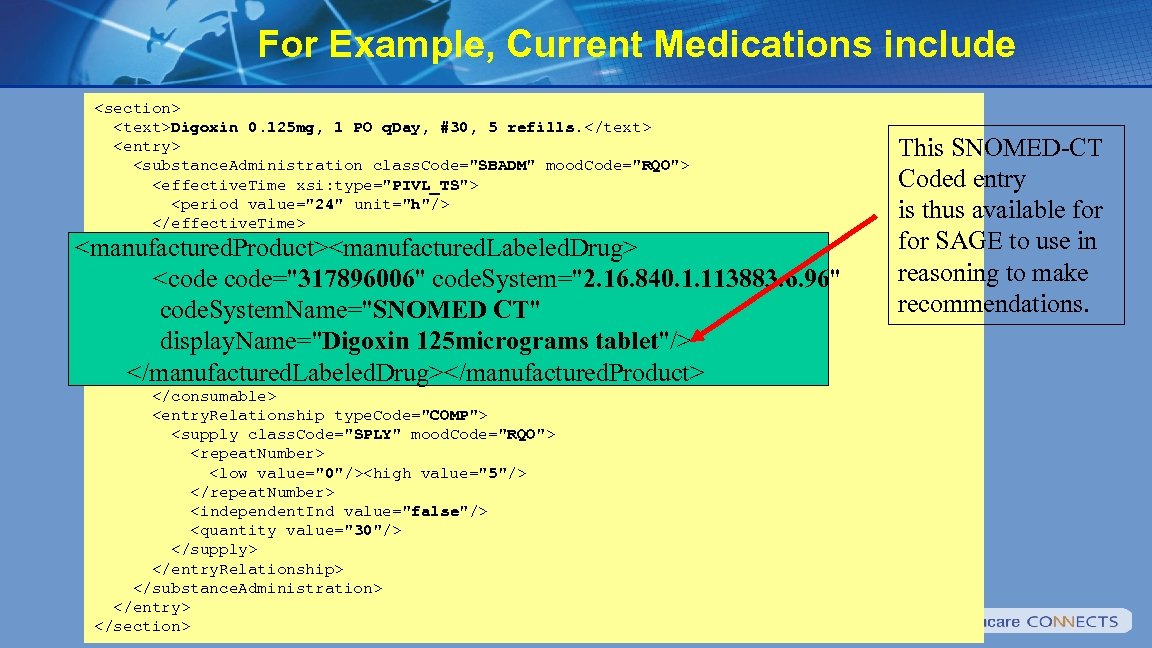 For Example, Current Medications include
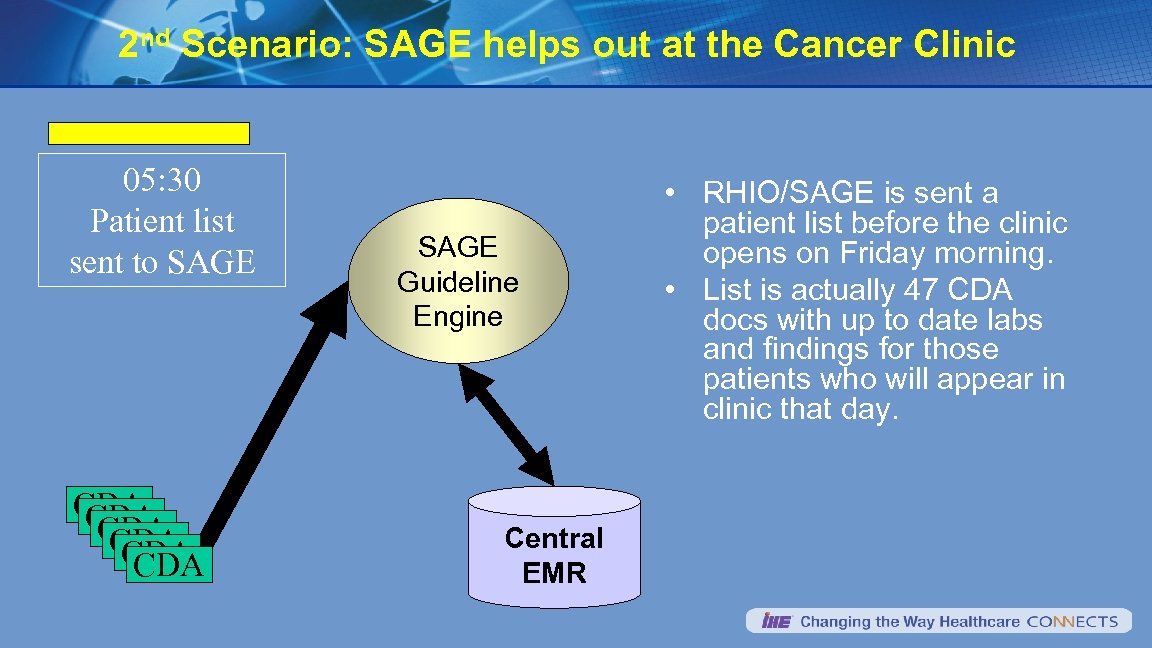 2 nd Scenario: SAGE helps out at the Cancer Clinic 05: 30 Patient list sent to SAGE CDA CDA CDA SAGE Guideline Engine Central EMR • RHIO/SAGE is sent a patient list before the clinic opens on Friday morning. • List is actually 47 CDA docs with up to date labs and findings for those patients who will appear in clinic that day.
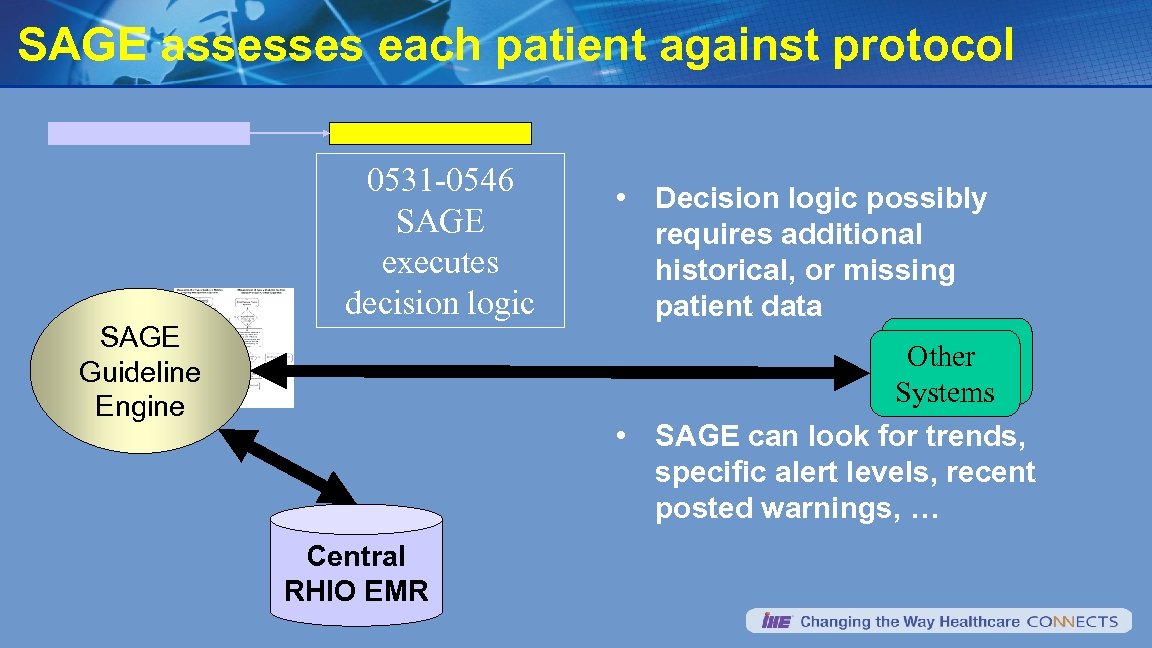 SAGE assesses each patient against protocol SAGE Guideline Engine 0531 -0546 SAGE executes decision logic • Decision logic possibly requires additional historical, or missing patient data Other Systems • SAGE can look for trends, specific alert levels, recent posted warnings, … Central RHIO EMR
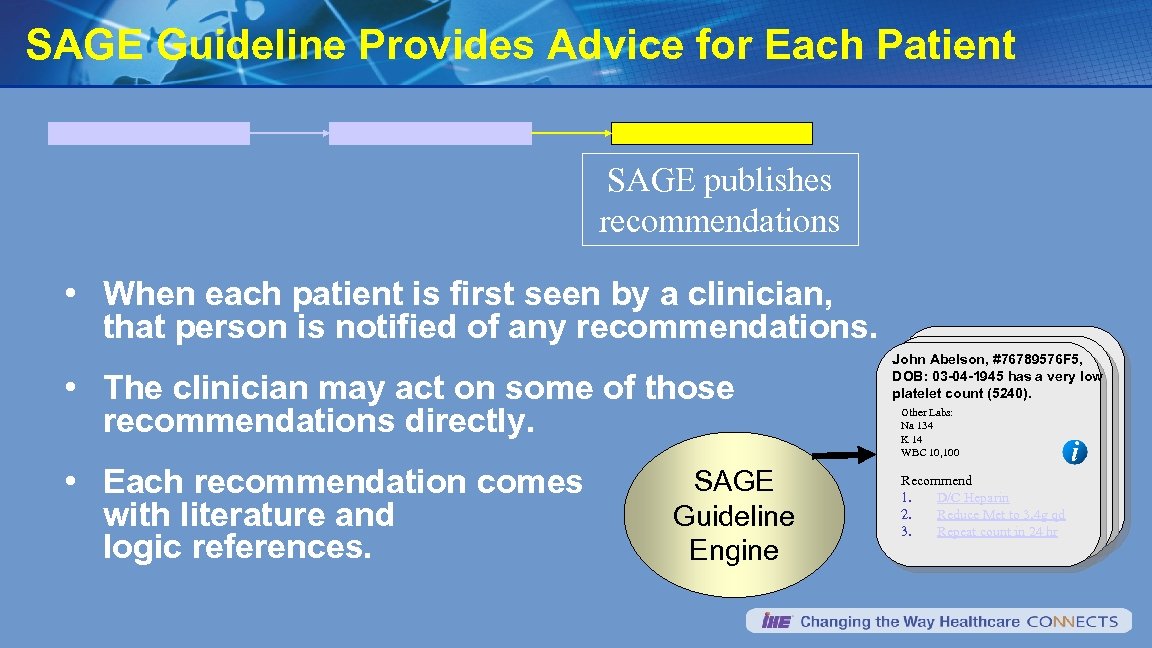 SAGE Guideline Provides Advice for Each Patient SAGE publishes recommendations • When each patient is first seen by a clinician, that person is notified of any recommendations. • The clinician may act on some of those recommendations directly. • Each recommendation comes with literature and logic references. SAGE Guideline Engine John Abelson, #76789576 F 5, DOB: 03 -04 -1945 has a very low platelet count (5240). Other Labs: Na 134 K 14 WBC 10, 100 Recommend 1. D/C Heparin 2. Reduce Met to 3. 4 g qd 3. Repeat count in 24 hr
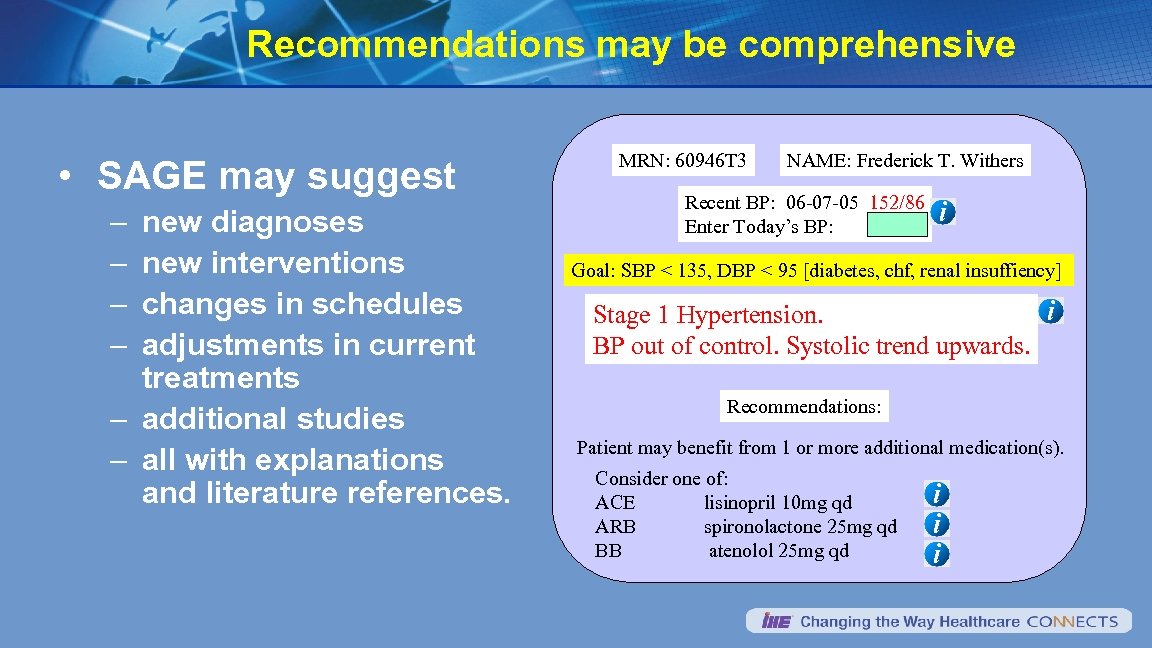 Recommendations may be comprehensive • SAGE may suggest – – new diagnoses new interventions changes in schedules adjustments in current treatments – additional studies – all with explanations and literature references. MRN: 60946 T 3 NAME: Frederick T. Withers Recent BP: 06 -07 -05 152/86 Enter Today’s BP: Goal: SBP < 135, DBP < 95 [diabetes, chf, renal insuffiency] Stage 1 Hypertension. BP out of control. Systolic trend upwards. Recommendations: Patient may benefit from 1 or more additional medication(s). Consider one of: ACE lisinopril 10 mg qd ARB spironolactone 25 mg qd BB atenolol 25 mg qd
 www. sageproject. com