


 Скачать презентацию Action 2 Knowledge Alliances What will you
25ec0e817b923b31ae0bc47c35d431c2.ppt
- Количество слайдов: 38
 Action 2 Knowledge Alliances
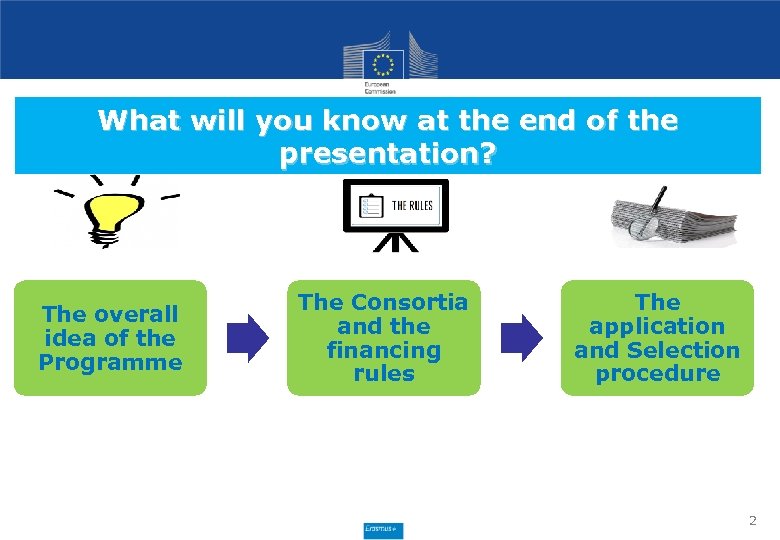 What will you know at the end of the presentation? The overall idea of the Programme The Consortia and the financing rules The application and Selection procedure 2
 PART I The overall idea of the Programme 3
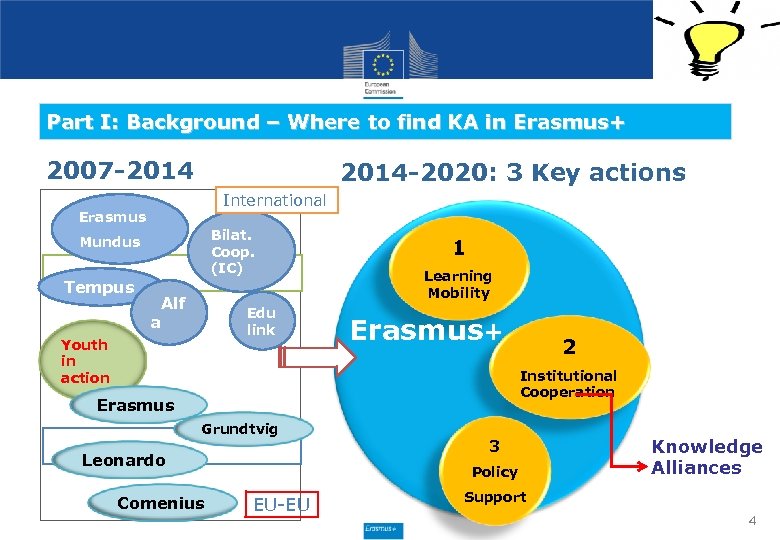 Part I: Background – Where to find KA in Erasmus+ 2007 -2014 -2020: 3 Key actions International Erasmus Bilat. Coop. (IC) Mundus Tempus Alf a Edu link Youth in action 1 Learning Mobility Erasmus+ 2 Institutional Cooperation Erasmus Grundtvig Leonardo Comenius 3 Policy EU-EU Knowledge Alliances Support 4
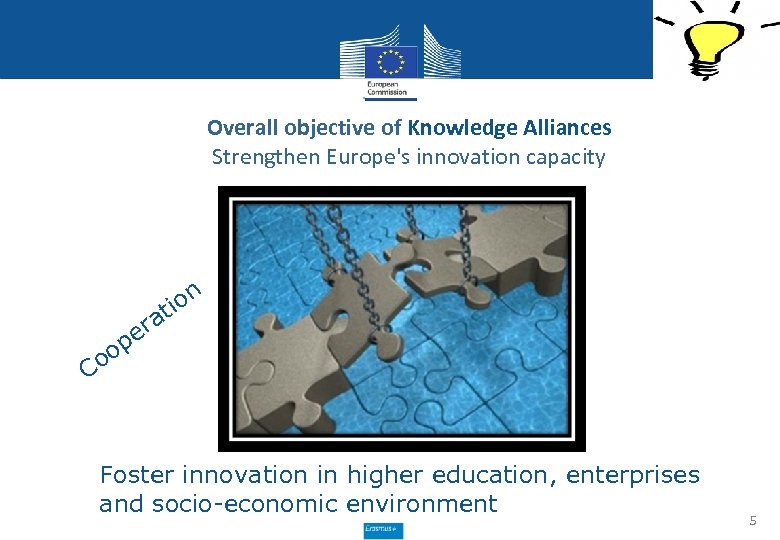 Overall objective of Knowledge Alliances Strengthen Europe's innovation capacity a er p n tio oo C Foster innovation in higher education, enterprises and socio-economic environment 5
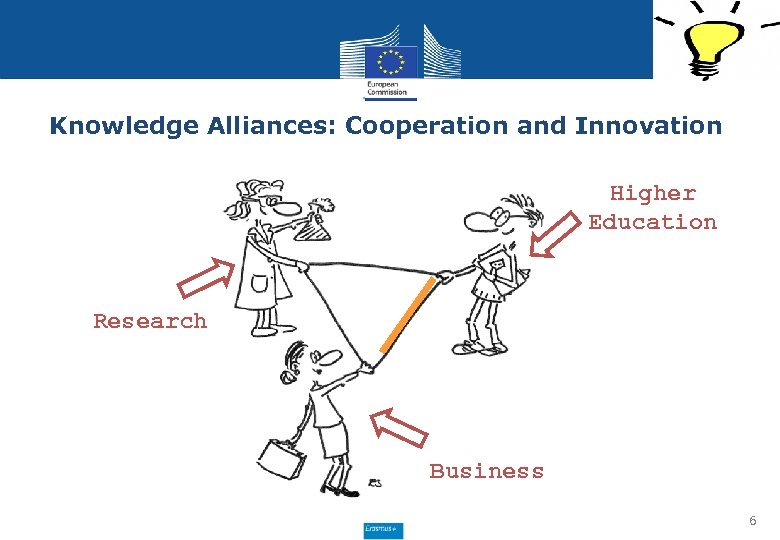 Knowledge Alliances: Cooperation and Innovation Higher Education Research Business 6
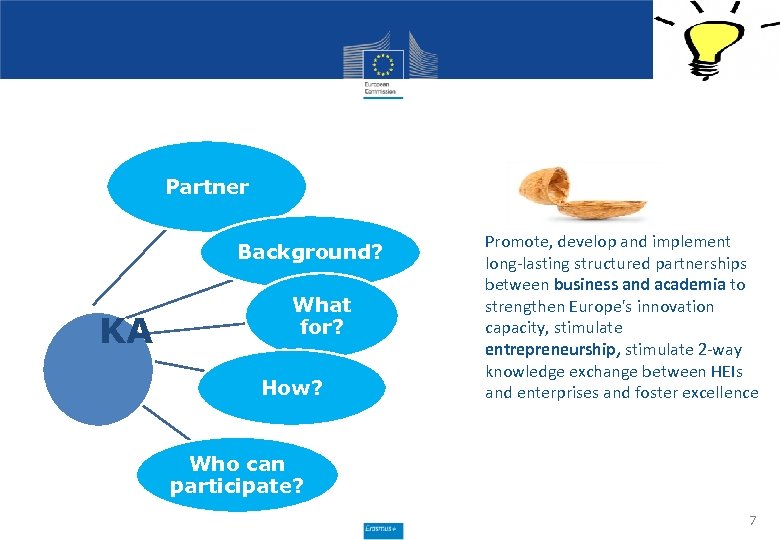 Partner Background? KA What for? How? Promote, develop and implement long-lasting structured partnerships between business and academia to strengthen Europe's innovation capacity, stimulate entrepreneurship, stimulate 2 -way knowledge exchange between HEIs and enterprises and foster excellence and Who can participate? 7
 PART I: Programme/Partner Countries 33 PROGRAMME COUNTRIES § EU Member States + § Turkey, Iceland, Liechtenstein § Norway, Former Yugoslav Republic of Macedonia PARTNER COUNTRIES ASSOCIATED PARTNERS 8
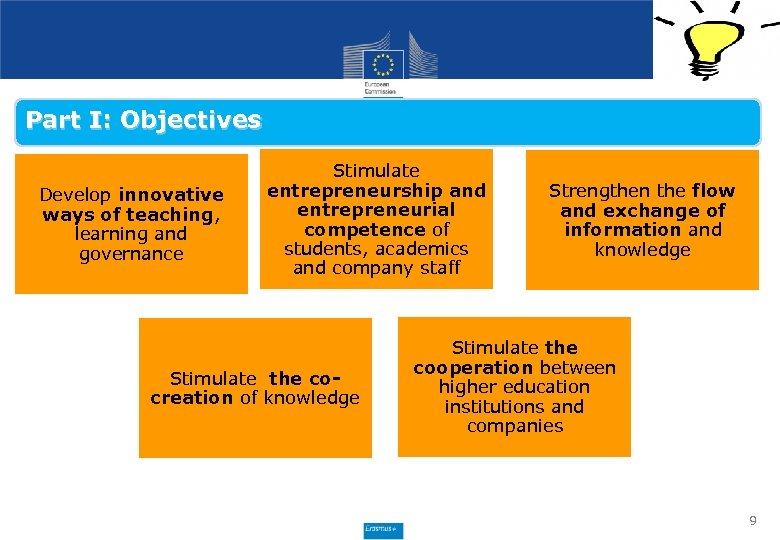 Part I: Objectives Develop innovative ways of teaching, learning and governance Stimulate entrepreneurship and entrepreneurial competence of students, academics and company staff Stimulate the cocreation of knowledge Strengthen the flow and exchange of information and knowledge Stimulate the cooperation between higher education institutions and companies 9
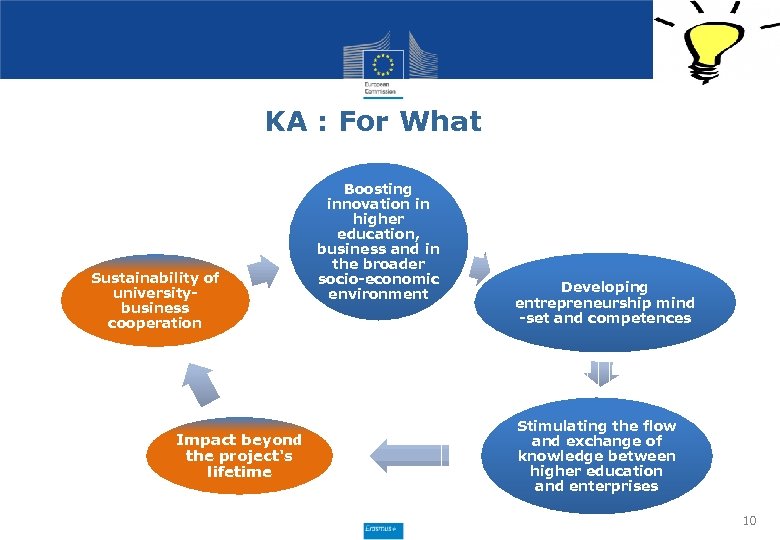 KA : For What Sustainability of universitybusiness cooperation Impact beyond the project's lifetime Boosting innovation in higher education, business and in the broader socio-economic environment Developing entrepreneurship mind -set and competences Stimulating the flow and exchange of knowledge between higher education and enterprises 10
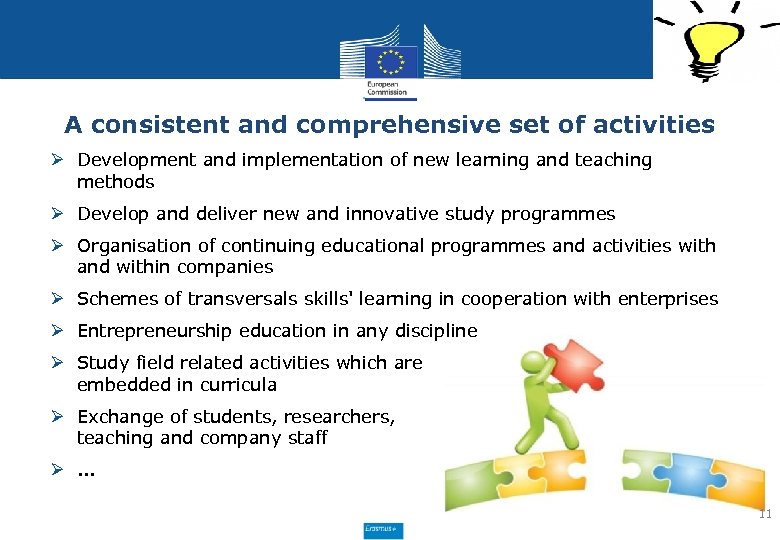 A consistent and comprehensive set of activities Ø Development and implementation of new learning and teaching methods Ø Develop and deliver new and innovative study programmes Ø Organisation of continuing educational programmes and activities with and within companies Ø Schemes of transversals skills' learning in cooperation with enterprises Ø Entrepreneurship education in any discipline Ø Study field related activities which are embedded in curricula Ø Exchange of students, researchers, teaching and company staff Ø … 11
 Mobility Activities Conditions: Ø Knowledge Alliances may organise mobility activities of students, researchers and staff in so far as they support/complement the other activities of the Alliance and bring added value in the realisation of the project's objectives Ø Mobility activities do not constitute the main activities of a Knowledge Alliance; extending and scaling- up these activities would need to be supported via the Key Action 1 of this Programme or other funding instruments 12
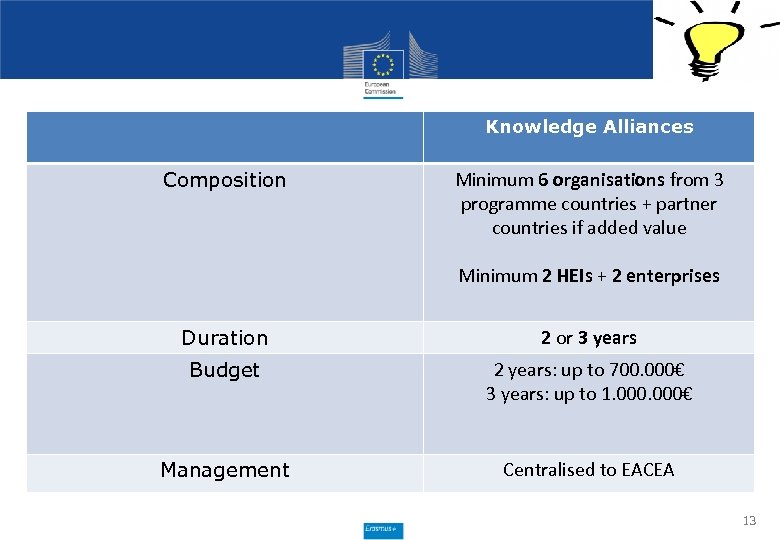 Knowledge Alliances Composition Minimum 6 organisations from 3 programme countries + partner countries if added value Minimum 2 HEIs + 2 enterprises Duration 2 or 3 years Budget 2 years: up to 700. 000€ 3 years: up to 1. 000€ Management Centralised to EACEA 13
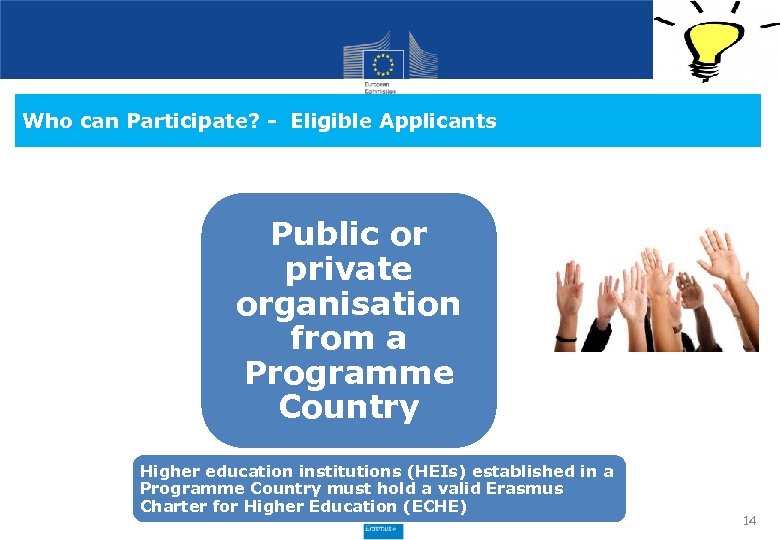 Who can Participate? - Eligible Applicants Public or private organisation from a Programme Country Higher education institutions (HEIs) established in a Programme Country must hold a valid Erasmus Charter for Higher Education (ECHE) 14
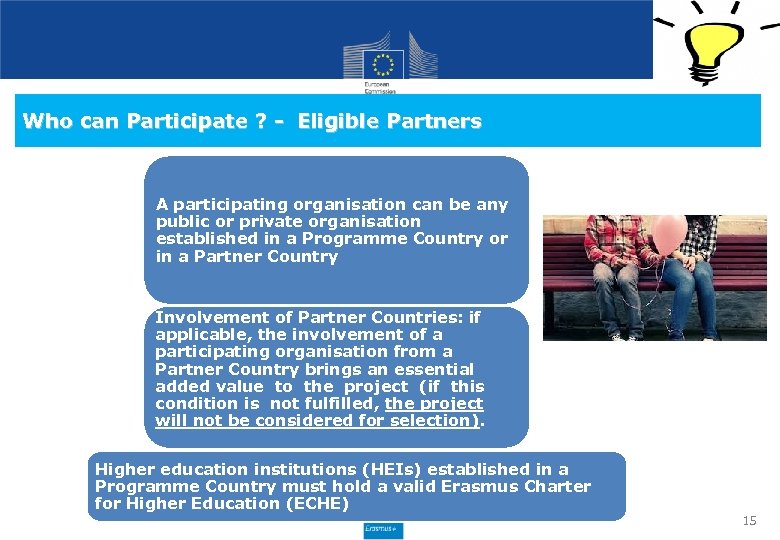 Who can Participate ? - Eligible Partners A participating organisation can be any public or private organisation established in a Programme Country or in a Partner Country Involvement of Partner Countries: if applicable, the involvement of a participating organisation from a Partner Country brings an essential added value to the project (if this condition is not fulfilled, the project will not be considered for selection). Higher education institutions (HEIs) established in a Programme Country must hold a valid Erasmus Charter for Higher Education (ECHE) 15
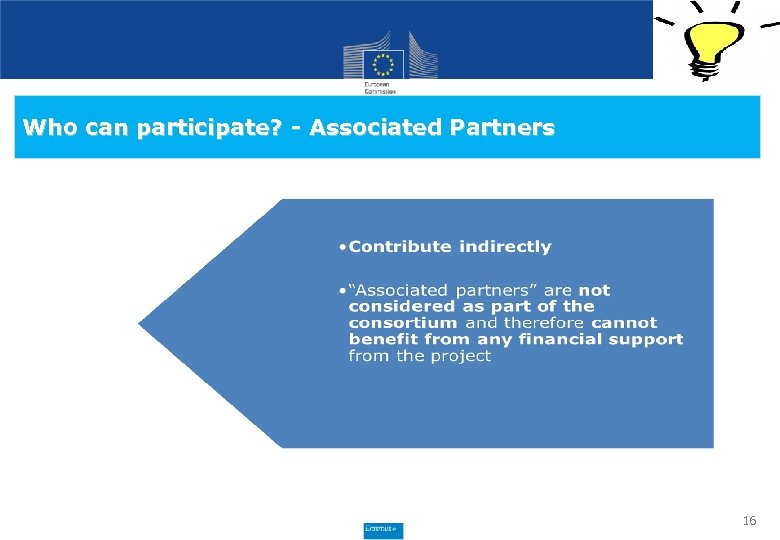 – Structure ? Who can participate? - Associated Partners Eligible Partners? 16
 PART II–The Consortia and the financing rules 17
 Overview about the new system 1) Principles • A new way of calculating the grant for Sector Skills and Knowledge Alliances: – based on a unit cost contribution (per group of countries and category). – Related to staff working days. Staffs working days x unit cost = EU Grant (contribution for implementing the project). E+ Unit Cost amounts are the result of a statistical analysis carried out on real project costs from previous generation of LLP programmes • The resulting EU grant is the EU contribution to cover all activities/costs of the project, whatever their nature: – Nature: staff; travel and subsistence; subcontracting; equipment; direct and indirect costs. – Activity directly linked: project management, project meetings, intellectual outputs , IT tools, analyses, studies, dissemination, participation in events, conferences, travel, etc. ). • Optional Mobility activities: - short term mobility of learners and staff in order to support or complement the other activities of the Alliance 18
 Unit cost system Staff working days Ø related to permanent, temporary, and interim staff employed by partner organizations and listed in the detailed project description - section III. 2. 3, with an employment contract and assigned to the project implementation in accordance with the provisions of the grant agreement. Ø Learners and volunteers working through subcontracting (e. g. freelancers, self-employed person, sole traders) cannot be considered as staff member. Ø unit rate cost linked to staff days includes all costs. Ex post control – supporting documents Ø For staff working days: The Agency will ask the beneficiary timesheets and employment contract, pay slip etc. . . Ø For mobility activities: boarding pass, hotels invoices, etc. 19
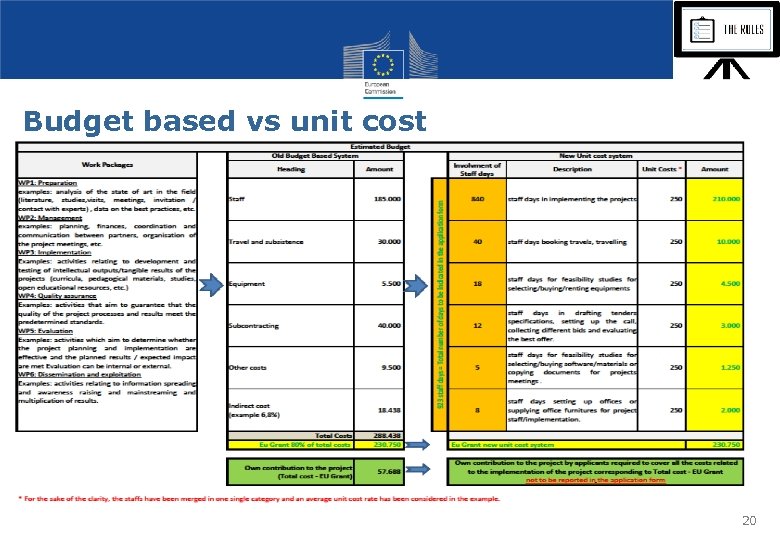 Budget based vs unit cost 20
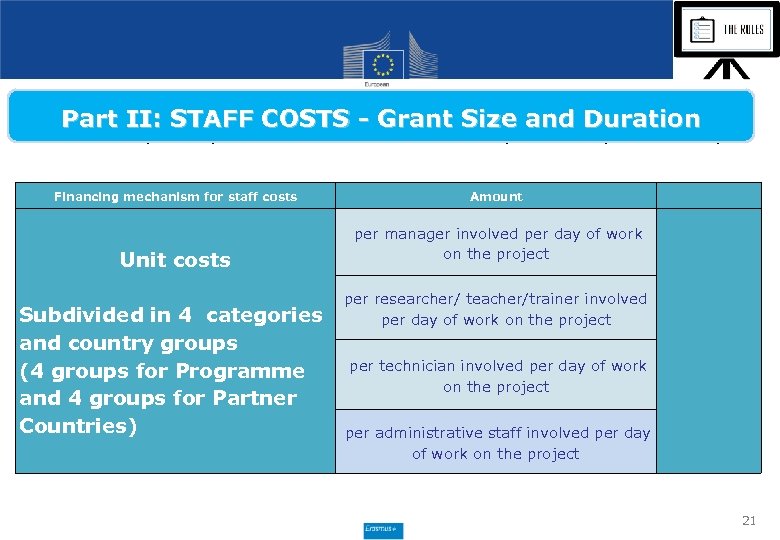 Part II: STAFF COSTS - Grant Size and Duration Unit costs per day Unit costs (return-trip for travel) Financing mechanism for staff costs Unit costs Subdivided in 4 categories and country groups (4 groups for Programme and 4 groups for Partner Countries) Amount per manager involved per day of work on the project per researcher/ teacher/trainer involved per day of work on the project per technician involved per day of work on the project per administrative staff involved per day of work on the project 21
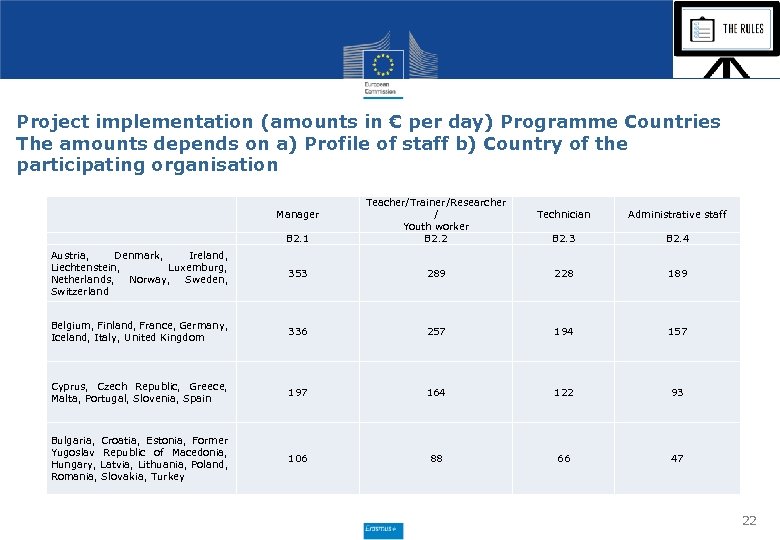 Project implementation (amounts in € per day) Programme Countries The amounts depends on a) Profile of staff b) Country of the participating organisation Manager B 2. 1 Teacher/Trainer/Researcher / Youth worker B 2. 2 Austria, Denmark, Ireland, Liechtenstein, Luxemburg, Netherlands, Norway, Sweden, Switzerland 353 Belgium, Finland, France, Germany, Iceland, Italy, United Kingdom Technician Administrative staff B 2. 3 B 2. 4 289 228 189 336 257 194 157 Cyprus, Czech Republic, Greece, Malta, Portugal, Slovenia, Spain 197 164 122 93 Bulgaria, Croatia, Estonia, Former Yugoslav Republic of Macedonia, Hungary, Latvia, Lithuania, Poland, Romania, Slovakia, Turkey 106 88 66 47 22
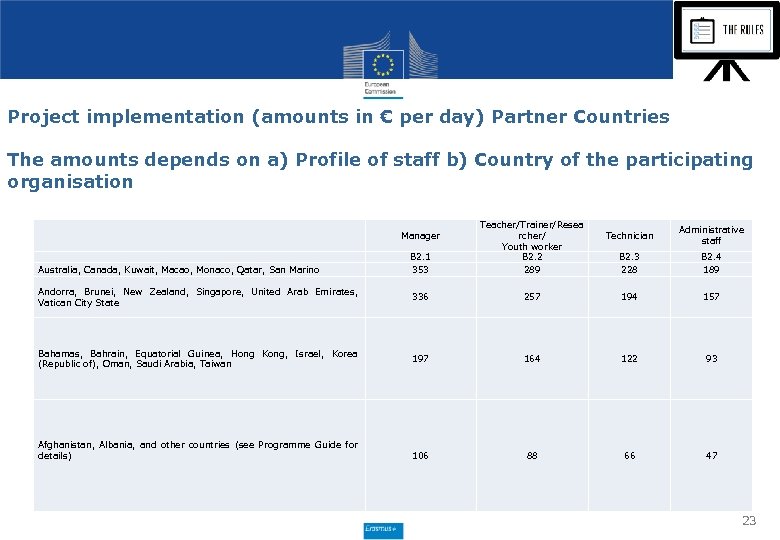 Project implementation (amounts in € per day) Partner Countries The amounts depends on a) Profile of staff b) Country of the participating organisation Australia, Canada, Kuwait, Macao, Monaco, Qatar, San Marino B 2. 1 353 Teacher/Trainer/Resea rcher/ Youth worker B 2. 2 289 Andorra, Brunei, New Zealand, Singapore, United Arab Emirates, Vatican City State 336 257 194 157 Bahamas, Bahrain, Equatorial Guinea, Hong Kong, Israel, Korea (Republic of), Oman, Saudi Arabia, Taiwan 197 164 122 93 Afghanistan, Albania, and other countries (see Programme Guide for details) 106 88 66 47 Manager Technician Administrative staff B 2. 3 228 B 2. 4 189 23
 PART III – The application and Selection procedure 24
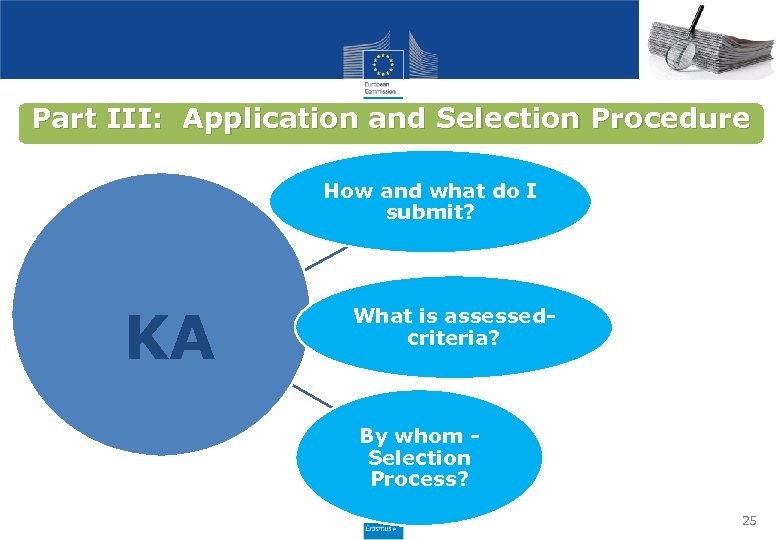 Part III: Application and Selection Procedure How and what do I submit? KA What is assessed- criteria? By whom - Selection Process? 25
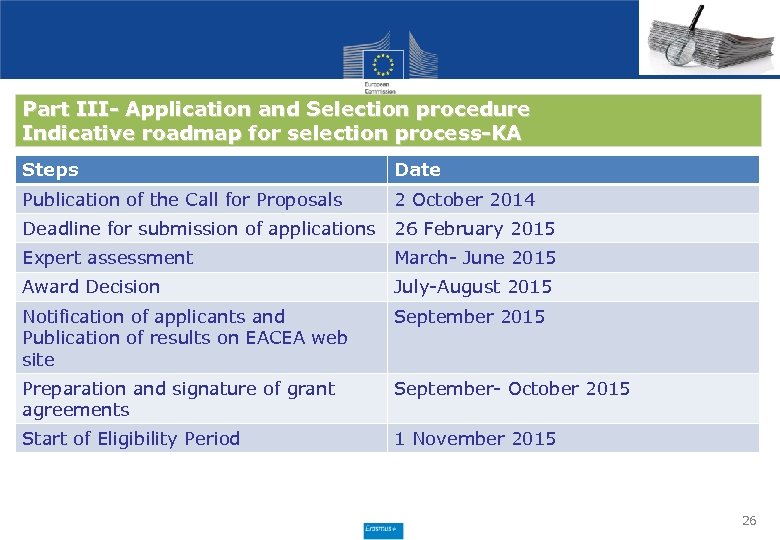 Part III- Application and Selection procedure Indicative roadmap for selection process-KA Steps Date Publication of the Call for Proposals 2 October 2014 Deadline for submission of applications 26 February 2015 Expert assessment March- June 2015 Award Decision July-August 2015 Notification of applicants and Publication of results on EACEA web site September 2015 Preparation and signature of grant agreements September- October 2015 Start of Eligibility Period 1 November 2015 26
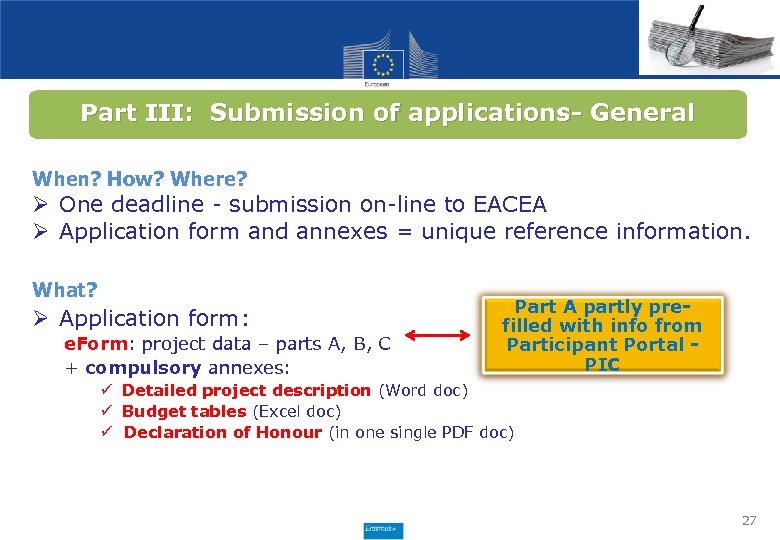 Part III: Submission of applications- General When? How? Where? Ø One deadline - submission on-line to EACEA Ø Application form and annexes = unique reference information. What? Ø Application form: e. Form: project data – parts A, B, C + compulsory annexes: Part A partly prefilled with info from Participant Portal - PIC ü Detailed project description (Word doc) ü Budget tables (Excel doc) ü Declaration of Honour (in one single PDF doc) 27
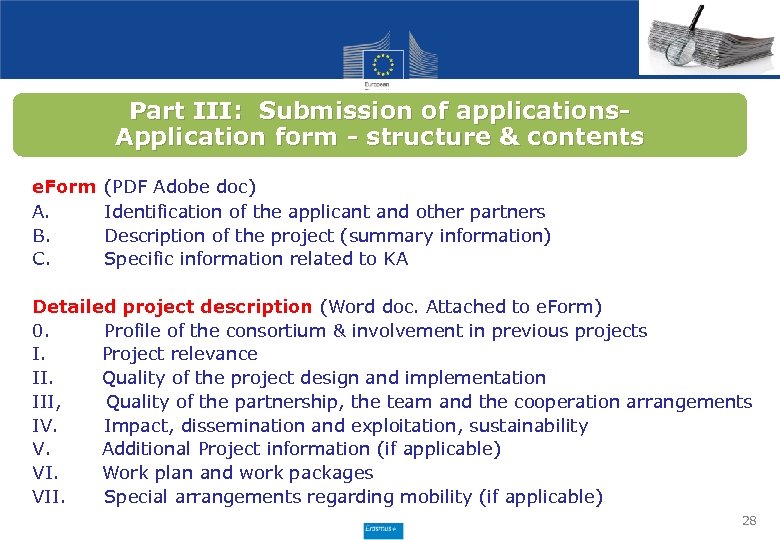 Part III: Submission of applications- Application form - structure & contents e. Form (PDF Adobe doc) A. Identification of the applicant and other partners B. Description of the project (summary information) C. Specific information related to KA Detailed project description (Word doc. Attached to e. Form) 0. Profile of the consortium & involvement in previous projects I. Project relevance II. Quality of the project design and implementation III, Quality of the partnership, the team and the cooperation arrangements IV. Impact, dissemination and exploitation, sustainability V. Additional Project information (if applicable) VI. Work plan and work packages VII. Special arrangements regarding mobility (if applicable) 28
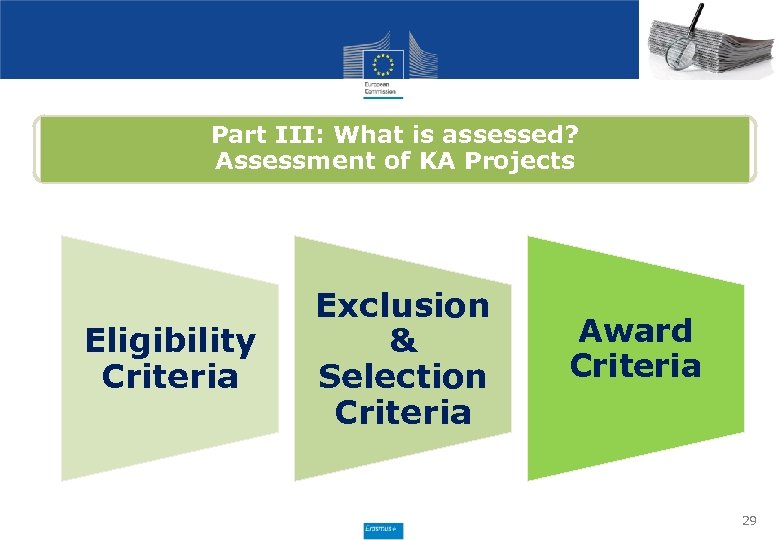 Part III: What is assessed? Assessment of KA Projects Eligibility Criteria Exclusion & Selection Criteria Award Criteria 29
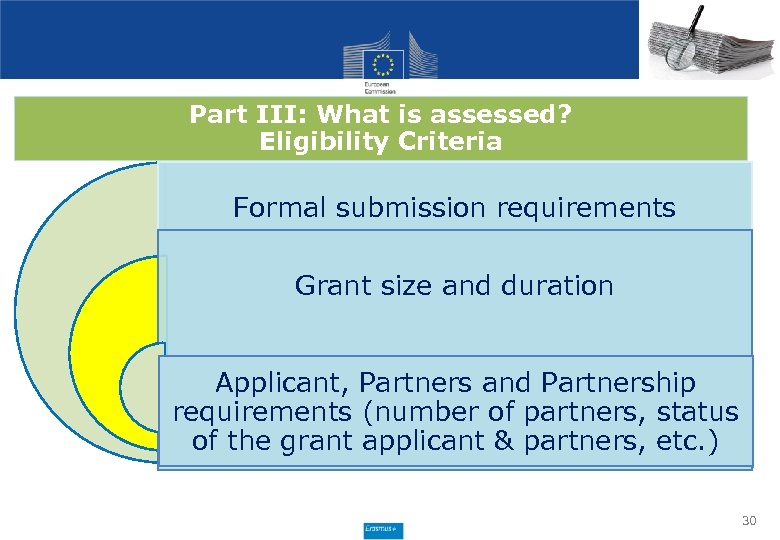 Part III: What is assessed? Eligibility Criteria Formal submission requirements Grant size and duration Applicant, Partners and Partnership requirements (number of partners, status of the grant applicant & partners, etc. ) 30
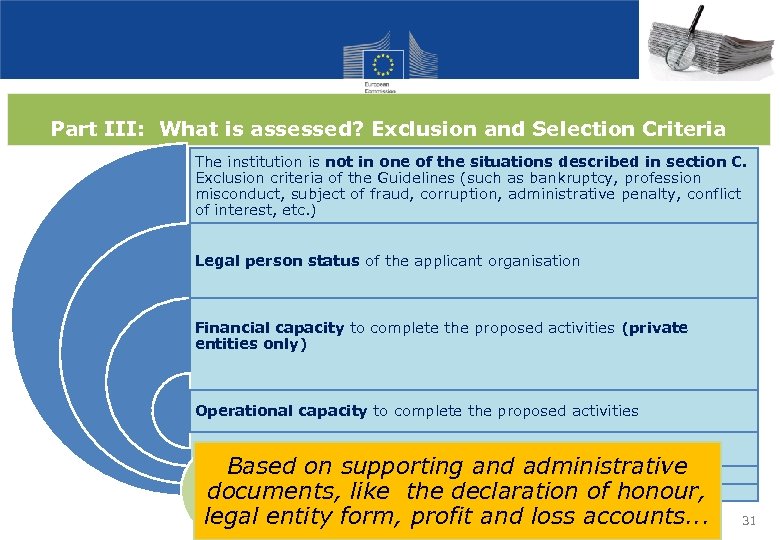 Part III: What is assessed? Exclusion and Selection Criteria The institution is not in one of the situations described in section C. Exclusion criteria of the Guidelines (such as bankruptcy, profession misconduct, subject of fraud, corruption, administrative penalty, conflict of interest, etc. ) Legal person status of the applicant organisation Financial capacity to complete the proposed activities (private entities only) Operational capacity to complete the proposed activities Based on supporting and administrative documents, like the declaration of honour, legal entity form, profit and loss accounts. . . 31
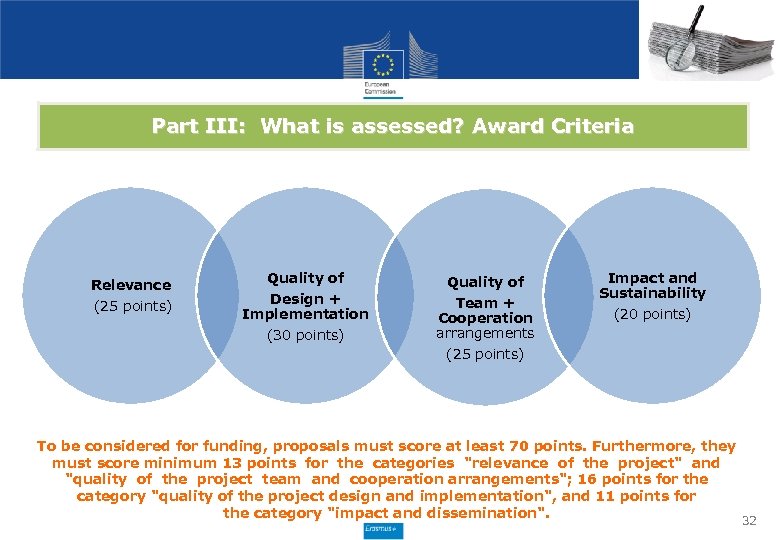 Part III: What is assessed? Award Criteria Relevance (25 points) Quality of Design + Implementation (30 points) Quality of Team + Cooperation arrangements (25 points) Impact and Sustainability (20 points) To be considered for funding, proposals must score at least 70 points. Furthermore, they must score minimum 13 points for the categories "relevance of the project" and "quality of the project team and cooperation arrangements"; 16 points for the category "quality of the project design and implementation", and 11 points for the category "impact and dissemination". 32
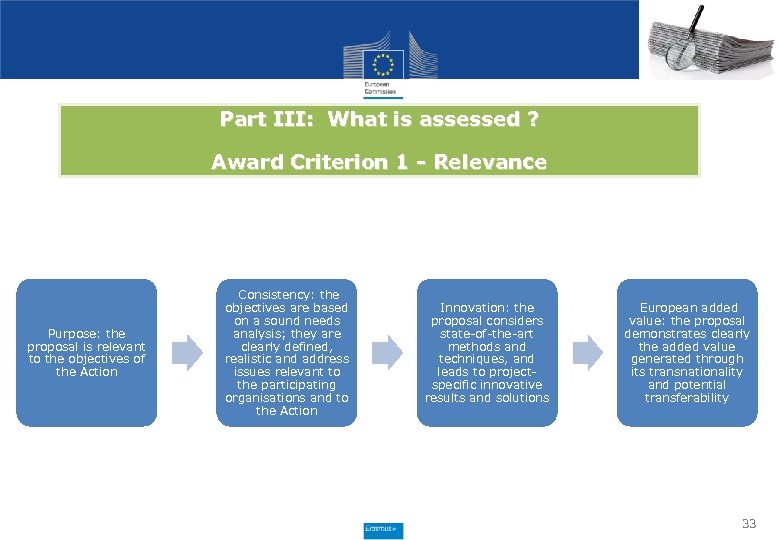 Part III: What is assessed ? Award Criterion 1 - Relevance Purpose: the proposal is relevant to the objectives of the Action Consistency: the objectives are based on a sound needs analysis; they are clearly defined, realistic and address issues relevant to the participating organisations and to the Action Innovation: the proposal considers state-of-the-art methods and techniques, and leads to projectspecific innovative results and solutions European added value: the proposal demonstrates clearly the added value generated through its transnationality and potential transferability 33
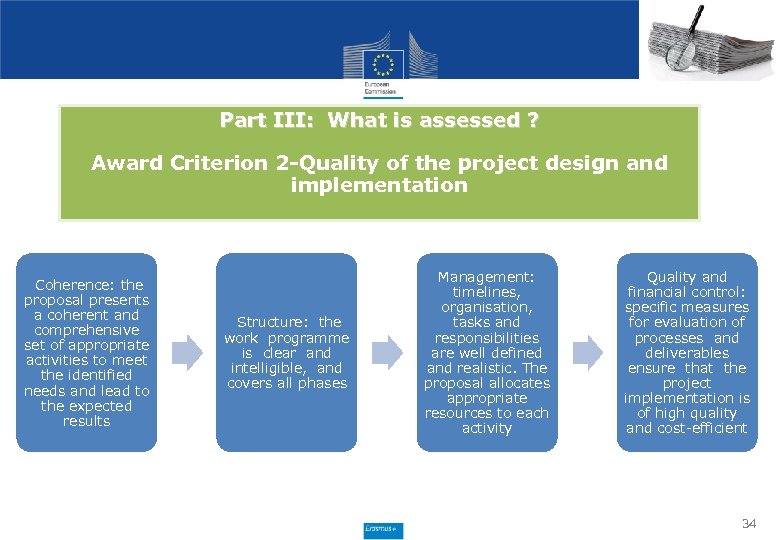 Part III: What is assessed ? Award Criterion 2 -Quality of the project design and implementation Coherence: the proposal presents a coherent and comprehensive set of appropriate activities to meet the identified needs and lead to the expected results Structure: the work programme is clear and intelligible, and covers all phases Management: timelines, organisation, tasks and responsibilities are well defined and realistic. The proposal allocates appropriate resources to each activity Quality and financial control: specific measures for evaluation of processes and deliverables ensure that the project implementation is of high quality and cost-efficient 34
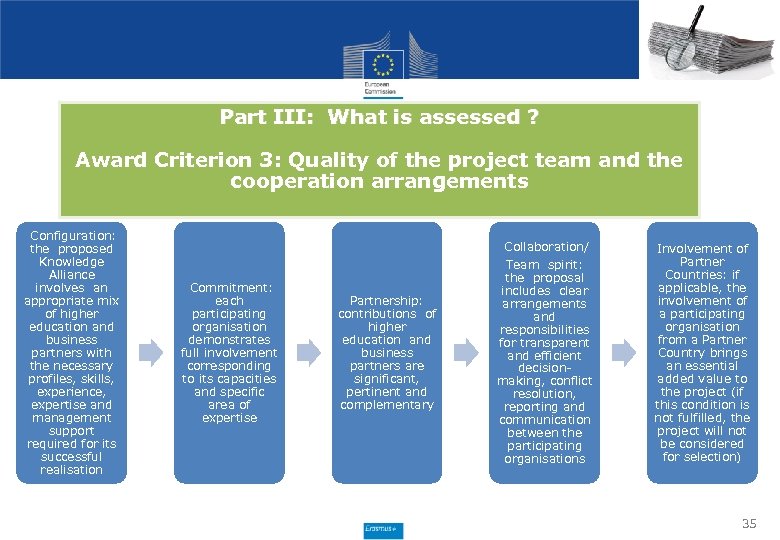 Part III: What is assessed ? Award Criterion 3: Quality of the project team and the cooperation arrangements Configuration: the proposed Knowledge Alliance involves an appropriate mix of higher education and business partners with the necessary profiles, skills, experience, expertise and management support required for its successful realisation Commitment: each participating organisation demonstrates full involvement corresponding to its capacities and specific area of expertise Partnership: contributions of higher education and business partners are significant, pertinent and complementary Collaboration/ Team spirit: the proposal includes clear arrangements and responsibilities for transparent and efficient decisionmaking, conflict resolution, reporting and communication between the participating organisations Involvement of Partner Countries: if applicable, the involvement of a participating organisation from a Partner Country brings an essential added value to the project (if this condition is not fulfilled, the project will not be considered for selection) 35
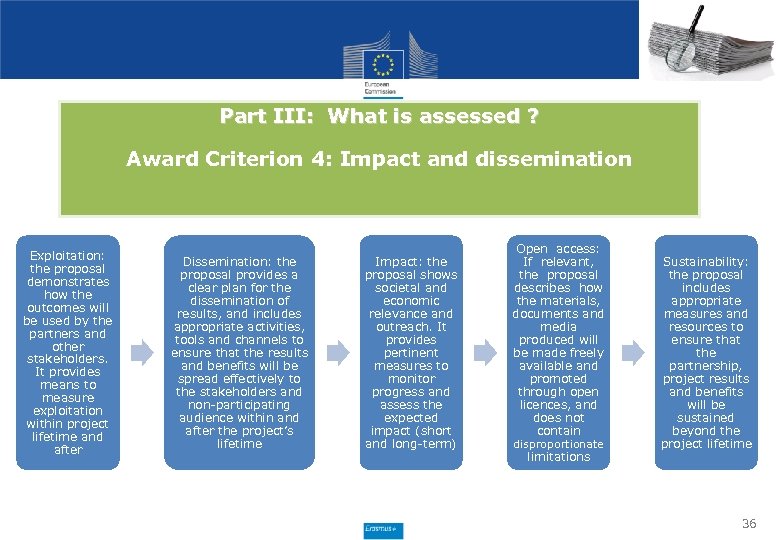 Part III: What is assessed ? Award Criterion 4: Impact and dissemination Exploitation: the proposal demonstrates how the outcomes will be used by the partners and other stakeholders. It provides means to measure exploitation within project lifetime and after Dissemination: the proposal provides a clear plan for the dissemination of results, and includes appropriate activities, tools and channels to ensure that the results and benefits will be spread effectively to the stakeholders and non-participating audience within and after the project’s lifetime Impact: the proposal shows societal and economic relevance and outreach. It provides pertinent measures to monitor progress and assess the expected impact (short and long-term) Open access: If relevant, the proposal describes how the materials, documents and media produced will be made freely available and promoted through open licences, and does not contain disproportionate limitations Sustainability: the proposal includes appropriate measures and resources to ensure that the partnership, project results and benefits will be sustained beyond the project lifetime 36
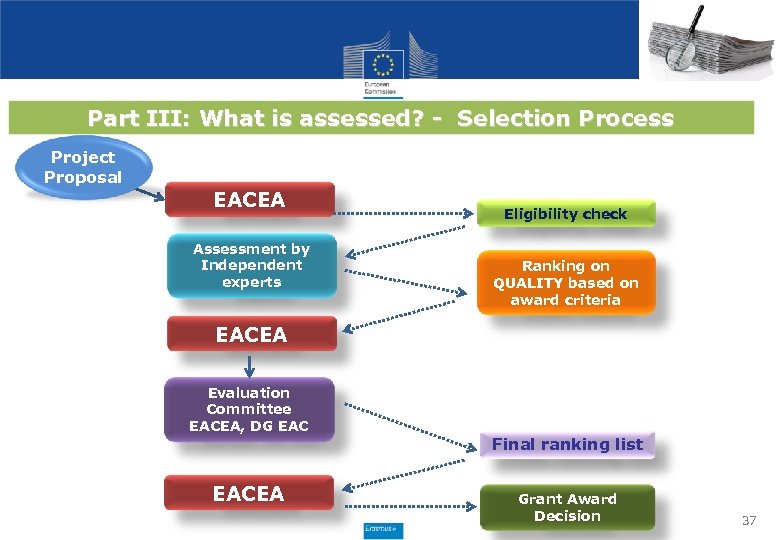 Part III: What is assessed? - Selection Process Project Proposal EACEA Assessment by Independent experts Eligibility check Ranking on QUALITY based on award criteria EACEA Evaluation Committee EACEA, DG EACEA Final ranking list Grant Award Decision 37
 38
38