


 Скачать презентацию ACT and Parent Training for Autsim and PDD
00ba420b2a0092e088015522c0e3562d.ppt
- Количество слайдов: 55
 ACT and Parent Training for Autsim and PDD: Creating a Context to Move Toward What is Important Giovanni Miselli, Ph. D IESCUM, ACT-Italia, AUSL RE
 - Psychological Flexibility as a treatment objective for childern with autsim and a teaching skill for parents - Around the Hexaflex (contacting the processes and examples of inflexibility on kids and Parents) - Parents as a Guide or a Gate Keeper (Experiential exercise) - the “What I have to do? ” TRAP for Parent Trainers and Cinicians - Bring Values in the Room (Framing Reinforcement/ABA concepts and Values) - Field experience and protocols (groups and couples) - Matrix!
 The DIFFICULTIES of PEOPLE with ASD 1) difficulties on social communication and social interaction 2) fixed interests and restricted repetitive patterns of behavior Our job is taking care of those difficulties And build contexts in wich learining and growing is possible
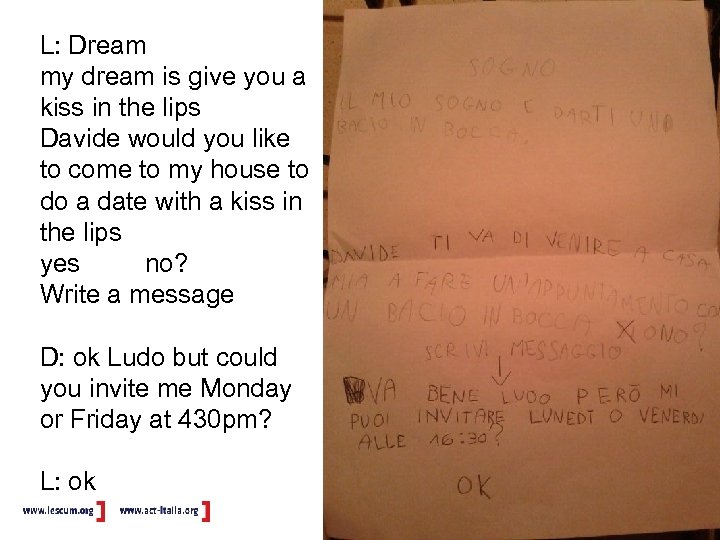 L: Dream my dream is give you a kiss in the lips Davide would you like to come to my house to do a date with a kiss in the lips yes no? Write a message D: ok Ludo but could you invite me Monday or Friday at 430 pm? L: ok
 L: Dream my dream is give you a kiss in the lips Davide would you like to come to my house to do a date with a kiss in the lips yes no? Write a message D: ok Ludo but could you invite me Monday or Friday at 430? L: ok
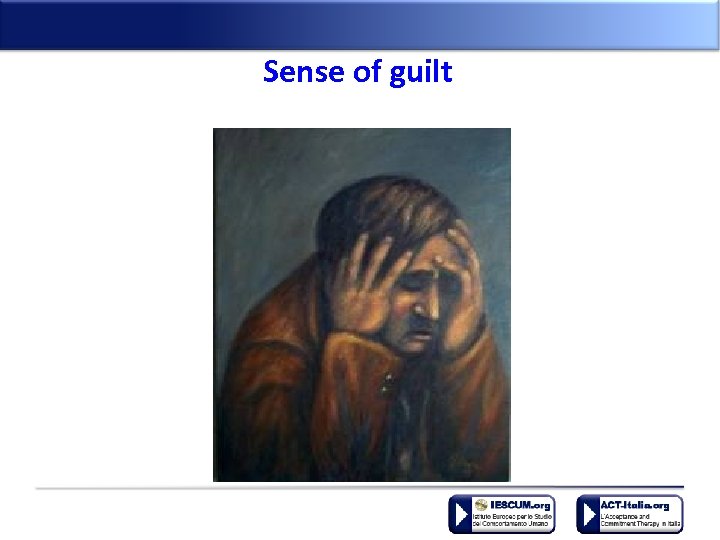 Sense of guilt
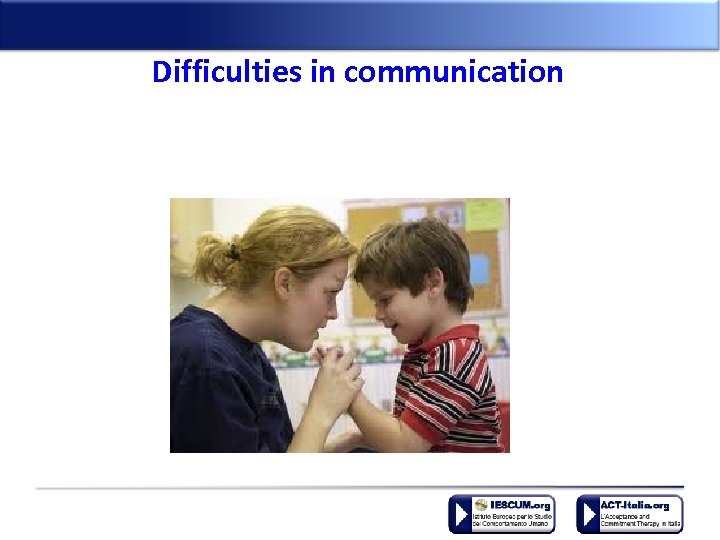 Difficulties in communication
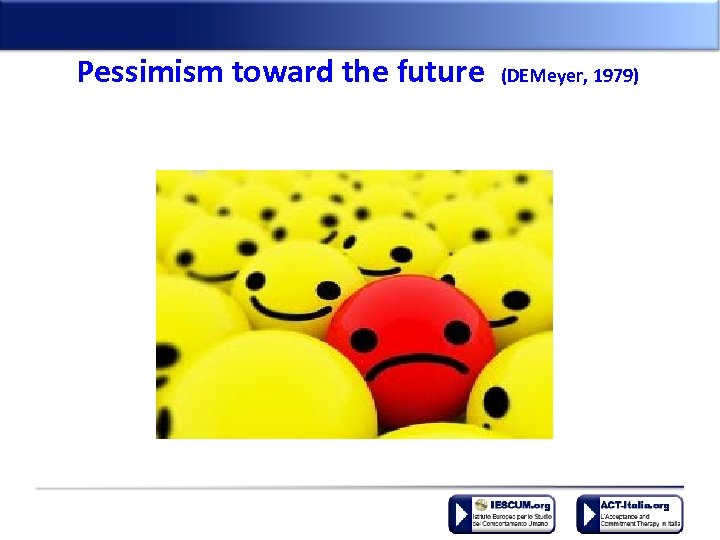 Pessimism toward the future (DEMeyer, 1979)
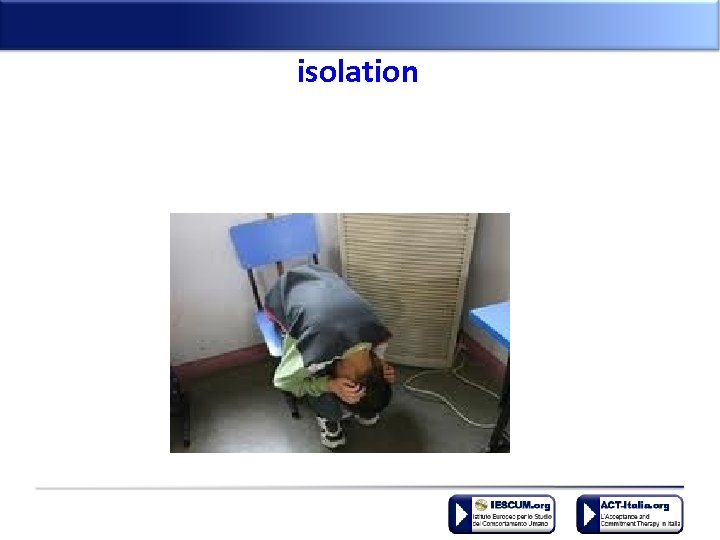 isolation
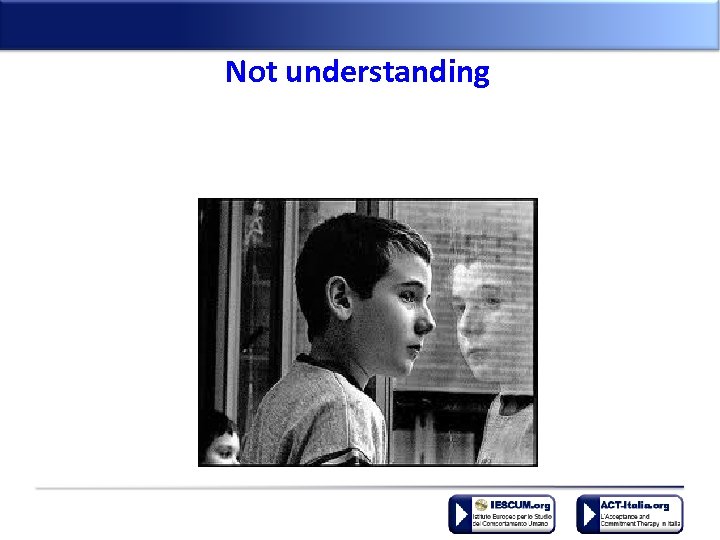 Not understanding
 Peculiarities, social Judgments
 Feelings of anger, depression
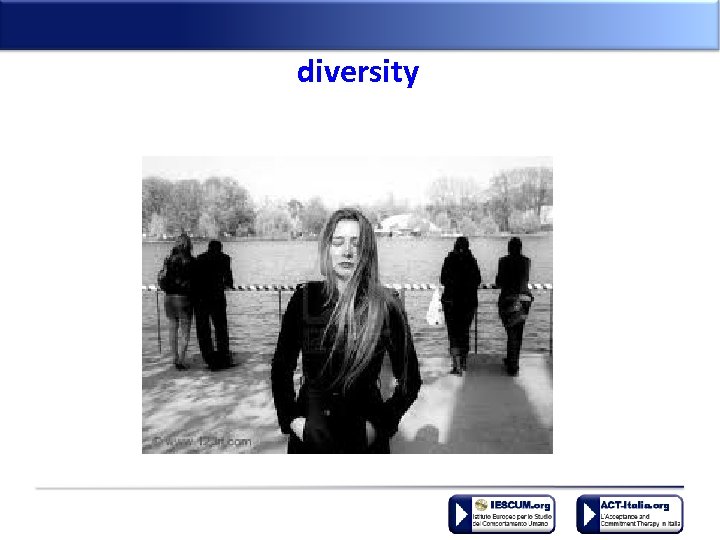 diversity
 Disagreement in the couple
 AIMS Context Autism is a chronic developmental disorder that has an impact not only on the child who directly suffer from it, but also on his/her parents (Blackledge & Hayes, 2006) Early Intensive Behavioral Intervention have proved effective in helping the child develop cognitive and behavior skills to good functioning levels, however they are extremely demanding on parents and children especially in contexts that do not provide a coherent and structured support for their application. This challenging context is common all over Italy
 Context Parents of children with autism may show the highest levels of parenting stress, relationship difficulties and mental health issues amongst parents of children of a variety of disabilities High levels of parental distress may significantly impact parent training outcomes Gould, 2013
 ACT Improved outcomes (for parents and children) might be achieved if strategies for dealing with interfering private events were incorporated into parent training packages Acceptance and Commitment Therapy (ACT) aims to cultivate parent vitality and well-being, while maximizing treatment outcomes, through mindfulness and values-guided action Gould, 2013
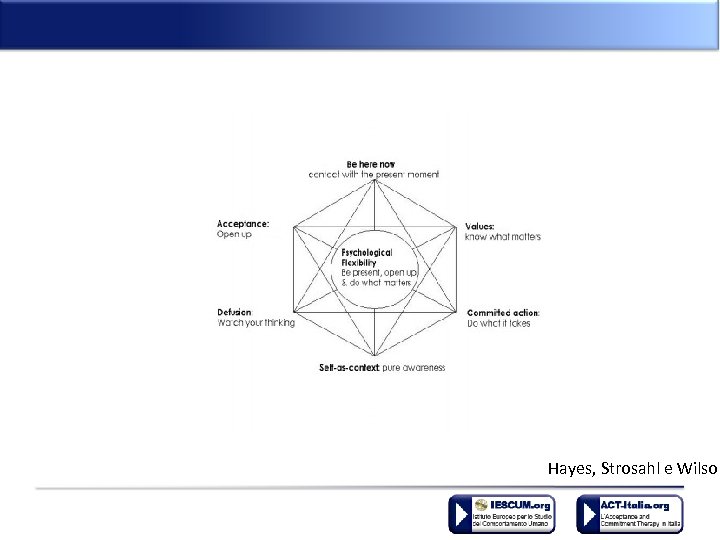
 ACT Experiential approach to behavior change Based on o Functional Contextualism o Relational Frame Theory (RFT) Root of human suffering = Psychological inflexibility Six core processes: contact with present moment, acceptance, defusion, self as context, values, and committed action. Gould, 2013
 La flessibilità psicologica è l’abilità di essere nel momento presente con piena consapevolezza e apertura alla nostra esperienza e di intraprendere azioni guidate dai nostri valori. Più semplicemente, è la capacità di “being present, open and do what counts”. Harris, 2011
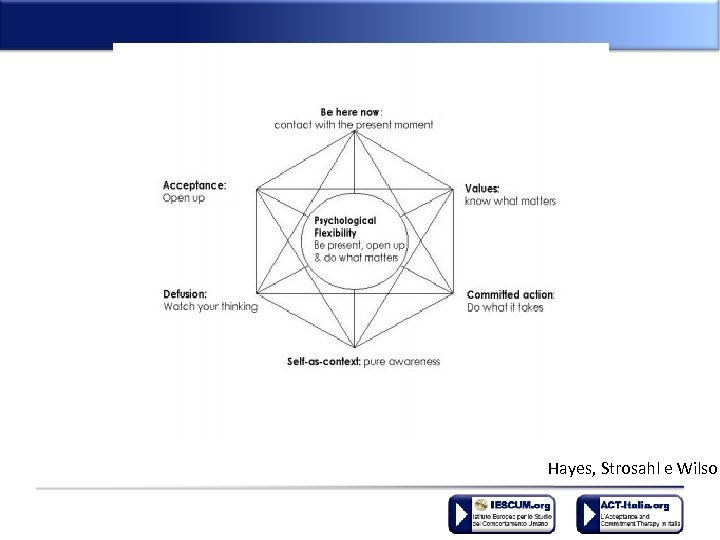 Hayes, Strosahl e Wilson
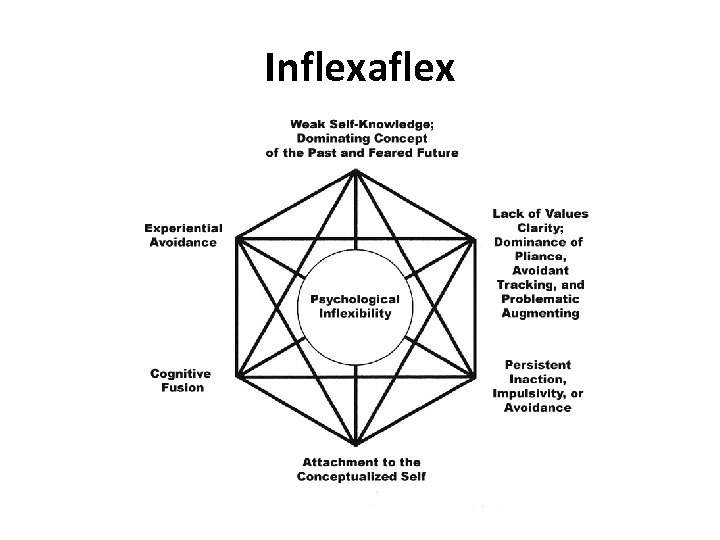 Inflexaflex
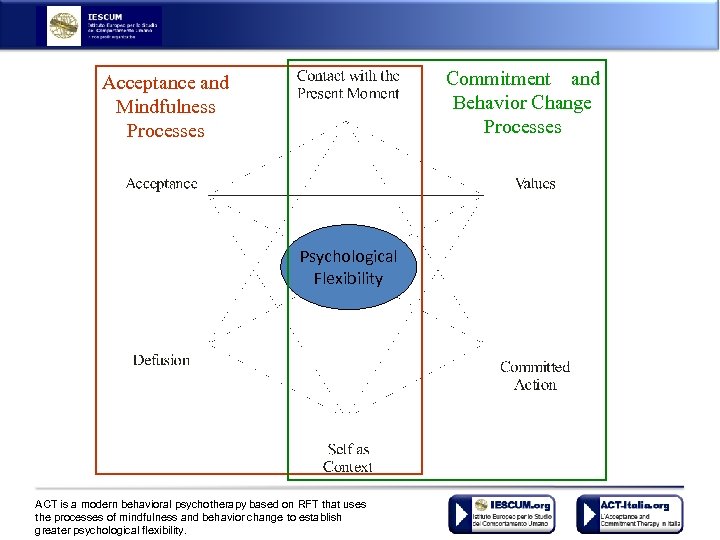 Commitment and Behavior Change Processes Acceptance and Mindfulness Processes Psychological Flexibility ACT is a modern behavioral psychotherapy based on RFT that uses the processes of mindfulness and behavior change to establish greater psychological flexibility.
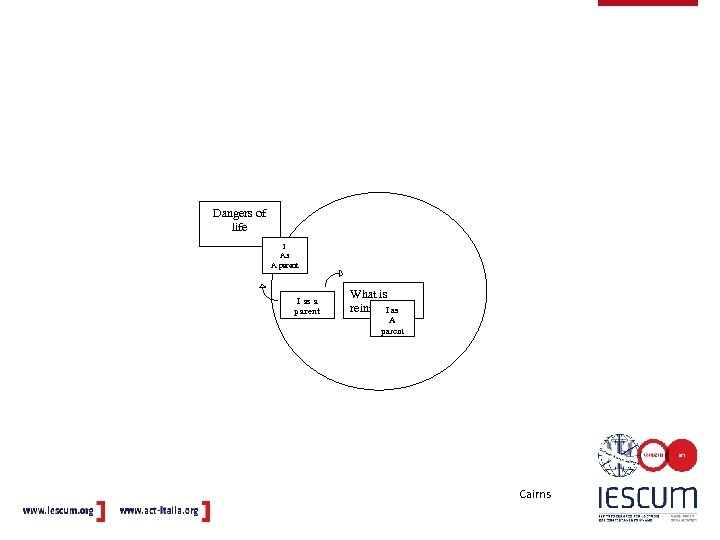 Dangers of life I As A parent I as a parent What is reinforcing I as A parent Cairns
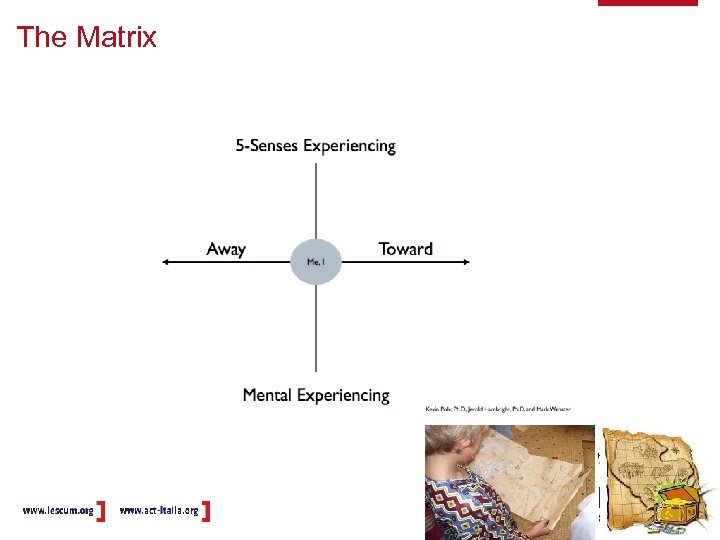 The Matrix
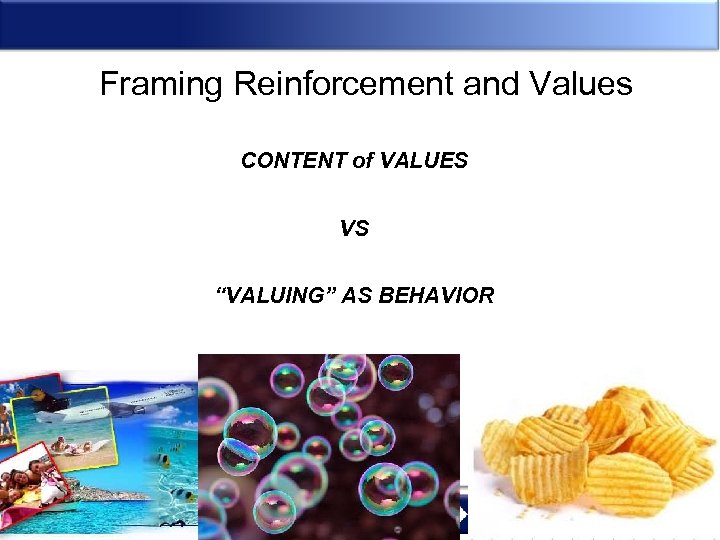 Framing Reinforcement and Values CONTENT of VALUES VS “VALUING” AS BEHAVIOR
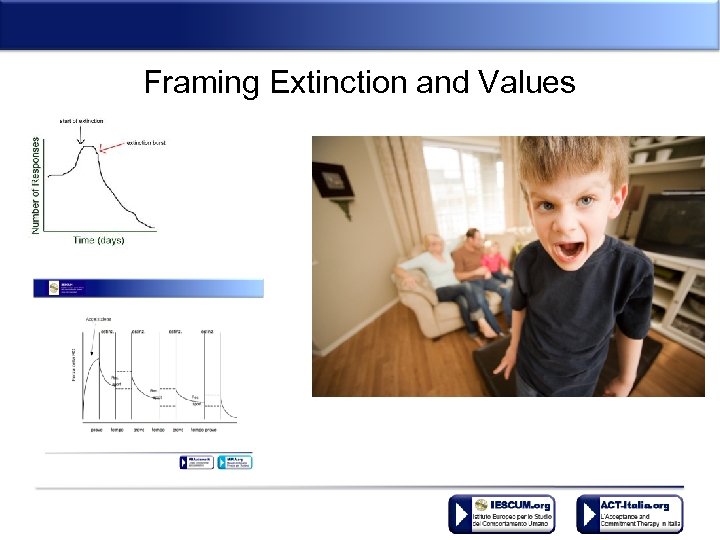 Framing Extinction and Values
 THE VALUE OF THE PORFESSIONAL become a valuable source of information - falling on knee (valuable source of info) - Knowing what is important (assessment of reinforcers) - A map of the wolrd (tracking contingencies) - the value of experience (directly contact contingencies CSB)
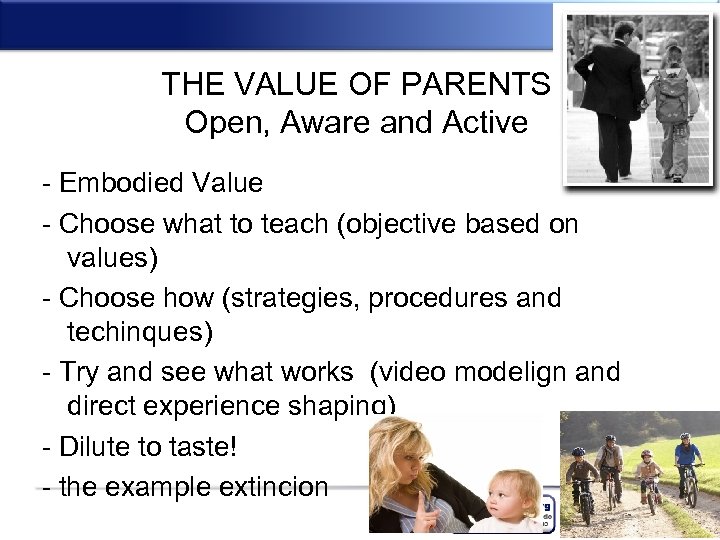 THE VALUE OF PARENTS Open, Aware and Active - Embodied Value - Choose what to teach (objective based on values) - Choose how (strategies, procedures and techinques) - Try and see what works (video modelign and direct experience shaping) - Dilute to taste! - the example extincion
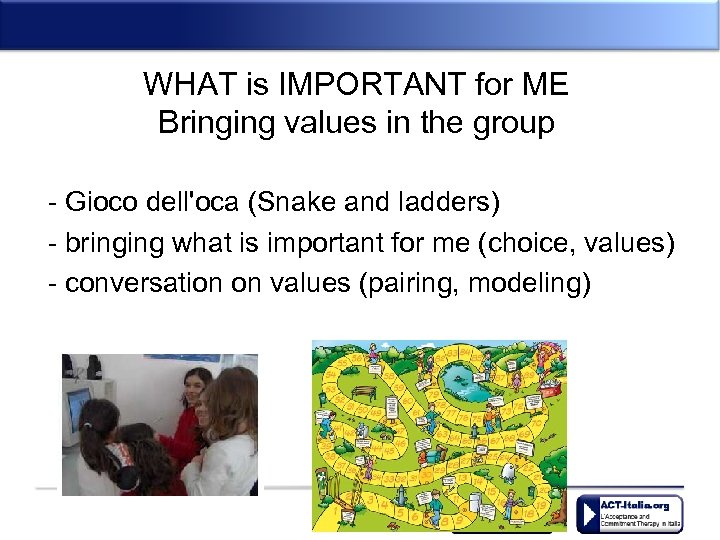 WHAT is IMPORTANT for ME Bringing values in the group - Gioco dell'oca (Snake and ladders) - bringing what is important for me (choice, values) - conversation on values (pairing, modeling)
 Context: ABA intervention Model 1 Model 2, 3, 4 ACT workshop before 20 ACT intervention during ABA 25 hours of home based ABA intervention 7 -10 hrs home based/center based, (26 h of intervention school based personalized teching with ABA supervision)
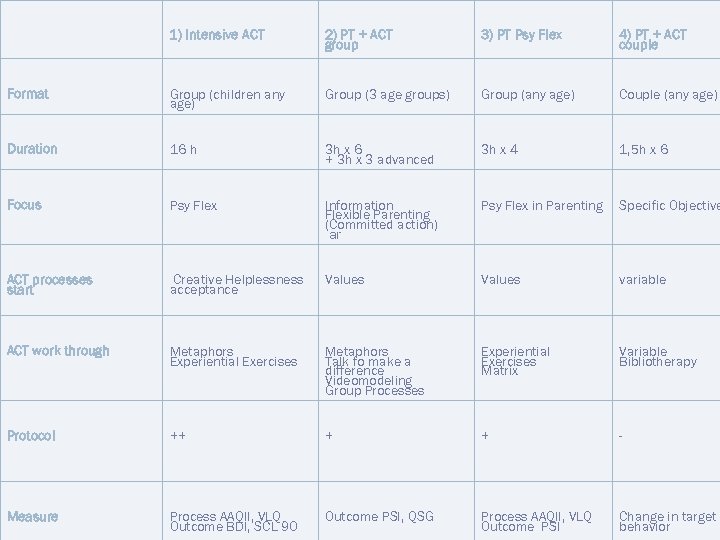 1) Intensive ACT Format 2) PT + ACT group Sediorpor sitataqui beriant Group age) frtddes(children any Group (3 age groups) deusque sed 3) PT Psy Flex 4) PT + ACT couple Group (any age) Couple (any age) Duration 16 h 3 h x 6 + 3 h x 3 advanced 3 h x 4 1, 5 h x 6 Focus Psy Flex Information Flexible Parenting (Committed action) ar Psy Flex in Parenting Specific Objective ACT processes start Creative Helplessness acceptance Values variable ACT work through Metaphors Experiential Exercises Metaphors Talk fo make a difference Videomodeling Group Processes Experiential Exercises Matrix Variable Bibliotherapy Protocol ++ + + - Measure Process AAQII, VLQ Outcome BDI, SCL 90 Outcome PSI, QSG Process AAQII, VLQ Outcome PSI Change in target behavior
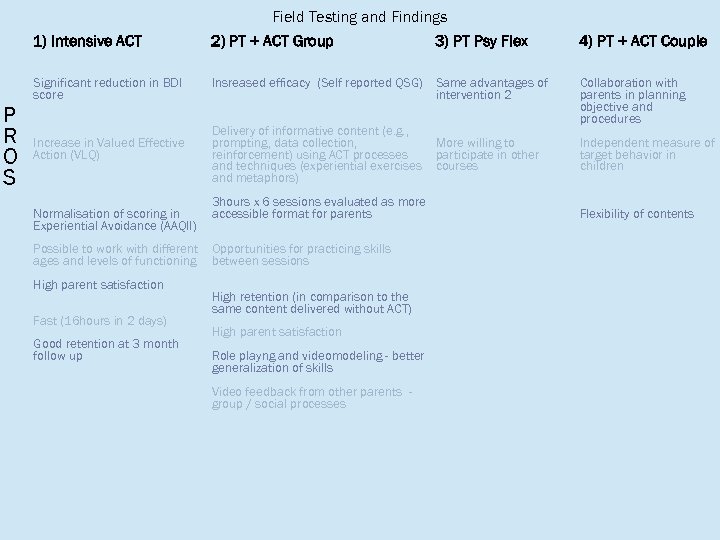 Field Testing and Findings P R O S 1) Intensive ACT 2) PT + ACT Group Significant reduction in BDI score Insreased efficacy (Self reported QSG) Same advantages of intervention 2 Increase in Valued Effective Action (VLQ) Delivery of informative content (e. g. , prompting, data collection, reinforcement) using ACT processes and techniques (experiential exercises and metaphors) Normalisation of scoring in Experiential Avoidance (AAQII) Possible to work with different ages and levels of functioning High parent satisfaction Fast (16 hours in 2 days) Good retention at 3 month follow up 3 hours x 6 sessions evaluated as more accessible format for parents Opportunities for practicing skills between sessions High retention (in comparison to the same content delivered without ACT) High parent satisfaction Role playng and videomodeling - better generalization of skills Video feedback from other parents group / social processes 3) PT Psy Flex More willing to participate in other courses 4) PT + ACT Couple Collaboration with parents in planning objective and procedures Independent measure of target behavior in children Flexibility of contents
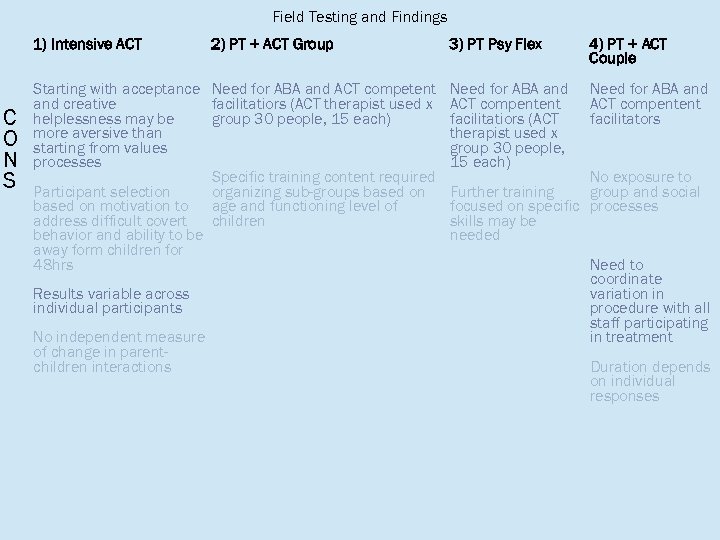 Field Testing and Findings C O N S 1) Intensive ACT 2) PT + ACT Group Starting with acceptance and creative helplessness may be more aversive than starting from values processes Need for ABA and ACT competent facilitatiors (ACT therapist used x group 30 people, 15 each) 3) PT Psy Flex Need for ABA and ACT compentent facilitatiors (ACT therapist used x group 30 people, 15 each) Specific training content required Participant selection organizing sub-groups based on Further training based on motivation to age and functioning level of focused on specific address difficult covert children skills may be behavior and ability to be needed away form children for 48 hrs Results variable across individual participants No independent measure of change in parentchildren interactions 4) PT + ACT Couple Need for ABA and ACT compentent facilitators No exposure to group and social processes Need to coordinate variation in procedure with all staff participating in treatment Duration depends on individual responses
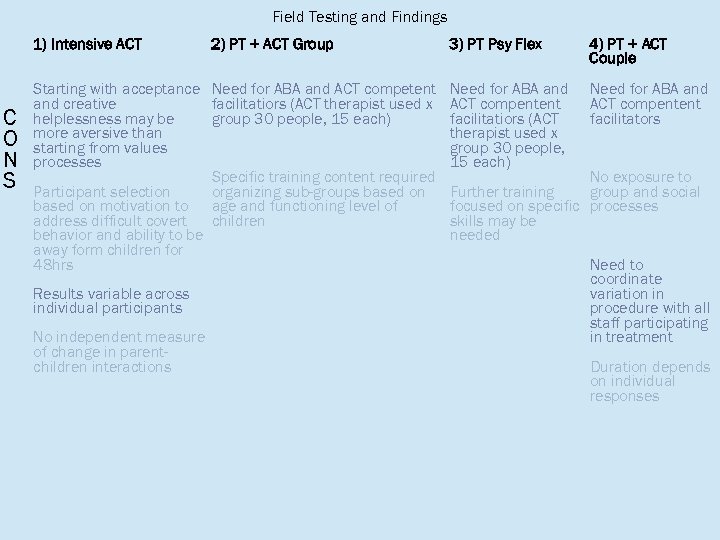 Field Testing and Findings C O N S 1) Intensive ACT 2) PT + ACT Group Starting with acceptance and creative helplessness may be more aversive than starting from values processes Need for ABA and ACT competent facilitatiors (ACT therapist used x group 30 people, 15 each) 3) PT Psy Flex Need for ABA and ACT compentent facilitatiors (ACT therapist used x group 30 people, 15 each) Specific training content required Participant selection organizing sub-groups based on Further training based on motivation to age and functioning level of focused on specific address difficult covert children skills may be behavior and ability to be needed away form children for 48 hrs Results variable across individual participants No independent measure of change in parentchildren interactions 4) PT + ACT Couple Need for ABA and ACT compentent facilitators No exposure to group and social processes Need to coordinate variation in procedure with all staff participating in treatment Duration depends on individual responses
 Hayes, Strosahl e Wilson
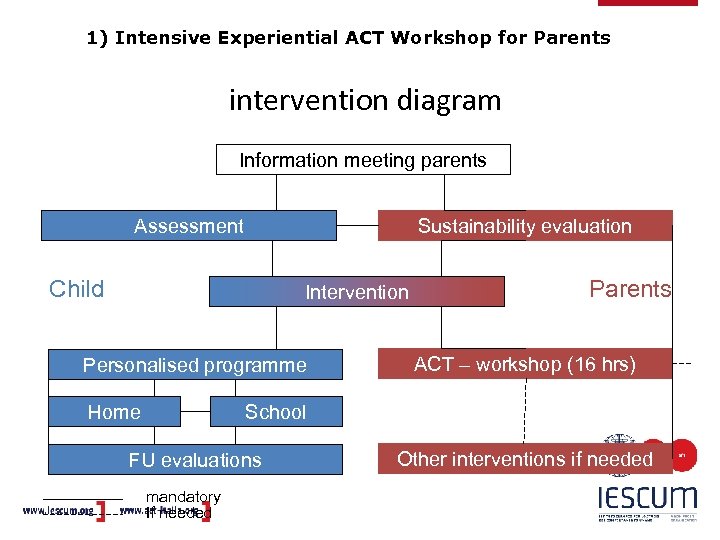 1) Intensive Experiential ACT Workshop for Parents intervention diagram Information meeting parents Assessment Sustainability evaluation Child Intervention Personalised programme Home Parents ACT – workshop (16 hrs) School FU evaluations mandatory If needed Other interventions if needed
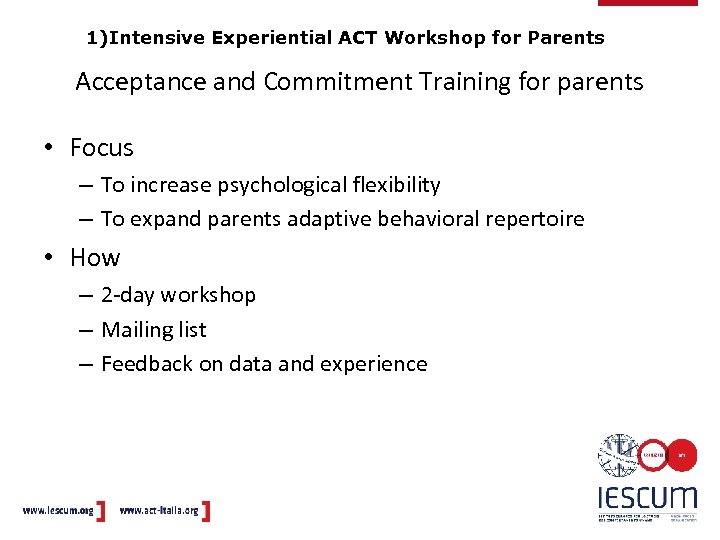 1)Intensive Experiential ACT Workshop for Parents Acceptance and Commitment Training for parents • Focus – To increase psychological flexibility – To expand parents adaptive behavioral repertoire • How – 2 -day workshop – Mailing list – Feedback on data and experience
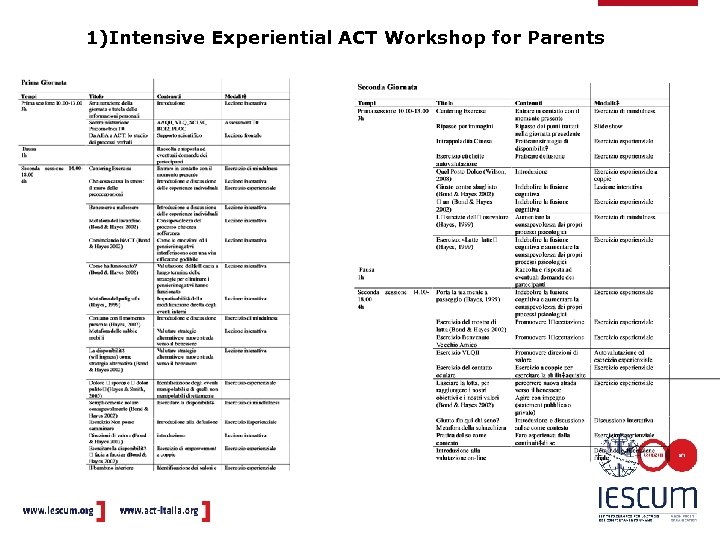 2 DAYS WORKSHOP PROTOCOL 1)Intensive Experiential ACT Workshop for Parents
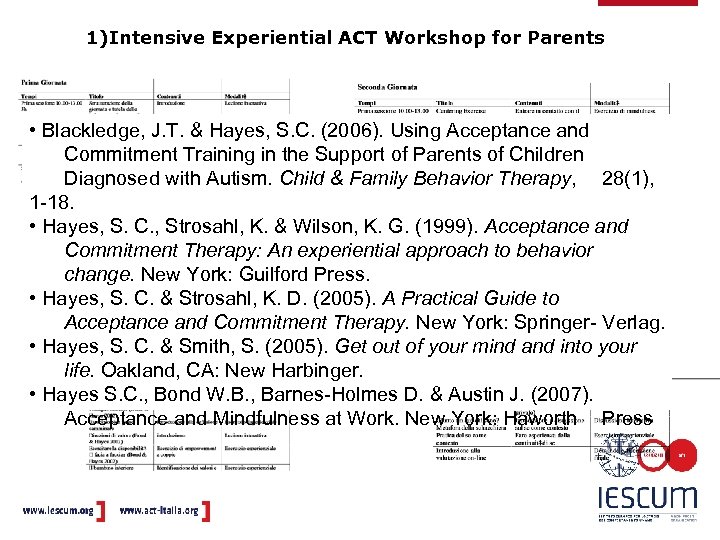 2 DAYS WORKSHOP PROTOCOL 1)Intensive Experiential ACT Workshop for Parents • Blackledge, J. T. & Hayes, S. C. (2006). Using Acceptance and Commitment Training in the Support of Parents of Children Diagnosed with Autism. Child & Family Behavior Therapy, 28(1), 1 -18. • Hayes, S. C. , Strosahl, K. & Wilson, K. G. (1999). Acceptance and Commitment Therapy: An experiential approach to behavior change. New York: Guilford Press. • Hayes, S. C. & Strosahl, K. D. (2005). A Practical Guide to Acceptance and Commitment Therapy. New York: Springer- Verlag. • Hayes, S. C. & Smith, S. (2005). Get out of your mind and into your life. Oakland, CA: New Harbinger. • Hayes S. C. , Bond W. B. , Barnes-Holmes D. & Austin J. (2007). Acceptance and Mindfulness at Work. New York: Haworth Press
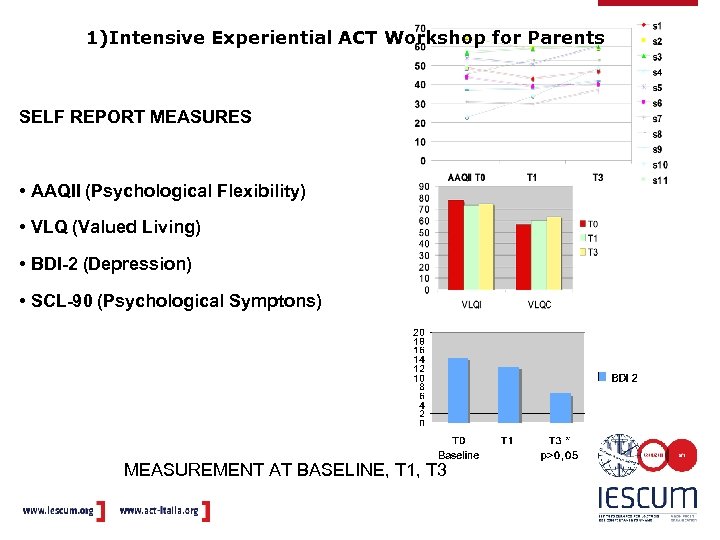 1)Intensive Experiential ACT Workshop for Parents SELF REPORT MEASURES • AAQII (Psychological Flexibility) • VLQ (Valued Living) • BDI-2 (Depression) • SCL-90 (Psychological Symptons) MEASUREMENT AT BASELINE, T 1, T 3
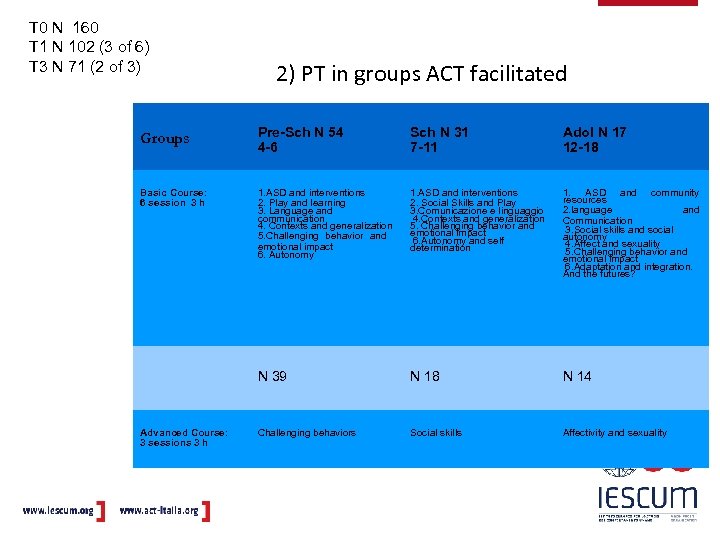 T 0 N 160 T 1 N 102 (3 of 6) T 3 N 71 (2 of 3) 2) PT in groups ACT facilitated Groups Pre-Sch N 54 4 -6 Sch N 31 7 -11 Adol N 17 12 -18 Basic Course: 6 session 3 h 1. ASD and interventions 2. Play and learning 3. Language and communication 4. Contexts and generalization 5. Challenging behavior and emotional impact 6. Autonomy 1. ASD and interventions 2. Social Skills and Play 3. Comunicazione e linguaggio 4. Contexts and generalization 5. Challenging behavior and emotional impact 6. Autonomy and self determination 1. ASD and community resources 2. language and Communication 3. Social skills and social autonomy 4. Affect and sexuality 5. Challenging behavior and emotional impact 6. Adaptation and integration. And the futures? N 39 N 18 N 14 Challenging behaviors Social skills Affectivity and sexuality Advanced Course: 3 sessions 3 h
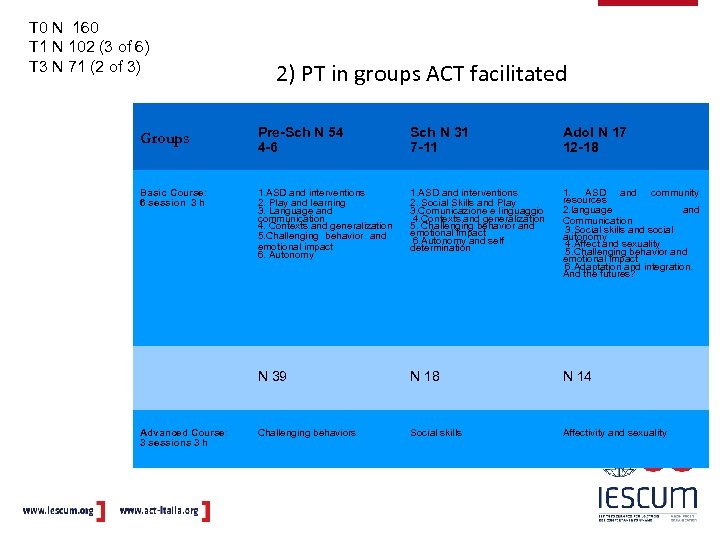 T 0 N 160 T 1 N 102 (3 of 6) T 3 N 71 (2 of 3) 2) PT in groups ACT facilitated Groups Pre-Sch N 54 4 -6 Sch N 31 7 -11 Adol N 17 12 -18 Basic Course: 6 session 3 h 1. ASD and interventions 2. Play and learning 3. Language and communication 4. Contexts and generalization 5. Challenging behavior and emotional impact 6. Autonomy 1. ASD and interventions 2. Social Skills and Play 3. Comunicazione e linguaggio 4. Contexts and generalization 5. Challenging behavior and emotional impact 6. Autonomy and self determination 1. ASD and community resources 2. language and Communication 3. Social skills and social autonomy 4. Affect and sexuality 5. Challenging behavior and emotional impact 6. Adaptation and integration. And the futures? N 39 N 18 N 14 Challenging behaviors Social skills Affectivity and sexuality Advanced Course: 3 sessions 3 h
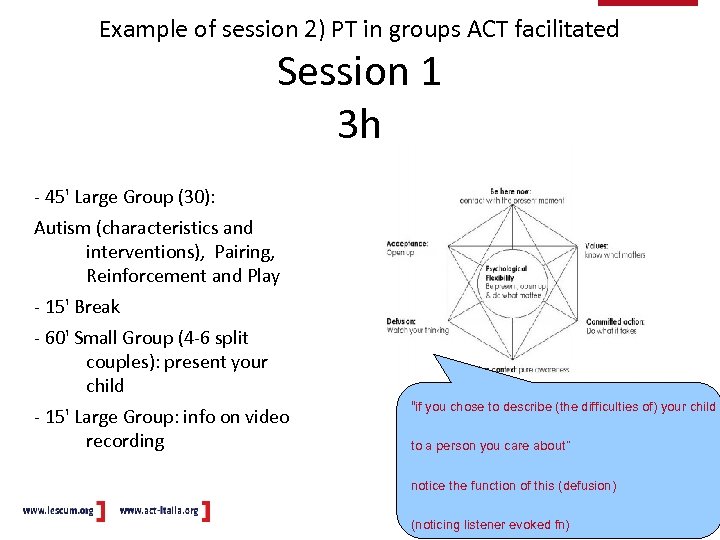 Example of session 2) PT in groups ACT facilitated Session 1 3 h - 45' Large Group (30): Autism (characteristics and interventions), Pairing, Reinforcement and Play - 15' Break - 60' Small Group (4 -6 split couples): present your child - 15' Large Group: info on video recording “if you chose to describe (the difficulties of) your child to a person you care about” notice the function of this (defusion) (noticing listener evoked fn)
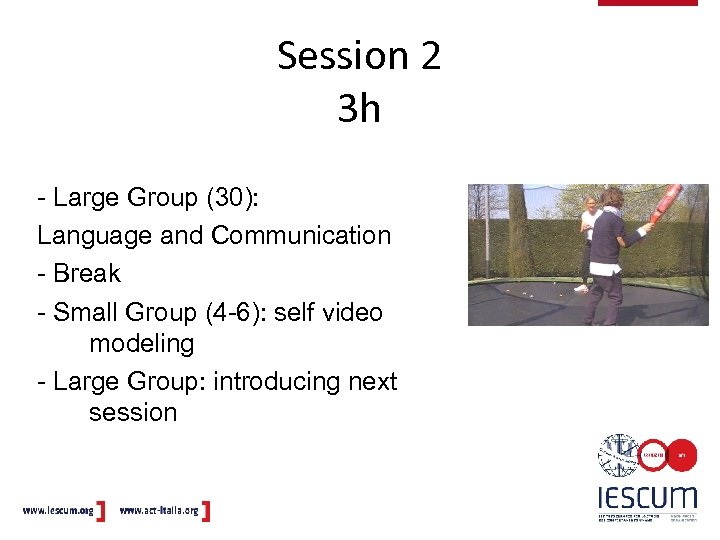 Session 2 3 h - Large Group (30): Language and Communication - Break - Small Group (4 -6): self video modeling - Large Group: introducing next session
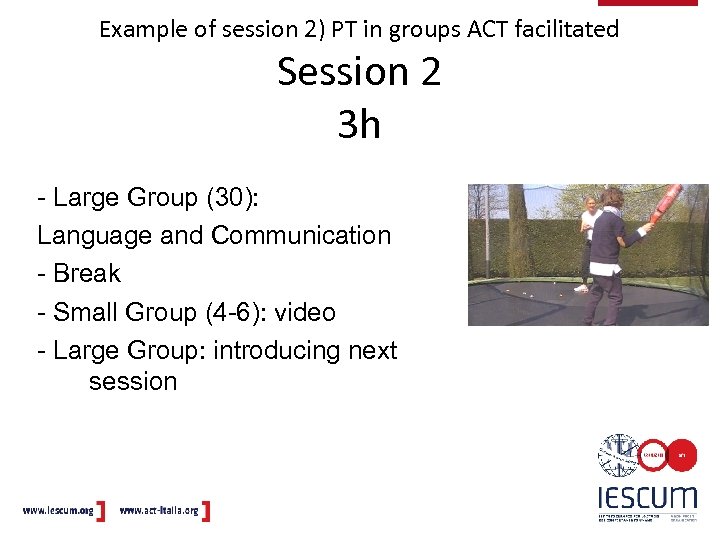 Example of session 2) PT in groups ACT facilitated Session 2 3 h - Large Group (30): Language and Communication - Break - Small Group (4 -6): video - Large Group: introducing next session
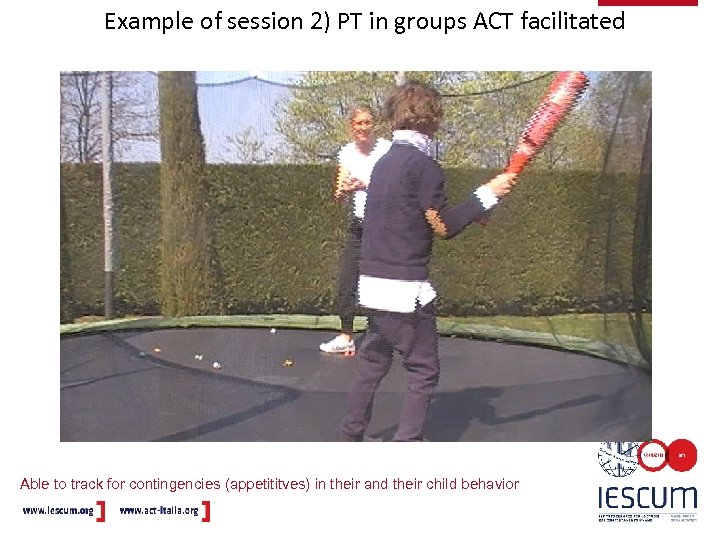 Example of session 2) PT in groups ACT facilitated Able to track for contingencies (appetititves) in their and their child behavior
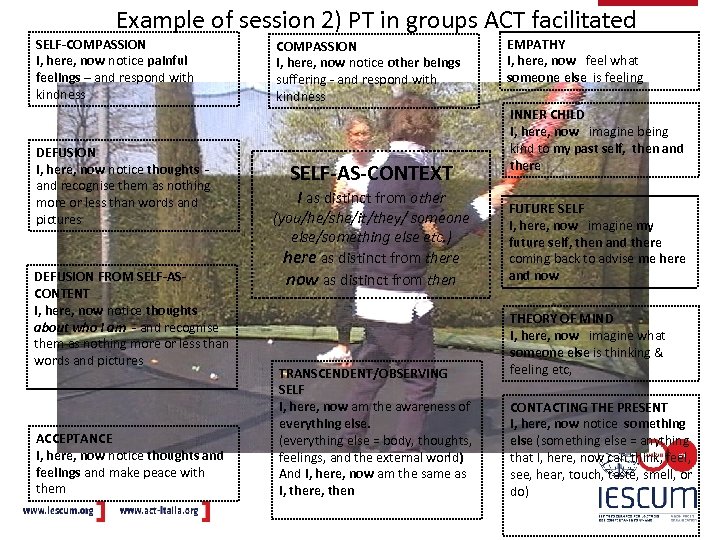 Example of session 2) PT in groups ACT facilitated SELF-COMPASSION I, here, now notice painful feelings – and respond with kindness DEFUSION I, here, now notice thoughts and recognise them as nothing more or less than words and pictures DEFUSION FROM SELF-ASCONTENT I, here, now notice thoughts about who I am - and recognise them as nothing more or less than words and pictures ACCEPTANCE I, here, now notice thoughts and feelings and make peace with them COMPASSION I, here, now notice other beings suffering - and respond with kindness SELF-AS-CONTEXT I as distinct from other (you/he/she/it/they/ someone else/something else etc. ) here as distinct from there now as distinct from then TRANSCENDENT/OBSERVING SELF I, here, now am the awareness of everything else. (everything else = body, thoughts, feelings, and the external world) And I, here, now am the same as I, there, then EMPATHY I, here, now feel what someone else is feeling INNER CHILD I, here, now imagine being kind to my past self, then and there FUTURE SELF I, here, now imagine my future self, then and there coming back to advise me here and now THEORY OF MIND I, here, now imagine what someone else is thinking & feeling etc, CONTACTING THE PRESENT I, here, now notice something else (something else = anything that I, here, now can think, feel, see, hear, touch, taste, smell, or do)
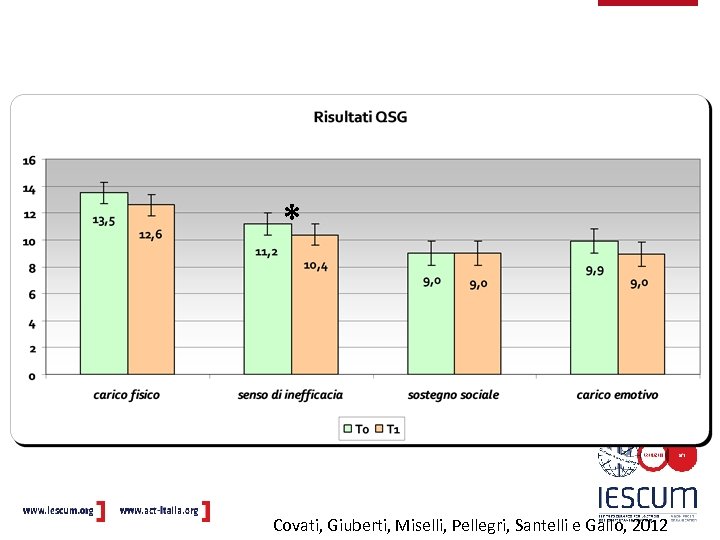 * Covati, Giuberti, Miselli, Pellegri, Santelli e Gallo, 2012
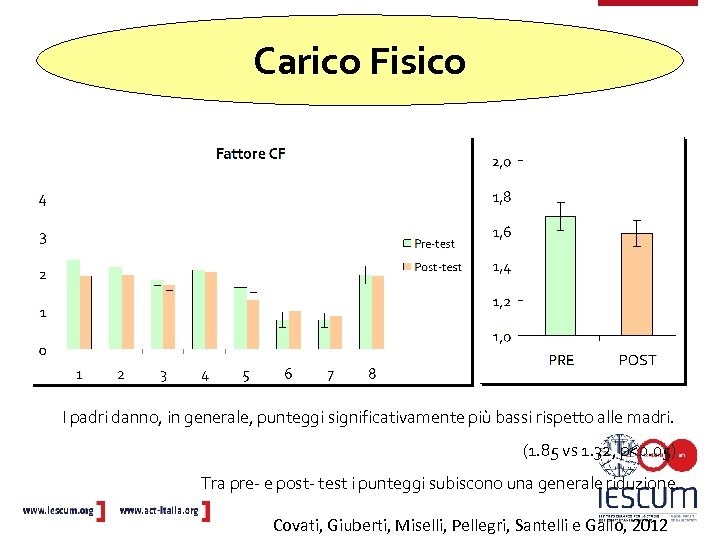 Carico Fisico I padri danno, in generale, punteggi significativamente più bassi rispetto alle madri. (1. 85 vs 1. 32, p<0. 05) Tra pre- e post- test i punteggi subiscono una generale riduzione. Covati, Giuberti, Miselli, Pellegri, Santelli e Gallo, 2012
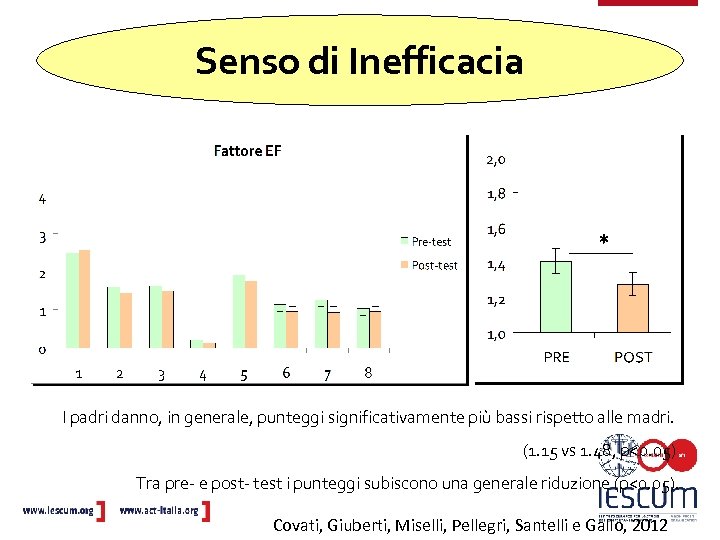 Senso di Inefficacia * I padri danno, in generale, punteggi significativamente più bassi rispetto alle madri. (1. 15 vs 1. 48, p<0. 05) Tra pre- e post- test i punteggi subiscono una generale riduzione (p<0. 05). Covati, Giuberti, Miselli, Pellegri, Santelli e Gallo, 2012
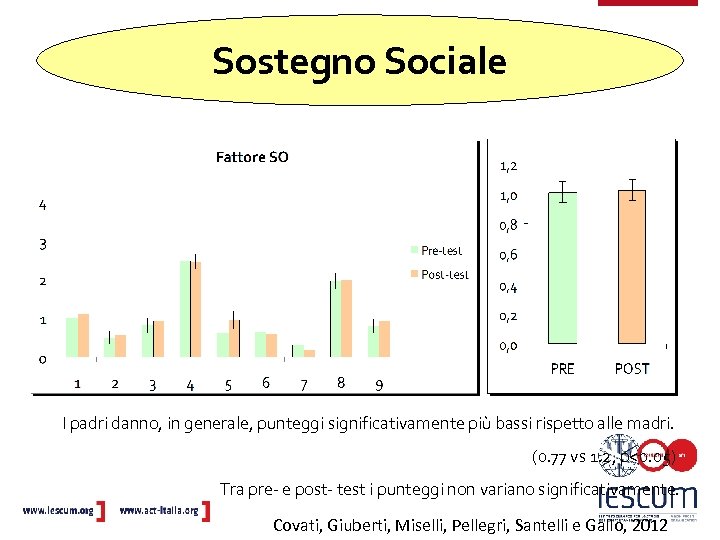 Sostegno Sociale I padri danno, in generale, punteggi significativamente più bassi rispetto alle madri. (0. 77 vs 1. 2, p<0. 05) Tra pre- e post- test i punteggi non variano significativamente. Covati, Giuberti, Miselli, Pellegri, Santelli e Gallo, 2012
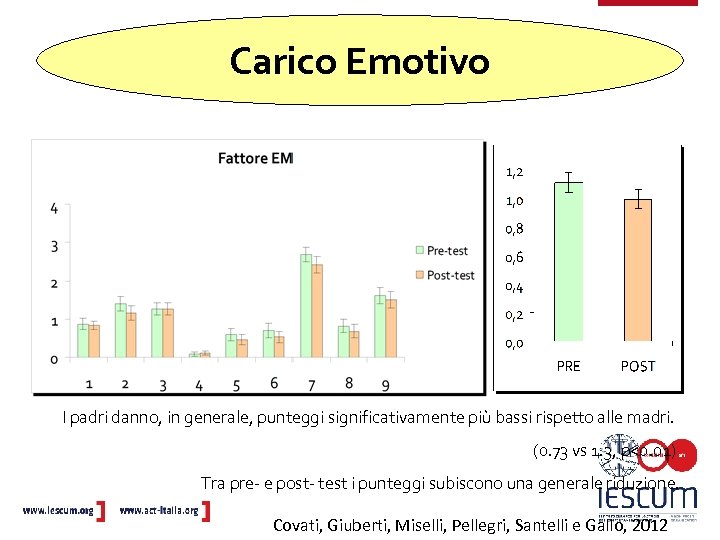 Carico Emotivo I padri danno, in generale, punteggi significativamente più bassi rispetto alle madri. (0. 73 vs 1. 3, p<0. 01) Tra pre- e post- test i punteggi subiscono una generale riduzione. Covati, Giuberti, Miselli, Pellegri, Santelli e Gallo, 2012
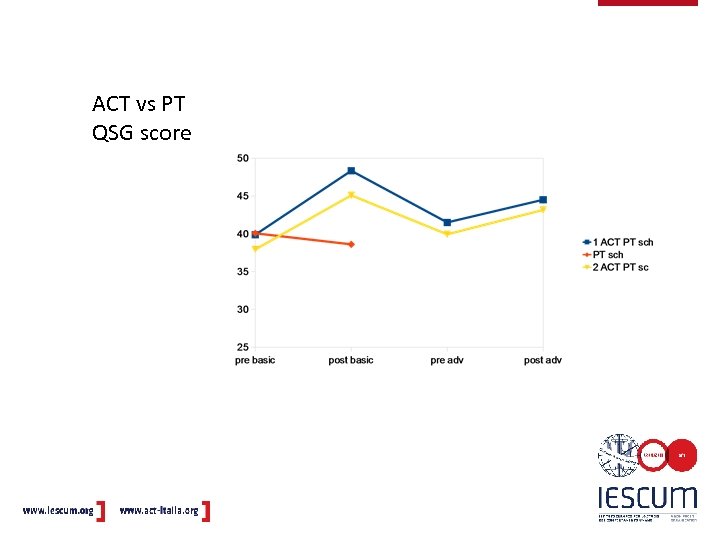 ACT vs PT QSG score
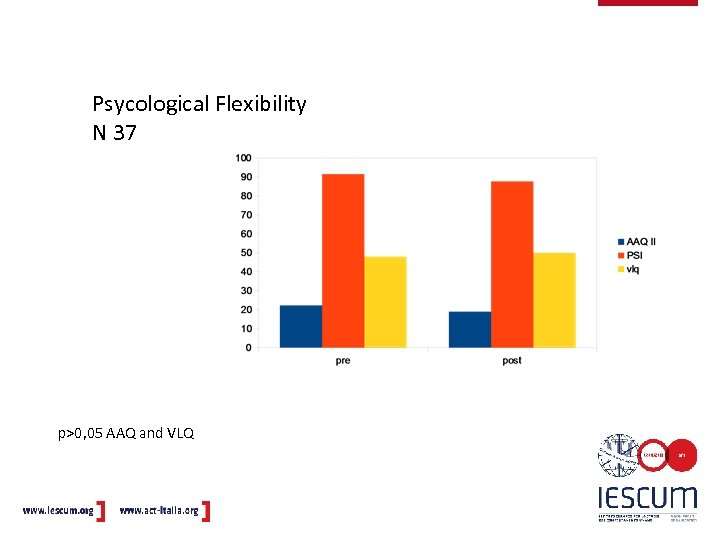 Psycological Flexibility N 37 p>0, 05 AAQ and VLQ
 THANK YOU! giovanni. miselli@gmail. com Giovanni Miselli Ph. D IESCUM, AUSL RE