 Скачать презентацию Achieving Quality in Nursing Homes Barbara Bowers Ph
87ab0c58462a1d4e6feb4c5441cda55b.ppt
- Количество слайдов: 35



Achieving Quality in Nursing Homes Barbara Bowers, Ph. D, RN, FAAN University of Wisconsin-Madison School of Nursing
The Status of Nursing Home Quality • Varying measures of quality – Deficiencies, QIs, hospitalizations • Improvements in past decade • Serious and ongoing issues • Quality of life and care; raising the bar • A long way to go……. .
Nursing Home Care Quality Problems • Unnecessary hospitalizations • Unrelieved pain • Poor end of life care • Missed change in condition • Preventable outcomes • Preventable functional decline • Poor quality of life
Reasons for Quality Problems • High turnover • Insufficient capacity • Workforce composition • Staffing Levels • Working to capacity/role clarity • Organizational culture • Technology • Ineffective transitions • Funding/resources • Orientation/Educati on
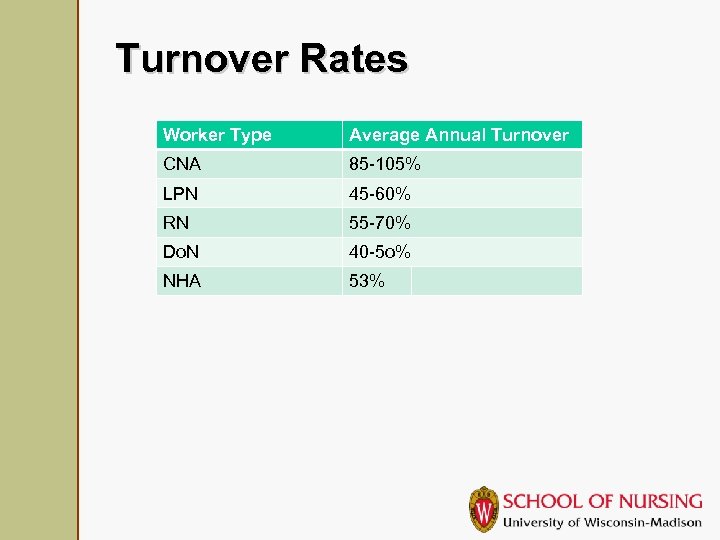
Turnover Rates Worker Type Average Annual Turnover CNA 85 -105% LPN 45 -60% RN 55 -70% Do. N 40 -5 o% NHA 53%
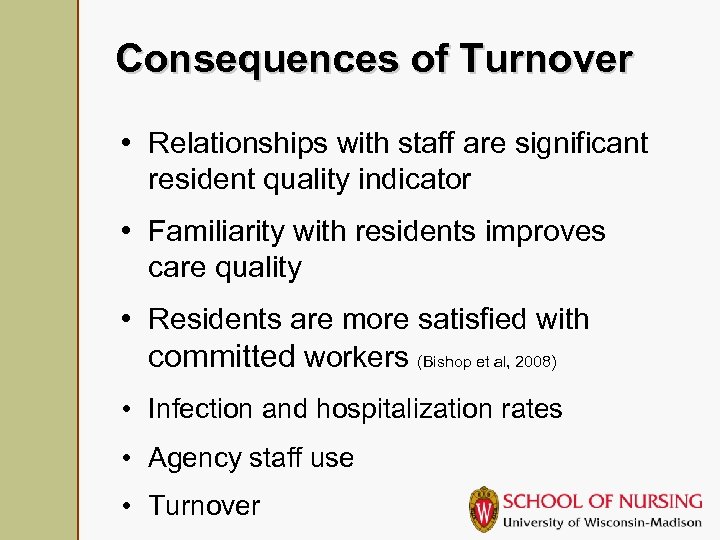
Consequences of Turnover • Relationships with staff are significant resident quality indicator • Familiarity with residents improves care quality • Residents are more satisfied with committed workers (Bishop et al, 2008) • Infection and hospitalization rates • Agency staff use • Turnover
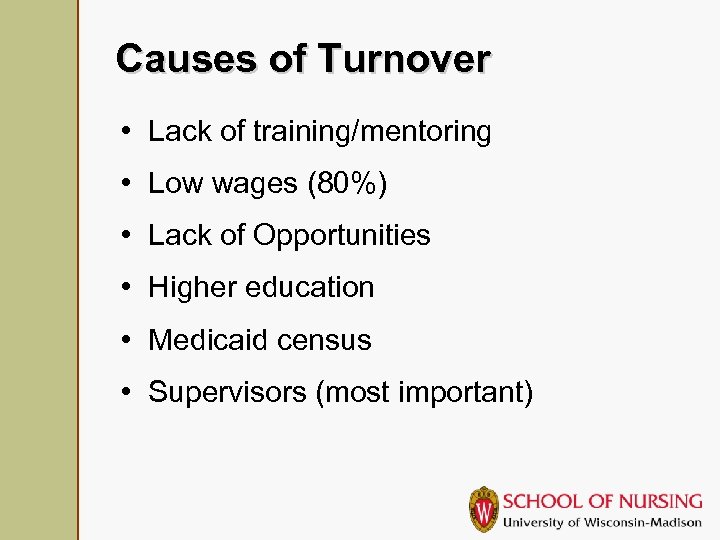
Causes of Turnover • Lack of training/mentoring • Low wages (80%) • Lack of Opportunities • Higher education • Medicaid census • Supervisors (most important)
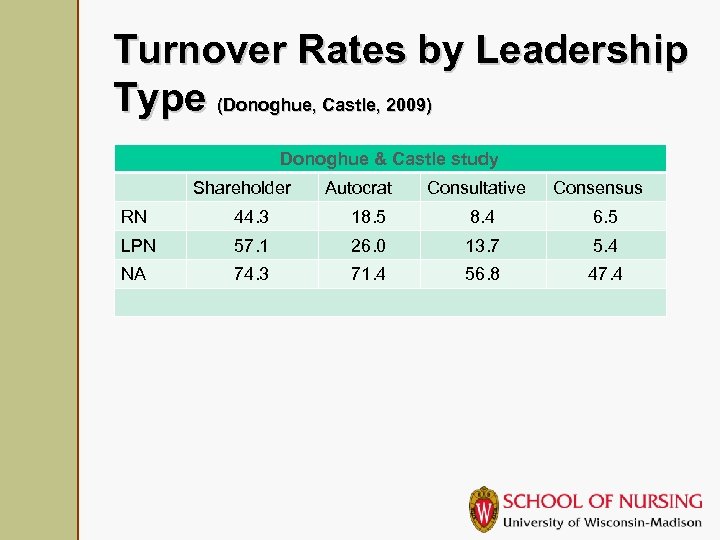
Turnover Rates by Leadership Type (Donoghue, Castle, 2009) Donoghue & Castle study Shareholder Autocrat Consultative Consensus RN 44. 3 18. 5 8. 4 6. 5 LPN 57. 1 26. 0 13. 7 5. 4 NA 74. 3 71. 4 56. 8 47. 4
The Importance of Supervisors • Impact on work stress and health of staff • Turnover, most important factor • Capacity building of staff • Implementation of new practices • Preparation to supervise
Staff Mix • Inconsistent evidence – Overall staffing related to outcomes – RNs are associated with better outcomes • Functional level/ADL • Mortality • Infections • Pressure Ulcers – Trends decreasing RNs
Advanced Practice and LTC • Decreased hospitalizations 50% • Falls • Behavioral symptoms • Activity level • Pressure ulcers • Staff development • Recommended by Io. M report
Staffing Levels • ". . . sufficient nursing staff to attain or maintain the highest practicable. . . well-being of each resident. . . " HCFA, 2001 • Many states have minimum • Minor increases in staffing levels, drop in RN • Io. M report, 90% insufficient levels
Quality areas most affected by Staffing • Independence in ADLs • Toileting • Walking • Pressure ulcers • Catheter use • UTIs
Capacity • “Adequacy is not just a number, it is capability” (Io. M, 1986) • Basic geriatric knowledge(preparation) • Communication effectiveness (families, physicians, each other) • Supervisory skills • Ongoing education • CQI experience and training
The Organization • Resources • Use of CQI • Decision making participation • Supervisor/manager support • Team work • Safety culture • Support for serious/end of life care • Learning culture
CQI in Nursing Homes • Lag behind hospitals • Adopters – Responding to regulations – Had information systems – Flexible use of personnel – Manager had CQI training – Improvement orientation – Rantz study of adopters – APNs
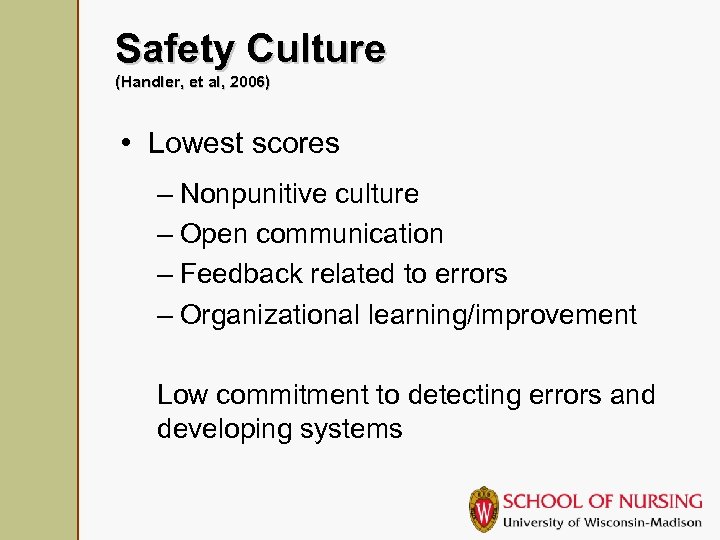
Safety Culture (Handler, et al, 2006) • Lowest scores – Nonpunitive culture – Open communication – Feedback related to errors – Organizational learning/improvement Low commitment to detecting errors and developing systems
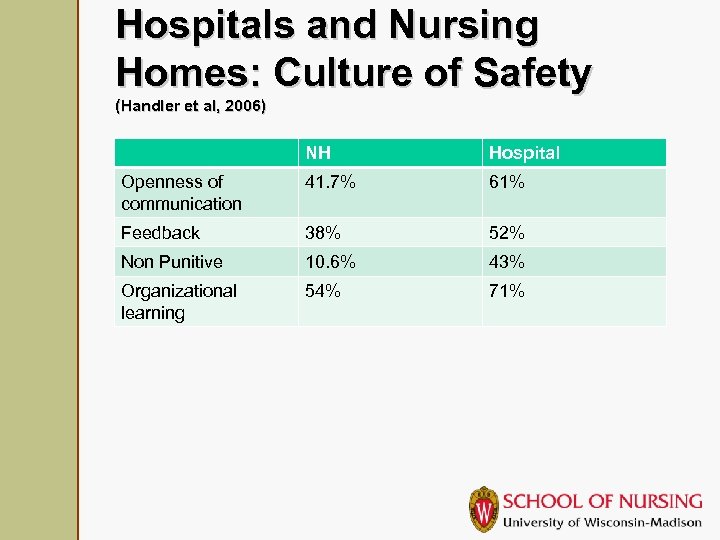
Hospitals and Nursing Homes: Culture of Safety (Handler et al, 2006) NH Hospital Openness of communication 41. 7% 61% Feedback 38% 52% Non Punitive 10. 6% 43% Organizational learning 54% 71%
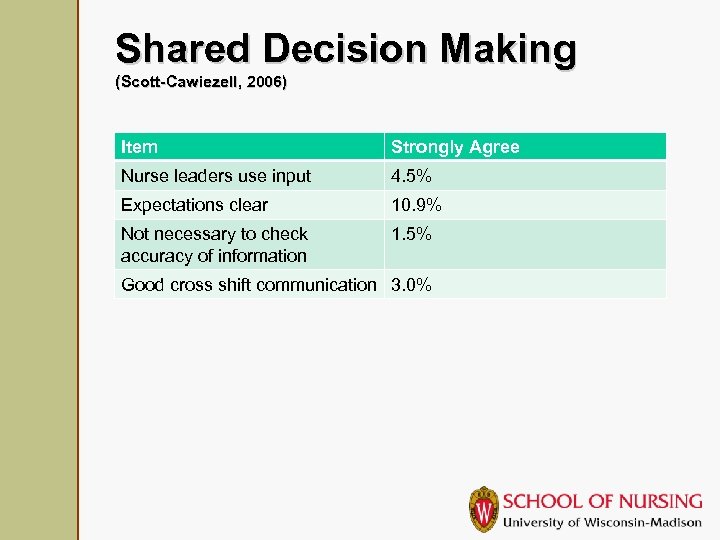
Shared Decision Making (Scott-Cawiezell, 2006) Item Strongly Agree Nurse leaders use input 4. 5% Expectations clear 10. 9% Not necessary to check accuracy of information 1. 5% Good cross shift communication 3. 0%
IMPROVING QUALITY IN NURSING HOMES
OBRA 1987 Nursing Home Reform Act • Quality of life • Maintain and improve functioning • Resident assessment and care plan • Freedom from restraint • CNA training and certification • Resident councils • Inspections and new ‘remedies’
Io. M, 2001 • Increase RN cover to 24 hours • Adjustment of pay to support RN hours • Use of geriatric specialists in direct care and leadership positions • Enhanced training for CNAs • Do. N education
Culture Change in Long Term Care • Focus of initiatives – – – Person centered Relationships Environment Clinical care Worker empowerment • Pioneer network 1997 • Eden Alternative 1997 • Wellspring Alliance 1998 • Action Pact • Green House
Person Centered Care • Resident choice and autonomy – Time to wake – Time to bed – What, where, when and with whom to have a meal – Leaving the building – Amenities – Caregivers – Activities
Relationships • Relationships with staff (CA) • Relationships with other residents • Continuation of past relationships – Family – Friends
Environment • Community • Relationship fostering • Home like environment • Neighborhood • Small house
Empowering Direct Care Staff • Prevent turnover • Decision maker closest to the resident • Participant in decisions about care • Self directing in most activities – Need skill development to function effectively
Pioneer Network • Group of nursing homes with common values • Elder at center • Relationship focused • More home like • Many models of care • Strong and expanding movement
Eden Alternative • Bill Thomas • Bring life into the home • Warmth and caring • Improved clinical outcomes
Wellspring • 11 nursing homes in Wisconsin • Improved clinical care • Advanced practice nurse consultants • In house champion • Empowered staff • Clinical teams • Workshops on clinical topics
Green House • Small house • Home environment • Guide supervising direct care staff • Self managed teams • Nurse consultant • Family meals • Private rooms and baths • Workers assigned to house
Culture Change and Quality • Staff turnover down • Absenteeism down • Familiarity increased (GH example) • Collaboration between nurse and direct care staff increased • Quality of life, choices up • Meals more social/weight gain • More family visiting • Less ADL decline
Improving Long Term Care • Blend of quality of life and care quality • Appropriate skills of staff • The right mix of providers • Leadership/supervisory skills • New job skills for direct care staff • Educational preparation of new nurses
Advancing Excellence • National Campaign • Wide range of stakeholders • Local Area Networks for Excellence • Quality improvement goals and support • 41% of Nursing homes
Advancing Excellence Goals • Reduce turnover • Increase consistent assignment • Decrease restraint use • Improve pain management • Improve advance care planning • Improve resident and staff satisfaction • Improve staff satisfaction
Скачать презентацию Achieving Quality in Nursing Homes Barbara Bowers Ph
87ab0c58462a1d4e6feb4c5441cda55b.ppt