Скачать презентацию Acetaminophen Toxicity Diane P Calello MD Department of
e238f93e26e2e6fb244c65988257bcd7.ppt
- Количество слайдов: 48
 Acetaminophen Toxicity Diane P. Calello MD Department of Pediatrics and Emergency Medicine Robert Wood Johnson Medical School – UMDNJ Staff Toxicologist, NJ Poison Education and Information Systems
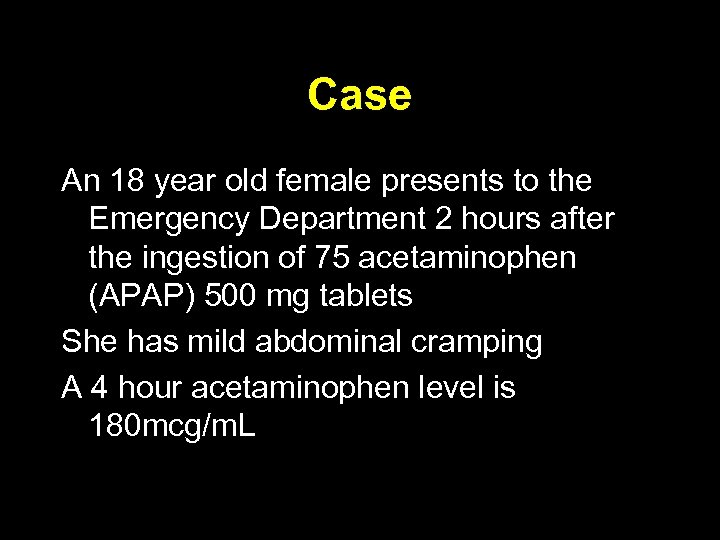 Case An 18 year old female presents to the Emergency Department 2 hours after the ingestion of 75 acetaminophen (APAP) 500 mg tablets She has mild abdominal cramping A 4 hour acetaminophen level is 180 mcg/m. L
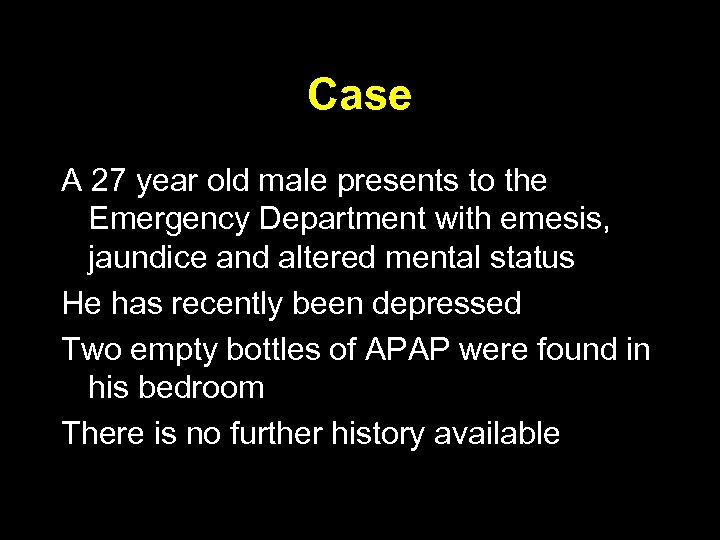 Case A 27 year old male presents to the Emergency Department with emesis, jaundice and altered mental status He has recently been depressed Two empty bottles of APAP were found in his bedroom There is no further history available
 Case A 28 year old male, with a PMH for hepatitis C and alcohol abuse, presents to the ED with RUQ pain and emesis He has been taking supratherapeutic doses of APAP His AST and ALT are 360 u/L and 489 u/L respectively APAP level is 45 mcg/m. L
 Objectives Understand basic pharmacology, metabolism, and mechanism of acetaminophen toxicity Describe the clinical features associated with APAP toxicity Discuss the principles of treatment: • Rationale • Indications • Timing
 Frequency of use Most commonly used analgesic • Present in hundreds of OTC preparations Over 10, 000 calls/year to poison centers Most common annual cause of: • pharmaceutical poisoning death • acute liver failure in US
 Pharmacology Analgesic, antipyretic with weak antiinflammatory properties Analgesia at serum APAP concentration of 10 mcg/m. L • Central inhibition of COX-2 and prostaglandin synthase Antipyresis at 4 -18 mcg/m. L • CNS inhibition of PGE 2
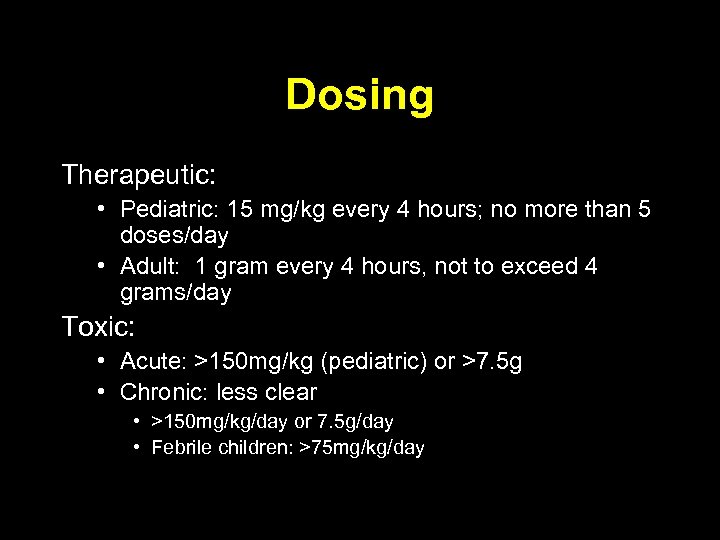 Dosing Therapeutic: • Pediatric: 15 mg/kg every 4 hours; no more than 5 doses/day • Adult: 1 gram every 4 hours, not to exceed 4 grams/day Toxic: • Acute: >150 mg/kg (pediatric) or >7. 5 g • Chronic: less clear • >150 mg/kg/day or 7. 5 g/day • Febrile children: >75 mg/kg/day
 Pediatrics Children can tolerate a higher level of acetaminophen without becoming toxic Misadventures in dosing is more common due to the different liquid pediatric preparations Febrile children are at greater risk of acetaminophen toxicity
 Toxicity Little to no toxicity in therapeutic dosing With overdose: • Hepatic toxicity progressing to fulminant hepatic failure, encephalopathy and death within days • Other systemic effects
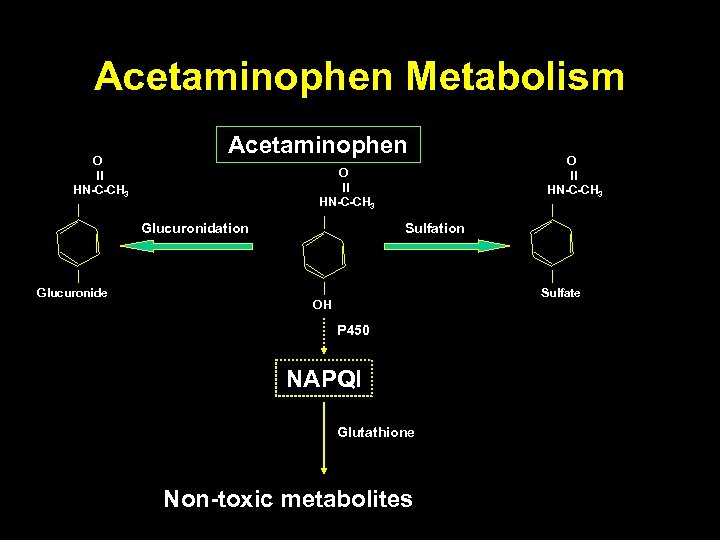 Acetaminophen Metabolism O ll HN-C-CH 3 Acetaminophen O ll HN-C-CH 3 Glucuronidation Glucuronide O ll HN-C-CH 3 Sulfation Sulfate OH P 450 NAPQI Glutathione Non-toxic metabolites
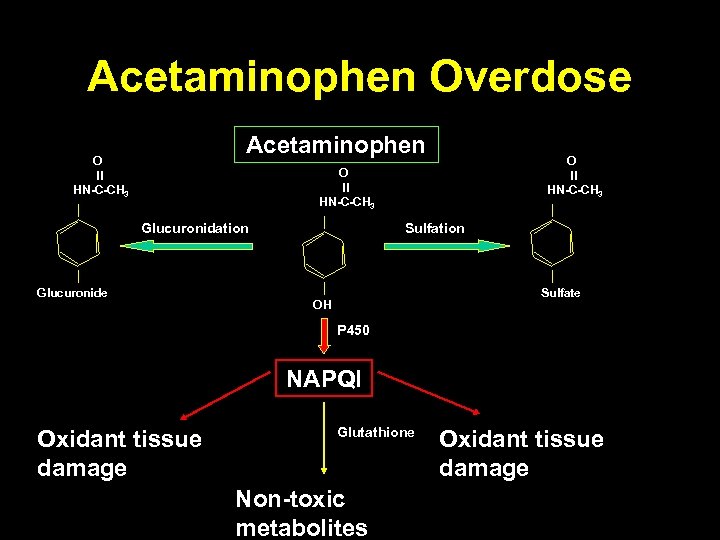 Acetaminophen Overdose Acetaminophen O ll HN-C-CH 3 Glucuronidation Glucuronide Sulfation Sulfate OH P 450 NAPQI Oxidant tissue damage Glutathione Non-toxic metabolites Oxidant tissue damage
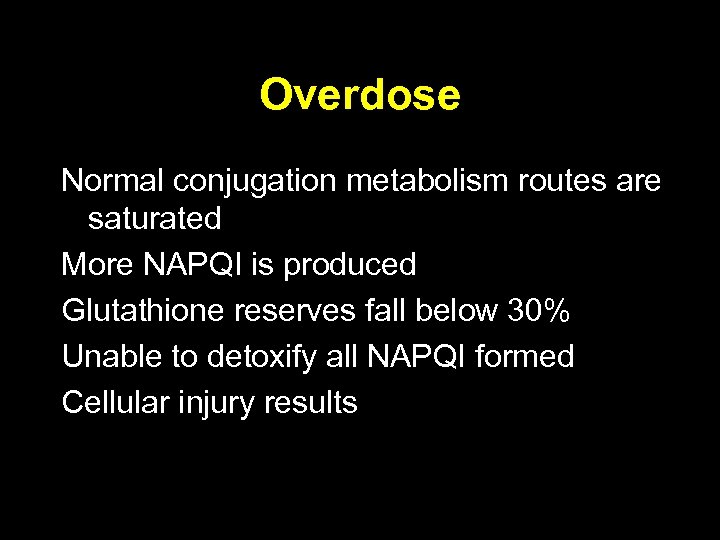 Overdose Normal conjugation metabolism routes are saturated More NAPQI is produced Glutathione reserves fall below 30% Unable to detoxify all NAPQI formed Cellular injury results
 NAPQI Covalently binds cellular proteins Alters cell function Results in cell injury and death Detoxified by glutathione
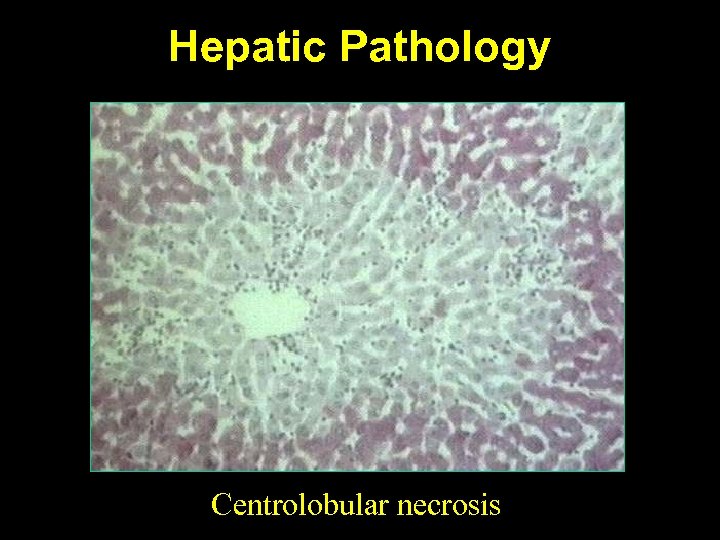 Hepatic Pathology Centrolobular necrosis
 Phases of Toxicity
 Phase I 0 to 24 hours Usually asymptomatic • “silent overdose”: • Importance of obtaining level Nausea, vomiting, abdominal pain
 Phase II 24 -72 hours Resolution of initial physical symptoms • May develop right upper quadrant pain Evolving liver injury • Elevation of LFT, PT, Bilirubin
 Phase III 3 to 4 days Nausea, vomiting, and abdominal pain reoccur Maximal manifestation of hepatic injury. AST/ALT in 10, 000 s Coagulopathy, hepatic necrosis, acidosis, encephalopathy Coma and anuria precede death
 Phase IV Beyond 4 days Recovery phase LFTs will decrease, but bilirubin may remain elevated for some time May take several weeks for LFTs to normalize
 Other Overdose Sequelae Renal toxicity • Occasionally renal failure can occur from massive overdoses • Possibly 2° to P 450 activity in the kidney Pancreatitis Pneumonitis
 Management Determine if acetaminophen ingestion occurred Determine if ingestion requires treatment Initiate appropriate treatment
 Case An 18 year old female presents to the Emergency Department 2 hours after the ingestion of 75 acetaminophen (APAP) 500 mg tablets She has mild abdominal cramping A 4 hour acetaminophen level is 180 mcg/m. L
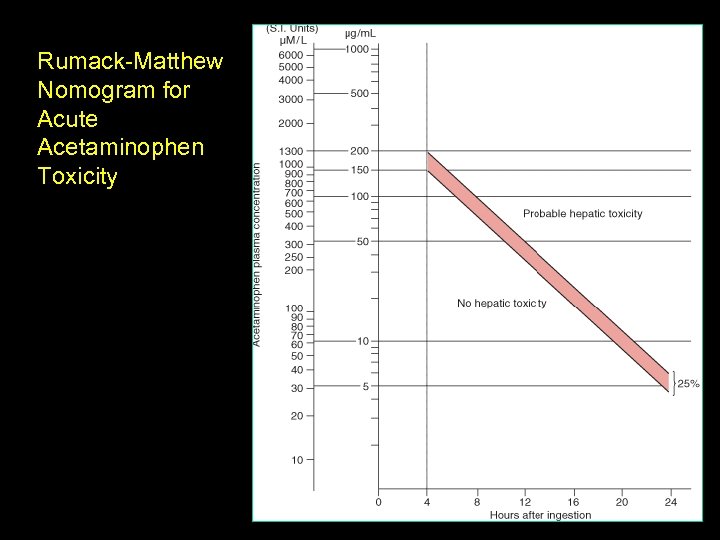 Rumack-Matthew Nomogram for Acute Acetaminophen Toxicity
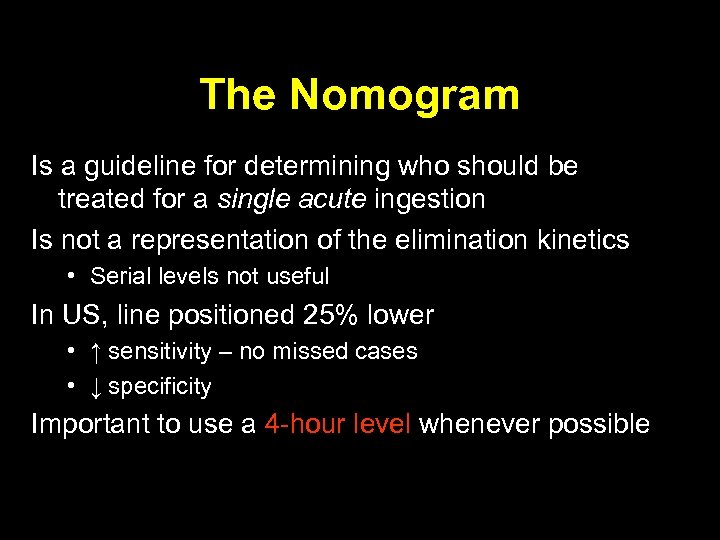 The Nomogram Is a guideline for determining who should be treated for a single acute ingestion Is not a representation of the elimination kinetics • Serial levels not useful In US, line positioned 25% lower • ↑ sensitivity – no missed cases • ↓ specificity Important to use a 4 -hour level whenever possible
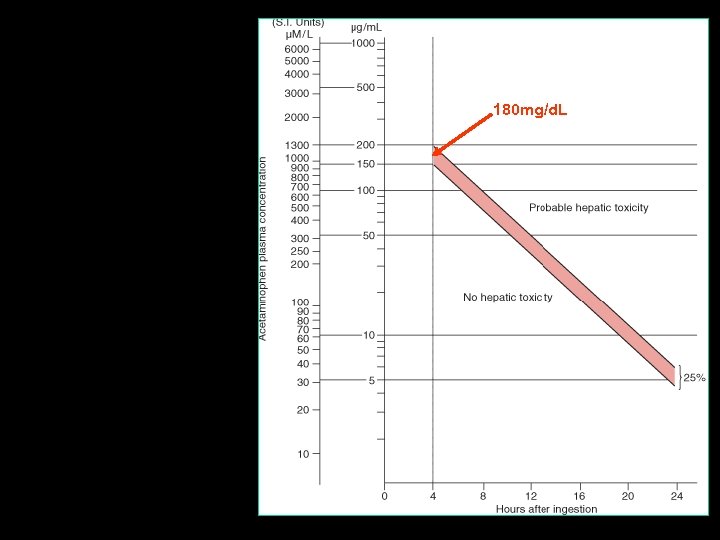 180 mg/d. L
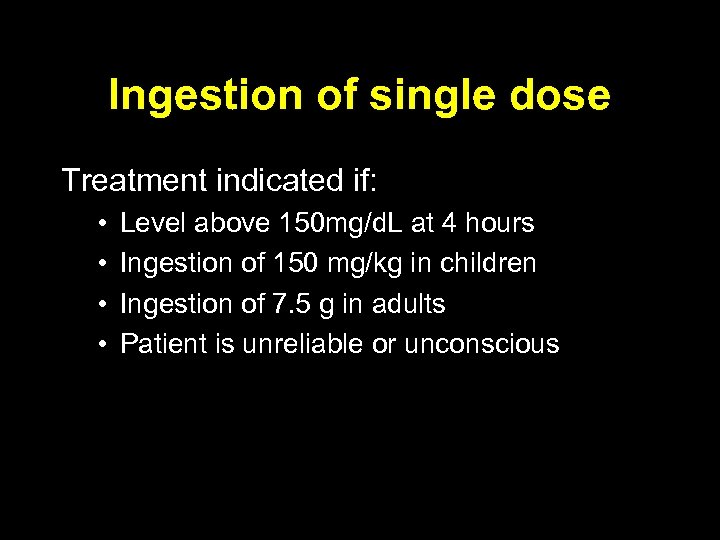 Ingestion of single dose Treatment indicated if: • • Level above 150 mg/d. L at 4 hours Ingestion of 150 mg/kg in children Ingestion of 7. 5 g in adults Patient is unreliable or unconscious
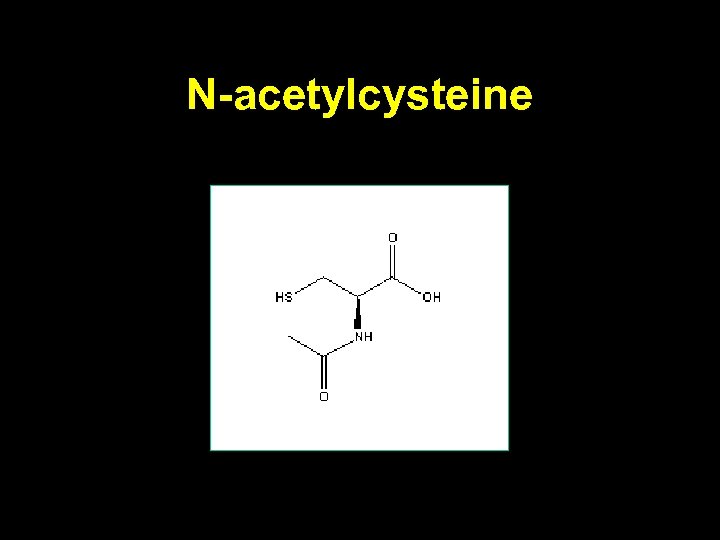 N-acetylcysteine
 Insert my 2 nd APAP met slide – NAC
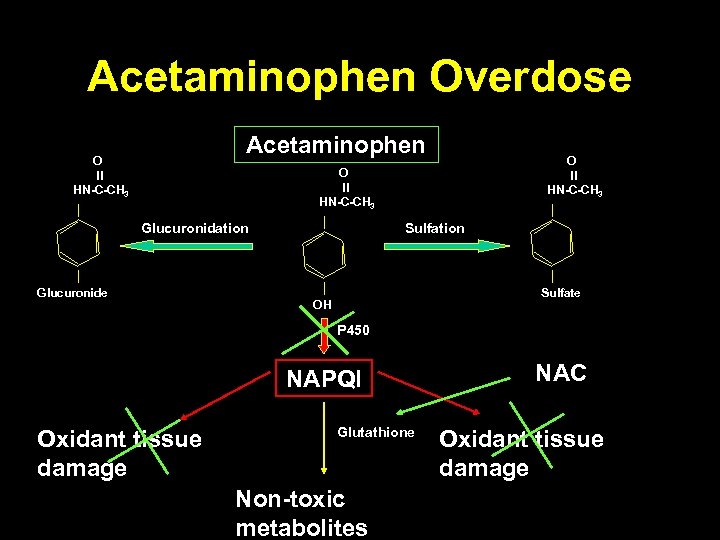 Acetaminophen Overdose Acetaminophen O ll HN-C-CH 3 Glucuronidation Glucuronide Sulfation Sulfate OH P 450 NAPQI Oxidant tissue damage Glutathione Non-toxic metabolites NAC Oxidant tissue damage
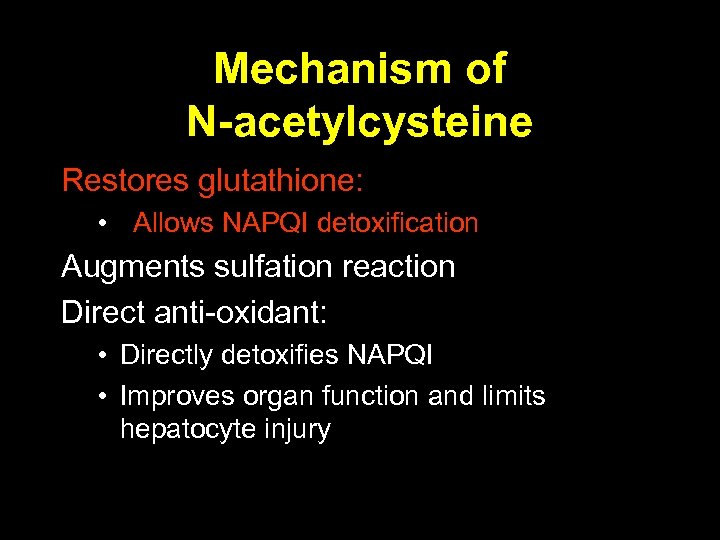 Mechanism of N-acetylcysteine Restores glutathione: • Allows NAPQI detoxification Augments sulfation reaction Direct anti-oxidant: • Directly detoxifies NAPQI • Improves organ function and limits hepatocyte injury
 Case A 27 year old male presents to the Emergency Department with emesis, jaundice and altered mental status He has recently been depressed Two empty bottles of APAP were found in his bedroom There is no further history available
 Unknown ingestion time Treat if any sign of liver injury even without history of APAP ingestion Detectable APAP level in altered patient If AST/ALT are normal • And APAP is less than 10 g/ml • Do not treat • Narrow window of risk
 Laboratory Assessment If patient is sick, one should obtain LFTs, PT, electrolytes, BUN/Cr, amylase, lipase and glucose • Late presenting sick patients will not have detectable acetaminophen levels • Diagnosis can be more difficult • They will require treatment
 Case A 28 year old male, with a PMH for hepatitis C and alcohol abuse, presents to the ED with RUQ pain and emesis He has been taking supratherapeutic doses of APAP His AST and ALT are 360 u/L and 489 u/L respectively APAP level is 45 mcg/m. L
 Repeat or Chronic ingestion Nomogram does not apply Suggested threshold: • 150 mg/kg per 24 hours in children • 7. 5 g per 24 hour period in adults Obtain acetaminophen level, AST, ALT, PT, BUN/Cr and electrolytes
 Repeat or chronic ingestion Patients who should be treated (similar to unknown ingestion time): • Signs of hepatotoxicity (elevated AST) • APAP level of 25 mcg/ml or greater • Symptomatic “Gray area”: APAP 11 -25 mcg/ml and normal AST in asymptomatic patient
 Ethanol And Acetaminophen Ethanol is metabolized to some extent by P 450 system Chronic ethanol ingestion causes increase in 2 E 1 P 450 activity • Acute acetaminophen ingestion is treated the same in patients who consume alcohol chronically
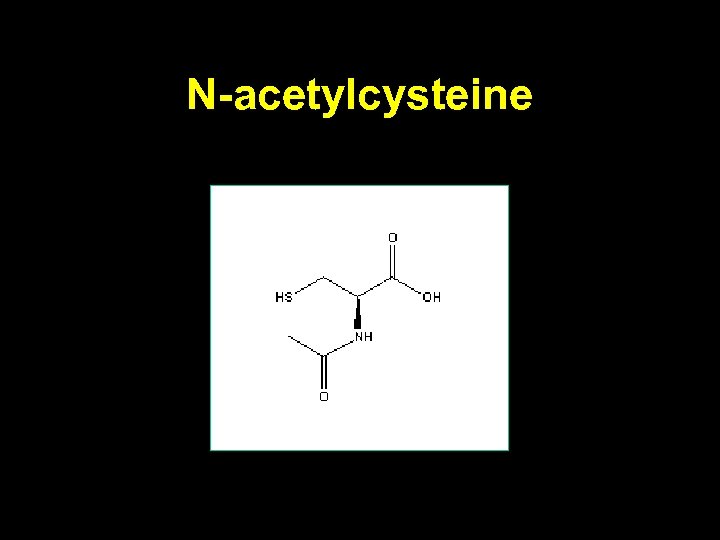 N-acetylcysteine
 N-acetylcysteine Greatest benefit if administered within 8 hours: • No clinical difference within the first 8 hours • All patients that have a normal AST at time of NAC initiation survive • Treatment within 8 hours of single ingestion completely prevents liver failure “Too Late” does not exist • Improved mortality even in patients with hepatic failure when initiated 2 -3 days after ingestion
 Oral N-acetylcysteine Oral loading dose is 140 mg/kg • Dilute 4: 1 with palatable liquid • Repeat doses are 70 mg/kg every 4 hours • Total of 17 doses for total of 72 hours Antiemetic treatment may be required • NAC is very foul “rotten egg” liquid
 IV N-acetylcysteine Can cause anaphylactoid reaction • Rash, hypotension, bronchospasm and death • Rate related; rare when given slowly Higher, continuous blood levels obtained then oral NAC Bolus administered first, then constant infusion rate may be given
 IV vs. Oral Both have their advantages and disadvantages Each may be more appropriate in certain settings No side by side studies to date Conclusions of relative benefits are speculative
 Case An 18 year old female presents to the Emergency Department 2 hours after the ingestion of 75 acetaminophen (APAP) 500 mg tablets She has mild abdominal cramping A 4 hour acetaminophen level is 180 mcg/m. L
 Case A 27 year old male presents to the Emergency Department with emesis, jaundice and an altered mental status He has recently been depressed Two empty bottles of APAP were found in his bedroom There is no further history available
 Case A 28 year old male, with a PMH for hepatitis C and alcohol abuse, presents to the ED with RUQ pain and emesis He has been taking supratherapeutic doses of APAP His AST and ALT are 360 u/L and 489 u/L respectively APAP level is 45 mcg/m. L
 Take-Home Points “Rule of 150’s” • >150 mg/kg = toxic dose • 7. 5 g in adults • >150 mg/d. L at 4 hours NAPQI and NAC: what they do Nomogram for single acute ingestions • Very conservative but safe Treatment: indications, timing