 Скачать презентацию Accessible voice services and systems Technical trends Jim
8b9aa06e8ad07e018becfd685109ca34.ppt
- Количество слайдов: 20



Accessible voice services and systems: Technical trends Jim Tobias tobias@inclusive. com 732. 441. 0831 v/tty 1
Introduction n Main trends Messaging growth and centrality u Expanding range of products and features u PC-and-software replacing user CPE u Convergence and unified messaging u IP telephony u n All have access implications Data from MMTA industry survey on CT (http: //img. cmpnet. com/telecomlibrary/content/mmta 2000. pdf)
Messaging growth and centrality - 1 n Explosive growth 48% of vendors have been active 1 year or less u 38% growth in user organization expenditures u financial services IVR use grew 67% in 1998; customer satisfaction with calls dropped from 87% to 80% - TARP 10/99 u n Residential (mostly IVR and AA) access to home services: ordering, delivery, banking, schools, government, etc. u “improved contact with. . . customers” is second highest rated reason for user organizations u
Messaging growth and centrality - 2 n Employment 33% of user organizations have voice mail now; 87% expect to within 2 years u “increased worker productivity” is top rated reason for user organizations u some jobs have high messaging content u § § § call centers (sales & support) – 3% of US workforce by 2004 professions any large organization
Accessibility implications Impact on social integration, commercial opportunities n Critical employability issue n
Expanding range of products and features n n Product ecology is exploding Maturity refinement? Interoperability with embedded applications Standards adherence to standards is greatest concern of vendors u end users rate its importance 95% u
Accessibility implications n n Profusion means there is usually at least one solution out there BUT information task becomes unmanageable purchasing decisions are complex u vendors unaware of access value of their own products u end users and system administrators also unaware u n Few standards address accessibility
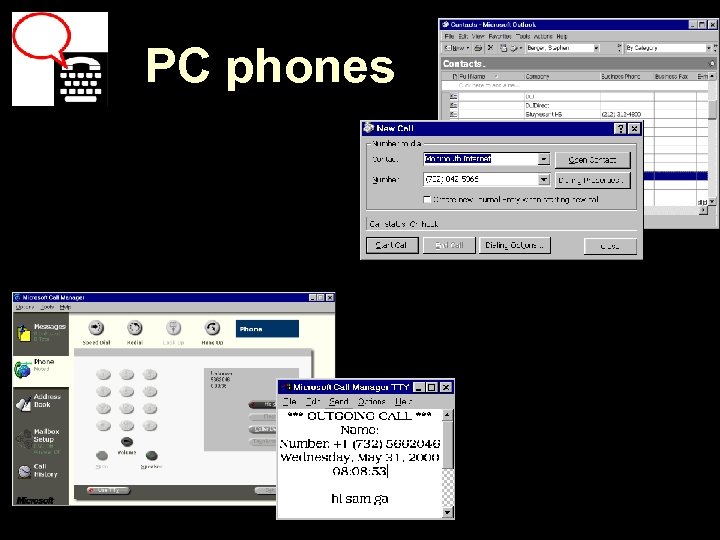
PC-and –software replacing user CPE n From simple POTS dialer utilities to proprietary phone simulators u TAPI and voice modems, other tools u integration with contact management software
PC phones
Accessibility implications n Messaging access depends on computer access u workplace computer access must be provided anyway Reduced need for specialized CPE and related equipment n TTY modems (desktop and network) n
Convergence and unified messaging n At user’s end PC applications can show a single mailbox, with cross-media notification and presentation u user can switch media or arrange for transcription u n At provider’s end one server for all media u identification of user’s media preference u
Demo of Call. Xpress
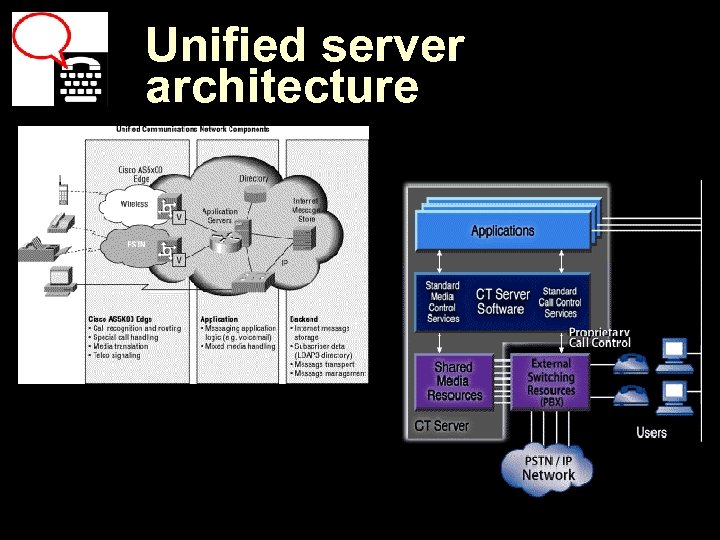
Unified server architecture
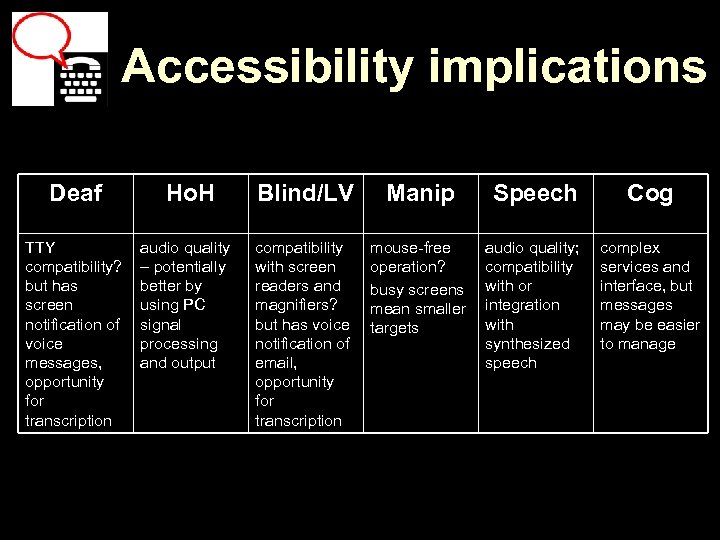
Accessibility implications Deaf TTY compatibility? but has screen notification of voice messages, opportunity for transcription Ho. H audio quality – potentially better by using PC signal processing and output Blind/LV Manip Speech Cog compatibility with screen readers and magnifiers? but has voice notification of email, opportunity for transcription mouse-free operation? busy screens mean smaller targets audio quality; compatibility with or integration with synthesized speech complex services and interface, but messages may be easier to manage
IP telephony n n Rapid growth: 9% of user organizations have it now; 64% expect to within 2 years Capable of simultaneous voice, video, shared application, and text u n can change features during session Messaging apps available for client or server (JFax, e. Voice, etc. )
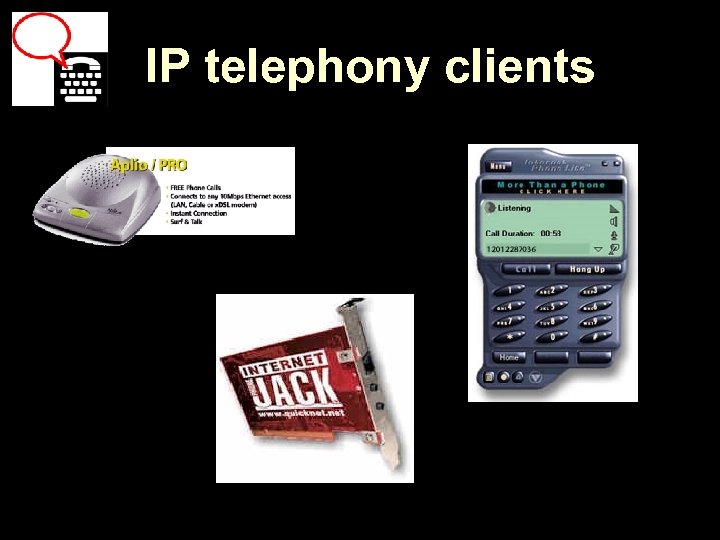
IP telephony clients
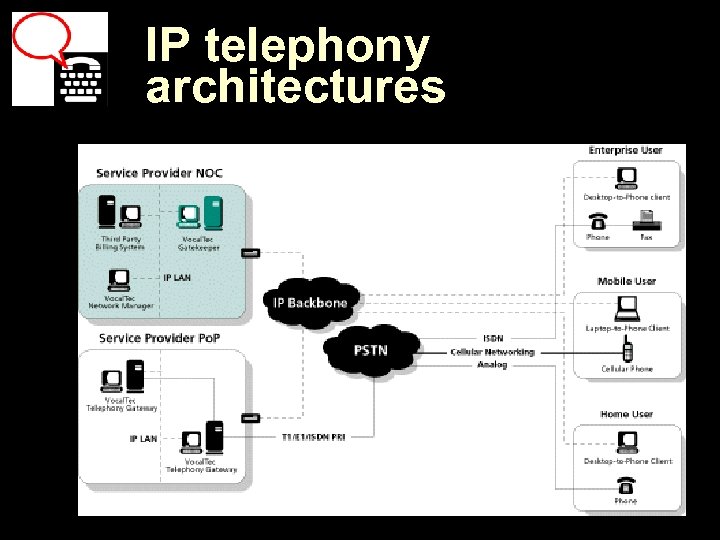
IP telephony architectures
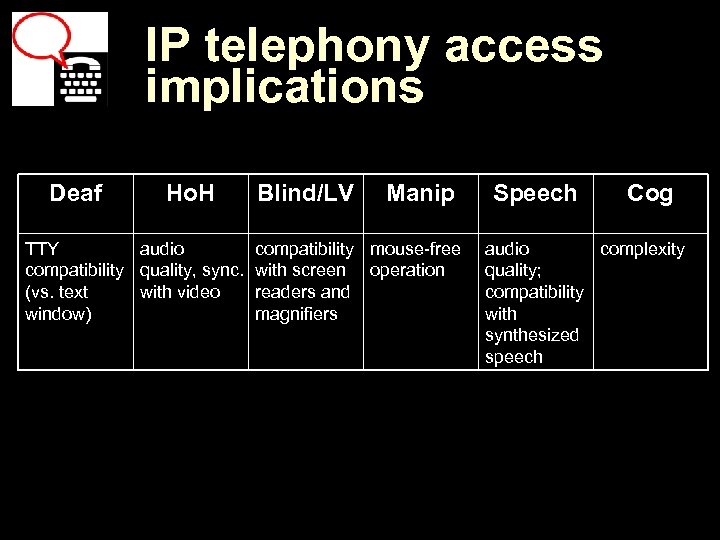
IP telephony access implications Deaf Ho. H Blind/LV Manip TTY audio compatibility mouse-free compatibility quality, sync. with screen operation (vs. text with video readers and window) magnifiers Speech Cog audio complexity quality; compatibility with synthesized speech
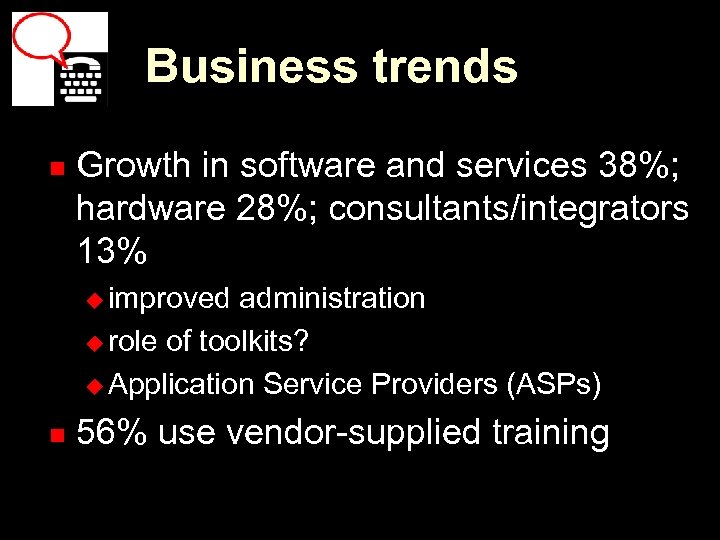
Business trends n Growth in software and services 38%; hardware 28%; consultants/integrators 13% u improved administration u role of toolkits? u Application Service Providers (ASPs) n 56% use vendor-supplied training
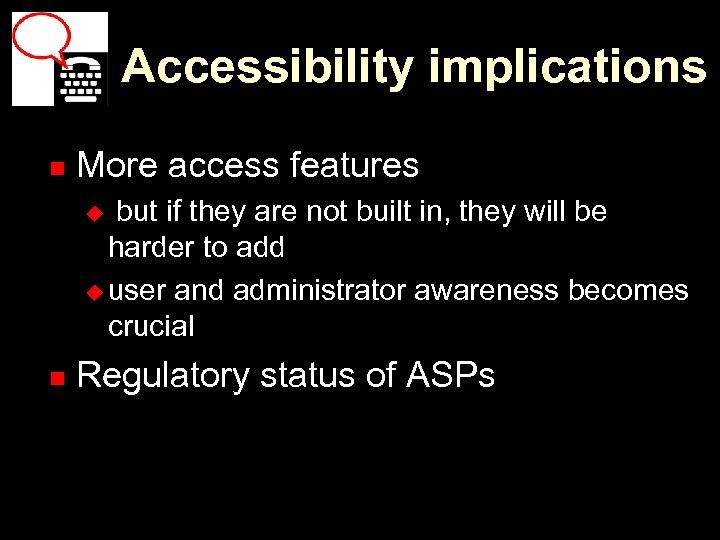
Accessibility implications n More access features but if they are not built in, they will be harder to add u user and administrator awareness becomes crucial u n Regulatory status of ASPs
Скачать презентацию Accessible voice services and systems Technical trends Jim
8b9aa06e8ad07e018becfd685109ca34.ppt