


 Скачать презентацию Access and Analysis of Worldwide Supply Chain Data
dc9bc8e4b58f134e9ff2d6b6b1cf7bb4.ppt
- Количество слайдов: 15
 Access and Analysis of Worldwide Supply Chain Data Methods for Cost Savings and Value Chain Optimization Jim Duarte Director, Strategic Business Analysis Anheuser Busch, Inc. Copyright © 2005, SAS Institute Inc. All rights reserved. Richard Foley Product Manager SAP Integration, SAS
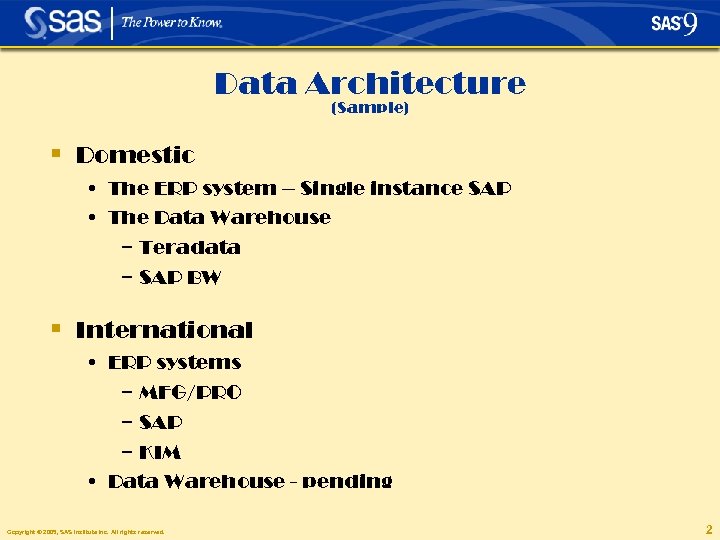 Data Architecture (Sample) § Domestic • The ERP system – Single instance SAP • The Data Warehouse − Teradata − SAP BW § International • ERP systems − MFG/PRO − SAP − KIM • Data Warehouse - pending Copyright © 2005, SAS Institute Inc. All rights reserved. 2
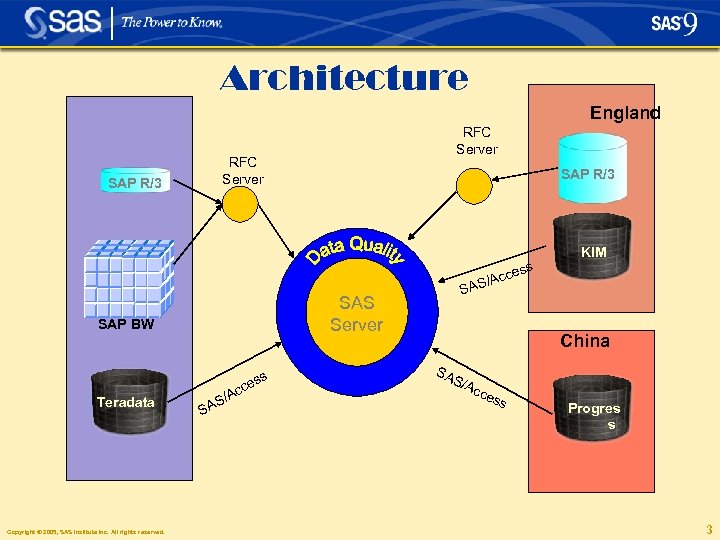 Architecture England SAP R/3 RFC Server SAP R/3 KIM ess s es Copyright © 2005, SAS Institute Inc. All rights reserved. S SAS Server SAP BW Teradata cc S/A A cc S/A SA China SA S /Ac ces s Progres s 3
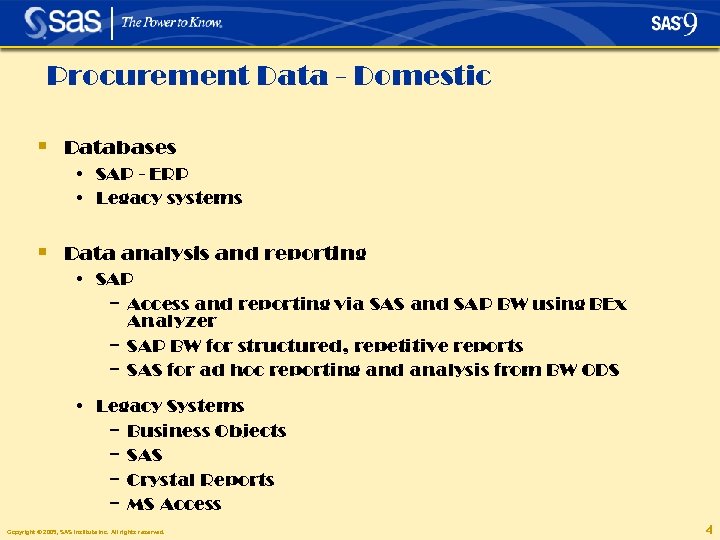 Procurement Data - Domestic § Databases • SAP - ERP • Legacy systems § Data analysis and reporting • SAP − Access and reporting via SAS and SAP BW using BEx Analyzer − SAP BW for structured, repetitive reports − SAS for ad hoc reporting and analysis from BW ODS • Legacy Systems − Business Objects − SAS − Crystal Reports − MS Access Copyright © 2005, SAS Institute Inc. All rights reserved. 4
 Procurement Data - International § Databases • SAP (Stand-alone instance) • MFG/PRO • KIM § Data analysis and reporting • SAP − ABAP Reports – Local − SAS – U. S. • MFG/PRO − COGNOS - Local − SAS – U. S. • KIM − SAS – U. S. − Unknown reporting tool - Local Copyright © 2005, SAS Institute Inc. All rights reserved. 5
 Information for Management § What do we buy? § Who do we buy it from? § Who bought it? § How much did we spend? § How did we pay for it? Copyright © 2005, SAS Institute Inc. All rights reserved. 6
 What do we buy? Keys to Getting the Answers § Keep the Material Master file up to date • Make changes and additions in a timely fashion • Use standard coding for consistency § Keep the Material Master accurate • Remove inconsistency in text records • “What” vs. “Where used” § Keep the Material Master organized • Find commonalities between businesses • Clarify differences between businesses Copyright © 2005, SAS Institute Inc. All rights reserved. 7
 Who do we buy it from? Keys to Getting the Answers § Keep the Vendor Master file up to date • Make changes and additions in a timely fashion • Use standard coding for consistency § Keep the Vendor Master accurate • Identify country of origin • “Purchased from” vs. “Remit to” § Keep the Vendor Master organized • Find commonalities between businesses • Clarify differences between businesses Copyright © 2005, SAS Institute Inc. All rights reserved. 8
 Who bought it? Keys to Getting the Answers § Finding the purchasing organization and purchaser • PO? • Invoice? • Clearing document? § Bought on behalf of… • Centralized purchasing • Local purchasing Copyright © 2005, SAS Institute Inc. All rights reserved. 9
 How much did we spend? Keys to Getting the Answers § By Vendor • Negotiating leverage • Parent/Child relationships • Multi-national purchasing § By Commodity • Reverse auction opportunities • Commonalities across businesses Copyright © 2005, SAS Institute Inc. All rights reserved. 10
 How did we pay for it? Keys to Getting the Answers § How many hands touched the transaction? § § § EDI EFT Paper check Procurement card Expense credit card Copyright © 2005, SAS Institute Inc. All rights reserved. 11
 Supply Chain § Manufacturing schedules and procurement • Quantity changes • Delivery changes § Order changes and procurement • Frequency • Timing Copyright © 2005, SAS Institute Inc. All rights reserved. 12
 Analytical Intelligence § Box and whisker plots • Claims data • Shipment data § Trend charts • Costs • Material movement comparisons § Correlation analysis Copyright © 2005, SAS Institute Inc. All rights reserved. 13
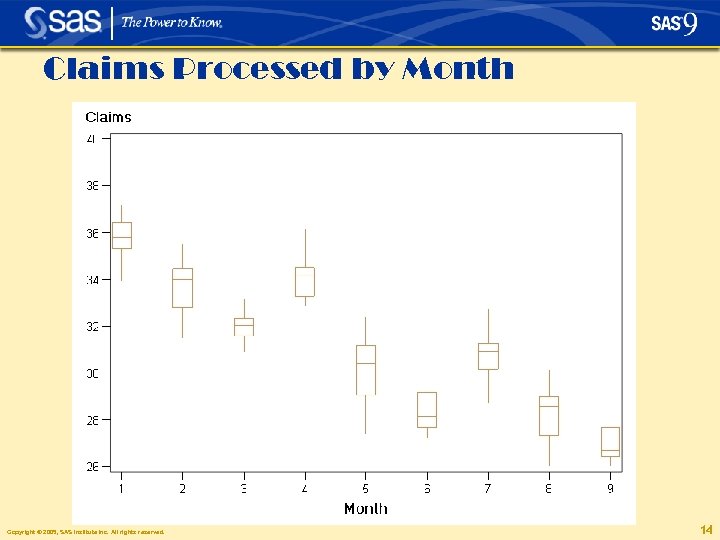 Claims Processed by Month Copyright © 2005, SAS Institute Inc. All rights reserved. 14
 Copyright © 2005, SAS Institute Inc. All rights reserved. 15