 Скачать презентацию ACCEPTANCE ELEMENT 2 DEFINITION Section 2 b
a5c5fa9bf0f1344cde35794ca7e00b03.ppt
- Количество слайдов: 12



ACCEPTANCE ELEMENT 2
DEFINITION Section 2 (b) Contract Act 1950 “When the person to whom the proposal is made signifies his assent threto, the proposal is said to be accepted: a proposal, when accepted, becomes a promise. ”
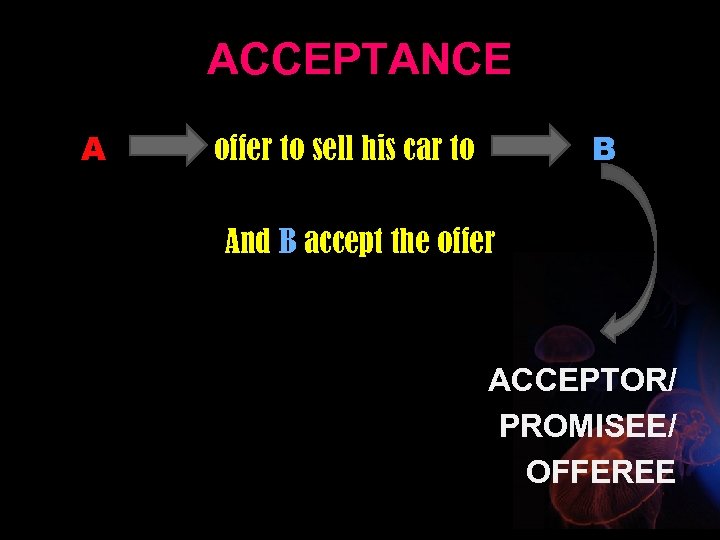
ACCEPTANCE A B offer to sell his car to And B accept the offer ACCEPTOR/ PROMISEE/ OFFEREE
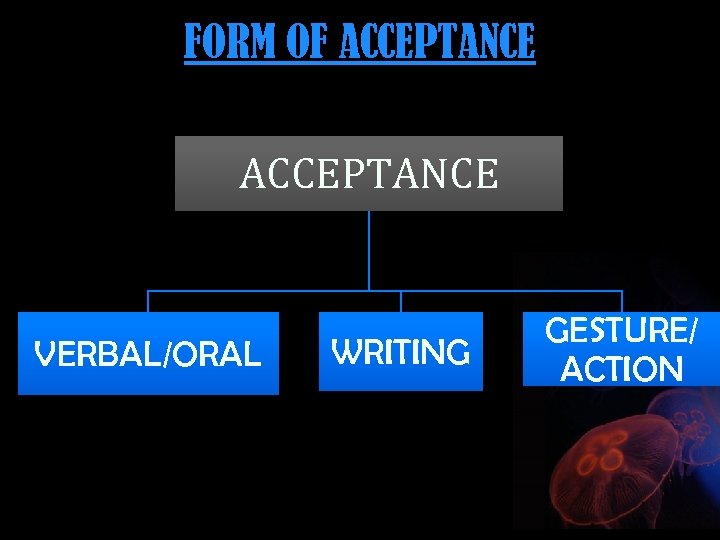
FORM OF ACCEPTANCE VERBAL/ORAL WRITING GESTURE/ ACTION
COMMUNICATION OF ACCEPTANCE The communication of acceptance is completed when it come to the knowledge of the proposer.
![ENTORES LTD v MILES FAR EAST CORP [1955] 2 QB 327 o Offer was](https://present5.com/presentation/a5c5fa9bf0f1344cde35794ca7e00b03/image-6.jpg "ENTORES LTD v MILES FAR EAST CORP [1955] 2 QB 327 o Offer was")
ENTORES LTD v MILES FAR EAST CORP [1955] 2 QB 327 o Offer was sent from London by telex. o Acceptance was made by telex from Amsterdam to London. o P sued D for breach of contract and start an action in London. ISSUES: 1)whether the communication of acceptance was completed? 2)Where the contract was made?
![ENTORES LTD v MILES FAR EAST CORP [1955] 2 QB 327 Court decision: o](https://present5.com/presentation/a5c5fa9bf0f1344cde35794ca7e00b03/image-7.jpg "ENTORES LTD v MILES FAR EAST CORP [1955] 2 QB 327 Court decision: o")
ENTORES LTD v MILES FAR EAST CORP [1955] 2 QB 327 Court decision: o The communication of acceptance was completed in London when the proposer received it. o The contract was made in London. INSTANTANEOUS MEANS OF COMMUNICATION 1) Telephone 2) Telex 3) Email
SECTION 7 CONTRACT 1950 The acceptance must – (a)be absolute and unqualified. (b)be express in some usual and reasonable manner unless the proposal prescribes the manner in which it is to be accepted.
SECTION 7 CONTRACT 1950 (a)be ABSOLUTE and UNQUALIFIED q The acceptor must accept the offer without any condition.
SECTION 7 CONTRACT 1950 (a)be ABSOLUTE and UNQUALIFIED q The acceptor must accept the offer without any condition. HYDE v WRENCH (1840) The D agreed to sell his estate to the P for £ 1000. However the P made a counter offer of £ 950. the D refused to sell the estate. Later on the P agreed to by the estate for £ 1000, but the D still refused to sell. The P sued the D for breach of contract. Court: there was no valid contract since P failed to fulfilled the D condition precedent.
SECTION 7 CONTRACT 1950 (b)be express in some usual and reasonable manner unless the proposal prescribes the manner in which it is to be accepted. q Where the proposal EXPRESSLY or IMPLICITLY states that it can be only accepted in certain way, the acceptor is bound to accept it in the prescribed manner. q Must do it within reasonable time.
EFFECT OF SILENCE DOES SILENCE CONSTITUTES AN ACCEPTANCE? FELTHOUSE v BINDLEY (1826) The P wrote to his nephew offering to buy the horse saying: “if I hear no more about him, I consider the horse is mine at £ 30 15 s”. The nephew did not reply. Later on the horse was sold in auction by mistake and the P sued the auctioneer for breach of contract. Court: there was no contract since the was no acceptance from the nephew.
Скачать презентацию ACCEPTANCE ELEMENT 2 DEFINITION Section 2 b
a5c5fa9bf0f1344cde35794ca7e00b03.ppt