 Скачать презентацию Accelerating Spread of Community-Based Strategies to Reduce Maternal
85c8a3cd400a448558b62464e8738c6e.ppt
- Количество слайдов: 23



Accelerating Spread of Community-Based Strategies to Reduce Maternal, Newborn and Child Health Challenges in Ghana by Nana A. Y. Twum-Danso, MD, MPH Director, Project Fives Alive! Institute for Healthcare Improvement 5 th Annual International Conference of the African Science Academy Development Initiative La Palm Royal Beach Hotel, Accra, Ghana November 10 -11, 2009
Presentation Outline • Background • Successful Community. Based Strategies • Summary

BACKGROUND
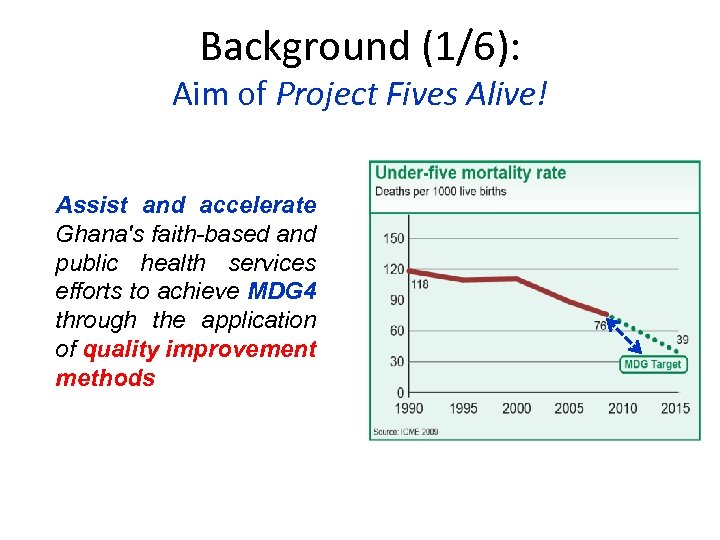
Background (1/6): Aim of Project Fives Alive! Assist and accelerate Ghana's faith-based and public health services efforts to achieve MDG 4 through the application of quality improvement methods
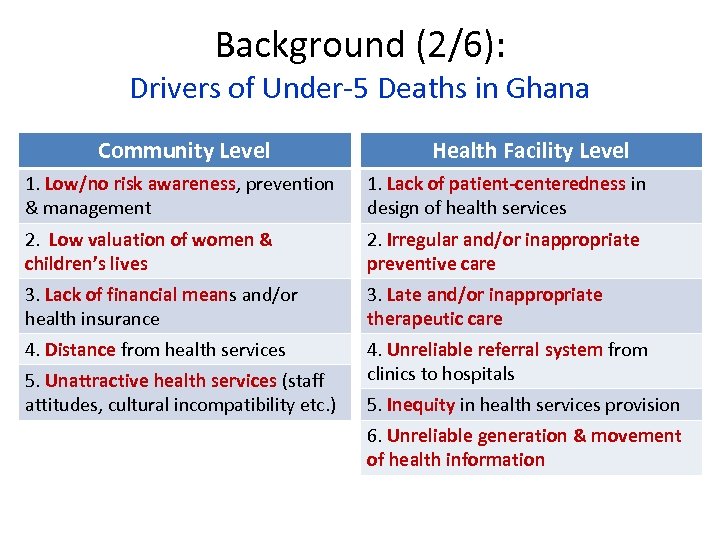
Background (2/6): Drivers of Under-5 Deaths in Ghana Community Level Health Facility Level 1. Low/no risk awareness, prevention & management 1. Lack of patient-centeredness in design of health services 2. Low valuation of women & children’s lives 2. Irregular and/or inappropriate preventive care 3. Lack of financial means and/or health insurance 3. Late and/or inappropriate therapeutic care 4. Distance from health services 4. Unreliable referral system from clinics to hospitals 5. Unattractive health services (staff attitudes, cultural incompatibility etc. ) 5. Inequity in health services provision 6. Unreliable generation & movement of health information
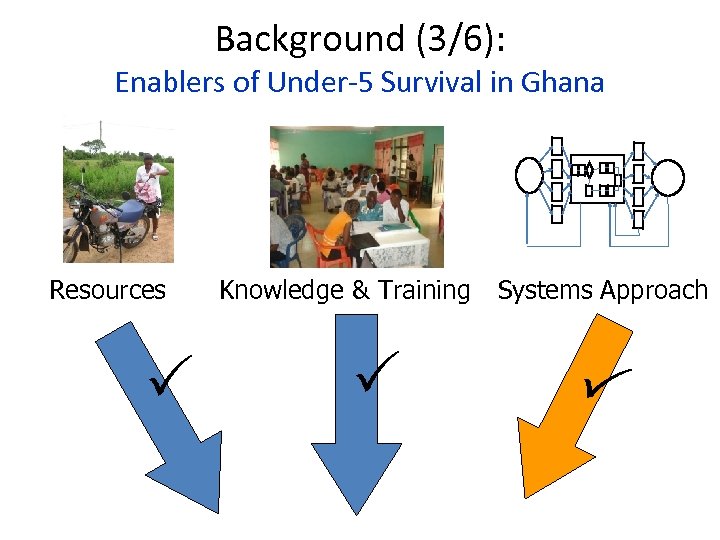
Background (3/6): Enablers of Under-5 Survival in Ghana Resources Knowledge & Training Systems Approach
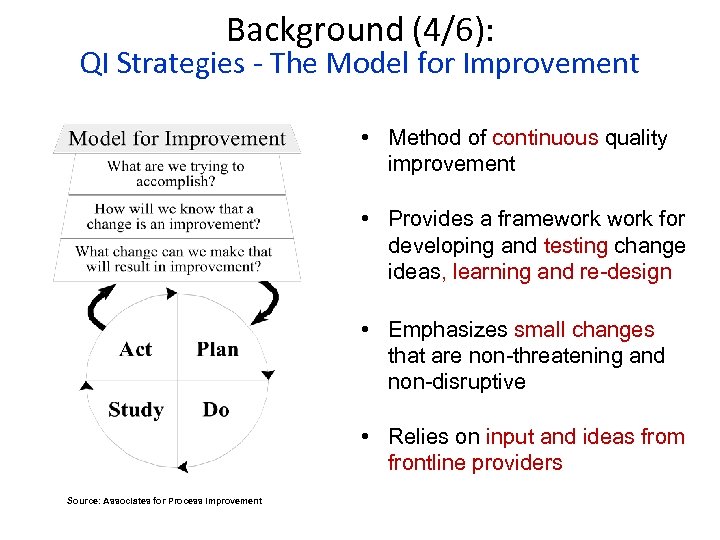
Background (4/6): QI Strategies - The Model for Improvement • Method of continuous quality improvement • Provides a framework for developing and testing change ideas, learning and re-design • Emphasizes small changes that are non-threatening and non-disruptive • Relies on input and ideas from frontline providers Source: Associates for Process Improvement
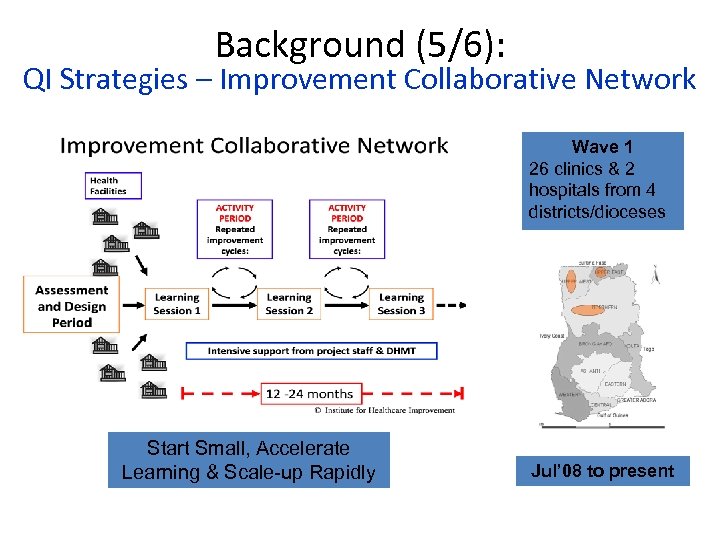
Background (5/6): QI Strategies – Improvement Collaborative Network Wave 1 26 clinics & 2 hospitals from 4 districts/dioceses Start Small, Accelerate Learning & Scale-up Rapidly Jul’ 08 to present
Background (6/6): Focus of QI Work • Care Pathway
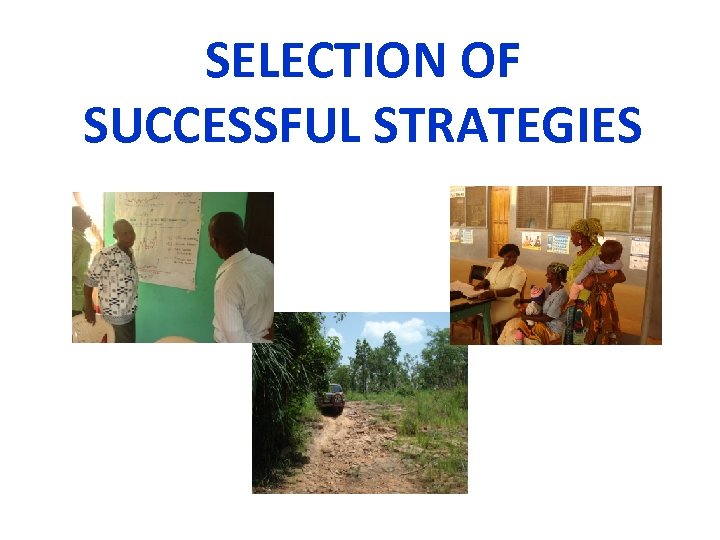
SELECTION OF SUCCESSFUL STRATEGIES
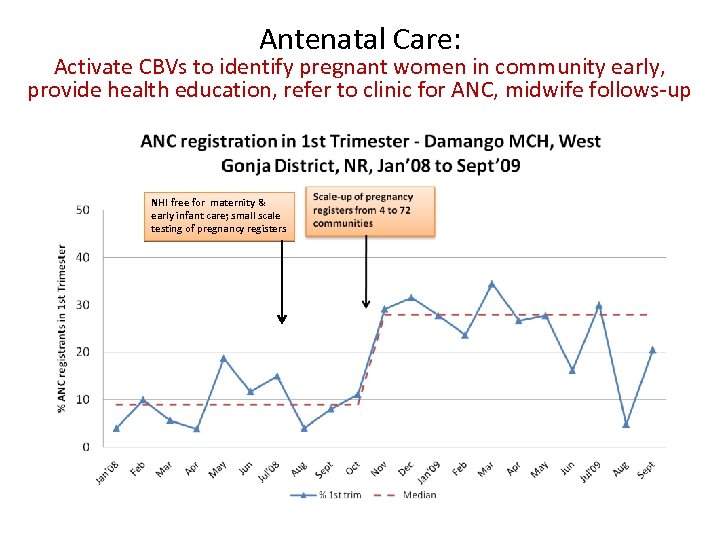
Antenatal Care: Activate CBVs to identify pregnant women in community early, provide health education, refer to clinic for ANC, midwife follows-up NHI free for maternity & early infant care; small scale testing of pregnancy registers
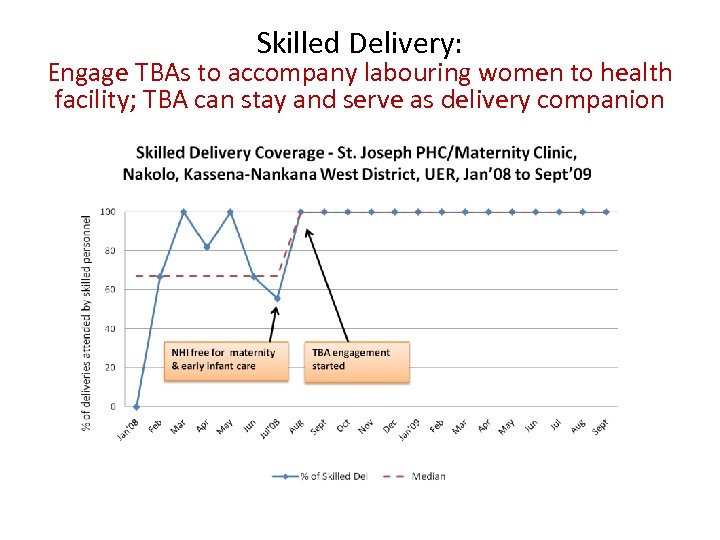
Skilled Delivery: Engage TBAs to accompany labouring women to health facility; TBA can stay and serve as delivery companion
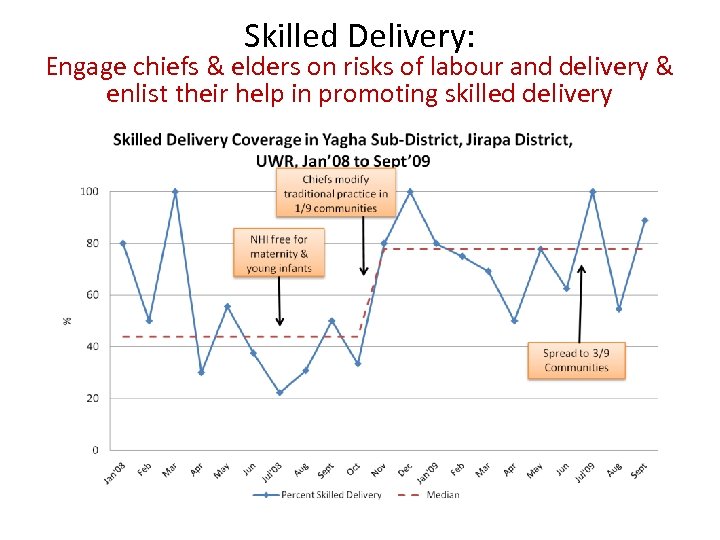
Skilled Delivery: Engage chiefs & elders on risks of labour and delivery & enlist their help in promoting skilled delivery
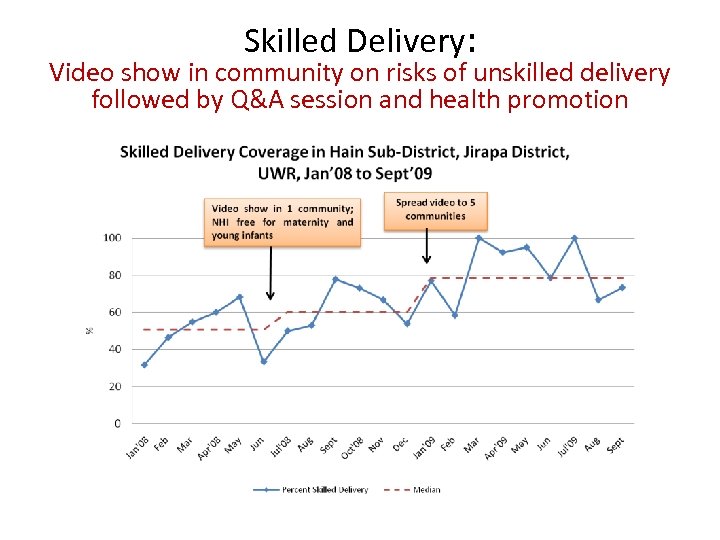
Skilled Delivery: Video show in community on risks of unskilled delivery followed by Q&A session and health promotion
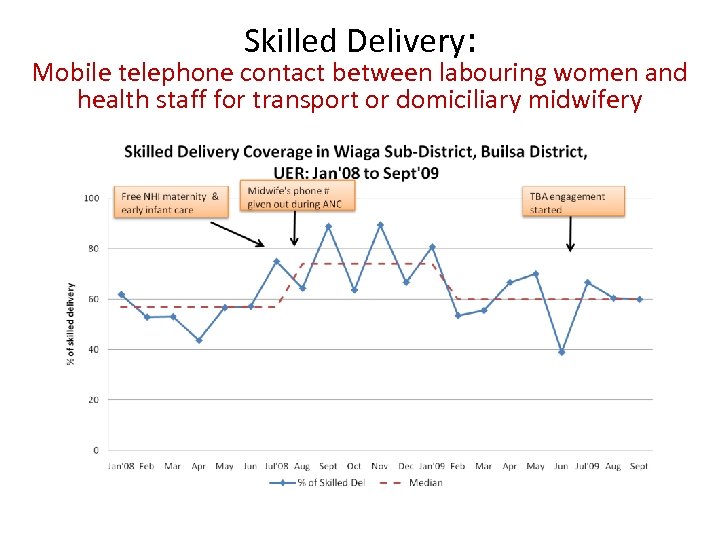
Skilled Delivery: Mobile telephone contact between labouring women and health staff for transport or domiciliary midwifery
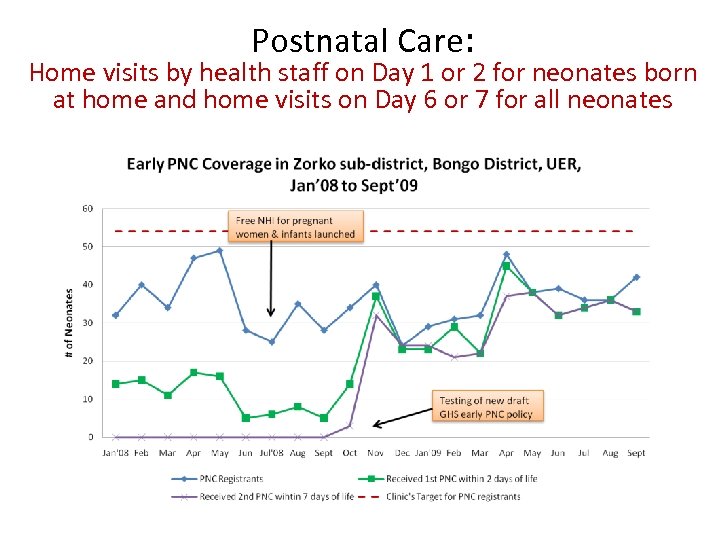
Postnatal Care: Home visits by health staff on Day 1 or 2 for neonates born at home and home visits on Day 6 or 7 for all neonates
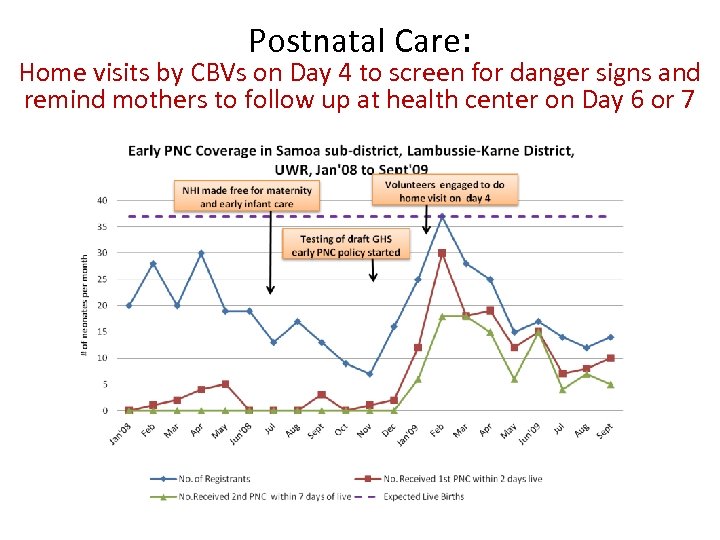
Postnatal Care: Home visits by CBVs on Day 4 to screen for danger signs and remind mothers to follow up at health center on Day 6 or 7
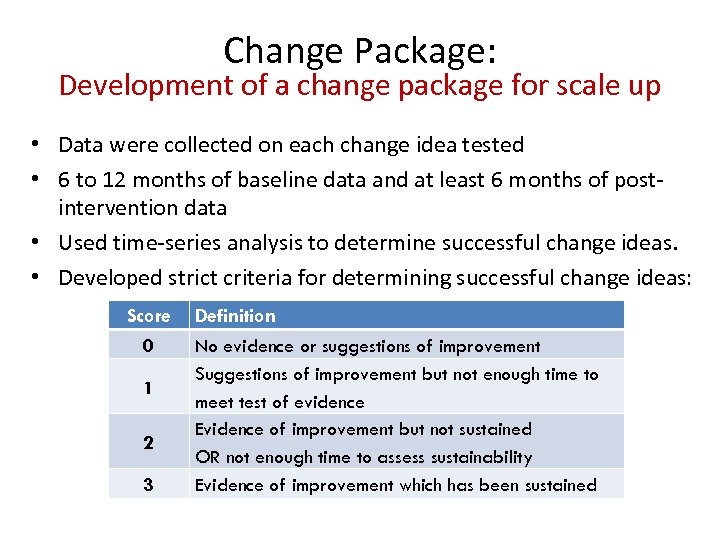
Change Package: Development of a change package for scale up • Data were collected on each change idea tested • 6 to 12 months of baseline data and at least 6 months of postintervention data • Used time-series analysis to determine successful change ideas. • Developed strict criteria for determining successful change ideas: Score 0 1 2 3 Definition No evidence or suggestions of improvement Suggestions of improvement but not enough time to meet test of evidence Evidence of improvement but not sustained OR not enough time to assess sustainability Evidence of improvement which has been sustained
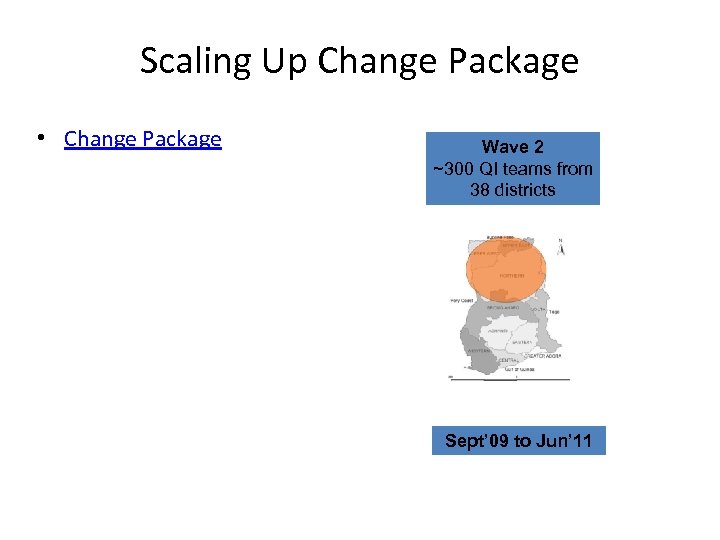
Scaling Up Change Package • Change Package Wave 2 ~300 QI teams from 38 districts Sept’ 09 to Jun’ 11
SUMMARY
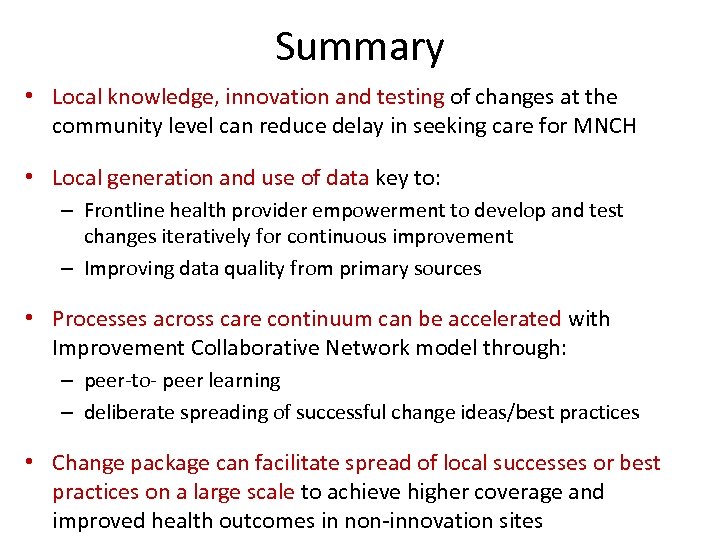
Summary • Local knowledge, innovation and testing of changes at the community level can reduce delay in seeking care for MNCH • Local generation and use of data key to: – Frontline health provider empowerment to develop and test changes iteratively for continuous improvement – Improving data quality from primary sources • Processes across care continuum can be accelerated with Improvement Collaborative Network model through: – peer-to- peer learning – deliberate spreading of successful change ideas/best practices • Change package can facilitate spread of local successes or best practices on a large scale to achieve higher coverage and improved health outcomes in non-innovation sites
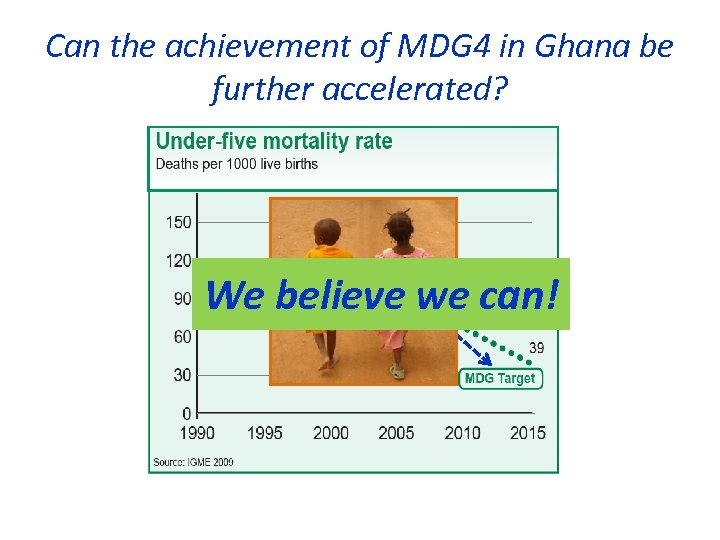
Can the achievement of MDG 4 in Ghana be further accelerated? We believe we can!
Acknowledgements • Team – – – – – George B. Akanlu Isaac A. Amenga-Etego Ireneous N. Dasoberi Solomon A. Atinbire Phoebe Bala Francisca Bagna Chrysanthus Kubio James Tobiga Pierre M. Barker • Institutions – Ghana Health Service – National Catholic Health Service – Institute for Healthcare Improvement – Bill & Melinda Gates Foundation
Скачать презентацию Accelerating Spread of Community-Based Strategies to Reduce Maternal
85c8a3cd400a448558b62464e8738c6e.ppt