


 Скачать презентацию Academic Writing and Critical Thinking some ideas for
EAP Russia 2013.pptx
- Количество слайдов: 45
 Academic Writing and Critical Thinking some ideas for the classroom Christopher Graham Russia, November 2013
 Aims and objectives § To consider the nature of EAP § To look at a model process for academic writing § To discuss the role of critical thinking in EAP
 What is EAP? “EAP is a branch of ESP. ”
 What is EAP? “EAP is the English that is taught to second-/thirdlanguage students preparing to enter undergraduate and postgraduate courses at universities and other institutions of higher education. ”
 What is EAP? Strong extrinsic motivation of academic study and a strong needs-driven syllabus.
 What abilities will an EAP teacher have? “An EAP teacher will have the knowledge and understanding of the key differences between the content and processes required for teaching and learning in an EAP class compared with a general ELT class. ” (BALEAP Competence framework)
 Part One - Academic Writing
 What about academic writing? “The most problematic use of English in Higher Education is probably writing. ” Andy Gillett, “What is EAP? ”
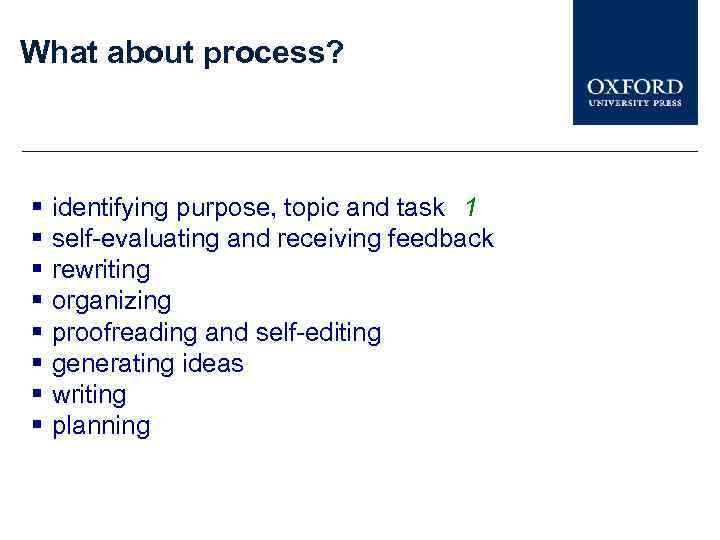 What about process? § § § § identifying purpose, topic and task 1 self-evaluating and receiving feedback rewriting organizing proofreading and self-editing generating ideas writing planning
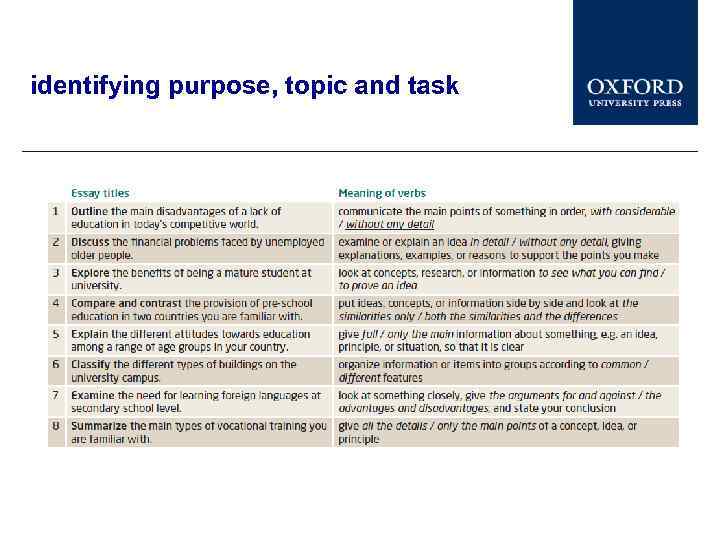 identifying purpose, topic and task
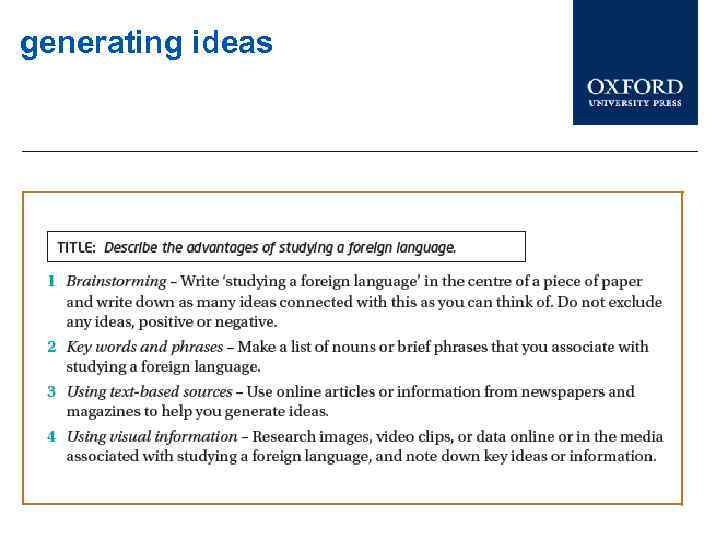 generating ideas
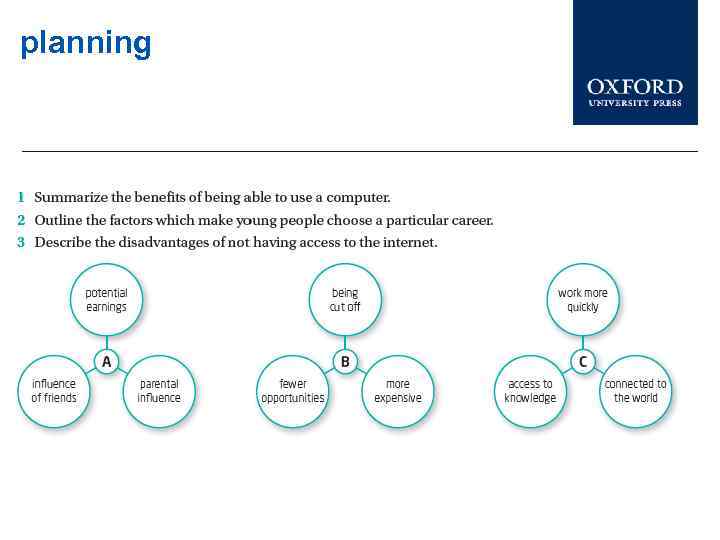 planning
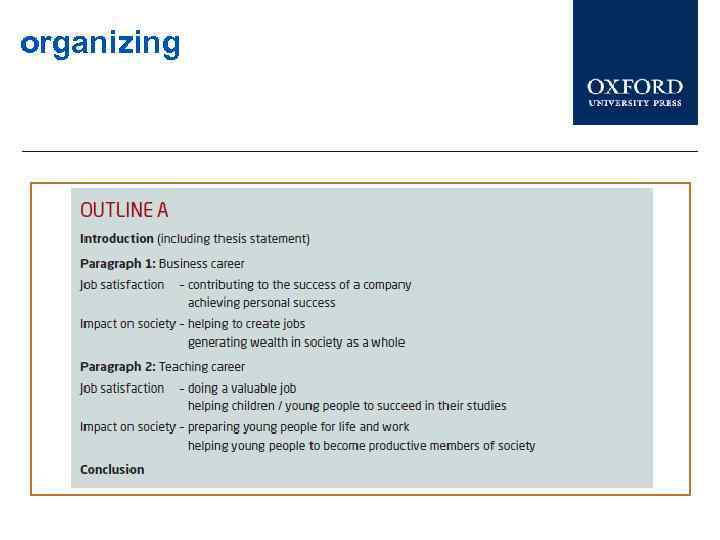 organizing
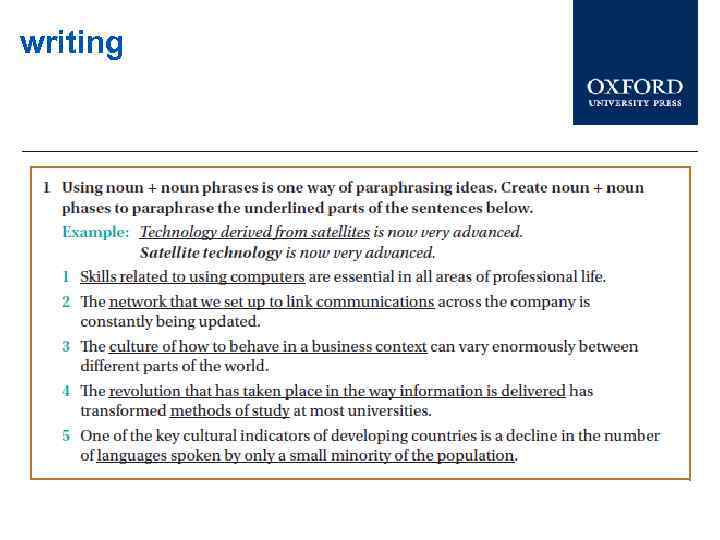 writing
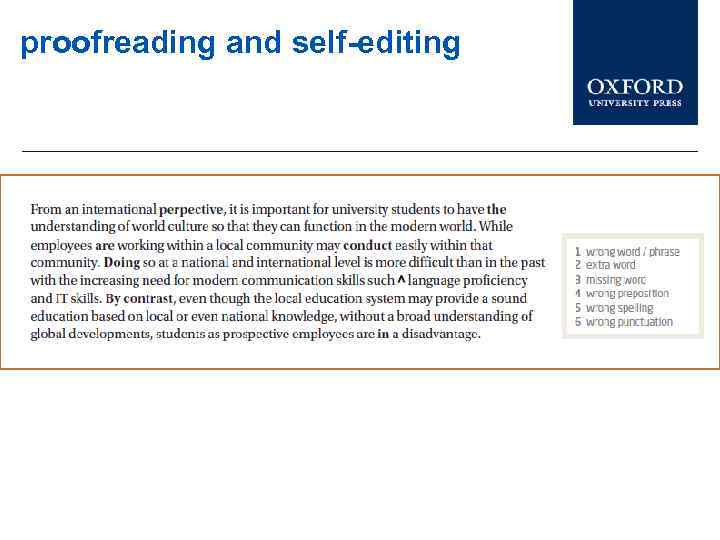 proofreading and self-editing
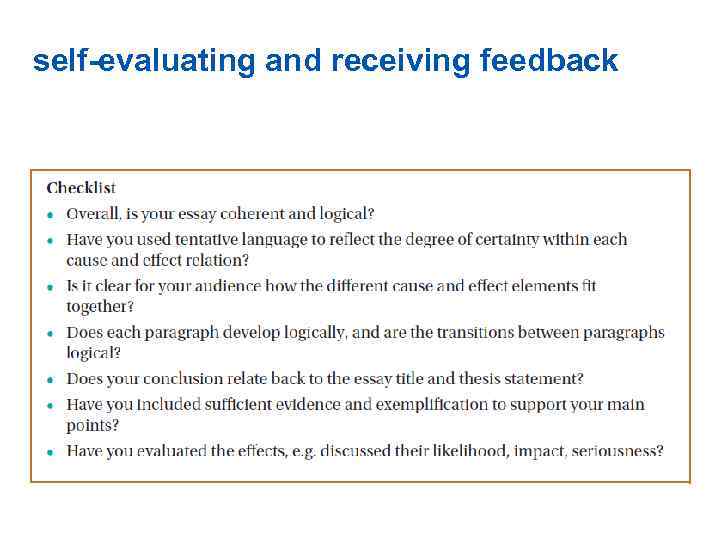 self-evaluating and receiving feedback
 rewriting • once, twice, three times, four … or more (!)
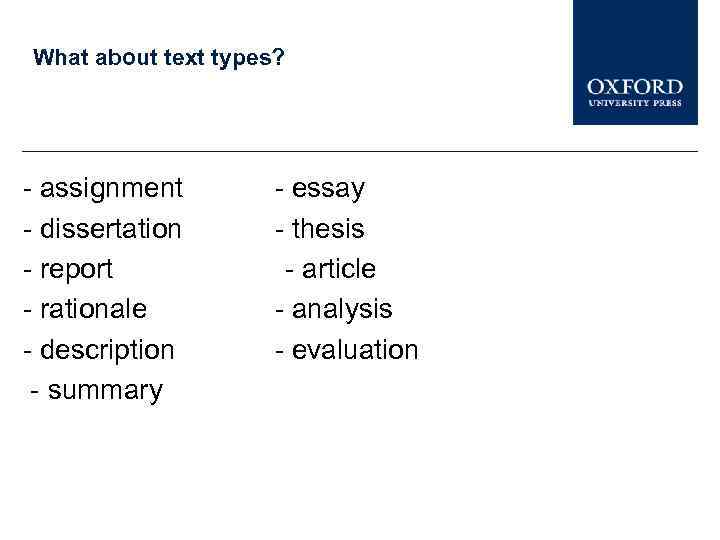 What about text types? - assignment - dissertation - report - rationale - description - summary - essay - thesis - article - analysis - evaluation
 source: fashionoutletpro. com THE ESSAY
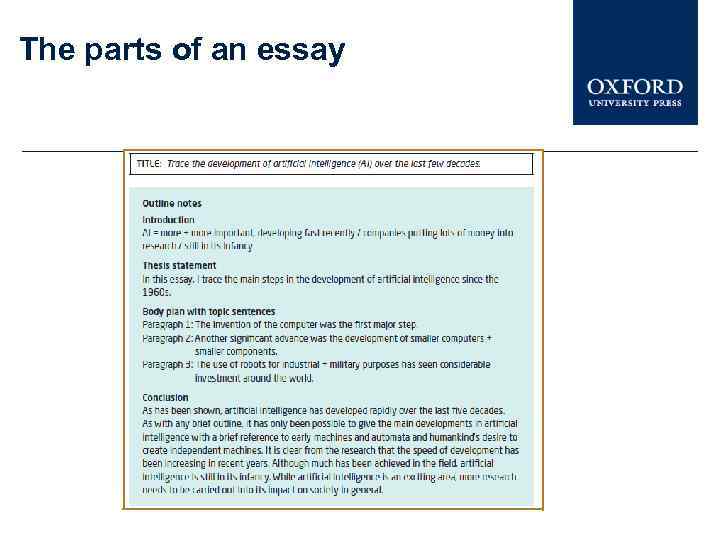 The parts of an essay
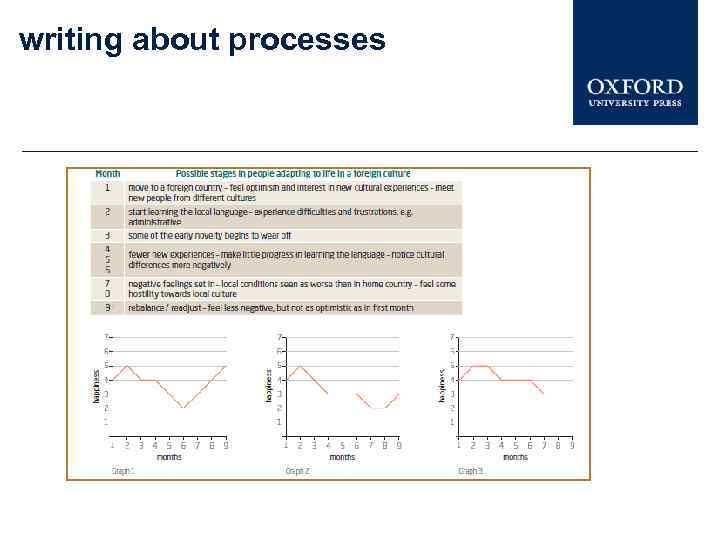 writing about processes
 What about style? source: suitsmen. co. uk FORMAL
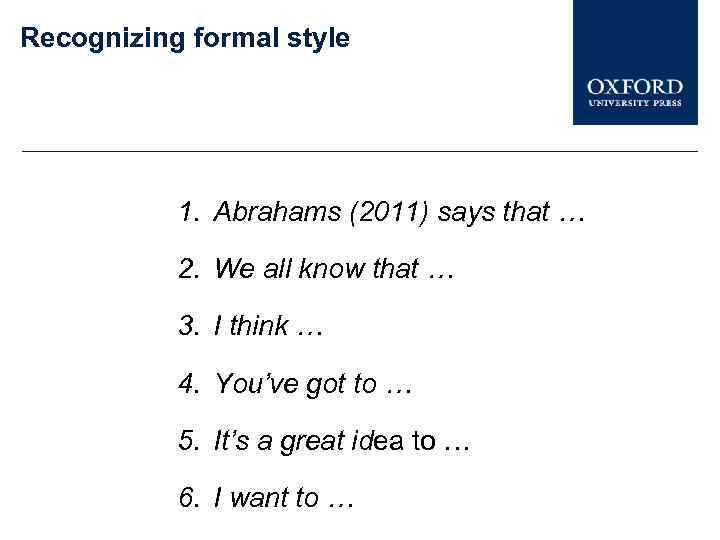 Recognizing formal style 1. Abrahams (2011) says that … 2. We all know that … 3. I think … 4. You’ve got to … 5. It’s a great idea to … 6. I want to …
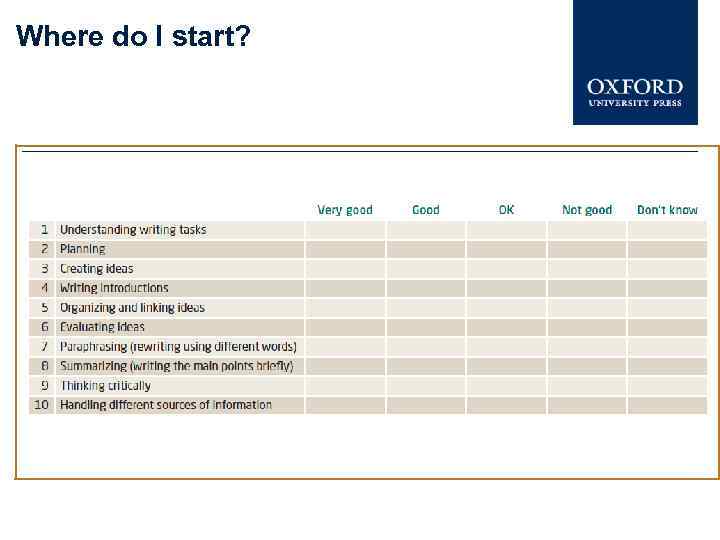 Where do I start?
 Part Two Critical Thinking
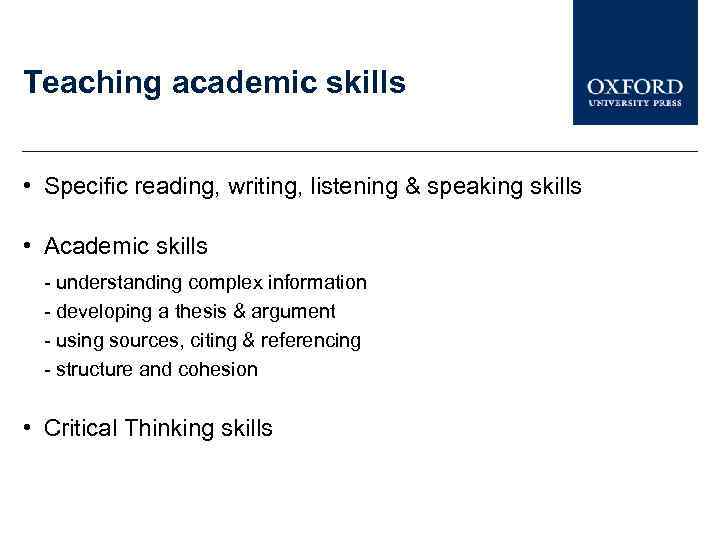 Teaching academic skills • Specific reading, writing, listening & speaking skills • Academic skills - understanding complex information - developing a thesis & argument - using sources, citing & referencing - structure and cohesion • Critical Thinking skills
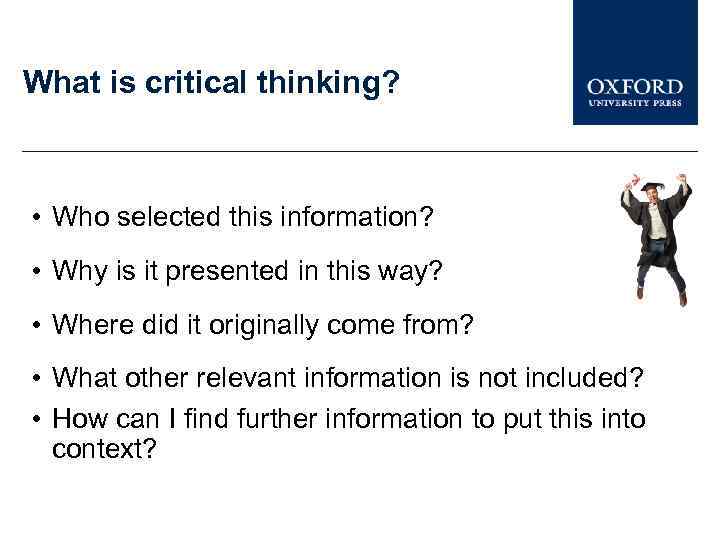 What is critical thinking? • Who selected this information? • Why is it presented in this way? • Where did it originally come from? • What other relevant information is not included? • How can I find further information to put this into context?
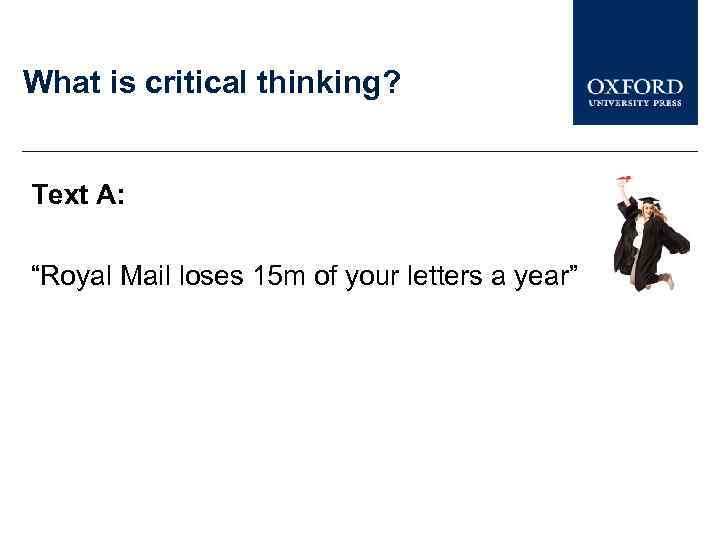 What is critical thinking? Text A: “Royal Mail loses 15 m of your letters a year”
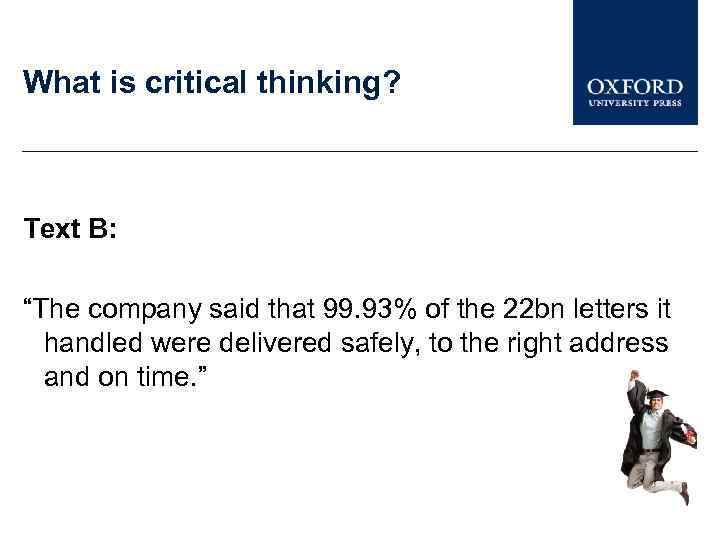 What is critical thinking? Text B: “The company said that 99. 93% of the 22 bn letters it handled were delivered safely, to the right address and on time. ”
 What is critical thinking? Text C: “More than 15 m badly addressed letters still arrived at the right place and on time each week. ”
 Teaching critical thinking skills • Preparation • Evaluation • Feedback • Self-reflection
 “Pre-thinking” • Preparing to read, write, listen & speak • Discussions & brainstorming • Activating and linking to existing knowledge • Preparing critical questions • Independent study – preparing for lectures & seminars
 Brainstorming • Brainstorm vocabulary • Describe • Answer questions • Add vocabulary
 Predicting You are going to listen to a lecture on the topic of language death. • What do you think this phrase means? • Can you think of any languages which might be referred to in the lecture?
 Guided discussion tasks 1. Read the three definitions of culture. Decide which one you prefer, and why.
 Guided discussion tasks 2. Work in groups. Decide which of the following characteristics you would include in your own definition of culture. Add any further characteristics.
 Guided discussion tasks 3. Write your own definition of culture, including your selected characteristics from 2. Present your definition to the class, and give reasons for your selection.
 Analysis • Identifying main & supporting arguments • Identifying authors’ stance • Identifying fact & opinion
 Evaluation • Evaluating systems, methods, processes, etc. • Evaluating arguments • Synthesizing information from different sources • Reacting to a text
 Feedback & self-reflection Written work – Working with teacher feedback – Peer work – Proof-reading & self correction
 Feedback & self-reflection Speaking: discussions & presentations – Working with teacher feedback – Peer observation – Working with recordings
 Feedback & self-reflection Study skills – Strategies – Time management
 Teaching Critical Thinking in EAP Asking critical questions Analysis & evaluation Critical Thinking at every stage of the process Self reflection & independent study
 Oxford EAP • Critical Thinking is • In-built and integrated • Applied to both content and performance • Noted in some of the task headings.
 Academic Writing and Critical Thinking some ideas for the classroom Christopher Graham Russia, November 2013