


 Скачать презентацию Academic Writing Academic Writing Academic writing is
academic_writing.ppt
- Количество слайдов: 28
 Academic Writing
 Academic Writing Academic writing is the kind of writing that you are required to do in college or university. It differs from other kinds of writing such as personal, literary, journalistic, or business writing. Its differences can be explained in part by its special audience, tone, and purpose. Whenever you write, consider your specific audience, that is, the people who will read what you have written. Knowing your audience will help you to communicate clearly and effectively. In academic writing, your audience is primarily your professors or instructors.
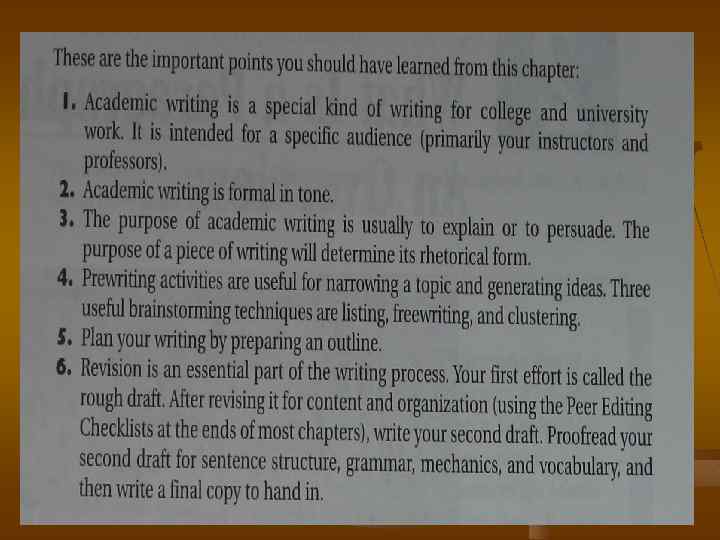
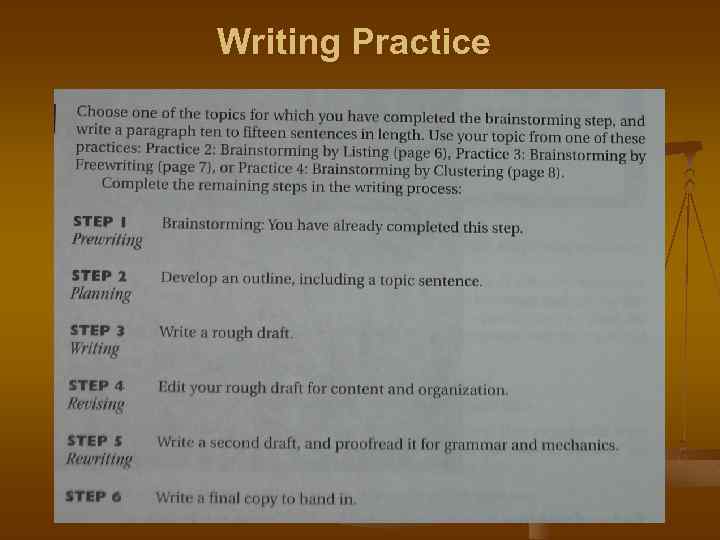
 The writing process 1. 2. 3. 4. There are four main stages in the writing process: prewriting planning writing and revising drafts writing the final copy to hand in
 Prewriting Step 1: Choosing and narrowing a topic For example: General topic ENVIRONMENT POLLUTION OCEAN POLLUTION Specific topic OIL SPILLS Very specific topic EFFECTS of OIL SPILLS ON SEA LIFE in THE ATLANTIC OCEAN
 Prewriting Step 2: Brainstorming is a way of gathering ideas about a topic. Think of a storm: thousands of drops of rain, all coming down together. Now, imagine thousands of ideas “raining” down onto your paper! When you brainstorm, write down every idea that comes to you. Don’t worry now about whether the ideas are good or silly, useful or not. You can decide that later. Right now, you are gathering ideas as you can. We will learn three types of brainstorming: n making a list n freewriting n mapping
 Brainstorming Making a list Follow this procedure: 1. Write down the general topic at the top of your paper. 2. Then make a list of every idea that comes into your mind about that topic. Keep the ideas flowing. Try to stay on the general topic; however, if you write down information that is completely off the topic, don’t worry about it because you can cross it out later. 3. Use words, phrases, sentences, and don’t worry about spelling or grammar.
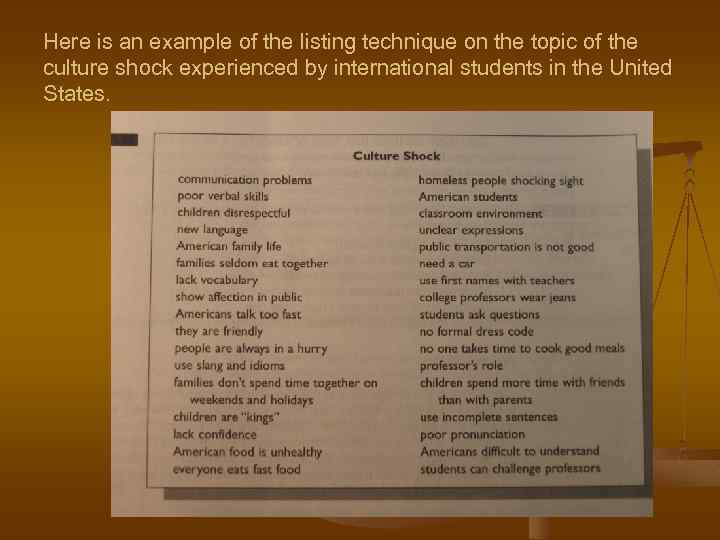 Here is an example of the listing technique on the topic of the culture shock experienced by international students in the United States.
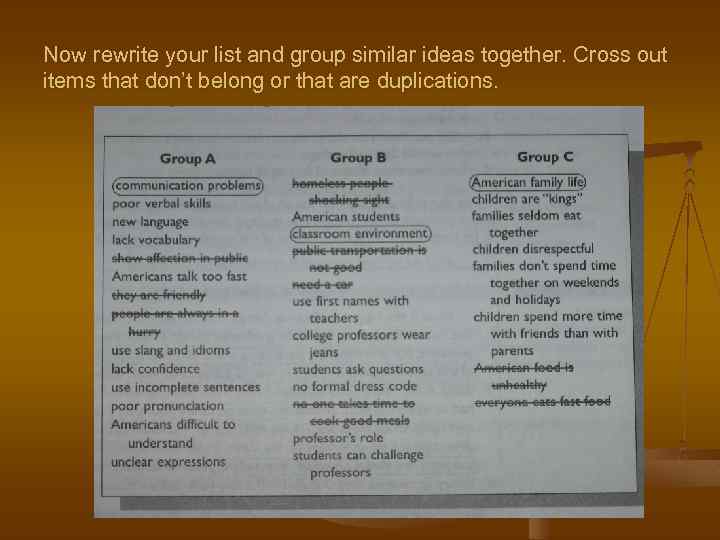 Now rewrite your list and group similar ideas together. Cross out items that don’t belong or that are duplications.
 Brainstorming Freewriting is a brainstorming activity in which you write freely about a topic because you are looking for a specific focus. While you are writing one idea spark another idea. As with listing, the purpose of freewriting is to generate as many ideas as possible and to write them down without worrying about approppriateness, grammar, spelling, logic or organization. Remember, the more you freewrite, the more ideas you will have. Don’t despair if your mind seems to “run dry”. Just keep your pencil moving. Follow this procedure: 1. Write the topic at the top of your paper. 2. Write as much as you can about the topic until you run out of ideas. Include such supporting items as facts, details, and examples that come into your mind about the subject. 3. After you have run out of ideas, reread your paper and circle the main idea(s) that you would like to develop. 4. Take that main idea and freewrite again.
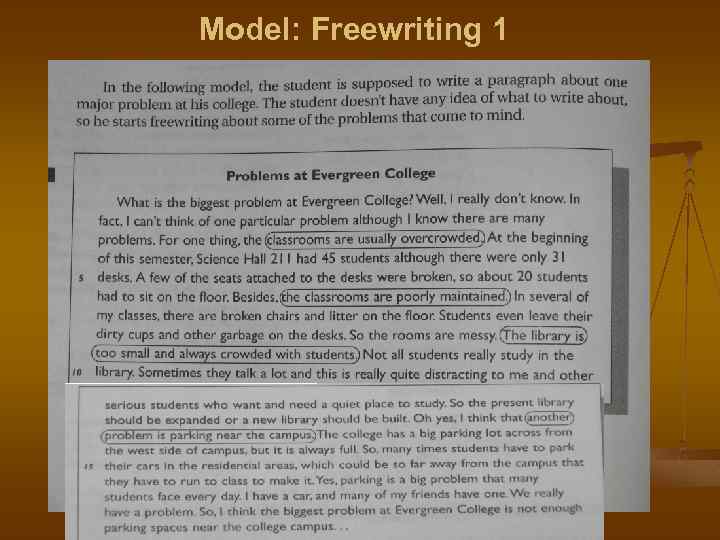 Model: Freewriting 1
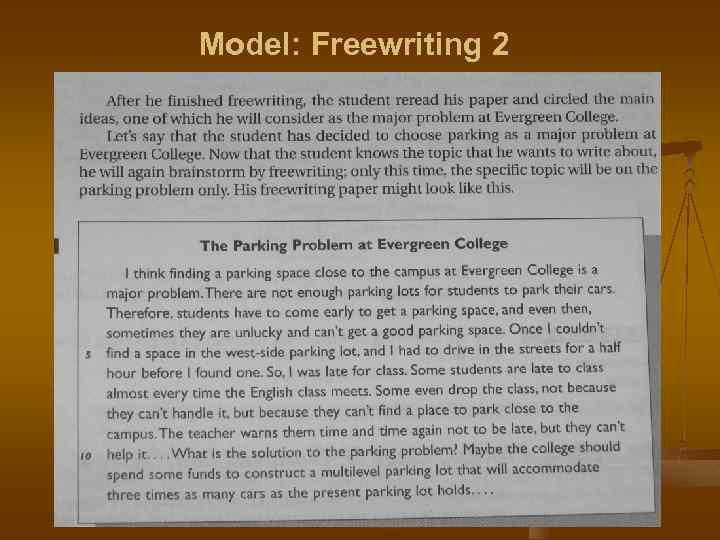 Model: Freewriting 2
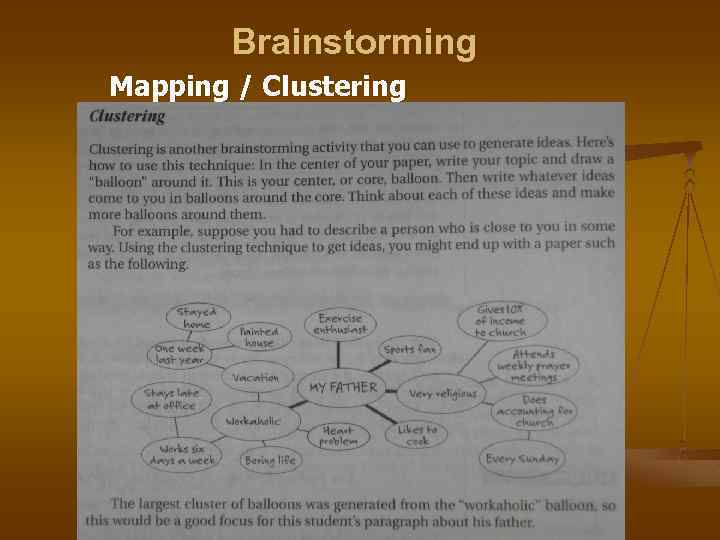 Brainstorming Mapping / Clustering
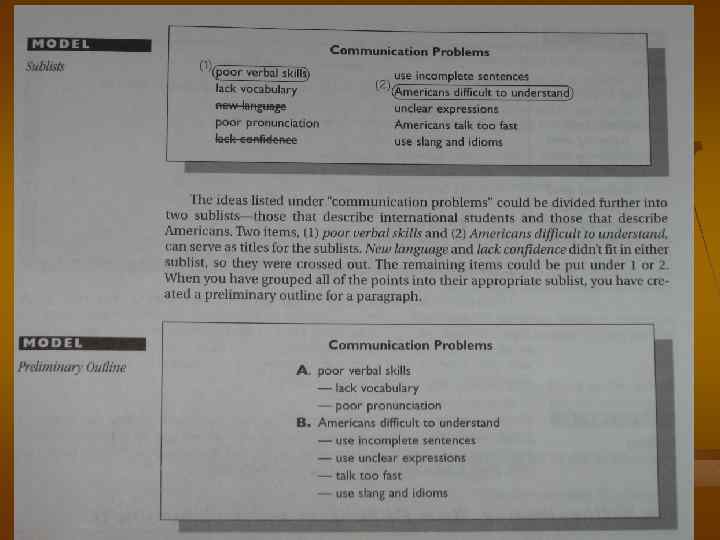
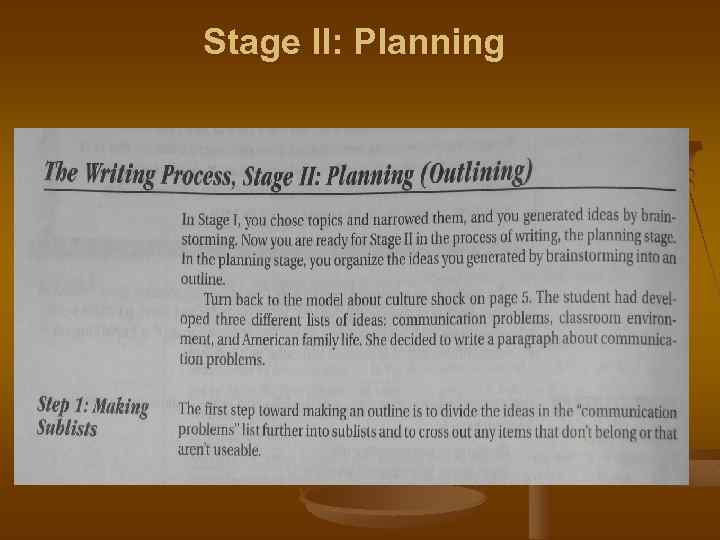 Stage II: Planning
 Mapping / Clustering
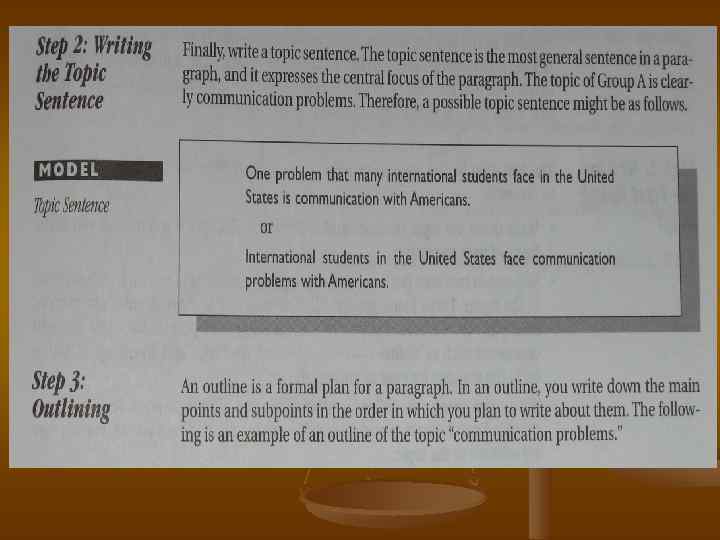
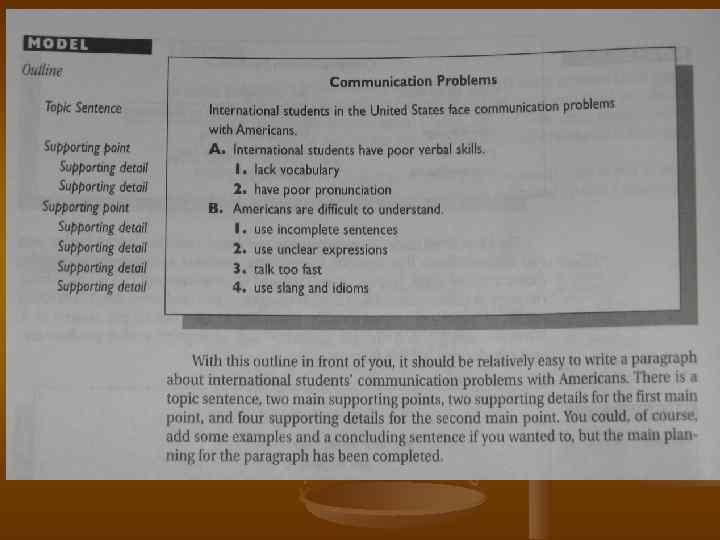
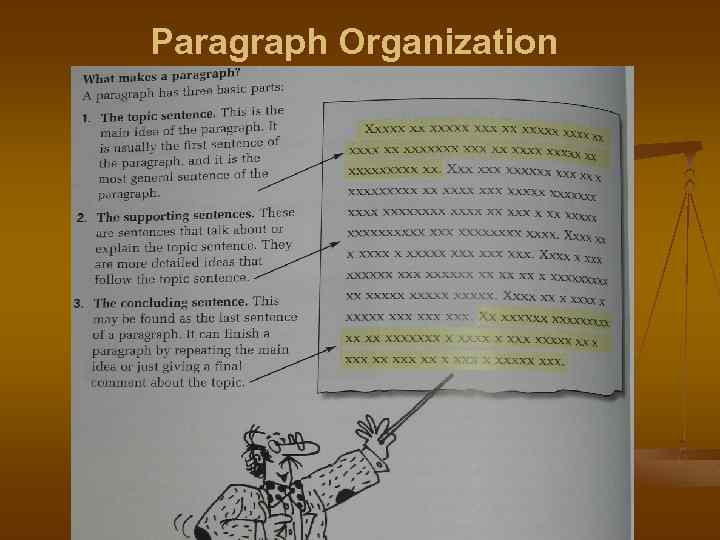 Paragraph Organization
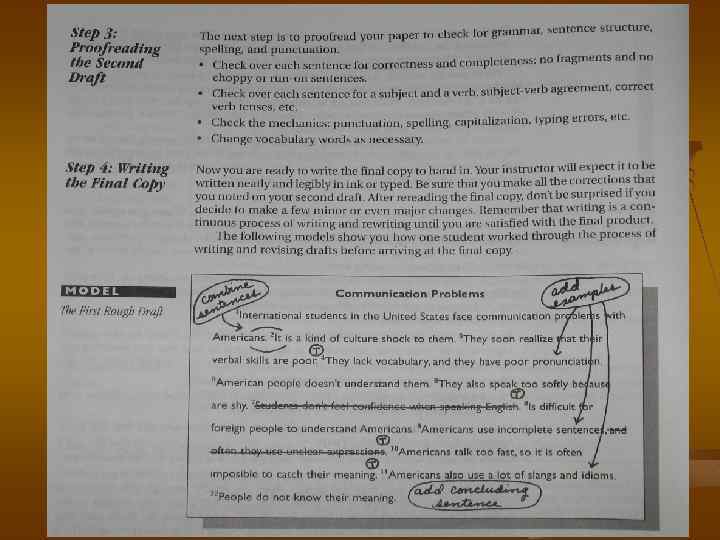
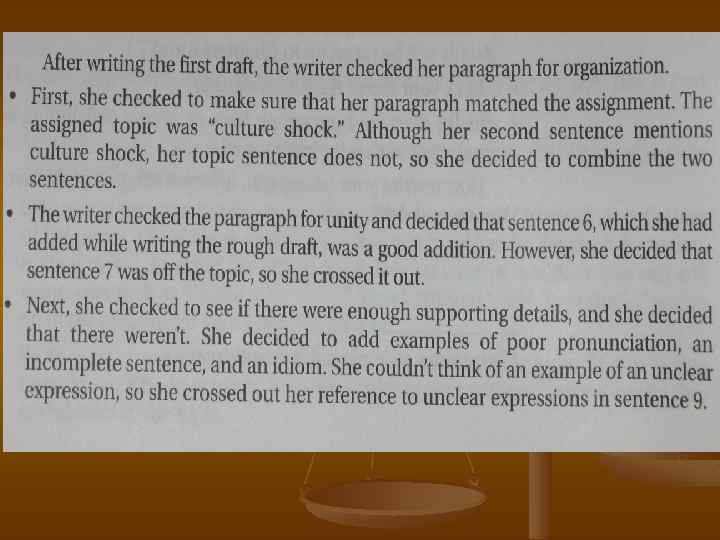
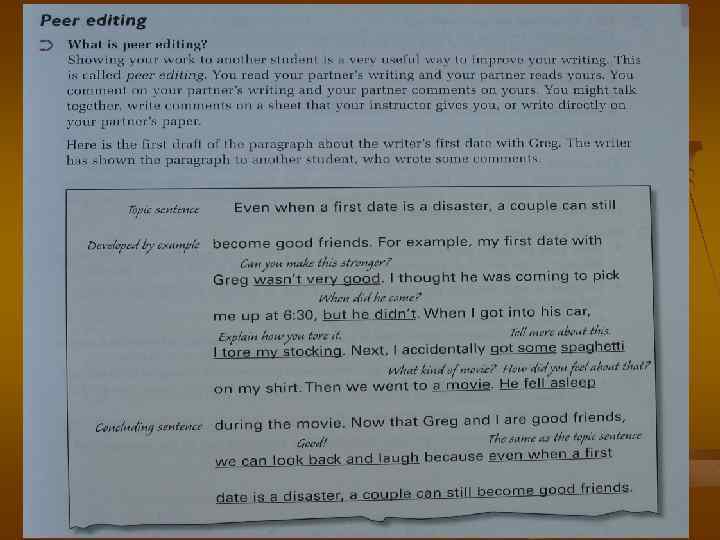
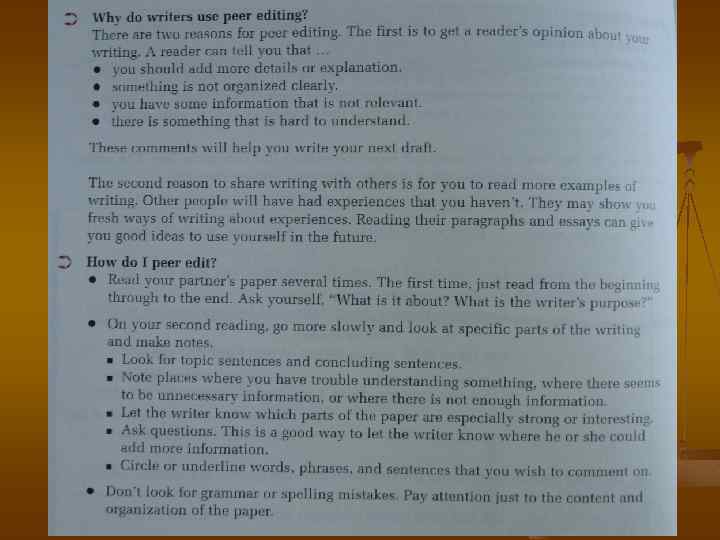
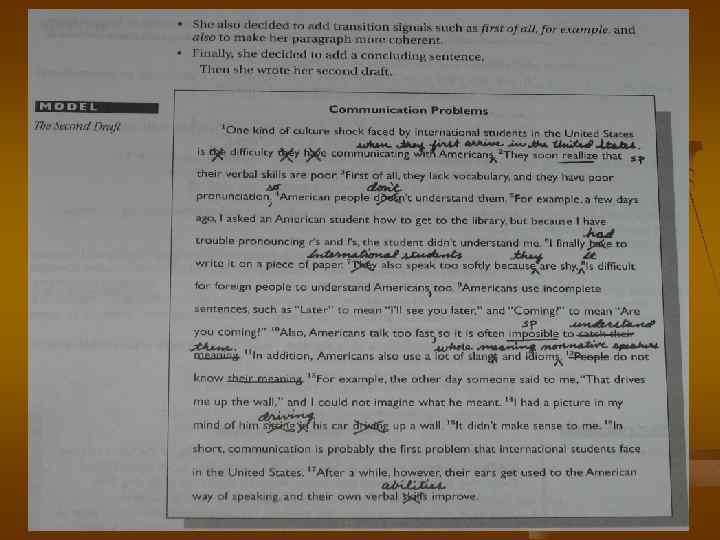
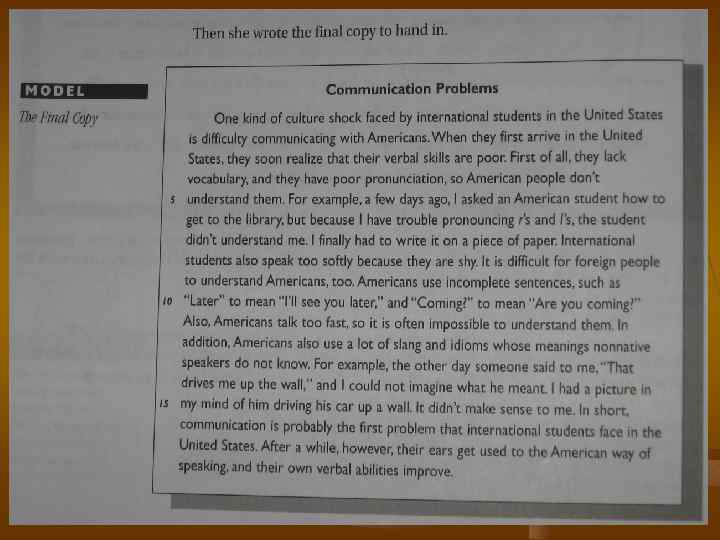
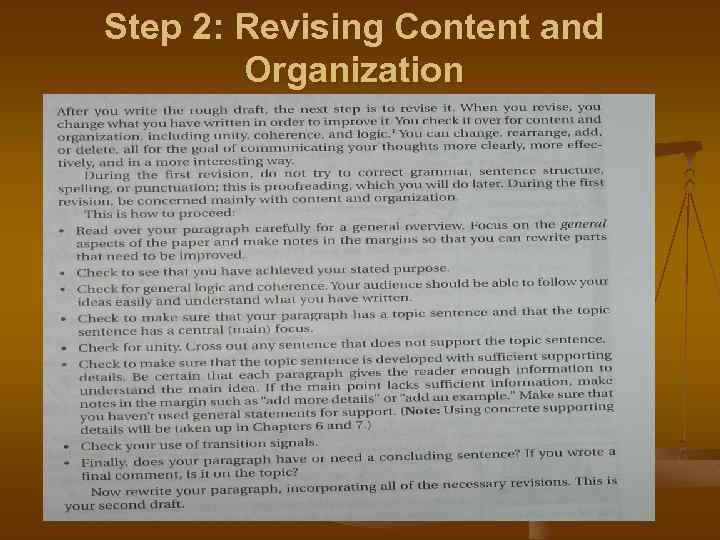 Step 2: Revising Content and Organization
 Writing Practice