


 Скачать презентацию Academic and Clinical Exchanges 2001 CAPCSD Conference Considerations
619062ad22f22baf2687efc1fbebb282.ppt
- Количество слайдов: 30
 Academic and Clinical Exchanges 2001 CAPCSD Conference Considerations in offering on-line instruction Robert Allen Fox The Ohio State University
 General Issues in Considering On-Line Instruction Prerequisites • Audience • Instructors • Course Costs • Funding Sources • Consideration of advantages and disadvantages in making decision to offer course(s) Creation of Course • Given program’s resources, decisions must be about the nature of instructional methodology to be used (format, communication, resource availability, student assessment/testing)
 Audiences for On-line Instruction • Students within your current graduate or undergraduate programs • Non-traditional students (e. g. Part-time students) • Students in special programs (e. g. , Ohio’s OMNIE program) • Students in other graduate programs (as part of “resource sharing” program) • Prospective graduate students needing prerequisites for grad program • Professionals needing CEU course credit
 On-line Course Instructors • Department’s current faculty and staff • Adjunct faculty and staff (at Ohio State, this includes research faculty at Cleveland Clinic) • Guest instructors from other universities, hospitals, research institutes, or from the community • Graduate teaching associates
 Course Costs • Instructor costs (adjunct salaries, summer salaries, overload payments) • Salaries for technicians/contract programmers • Equipment purchases (e. g. , computers, video equipment, mimio system) • Classroom/recording facilities (e. g. , Internet connections, satellite links, multimedia classrooms) • Advertising; non-traditional registrations
 Funding Sources • University funds (general operating budget, special closed-course funds, development funds) • Direct tuition support (availability varies from university to university) • Grants (federal, state, private); development funds • Fees for short-term courses (using CEU model)
 Advantages to On-line Instruction • Expands/elaborates course content compared to traditional lecture format • Provides a virtual increase in the size of the department course offerings (and faculty) at relatively low costs (e. g. , no additional faculty lines needed) • Allows development of self-pace, free-standing courses that might avoid normal scheduling constraints (days-of-the-week and times)
 Disadvantages to On-line Instruction • More technically demanding (for instructor and facility) than traditional lecture courses • Adequate course development requires consider faculty time (who supports this? ) • Some content may be difficult to provide (anatomy/physiology labs; ABR labs) • Faculty reluctance to innovate • Student concern/unease • Institutional inertia
 Components to Consider When Developing On-line Course • Content presentation format to be used • Establishment of reliable communication link(s) between instructor and students • • Facilitation of communication among students Distribution of required readings Testing (exams and quizzes) Student presentations
 1. Content Presentation Format • audio-only (audiotapes, teleconferencing) • video (videotapes, closed-circuit TV) • internet resources/programs (established web pages, courseware such as Web. CT, streaming video over internet) • combination of all of the above (choice based on resources available to instructor and student) There advantages and disadvantages to each
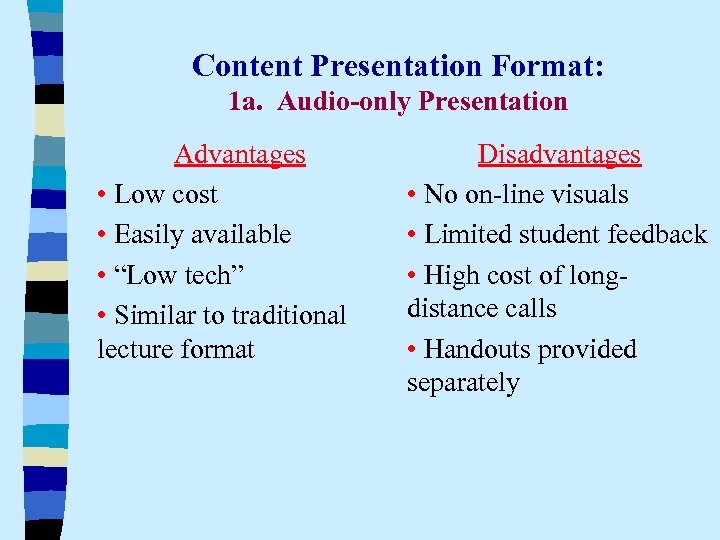 Content Presentation Format: 1 a. Audio-only Presentation Advantages • Low cost • Easily available • “Low tech” • Similar to traditional lecture format Disadvantages • No on-line visuals • Limited student feedback • High cost of longdistance calls • Handouts provided separately
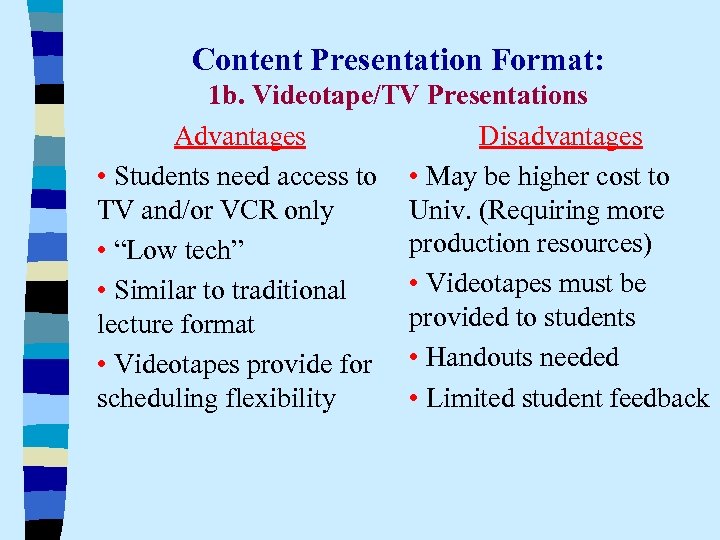 Content Presentation Format: 1 b. Videotape/TV Presentations Advantages Disadvantages • Students need access to • May be higher cost to TV and/or VCR only Univ. (Requiring more production resources) • “Low tech” • Videotapes must be • Similar to traditional provided to students lecture format • Videotapes provide for • Handouts needed scheduling flexibility • Limited student feedback
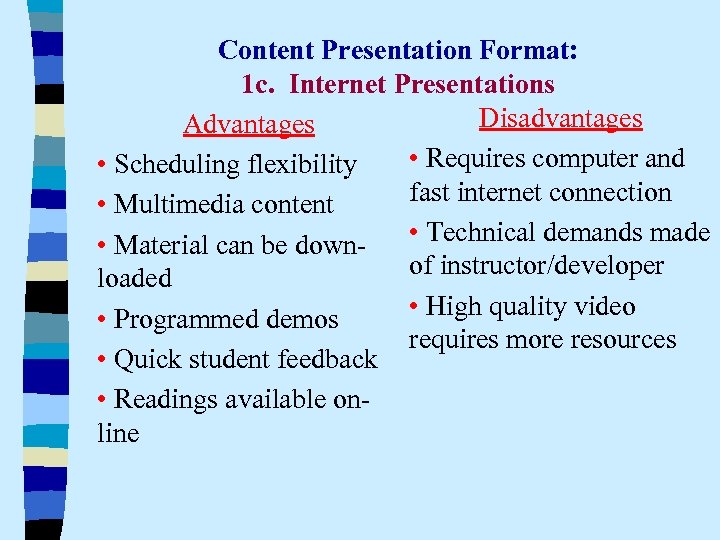 Content Presentation Format: 1 c. Internet Presentations Disadvantages Advantages • Requires computer and • Scheduling flexibility fast internet connection • Multimedia content • Technical demands made • Material can be downof instructor/developer loaded • High quality video • Programmed demos requires more resources • Quick student feedback • Readings available online
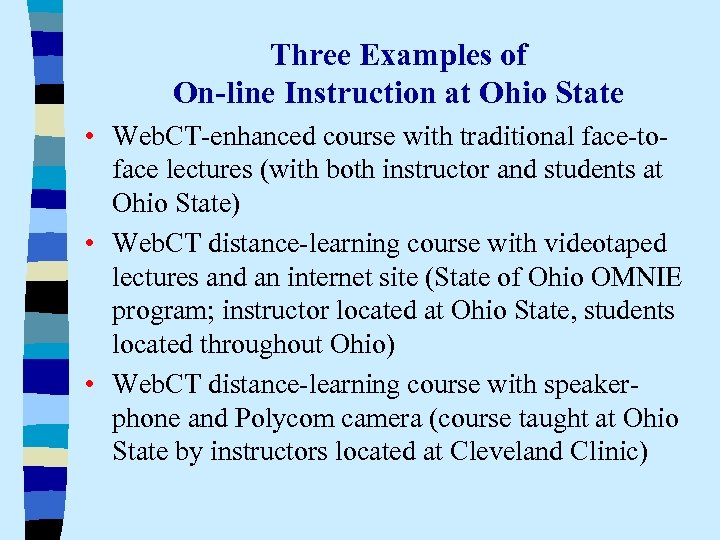 Three Examples of On-line Instruction at Ohio State • Web. CT-enhanced course with traditional face-toface lectures (with both instructor and students at Ohio State) • Web. CT distance-learning course with videotaped lectures and an internet site (State of Ohio OMNIE program; instructor located at Ohio State, students located throughout Ohio) • Web. CT distance-learning course with speakerphone and Polycom camera (course taught at Ohio State by instructors located at Cleveland Clinic)
 Bioacoustics Traditional Lecture Course with Web. Enhancement • Required undergraduate course • Instructors provides lectures and there is a recitation section • Notes and links to useful sites are made available through the web (demonstrations of acoustic principles available) • A set of class exercises available only through the web
 Multicultural Variation in Communication and Its Disorders A Distance-Learning Course • Required Graduate course for OMNIE program • All lectures provided on videotape • Class notes and links to useful sites are made available through the web • Quizzes done through the web • All readings available on the web (except txtbook) • Use of Chat rooms for projects and questions • One face-to-face meeting during quarter
 Adult Hearing Disorders II and III A Distance-Learning Course • Required course for regular audiology program • All lectures live provided through internet or telephone conferencing with internet site • Class notes and links to useful sites are made available through the web • All readings available on the web (except textbook) • No face-to-face meetings during quarter • Uses a GTA for miscellaneous task on campus
 Demonstration of Internet Site (Web. CT) for Multicultural Course • Access to syllabus, course notes, and • • • calendar Instructor-student and student-student communication Access to reserve desk and readings Topic/Class notes Available Glossary On-line Quizzes
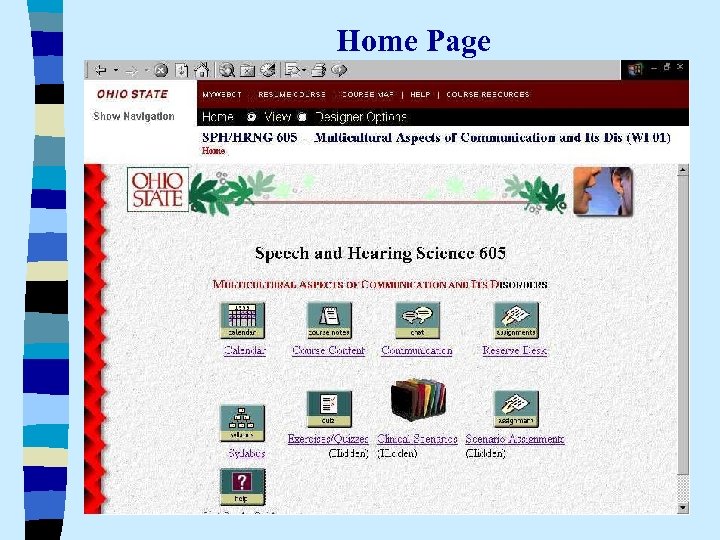 Home Page
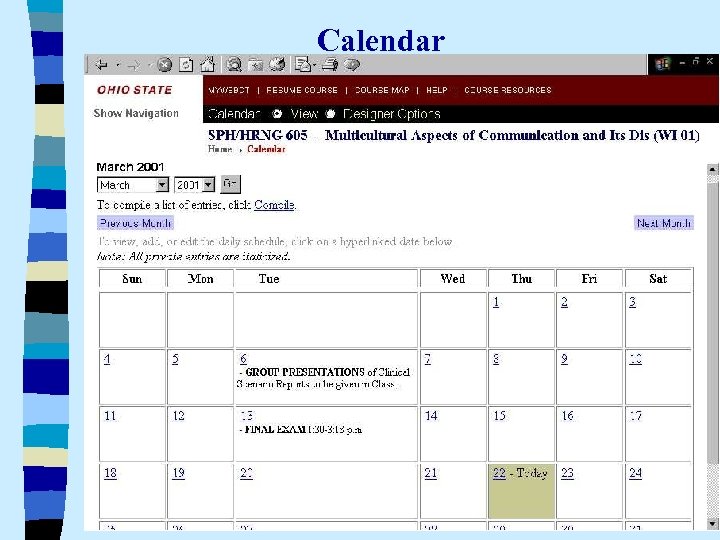 Calendar
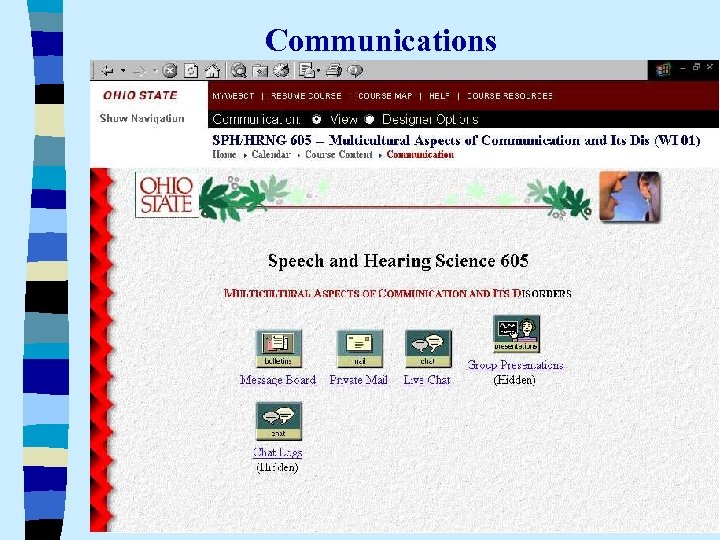 Communications
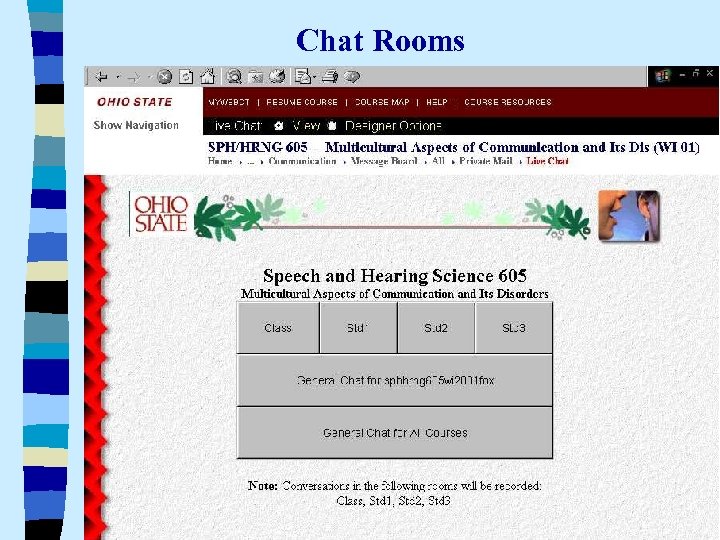 Chat Rooms
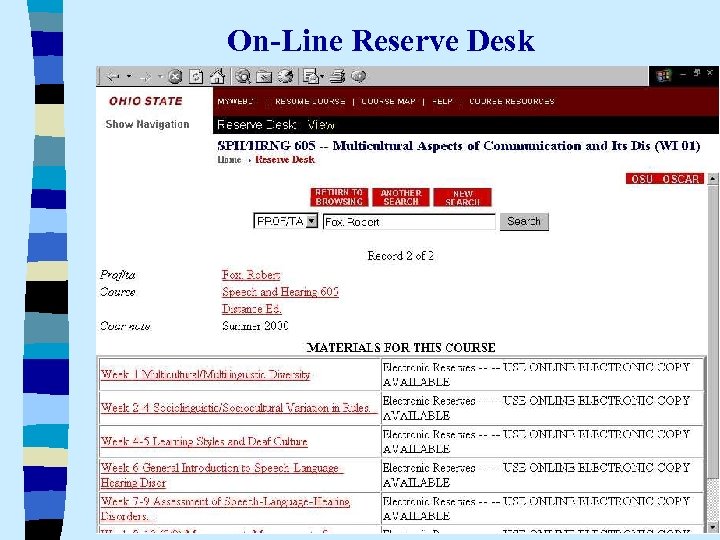 On-Line Reserve Desk
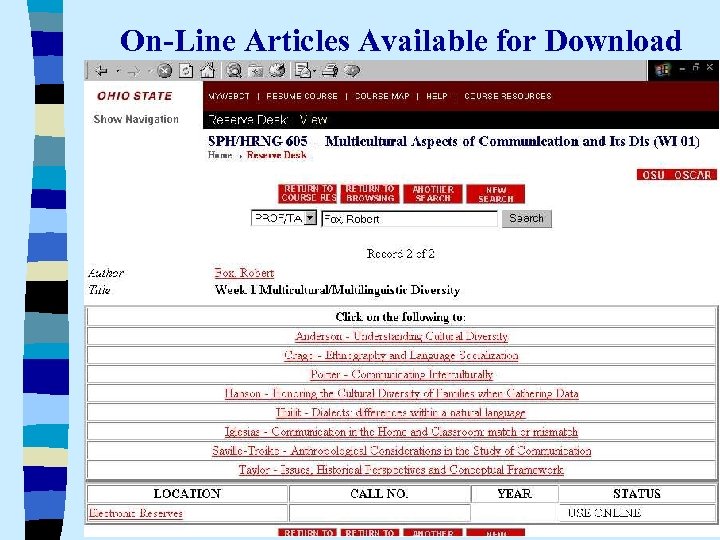 On-Line Articles Available for Download
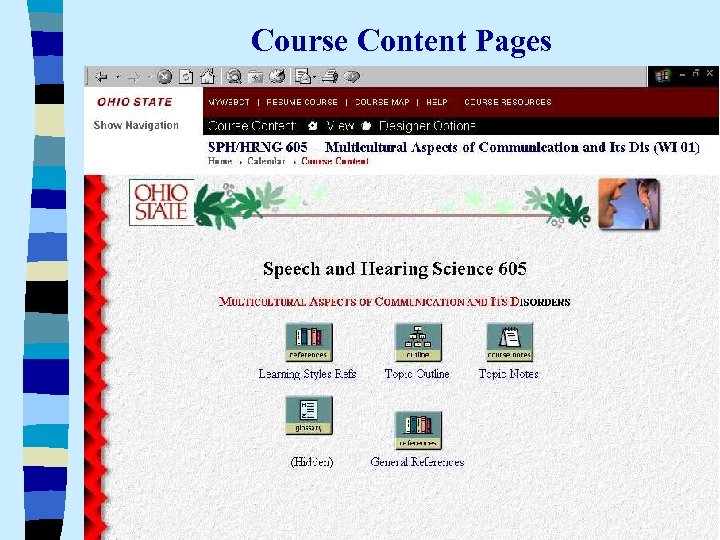 Course Content Pages
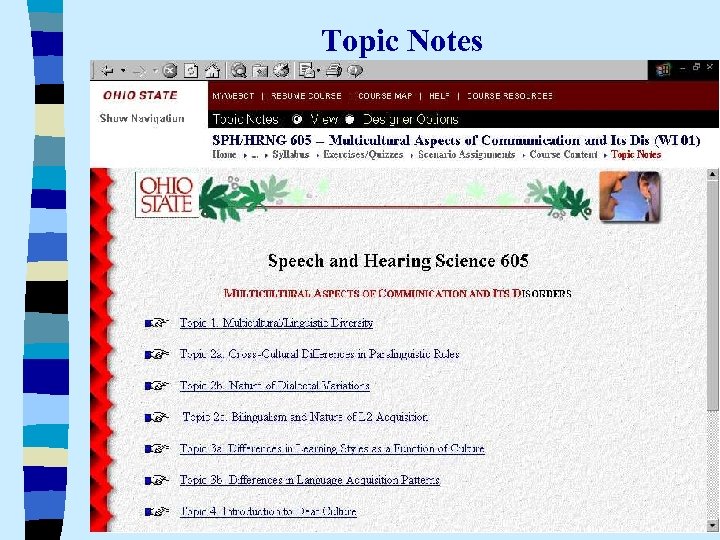 Topic Notes
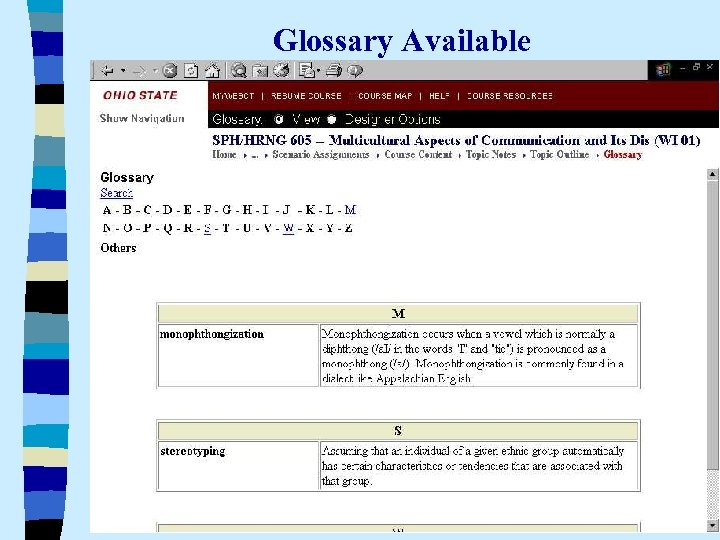 Glossary Available
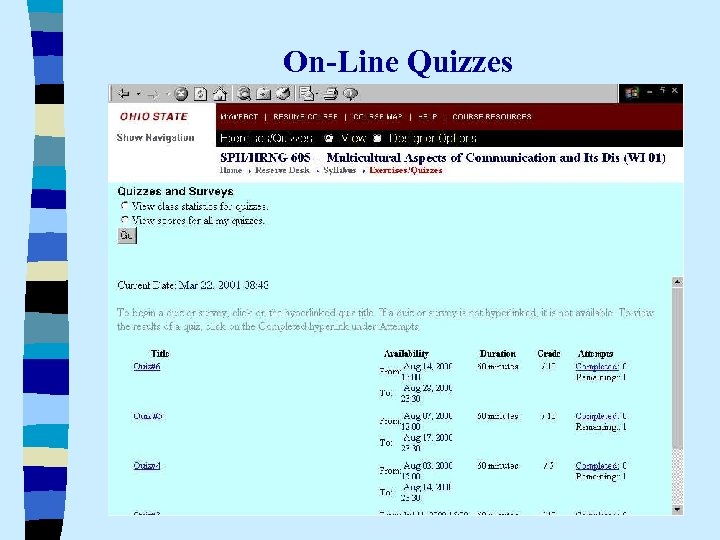 On-Line Quizzes
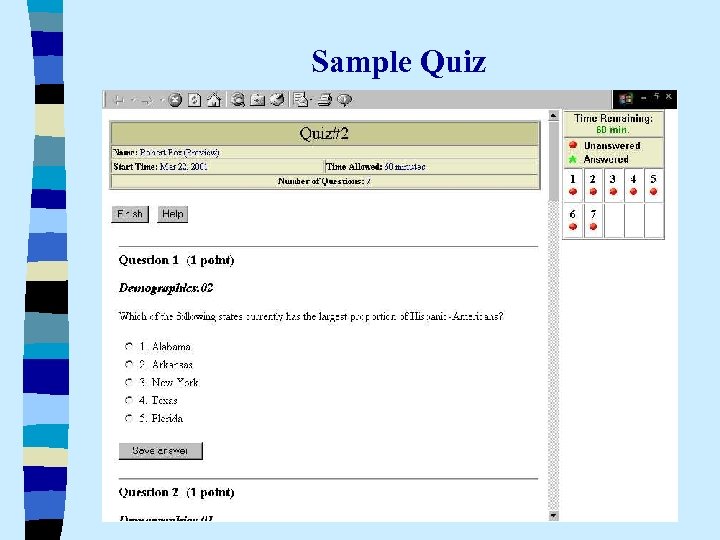 Sample Quiz
 Summary • On-line courses offer many advantages and certainly represents part of our discipline’s future • But offering such courses represents a serious commitment of time, money, and department resources • Know your needs and make your expectations reasonable--make wise choices • Planning is very important--a poorly developed, poorly advertised, and/or technically weak course will not be an advantage to your department