 Скачать презентацию ABS Management Tool International Meeting on Implementation of
730fce82d51bbc4d525d632e81eb1e06.ppt
- Количество слайдов: 25



ABS Management Tool International Meeting on Implementation of the ABS Management Tool October 9, 2007 Montreal Sponsored by: SECO Organized by: IISD, Stratos Inc. , Jorge Cabrera
Meeting Objectives Ø To launch the ABS Management Tool – Final version Ø To build support and engagement for implementation of the ABS Management Tool 2
Agenda 1) Welcome and Introductions 2) The ABS – MT Project and Presentation of the Management Tool 3) Discussion of the Implementation Plan 4) Discussion of Factors for Successful Implementation 5) Next Steps 3
ABS Management Tool Project Phase 1 (2003 - 2004) § Research on ABS and other standards § Development of working draft Management Tool Phase 2 (2004 – 2007) § § Field Testing Outreach and stakeholder consultations Assessment of implementation options Revision and finalization of the ABS-MT International Advisory Committee -------------Supported by Ø Swiss State Secretariat for Economic Affairs (SECO) Executed by Ø IISD Ø Stratos Inc. Ø Jorge Cabrera 4
Project Activities Development of the Management Tool: § § § Working Draft + User Guide – 2004 Revised Working Draft – 2006 Best Practice Standard and Handbook - 2007 Outreach and Stakeholder Engagement Field Testing of the ABS – MT Design of an Implementation Plan 5
Outreach and Feedback Ø Ø Ø Ø CBD Forums Industry Indigenous Peoples Governments Researchers NGOs International ABS Practitioners Workshop - Costa Rica 6
Testing the Management Tool in Practice Ø Field Tests § Use of the ABS-MT in new ABS negotiations (project level) • Australia • Bolivia • Cameroon • Malaysia • Tanzania 7
Lessons Learned – ABS Trends Ø Growing areas of activity § Micro-organisms, plants, animals with novel enzymes § Bulk collection of genetic/biological resources – cosmetics, herbal medicines § New environments – marine, severe environmental conditions Ø Strong demand for international guidance: § By governments, industry, research institutions + communities 8
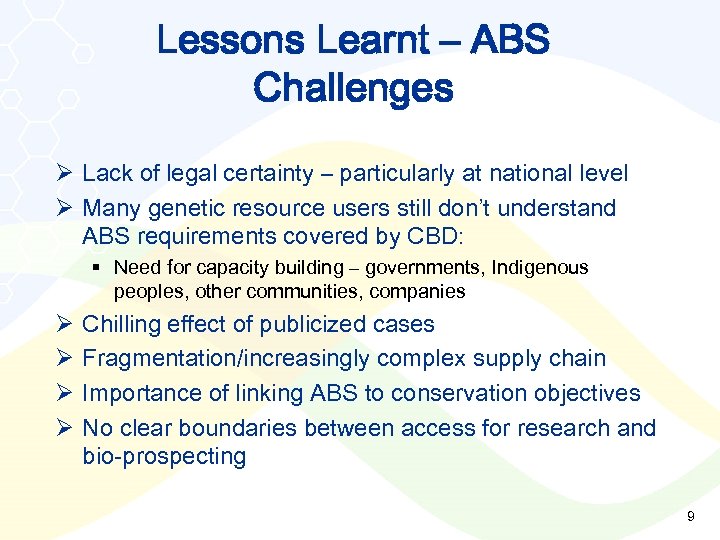
Lessons Learnt – ABS Challenges Ø Lack of legal certainty – particularly at national level Ø Many genetic resource users still don’t understand ABS requirements covered by CBD: § Need for capacity building – governments, Indigenous peoples, other communities, companies Ø Ø Chilling effect of publicized cases Fragmentation/increasingly complex supply chain Importance of linking ABS to conservation objectives No clear boundaries between access for research and bio-prospecting 9
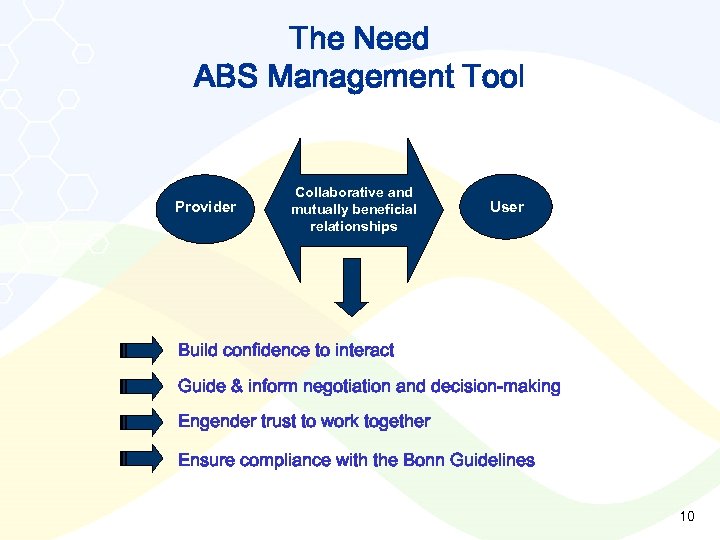
The Need ABS Management Tool Provider Collaborative and mutually beneficial relationships User Build confidence to interact Guide & inform negotiation and decision-making Engender trust to work together Ensure compliance with the Bonn Guidelines 10
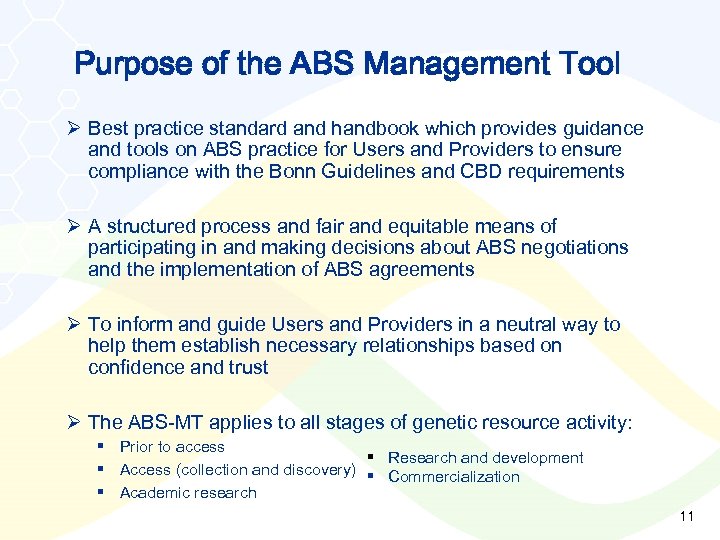
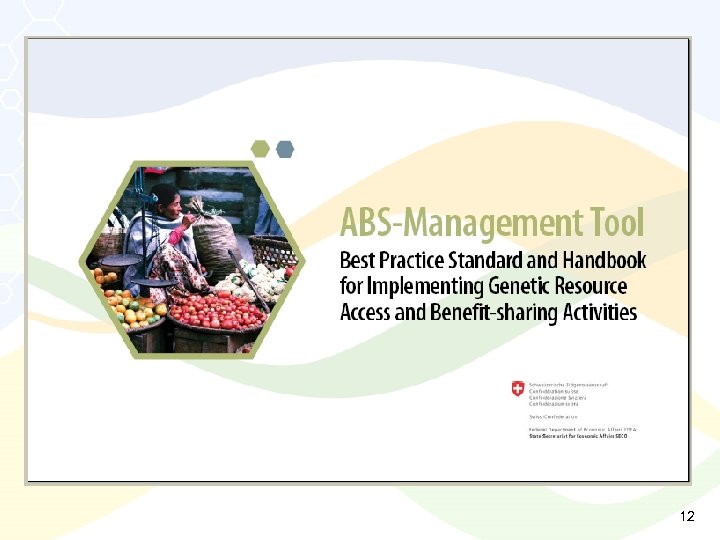
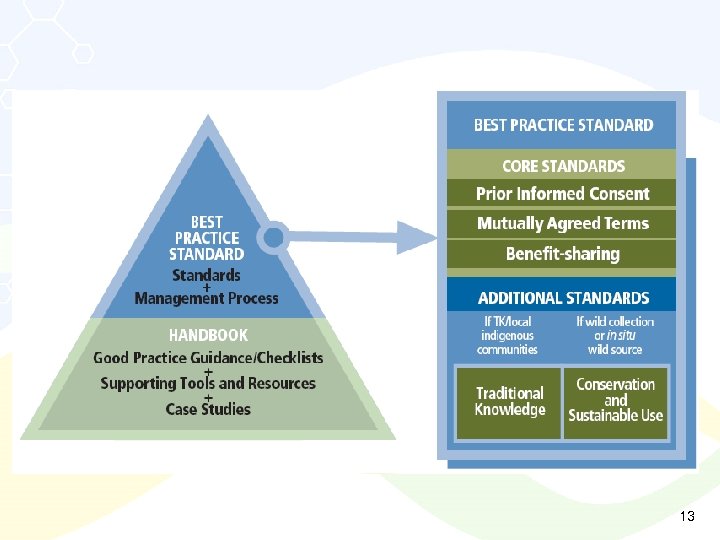
Purpose of the ABS Management Tool Ø Best practice standard and handbook which provides guidance and tools on ABS practice for Users and Providers to ensure compliance with the Bonn Guidelines and CBD requirements Ø A structured process and fair and equitable means of participating in and making decisions about ABS negotiations and the implementation of ABS agreements Ø To inform and guide Users and Providers in a neutral way to help them establish necessary relationships based on confidence and trust Ø The ABS-MT applies to all stages of genetic resource activity: § Prior to access § Research and development § Access (collection and discovery) § Commercialization § Academic research 11
12
13
Management Processes Ø Use in an Organization’s Management System or Procedures Ø Other Management Considerations: § The Participation of Indigenous and Local Communities § Documentation and Information-management sharing § Reporting § Emerging Practices on Certificate of Origin/Compliance with National Law 14
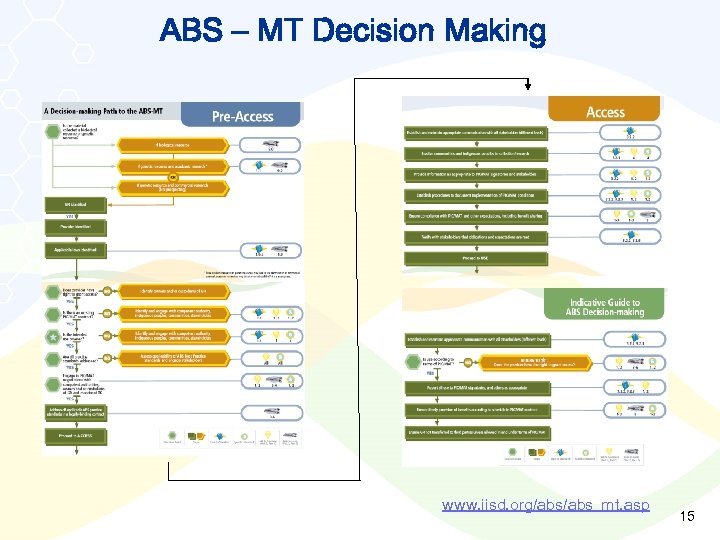
ABS – MT Decision Making www. iisd. org/abs_mt. asp 15
Implementation Support Program Purpose is to facilitate: Ø Broad use of the ABS-MT as a neutral source of guidance to ABS practice; Ø Adoption of the ABS- MT as a recognized ABS best practice standard for compliance with the Bonn Guidelines (and an international regime in the future); and Ø Support to users and providers of genetic resources to improve ABS practices and processes. 16
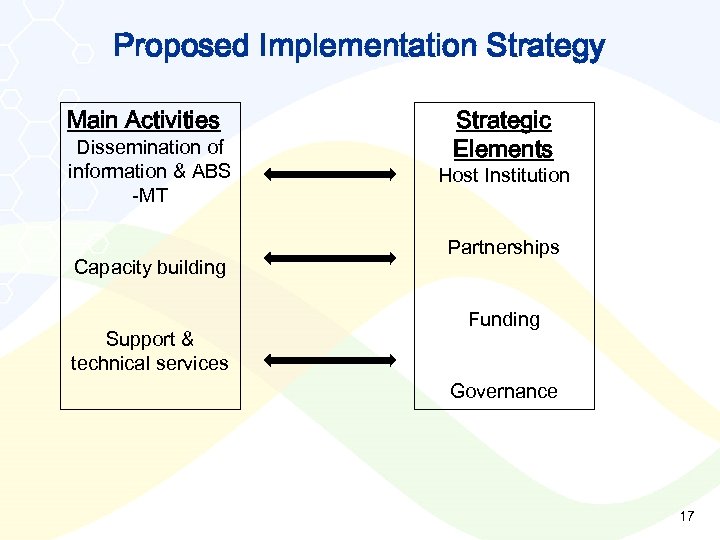
Proposed Implementation Strategy Main Activities Dissemination of information & ABS -MT Capacity building Support & technical services Strategic Elements Host Institution Partnerships Funding Governance 17
Host Institution – Potential TOR • Identify key partner institutions to establish cooperative agreements, joint ventures, or contracted activities to support implementation • Create an active ABS website with an interactive version of the ABS-MT • Promote and provide outreach on use of the ABS-MT through guidance and the dissemination of neutral information • Provide and facilitate capacity building and training for Providers and Users, using the ABS-MT as the basis • Facilitate access to ABS expertise for development of ABS agreements or needed technical assistance through partnerships with other organizations or experts • Liaison with the CBD Secretariat and represent the ABS MT at key international and national meetings related to ABS • Animate the best practice network of ABS practitioners; and • Identify funding sources and submit proposal for on-going funding to support ABS functions and activities 18
Host Institution Selection Ø Criteria § Knowledge of CBD and ABS issues § Perceived as neutral among a range of ABS interests § Experience in developing countries and cross-cultural environments § Existing institutional relationships and networks § Strong communications platforms in place § Organizational management capacity Ø Process § Swiss government (SECO) to identify and select : • Tender; or • Selection and direct negotiation 19
Potential Host Institutions ABS-MT Office would best be housed in an existing organization. Four neutral and internationally recognized organizations have been identified as possible hosts for an ABS-MT Office: Ø IUCN – The World Conservation Union ; Ø UNCTAD Bio. Trade Program; Ø United Nations University – Institute for Advanced Studies (UNUIAS); Ø the International Development Research Centre (IDRC). Ø Other? 20
Potential Partnerships Ø Industry associations active on ABS; Ø Organizations promoting the use of related standards such as the § Bio. Trade Facilitation Program (BTFP); and § the IUCN/WWF/Bf. N International Standard for Sustainable Wild Collection of Medicinal and Aromatic Plants (ISSC-MAP) Ø Research institutions; Ø Aboriginal and community groups; Ø Inter-governmental /multilateral organizations; Ø International NGOs; Ø Foundations ; and Ø Professional societies. 21
Fundraising + Potential Donors Ø To date, funding has been provided by SECO. Ø Potential donors can include: § foundations § bilateral donors § multilateral donors § industry. 22
Governance Ø Adoption and wide use of the ABS-MT will require international support and endorsement. Ø The Implementation Program may benefit from a governance structure which brings together key interests with a stake in the successful application of the ABS-MT. Possible elements of such a governance structure could include: 1) An International Steering Committee – with representation or individual membership from a regionally balanced set of interests – government, Indigenous and communities, industry, research community and NGOs; 2) A Tecnhnical Advisory Committee comprising of experts from a variety of disciplines and aspects of ABS practice; and 3) A Network of ABS Practitioners to ensure that the ABS MT remains up-to-date in its application, informed by experience and best practices around the world. 23
Factors for Successful Implementation Key factors for successful implementation of the ABS-MT: Ø Authoritative endorsement Ø Widely distributed Ø Adopted and applied Ø Feasible plan in place Ø Other? 24
Initiating the Implementation Support Program 1. Identify and select host institution 2. Fundraising from a variety of sources 3. Establishment of initial partnerships 4. Mounting web based version of ABS - MT 5. Broad dissemination of the ABS-MT 25
Скачать презентацию ABS Management Tool International Meeting on Implementation of
730fce82d51bbc4d525d632e81eb1e06.ppt