


About plants
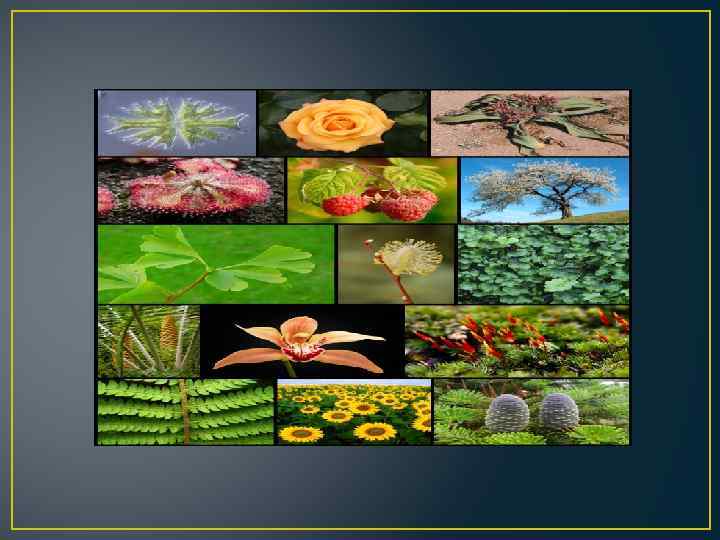
• Plants, also called green plants (Viridiplantae in Latin), are multicellular eukaryotes of the kingdom Plantae. They form a clade that includes the flowering plants, conifers and other gymnosperms, ferns, clubmosses, hornworts, liverworts, mosses and the green algae. Plants exclude the red and brown algae, animals, the fungi, archaea and bacteria.

• The vegetative Plant body customarily consists of three general kinds of parts called roots, stems, flowers and leaves.
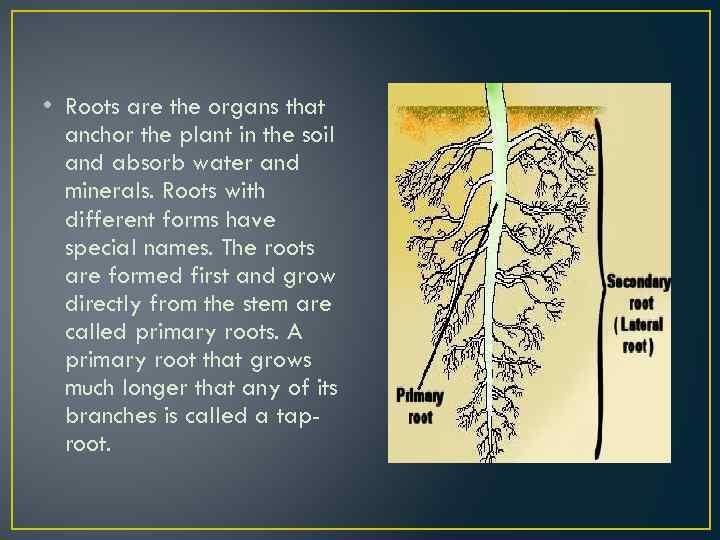
• Roots are the organs that anchor the plant in the soil and absorb water and minerals. Roots with different forms have special names. The roots are formed first and grow directly from the stem are called primary roots. A primary root that grows much longer that any of its branches is called a taproot.
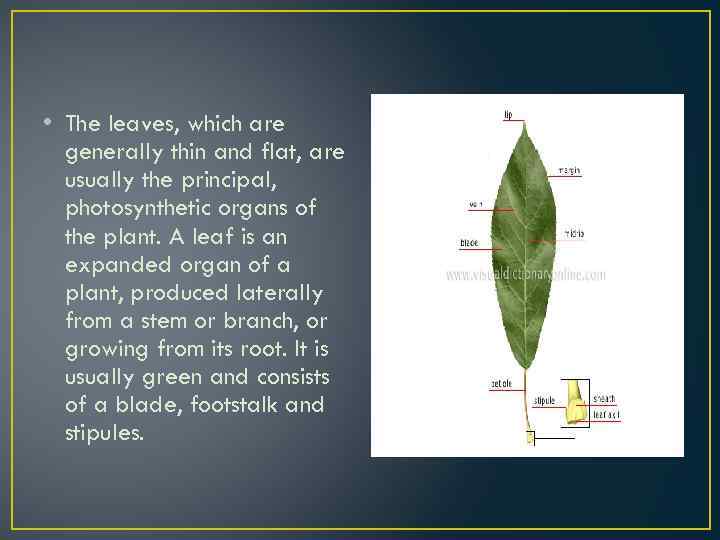
• The leaves, which are generally thin and flat, are usually the principal, photosynthetic organs of the plant. A leaf is an expanded organ of a plant, produced laterally from a stem or branch, or growing from its root. It is usually green and consists of a blade, footstalk and stipules.
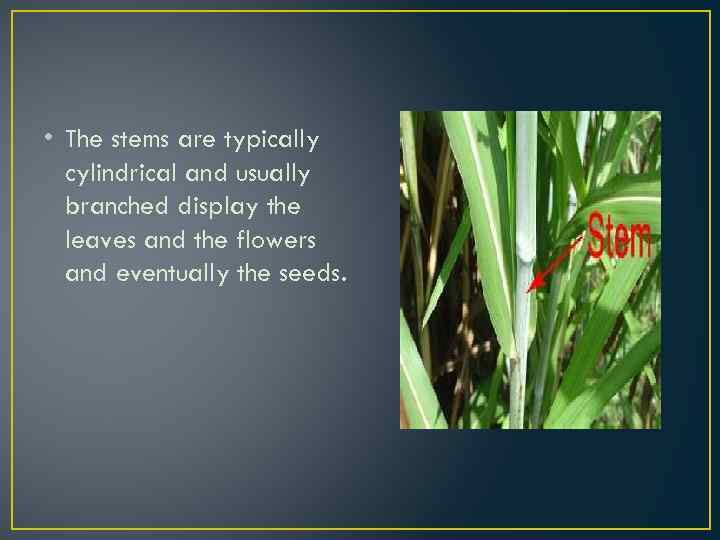
• The stems are typically cylindrical and usually branched display the leaves and the flowers and eventually the seeds.
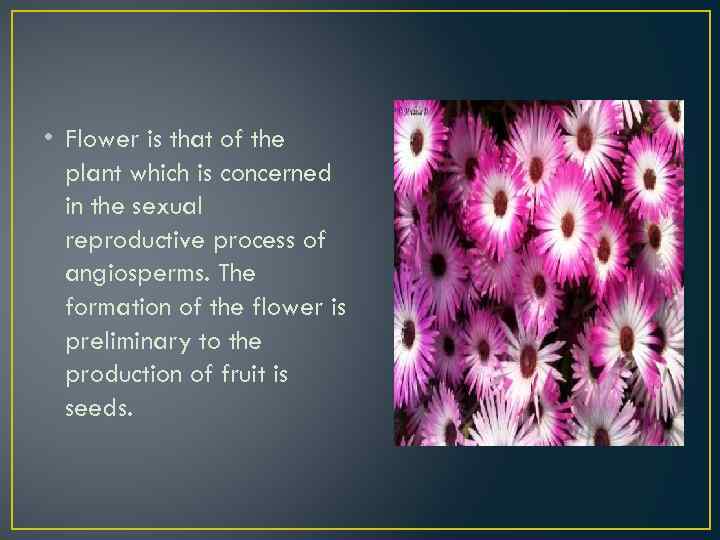
• Flower is that of the plant which is concerned in the sexual reproductive process of angiosperms. The formation of the flower is preliminary to the production of fruit is seeds.
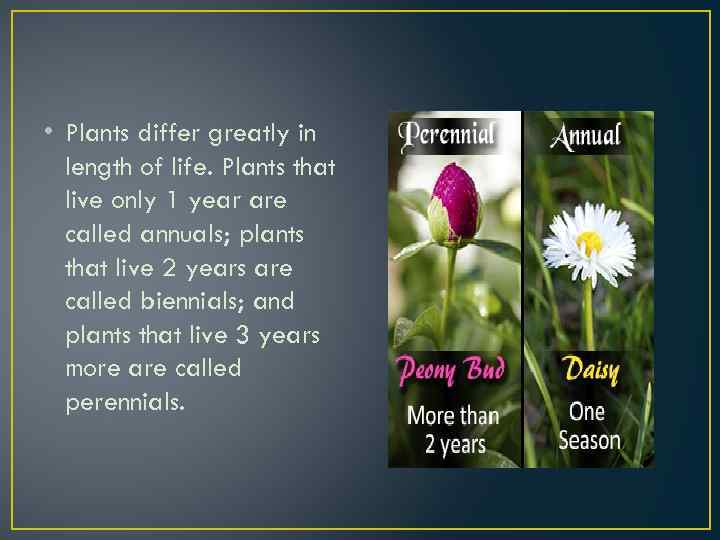
• Plants differ greatly in length of life. Plants that live only 1 year are called annuals; plants that live 2 years are called biennials; and plants that live 3 years more are called perennials.
• • • There are four important different groups of plants: Thallus plants or Thallophytes Moss plants or Bryophytes Fernlike plants or Pteridophytes Seed plants or Spermatophytes.
• Thallophytes are the lowest and simplest of all plants. The group includes the one-celled bacteria, the algae, and the fungi, like the molds that are often seen growing on bread cheese. • Bryophytes includes the mosses, lichens and liverwords that are found in forests. There are have no true roots or stems. Instead of leaves they have green, leaflike scales. Most plants belonging to this division are quite small.
• Fernlike plants includes the ferns, quillworts, and club mosses. These plants have neither flowers nor seeds, but they are divided into distinct parts, including roots, stems and leaves. • Seed plants have the most complex structure. These are the only plants that have flowers and reproduce by fertilization with pollen. Such plants include our common grasses, vegetables, most trees, shrubs, flowers and many others.

Thank you for your attention
