


 Скачать презентацию A Watershed Analysis of Threemile Pond Implications for
c46a1218ebc6764f847a5f241eaa2466.ppt
- Количество слайдов: 54
 A Watershed Analysis of Threemile Pond: Implications for water quality and land use management Colby College Environmental Assessment Team Colby College Biology Department, Waterville, ME December 4, 2003
 Presentation Overview Introduction Water Quality Analysis Land Use Analysis -Intermission. GIS Analysis and Models Development Recommendations
 Anna Sommo Introduction Characteristics of Maine Lakes Threemile Pond Overview Study Objectives
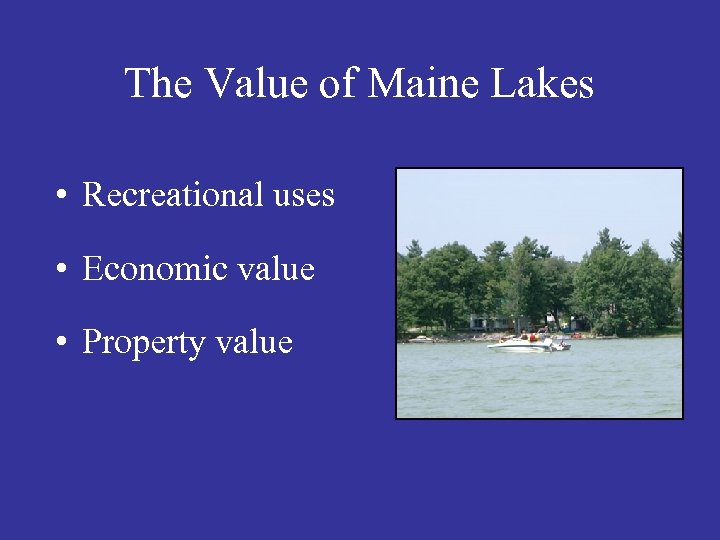 The Value of Maine Lakes • Recreational uses • Economic value • Property value
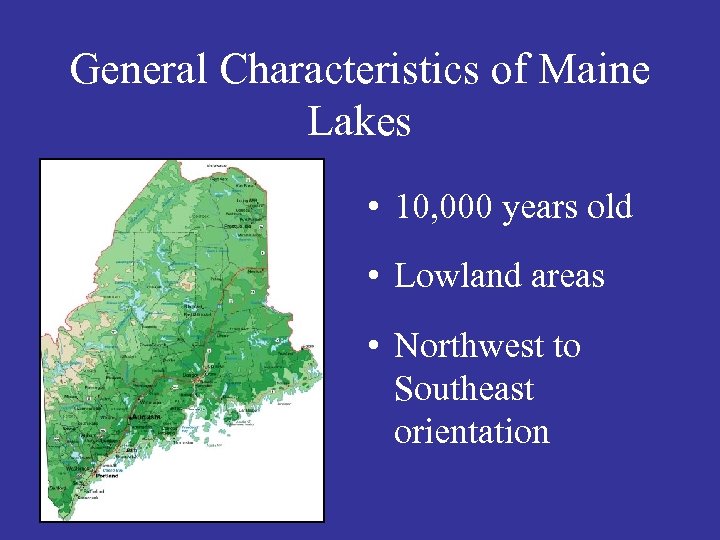 General Characteristics of Maine Lakes • 10, 000 years old • Lowland areas • Northwest to Southeast orientation
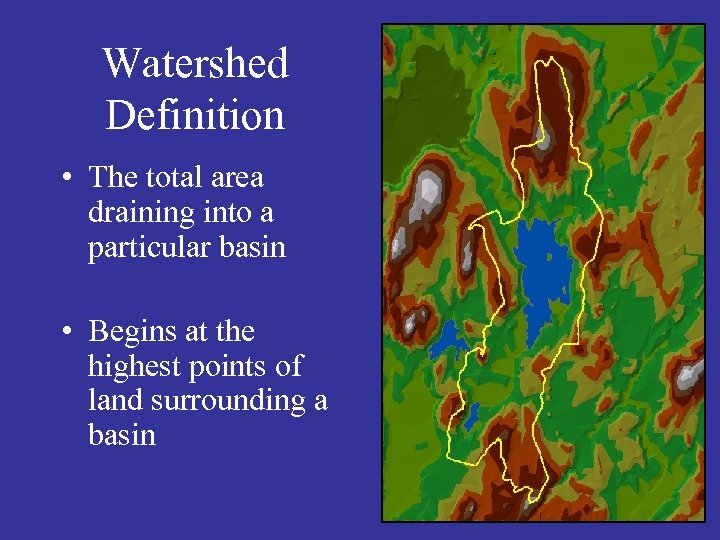 Watershed Definition • The total area draining into a particular basin • Begins at the highest points of land surrounding a basin
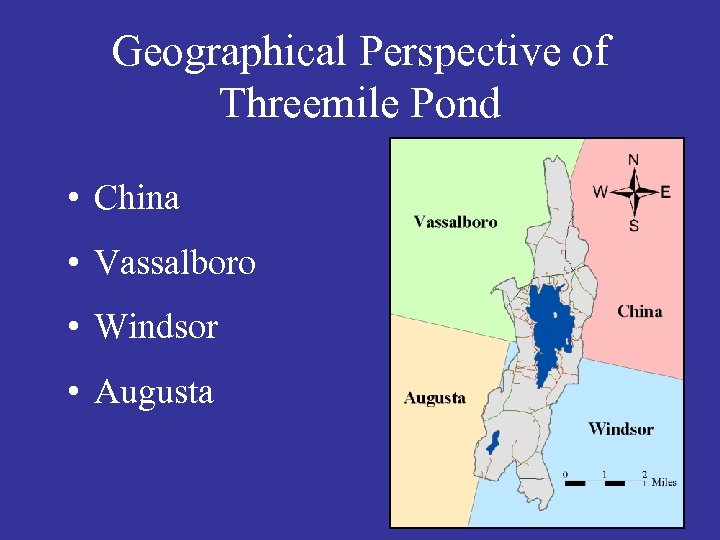 Geographical Perspective of Threemile Pond • China • Vassalboro • Windsor • Augusta
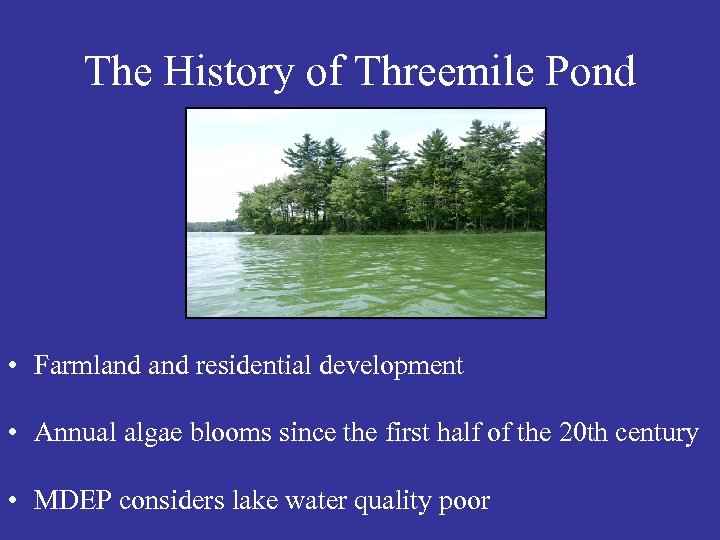 The History of Threemile Pond • Farmland residential development • Annual algae blooms since the first half of the 20 th century • MDEP considers lake water quality poor
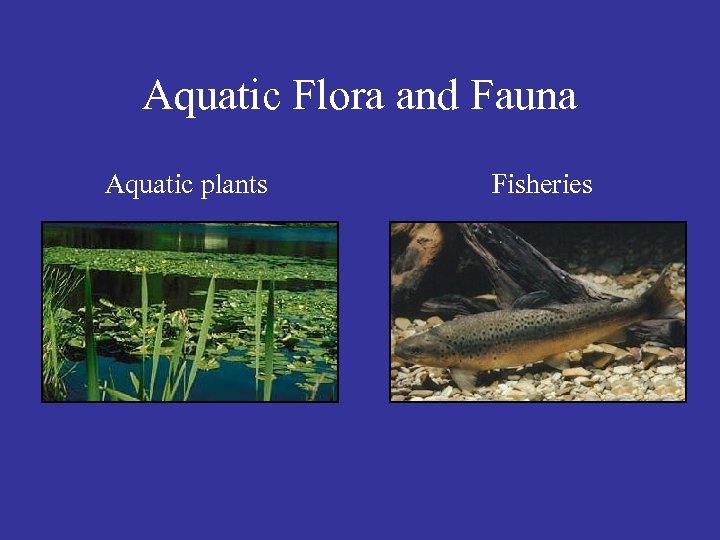 Aquatic Flora and Fauna Aquatic plants Fisheries
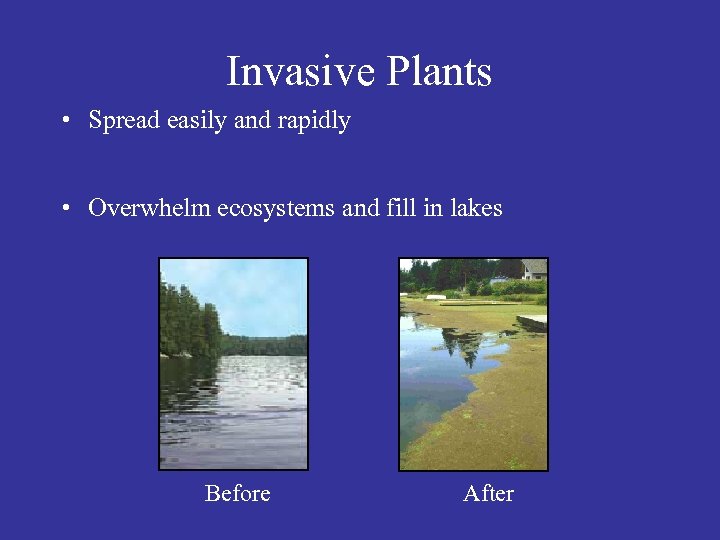 Invasive Plants • Spread easily and rapidly • Overwhelm ecosystems and fill in lakes Before After
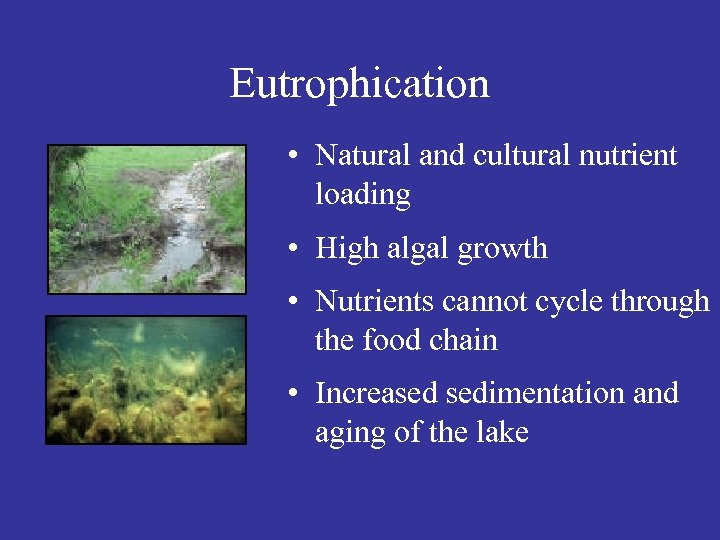 Eutrophication • Natural and cultural nutrient loading • High algal growth • Nutrients cannot cycle through the food chain • Increased sedimentation and aging of the lake
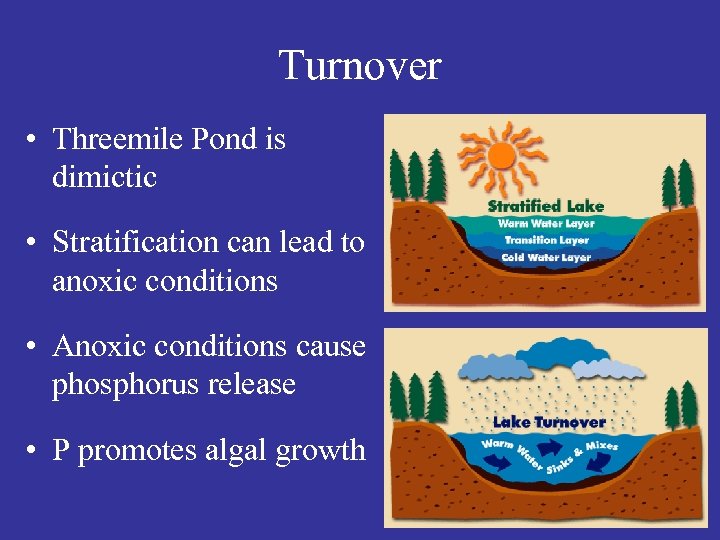 Turnover • Threemile Pond is dimictic • Stratification can lead to anoxic conditions • Anoxic conditions cause phosphorus release • P promotes algal growth
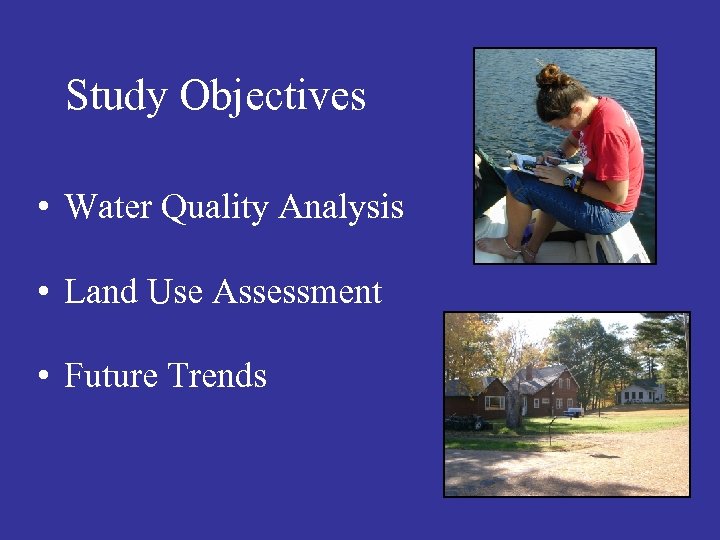 Study Objectives • Water Quality Analysis • Land Use Assessment • Future Trends
 Water Quality Bethany Craig
 Overview • Sample site locations • Physical measurements • Chemical tests
 Sample Site Locations • 3 Characterization Sites • 5 Spot Sites • 4 Tributary Sites
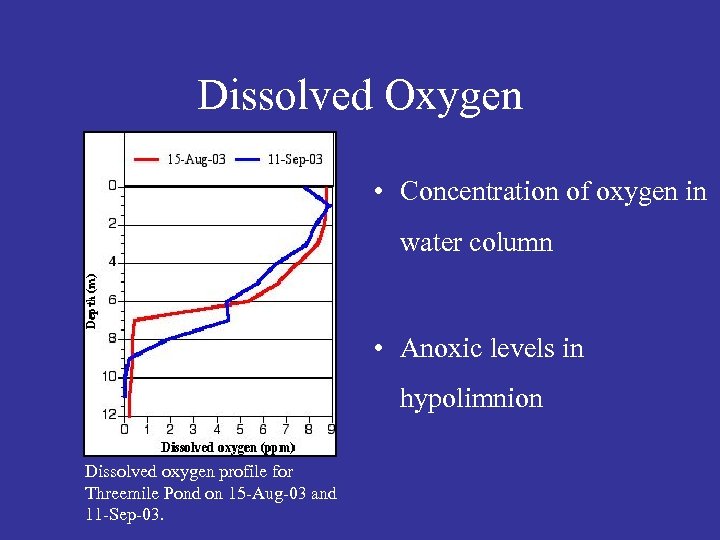 Dissolved Oxygen • Concentration of oxygen in water column • Anoxic levels in hypolimnion Dissolved oxygen profile for Threemile Pond on 15 -Aug-03 and 11 -Sep-03.
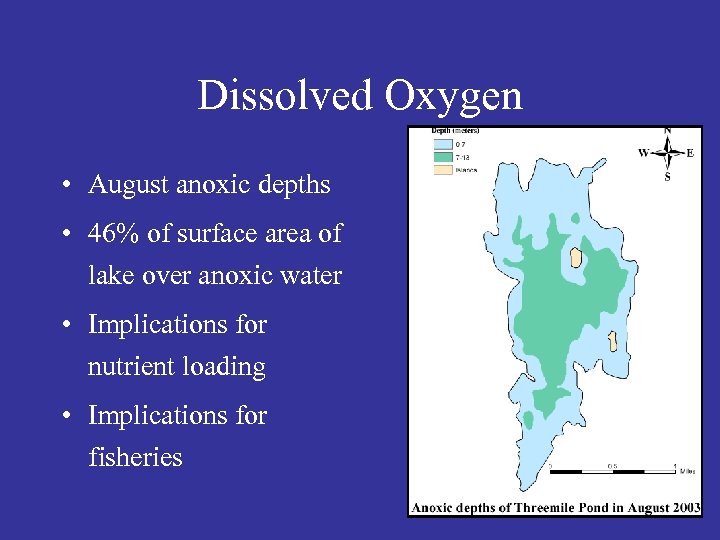 Dissolved Oxygen • August anoxic depths • 46% of surface area of lake over anoxic water • Implications for nutrient loading • Implications for fisheries
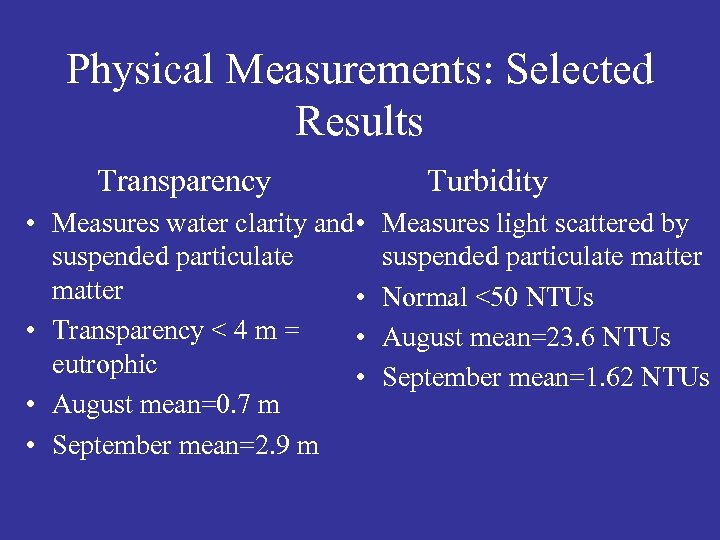 Physical Measurements: Selected Results Transparency • Measures water clarity and • suspended particulate matter • • Transparency < 4 m = • eutrophic • • August mean=0. 7 m • September mean=2. 9 m Turbidity Measures light scattered by suspended particulate matter Normal <50 NTUs August mean=23. 6 NTUs September mean=1. 62 NTUs
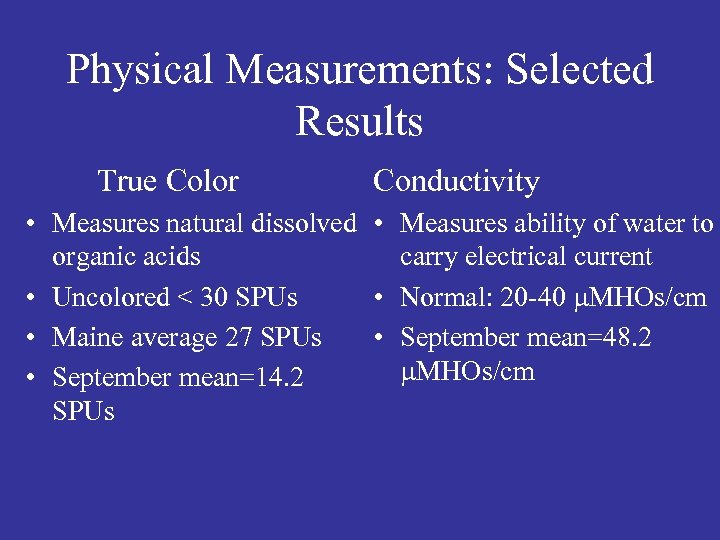 Physical Measurements: Selected Results True Color Conductivity • Measures natural dissolved • Measures ability of water to organic acids carry electrical current • Uncolored < 30 SPUs • Normal: 20 -40 MHOs/cm • Maine average 27 SPUs • September mean=48. 2 MHOs/cm • September mean=14. 2 SPUs
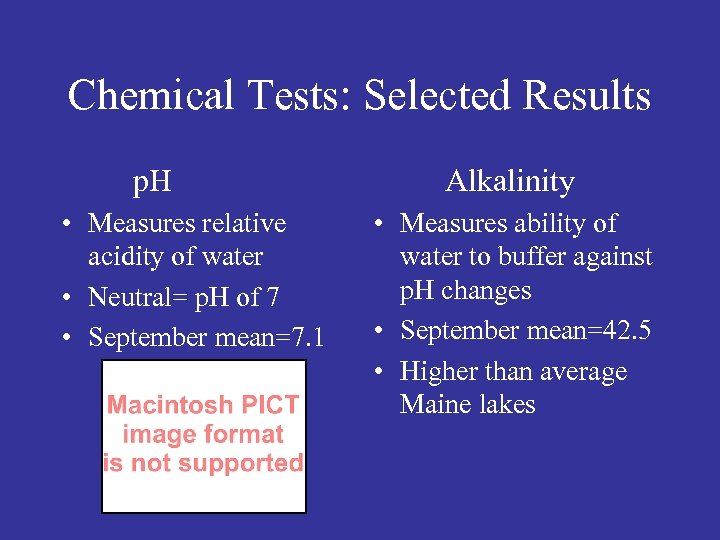 Chemical Tests: Selected Results p. H • Measures relative acidity of water • Neutral= p. H of 7 • September mean=7. 1 Alkalinity • Measures ability of water to buffer against p. H changes • September mean=42. 5 • Higher than average Maine lakes
 Chemical Tests: Selected Results Hardness • Measures concentration of Magnesium and Calcium ions • Soft water 0 to 60 mg/L • September mean= 4. 04 mg/L • Soft water implications
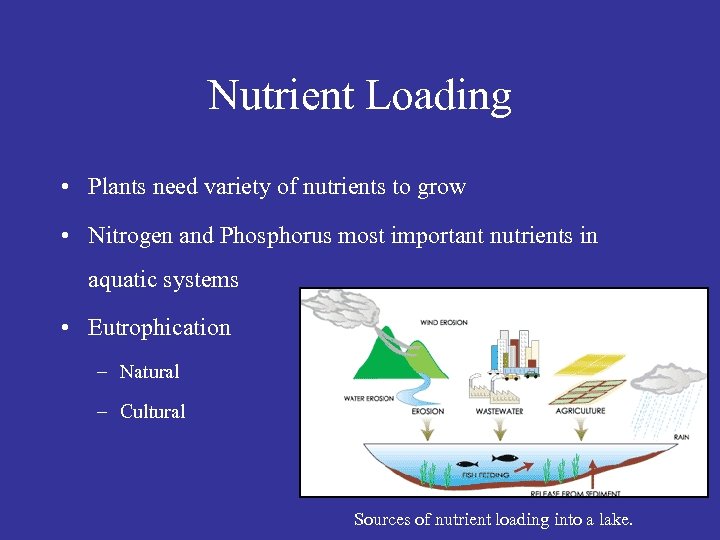 Nutrient Loading • Plants need variety of nutrients to grow • Nitrogen and Phosphorus most important nutrients in aquatic systems • Eutrophication – Natural – Cultural Sources of nutrient loading into a lake.
 Nitrates and Nitrites • Measures total amount of nitrates and nitrites in water • Sources – Fertilizers – Septic tanks and animal waste • Normal < 1 ppm • September mean =0. 06 ppm Threemile Pond boat ramp
 Phosphorus Tom Rogers
 Phosphorus • Why phosphorus is important to study • Historical phosphorus data for Threemile Pond • Current phosphorus data for Threemile Pond • How Threemile Pond compares with other Maine lakes • Water budget
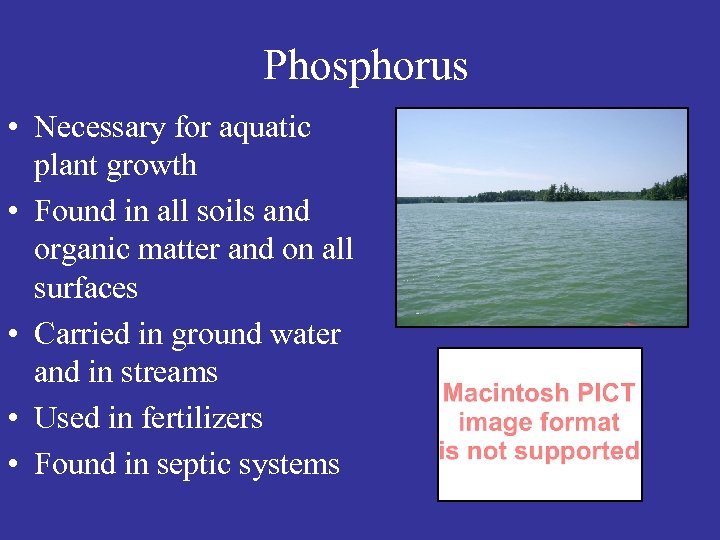 Phosphorus • Necessary for aquatic plant growth • Found in all soils and organic matter and on all surfaces • Carried in ground water and in streams • Used in fertilizers • Found in septic systems
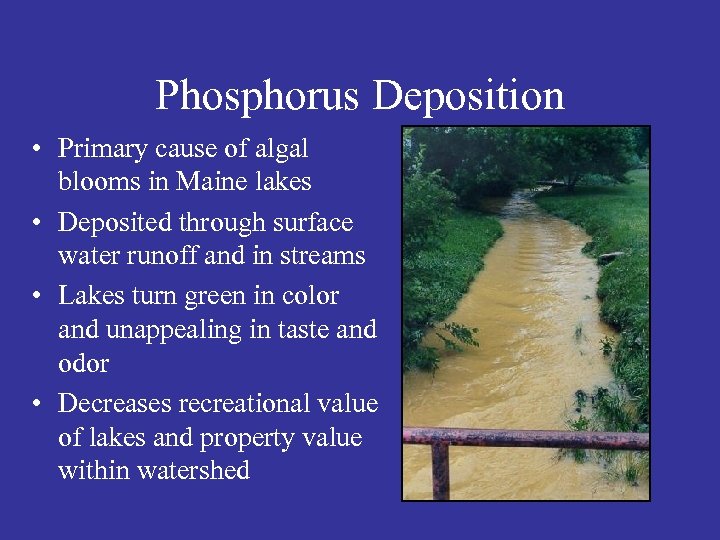 Phosphorus Deposition • Primary cause of algal blooms in Maine lakes • Deposited through surface water runoff and in streams • Lakes turn green in color and unappealing in taste and odor • Decreases recreational value of lakes and property value within watershed
 Historical Total Phosphorus- Threemile Pond Critical phosphorus limit for algal blooms =15 ppb
 August 2003 Phosphorus Readings
 Phosphorus for Surrounding Lakes in Recent Years
 September 2003 Phosphorus Readings
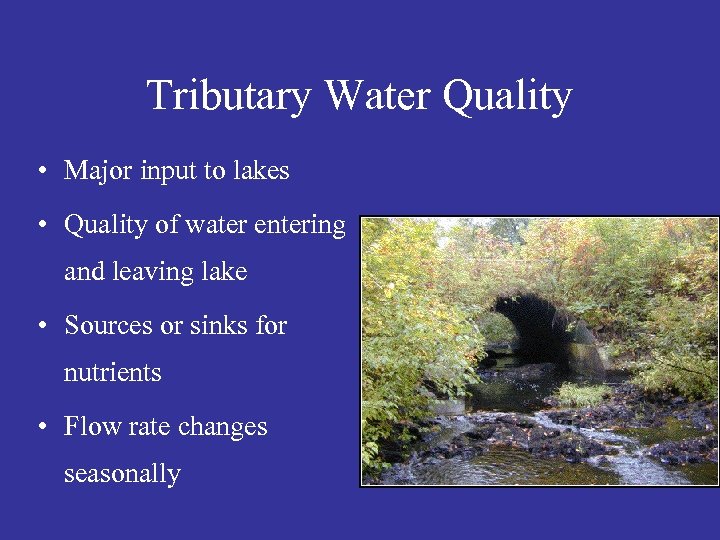 Tributary Water Quality • Major input to lakes • Quality of water entering and leaving lake • Sources or sinks for nutrients • Flow rate changes seasonally
 Tributary Data for Sept. 2003 • Sites 9 and 10 -Seward Mills Brook --Outlet • Site 11 -Unnamed stream from wetlands --Inlet • Site 12 -Barton Brook from Threecornered Pond & Mud Pond --Inlet
 Water Budget -Flushing Rate • Rate at which a lake replenishes water • Given for lakes of similar area and depth to Threemile Pond
 Land Use Kelly Welch
 Overview • Introduction to land use • Historical land use trends • Land use categories • Results • Summary of findings
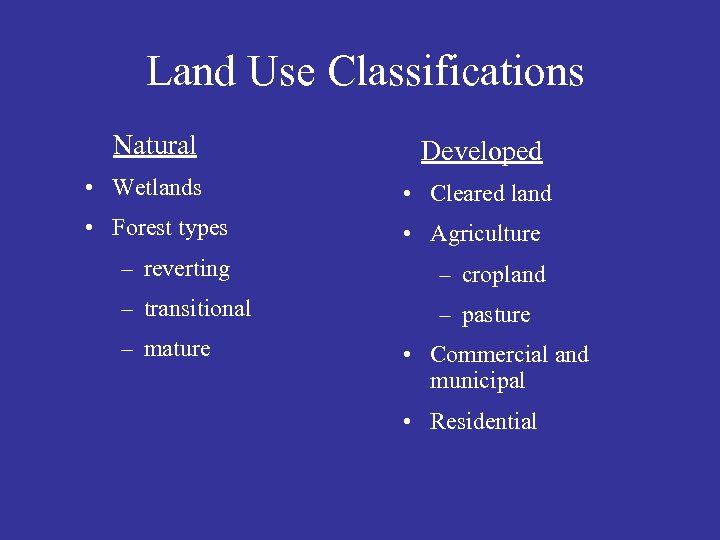
 Watershed Land Use • Examined land use changes between 1956 and 1998 • Why examine land use changes? – Effects of land use types – Historic trends – Identify potential sources of pollution
 Regional Land Use Trends • Decline in agriculture throughout New England • Maine State trends – 90% forested – 3% agriculture – 2% urban – 5% other (wetlands, residential, transportation uses)
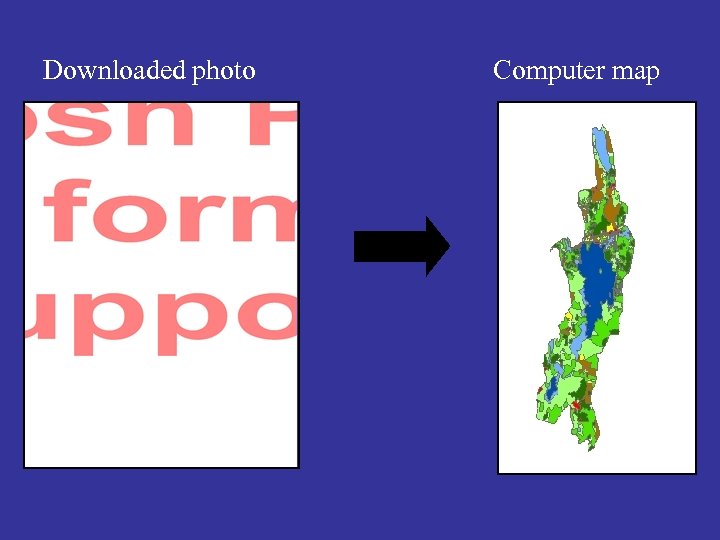
 Maps • Used digital orthophoto quadrangles downloaded from the Maine Office of GIS for 1998 • Aerial photos for 1956 • Computer program Arc. Map. TM
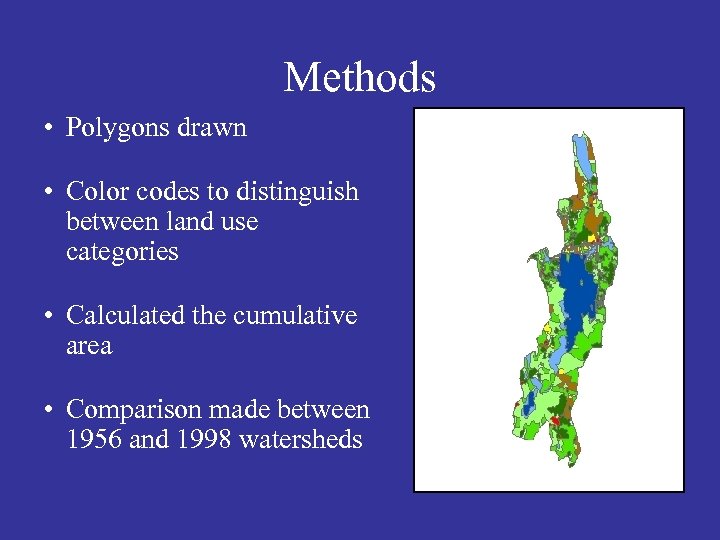 Methods • Polygons drawn • Color codes to distinguish between land use categories • Calculated the cumulative area • Comparison made between 1956 and 1998 watersheds
 Downloaded photo Computer map
 Land Use Classifications Natural Developed • Wetlands • Cleared land • Forest types • Agriculture – reverting – cropland – transitional – pasture – mature • Commercial and municipal • Residential
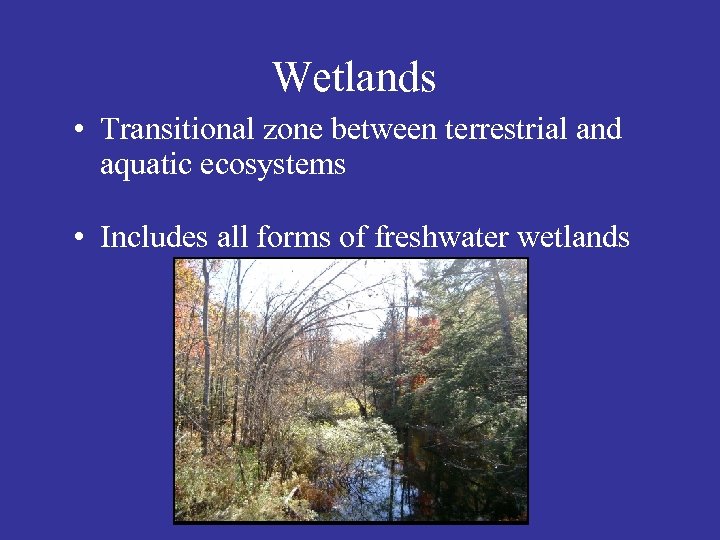 Wetlands • Transitional zone between terrestrial and aquatic ecosystems • Includes all forms of freshwater wetlands
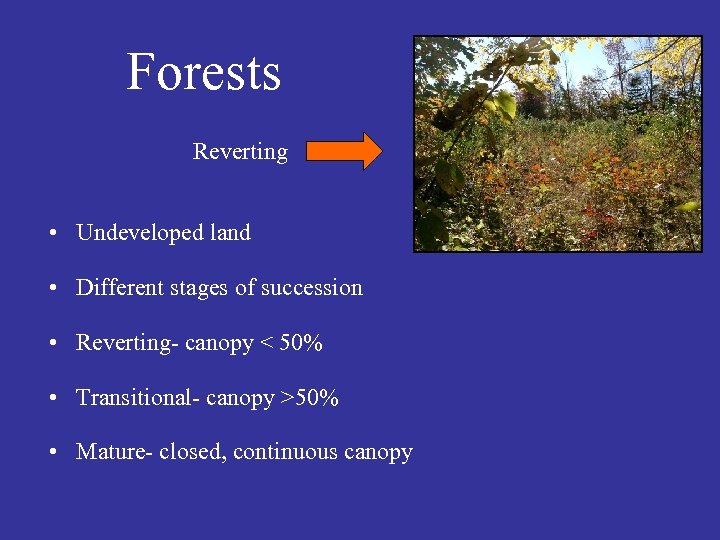 Forests Reverting • Undeveloped land • Different stages of succession • Reverting- canopy < 50% • Transitional- canopy >50% • Mature- closed, continuous canopy
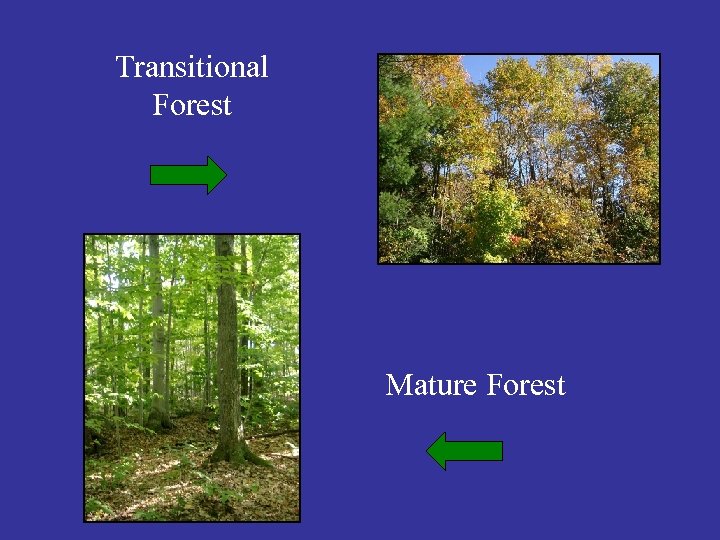 Transitional Forest Mature Forest
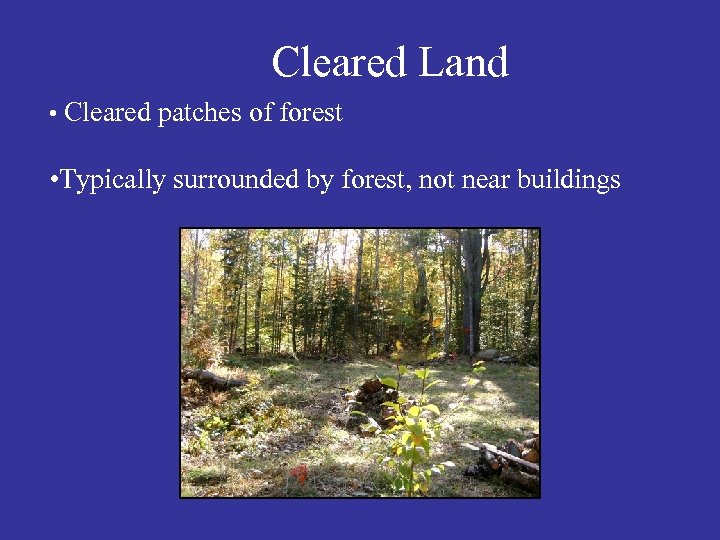 Cleared Land • Cleared patches of forest • Typically surrounded by forest, not near buildings
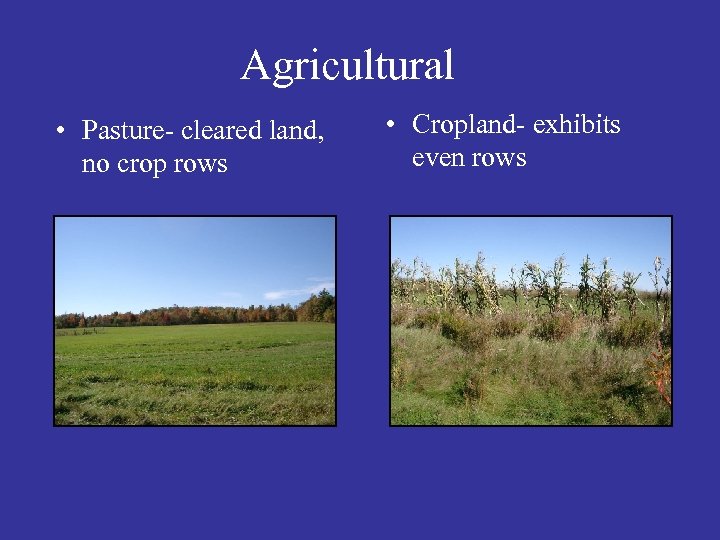 Agricultural • Pasture- cleared land, no crop rows • Cropland- exhibits even rows
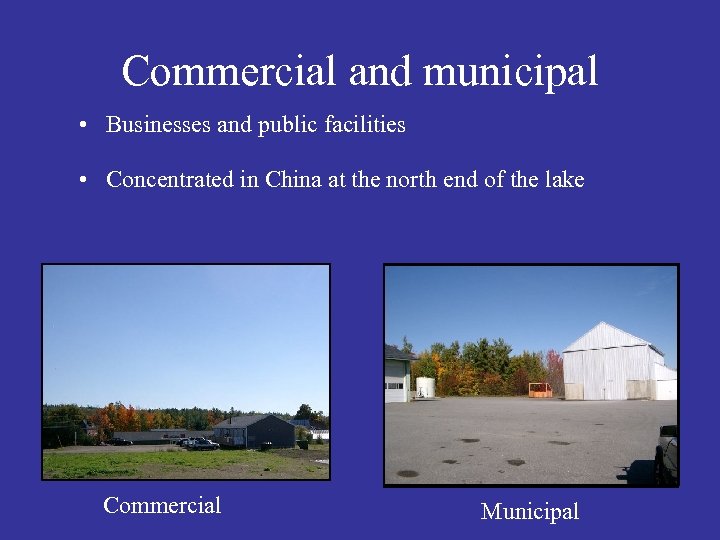 Commercial and municipal • Businesses and public facilities • Concentrated in China at the north end of the lake Commercial Municipal
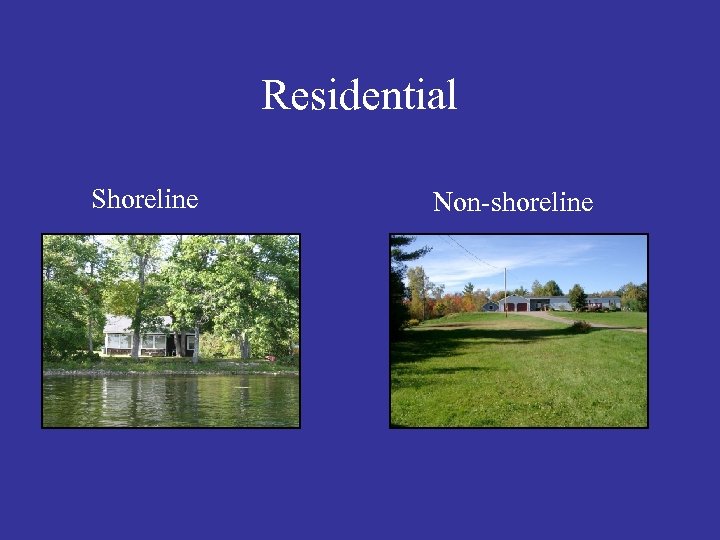 Residential Shoreline Non-shoreline
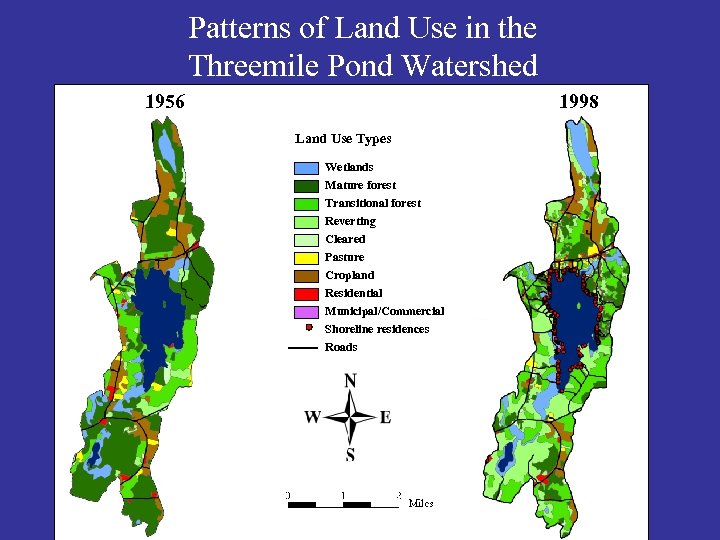 Patterns of Land Use in the Threemile Pond Watershed 1956 1998 Land Use Types Wetlands Mature forest Transitional forest Reverting Cleared Pasture Cropland Residential Municipal/Commercial Shoreline residences Roads
 Percent of the watershed covered by each land use category <1% 1956 1998
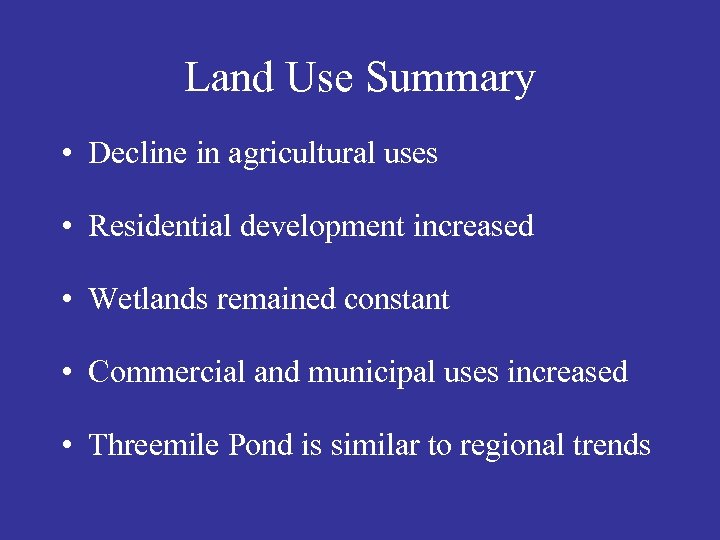 Land Use Summary • Decline in agricultural uses • Residential development increased • Wetlands remained constant • Commercial and municipal uses increased • Threemile Pond is similar to regional trends
 Intermission