 Скачать презентацию A UN Decade of Education for Sustainable Development
1c248329152b0a27d1fc4f030849b127.ppt
- Количество слайдов: 26



A UN Decade of Education for Sustainable Development: What difference will it make? Daniella Tilbury Professor of Sustainability University of Gloucestershire Chair, UN Global Monitoring and Evaluation Expert Group for DESD (MEEG)
A UN Decade of ESD The UN General Assembly declared 20052014 a UN Decade of Education for Sustainable Development (DESD). The launch of the DESD marked the beginning of a worldwide movement which seeks to improve opportunities and quality in ESD. As a global initiative, the DESD is challenging education sectors to reorient their activities towards sustainable development and to play a leading role in championing change.
A UN Decade of ESD Brief Presentation: 1. Intentions and realities of the DESD. 2. Monitoring and evaluation processes of the DESD 3. Some reflection on what DESD can mean to the UK FHE sector. Identify ways in which the UK FHE Sector could contribute to international activities set in motion by the Decade. Raise questions about what the sector can achieve by 2015 under the banner of the Decade.
The Intentions of the DESD Goal: to provide every person access to education and learning that brings about societal change and a more sustainable future DESD Objectives a. To give an enhanced profile to the central role of education and learning in the common pursuit of SD b. To facilitate links and networking, exchange, interaction among stakeholders in ESD c. Provide a space and opportunity for refining and promoting a vision of and transition to SD – through all forms of learning d. To foster increased quality of teaching and learning in ESD e. To develop strategies at every level to strengthen capacity in ESD
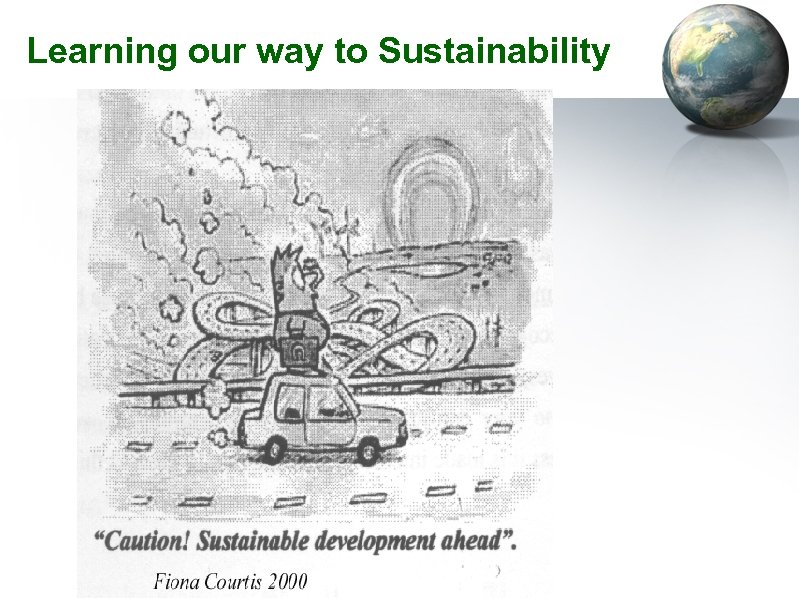
Learning our way to Sustainability
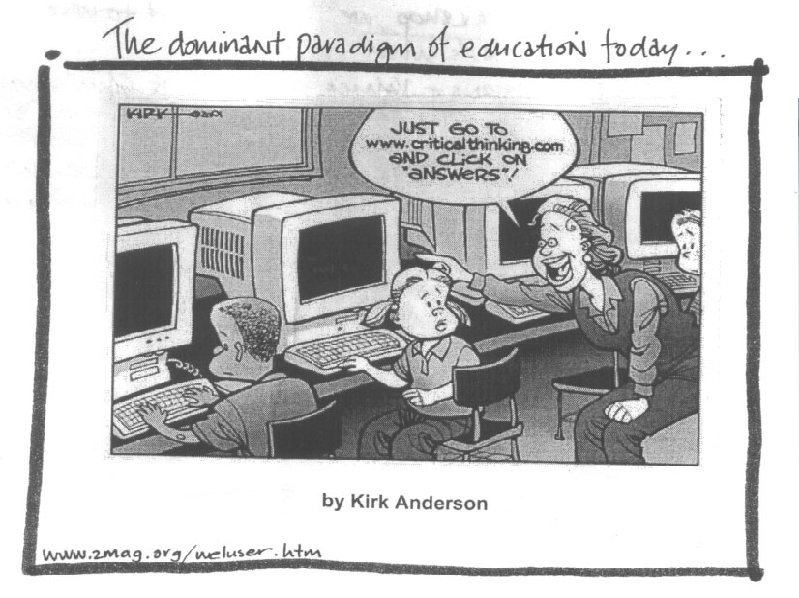
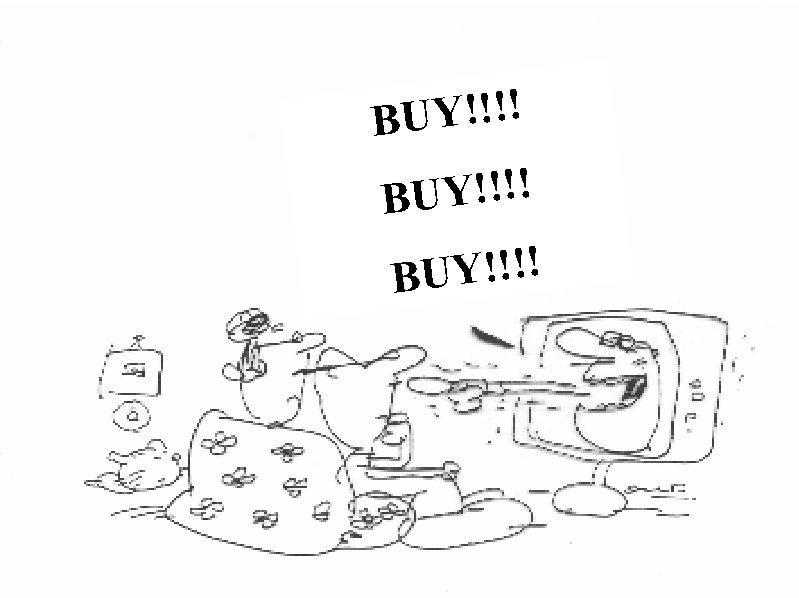
• UY!!!! BU
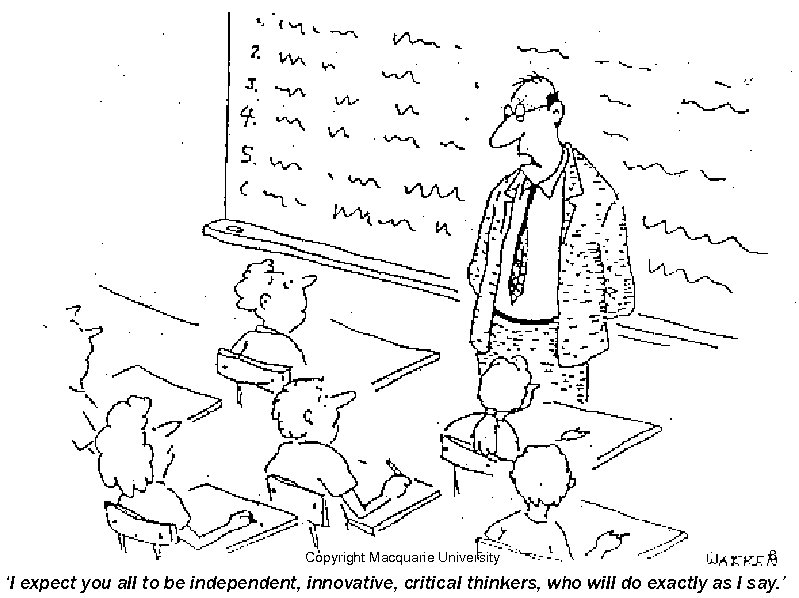
• Copyright Macquarie University 8 ‘I expect you all to be independent, innovative, critical thinkers, who will do exactly as I say. ’
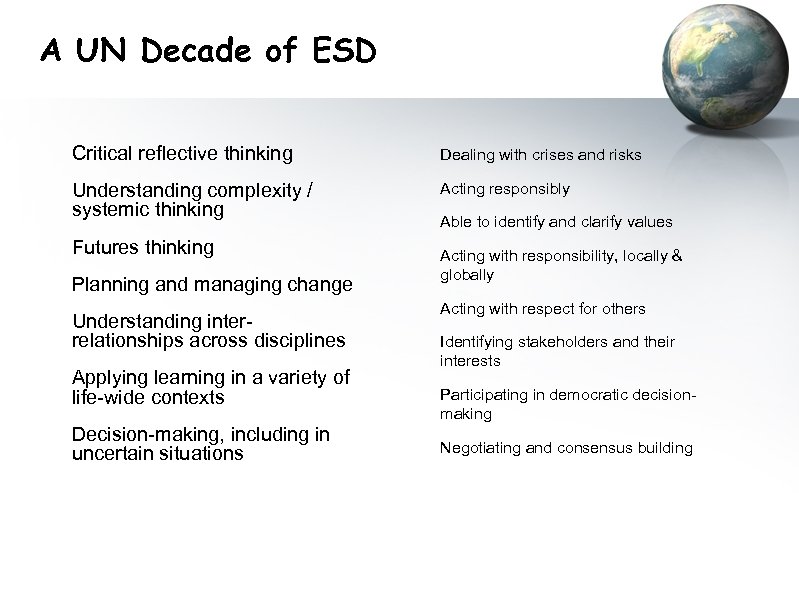
A UN Decade of ESD Critical reflective thinking Dealing with crises and risks Understanding complexity / systemic thinking Acting responsibly Futures thinking Planning and managing change Understanding interrelationships across disciplines Applying learning in a variety of life-wide contexts Decision-making, including in uncertain situations Able to identify and clarify values Acting with responsibility, locally & globally Acting with respect for others Identifying stakeholders and their interests Participating in democratic decisionmaking Negotiating and consensus building
The Realities of the DESD The scope of the DESD is broad and its potential effects far reaching However, If successful the DESD could transform not only education but also quality of life of many across the globe. • No Mandate • No New Resources • Limited Understanding of ESD in Nat Coms and National and Regional Authorities
The Realities of the DESD Activities • Launches • Rebadging of current activities • Celebratory launches and events Effective way of promoting the DESD and raising awareness about its objectives; however, on their own, they do not provide a sufficient platform for learning or capacity building Business as Usual? ?
A UN Decade of ESD UNESCO have initiated a global monitoring and evaluation process to track developments. The DESD evaluation process is provoking questions about: Where are we at? Where are we going? What difference can a Decade make?
Global Monitoring and Evaluation UNESCO was designated as the lead agency and has responsibility of establishing mechanisms for monitoring and evaluation. It will on progress to the UN GA in 2010 and the UNESCO Executive Board at the end of each Biennium. Reports are expected in: 2009 focus on contexts and structure 2011 focus on process and learning 2015 focus on impacts and outcomes
Developing a Global Framework UNESCO established a Monitoring and Evaluation Expert Group (MEEG) to assist in developing a global framework which could assist with: (a) tracking global progress in ESD; (b) to assess UNESCO's own contribution to the implementation of the DESD.
The Global Monitoring and Evaluation Framework. The framework is underpinned by the ESD major thrusts for DESD and global milestones identified by International Implementation Scheme (2005). It is important to develop a GMEF which is simple, focused and effective and seen as valid by various stakeholders.
The Global Monitoring and Evaluation Framework The GMEF Combines: . • • • self-reporting, participatory monitoring and expert evaluation to increase opportunities for engagement as well as assure representation and validity of data.
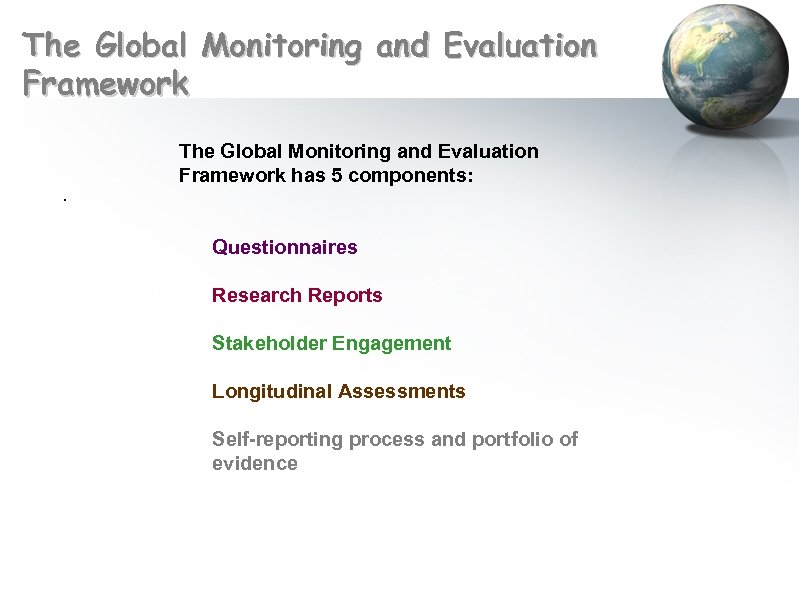
The Global Monitoring and Evaluation Framework. The Global Monitoring and Evaluation Framework has 5 components: Questionnaires Research Reports Stakeholder Engagement Longitudinal Assessments Self-reporting process and portfolio of evidence
The Global Monitoring and Evaluation Framework The Questionnaires: . - To be completed at country level. - Seek to increase awareness of DESD. - Provide opportunities for self reflection and reporting. - Information provided will serve as baseline data for research reports. - National agencies encouraged to involve a range of stakeholders in collecting and collating responses.
The Global Monitoring and Evaluation Framework Stakeholder Engagement . - National stakeholder engagement in questionnaire process. - Regional stakeholder engagement in collation of regional data and insights. - International stakeholder engagement through Global Stakeholder Groups.
The Global Monitoring and Evaluation Framework Evaluation Research . - Commission regional teams and a global leader - Reports will identify common issues, assess changes and capture innovation across the regions (bringing data ‘alive’). - Provide snapshots using questionnaire data, documentary analysis and telephone interviews with key stakeholders (for cycle 1).
The Global Monitoring and Evaluation Framework Longitudinal Assessments . - It is important to capture depth and impact of changes. - Need to capture experiences over time and in-depth case studies. - This option is costly and a detailed proposal is to be developed. - UNESCO and UNTWIN Chairs encouraged to play a role.
The Global Monitoring and Evaluation Framework ESD Indicators provide a way to assess ESD progress during the DESD. Indicators help provide key pieces of information that summarise: What is happening in ESD at a point in time (status indicators); What has been put in place to assist the development of ESD (facilitative indicators); What has been learnt in the process of implementing ESD (learning indicators); What has changed (effect indicators); and What progress has been made (performance indicators).
Participation for Change International Level Mid Decade Review Germany (2009) www. unesco. education/ESD UNECE report (2007 -2015) www. unece/env. ed/esd. org Swedish National Commission ESD Seminar (Oct 2008)
A UN Decade of ESD In the UK: – In the UK Nat Com for UNESCO (UKNC) is responsible for implementing and reporting on DESD. – It is currently developing a report which provides baseline data on ESD in the UK and measures progress during the DESD. (contact Sammejias@gmail. com
What difference will the DESD make to the FHE sector?
Finally …. ‘Not everything that counts can be counted. Not everything that can be counted counts. ’ Albert Einstein
Скачать презентацию A UN Decade of Education for Sustainable Development
1c248329152b0a27d1fc4f030849b127.ppt