 Скачать презентацию A UC-Wide Cyberinfrastructure for Data-Intensive Research Invited
7776454ff6d39d23f050017dab119bc3.ppt
- Количество слайдов: 44



“A UC-Wide Cyberinfrastructure for Data-Intensive Research” Invited Presentation UC IT Leadership Council Oakland, CA May 19, 2014 Dr. Larry Smarr Director, California Institute for Telecommunications and Information Technology Harry E. Gruber Professor, Dept. of Computer Science and Engineering Jacobs School of Engineering, UCSD 1 http: //lsmarr. calit 2. net
Vision: Creating a UC-Wide “Big Data” Plane Connected to CENIC, I 2, & GLIF Use Lightpaths to Connect All UC Data Generators and Consumers, Creating a “Big Data” Plane Integrated With High Performance Global Networks “The Bisection Bandwidth of a Cluster Interconnect, but Deployed on a 10 -Campus Scale. ” This Vision Has Been Building for Over a Decade
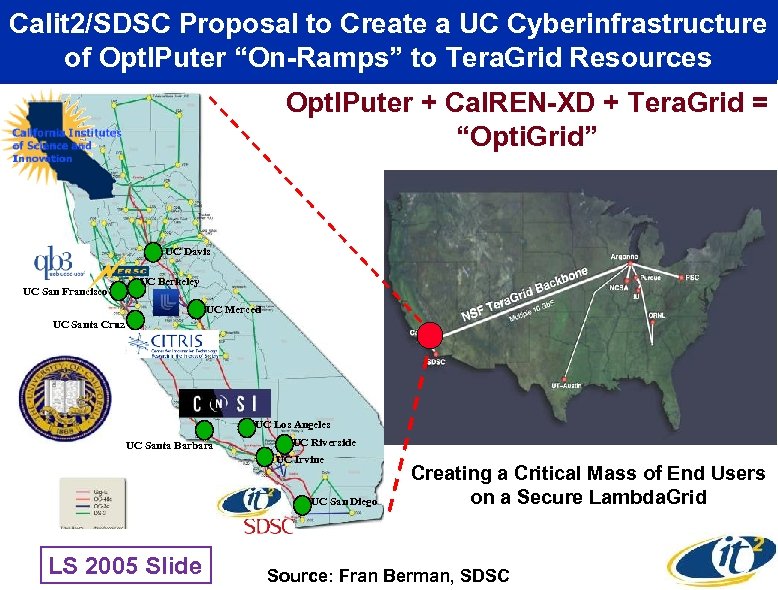
Calit 2/SDSC Proposal to Create a UC Cyberinfrastructure of Opt. IPuter “On-Ramps” to Tera. Grid Resources Opt. IPuter + Cal. REN-XD + Tera. Grid = “Opti. Grid” UC Davis UC San Francisco UC Berkeley UC Merced UC Santa Cruz UC Los Angeles UC Santa Barbara UC Riverside UC Irvine UC San Diego LS 2005 Slide Creating a Critical Mass of End Users on a Secure Lambda. Grid Source: Fran Berman, SDSC
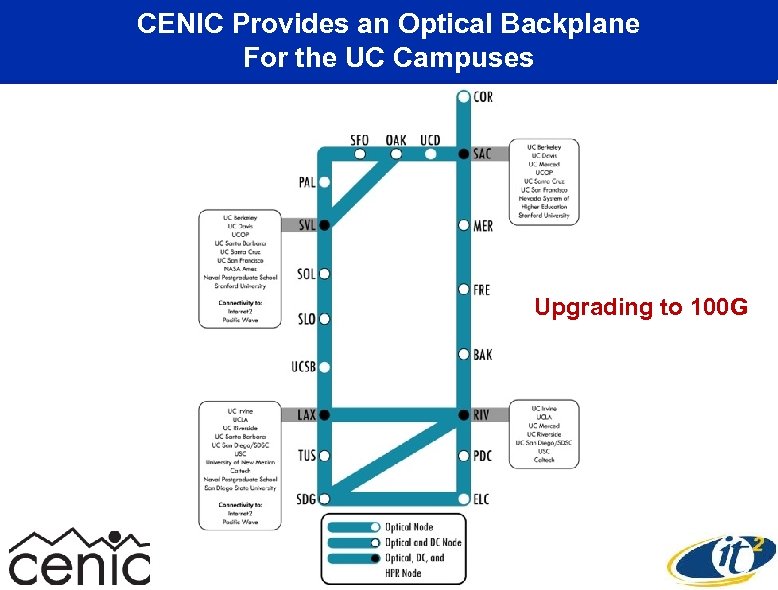
CENIC Provides an Optical Backplane For the UC Campuses Upgrading to 100 G
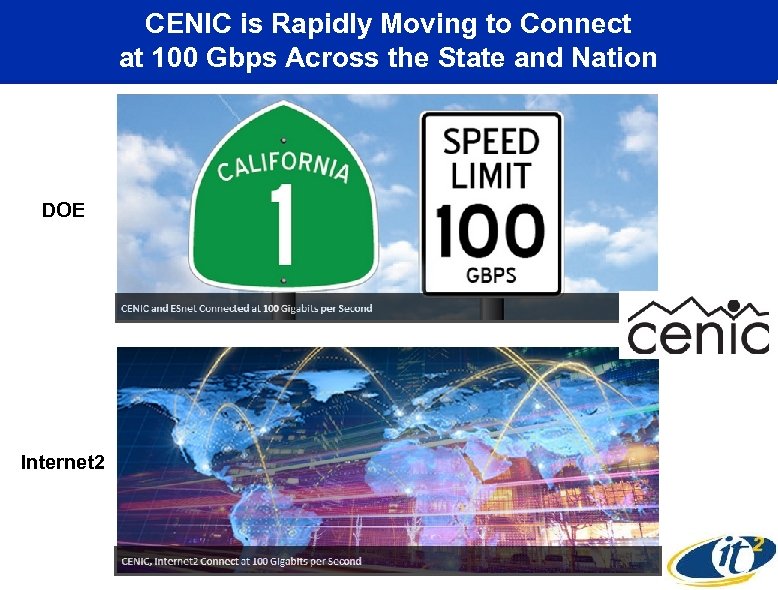
CENIC is Rapidly Moving to Connect at 100 Gbps Across the State and Nation DOE Internet 2
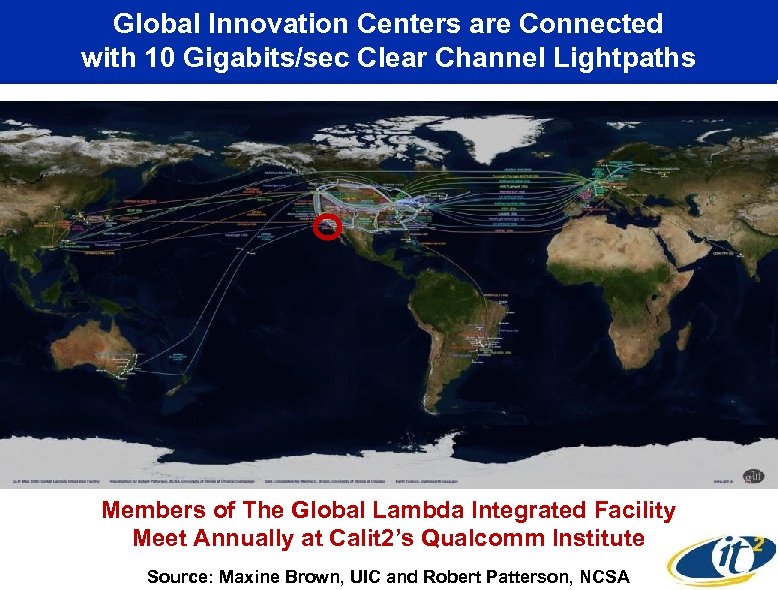
Global Innovation Centers are Connected with 10 Gigabits/sec Clear Channel Lightpaths Members of The Global Lambda Integrated Facility Meet Annually at Calit 2’s Qualcomm Institute Source: Maxine Brown, UIC and Robert Patterson, NCSA
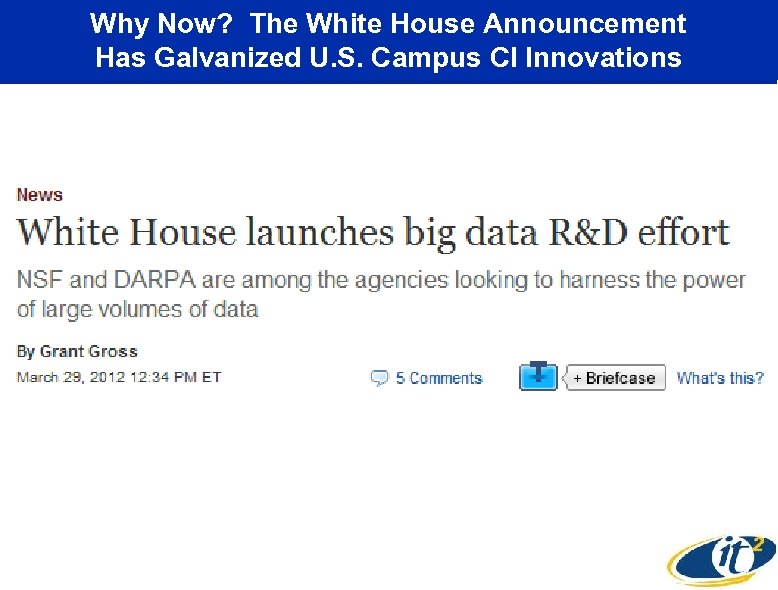
Why Now? The White House Announcement Has Galvanized U. S. Campus CI Innovations
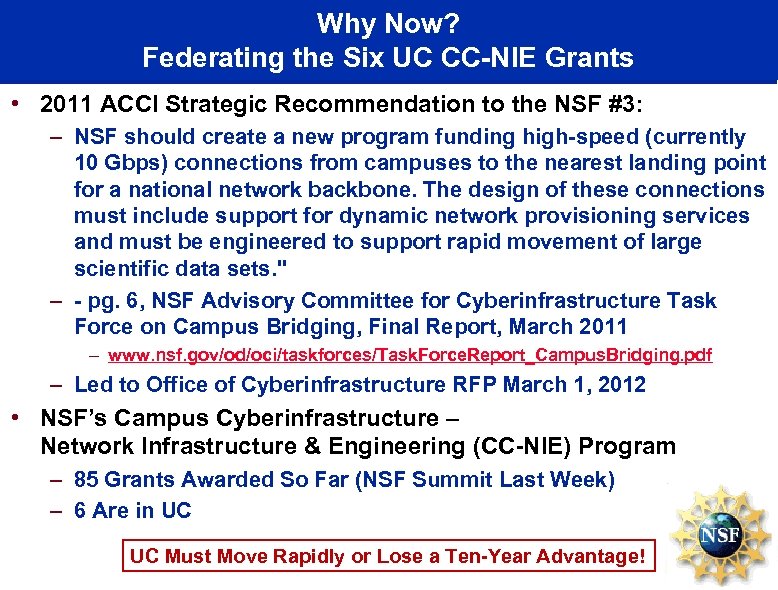
Why Now? Federating the Six UC CC-NIE Grants • 2011 ACCI Strategic Recommendation to the NSF #3: – NSF should create a new program funding high-speed (currently 10 Gbps) connections from campuses to the nearest landing point for a national network backbone. The design of these connections must include support for dynamic network provisioning services and must be engineered to support rapid movement of large scientific data sets. " – - pg. 6, NSF Advisory Committee for Cyberinfrastructure Task Force on Campus Bridging, Final Report, March 2011 – www. nsf. gov/od/oci/taskforces/Task. Force. Report_Campus. Bridging. pdf – Led to Office of Cyberinfrastructure RFP March 1, 2012 • NSF’s Campus Cyberinfrastructure – Network Infrastructure & Engineering (CC-NIE) Program – 85 Grants Awarded So Far (NSF Summit Last Week) – 6 Are in UC UC Must Move Rapidly or Lose a Ten-Year Advantage!
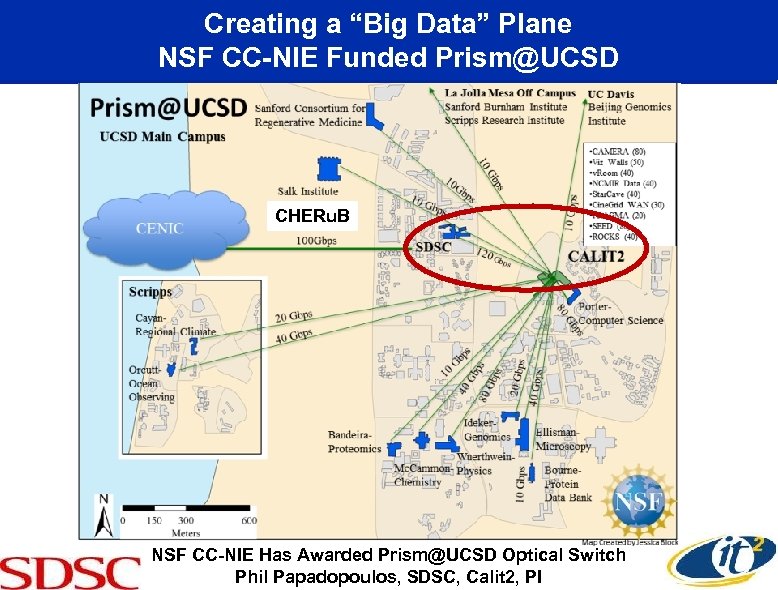
Creating a “Big Data” Plane NSF CC-NIE Funded Prism@UCSD CHERu. B NSF CC-NIE Has Awarded Prism@UCSD Optical Switch Phil Papadopoulos, SDSC, Calit 2, PI
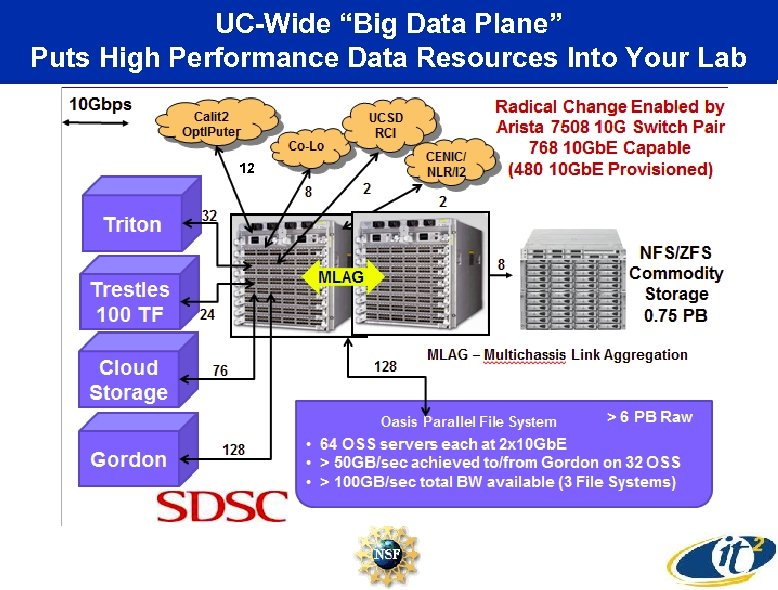
UC-Wide “Big Data Plane” Puts High Performance Data Resources Into Your Lab 12
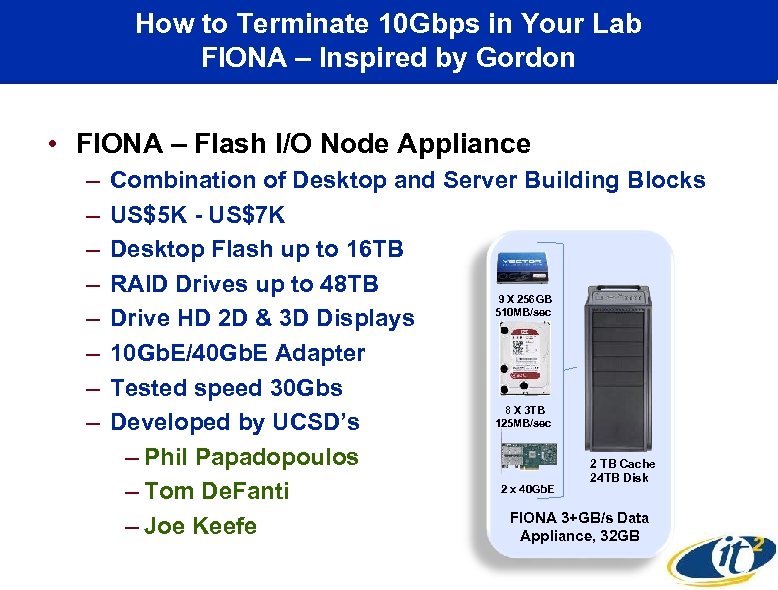
How to Terminate 10 Gbps in Your Lab FIONA – Inspired by Gordon • FIONA – Flash I/O Node Appliance – – – – Combination of Desktop and Server Building Blocks US$5 K - US$7 K Desktop Flash up to 16 TB RAID Drives up to 48 TB 9 X 256 GB 510 MB/sec Drive HD 2 D & 3 D Displays 10 Gb. E/40 Gb. E Adapter Tested speed 30 Gbs 8 X 3 TB 125 MB/sec Developed by UCSD’s – Phil Papadopoulos 2 TB Cache 24 TB Disk 2 x 40 Gb. E – Tom De. Fanti FIONA 3+GB/s Data – Joe Keefe Appliance, 32 GB
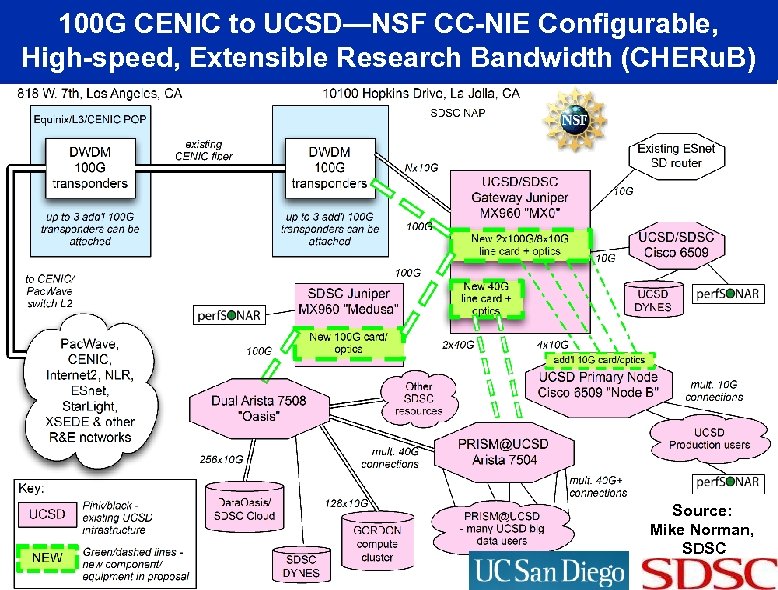
100 G CENIC to UCSD—NSF CC-NIE Configurable, High-speed, Extensible Research Bandwidth (CHERu. B) Source: Mike Norman, SDSC
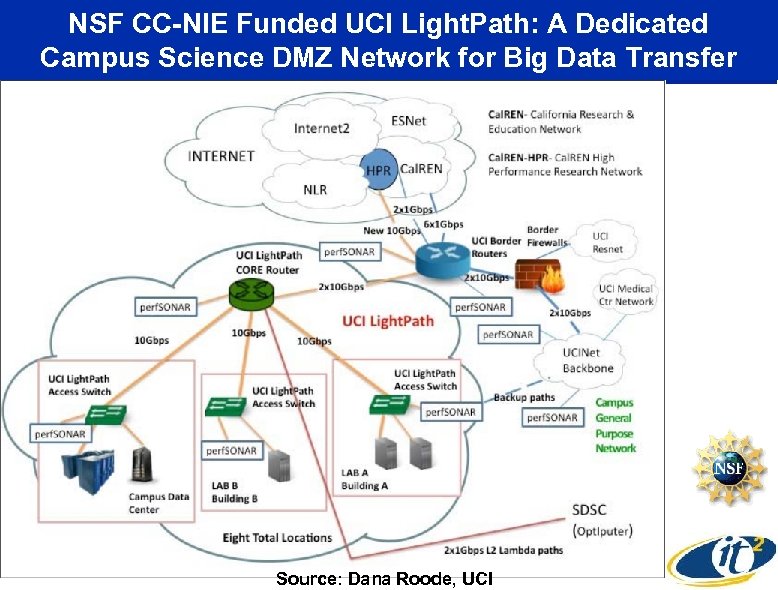
NSF CC-NIE Funded UCI Light. Path: A Dedicated Campus Science DMZ Network for Big Data Transfer Source: Dana Roode, UCI
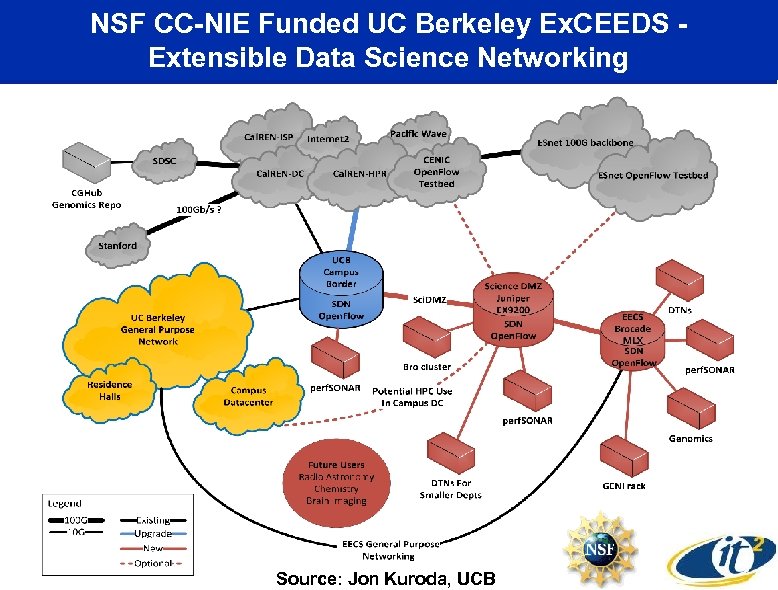
NSF CC-NIE Funded UC Berkeley Ex. CEEDS Extensible Data Science Networking Source: Jon Kuroda, UCB
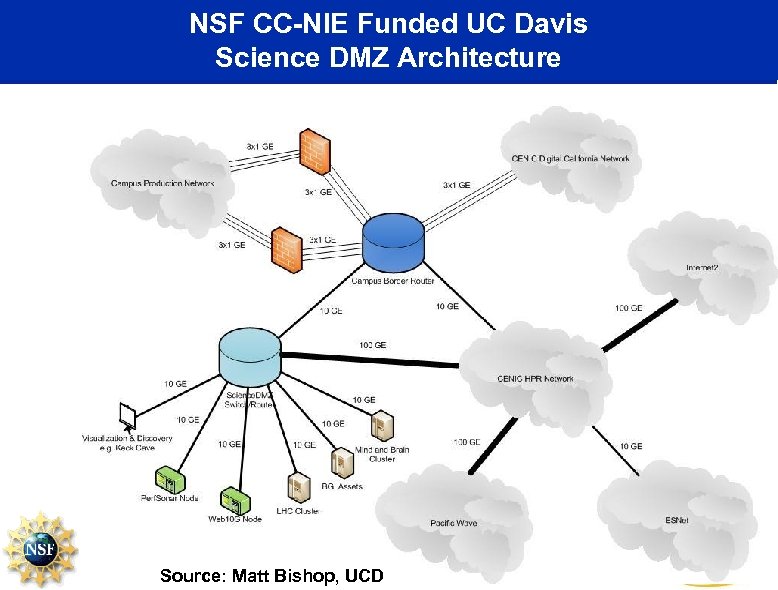
NSF CC-NIE Funded UC Davis Science DMZ Architecture Source: Matt Bishop, UCD
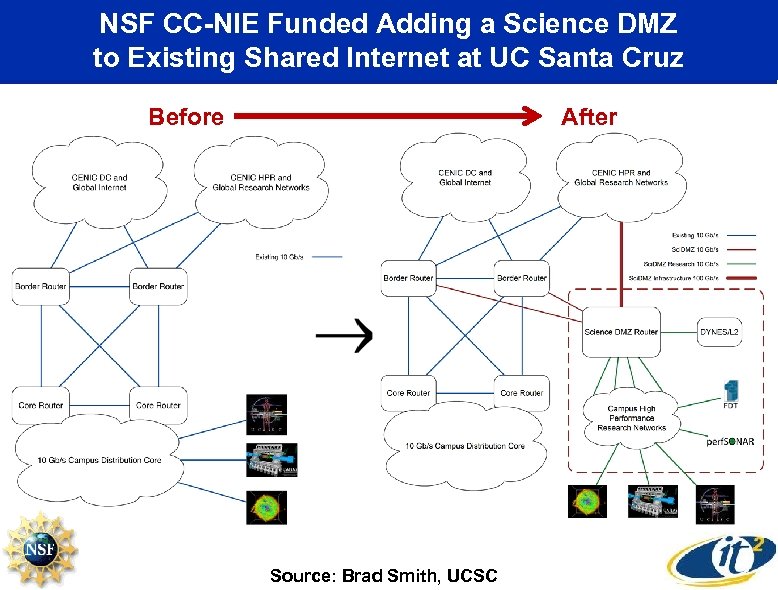
NSF CC-NIE Funded Adding a Science DMZ to Existing Shared Internet at UC Santa Cruz Before After Source: Brad Smith, UCSC
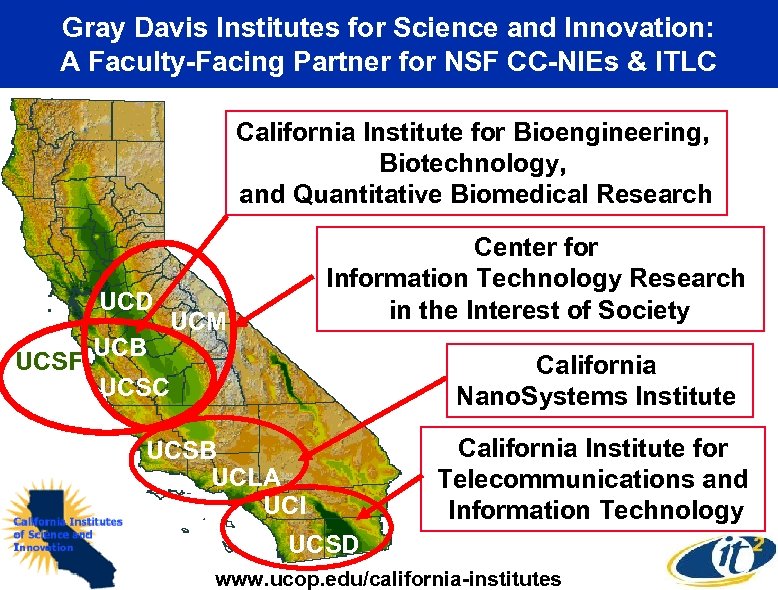
Gray Davis Institutes for Science and Innovation: A Faculty-Facing Partner for NSF CC-NIEs & ITLC California Institute for Bioengineering, Biotechnology, and Quantitative Biomedical Research UCD UCSF UCB Center for Information Technology Research in the Interest of Society UCM California Nano. Systems Institute UCSC UCSB UCLA UCI California Institute for Telecommunications and Information Technology UCSD www. ucop. edu/california-institutes
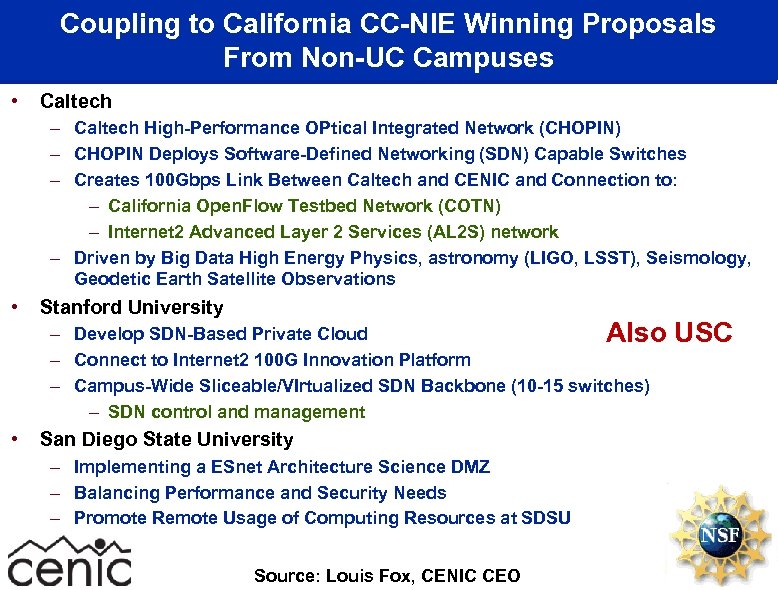
Coupling to California CC-NIE Winning Proposals From Non-UC Campuses • Caltech – Caltech High-Performance OPtical Integrated Network (CHOPIN) – CHOPIN Deploys Software-Defined Networking (SDN) Capable Switches – Creates 100 Gbps Link Between Caltech and CENIC and Connection to: – California Open. Flow Testbed Network (COTN) – Internet 2 Advanced Layer 2 Services (AL 2 S) network – Driven by Big Data High Energy Physics, astronomy (LIGO, LSST), Seismology, Geodetic Earth Satellite Observations • Stanford University • San Diego State University – Develop SDN-Based Private Cloud Also USC – Connect to Internet 2 100 G Innovation Platform – Campus-Wide Sliceable/VIrtualized SDN Backbone (10 -15 switches) – SDN control and management – Implementing a ESnet Architecture Science DMZ – Balancing Performance and Security Needs – Promote Remote Usage of Computing Resources at SDSU Source: Louis Fox, CENIC CEO
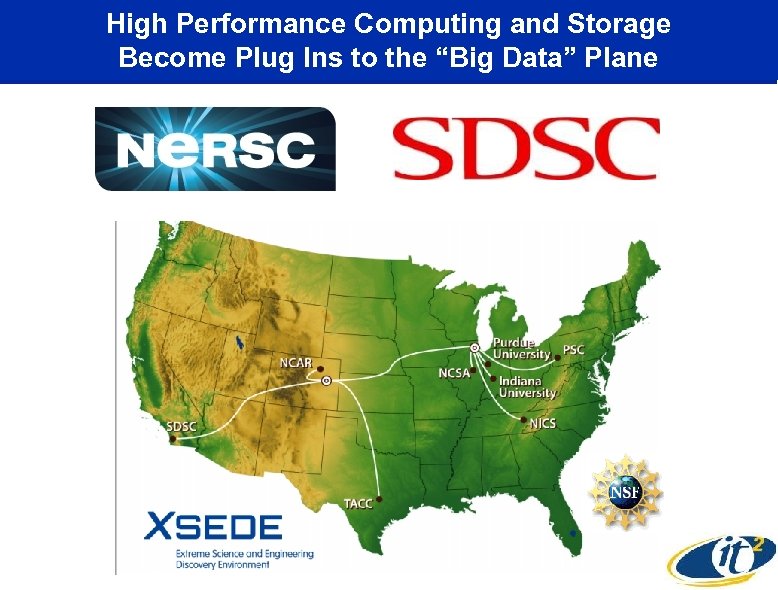
High Performance Computing and Storage Become Plug Ins to the “Big Data” Plane
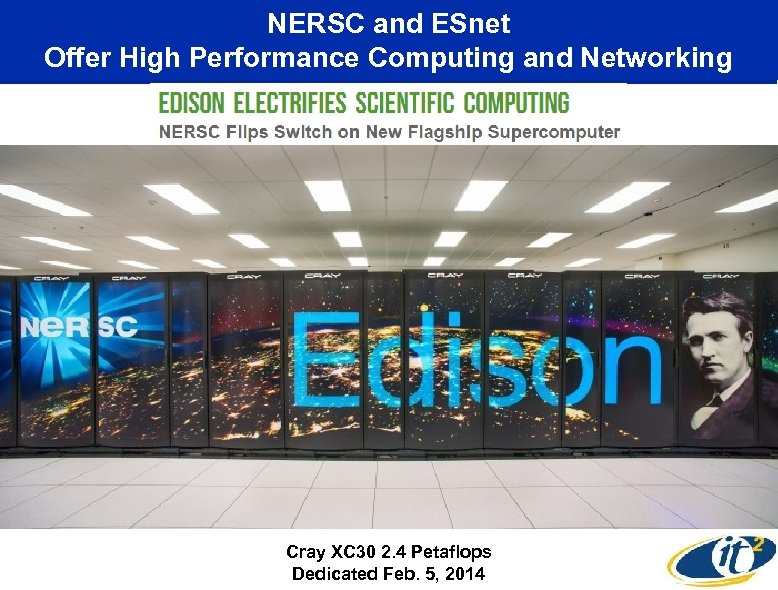
NERSC and ESnet Offer High Performance Computing and Networking Cray XC 30 2. 4 Petaflops Dedicated Feb. 5, 2014
SDSC’s Comet is a ~2 Peta. FLOPs System Architected for the “Long Tail of Science” NSF Track 2 award to SDSC $12 M NSF award to acquire $3 M/yr x 4 yrs to operate Production early 2015
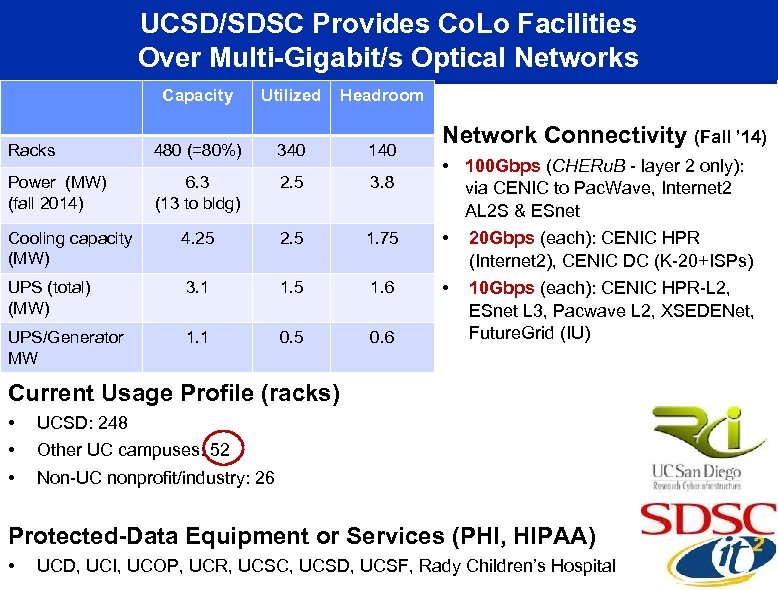
UCSD/SDSC Provides Co. Lo Facilities Over Multi-Gigabit/s Optical Networks Capacity Utilized Headroom Racks 480 (=80%) 340 140 Power (MW) (fall 2014) 6. 3 (13 to bldg) 2. 5 3. 8 Cooling capacity (MW) 4. 25 2. 5 1. 75 UPS (total) (MW) 3. 1 1. 5 1. 6 UPS/Generator MW 1. 1 0. 5 0. 6 Network Connectivity (Fall ’ 14) • 100 Gbps (CHERu. B - layer 2 only): via CENIC to Pac. Wave, Internet 2 AL 2 S & ESnet • 20 Gbps (each): CENIC HPR (Internet 2), CENIC DC (K-20+ISPs) • 10 Gbps (each): CENIC HPR-L 2, ESnet L 3, Pacwave L 2, XSEDENet, Future. Grid (IU) Current Usage Profile (racks) • • • UCSD: 248 Other UC campuses: 52 Non-UC nonprofit/industry: 26 Protected-Data Equipment or Services (PHI, HIPAA) • UCD, UCI, UCOP, UCR, UCSC, UCSD, UCSF, Rady Children’s Hospital
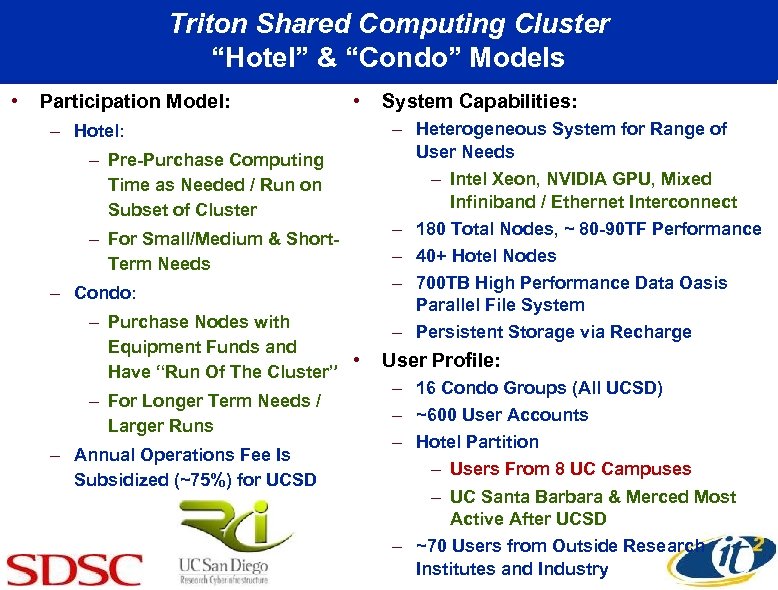
Triton Shared Computing Cluster “Hotel” & “Condo” Models • Participation Model: • – Hotel: – Pre-Purchase Computing Time as Needed / Run on Subset of Cluster – For Small/Medium & Short. Term Needs – Condo: – Purchase Nodes with Equipment Funds and • Have “Run Of The Cluster” – For Longer Term Needs / Larger Runs – Annual Operations Fee Is Subsidized (~75%) for UCSD System Capabilities: – Heterogeneous System for Range of User Needs – Intel Xeon, NVIDIA GPU, Mixed Infiniband / Ethernet Interconnect – 180 Total Nodes, ~ 80 -90 TF Performance – 40+ Hotel Nodes – 700 TB High Performance Data Oasis Parallel File System – Persistent Storage via Recharge User Profile: – 16 Condo Groups (All UCSD) – ~600 User Accounts – Hotel Partition – Users From 8 UC Campuses – UC Santa Barbara & Merced Most Active After UCSD – ~70 Users from Outside Research Institutes and Industry
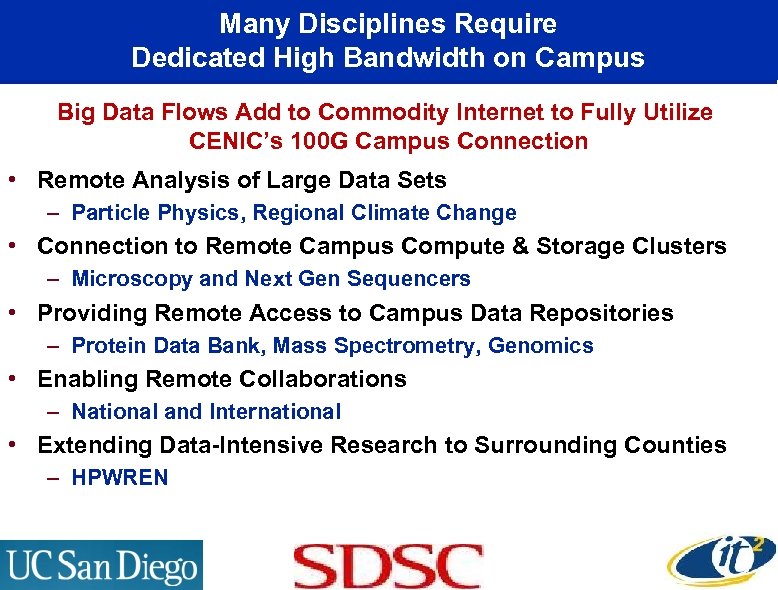
Many Disciplines Require Dedicated High Bandwidth on Campus Big Data Flows Add to Commodity Internet to Fully Utilize CENIC’s 100 G Campus Connection • Remote Analysis of Large Data Sets – Particle Physics, Regional Climate Change • Connection to Remote Campus Compute & Storage Clusters – Microscopy and Next Gen Sequencers • Providing Remote Access to Campus Data Repositories – Protein Data Bank, Mass Spectrometry, Genomics • Enabling Remote Collaborations – National and International • Extending Data-Intensive Research to Surrounding Counties – HPWREN
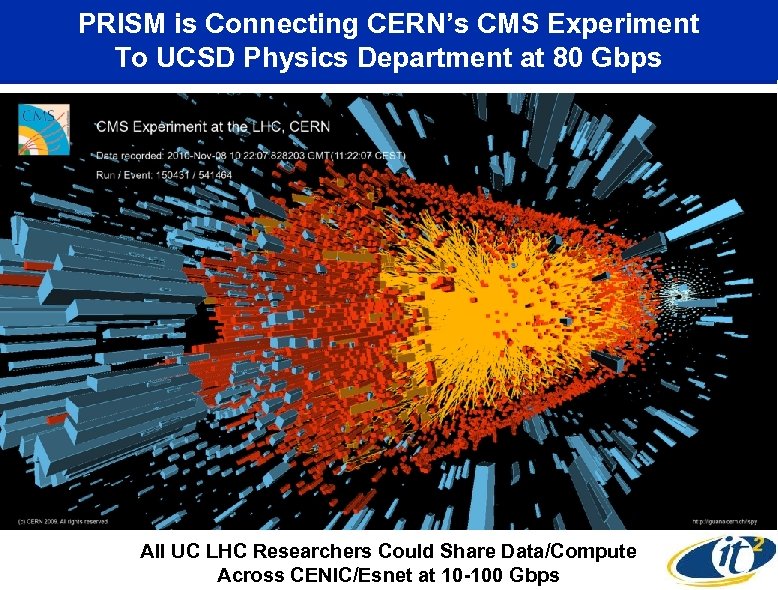
PRISM is Connecting CERN’s CMS Experiment To UCSD Physics Department at 80 Gbps All UC LHC Researchers Could Share Data/Compute Across CENIC/Esnet at 10 -100 Gbps
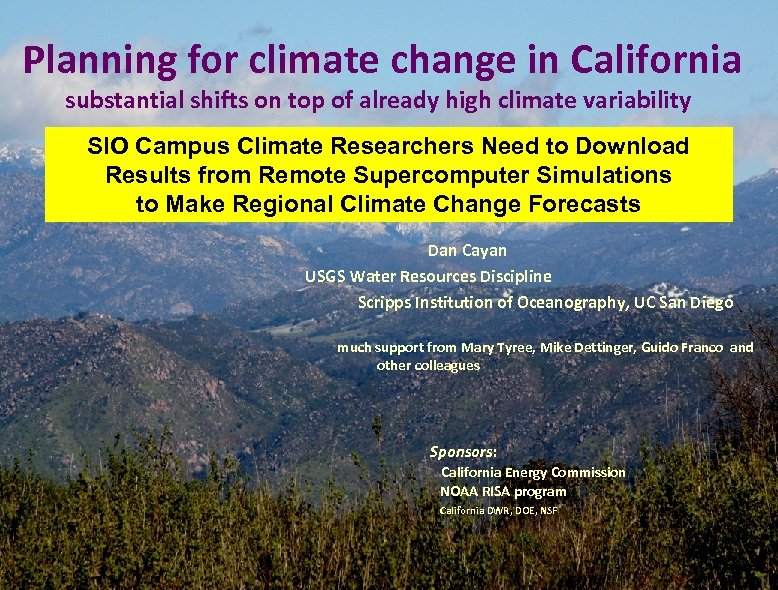
Planning for climate change in California substantial shifts on top of already high climate variability SIO Campus Climate Researchers Need to Download Results from Remote Supercomputer Simulations to Make Regional Climate Change Forecasts Dan Cayan USGS Water Resources Discipline Scripps Institution of Oceanography, UC San Diego much support from Mary Tyree, Mike Dettinger, Guido Franco and other colleagues Sponsors: California Energy Commission NOAA RISA program California DWR, DOE, NSF
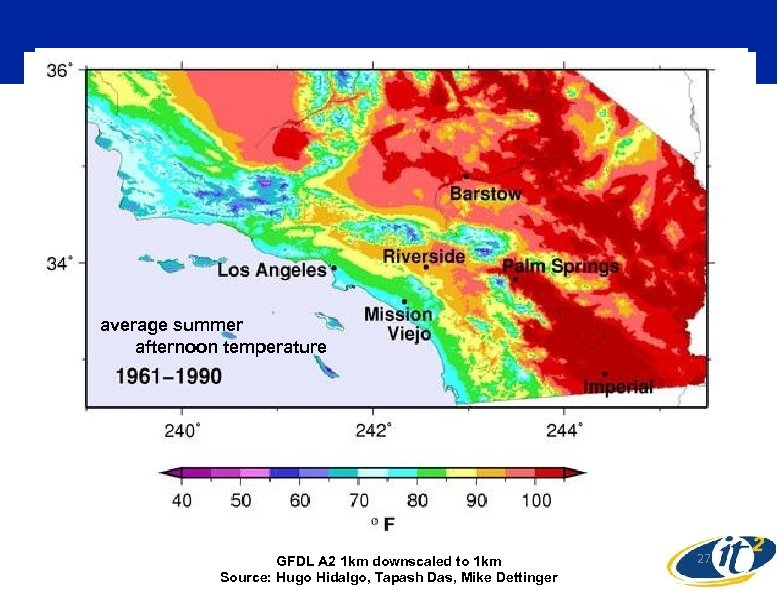
average summer afternoon temperature GFDL A 2 1 km downscaled to 1 km Source: Hugo Hidalgo, Tapash Das, Mike Dettinger 27
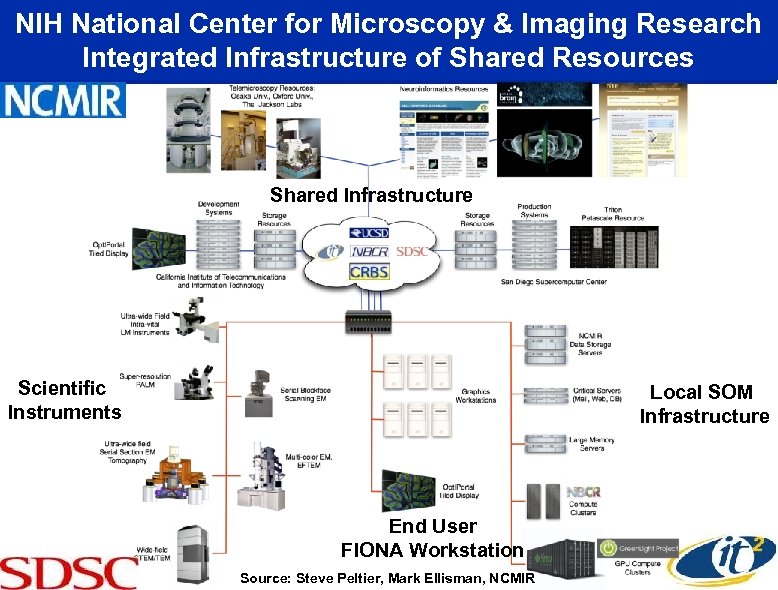
NIH National Center for Microscopy & Imaging Research Integrated Infrastructure of Shared Resources Shared Infrastructure Scientific Instruments Local SOM Infrastructure End User FIONA Workstation Source: Steve Peltier, Mark Ellisman, NCMIR
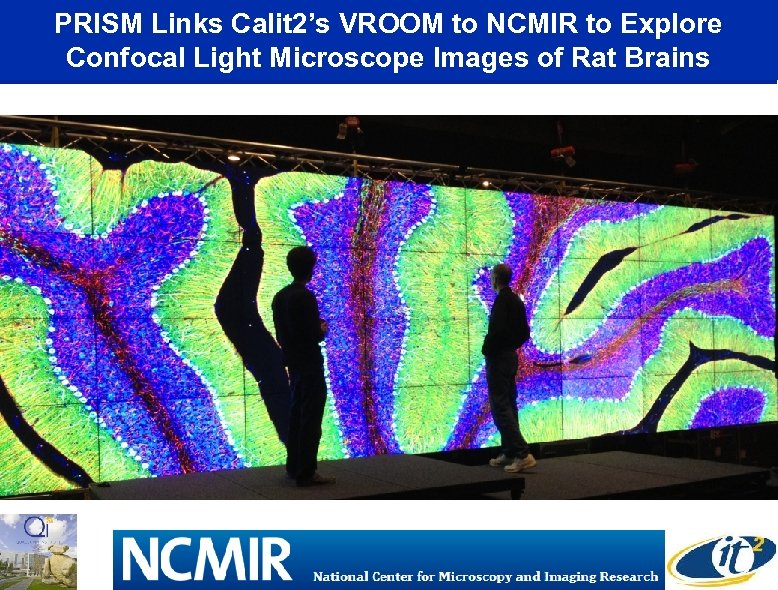
PRISM Links Calit 2’s VROOM to NCMIR to Explore Confocal Light Microscope Images of Rat Brains
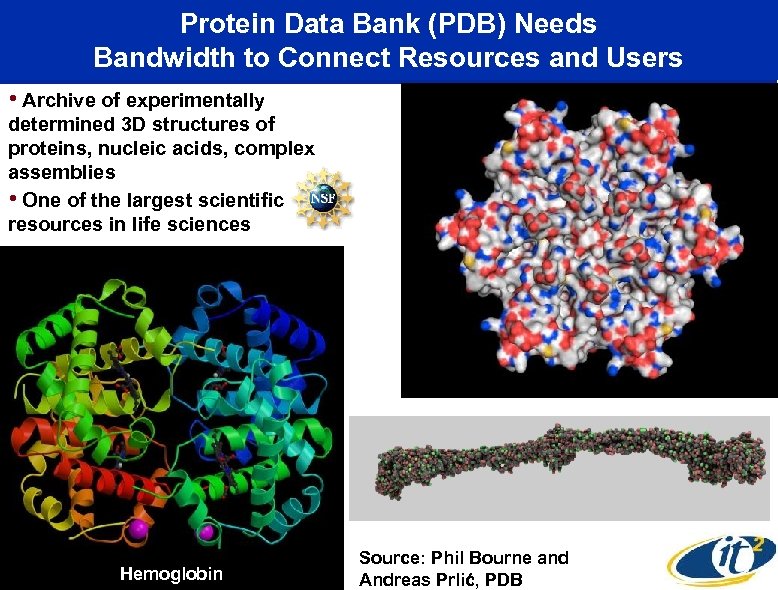
Protein Data Bank (PDB) Needs Bandwidth to Connect Resources and Users • Archive of experimentally determined 3 D structures of proteins, nucleic acids, complex assemblies • One of the largest scientific resources in life sciences Virus Hemoglobin Source: Phil Bourne and Andreas Prlić, PDB
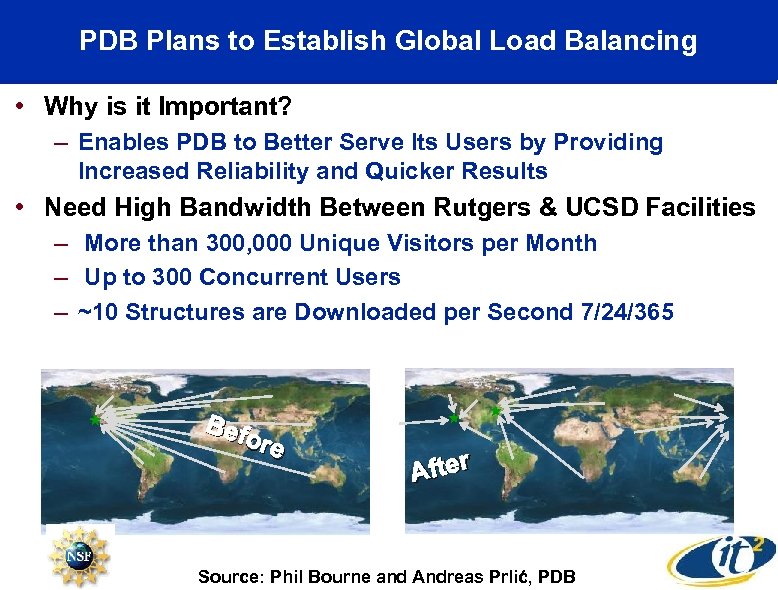
PDB Plans to Establish Global Load Balancing • Why is it Important? – Enables PDB to Better Serve Its Users by Providing Increased Reliability and Quicker Results • Need High Bandwidth Between Rutgers & UCSD Facilities – More than 300, 000 Unique Visitors per Month – Up to 300 Concurrent Users – ~10 Structures are Downloaded per Second 7/24/365 Bef ore After Source: Phil Bourne and Andreas Prlić, PDB
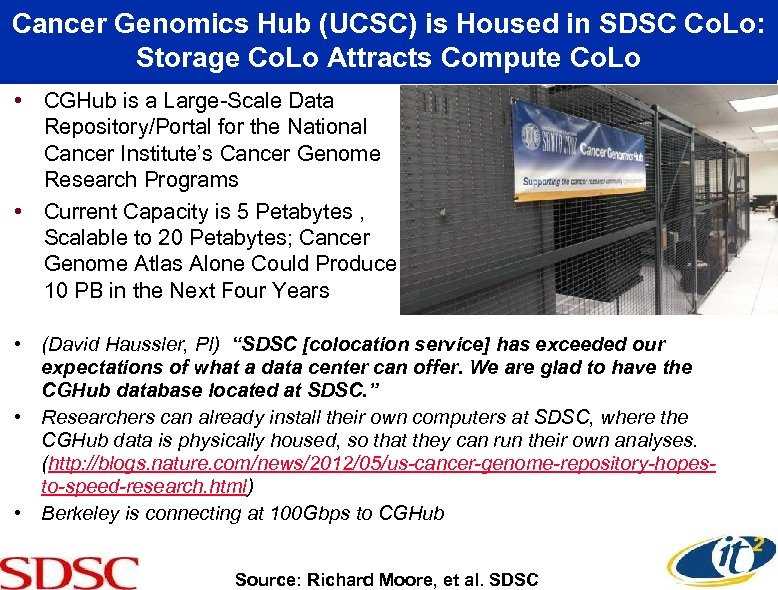
Cancer Genomics Hub (UCSC) is Housed in SDSC Co. Lo: Storage Co. Lo Attracts Compute Co. Lo • CGHub is a Large-Scale Data Repository/Portal for the National Cancer Institute’s Cancer Genome Research Programs • Current Capacity is 5 Petabytes , Scalable to 20 Petabytes; Cancer Genome Atlas Alone Could Produce 10 PB in the Next Four Years • (David Haussler, PI) “SDSC [colocation service] has exceeded our expectations of what a data center can offer. We are glad to have the CGHub database located at SDSC. ” • Researchers can already install their own computers at SDSC, where the CGHub data is physically housed, so that they can run their own analyses. (http: //blogs. nature. com/news/2012/05/us-cancer-genome-repository-hopesto-speed-research. html) • Berkeley is connecting at 100 Gbps to CGHub Source: Richard Moore, et al. SDSC
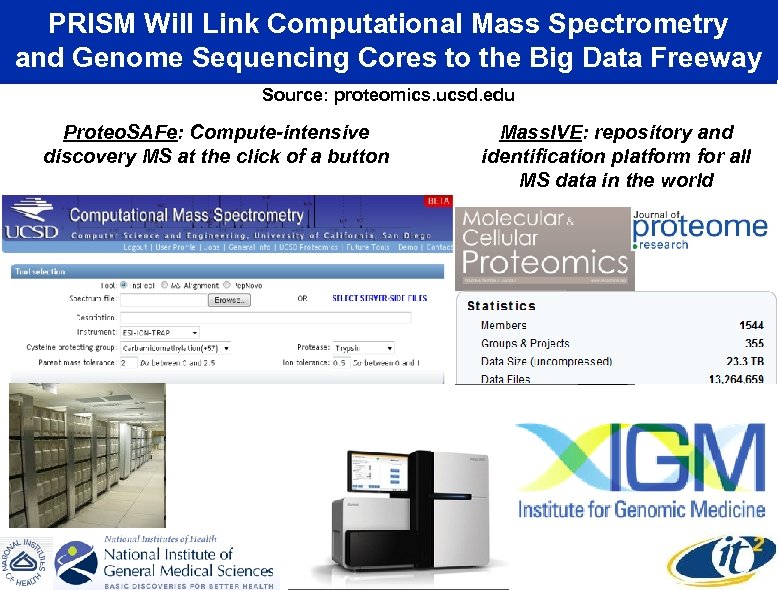
PRISM Will Link Computational Mass Spectrometry and Genome Sequencing Cores to the Big Data Freeway Source: proteomics. ucsd. edu Proteo. SAFe: Compute-intensive discovery MS at the click of a button Mass. IVE: repository and identification platform for all MS data in the world
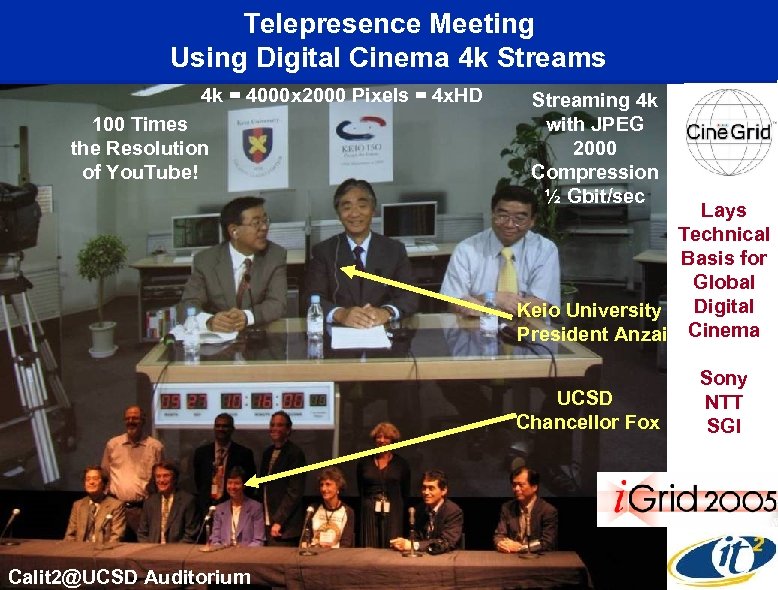
Telepresence Meeting Using Digital Cinema 4 k Streams 4 k = 4000 x 2000 Pixels = 4 x. HD 100 Times the Resolution of You. Tube! Streaming 4 k with JPEG 2000 Compression ½ Gbit/sec Lays Technical Basis for Global Keio University Digital President Anzai Cinema UCSD Chancellor Fox Calit 2@UCSD Auditorium Sony NTT SGI
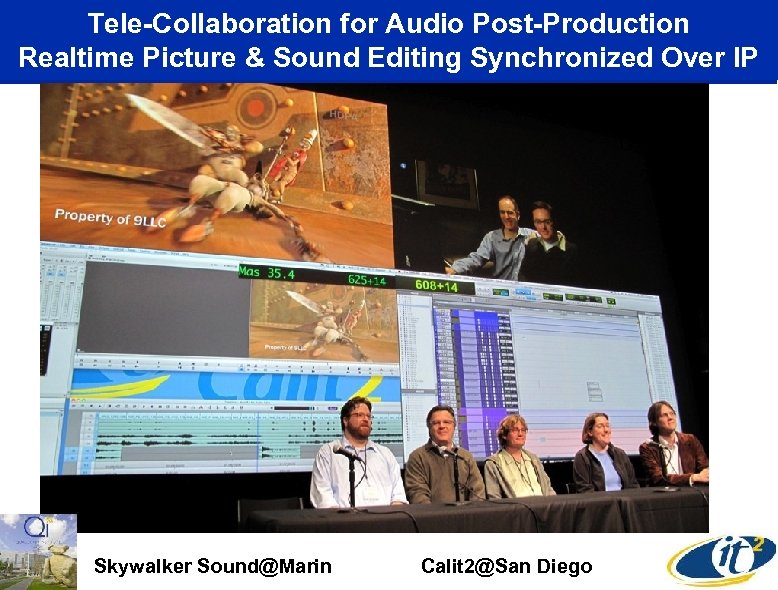
Tele-Collaboration for Audio Post-Production Realtime Picture & Sound Editing Synchronized Over IP Skywalker Sound@Marin Calit 2@San Diego
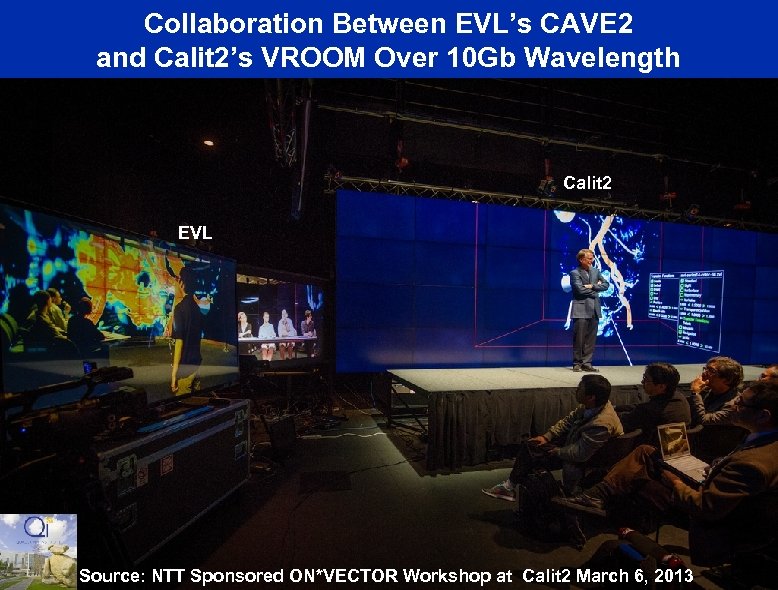
Collaboration Between EVL’s CAVE 2 and Calit 2’s VROOM Over 10 Gb Wavelength Calit 2 EVL Source: NTT Sponsored ON*VECTOR Workshop at Calit 2 March 6, 2013
High Performance Wireless Research and Education Network http: //hpwren. ucsd. edu/ National Science Foundation awards 0087344, 0426879 and 0944131
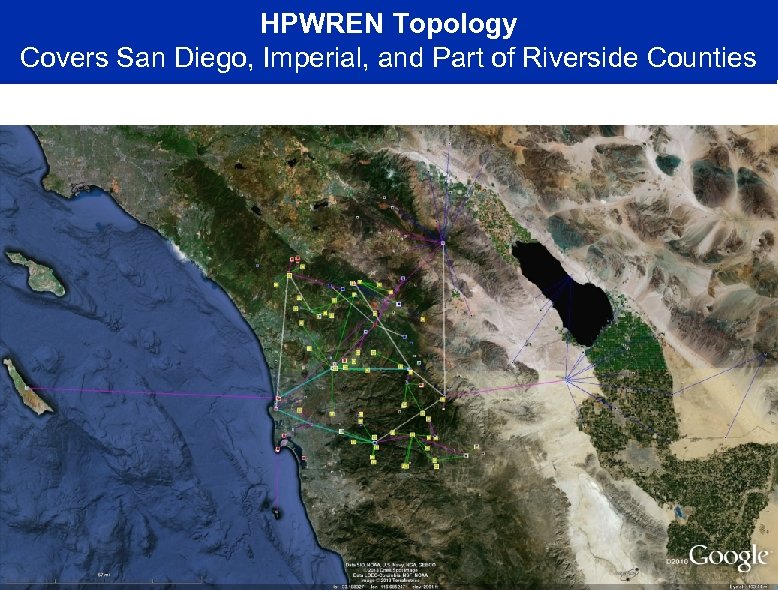
HPWREN Topology Covers San Diego, Imperial, and Part of Riverside Counties to CI and PEMEX approximately 50 miles: Note: locations are approximate
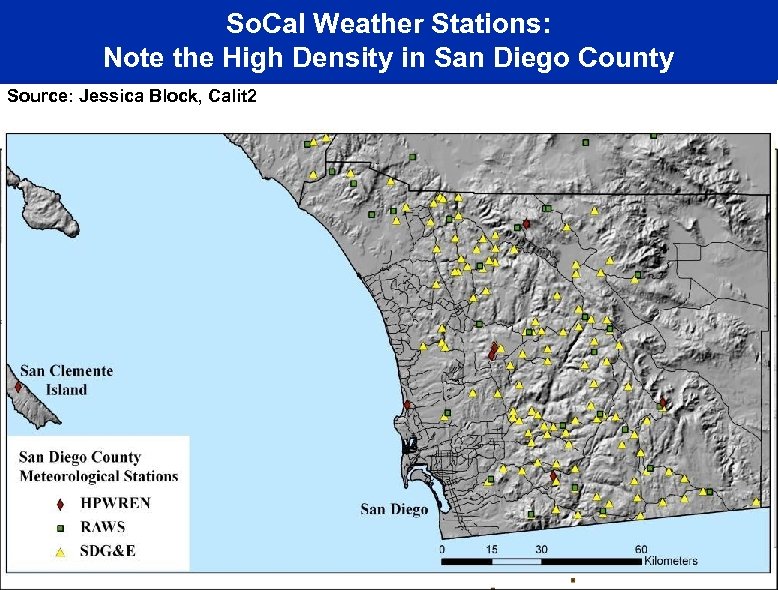
So. Cal Weather Stations: Note the High Density in San Diego County Source: Jessica Block, Calit 2
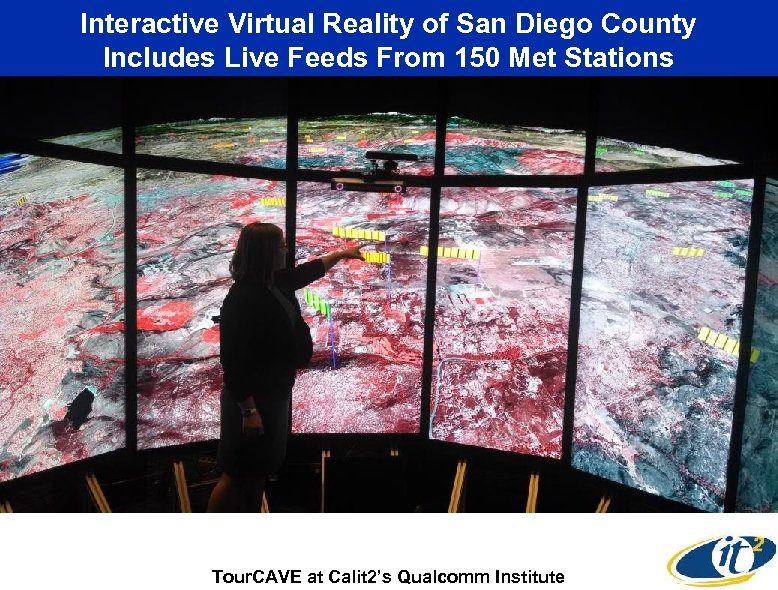
Interactive Virtual Reality of San Diego County Includes Live Feeds From 150 Met Stations Tour. CAVE at Calit 2’s Qualcomm Institute
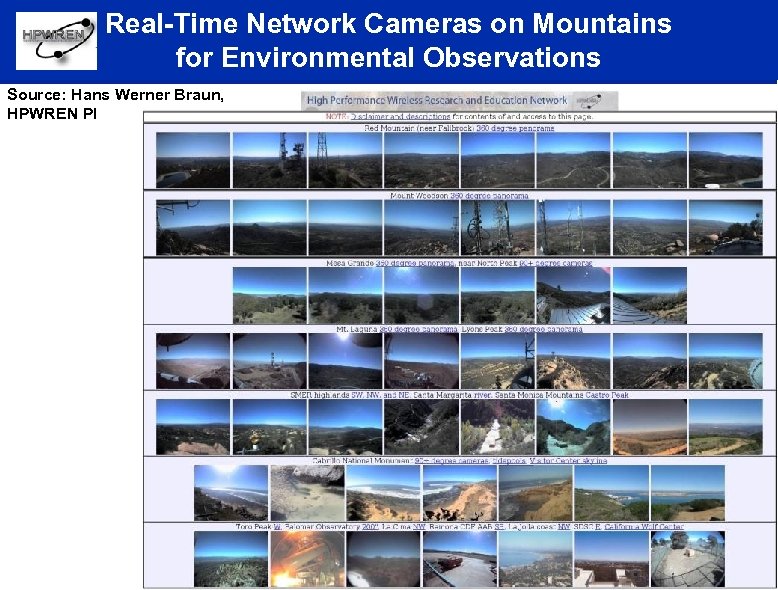
Real-Time Network Cameras on Mountains for Environmental Observations Source: Hans Werner Braun, HPWREN PI
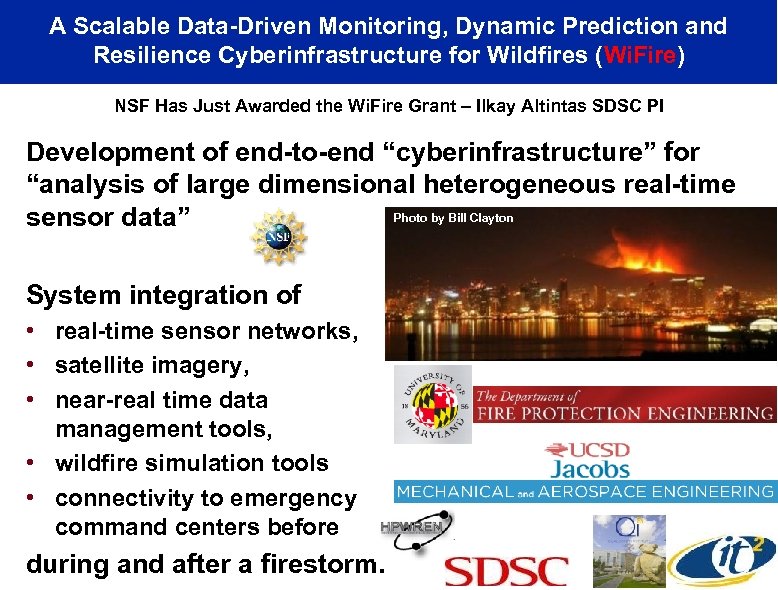
A Scalable Data-Driven Monitoring, Dynamic Prediction and Resilience Cyberinfrastructure for Wildfires (Wi. Fire) NSF Has Just Awarded the Wi. Fire Grant – Ilkay Altintas SDSC PI Development of end-to-end “cyberinfrastructure” for “analysis of large dimensional heterogeneous real-time Photo by Bill Clayton sensor data” System integration of • real-time sensor networks, • satellite imagery, • near-real time data management tools, • wildfire simulation tools • connectivity to emergency command centers before during and after a firestorm.
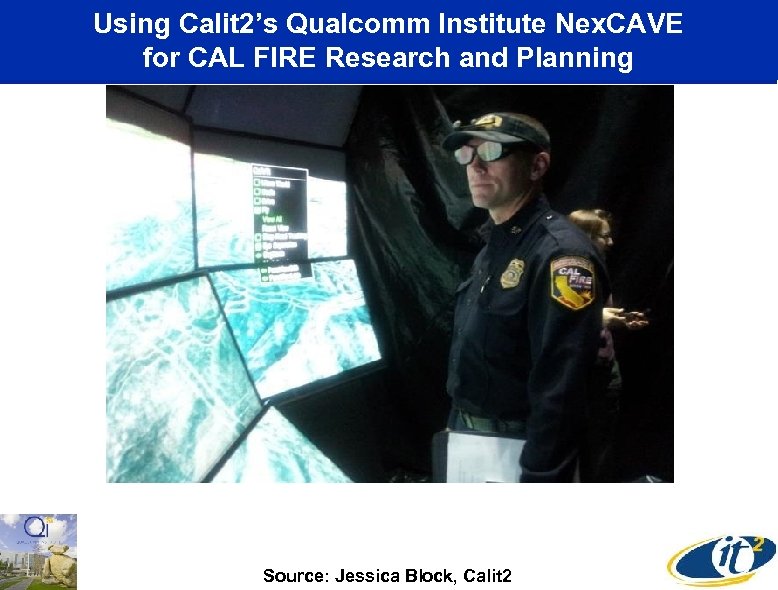
Using Calit 2’s Qualcomm Institute Nex. CAVE for CAL FIRE Research and Planning Source: Jessica Block, Calit 2
Integrated Digital Infrastructure: Next Steps • White Paper for UCSD Delivered to Chancellor – Creating a Campus Research Data Library – Deploying Advanced Cloud, Networking, Storage, Compute, and Visualization Services – Organizing a User-Driven IDI Specialists Team – Riding the Learning Curve from Leading-Edge Capabilities to Community Data Services – Extending the High Performance Wireless Research and Education Network (HPWREN) to all UC Campuses • White Paper for UC-Wide IDI Under Development • Calit 2 (UCSD, UCI) and CITRIS (UCB, UCSC, UCD) – Begin Work on Integrating CC-NIEs Across Campuses – Calit 2 and UCR Investigating HPWREN Deployment • Add in UCLA, UCSB, UCSF, UCR, UCM
Скачать презентацию A UC-Wide Cyberinfrastructure for Data-Intensive Research Invited
7776454ff6d39d23f050017dab119bc3.ppt