Скачать презентацию A Systematic Review of Interventions to Increase Awareness
cfd64d0f9c3c62960238e8438944d271.ppt
- Количество слайдов: 16
 A Systematic Review of Interventions to Increase Awareness, Knowledge, and Folic Acid Consumption Before and During Pregnancy Corina Mihaela Chivu, MD, MPH , Dr. PH trainee (Brunel University, The Centre for Public Health Research, London, UK) Prof Theodore H. Tulchinsky, MD, MPH & Prof Mayer Brezis, MD, MPH (The Hebrew University - Braun School of Public Health, Jerusalem Israel) Karla Soares-Weiser, MD, Ph. D (Enhance Reviews, Israel) Rony Braunstein, Ph. D, MSc (The Centre for Safety and Quality Hadassah University Hospital,
 Background & Purpose Folic acid supplementation before and during pregnancy prevents neural tube defects since 1992, the U. S. Public Health Service has recommended that all women of childbearing age consume 400 µg folic acid each day
 Background & Purpose Systematic review on interventions designed to improve awareness, knowledge, consumption of folic acid supplements before and during pregnancy in order to assess which were most effective and to recommend future directions for researchers, health promotion practitioners, clinicians
 Methodology Data Sources Cochrane Library and Medline Study Inclusion Criteria (1) study design: RCT & quasi-experimental interrupted time series & follow-up & case-control & before-and-after (2) women (15– 49 years) (3) any type of education intervention (4) rates of women’s awareness, knowledge, or consumption of folic acid supplements (5) publication 1992 - 2005
 Social marketing criteria channel of communication duration of the campaign number of exposures to the message content of the message language of message
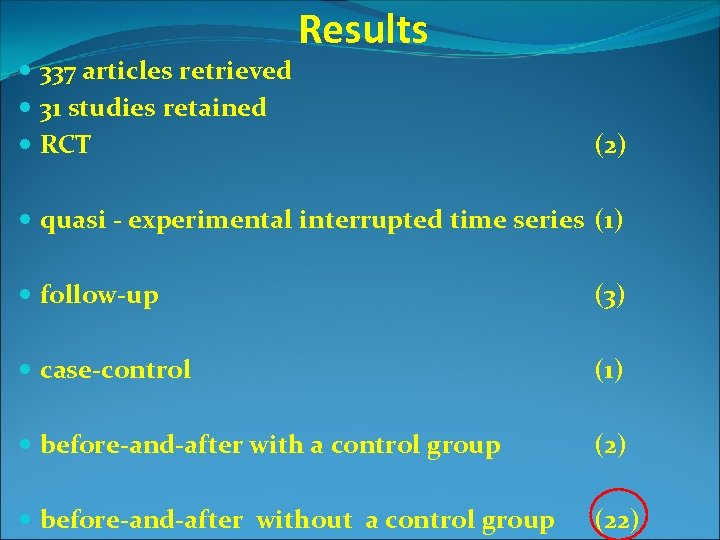 337 articles retrieved 31 studies retained RCT Results (2) quasi - experimental interrupted time series (1) follow-up (3) case-control (1) before-and-after with a control group (2) before-and-after without a control group (22)
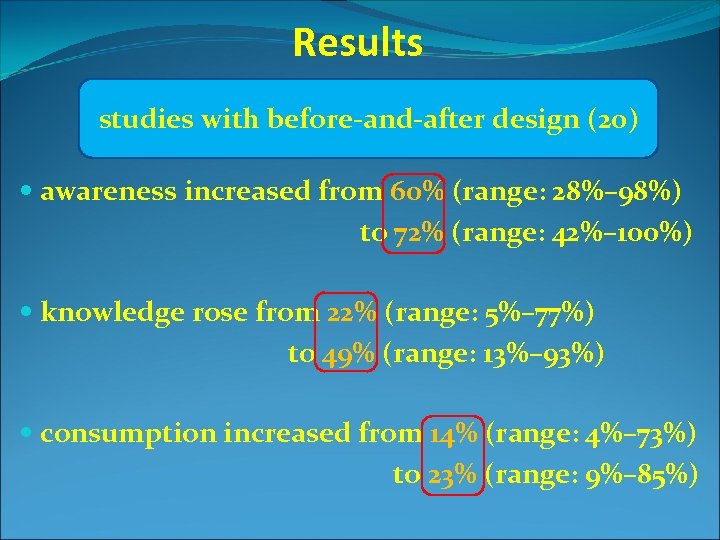 Results studies with before-and-after design (20) awareness increased from 60% (range: 28%– 98%) to 72% (range: 42%– 100%) knowledge rose from 22% (range: 5%– 77%) to 49% (range: 13%– 93%) consumption increased from 14% (range: 4%– 73%) to 23% (range: 9%– 85%)
 Limitations use of self-report data (recall bias) heterogeneity study design interventions
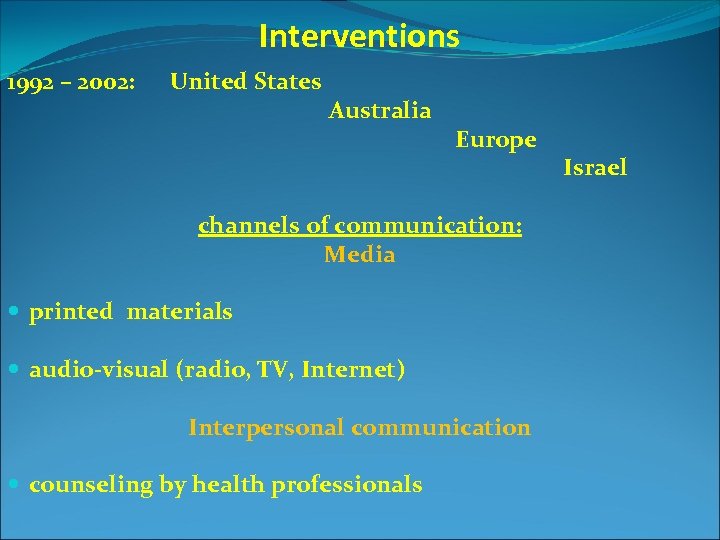 Interventions 1992 – 2002: United States Australia Europe channels of communication: Media printed materials audio-visual (radio, TV, Internet) Interpersonal communication counseling by health professionals Israel
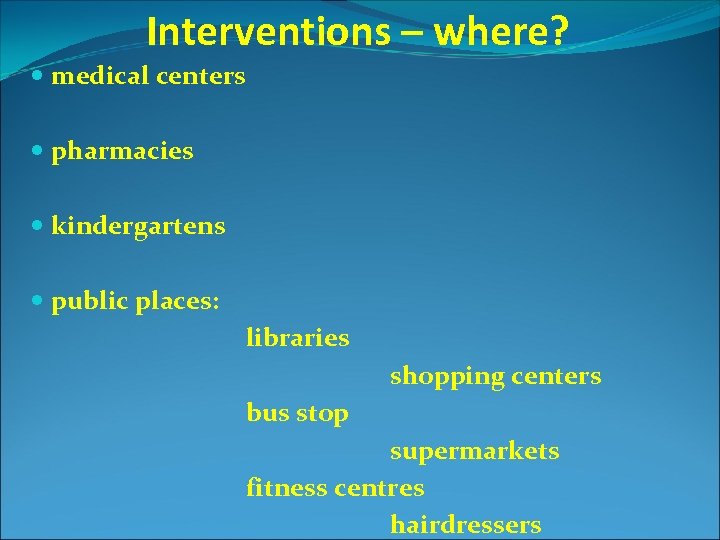 Interventions – where? medical centers pharmacies kindergartens public places: libraries shopping centers bus stop supermarkets fitness centres hairdressers
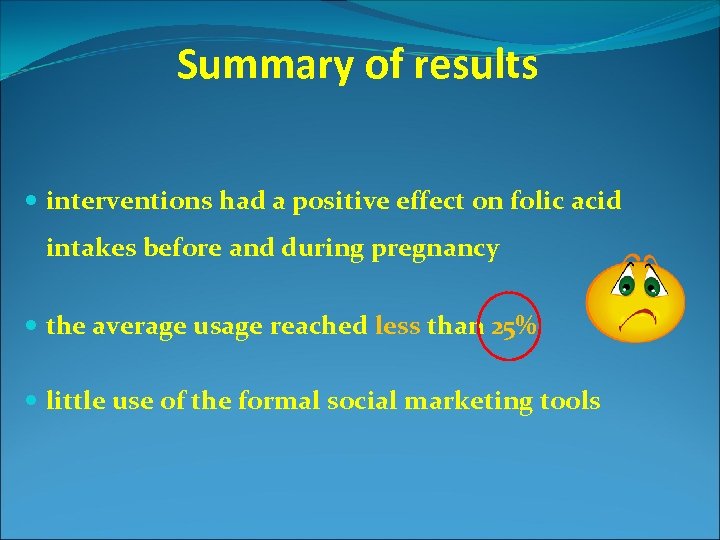 Summary of results interventions had a positive effect on folic acid intakes before and during pregnancy the average usage reached less than 25% little use of the formal social marketing tools
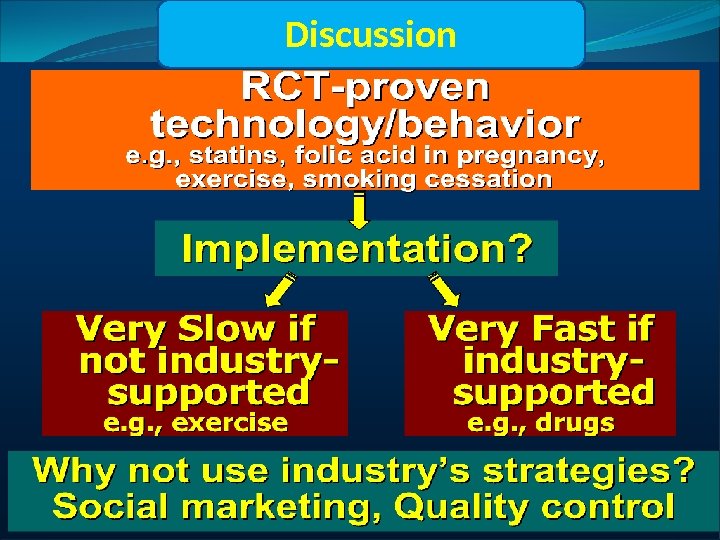 Discussion
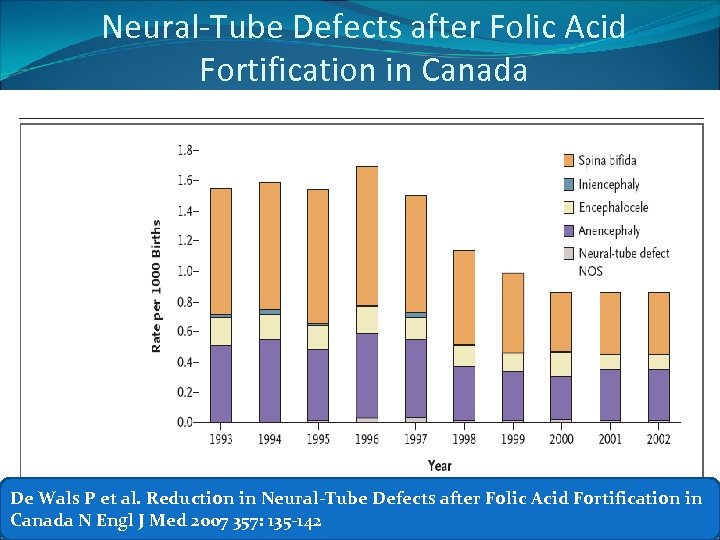 Neural-Tube Defects after Folic Acid Fortification in Canada De Wals P et al. Reduction in Neural-Tube Defects after Folic Acid Fortification in Canada N Engl J Med 2007 357: 135 -142
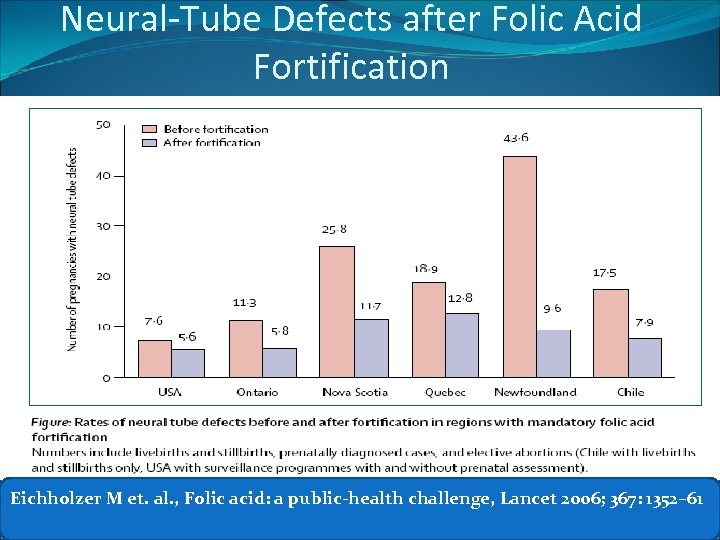 Neural-Tube Defects after Folic Acid Fortification Eichholzer M et. al. , Folic acid: a public-health challenge, Lancet 2006; 367: 1352– 61
 Conclusions & Recommendations need to develop and test more effective health education interventions to promote folic acid supplement use by women of reproductive age need to make mandatory fortification global