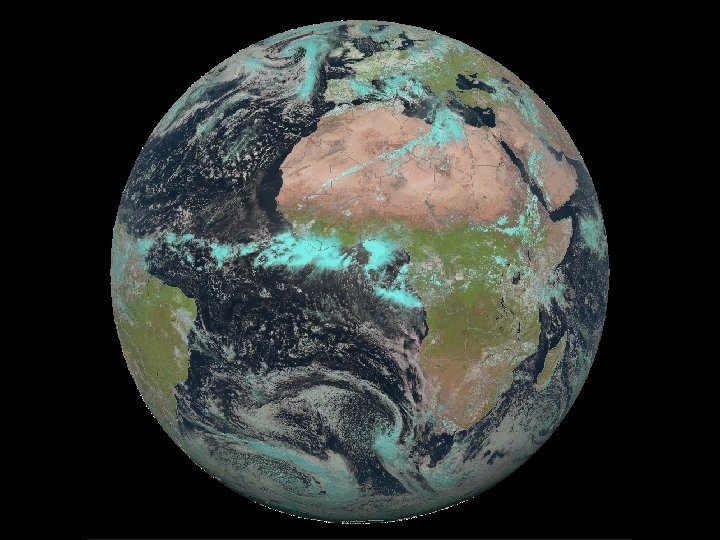
Скачать презентацию A Summary of the UCAR Google o Weather
82ed8de7f3e72ba63c17abfe29909123.ppt
- Количество слайдов: 35
 A Summary of the UCAR Google. o Weather and Meningitis Project Personnel: Abudulai Adams-Forgor 1, Mary Hayden 2, Abraham Hodgson 1, Thomas Hopson 2, Benjamin Lamptey 3, Jeff Lazo 2, Raj Pandya 2, Jennie Rice 4, Fred Semazzi 5, Madeleine Thomson 6, Sylwia Trazka 6, Tom Warner 2, Tom Yoksas 2 Collaborating Institutions: 1: Navrongo Health Research Centre, Ghana; 2. UCAR/NCAR/UOP, USA; 3. Accra, Ghana; 4. Independent Consultant, Boulder; 5. North Carolina State University, USA; 6. International Research Institute for Climate and Society, Columbia University, USA Delivered by: Raj Pandya, 8 December 2008
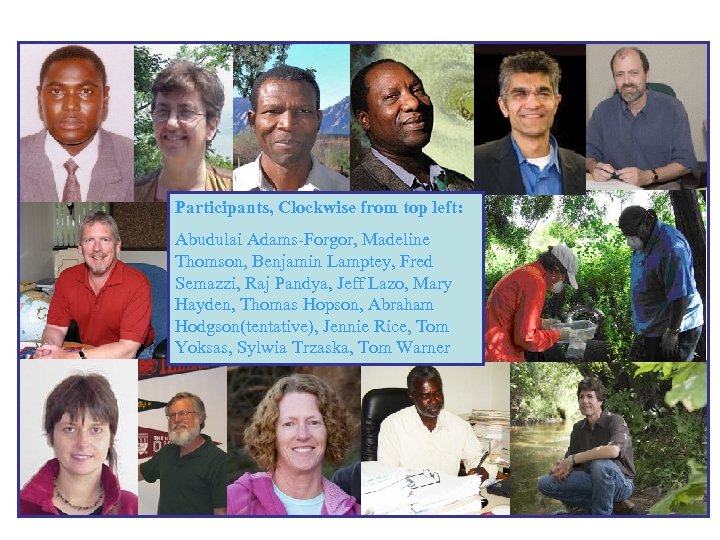 Participants, Clockwise from top left: Abudulai Adams-Forgor, Madeline Thomson, Benjamin Lamptey, Fred Semazzi, Raj Pandya, Jeff Lazo, Mary Hayden, Thomas Hopson, Abraham Hodgson(tentative), Jennie Rice, Tom Yoksas, Sylwia Trzaska, Tom Warner
 Outline § Project Goal § to use meteorological forecasts to help those who are managing Meningitis in the face of limited vaccine availability § Context § An overview of Meningitis § Reactive and proactive vaccination strategies § Problem § How to identify areas at risk for an epidemic § Short term: How to allocate scarce vaccines § Method § Comprehensive analysis of meningitis risk factors § First step: Using meteorological data to target reactive vaccination
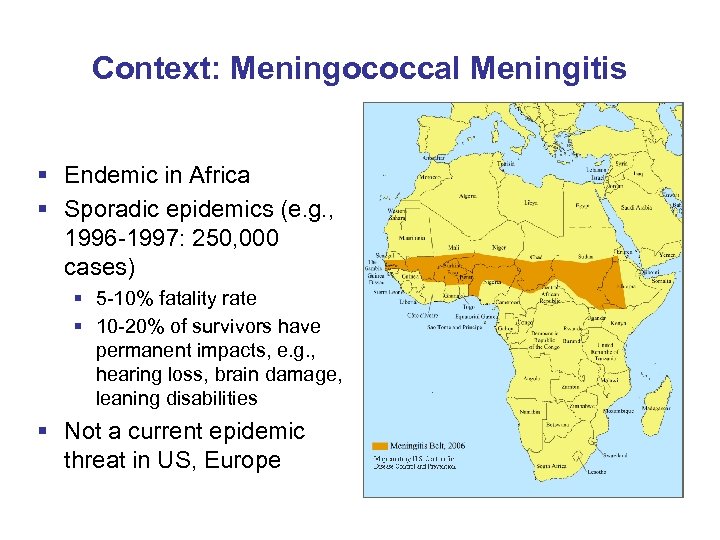 Context: Meningococcal Meningitis § Endemic in Africa § Sporadic epidemics (e. g. , 1996 -1997: 250, 000 cases) § 5 -10% fatality rate § 10 -20% of survivors have permanent impacts, e. g. , hearing loss, brain damage, leaning disabilities § Not a current epidemic threat in US, Europe
 Managing Meningococcal Meningitis Worldwide § Neisseria meningitidis (Nm), is responsible for meningococcal disease that occurs worldwide § In the meningitis belt epidemics are usually due to serogroup A meningococcus § The currently-available vaccine for serogroup A is scarce and has limited efficacy § An improved vaccine is being piloted next year: mass vaccinations throughout the meningitis belt over the next 10 years may eliminate the disease § In the developed world, the disease is uncommon. Most cases are due to serogroup C meningococcus, for which there are good vaccines § In the last decade, we have seen the emergence of serogroups X and W 135, internationally § Serogroup X has no vaccine; a limited efficacy vaccine for W exists
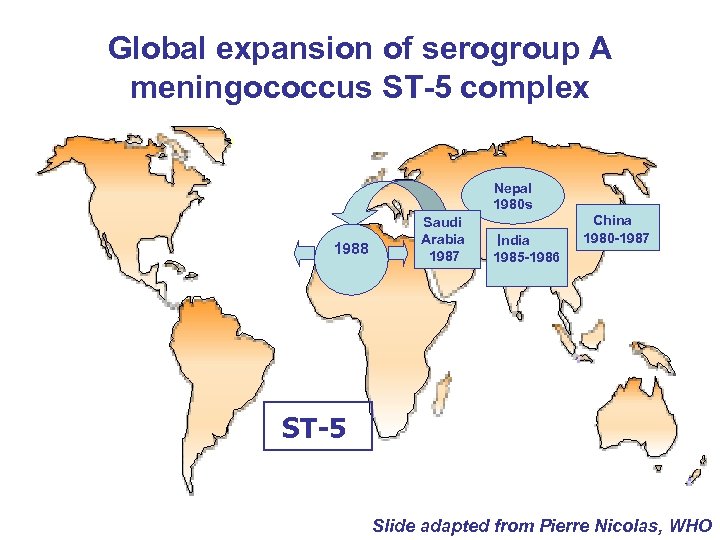 Global expansion of serogroup A meningococcus ST-5 complex Nepal 1980 s 1988 Saudi Arabia 1987 India 1985 -1986 China 1980 -1987 ST-5 Slide adapted from Pierre Nicolas, WHO
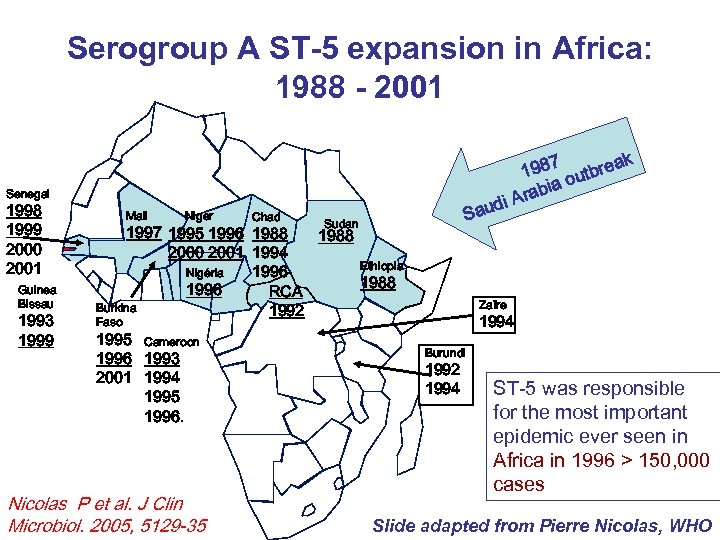 Serogroup A ST-5 expansion in Africa: 1988 - 2001 k 7 198 outbrea a rabi di A Senegal 1998 1999 2000 2001 Guinea Bissau 1993 1999 Mali Niger Chad Sau Sudan 1997 1995 1996 1988 2000 2001 1994 Ethiopia Nigéria 1996 1988 1996 RCA Burkina 1992 Zaïre 1994 Faso 1995 Cameroon 1996 1993 2001 1994 1995 1996. Nicolas P et al. J Clin Microbiol. 2005, 5129 -35 Burundi 1992 1994 ST-5 was responsible for the most important epidemic ever seen in Africa in 1996 > 150, 000 cases Slide adapted from Pierre Nicolas, WHO
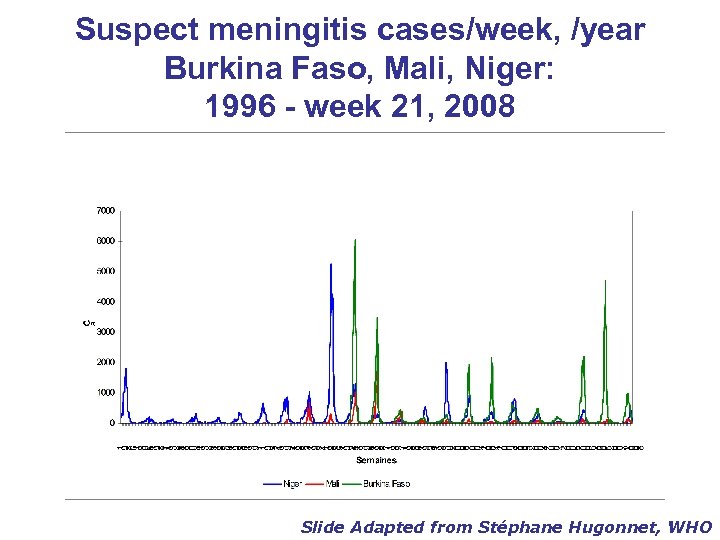 Suspect meningitis cases/week, /year Burkina Faso, Mali, Niger: 1996 - week 21, 2008 Slide Adapted from Stéphane Hugonnet, WHO
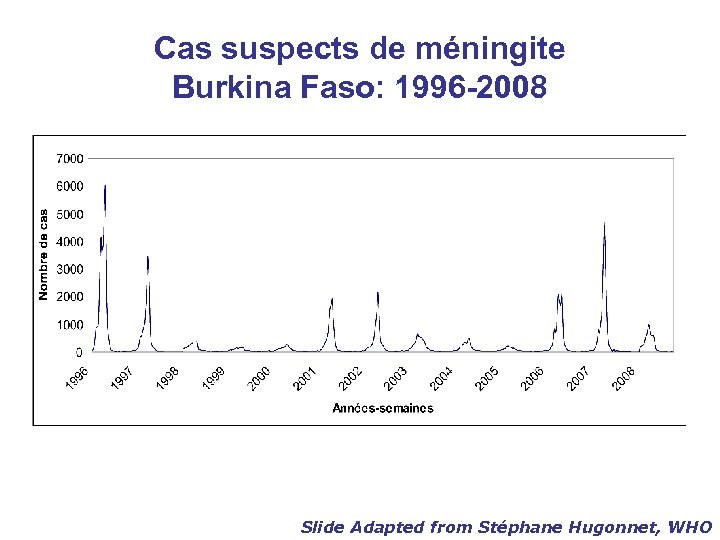 Cas suspects de méningite Burkina Faso: 1996 -2008 Slide Adapted from Stéphane Hugonnet, WHO
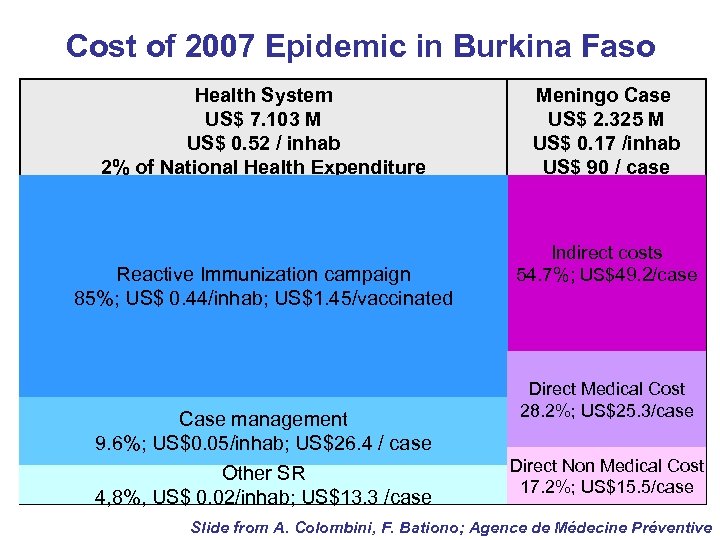 Cost of 2007 Epidemic in Burkina Faso Health System US$ 7. 103 M US$ 0. 52 / inhab 2% of National Health Expenditure Reactive Immunization campaign 85%; US$ 0. 44/inhab; US$1. 45/vaccinated Case management 9. 6%; US$0. 05/inhab; US$26. 4 / case Other SR 4, 8%, US$ 0. 02/inhab; US$13. 3 /case Meningo Case US$ 2. 325 M US$ 0. 17 /inhab US$ 90 / case Indirect costs 54. 7%; US$49. 2/case Direct Medical Cost 28. 2%; US$25. 3/case Direct Non Medical Cost 17. 2%; US$15. 5/case Slide from A. Colombini, F. Bationo; Agence de Médecine Préventive
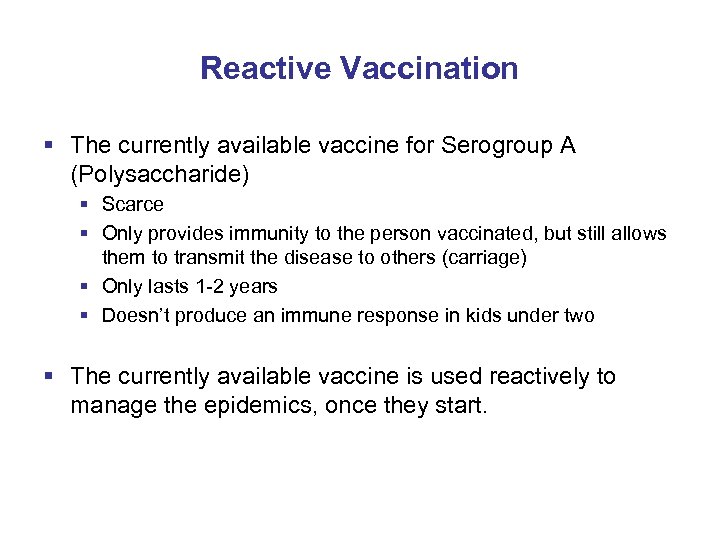 Reactive Vaccination § The currently available vaccine for Serogroup A (Polysaccharide) § Scarce § Only provides immunity to the person vaccinated, but still allows them to transmit the disease to others (carriage) § Only lasts 1 -2 years § Doesn’t produce an immune response in kids under two § The currently available vaccine is used reactively to manage the epidemics, once they start.
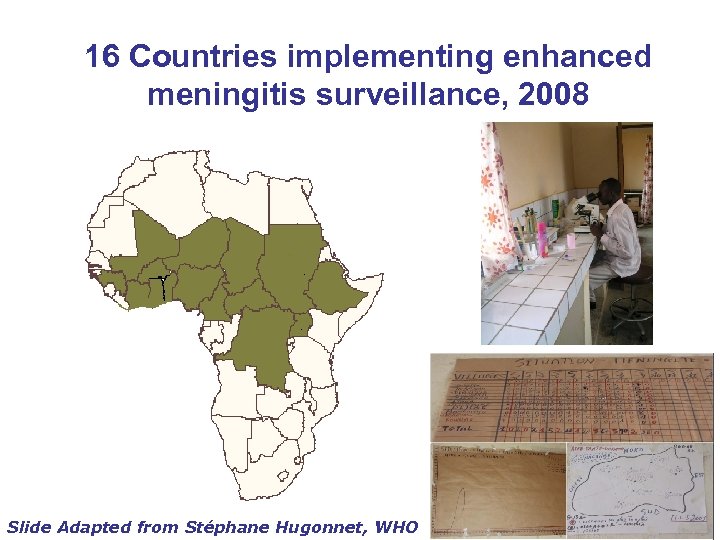 16 Countries implementing enhanced meningitis surveillance, 2008 Slide Adapted from Stéphane Hugonnet, WHO
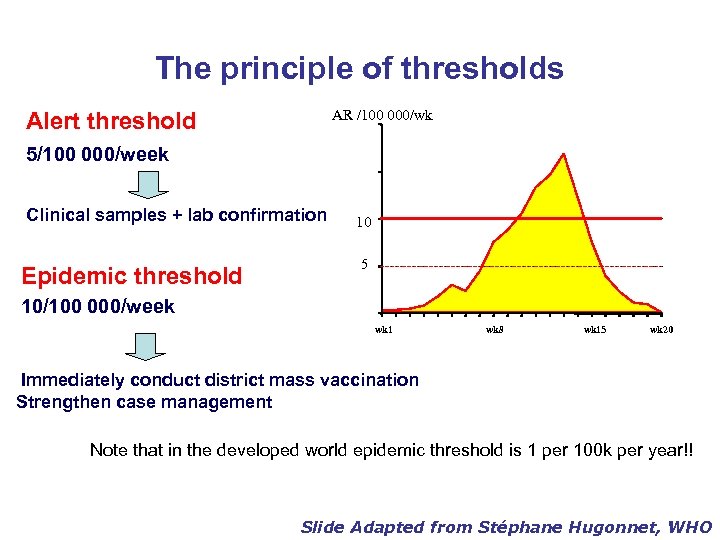 The principle of thresholds AR /100 000/wk 1600 Alert threshold Number of Cases 5/100 000/week Clinical samples + lab confirmation Epidemic threshold 10/100 000/week 1200 800 10 5 400 0 w 1 w 2 w 3 w 4 w 5 wk 1 wk 8 wk 15 wk 20 Immediately conduct district mass vaccination Strengthen case management Note that in the developed world epidemic threshold is 1 per 100 k per year!! Slide Adapted from Stéphane Hugonnet, WHO
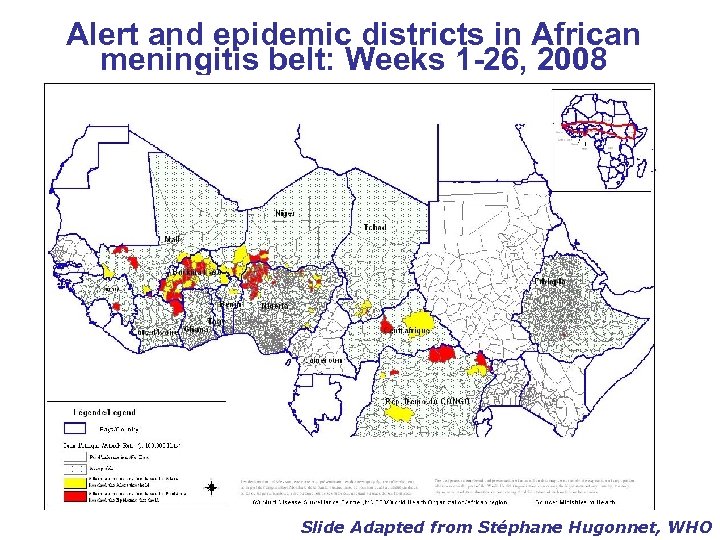 Alert and epidemic districts in African meningitis belt: Weeks 1 -26, 2008 Slide Adapted from Stéphane Hugonnet, WHO
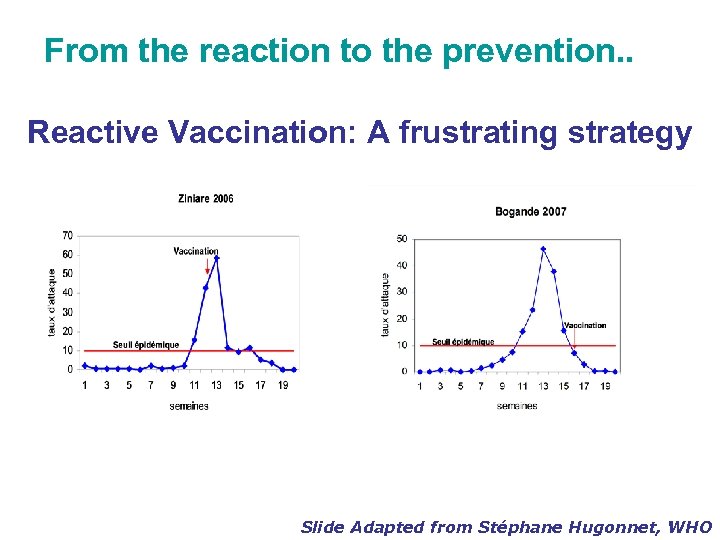 From the reaction to the prevention. . Reactive Vaccination: A frustrating strategy Slide Adapted from Stéphane Hugonnet, WHO
 The new vaccine - Conjugate A § Promising features § § May provide immunity for up to 10 years Once vaccinated, a person can’t transmit the disease (no carriage) Immunogenic in children under two All this implies that the new vaccine (conjugate) can be used proactively § Caveats. . § The vaccine hasn’t yet been evaluated in real-world settigns § Manufacturing constraints mean that it may require ten years to vaccinate everyone in the meningitis belt § Implies the need to continue reactive strategies in response to epidemics § Doesn’t protect against X or W serogroup § W was a problem among Hajj pilgrims, and responsible for 12, 617 cases and 1, 447 deaths in Burkina in 2002 (but has been much less visible lately) § All this suggests the reactive use of the currently-available vaccine (the polysaccharide) will continue
 Managing and Forecasting Meningitis Epidemics § Meningococcal meningitis epidemics require three factors… § A population susceptible to the emerging serogroup § An hyper-invasive/hyper-virulent strain § Risk factors – including environmental factors, social factors, …
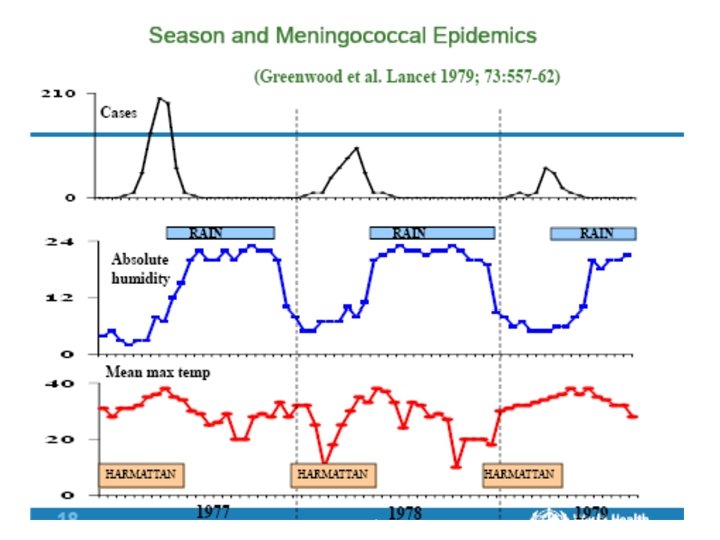
 Why do we think Weather is a Risk Factor for Meningitis? § Meningitis in Africa is largely, though not entirely, confined to regions with a defined dry season § Meningitis epidemics always occur in the dry season § Meningitis is culturally associated with dust, which is seasonal (in fact, in many languages the name for meningitis is “sand disease”) § Meningitis epidemics end abruptly with the start of the rainy season
 Two questions: § Can what is known about climate and weather risk factors be used to better help manage scarce vaccines in the current reactive strategy § What kind of research can improve future management, including the proactive application of the new Conjugate A vaccine.
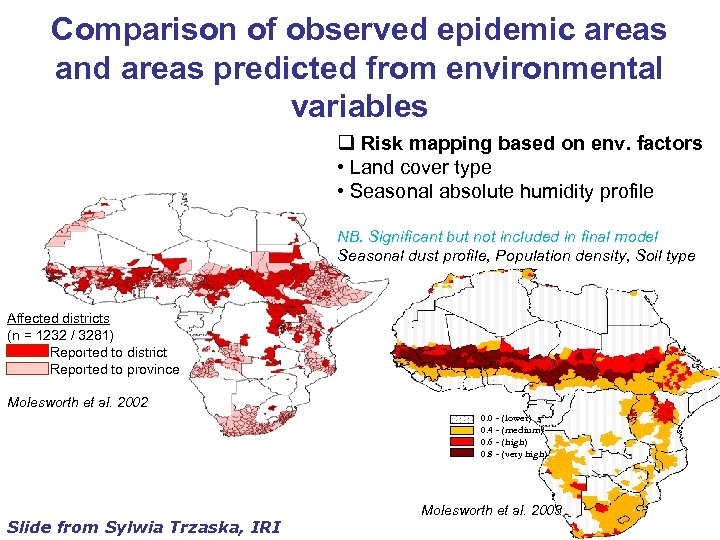 Comparison of observed epidemic areas and areas predicted from environmental variables q Risk mapping based on env. factors • Land cover type • Seasonal absolute humidity profile NB. Significant but not included in final model Seasonal dust profile, Population density, Soil type Affected districts (n = 1232 / 3281) Reported to district Reported to province Molesworth et al. 2002 0. 0 - (lower) 0. 4 - (medium) 0. 6 - (high) 0. 8 - (very high) Slide from Sylwia Trzaska, IRI Molesworth et al. 2003
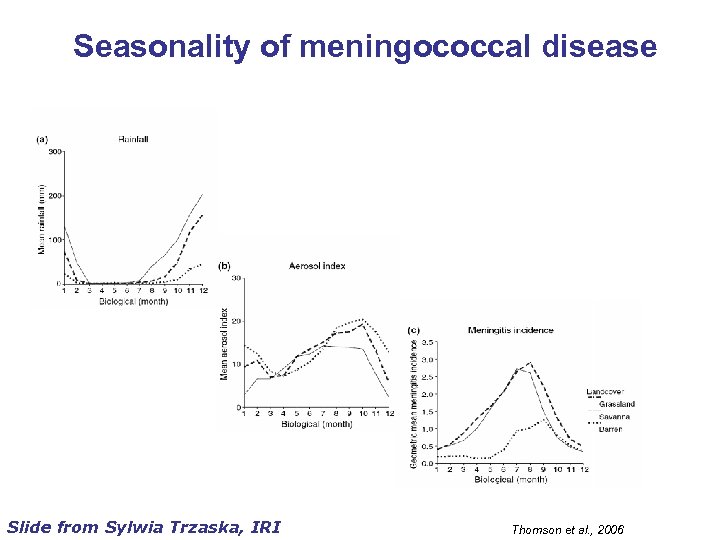 Seasonality of meningococcal disease Slide from Sylwia Trzaska, IRI Thomson et al. , 2006
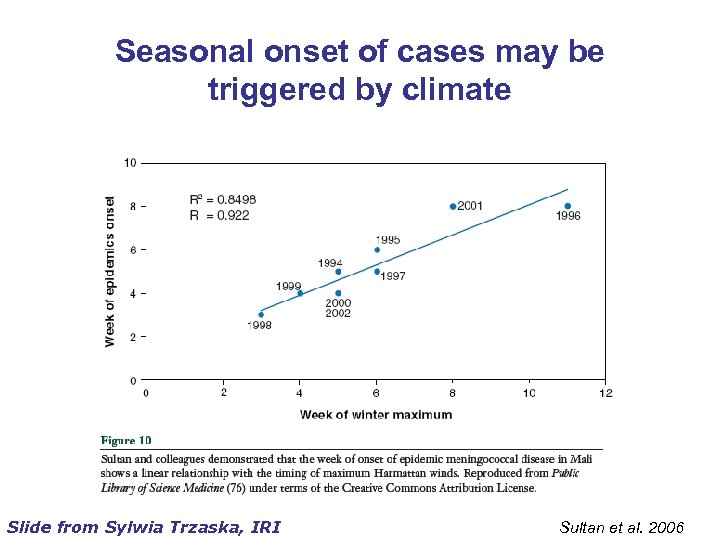 Seasonal onset of cases may be triggered by climate Slide from Sylwia Trzaska, IRI Sultan et al. 2006
 Our Google Project Components 0. Overall focus on Ghana, especially Navrongo Activity 1. Systematic investigation of the factors (not just environmental) that will impact the epidemics § § The role of dust? Cultural Practices, Population, etc. . Activity 2. Better forecasts of the end of the dry season § § Preliminary conversations suggest more precise information would help; decision makers are already informally trying to account for this Focus on implementation of current understanding in a decision process while doing research Activity 3. Preliminary economic assessment of the impact of vaccine intervention – including impact of new weather information § Includes a survey of households to identify other factors that may be managed as well
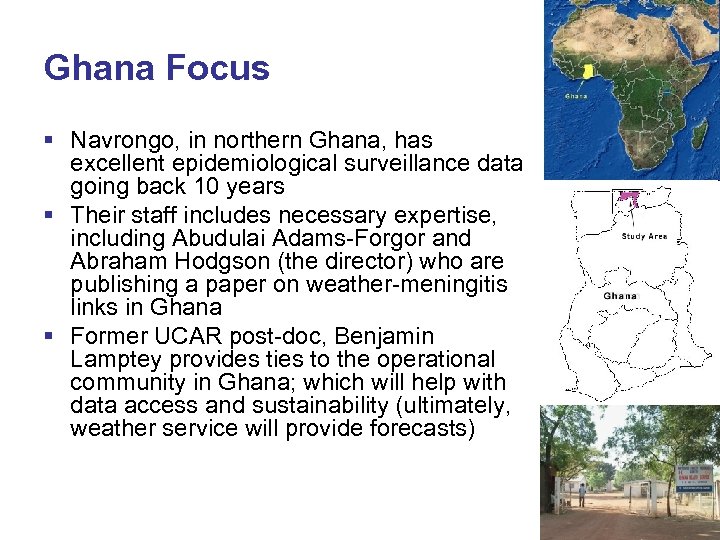 Ghana Focus § Navrongo, in northern Ghana, has excellent epidemiological surveillance data going back 10 years § Their staff includes necessary expertise, including Abudulai Adams-Forgor and Abraham Hodgson (the director) who are publishing a paper on weather-meningitis links in Ghana § Former UCAR post-doc, Benjamin Lamptey provides ties to the operational community in Ghana; which will help with data access and sustainability (ultimately, weather service will provide forecasts)
 Influence Diagrams: A tool for organizing and activating the projects activities § Compact, graphical way to communicate complex relationships between: § Decisions § Uncertainties, data, research results § Outcomes and objectives § Corresponds to a mathematical model (Bayesian network) § Incorporates probability distributions § Optimizes the decision § Determines the value of new information, research
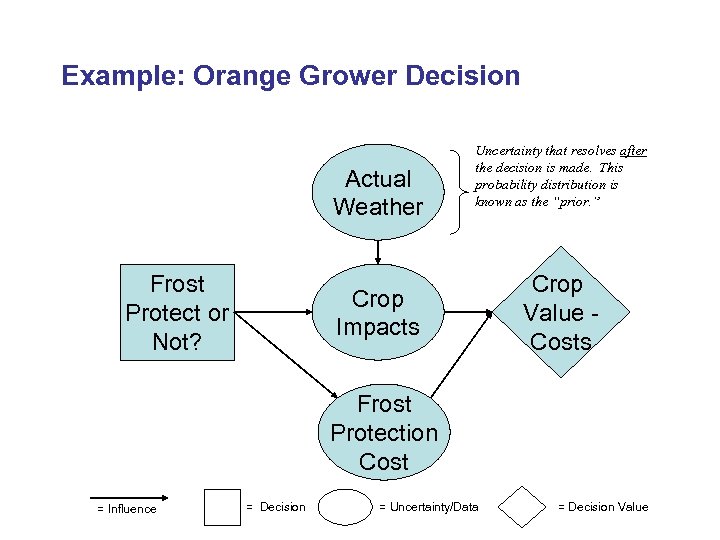 Example: Orange Grower Decision Actual Weather Frost Protect or Not? Uncertainty that resolves after the decision is made. This probability distribution is known as the “prior. ” Crop Impacts Crop Value Costs Frost Protection Cost = Influence = Decision = Uncertainty/Data = Decision Value
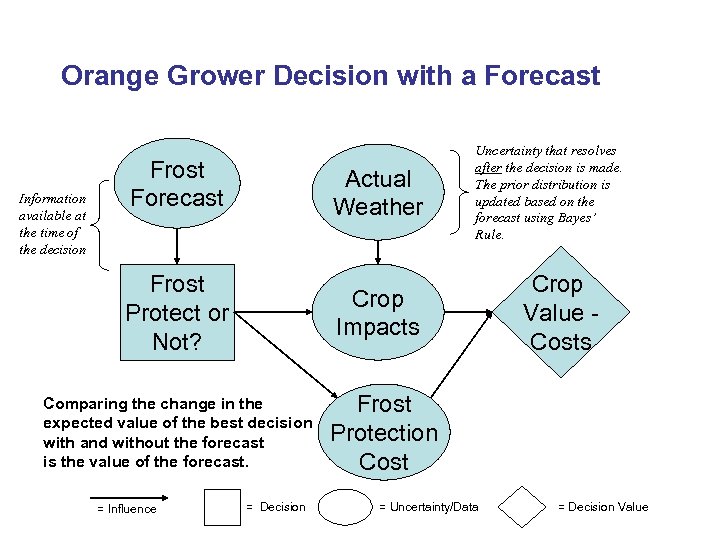 Orange Grower Decision with a Forecast Actual Weather Frost Protect or Not? Information available at the time of the decision Frost Forecast Uncertainty that resolves after the decision is made. The prior distribution is updated based on the forecast using Bayes’ Rule. Crop Impacts Comparing the change in the expected value of the best decision with and without the forecast is the value of the forecast. = Influence = Decision Crop Value Costs Frost Protection Cost = Uncertainty/Data = Decision Value
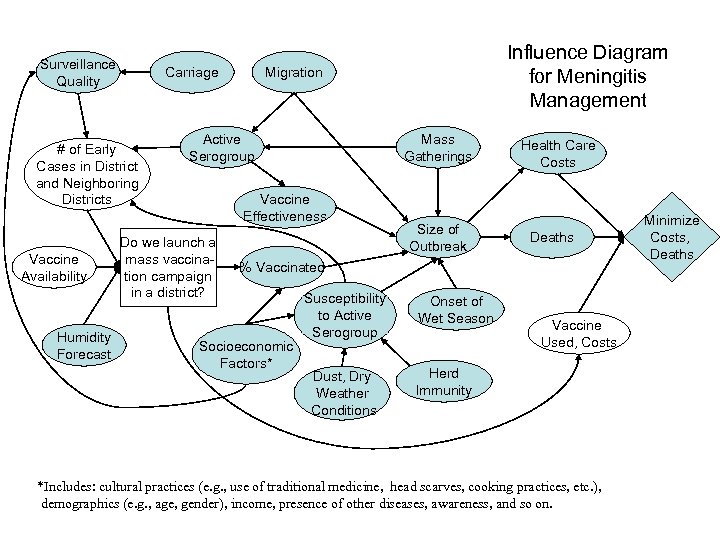 Surveillance Quality Carriage # of Early Cases in District and Neighboring Districts Vaccine Availability Humidity Forecast Migration Active Serogroup Mass Gatherings Vaccine Effectiveness Do we launch a mass vaccination campaign in a district? Influence Diagram for Meningitis Management Size of Outbreak Health Care Costs Deaths % Vaccinated Socioeconomic Factors* Susceptibility to Active Serogroup Dust, Dry Weather Conditions Onset of Wet Season Vaccine Used, Costs Herd Immunity *Includes: cultural practices (e. g. , use of traditional medicine, head scarves, cooking practices, etc. ), demographics (e. g. , age, gender), income, presence of other diseases, awareness, and so on. Minimize Costs, Deaths
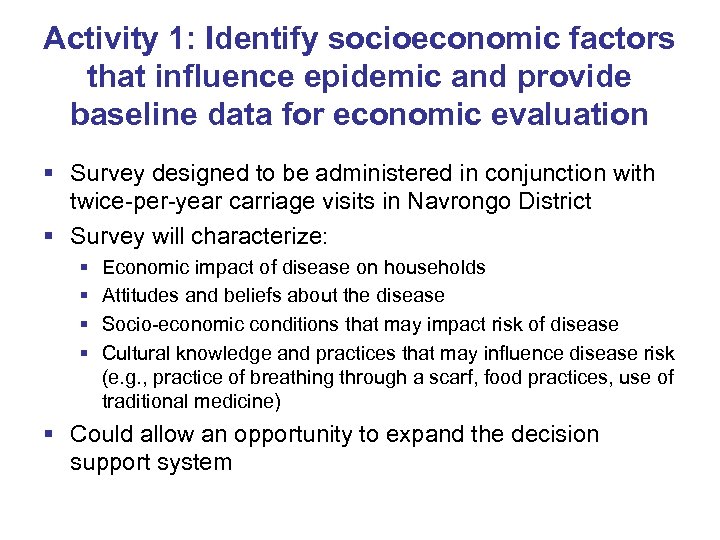 Activity 1: Identify socioeconomic factors that influence epidemic and provide baseline data for economic evaluation § Survey designed to be administered in conjunction with twice-per-year carriage visits in Navrongo District § Survey will characterize: § § Economic impact of disease on households Attitudes and beliefs about the disease Socio-economic conditions that may impact risk of disease Cultural knowledge and practices that may influence disease risk (e. g. , practice of breathing through a scarf, food practices, use of traditional medicine) § Could allow an opportunity to expand the decision support system
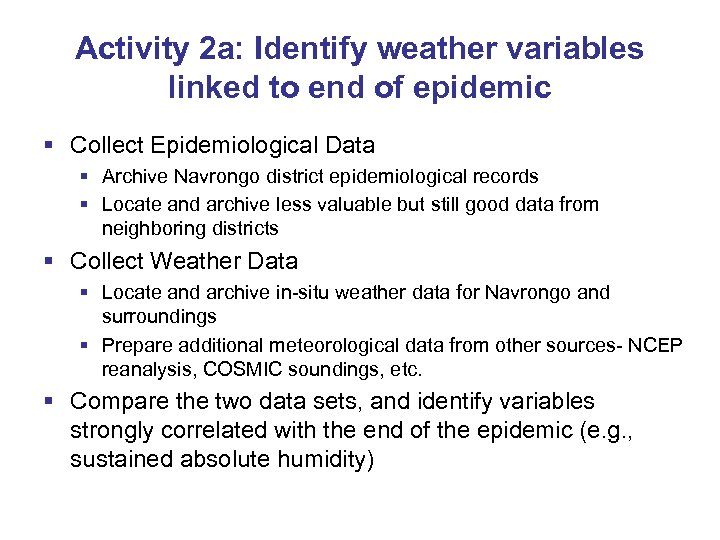 Activity 2 a: Identify weather variables linked to end of epidemic § Collect Epidemiological Data § Archive Navrongo district epidemiological records § Locate and archive less valuable but still good data from neighboring districts § Collect Weather Data § Locate and archive in-situ weather data for Navrongo and surroundings § Prepare additional meteorological data from other sources- NCEP reanalysis, COSMIC soundings, etc. § Compare the two data sets, and identify variables strongly correlated with the end of the epidemic (e. g. , sustained absolute humidity)
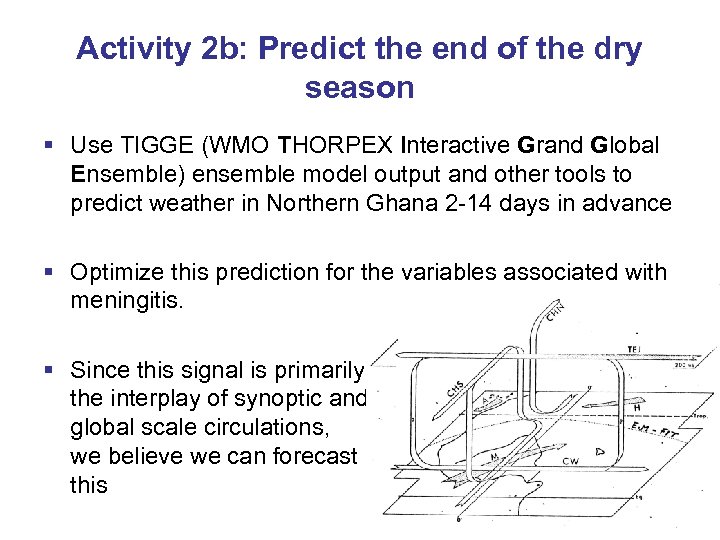 Activity 2 b: Predict the end of the dry season § Use TIGGE (WMO THORPEX Interactive Grand Global Ensemble) ensemble model output and other tools to predict weather in Northern Ghana 2 -14 days in advance § Optimize this prediction for the variables associated with meningitis. § Since this signal is primarily the interplay of synoptic and global scale circulations, we believe we can forecast this
 OUTPUT: A Decision Support System § Meet with local, regional and international decision makers to design data delivery systems that support their needs: § Vaccination deployment decisions are made by WHO, Médecines sans Frontières, UNICEF and Red Cross/Red Crescent § They do try to prioritize areas where rains are farther away in time for vaccination campaigns § Seasonal forecasts are not yet actionable § If we can build a decision support system, we can use the influence diagram to do a very preliminary evaluation the impact of the decision (Activity 3)
 Some final thoughts…lessons I think I’ve learned so far (and the rest of team already knew…) § Listen - to decision-makers and in-the-field workers to ensure the decision process is based on real data, meets decision-makers needs, and results in action. § E. g. : we’ve learned that seasonal forecasts are (currently) more difficult to use than short-term forecasts, because decision makers we are working with can’t influence the amount of vaccine available. § Be Humble - Meteorology isn’t the only factor that influences the disease spread, so it needs to be considered in that context; multiple expertise is needed to even figure out how meteorology can contribute § Involve the Community - Work in Africa (or any community) needs to occur at the invitation of the community, with the community, and address the needs of the community. “No drive-by science”