


 Скачать презентацию A Social Media Approach to Employee Engagement Research
cac1cd8ece5ea8e458319b71d20e369b.ppt
- Количество слайдов: 29
 A Social Media Approach to Employee Engagement Research Michael Silverman
 Contents • Limitations of employee engagement surveys • New developments in employee research: – Social media – Text analysis – Graphical user interfaces • Unilever case studies: – Opinion Space – The Social Media Garden – The Hive • Organizational Network Analysis 2
 Surveys are Boring 3
 Too Much Focus on the Numbers 4
 The Research Black Hole 5
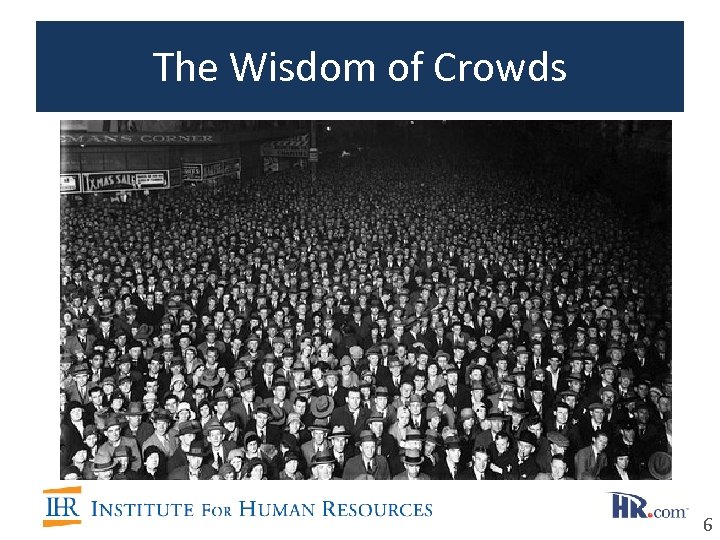 The Wisdom of Crowds 6
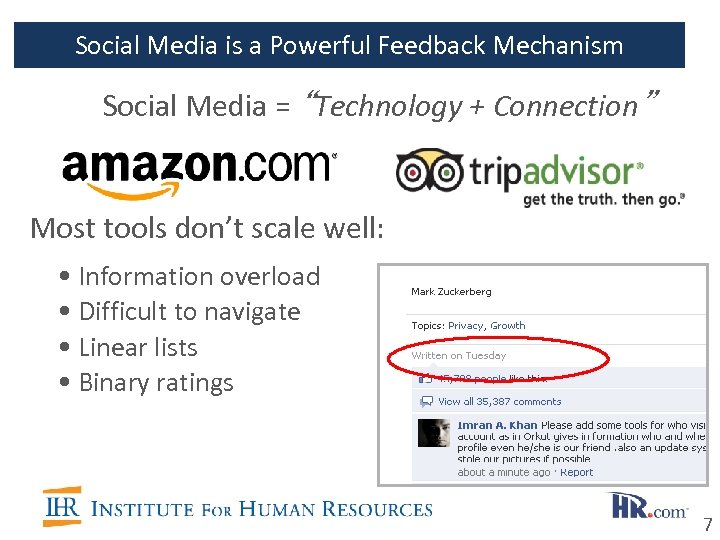 Social Media is a Powerful Feedback Mechanism Social Media = “Technology + Connection” Most tools don’t scale well: • Information overload • Difficult to navigate • Linear lists • Binary ratings 7
 Text/Sentiment Analysis • The use of linguistic techniques to extract meaning from content • Uses a natural language processing engine to understand grammar, syntax and context • Can transform huge volumes of unstructured text into easy to understand categories • Sentiment for categories shows how negative or positive comments are: a score between -2 (very negative) to +2 (very positive) • Understand different emotions about categories • Use in combination with structured data (eg survey scores) • See http: //clarabridge. com 8
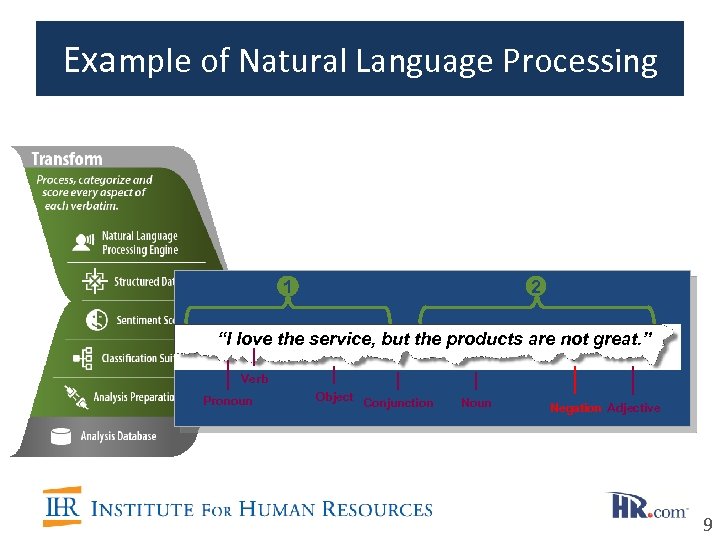 Example of Natural Language Processing 1 2 “I love the service, but the products are not great. ” Verb Pronoun Object Conjunction Noun Negation Adjective 9
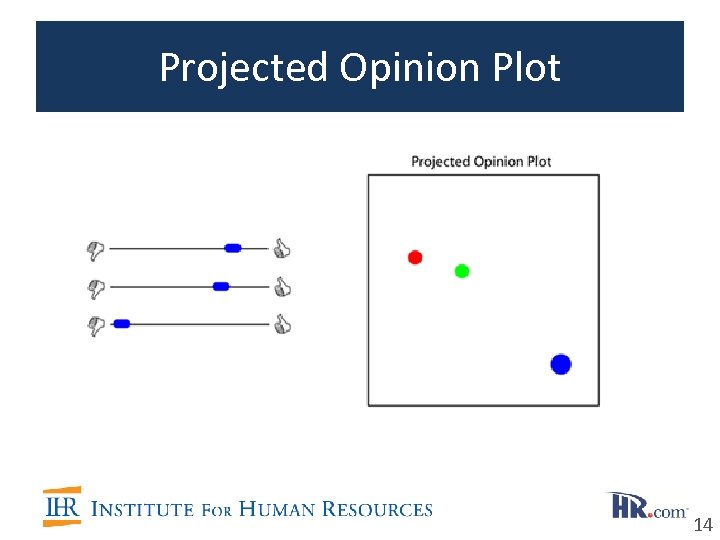
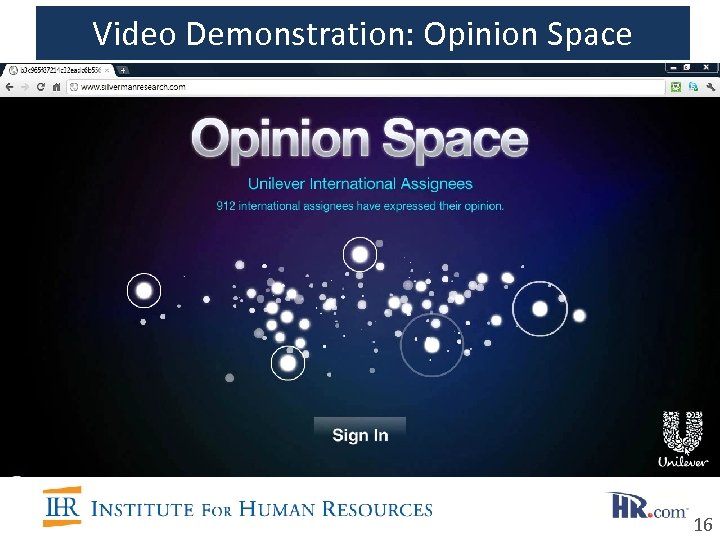
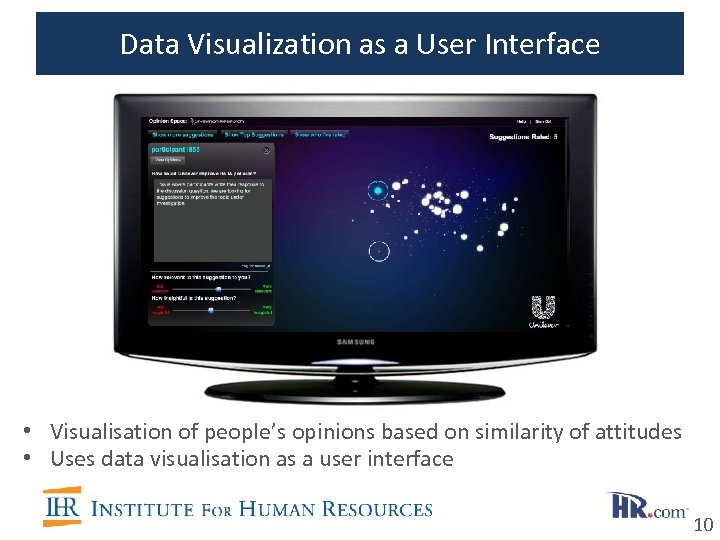 Data Visualization as a User Interface • Visualisation of people’s opinions based on similarity of attitudes • Uses data visualisation as a user interface 10
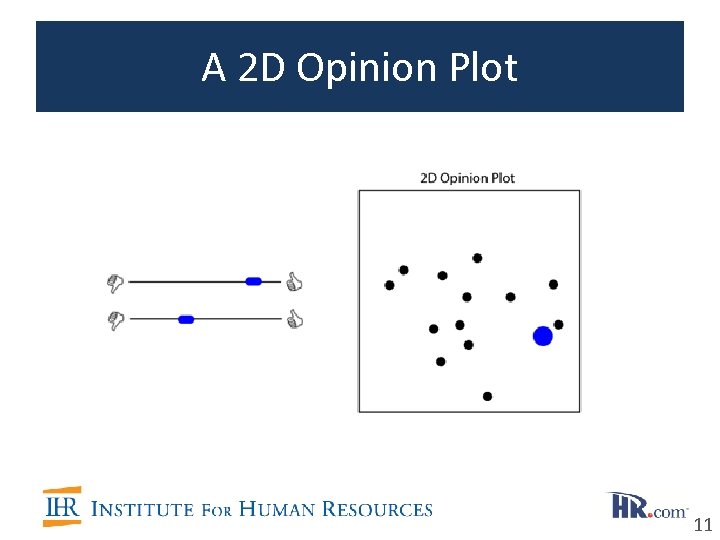 A 2 D Opinion Plot 11
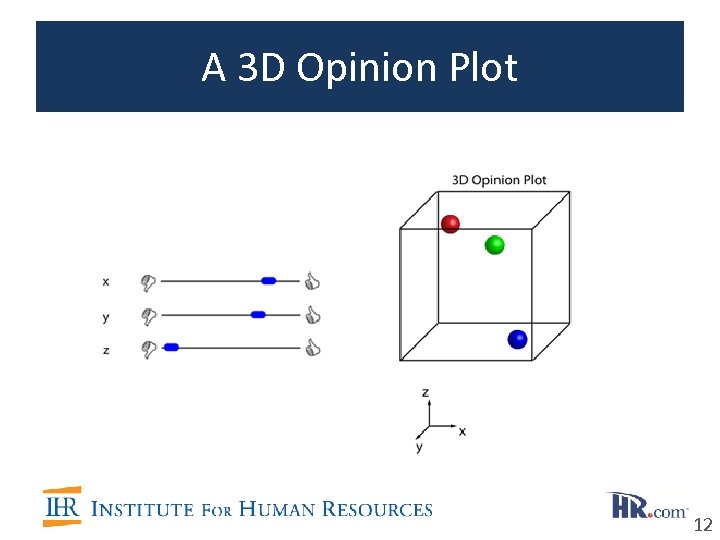 A 3 D Opinion Plot 12
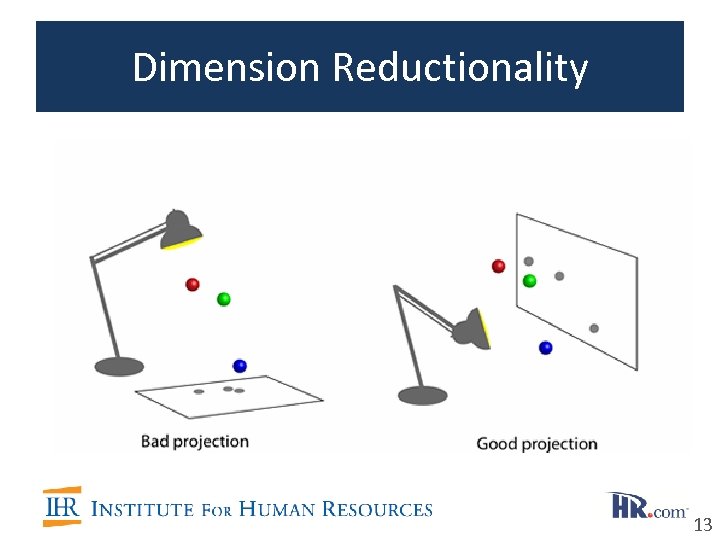 Dimension Reductionality 13
 Projected Opinion Plot 14
 Unilever: Case Study 1 15 International Assignee (IA) reward policy lacking: • • Poor implementation & delivery No clear agreement on the way forward Particular issues with this population: • • Very global and valuable group Contentious and complex issue Why ask? • • • We want to hear the authentic voice of employees Assess reward elements Crowd source suggestions Allow understanding Let off some steam 15
 Video Demonstration: Opinion Space 16
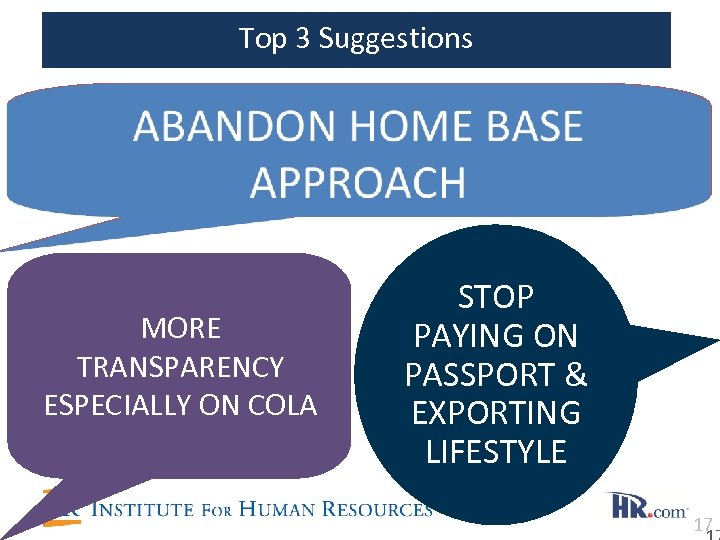 Top 3 Suggestions Abandon the crazily complex and absolutely intransparent home-pay rule. - It may look transparent on paper, but essentially the blackbox of hypothetical home tax, Cola calculation and 'spendable' amount is unacceptable and irreconcilable with reality. No one understands their payslip and no one can actually explain it!!! - Hypothetical tax is particularly contentious as you have to wait for years to get a reconciliation and in the meanwhile the hypothetical tax rate may move any direction. There is no planning certainty. No country would dare to move their income tax as much as Unilever dares to vary their hypothetical tax rate. On top the hypothetical rate is not even adapted after the first reconciliation! - It treats people with different backgrounds differently while what matters for many is NOT their home-country. Particularly global professionals are not self-referencing themselves to home but to where they could work and want to work. (Score = 87, based on 39 ratings) 1) More transparency. . . for example, expats that have the same WL and same family size get different housing budgets, and this sometimes seems unfair. 2) COLA calculations are just wrong. . . it assumes an 'average' basket of goods in my country of origin, but in my home country, that average basket does not reflect my own reality. Also, this calculation is too low. Currently, my full Cola goes into paying for the additional cost of gas bill, the water bill, and cable. None is left over for the other costs that can be considerably more expensive than at home. 3) The policy favors economically people moving from high cost of living localities to the third world, and penalizes those moving from third world country to developed places. 4) The health insurance should cover 100% dental and vision 5) The policy does not address pension disparities if the asignee has little possibility of returning to home country. (Score = 84, based on 53 ratings) MORE TRANSPARENCY ESPECIALLY ON COLA The biggest change is not to look at the color of the skin and the passport a person holds to determine the pay and the package a person would get. The current policy says that a person from a third world country deserves only a third world lifestyle, and a third world level of savings, wherever he goes. . . while somebody from a first world country deserves a first world lifestyle even if he is assigned in a third world country. This is the height of institutionalized racism, in a company who prides itself of promoting diversity. The next one is to improve the quality of the service providers--from being stoic, cold messengers and policy implementors, to sincere assistance providers. (Score = 81, based on 11 ratings) STOP PAYING ON PASSPORT & EXPORTING LIFESTYLE 17
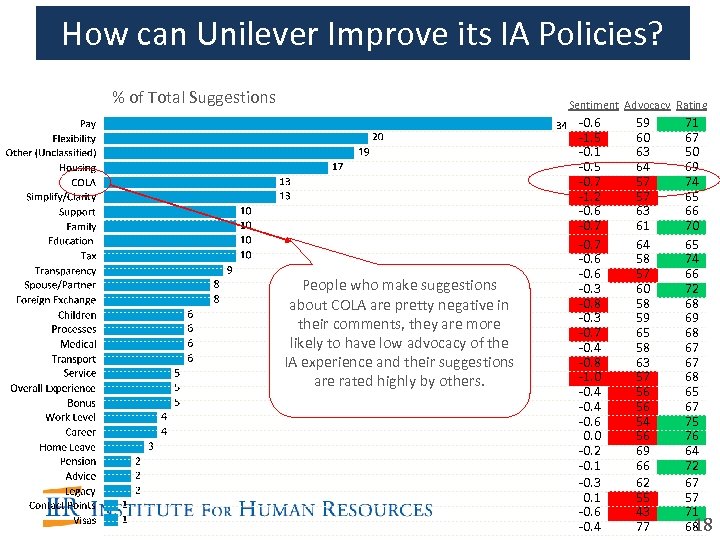 How can Unilever Improve its IA Policies? % of Total Suggestions Sentiment Advocacy Rating People who make suggestions about COLA are pretty negative in their comments, they are more likely to have low advocacy of the IA experience and their suggestions are rated highly by others. -0. 6 -1. 5 -0. 1 -0. 5 -0. 7 -1. 2 -0. 6 -0. 7 -0. 6 -0. 3 -0. 8 -0. 3 -0. 7 -0. 4 -0. 8 -1. 0 -0. 4 -0. 6 0. 0 -0. 2 -0. 1 -0. 3 0. 1 -0. 6 -0. 4 59 60 63 64 57 57 63 61 64 58 57 60 58 59 65 58 63 57 56 56 54 56 69 66 62 55 43 77 71 67 50 69 74 65 66 70 65 74 66 72 68 69 68 67 67 68 65 67 75 76 64 72 67 57 71 18 68
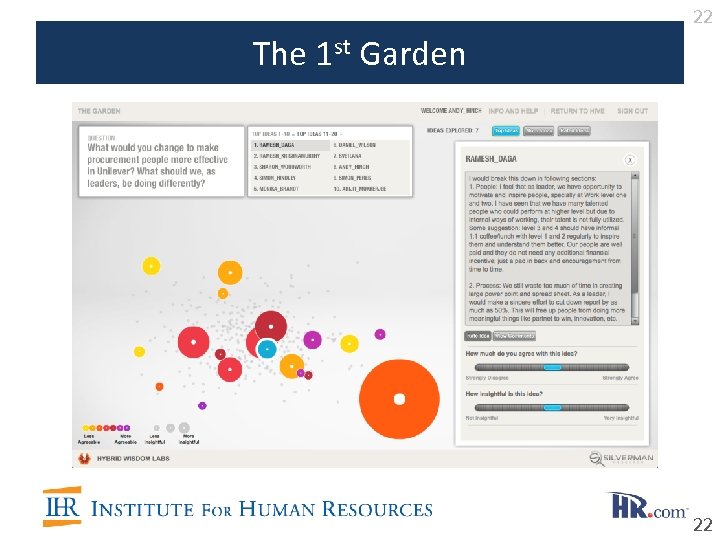
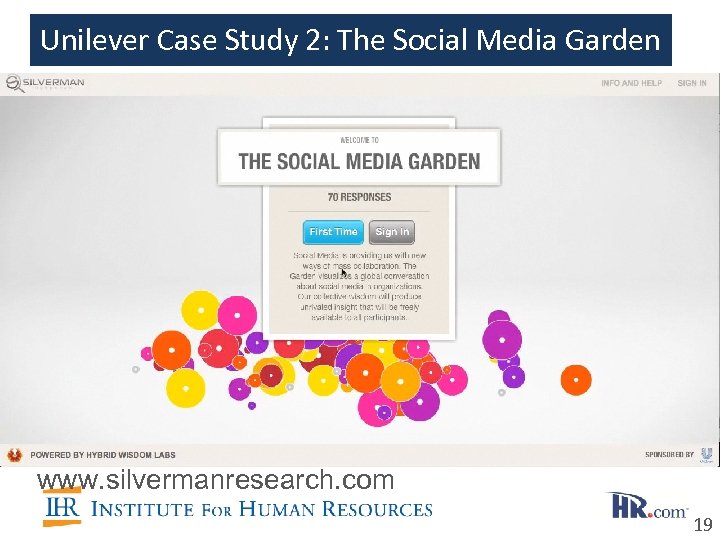 Unilever Case Study 2: The Social Media Garden www. silvermanresearch. com 19
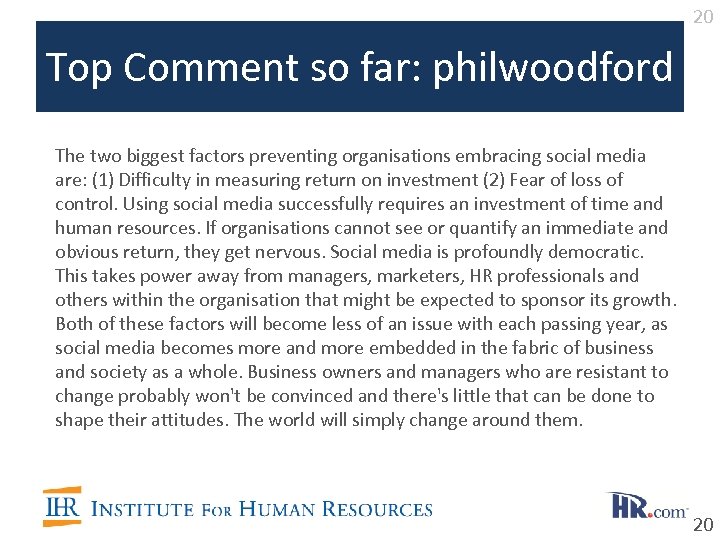 20 Top Comment so far: philwoodford The two biggest factors preventing organisations embracing social media are: (1) Difficulty in measuring return on investment (2) Fear of loss of control. Using social media successfully requires an investment of time and human resources. If organisations cannot see or quantify an immediate and obvious return, they get nervous. Social media is profoundly democratic. This takes power away from managers, marketers, HR professionals and others within the organisation that might be expected to sponsor its growth. Both of these factors will become less of an issue with each passing year, as social media becomes more and more embedded in the fabric of business and society as a whole. Business owners and managers who are resistant to change probably won't be convinced and there's little that can be done to shape their attitudes. The world will simply change around them. 20
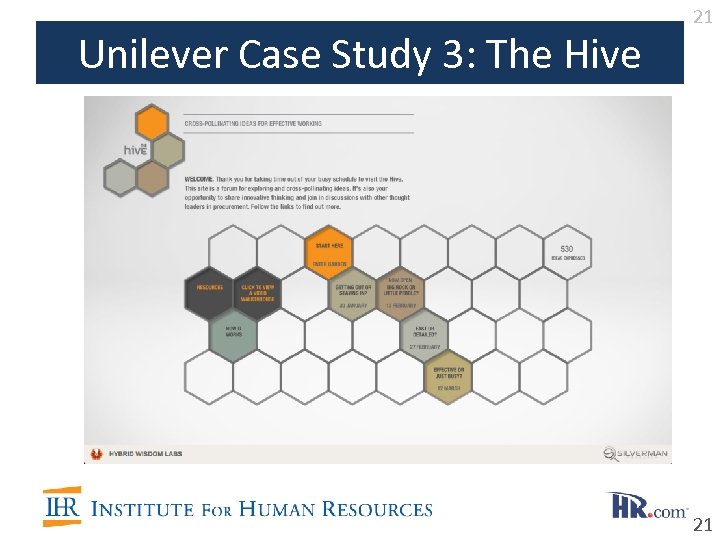 Unilever Case Study 3: The Hive 21 21
 22 The 1 st Garden 22
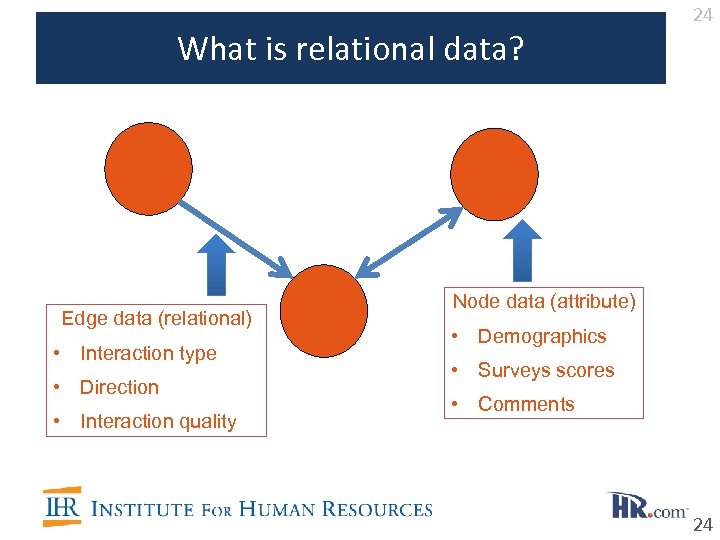
 23 What is Organisational Network Analysis? • Many acknowledge the importance of networks and informal relationships at work, but… • Few actually put any effort into assessing and supporting connections • Vast majority of data that HR measures is attribute data – characteristics/attitudes of employees • Relational data = ties that connect employees to each other • Social Network Analysis uses relational data 23
 What is relational data? Edge data (relational) • Interaction type • Direction • Interaction quality 24 Node data (attribute) • Demographics • Surveys scores • Comments 24
 25 What questions to ask? Two are particularly good in highlighting opportunities for improvement: 1. Information: How often do you typically turn to this person for information on work-related topics? (Very Often – Never) 2. Communication: I would be more effective in my work if I could communicate with this person more? (Strongly Agree – Strongly Disagree) 25
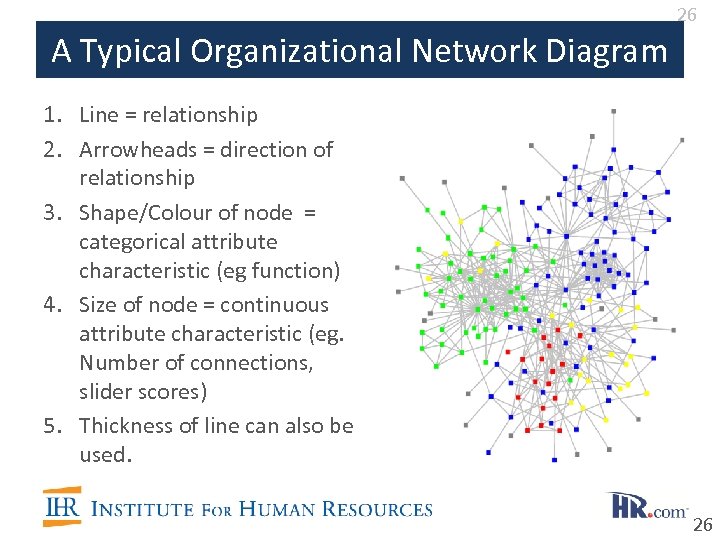 26 A Typical Organizational Network Diagram 1. Line = relationship 2. Arrowheads = direction of relationship 3. Shape/Colour of node = categorical attribute characteristic (eg function) 4. Size of node = continuous attribute characteristic (eg. Number of connections, slider scores) 5. Thickness of line can also be used. 26
 Quantitative Analysis 27 Can do more than visual analysis Look at network statistics for groups or individuals Compare scores in different networks Degree centrality: the number of direct connections a person has (ingoing or outgoing) • Network Density: level of connectivity with the network (number of existing ties/total number of possible ties) • Cohesion: the shortest path – the minimum number of links to get to from one person to another • • 27
 Tips for Engagement Research 28 • Don’t be afraid to “ask the victims” • If you want the authentic voice of employees, you will not achieve it using surveys • Only social media that use data visualization as a user interface are capable of adequately sustaining a large number of participants • Allow employees the freedom to say what they want - openly • Don’t censor or select comments, let the community selfpolice comments • Use text analysis to quickly distill the essence of conversations and combine this with traditional quantitative survey data • Also need to look at relational data – not just attribute data 28
 michael@silvermanresearch. com www. silvermanresearch. com