 Скачать презентацию A signal transducer and cancer Neurofibromin
b2126c552dc1d6f13481fec9532fd79e.ppt
- Количество слайдов: 32



• A signal transducer and cancer Neurofibromin, ras, and cancer - utah
Tumor suppressor genes Table 20. 3 • Protein products suppress uncontrolled cell proliferation • Both copies must be inactivated for loss of function = 2 mutations in one cell required • Recessive • 2 hit model (Knudson 1971)
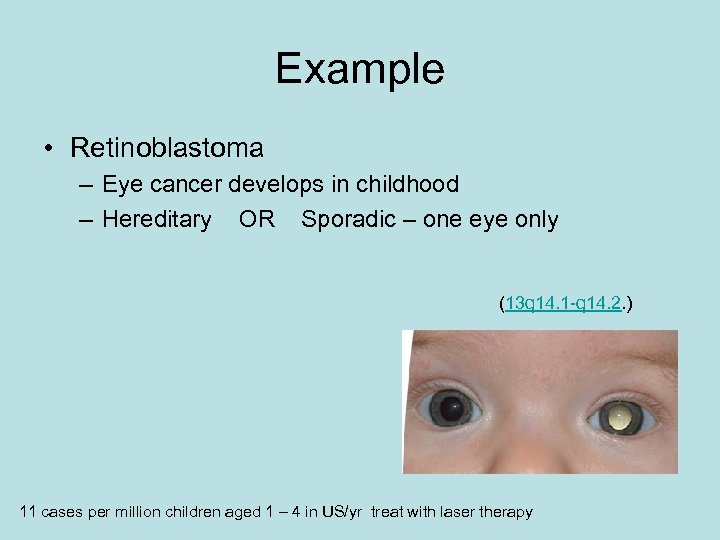
Example • Retinoblastoma – Eye cancer develops in childhood – Hereditary OR Sporadic – one eye only (13 q 14. 1 -q 14. 2. ) 11 cases per million children aged 1 – 4 in US/yr treat with laser therapy
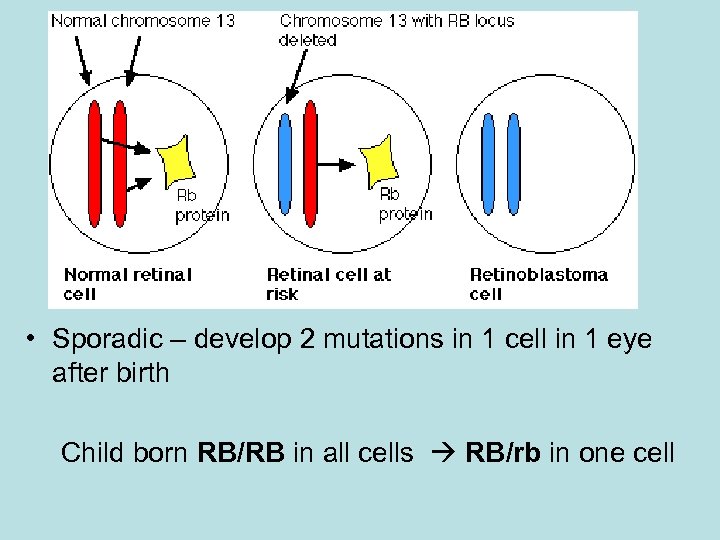
• Sporadic – develop 2 mutations in 1 cell in 1 eye after birth Child born RB/RB in all cells RB/rb in one cell
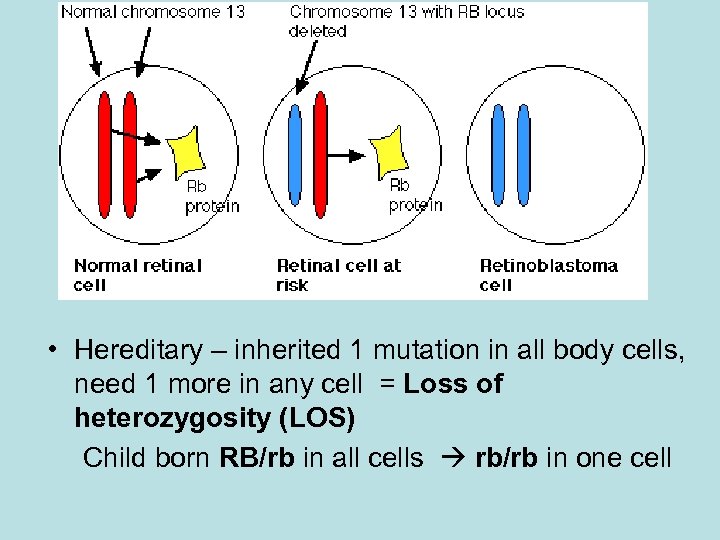
• Hereditary – inherited 1 mutation in all body cells, need 1 more in any cell = Loss of heterozygosity (LOS) Child born RB/rb in all cells rb/rb in one cell
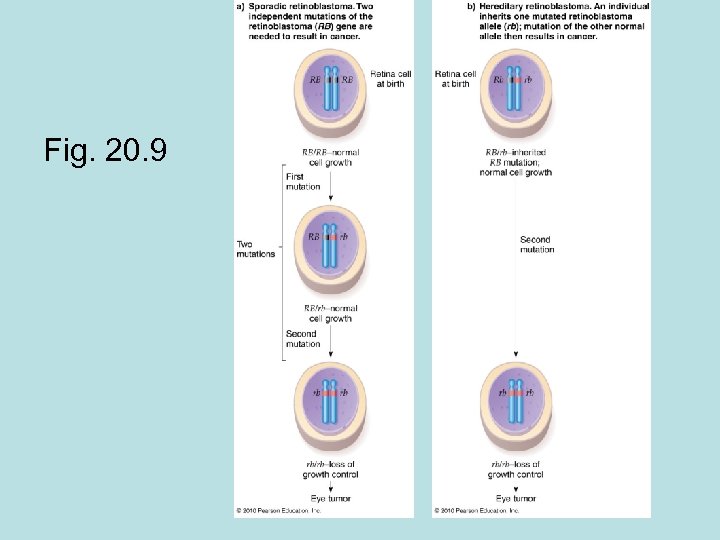
Fig. 20. 9
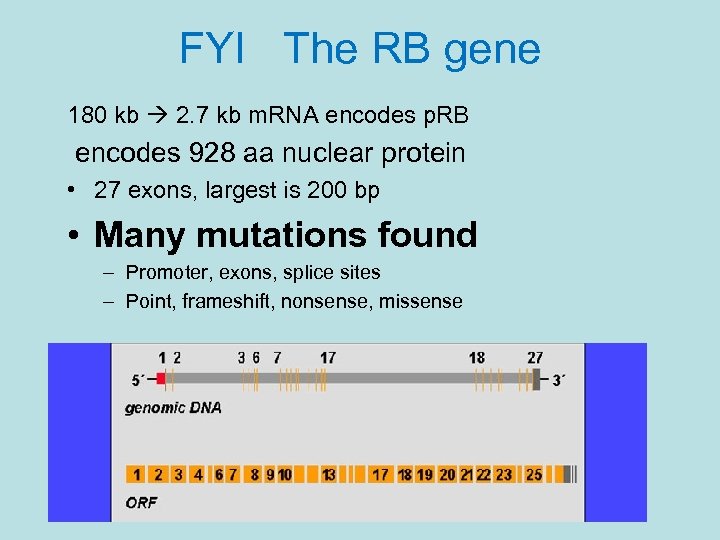
FYI The RB gene 180 kb 2. 7 kb m. RNA encodes p. RB encodes 928 aa nuclear protein • 27 exons, largest is 200 bp • Many mutations found – Promoter, exons, splice sites – Point, frameshift, nonsense, missense
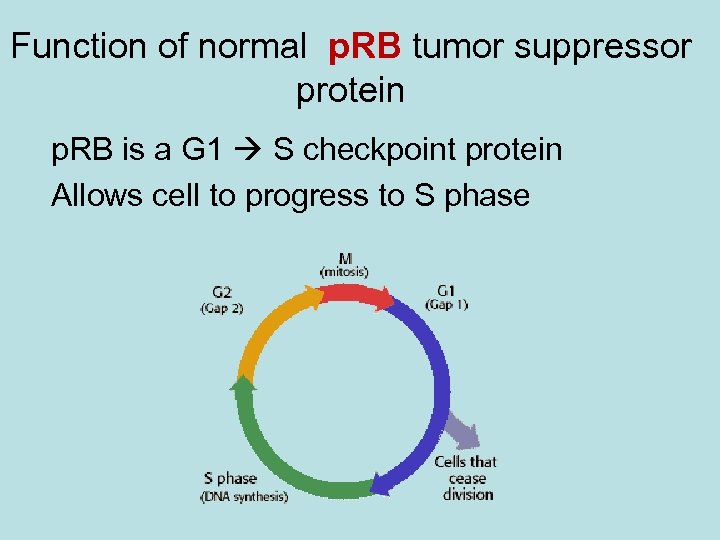
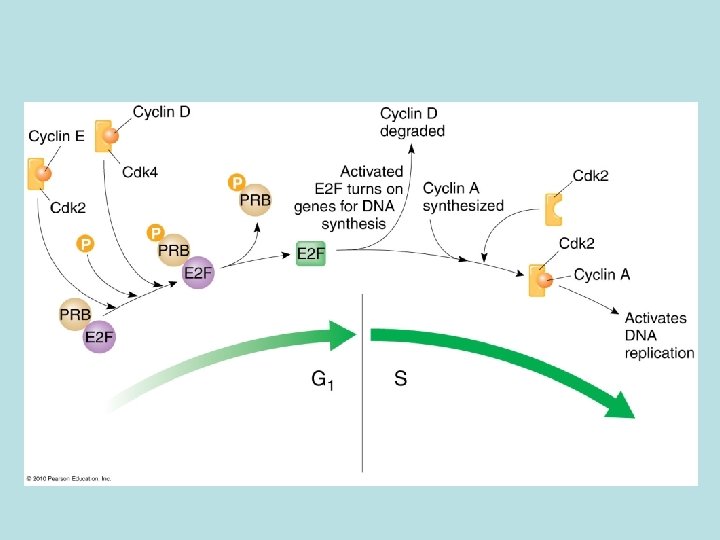
Function of normal p. RB tumor suppressor protein p. RB is a G 1 S checkpoint protein Allows cell to progress to S phase
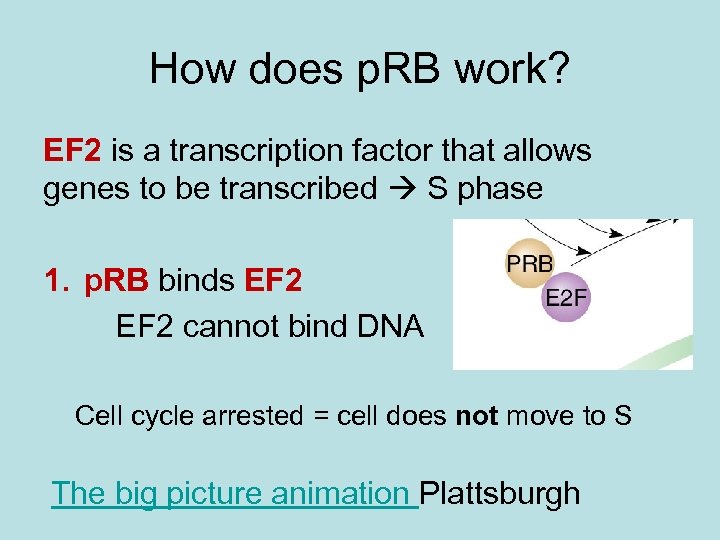
How does p. RB work? EF 2 is a transcription factor that allows genes to be transcribed S phase 1. p. RB binds EF 2 cannot bind DNA Cell cycle arrested = cell does not move to S The big picture animation Plattsburgh
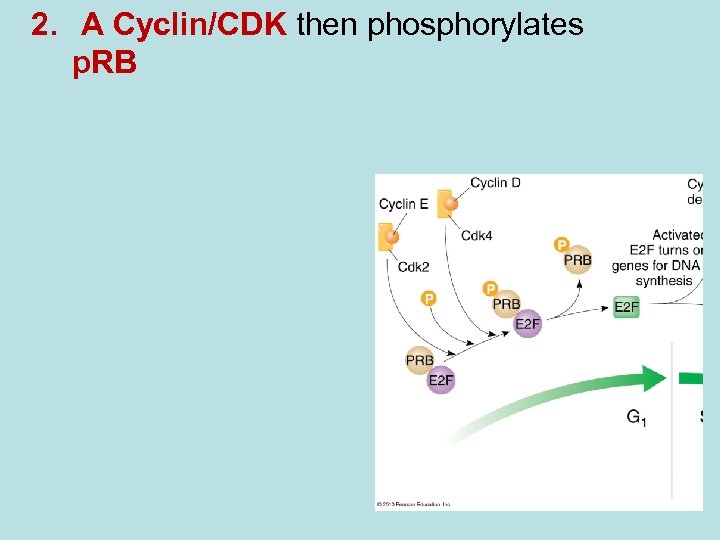
2. A Cyclin/CDK then phosphorylates p. RB
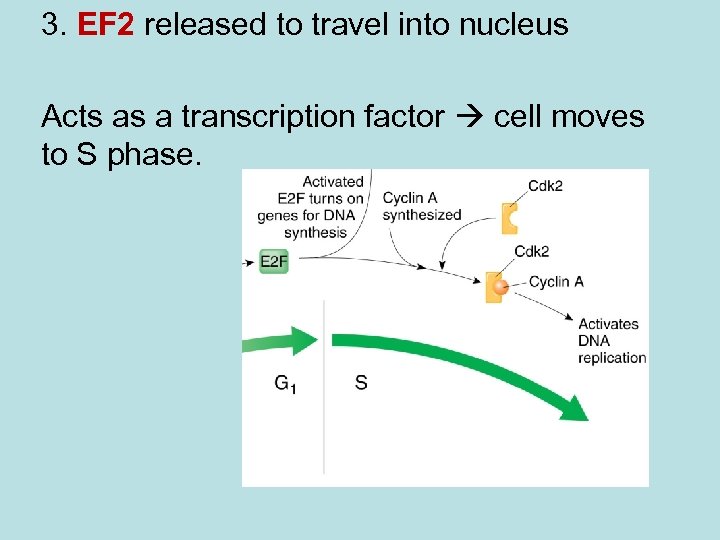
3. EF 2 released to travel into nucleus Acts as a transcription factor cell moves to S phase.
Cyclin then degraded (no more phosphorylation of p. RB) EF 2 bound to p. RB If RB gene is mutant then
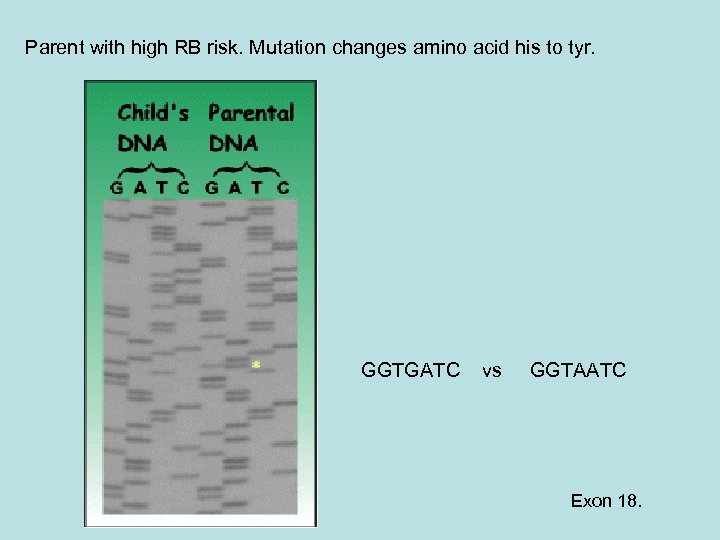
Parent with high RB risk. Mutation changes amino acid his to tyr. GGTGATC vs GGTAATC Exon 18.
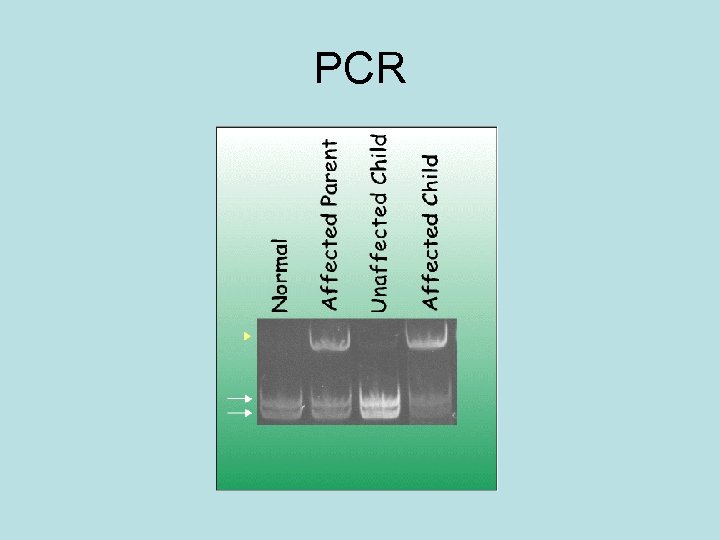
PCR
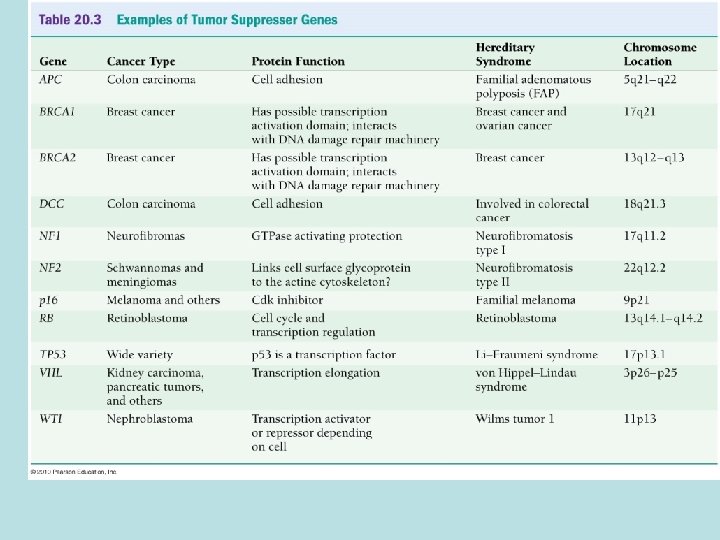
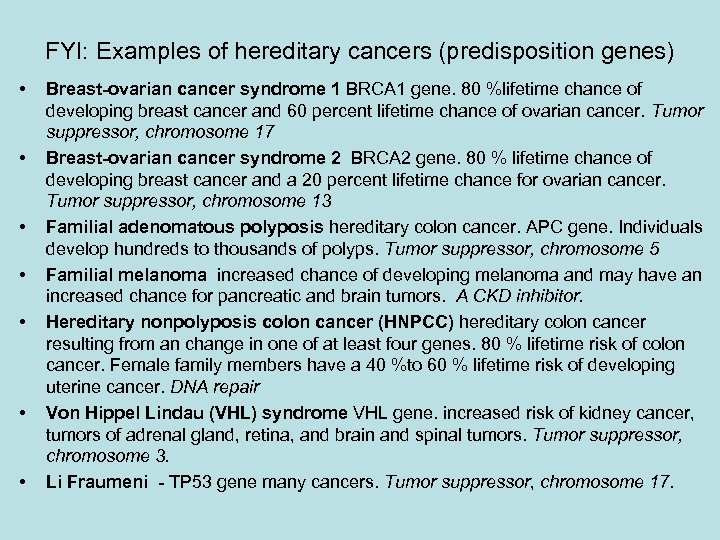
FYI: Examples of hereditary cancers (predisposition genes) • • Breast-ovarian cancer syndrome 1 BRCA 1 gene. 80 %lifetime chance of developing breast cancer and 60 percent lifetime chance of ovarian cancer. Tumor suppressor, chromosome 17 Breast-ovarian cancer syndrome 2 BRCA 2 gene. 80 % lifetime chance of developing breast cancer and a 20 percent lifetime chance for ovarian cancer. Tumor suppressor, chromosome 13 Familial adenomatous polyposis hereditary colon cancer. APC gene. Individuals develop hundreds to thousands of polyps. Tumor suppressor, chromosome 5 Familial melanoma increased chance of developing melanoma and may have an increased chance for pancreatic and brain tumors. A CKD inhibitor. Hereditary nonpolyposis colon cancer (HNPCC) hereditary colon cancer resulting from an change in one of at least four genes. 80 % lifetime risk of colon cancer. Female family members have a 40 %to 60 % lifetime risk of developing uterine cancer. DNA repair Von Hippel Lindau (VHL) syndrome VHL gene. increased risk of kidney cancer, tumors of adrenal gland, retina, and brain and spinal tumors. Tumor suppressor, chromosome 3. Li Fraumeni - TP 53 gene many cancers. Tumor suppressor, chromosome 17.
Cancer: multi-step disease • Accumulation of mutations in a number of genes in single cell • Can build up over decades • Vogelstein model – FAP colorectal cancer
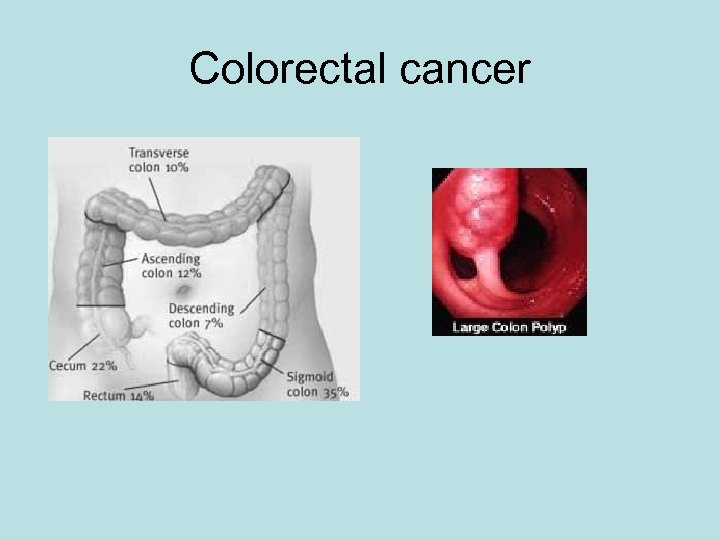
Colorectal cancer
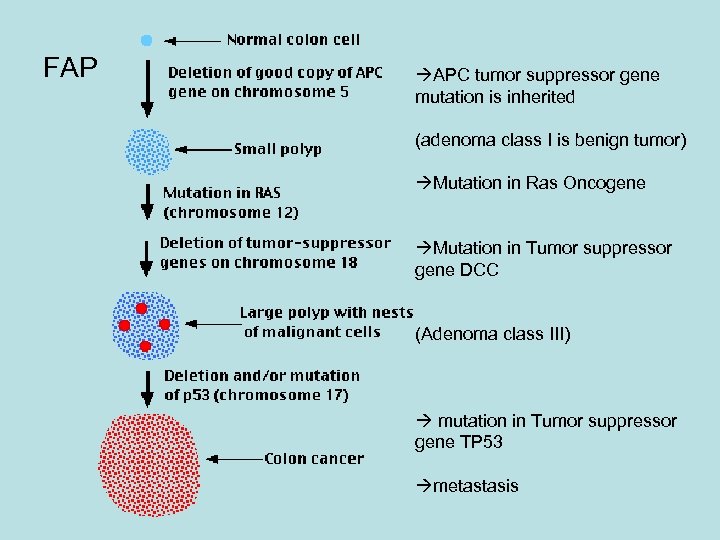
FAP APC tumor suppressor gene mutation is inherited (adenoma class I is benign tumor) Mutation in Ras Oncogene Mutation in Tumor suppressor gene DCC (Adenoma class III) mutation in Tumor suppressor gene TP 53 metastasis
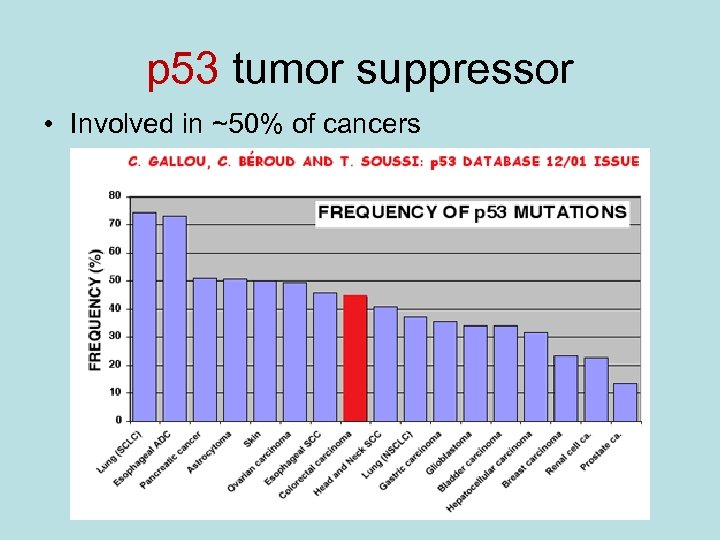
p 53 tumor suppressor • Involved in ~50% of cancers
Role of p 53 tumor suppressor • Monitors signals that indicate DNA damage/mutation • Damage cell increase p 53 protein • Normal cell p 53 would inhibit cell growth but p 53 has short half life
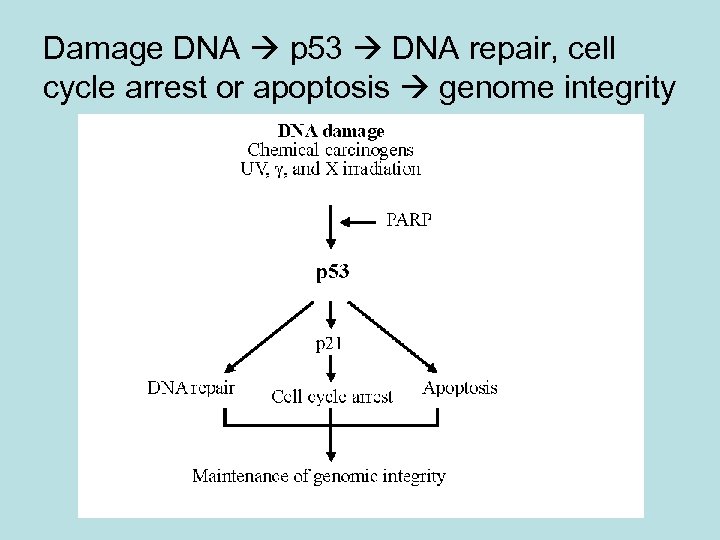
Damage DNA p 53 DNA repair, cell cycle arrest or apoptosis genome integrity
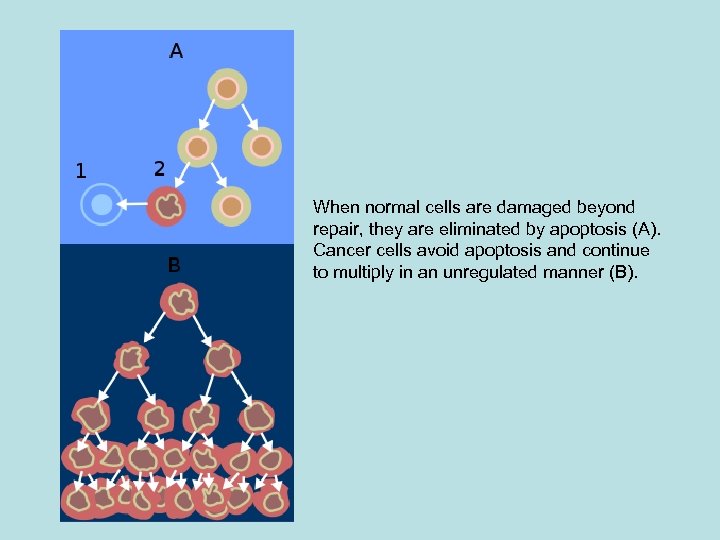
When normal cells are damaged beyond repair, they are eliminated by apoptosis (A). Cancer cells avoid apoptosis and continue to multiply in an unregulated manner (B).
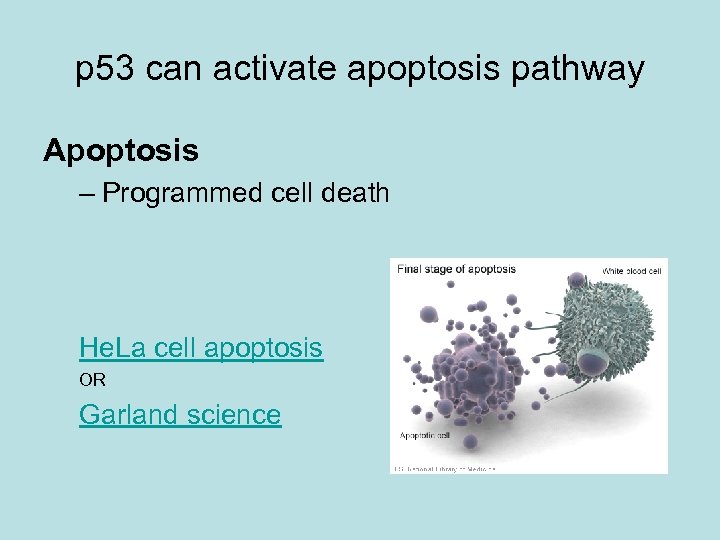
p 53 can activate apoptosis pathway Apoptosis – Programmed cell death He. La cell apoptosis OR Garland science
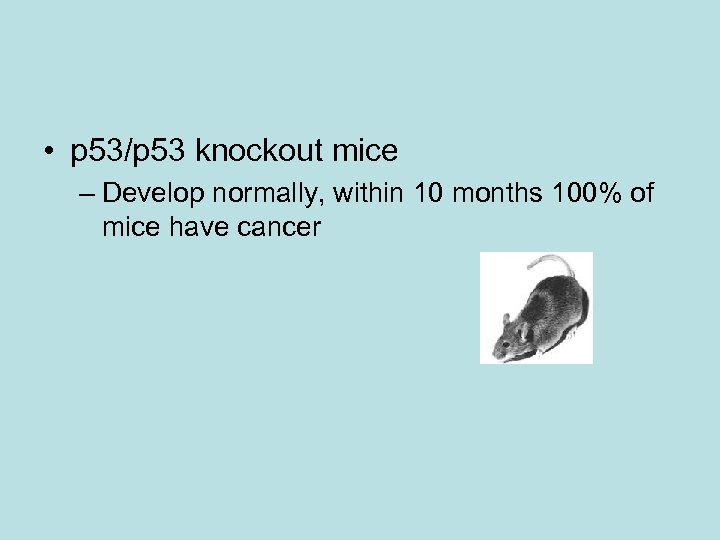
• p 53/p 53 knockout mice – Develop normally, within 10 months 100% of mice have cancer
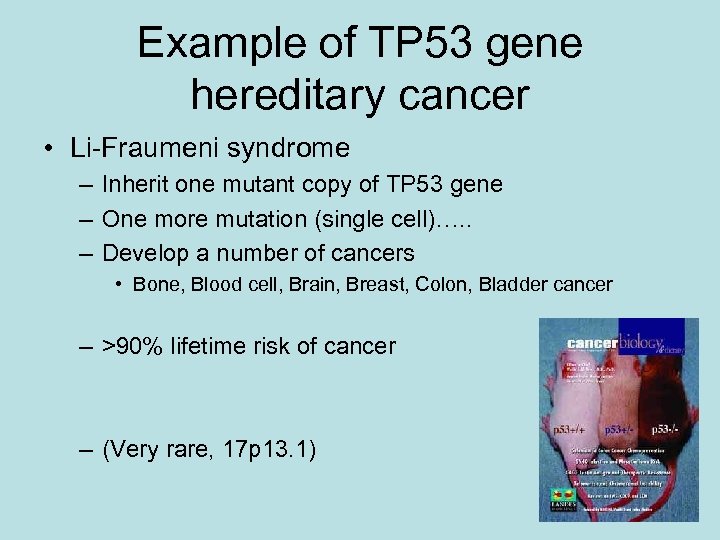
Example of TP 53 gene hereditary cancer • Li-Fraumeni syndrome – Inherit one mutant copy of TP 53 gene – One more mutation (single cell)…. . – Develop a number of cancers • Bone, Blood cell, Brain, Breast, Colon, Bladder cancer – >90% lifetime risk of cancer – (Very rare, 17 p 13. 1)
Evidence that p 53 is a tumor suppressor • Moshe Oren • Weizmann Institute/Israel
angiogenesis • Tumor obtains its own blood supply • HHMI animation
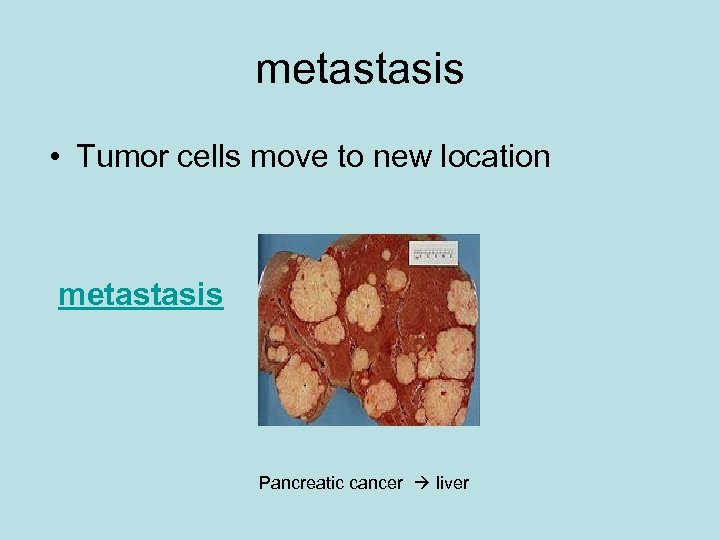
metastasis • Tumor cells move to new location metastasis Pancreatic cancer liver
Telomerase in cancer cells • Telomeres at ends of chromosomes • Chromosome shortens with each cell division • No telomerase in normal cells • Cancer cells make telomerase immortalized
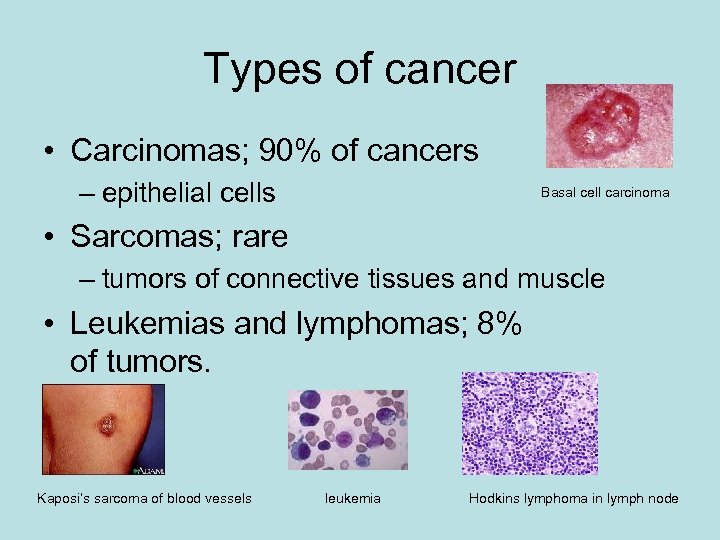
Types of cancer • Carcinomas; 90% of cancers – epithelial cells Basal cell carcinoma • Sarcomas; rare – tumors of connective tissues and muscle • Leukemias and lymphomas; 8% of tumors. Kaposi’s sarcoma of blood vessels leukemia Hodkins lymphoma in lymph node
Скачать презентацию A signal transducer and cancer Neurofibromin
b2126c552dc1d6f13481fec9532fd79e.ppt