


 Скачать презентацию A short journey to the infinitely small Fundamentals
FundamentalsOfParticlePhysics.2009.ppt
- Количество слайдов: 45
 A short journey to the infinitely small Fundamentals of Particle Physics • Building blocks: particles and forces • Current areas of research Stefania Ricciardi RAL, March 2009
 Warning This journey may change your vision of the Universe. What you will hear may alter your perception of reality. Stay awake and keep an open mind! We are entering a Quantum World. .
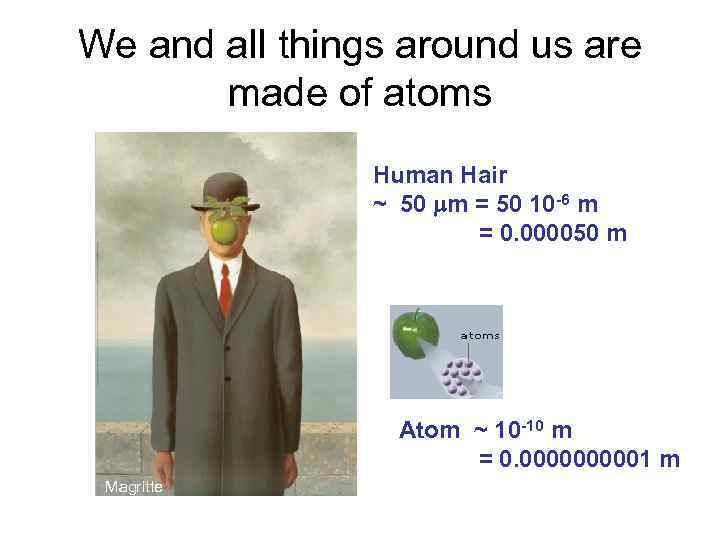 We and all things around us are made of atoms Human Hair ~ 50 mm = 50 10 -6 m = 0. 000050 m Atom ~ 10 -10 m = 0. 000001 m Magritte
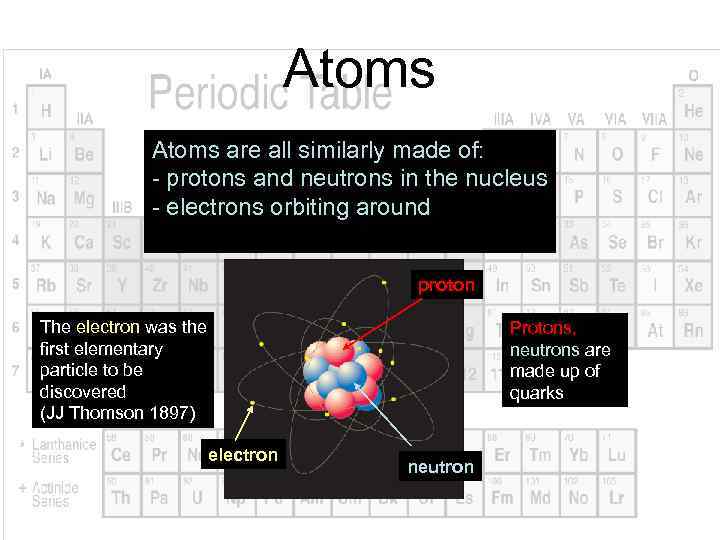 Atoms are all similarly made of: - protons and neutrons in the nucleus - electrons orbiting around proton The electron was the first elementary particle to be discovered (JJ Thomson 1897) Protons, neutrons are made up of quarks electron neutron
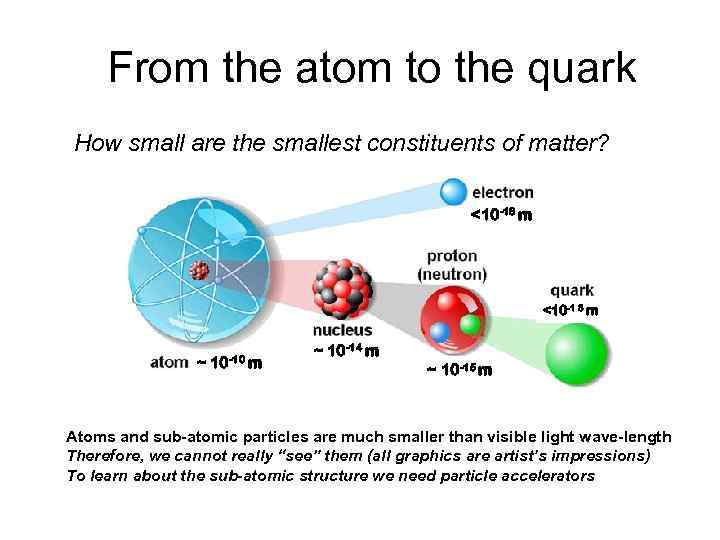 From the atom to the quark How small are the smallest constituents of matter? <10 -18 m <10 -1 8 m ~ 10 -10 m ~ 10 -14 m ~ 10 -15 m Atoms and sub-atomic particles are much smaller than visible light wave-length Therefore, we cannot really “see” them (all graphics are artist’s impressions) To learn about the sub-atomic structure we need particle accelerators
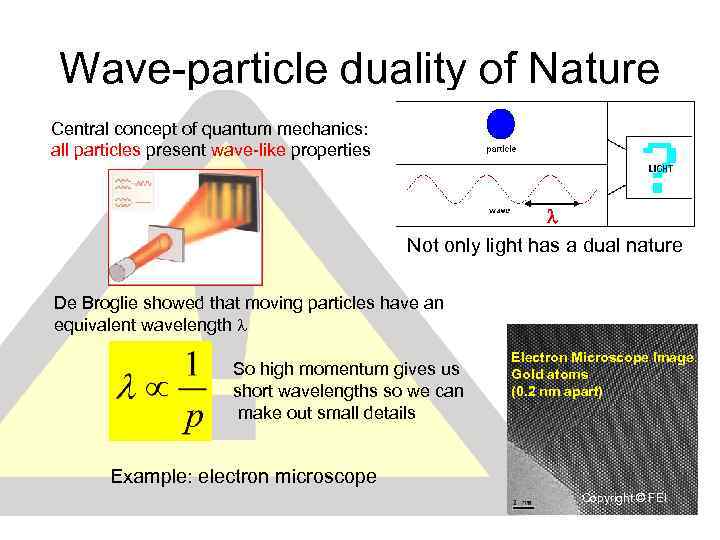 Wave-particle duality of Nature Central concept of quantum mechanics: all particles present wave-like properties l Not only light has a dual nature De Broglie showed that moving particles have an equivalent wavelength l So high momentum gives us short wavelengths so we can make out small details Electron Microscope Image Gold atoms (0. 2 nm apart) Example: electron microscope Copyright © FEI
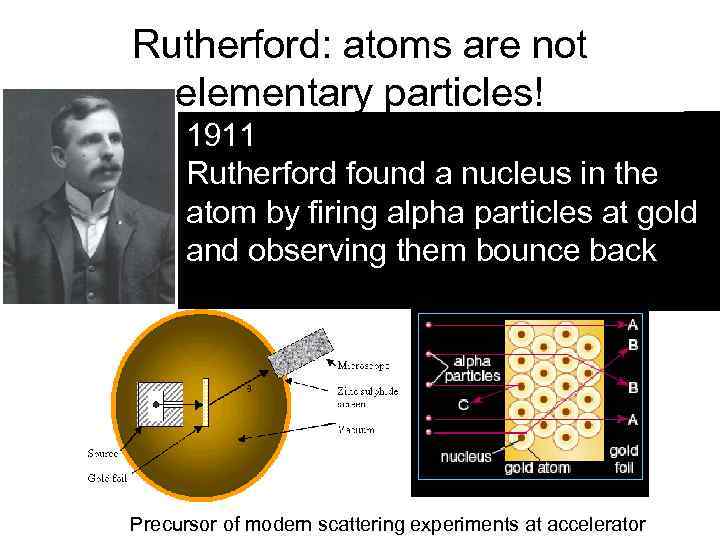 Rutherford: atoms are not elementary particles! 1911 Rutherford found a nucleus in the atom by firing alpha particles at gold and observing them bounce back Precursor of modern scattering experiments at accelerator
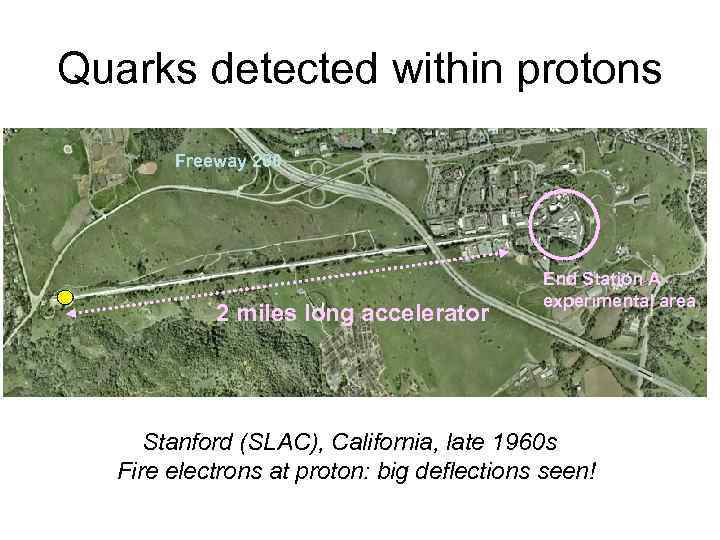 Quarks detected within protons Freeway 280 2 miles long accelerator End Station A experimental area Stanford (SLAC), California, late 1960 s Fire electrons at proton: big deflections seen!
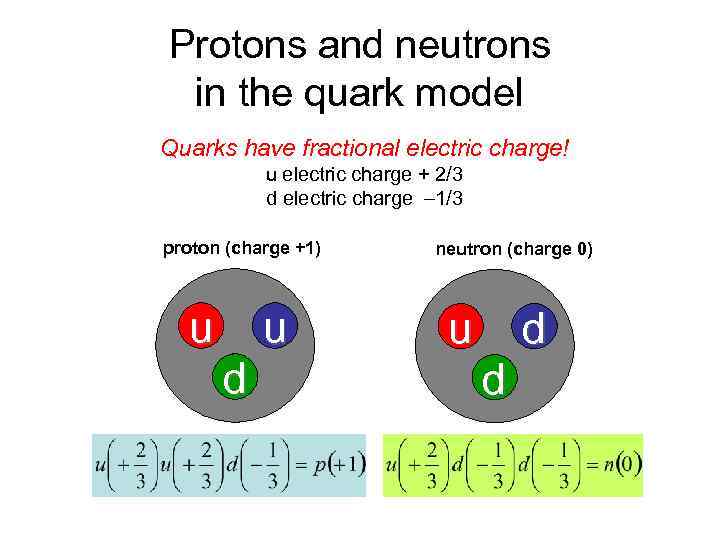 Protons and neutrons in the quark model Quarks have fractional electric charge! u electric charge + 2/3 d electric charge -1/3 proton (charge +1) u u d neutron (charge 0) u d d
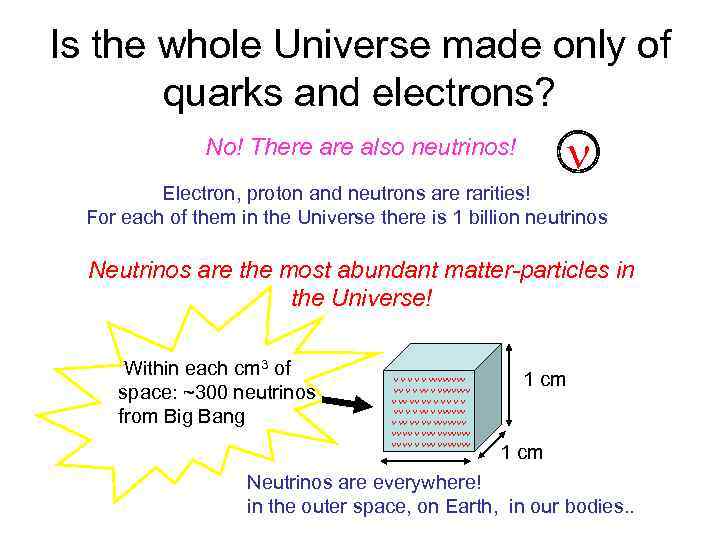 Is the whole Universe made only of quarks and electrons? No! There also neutrinos! Electron, proton and neutrons are rarities! For each of them in the Universe there is 1 billion neutrinos Neutrinos are the most abundant matter-particles in the Universe! Within each cm 3 of space: ~300 neutrinos from Big Bang 1 cm Neutrinos are everywhere! in the outer space, on Earth, in our bodies. .
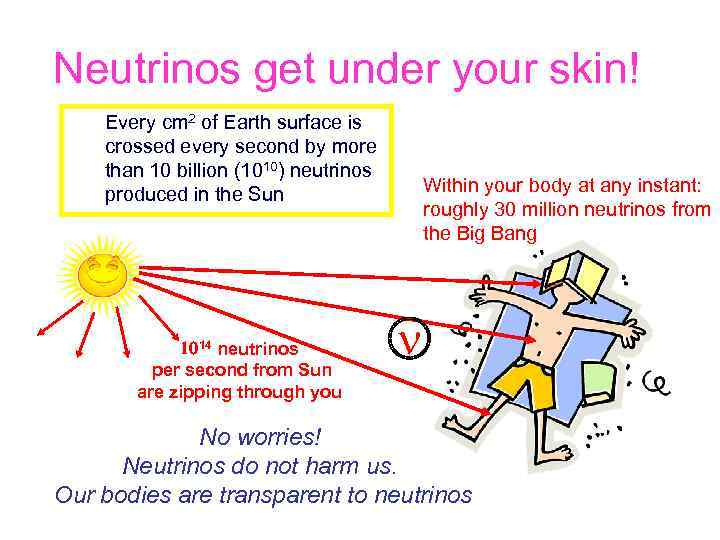 Neutrinos get under your skin! Every cm 2 of Earth surface is crossed every second by more than 10 billion (1010) neutrinos produced in the Sun 1014 neutrinos per second from Sun are zipping through you Within your body at any instant: roughly 30 million neutrinos from the Big Bang No worries! Neutrinos do not harm us. Our bodies are transparent to neutrinos
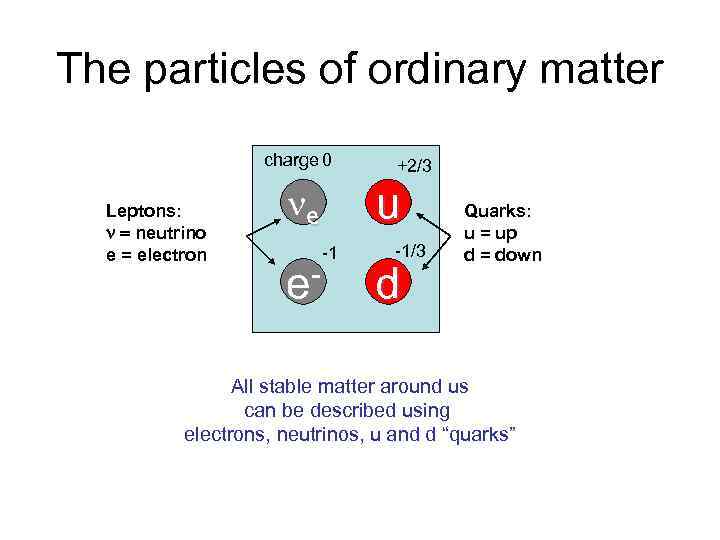 The particles of ordinary matter charge 0 Leptons: n = neutrino e = electron u e e- +2/3 -1 -1/3 d Quarks: u = up d = down All stable matter around us can be described using electrons, neutrinos, u and d “quarks”
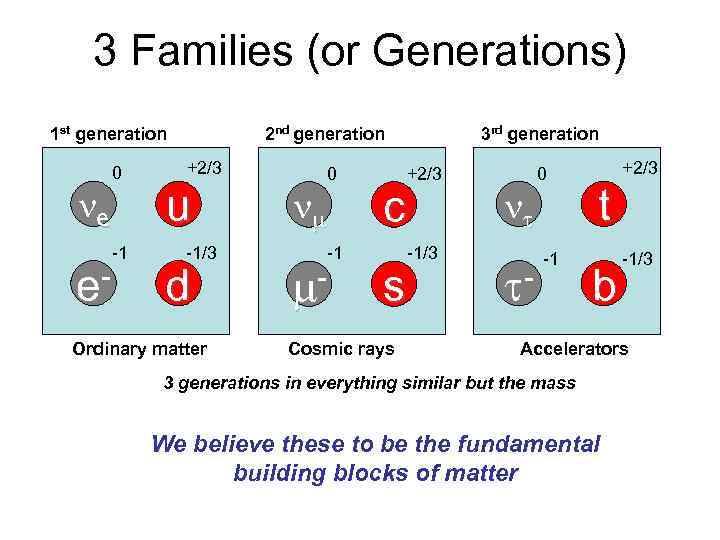 3 Families (or Generations) 1 st generation e e- 0 -1 2 nd generation +2/3 u -1/3 d Ordinary matter m 0 -1 m c s Cosmic rays 3 rd generation +2/3 -1/3 t t 0 -1 +2/3 t b -1/3 Accelerators 3 generations in everything similar but the mass We believe these to be the fundamental building blocks of matter
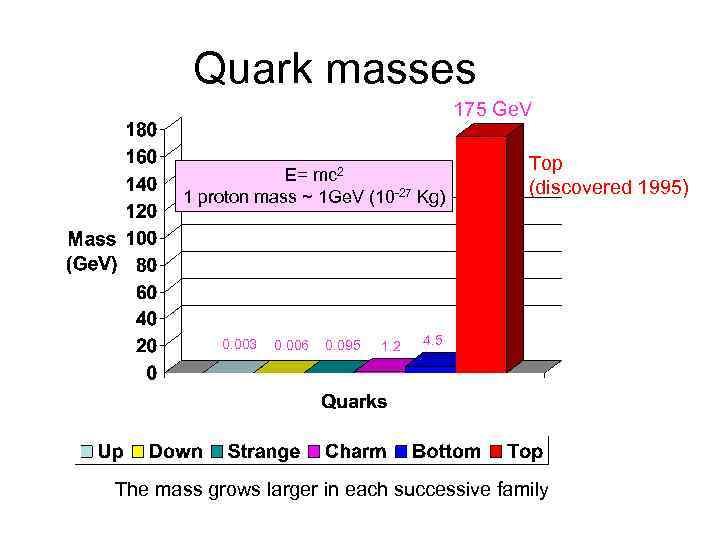 Quark masses 175 Ge. V E= mc 2 1 proton mass ~ 1 Ge. V (10 -27 Kg) 0. 003 0. 006 0. 095 1. 2 Top (discovered 1995) 4. 5 The mass grows larger in each successive family
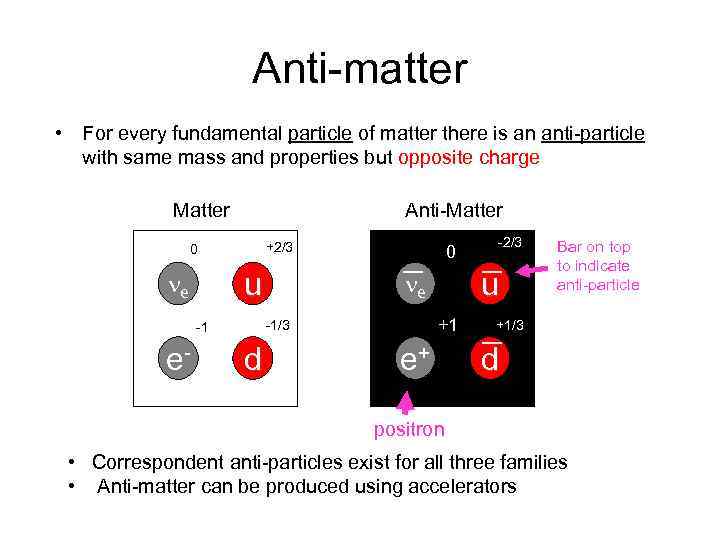 Anti-matter • For every fundamental particle of matter there is an anti-particle with same mass and properties but opposite charge Matter Anti-Matter +2/3 0 u e d -2/3 u e +1 -1/3 -1 e- 0 e+ Bar on top to indicate anti-particle +1/3 d positron • Correspondent anti-particles exist for all three families • Anti-matter can be produced using accelerators
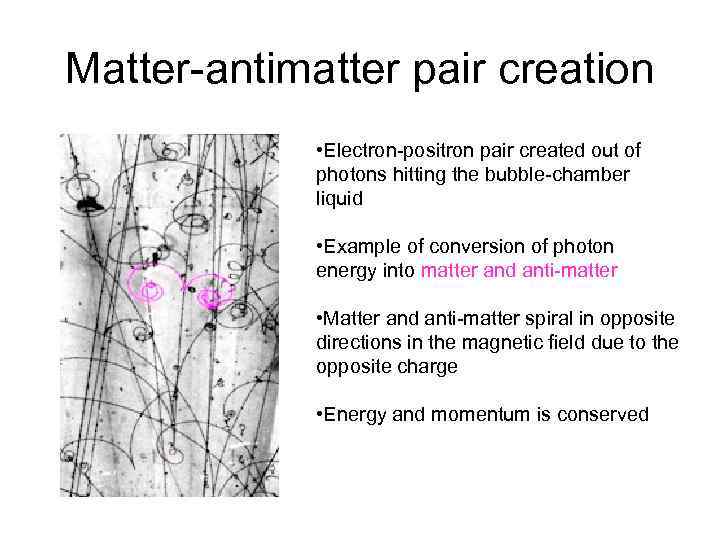 Matter-antimatter pair creation • Electron-positron pair created out of photons hitting the bubble-chamber liquid • Example of conversion of photon energy into matter and anti-matter • Matter and anti-matter spiral in opposite directions in the magnetic field due to the opposite charge • Energy and momentum is conserved
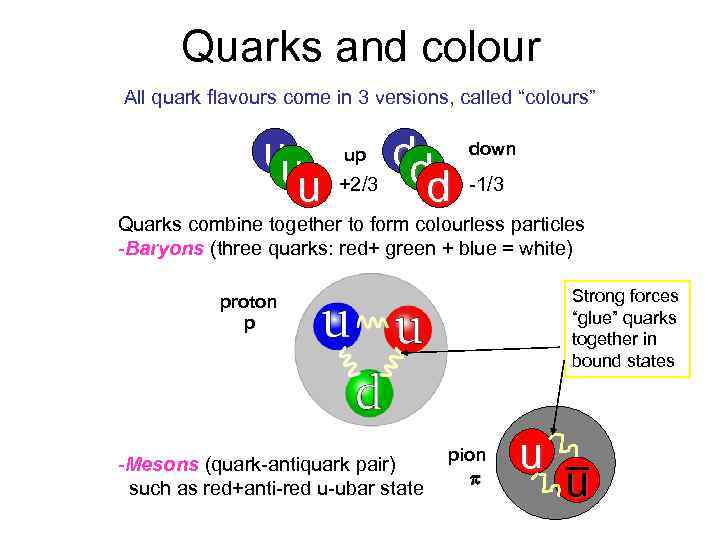 Quarks and colour All quark flavours come in 3 versions, called “colours” uu u up +2/3 dd d down -1/3 Quarks combine together to form colourless particles -Baryons (three quarks: red+ green + blue = white) Strong forces “glue” quarks together in bound states proton p -Mesons (quark-antiquark pair) such as red+anti-red u-ubar state pion p u u
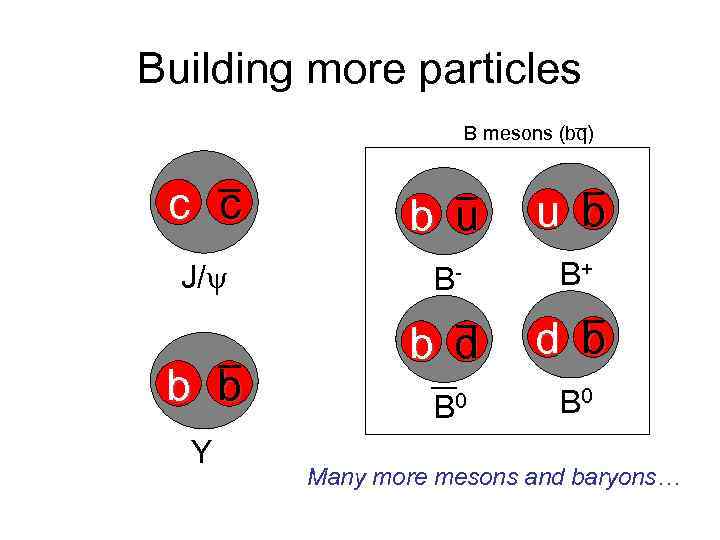 Building more particles B mesons (bq) c c b u u b J/y B- B+ b d d b B 0 b b Y Many more mesons and baryons…
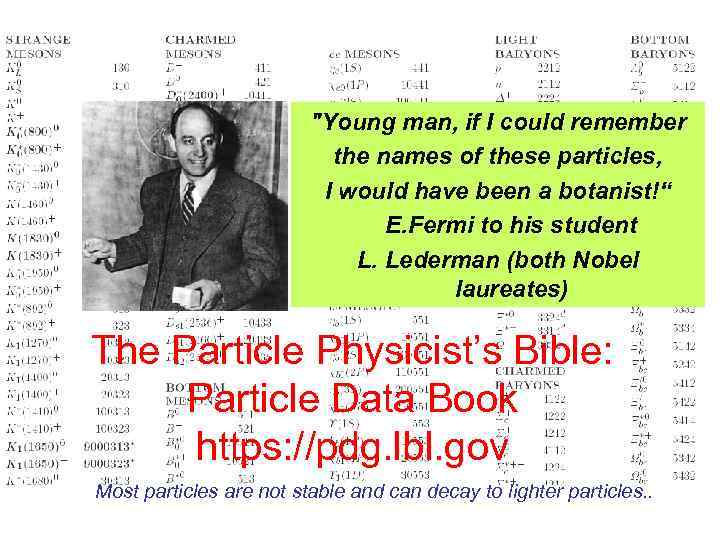 "Young man, if I could remember the names of these particles, I would have been a botanist!“ E. Fermi to his student L. Lederman (both Nobel laureates) The Particle Physicist’s Bible: Particle Data Book https: //pdg. lbl. gov Most particles are not stable and can decay to lighter particles. .
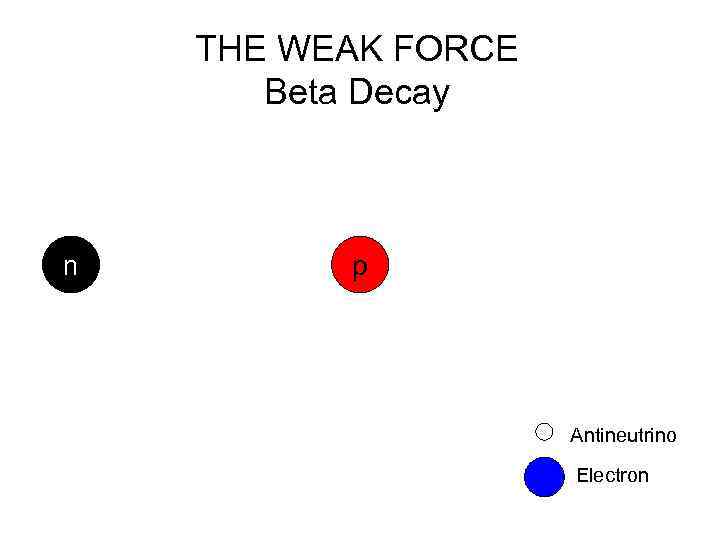 THE WEAK FORCE Beta Decay n p Antineutrino Electron
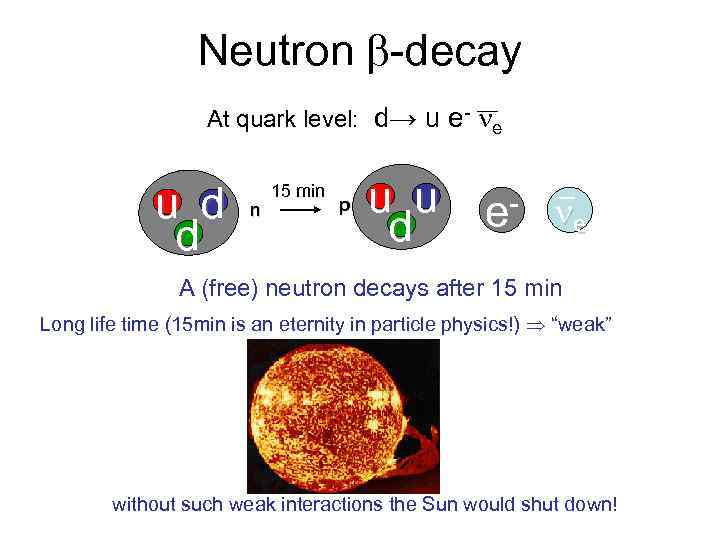 Neutron b-decay At quark level: d→ u e- e u d d n 15 min p u u d e- e A (free) neutron decays after 15 min Long life time (15 min is an eternity in particle physics!) “weak” without such weak interactions the Sun would shut down!
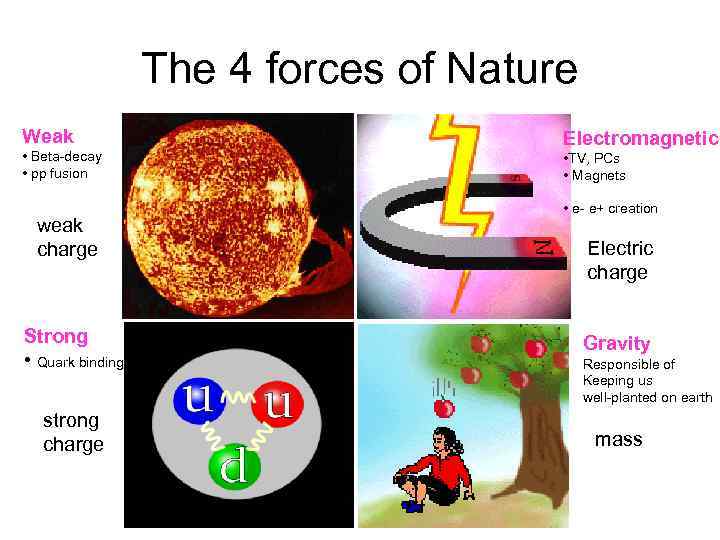 The 4 forces of Nature Weak • Beta-decay • pp fusion weak charge Electromagnetic • TV, PCs • Magnets • e- e+ creation Electric charge Strong • Quark binding Gravity strong charge mass Responsible of Keeping us well-planted on earth
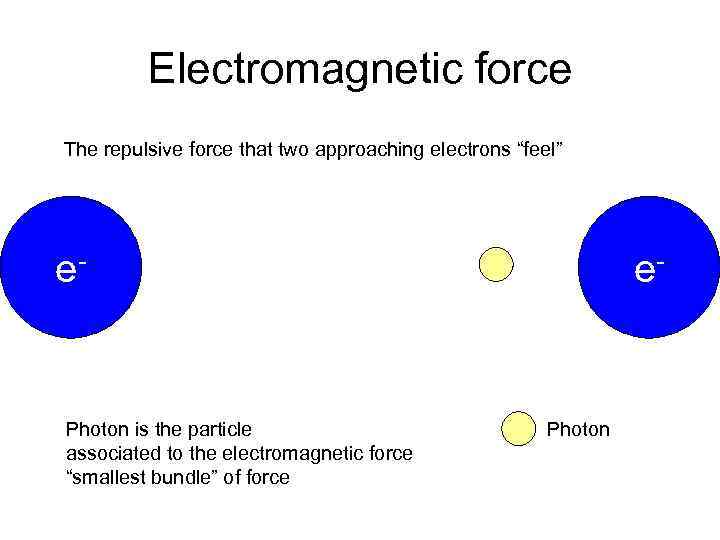 Electromagnetic force The repulsive force that two approaching electrons “feel” e- Photon is the particle associated to the electromagnetic force “smallest bundle” of force e- Photon
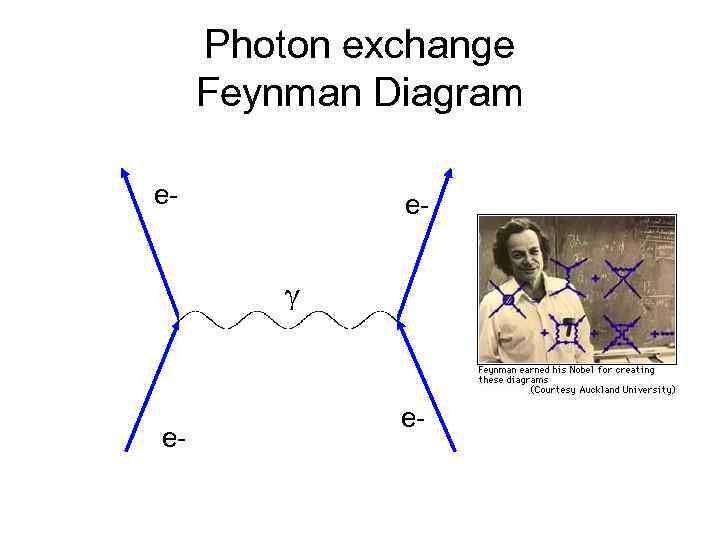 Photon exchange Feynman Diagram e- e- g e- e-
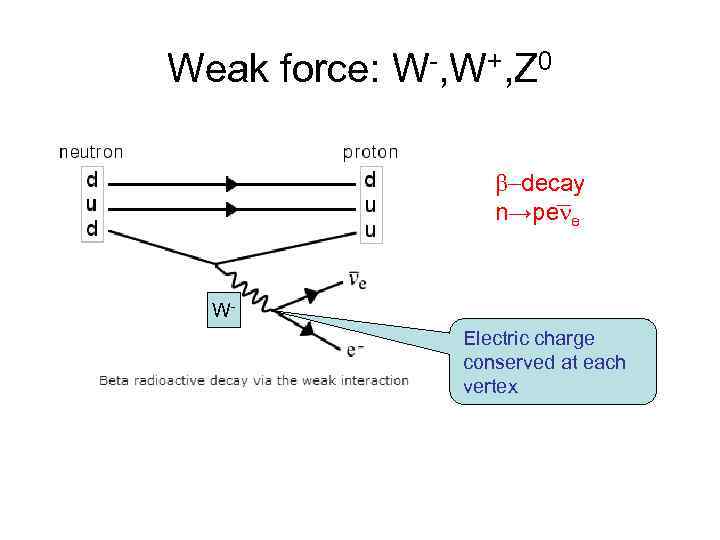 Weak force: W-, W+, Z 0 b-decay n→pe e WElectric charge conserved at each vertex
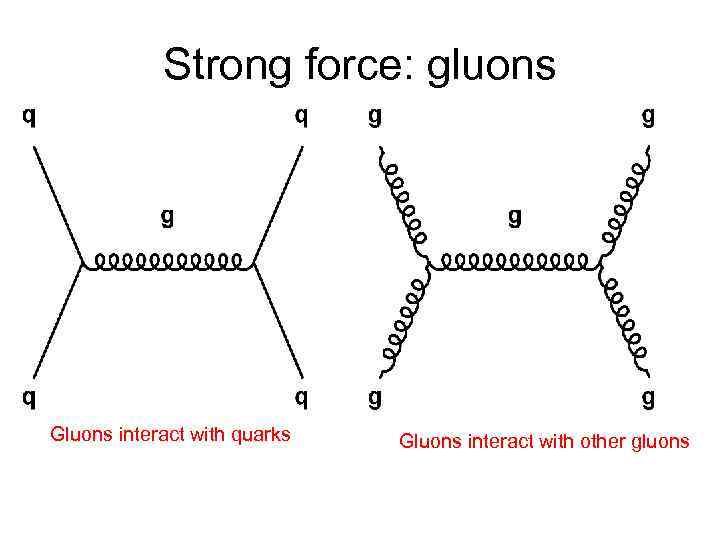 Strong force: gluons Gluons interact with quarks Gluons interact with other gluons
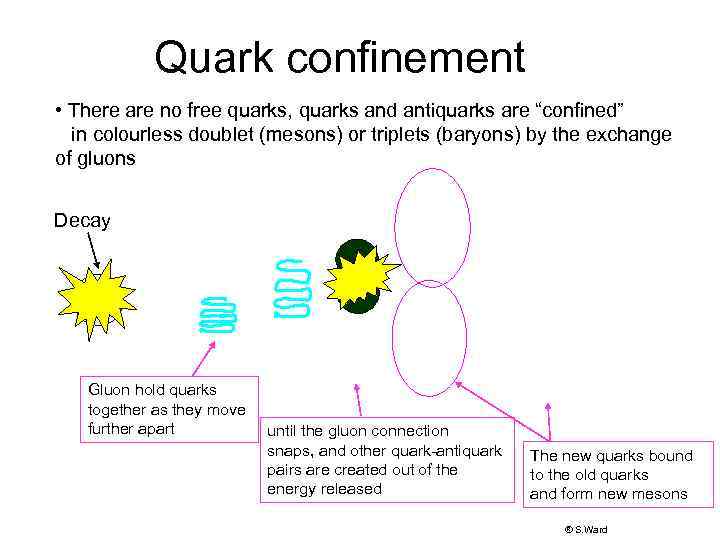 Quark confinement • There are no free quarks, quarks and antiquarks are “confined” in colourless doublet (mesons) or triplets (baryons) by the exchange of gluons Decay Z 0 Gluon hold quarks together as they move further apart until the gluon connection snaps, and other quark-antiquark pairs are created out of the energy released The new quarks bound to the old quarks and form new mesons ® S. Ward
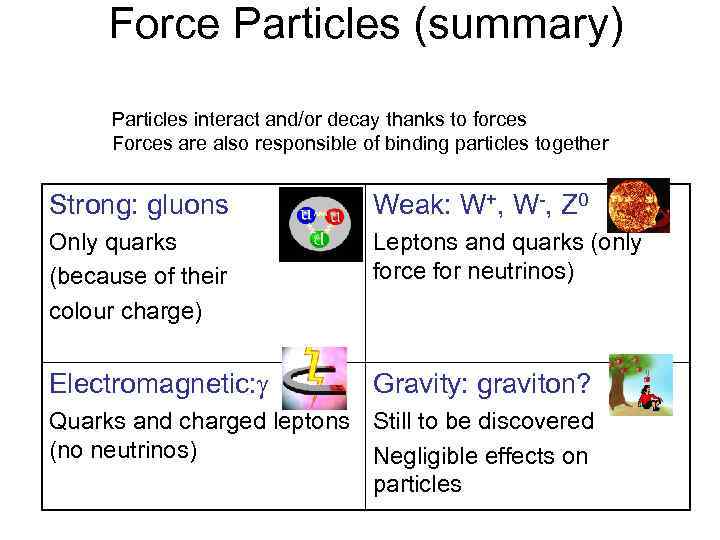 Force Particles (summary) Particles interact and/or decay thanks to forces Forces are also responsible of binding particles together Strong: gluons Weak: W+, W-, Z 0 Only quarks (because of their colour charge) Leptons and quarks (only force for neutrinos) Electromagnetic: g Gravity: graviton? Quarks and charged leptons Still to be discovered (no neutrinos) Negligible effects on particles
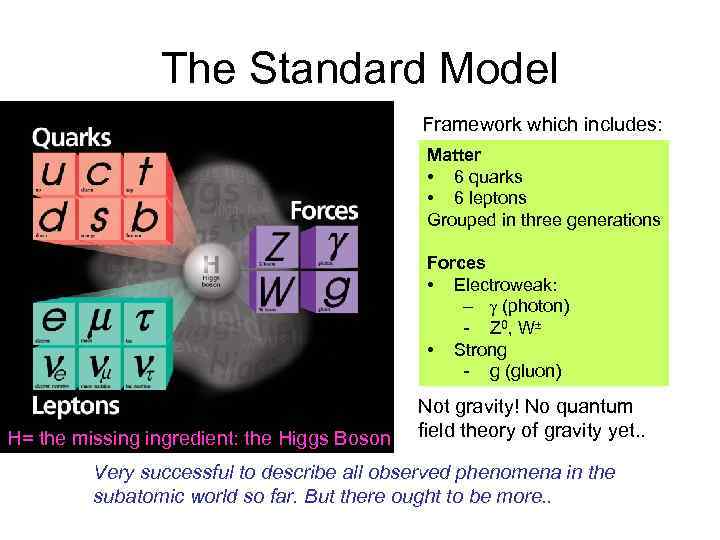 The Standard Model Framework which includes: Matter • 6 quarks • 6 leptons Grouped in three generations Forces • Electroweak: - g (photon) - Z 0 , W ± • Strong - g (gluon) H= the missing ingredient: the Higgs Boson Not gravity! No quantum field theory of gravity yet. . Very successful to describe all observed phenomena in the subatomic world so far. But there ought to be more. .
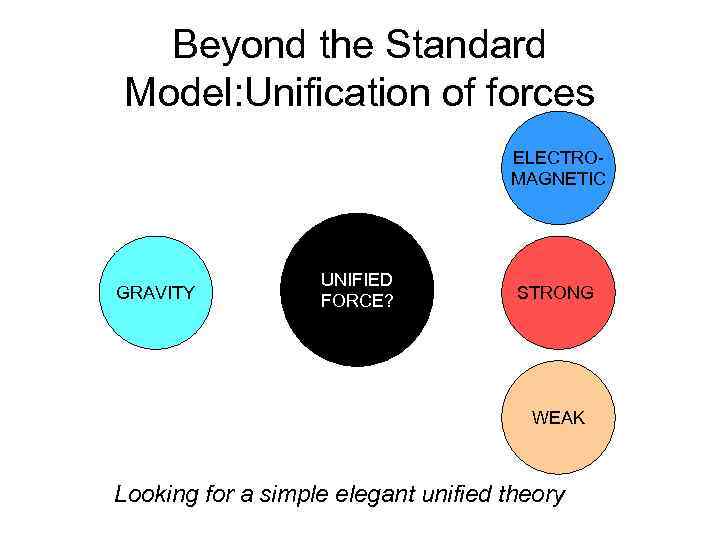 Beyond the Standard Model: Unification of forces ELECTROMAGNETIC GRAVITY UNIFIED FORCE? STRONG WEAK Looking for a simple elegant unified theory
 Open question: Why is the Universe made of matter and not equally of anti-matter? • We have seen that for every fundamental particle there is a corresponding antiparticle. • Where are these anti-particles? • Large amount of matter but no evidence of large amount of antimatter in the Universe. .
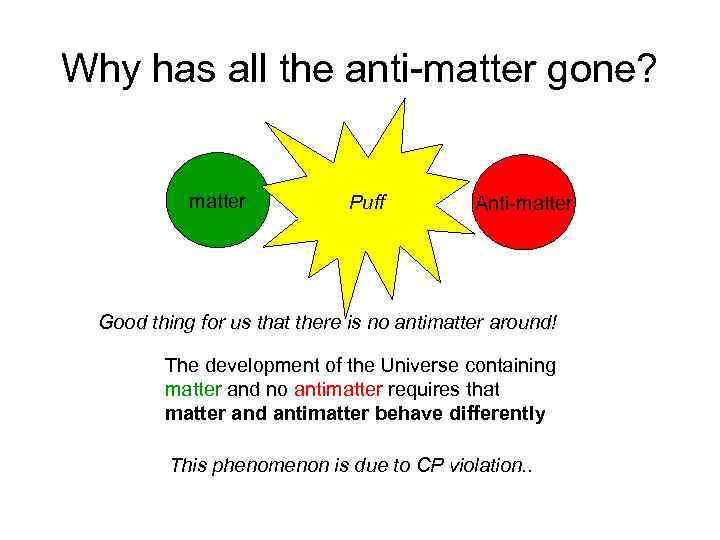 Why has all the anti-matter gone? matter Puff Anti-matter Good thing for us that there is no antimatter around! The development of the Universe containing matter and no antimatter requires that matter and antimatter behave differently This phenomenon is due to CP violation. .
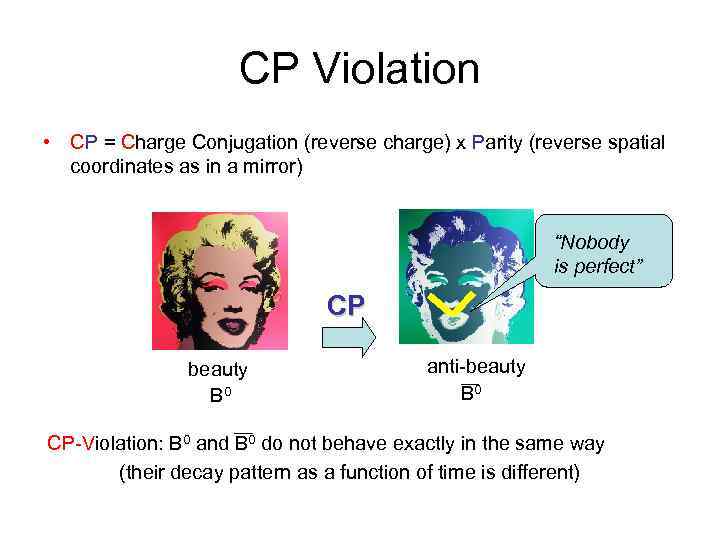 CP Violation • CP = Charge Conjugation (reverse charge) x Parity (reverse spatial coordinates as in a mirror) “Nobody is perfect” CP beauty B 0 anti-beauty B 0 CP-Violation: B 0 and B 0 do not behave exactly in the same way (their decay pattern as a function of time is different)
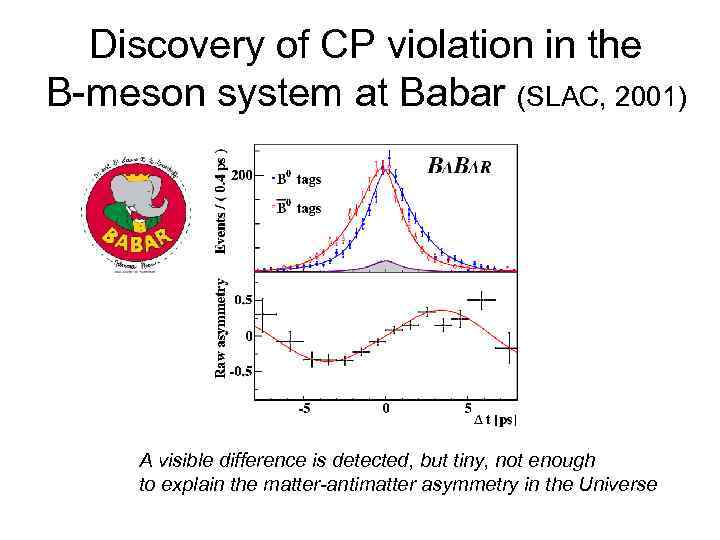 Discovery of CP violation in the B-meson system at Babar (SLAC, 2001) A visible difference is detected, but tiny, not enough to explain the matter-antimatter asymmetry in the Universe
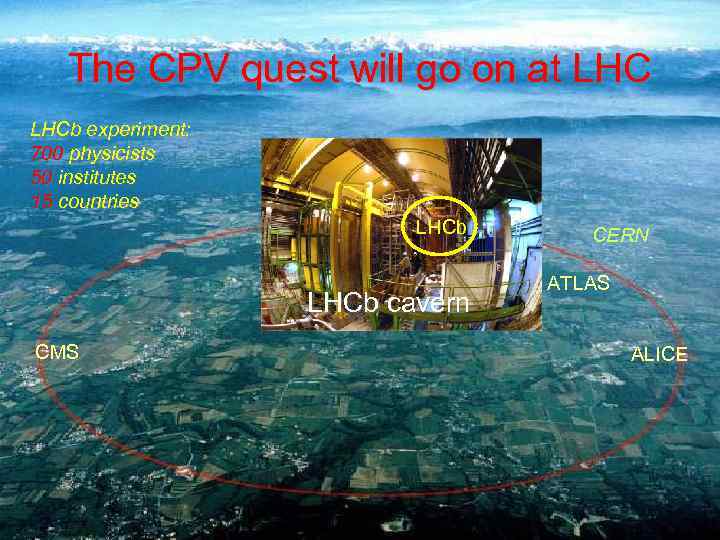 The CPV quest will go on at LHCb experiment: 700 physicists 50 institutes 15 countries LHCb cavern CMS CERN ATLAS ALICE
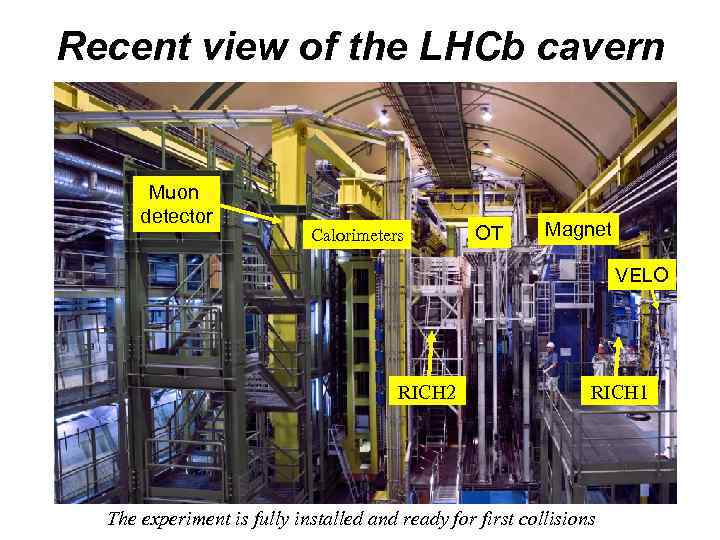 Recent view of the LHCb cavern RICH-1 Muon detector Calorimeters OT Magnet VELO It’s complete! RICH 2 RICH 1 The experiment is fully installed and ready for first collisions
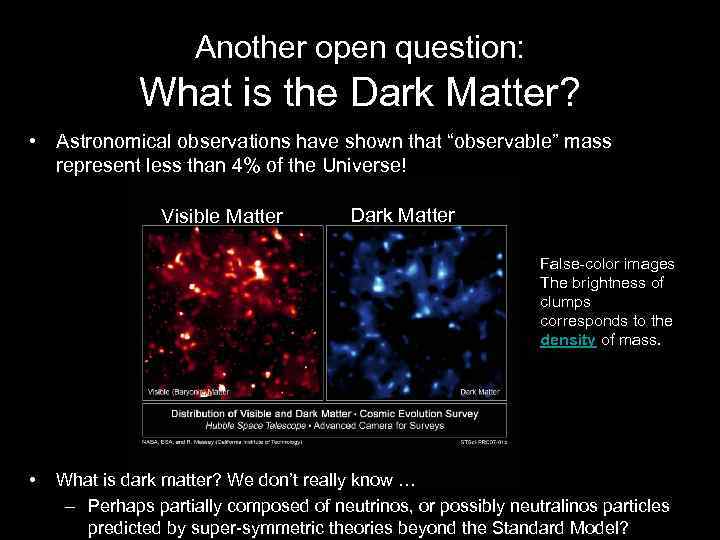 Another open question: What is the Dark Matter? • Astronomical observations have shown that “observable” mass represent less than 4% of the Universe! Visible Matter Dark Matter False-color images The brightness of clumps corresponds to the density of mass. • What is dark matter? We don’t really know … – Perhaps partially composed of neutrinos, or possibly neutralinos particles predicted by super-symmetric theories beyond the Standard Model?
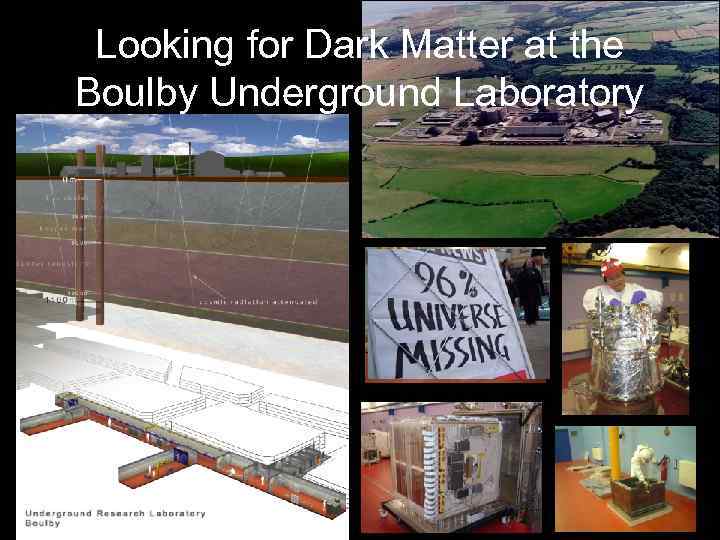 Looking for Dark Matter at the Boulby Underground Laboratory
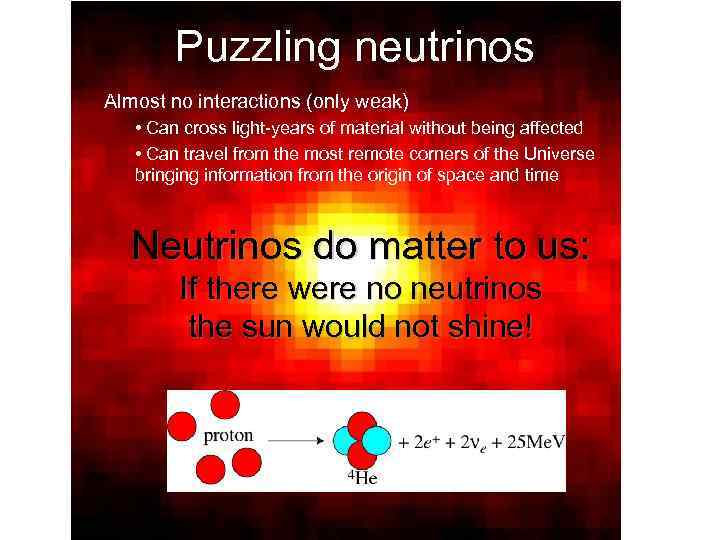 Puzzling neutrinos Almost no interactions (only weak) • Can cross light-years of material without being affected • Can travel from the most remote corners of the Universe bringing information from the origin of space and time Neutrinos do matter to us: If there were no neutrinos the sun would not shine!
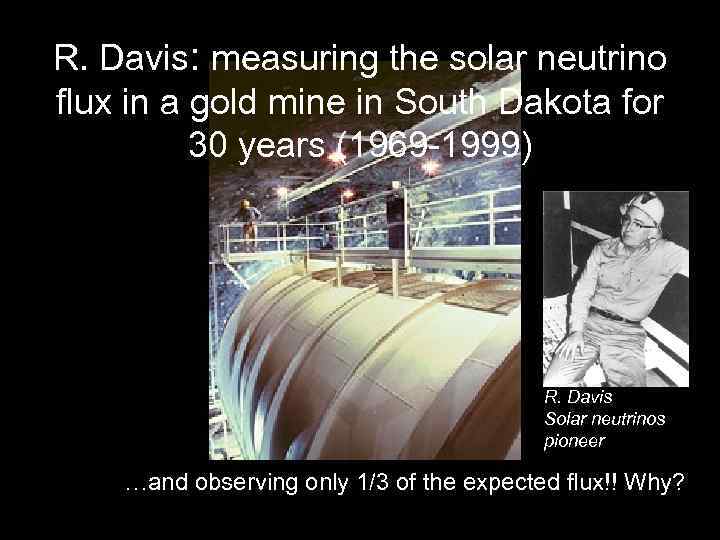 R. Davis: measuring the solar neutrino flux in a gold mine in South Dakota for 30 years (1969 -1999) R. Davis Solar neutrinos pioneer …and observing only 1/3 of the expected flux!! Why?
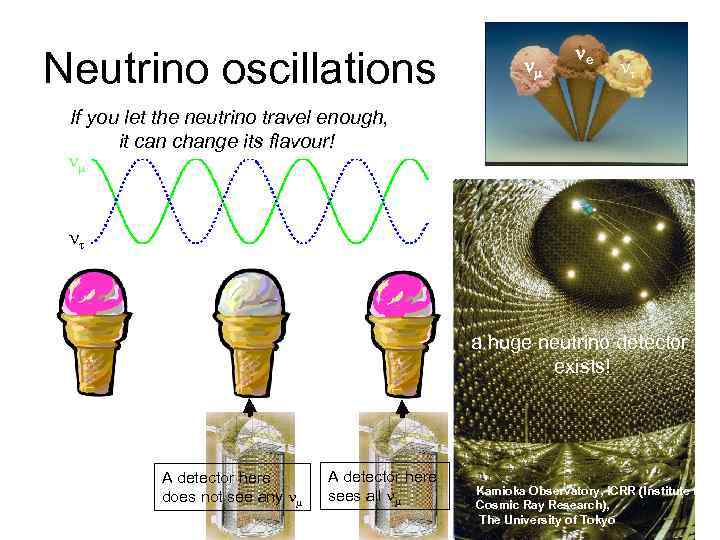 Neutrino oscillations nm ne t If you let the neutrino travel enough, it can change its flavour! m t a huge neutrino detector in the right place exists! A detector here does not see any m A detector here sees all m Kamioka Observatory, ICRR (Institute for Cosmic Ray Research), The University of Tokyo
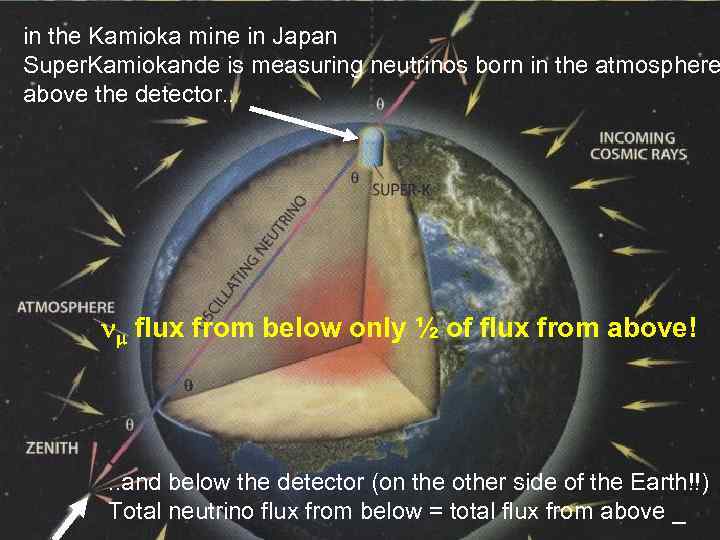 in the Kamioka mine in Japan Super. Kamiokande is measuring neutrinos born in the atmosphere above the detector. . nm flux from below only ½ of flux from above! . . and below the detector (on the other side of the Earth!!) Total neutrino flux from below = total flux from above _
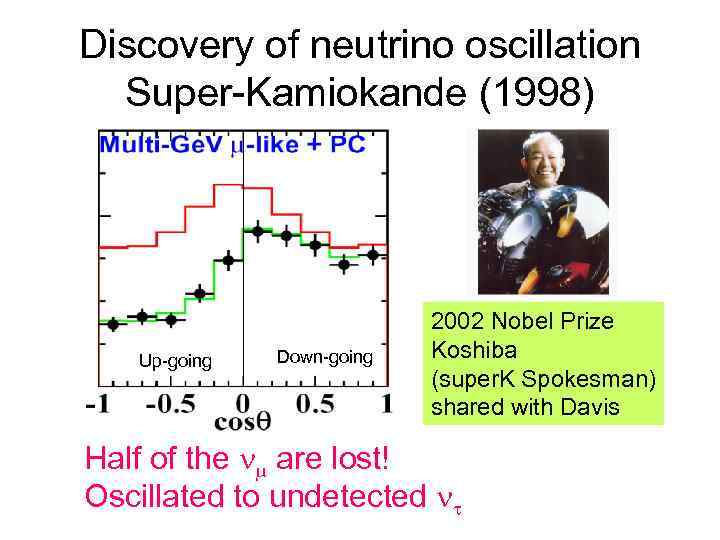 Discovery of neutrino oscillation Super-Kamiokande (1998) Up-going Down-going 2002 Nobel Prize Koshiba (super. K Spokesman) shared with Davis Half of the m are lost! Oscillated to undetected t
 What have we learnt? • A number of surprising things: – A limited number of forces and matter particles describe all the Universe we know about; – A theory of the interactions of matter with forces called the Standard Model describes successfully the phenomena of the subatomic world; – There are evidences that there is lot more that we do not know about and our research should find: such as the missing anti-matter, dark matter, puzzling neutrino properties, but also the Standard Model key-vault. . the Higgs!
 Looking into the future • The Higgs should be found at the LHC…please be patient for a few more hours…. and you will learn about the Higgs, the LHC, and much more! NOT