 Скачать презентацию A second generation of web-based communities — internet
cda7f60c6579387c15b60ccba2bf86ff.ppt
- Количество слайдов: 31



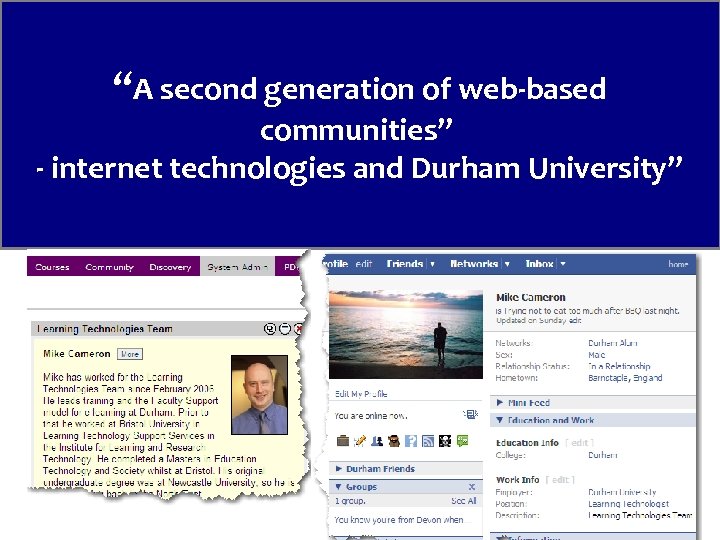
“A second generation of web-based communities” - internet technologies and Durham University”
Aims • Brief introduction to Web 2. 0 • Provide a case study from Durham • Look at how we engage with social and collaborative technologies now and in the future.
Web 2. 0 ‘…. a perceived second generation of webbased communities and hosted services — such as social-networking sites, wikis and folksonomies — which aim to facilitate collaboration and sharing between users. Source: Wikipedia
Internet 2. 0 • Web 1. 0 • Double. Click • Ofoto • Akamai • mp 3. com • Britannica Online • personal websites • evite • domain name speculation • page views • screen scraping • publishing • content management systems • directories (taxonomy) • stickiness • • • • Web 2. 0 Google Ad. Sense Flickr Bit. Torrent Napster Wikipedia blogging upcoming. org and EVDB search engine optimisation cost per click web services participation wikis tagging (“folksonomy”) syndication
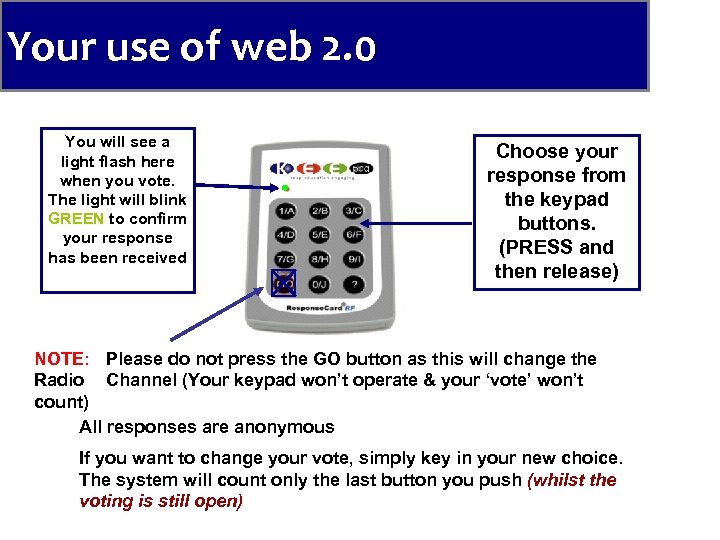
House Keeping Your use of web 2. 0 Using the keypads You will see a light flash here when you vote. The light will blink GREEN to confirm your response has been received Choose your response from the keypad buttons. (PRESS and then release) NOTE: Please do not press the GO button as this will change the Radio Channel (Your keypad won’t operate & your ‘vote’ won’t count) All responses are anonymous If you want to change your vote, simply key in your new choice. The system will count only the last button you push (whilst the voting is still open)
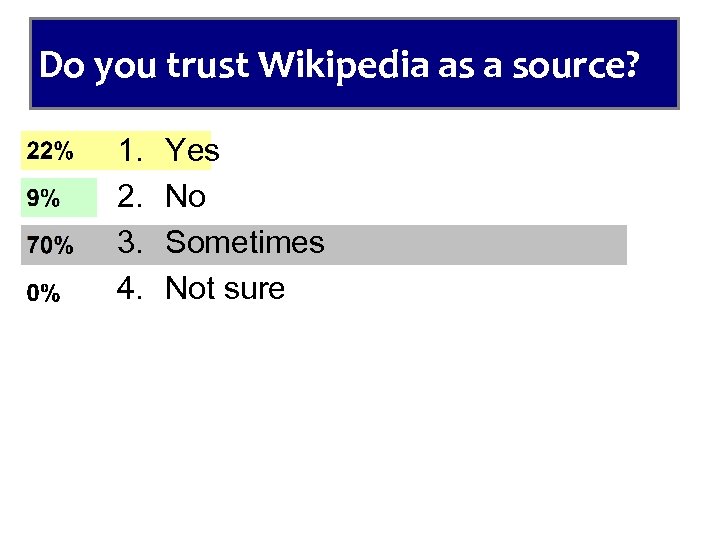
Do you trust Wikipedia as a source? 1. 2. 3. 4. Yes No Sometimes Not sure
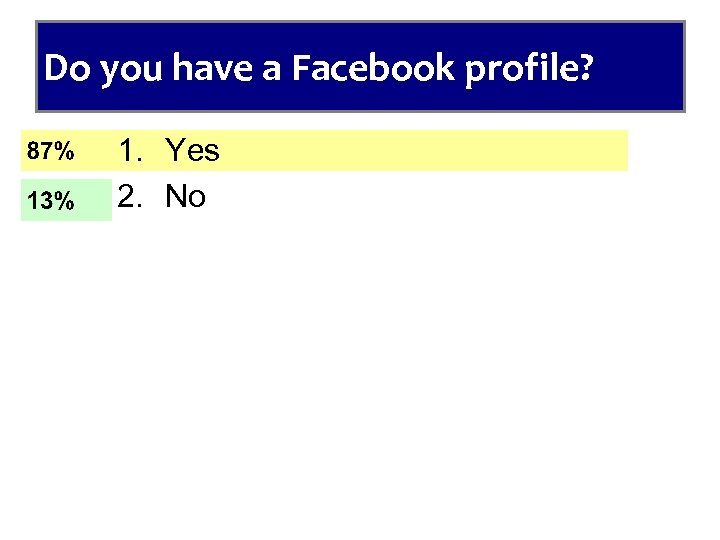
Do you have a Facebook profile? 1. Yes 2. No
Facebook – Groups • I Couldn't Care Less If It Was University of Durham or Durham University network • The Dr Smith Appreciation Society • Communist Revolutionary Front of Durham University • Durham Dictionary • It's not Facebook procrastination, it's history revision.
Whose e. Learning is it anyway? A case study exploring the boundaries between student-owned social networks and institutional VLEs
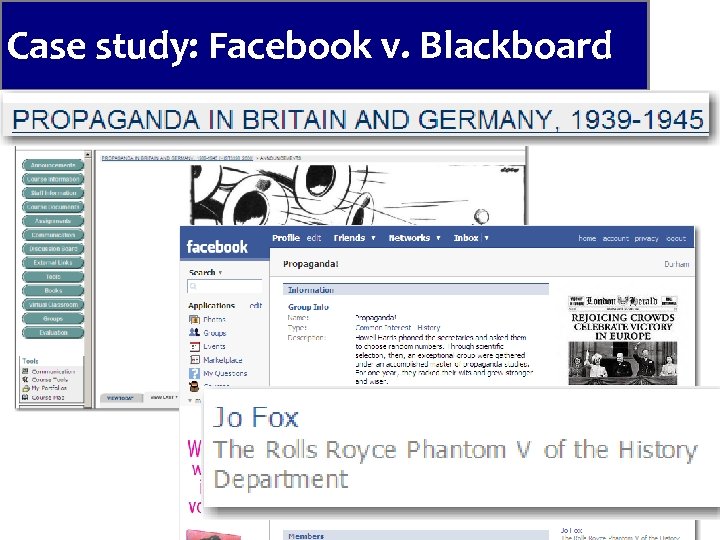
Case study: Facebook v. Blackboard
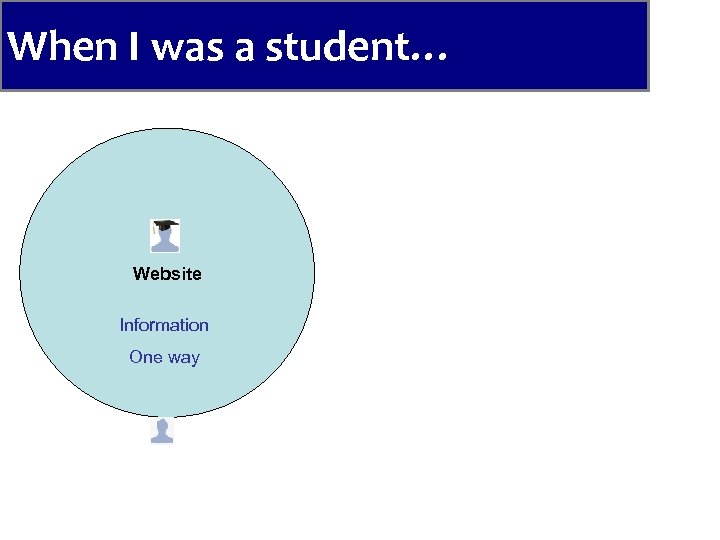
When I was a student… Website Information One way
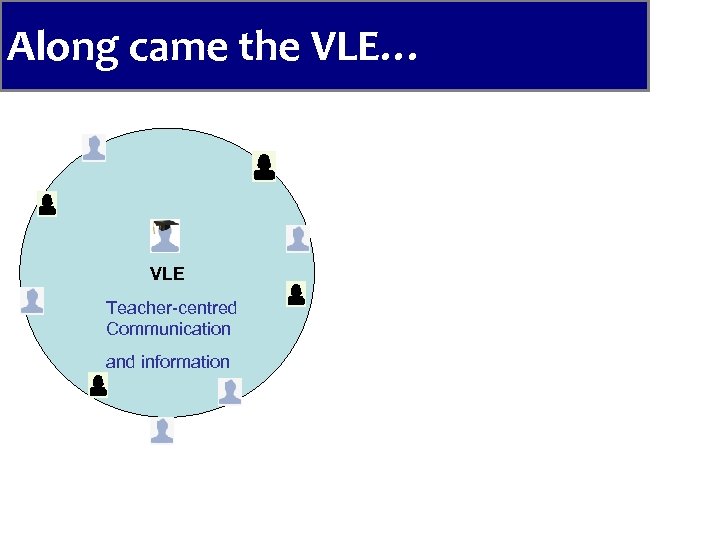
Along came the VLE… VLE Teacher-centred Communication and information
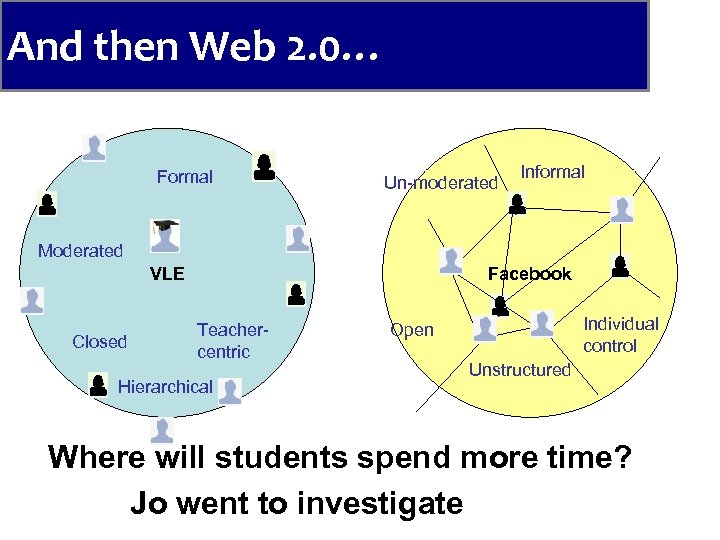
And then Web 2. 0… Formal Un-moderated Informal Moderated VLE Closed Facebook Teachercentric Hierarchical Individual control Open Unstructured Where will students spend more time? Jo went to investigate
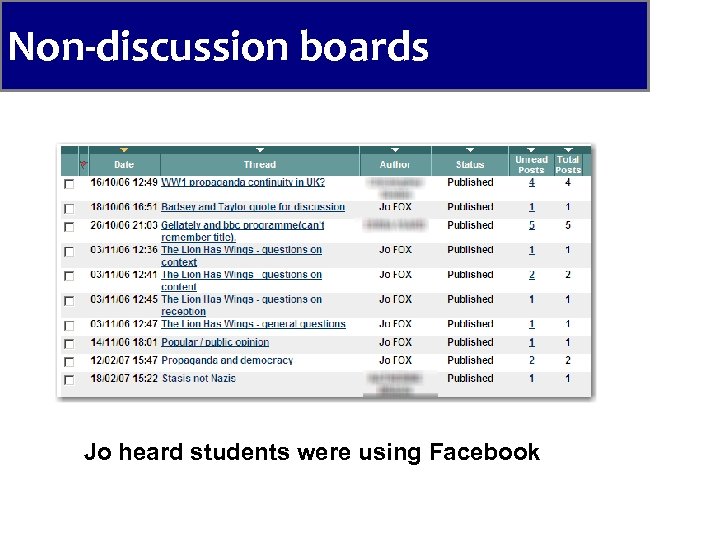
Non-discussion boards Jo heard students were using Facebook
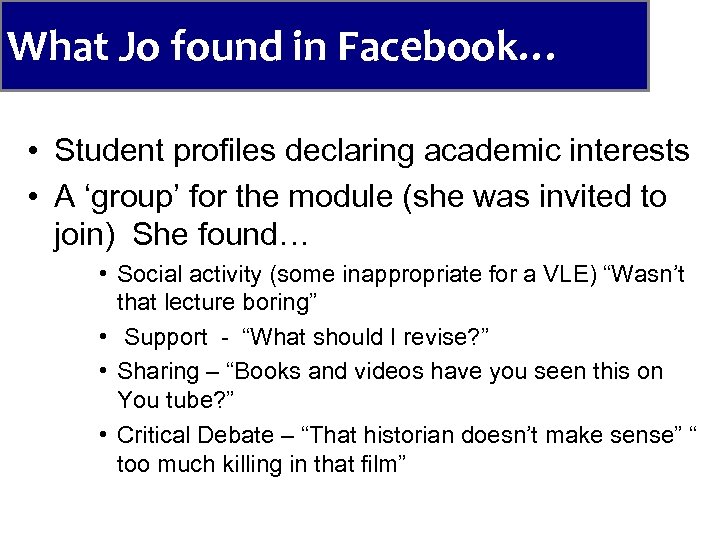
What Jo found in Facebook… • Student profiles declaring academic interests • A ‘group’ for the module (she was invited to join) She found… • Social activity (some inappropriate for a VLE) “Wasn’t that lecture boring” • Support - “What should I revise? ” • Sharing – “Books and videos have you seen this on You tube? ” • Critical Debate – “That historian doesn’t make sense” “ too much killing in that film”
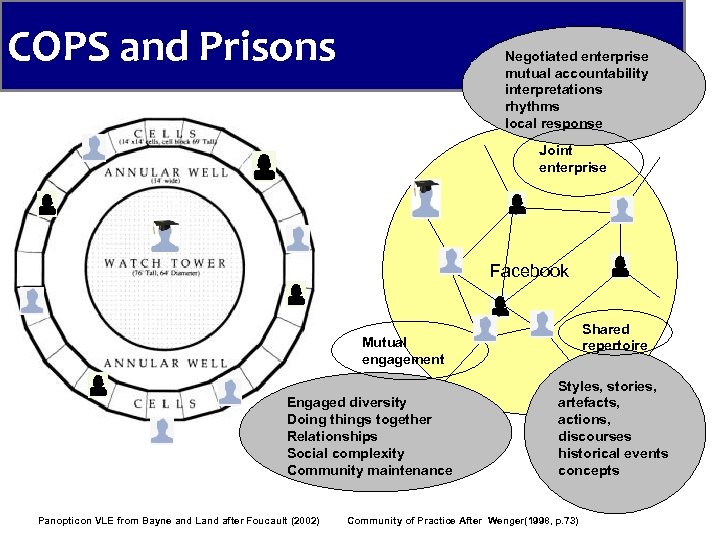
COPS and Prisons Negotiated enterprise mutual accountability interpretations rhythms local response Joint enterprise Facebook VLE Shared repertoire Mutual engagement Engaged diversity Doing things together Relationships Social complexity Community maintenance Panopticon VLE from Bayne and Land after Foucault (2002) Styles, stories, artefacts, actions, discourses historical events concepts Community of Practice After Wenger(1998, p. 73)
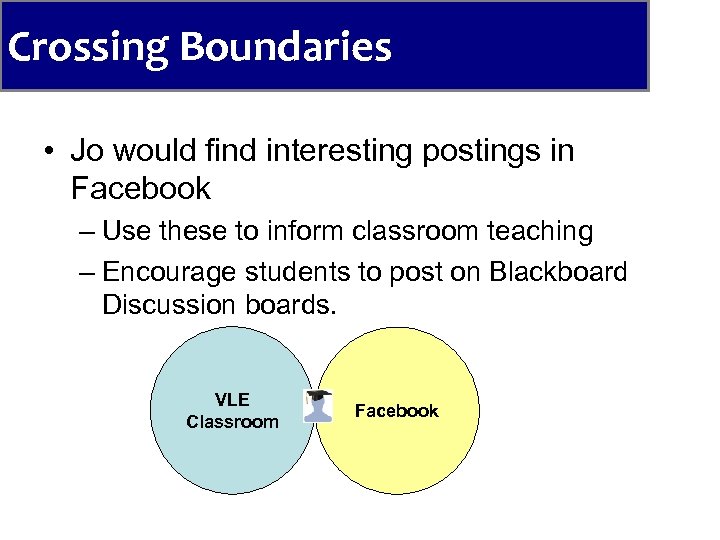
Crossing Boundaries • Jo would find interesting postings in Facebook – Use these to inform classroom teaching – Encourage students to post on Blackboard Discussion boards. VLE Classroom Facebook
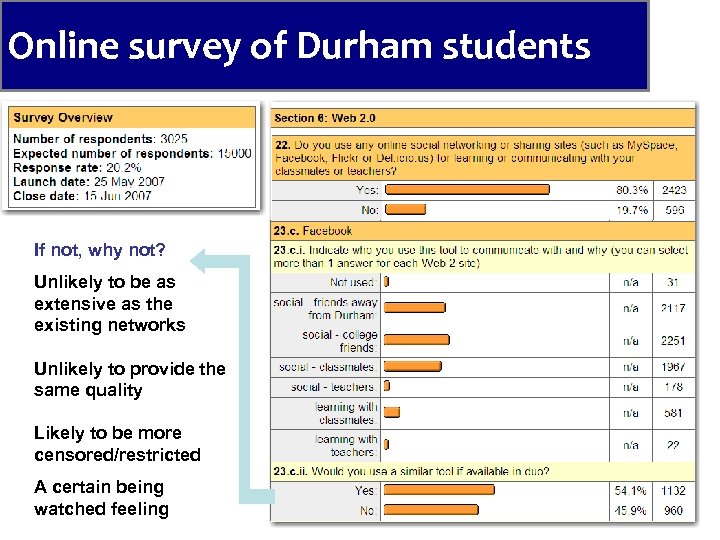
Online survey of Durham students If not, why not? Unlikely to be as extensive as the existing networks Unlikely to provide the same quality Likely to be more censored/restricted A certain being watched feeling
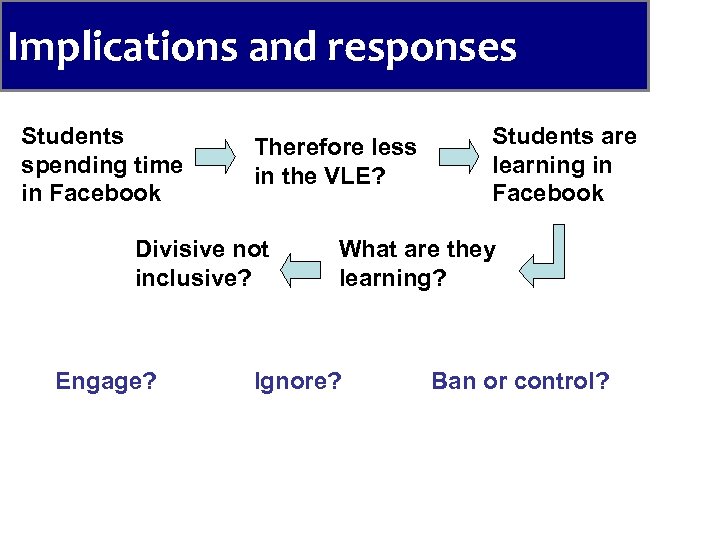
Implications and responses Students spending time in Facebook Therefore less in the VLE? Divisive not inclusive? Engage? Students are learning in Facebook What are they learning? Ignore? Ban or control?
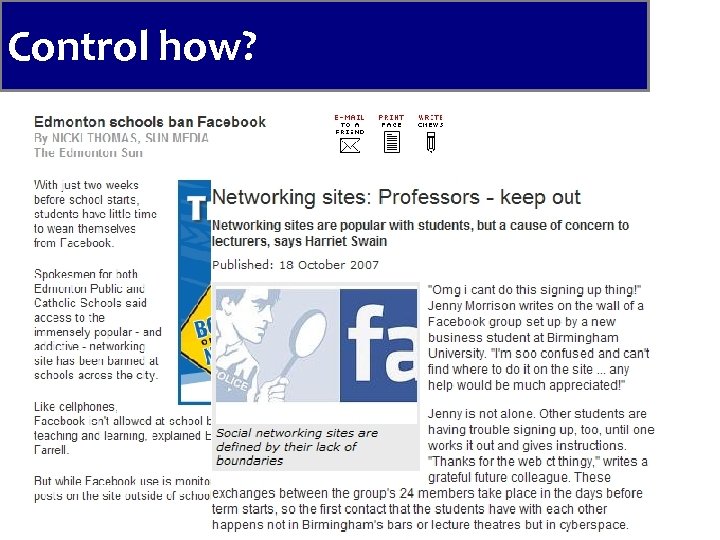
Control how?
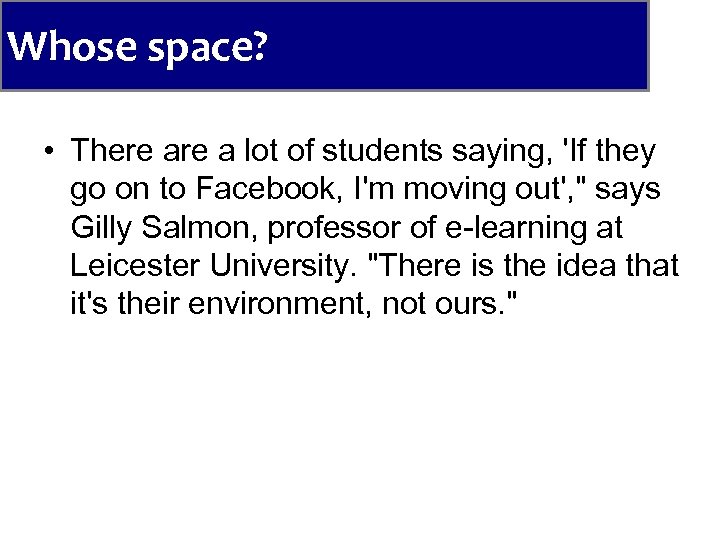
Whose space? • There a lot of students saying, 'If they go on to Facebook, I'm moving out', " says Gilly Salmon, professor of e-learning at Leicester University. "There is the idea that it's their environment, not ours. "
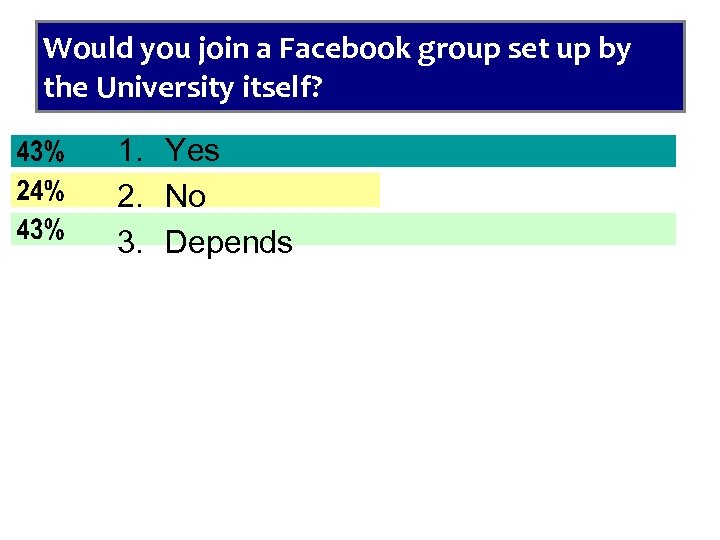
Would you join a Facebook group set up by the University itself? 1. Yes 2. No 3. Depends
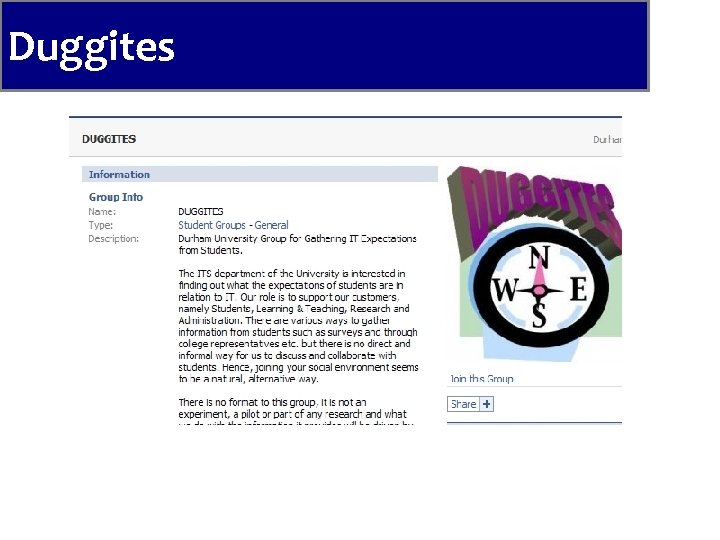
Duggites
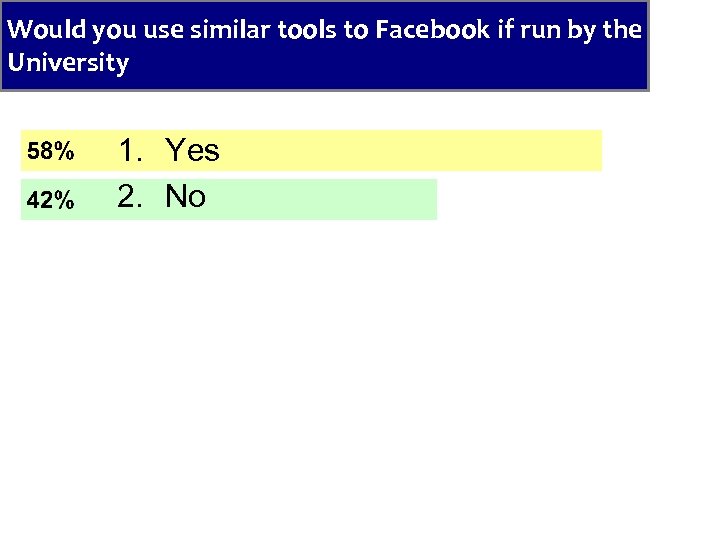
Would you use similar tools to Facebook if run by the University 1. Yes 2. No
Vive la difference Accept separate spaces for student centred informal learning and formal VLE Use like Jo (if students let you)? Bring affordances of tools in where relevant to formal education ‘Mash up’ VLE and Facebook
Wikis in duo – a website that allows visitors to add, remove, edit and change content, typically without the need for registration. It also allows for linking among any number of pages. This ease of interaction and operation makes a wiki an effective tool for mass collaborative authoring. Example: duopedia
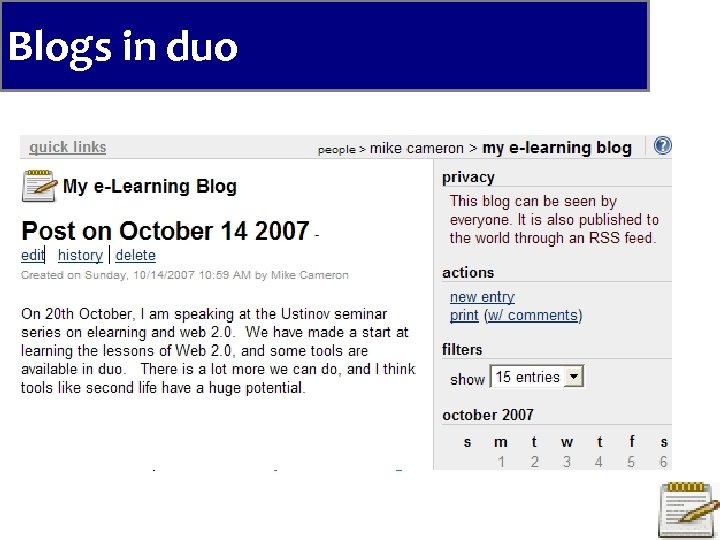
Blogs in duo – “A blog is a user-generated website where entries are made in journal style and displayed in a reverse chronological order” (source: Wikipedia). The term is generally thought to be an abbreviation of the words "web-log". Example: duo system blog
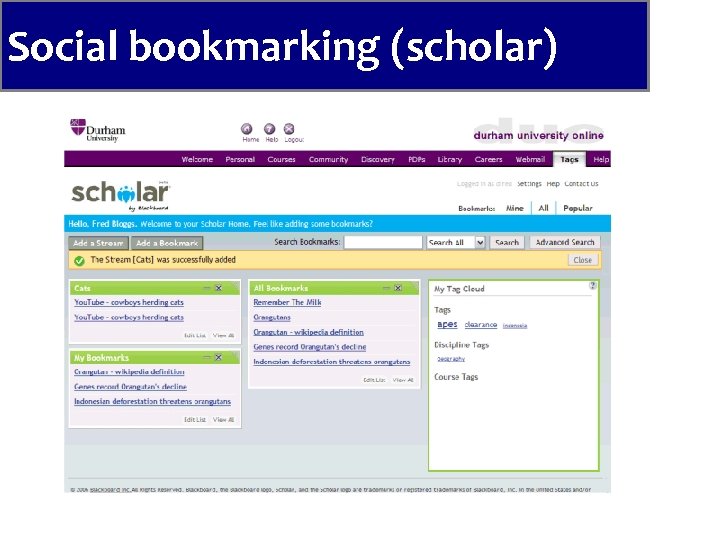
Social bookmarking (scholar)
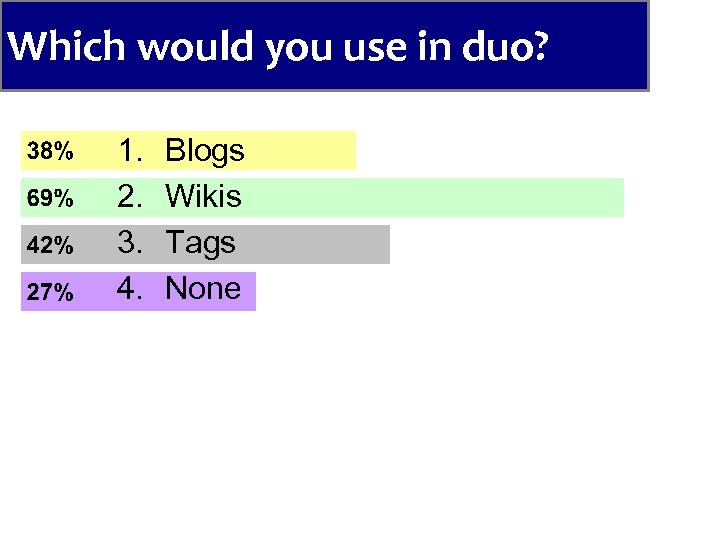
Which would you use in duo? 1. 2. 3. 4. Blogs Wikis Tags None
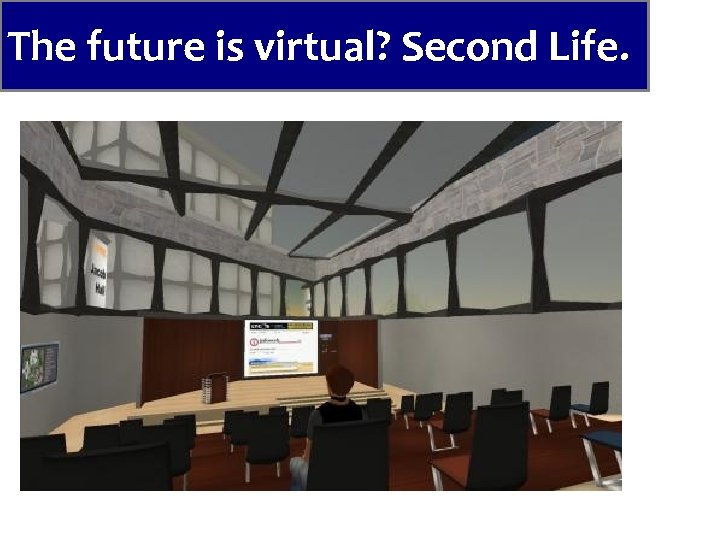
The future is virtual? Second Life.
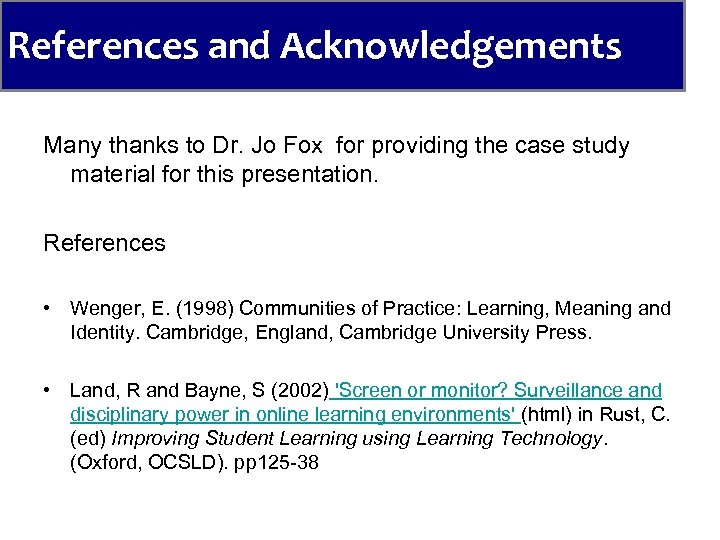
References and Acknowledgements Many thanks to Dr. Jo Fox for providing the case study material for this presentation. References • Wenger, E. (1998) Communities of Practice: Learning, Meaning and Identity. Cambridge, England, Cambridge University Press. • Land, R and Bayne, S (2002) 'Screen or monitor? Surveillance and disciplinary power in online learning environments' (html) in Rust, C. (ed) Improving Student Learning using Learning Technology. (Oxford, OCSLD). pp 125 -38
Скачать презентацию A second generation of web-based communities — internet
cda7f60c6579387c15b60ccba2bf86ff.ppt