


 Скачать презентацию A Review Of The Threat To Civil Aviation
6489958961701357444d3f0e6aa269b3.ppt
- Количество слайдов: 29
 A Review Of The Threat To Civil Aviation & The International Response Gabriel Chow
 Overview 1. 2. 3. The threat The International Response Concluding remarks
 1. The Threat To Civil Aviation
 Who poses a threat? n n n Unruly passengers Asylum seekers Criminals People with psychiatric disorders Terrorists
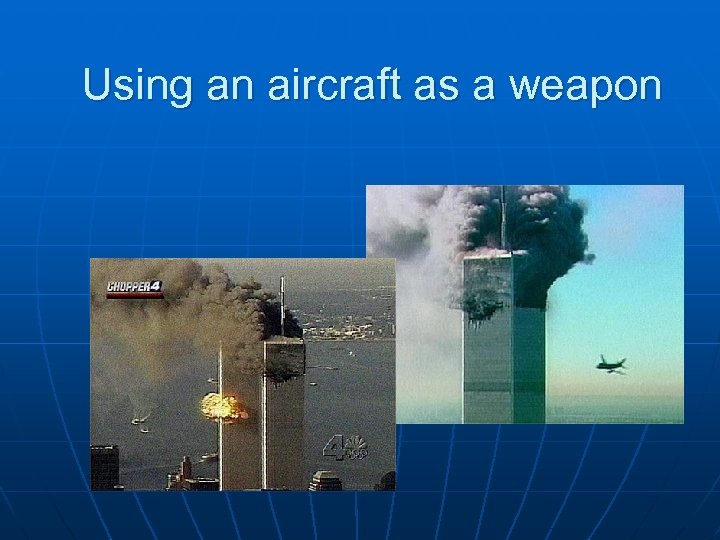
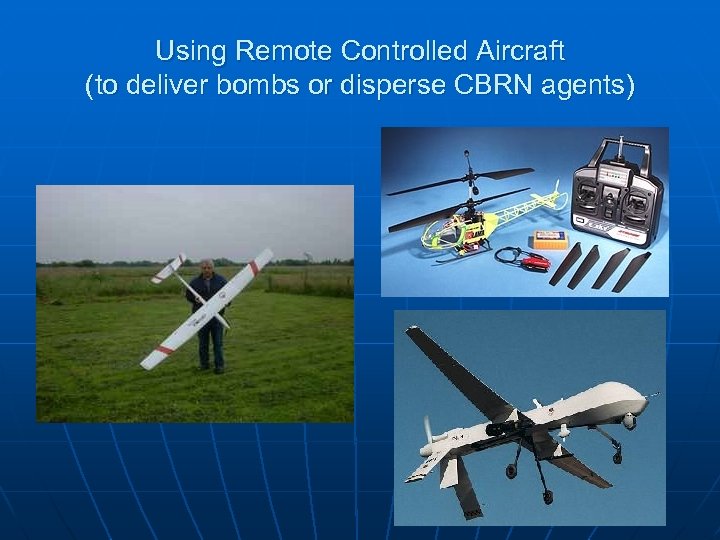
 The terrorist threat to civil aviation n Attacks against aircraft n Attacks against airports n Using Aircraft as weapons of mass destruction
 Attacks against aircraft
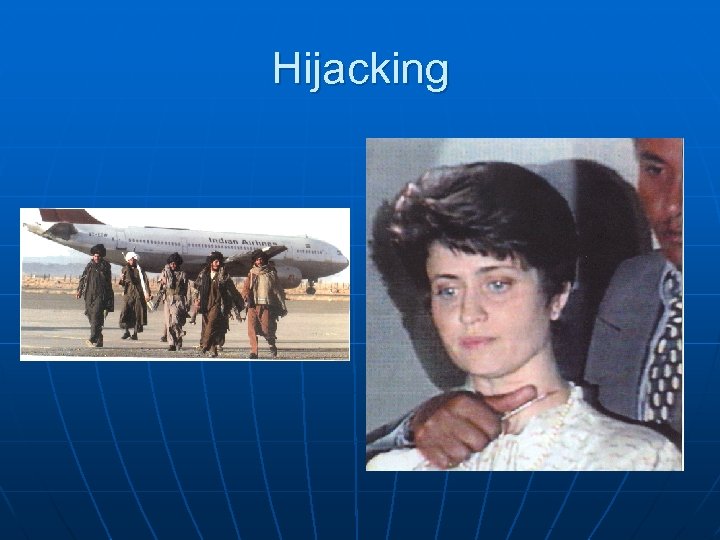 Hijacking
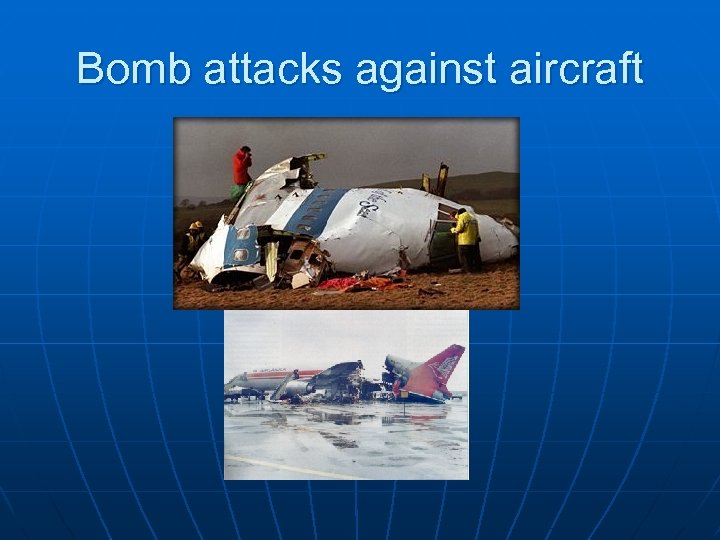 Bomb attacks against aircraft
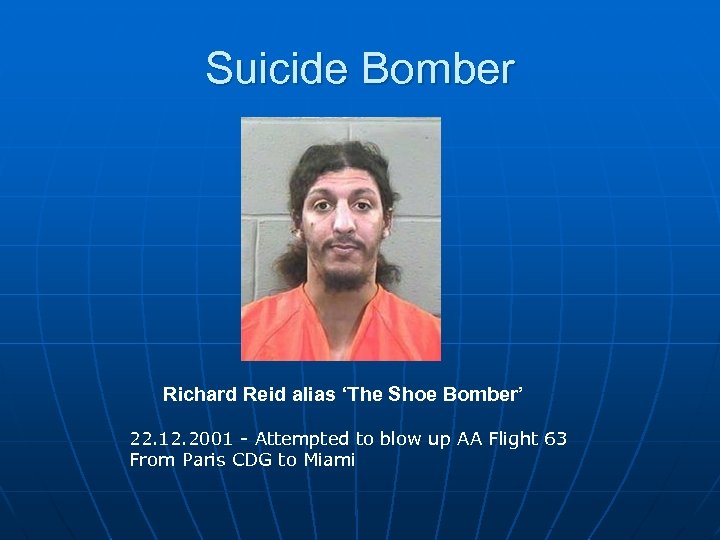 Suicide Bomber Richard Reid alias ‘The Shoe Bomber’ 22. 12. 2001 - Attempted to blow up AA Flight 63 From Paris CDG to Miami
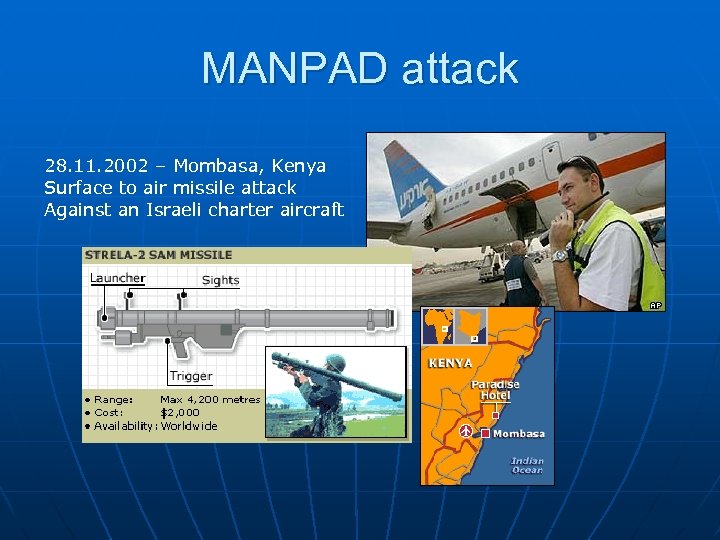 MANPAD attack 28. 11. 2002 – Mombasa, Kenya Surface to air missile attack Against an Israeli charter aircraft
 Attacks against airports (and ground operations)
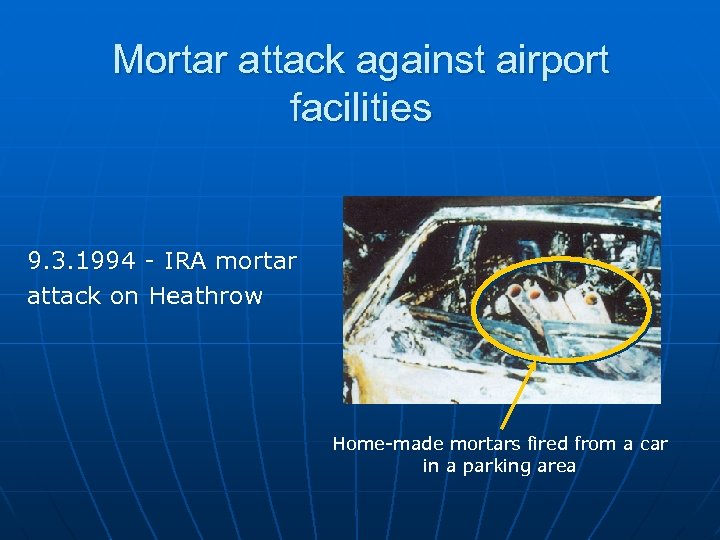 Mortar attack against airport facilities 9. 3. 1994 - IRA mortar attack on Heathrow Home-made mortars fired from a car in a parking area
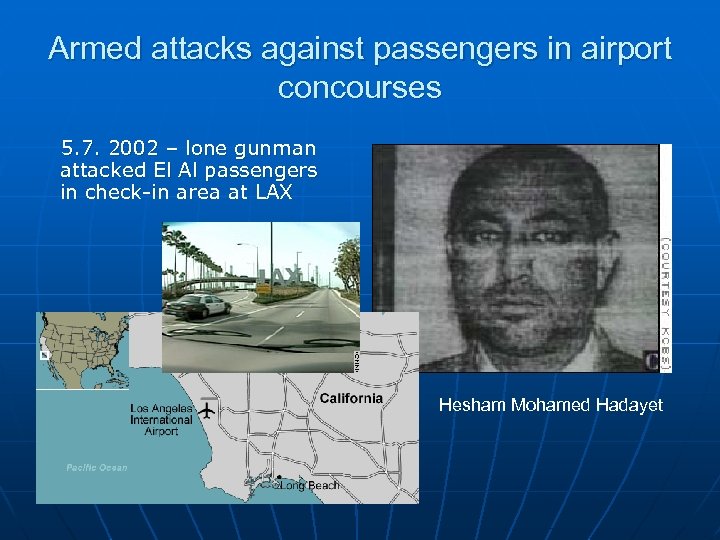 Armed attacks against passengers in airport concourses 5. 7. 2002 – lone gunman attacked El Al passengers in check-in area at LAX Hesham Mohamed Hadayet
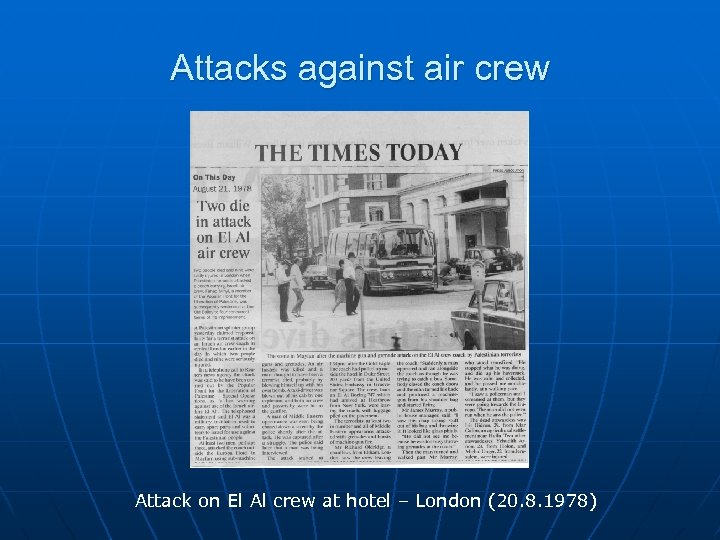 Attacks against air crew Attack on El Al crew at hotel – London (20. 8. 1978)
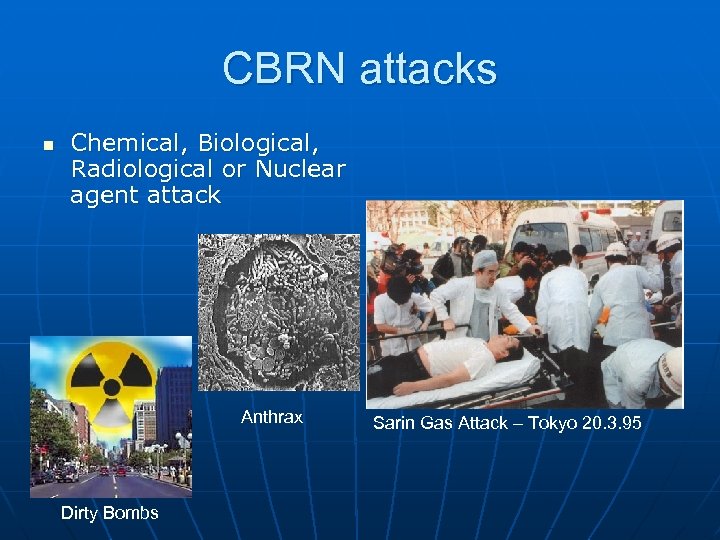 CBRN attacks n Chemical, Biological, Radiological or Nuclear agent attack Anthrax Dirty Bombs Sarin Gas Attack – Tokyo 20. 3. 95
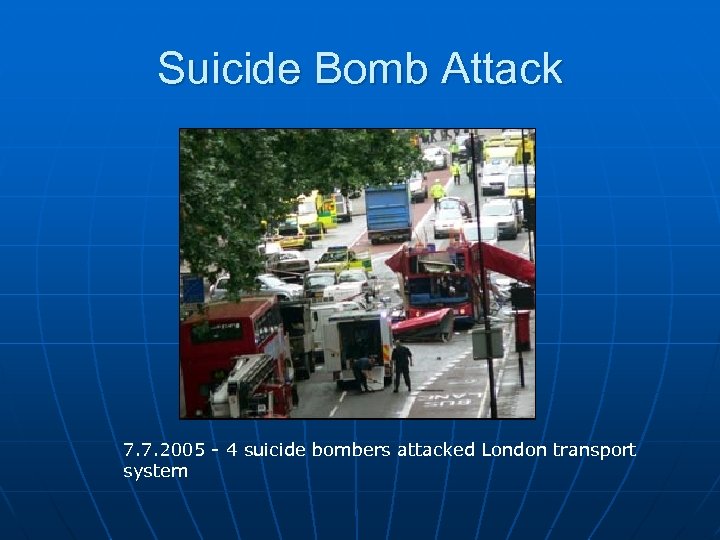 Suicide Bomb Attack 7. 7. 2005 - 4 suicide bombers attacked London transport system
 Using aircraft as weapons of mass destruction
 Using an aircraft as a weapon
 Using Remote Controlled Aircraft (to deliver bombs or disperse CBRN agents)
 2. The International Response
 Legal Framework n Convention on International Civil Aviation ( ’The Chicago Convention’) n International Conventions International Civil Aviation Organisation (ICAO) n n Annex 17 ‘Security’
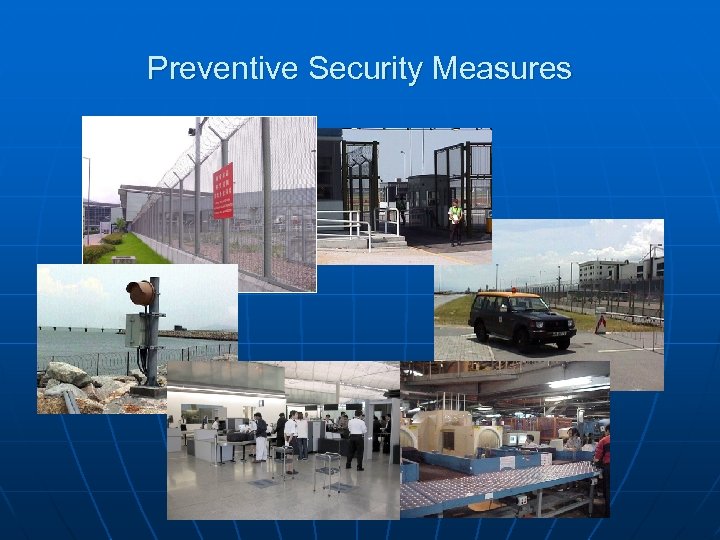 Preventive Security Measures
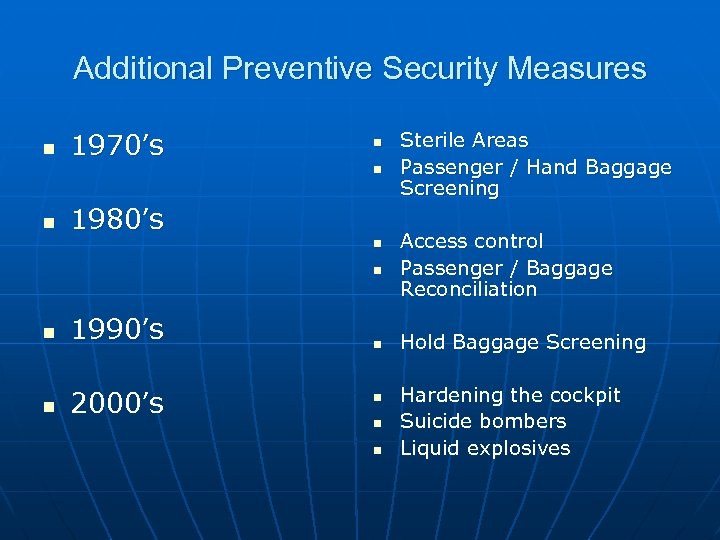 Additional Preventive Security Measures n 1970’s n n n 1980’s Sterile Areas Passenger / Hand Baggage Screening n Access control Passenger / Baggage Reconciliation n Hold Baggage Screening n n 1990’s n 2000’s n n n Hardening the cockpit Suicide bombers Liquid explosives
 3. Concluding Remarks
 Reactive Proactive In the past aviation security n has reacted to new threats In the future aviation security – n needs to predict new threats
 Improvement Strategy 1. Improve the security processes n n n 2. Improve the performance of security staff n 3. More intelligent processes Focus resources on those that present a risk Better facilities Develop and apply ‘Human Factors’ best practices Improve and increase the use of technology n Explosive detection equipment in passenger screening
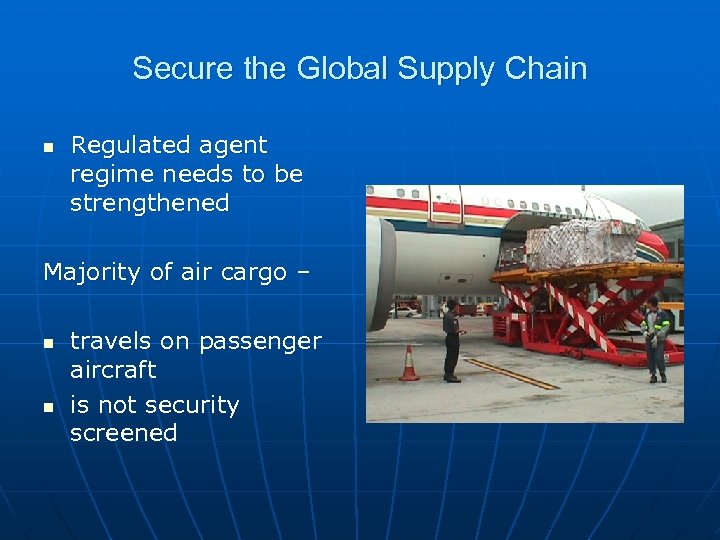 Secure the Global Supply Chain n Regulated agent regime needs to be strengthened Majority of air cargo – n n travels on passenger aircraft is not security screened
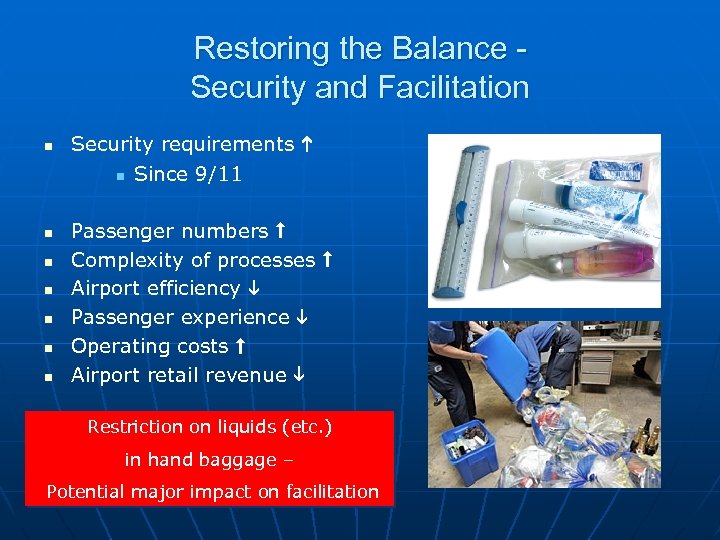 Restoring the Balance Security and Facilitation n n n Security requirements n Since 9/11 Passenger numbers Complexity of processes Airport efficiency Passenger experience Operating costs Airport retail revenue Restriction on liquids (etc. ) in hand baggage – Potential major impact on facilitation
 Thank you