


 Скачать презентацию A Prospective Randomized Investigation of a Novel Platinum
736ac70d7660d41385a7697b4497e0d4.ppt
- Количество слайдов: 26
 A Prospective, Randomized Investigation of a Novel Platinum Chromium Everolimus-Eluting Coronary Stent: The PLATINUM Trial Gregg W. Stone, Paul S. Teirstein, Ian T. Meredith, Bruno Farah, Christophe L. Dubois, Robert L. Feldman, Joseph Dens, Nobuhisa Hagiwara, Dominic J. Allocco, and Keith D. Dawkins for the PLATINUM Trial Investigators
 Disclosures GW Stone: Scientific advisory boards for and honoraria from Boston Scientific and Abbott Vascular, and consultant to Medtronic IT Meredith: Scientific advisory board for and honoraria from Boston Scientific PS Teirstein: Research grants, honoraria, and consulting fees from Boston Scientific, Abbott, Cordis and Medtronic B Farah: Honoraria from Boston Scientific and Abbott Vascular CL Dubois: Honoraria from Boston Scientific and Abbott Vascular TL Feldman: Scientific advisory board for and honoraria from Boston Scientific J Dens: None N Hagiwara: None DJ Allocco: Full-time employee and stockholder of Boston Scientific KD Dawkins: Full-time employee and stockholder of Boston Scientific
 Background u u Advances in stent technology have continued to improve the clinical outcomes for patients undergoing PCI The cobalt chromium everolimus-eluting stent (Co. Cr-EES; XIENCE V / PROMUS) has established a new standard for clinical safety and efficacy, with numerous randomized trials demonstrating low rates of restenosis and stent thrombosis
 Background u A novel stent based on a new metal alloy has been developed, the platinum chromium EES (Pt. Cr-EES; PROMUS Element), which uses the same durable, biocompatible, inert fluorocopolymer and antiproliferative agent as the predicate Co. Cr-EES, but with a modified scaffold designed for improved deliverability, vessel conformability, side-branch access, radiopacity, radial strength and fracture resistance
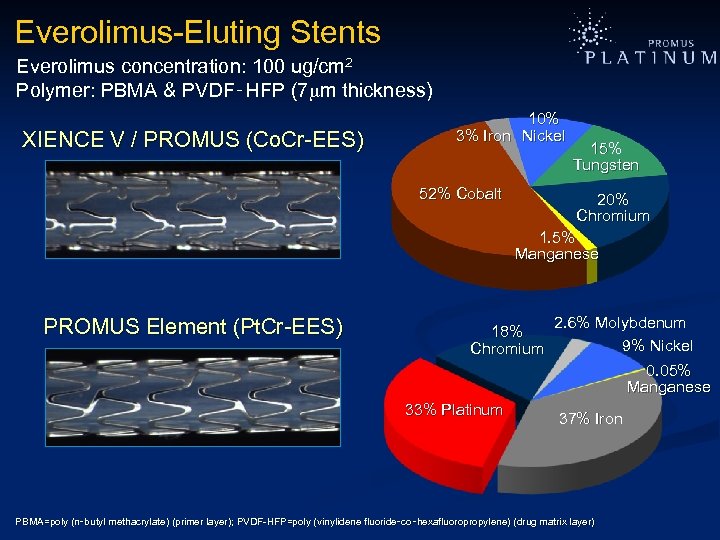 Everolimus-Eluting Stents Everolimus concentration: 100 ug/cm 2 Polymer: PBMA & PVDF‑HFP (7 m thickness) XIENCE V / PROMUS (Co. Cr-EES) 10% 3% Iron Nickel 52% Cobalt 15% Tungsten 20% Chromium 1. 5% Manganese PROMUS Element (Pt. Cr-EES) 18% Chromium 2. 6% Molybdenum 9% Nickel 0. 05% Manganese 33% Platinum 37% Iron PBMA=poly (n‑butyl methacrylate) (primer layer); PVDF-HFP=poly (vinylidene fluoride‑co‑hexafluoropropylene) (drug matrix layer) PBMA=poly (n‑ butyl methacrylate) (primer layer); PVDF-HFP=poly (vinylidene fluoride‑ co‑
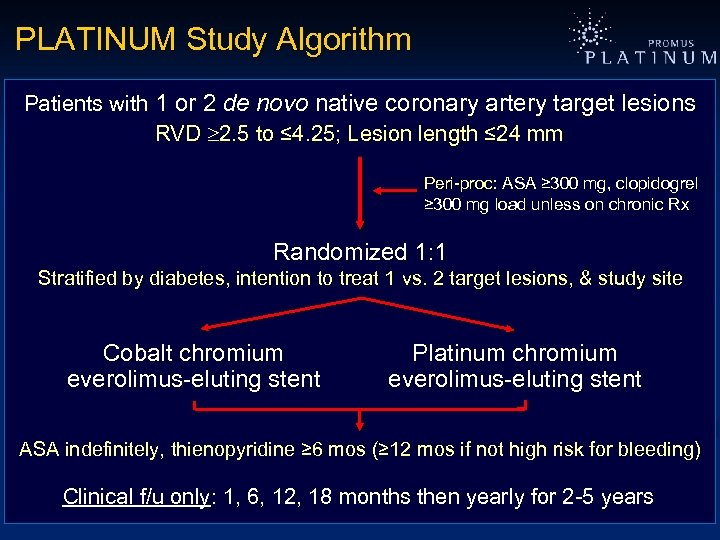 PLATINUM Study Algorithm Patients with 1 or 2 de novo native coronary artery target lesions RVD 2. 5 to ≤ 4. 25; Lesion length ≤ 24 mm Peri-proc: ASA ≥ 300 mg, clopidogrel ≥ 300 mg load unless on chronic Rx Randomized 1: 1 Stratified by diabetes, intention to treat 1 vs. 2 target lesions, & study site Cobalt chromium everolimus-eluting stent Platinum chromium everolimus-eluting stent ASA indefinitely, thienopyridine ≥ 6 mos (≥ 12 mos if not high risk for bleeding) Clinical f/u only: 1, 6, 12, 18 months then yearly for 2 -5 years
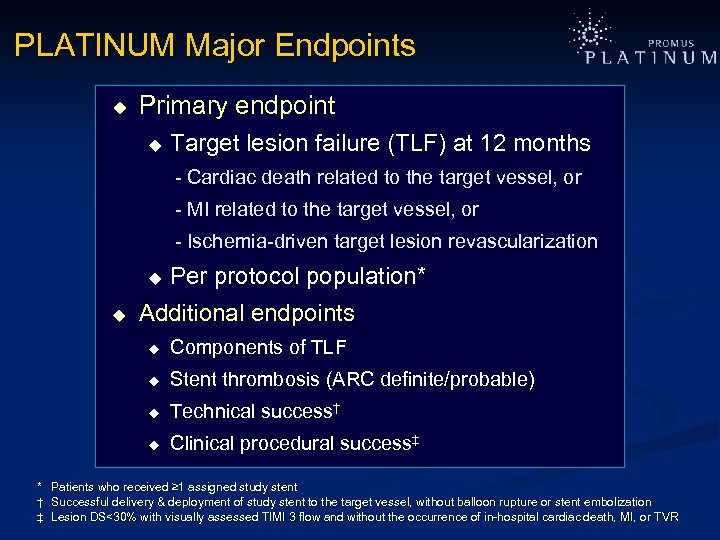 PLATINUM Major Endpoints u Primary endpoint u Target lesion failure (TLF) at 12 months - Cardiac death related to the target vessel, or - MI related to the target vessel, or - Ischemia-driven target lesion revascularization u u Per protocol population* Additional endpoints u Components of TLF u Stent thrombosis (ARC definite/probable) u Technical success† u Clinical procedural success‡ * Patients who received ≥ 1 assigned study stent † Successful delivery & deployment of study stent to the target vessel, without balloon rupture or stent embolization ‡ Lesion DS<30% with visually assessed TIMI 3 flow and without the occurrence of in-hospital cardiac death, MI, or TVR
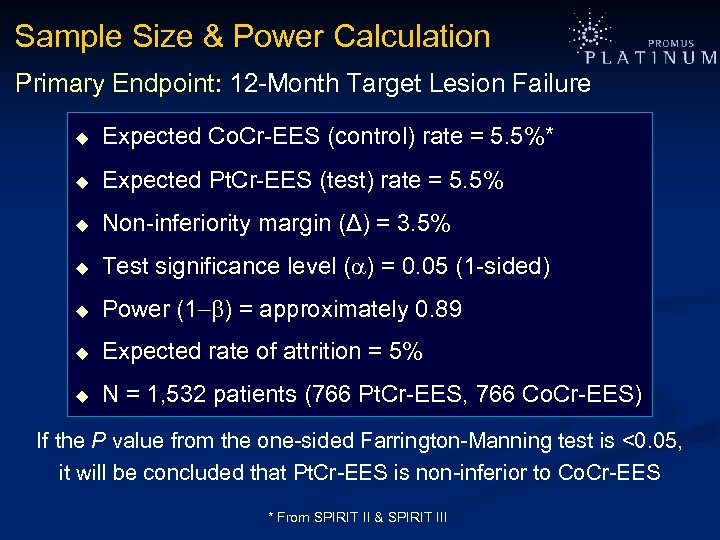 Sample Size & Power Calculation Primary Endpoint: 12 -Month Target Lesion Failure u Expected Co. Cr-EES (control) rate = 5. 5%* u Expected Pt. Cr-EES (test) rate = 5. 5% u Non-inferiority margin (Δ) = 3. 5% u Test significance level ( ) = 0. 05 (1 -sided) u Power (1 ) = approximately 0. 89 u Expected rate of attrition = 5% u N = 1, 532 patients (766 Pt. Cr-EES, 766 Co. Cr-EES) If the P value from the one-sided Farrington-Manning test is <0. 05, it will be concluded that Pt. Cr-EES is non-inferior to Co. Cr-EES * From SPIRIT II & SPIRIT III
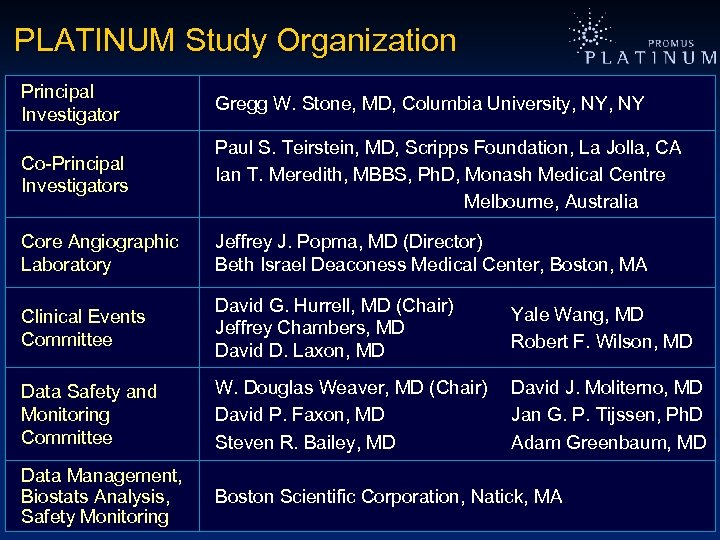 PLATINUM Study Organization Principal Investigator Gregg W. Stone, MD, Columbia University, NY Co-Principal Investigators Paul S. Teirstein, MD, Scripps Foundation, La Jolla, CA Ian T. Meredith, MBBS, Ph. D, Monash Medical Centre Melbourne, Australia Core Angiographic Laboratory Jeffrey J. Popma, MD (Director) Beth Israel Deaconess Medical Center, Boston, MA Clinical Events Committee David G. Hurrell, MD (Chair) Jeffrey Chambers, MD David D. Laxon, MD Yale Wang, MD Robert F. Wilson, MD Data Safety and Monitoring Committee W. Douglas Weaver, MD (Chair) David P. Faxon, MD Steven R. Bailey, MD David J. Moliterno, MD Jan G. P. Tijssen, Ph. D Adam Greenbaum, MD Data Management, Biostats Analysis, Safety Monitoring Boston Scientific Corporation, Natick, MA
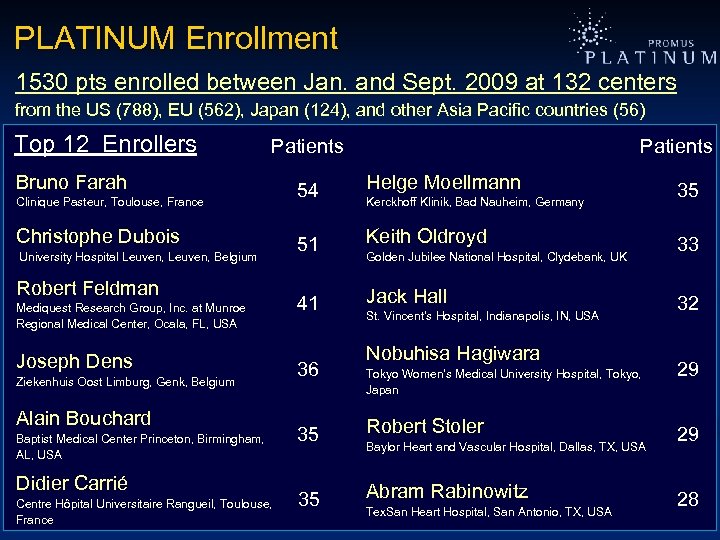 PLATINUM Enrollment 1530 pts enrolled between Jan. and Sept. 2009 at 132 centers from the US (788), EU (562), Japan (124), and other Asia Pacific countries (56) Top 12 Enrollers Patients Bruno Farah Clinique Pasteur, Toulouse, France Christophe Dubois University Hospital Leuven, Belgium Robert Feldman Mediquest Research Group, Inc. at Munroe Regional Medical Center, Ocala, FL, USA Joseph Dens Ziekenhuis Oost Limburg, Genk, Belgium Alain Bouchard Baptist Medical Center Princeton, Birmingham, AL, USA Didier Carrié Centre Hôpital Universitaire Rangueil, Toulouse, France Patients 54 Helge Moellmann 51 Keith Oldroyd 41 Jack Hall 36 Kerckhoff Klinik, Bad Nauheim, Germany Golden Jubilee National Hospital, Clydebank, UK St. Vincent's Hospital, Indianapolis, IN, USA Nobuhisa Hagiwara Tokyo Women's Medical University Hospital, Tokyo, Japan 35 Robert Stoler 35 Abram Rabinowitz Baylor Heart and Vascular Hospital, Dallas, TX, USA Tex. San Heart Hospital, San Antonio, TX, USA 35 33 32 29 29 28
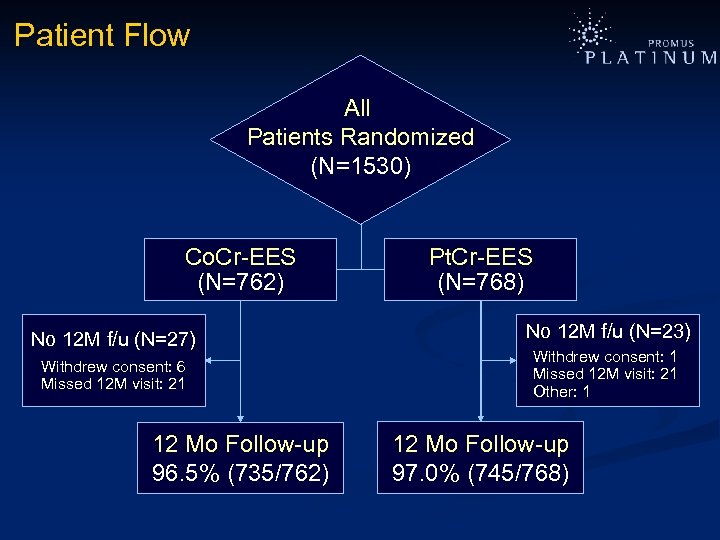 Patient Flow All Patients Randomized (N=1530) Co. Cr-EES (N=762) No 12 M f/u (N=27) Withdrew consent: 6 Missed 12 M visit: 21 12 Mo Follow-up 96. 5% (735/762) Pt. Cr-EES (N=768) No 12 M f/u (N=23) Withdrew consent: 1 Missed 12 M visit: 21 Other: 1 12 Mo Follow-up 97. 0% (745/768)
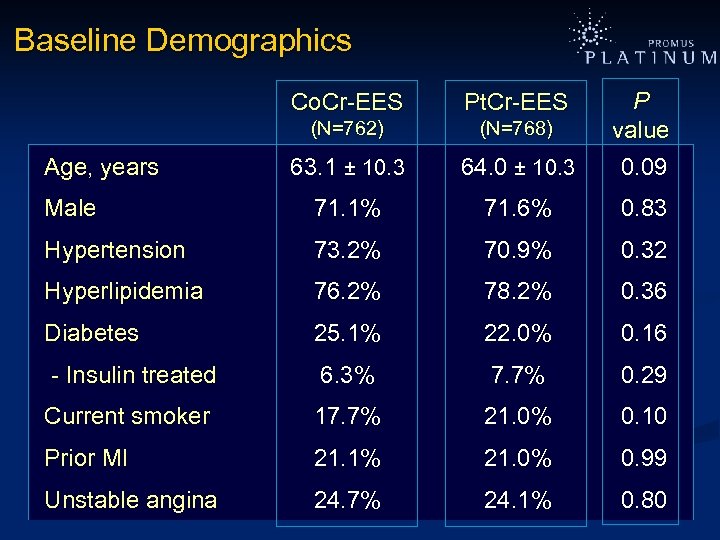 Baseline Demographics Co. Cr-EES Pt. Cr-EES (N=762) (N=768) 63. 1 ± 10. 3 64. 0 ± 10. 3 P value 0. 09 Male 71. 1% 71. 6% 0. 83 Hypertension 73. 2% 70. 9% 0. 32 Hyperlipidemia 76. 2% 78. 2% 0. 36 Diabetes 25. 1% 22. 0% 0. 16 - Insulin treated 6. 3% 7. 7% 0. 29 Current smoker 17. 7% 21. 0% 0. 10 Prior MI 21. 1% 21. 0% 0. 99 Unstable angina 24. 7% 24. 1% 0. 80 Age, years
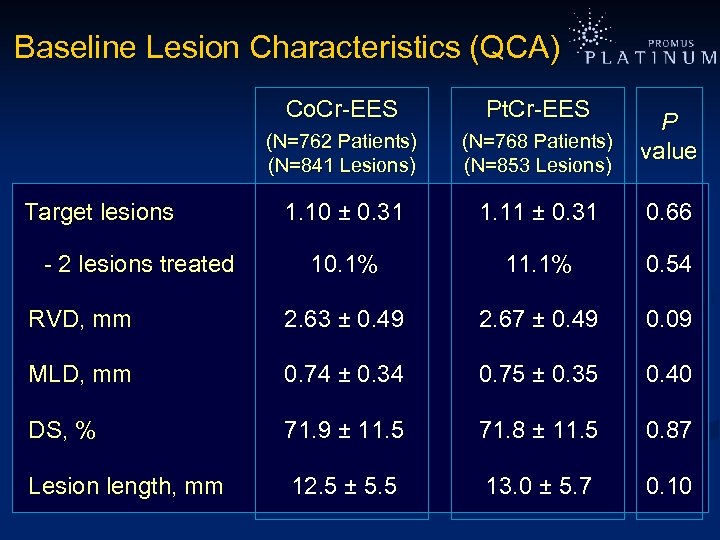 Baseline Lesion Characteristics (QCA) Co. Cr-EES Pt. Cr-EES (N=762 Patients) (N=841 Lesions) (N=768 Patients) (N=853 Lesions) 1. 10 ± 0. 31 1. 11 ± 0. 31 0. 66 10. 1% 11. 1% 0. 54 RVD, mm 2. 63 ± 0. 49 2. 67 ± 0. 49 0. 09 MLD, mm 0. 74 ± 0. 34 0. 75 ± 0. 35 0. 40 DS, % 71. 9 ± 11. 5 71. 8 ± 11. 5 0. 87 Lesion length, mm 12. 5 ± 5. 5 13. 0 ± 5. 7 0. 10 Target lesions - 2 lesions treated P value
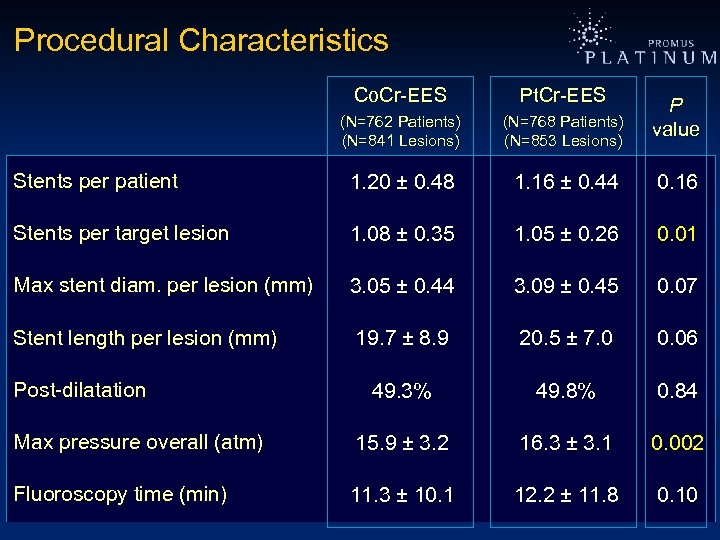 Procedural Characteristics Co. Cr-EES Pt. Cr-EES (N=762 Patients) (N=841 Lesions) (N=768 Patients) (N=853 Lesions) Stents per patient 1. 20 ± 0. 48 1. 16 ± 0. 44 0. 16 Stents per target lesion 1. 08 ± 0. 35 1. 05 ± 0. 26 0. 01 Max stent diam. per lesion (mm) 3. 05 ± 0. 44 3. 09 ± 0. 45 0. 07 Stent length per lesion (mm) 19. 7 ± 8. 9 20. 5 ± 7. 0 0. 06 49. 3% 49. 8% 0. 84 Max pressure overall (atm) 15. 9 ± 3. 2 16. 3 ± 3. 1 0. 002 Fluoroscopy time (min) 11. 3 ± 10. 1 12. 2 ± 11. 8 0. 10 Post-dilatation P value
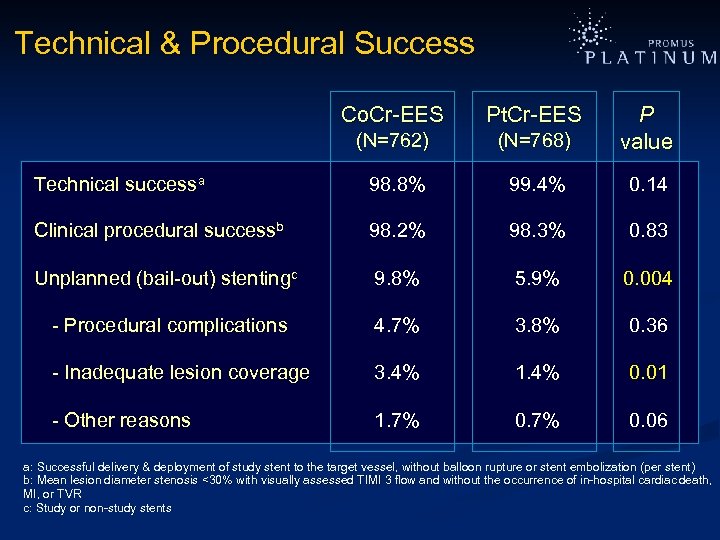 Technical & Procedural Success Co. Cr-EES Pt. Cr-EES (N=762) (N=768) P value Technical successa 98. 8% 99. 4% 0. 14 Clinical procedural successb 98. 2% 98. 3% 0. 83 Unplanned (bail-out) stentingc 9. 8% 5. 9% 0. 004 - Procedural complications 4. 7% 3. 8% 0. 36 - Inadequate lesion coverage 3. 4% 1. 4% 0. 01 - Other reasons 1. 7% 0. 06 a: Successful delivery & deployment of study stent to the target vessel, without balloon rupture or stent embolization (per stent) b: Mean lesion diameter stenosis <30% with visually assessed TIMI 3 flow and without the occurrence of in-hospital cardiac death, MI, or TVR c: Study or non-study stents
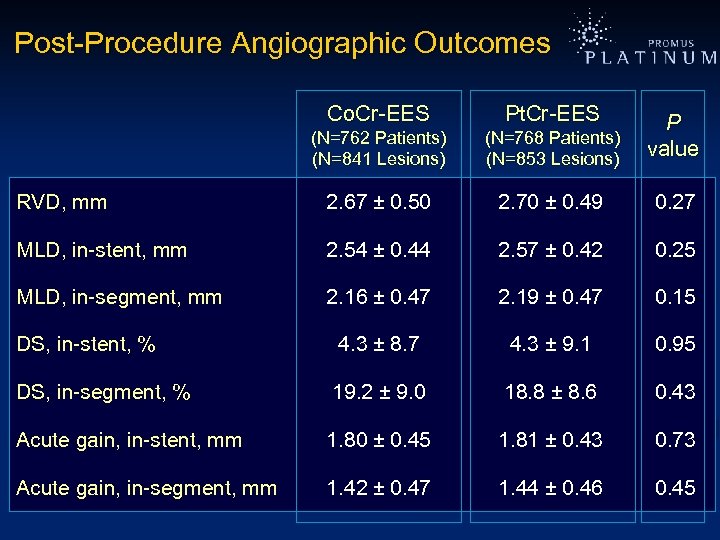 Post-Procedure Angiographic Outcomes Co. Cr-EES Pt. Cr-EES (N=762 Patients) (N=841 Lesions) (N=768 Patients) (N=853 Lesions) P value RVD, mm 2. 67 ± 0. 50 2. 70 ± 0. 49 0. 27 MLD, in-stent, mm 2. 54 ± 0. 44 2. 57 ± 0. 42 0. 25 MLD, in-segment, mm 2. 16 ± 0. 47 2. 19 ± 0. 47 0. 15 DS, in-stent, % 4. 3 ± 8. 7 4. 3 ± 9. 1 0. 95 DS, in-segment, % 19. 2 ± 9. 0 18. 8 ± 8. 6 0. 43 Acute gain, in-stent, mm 1. 80 ± 0. 45 1. 81 ± 0. 43 0. 73 Acute gain, in-segment, mm 1. 42 ± 0. 47 1. 44 ± 0. 46 0. 45
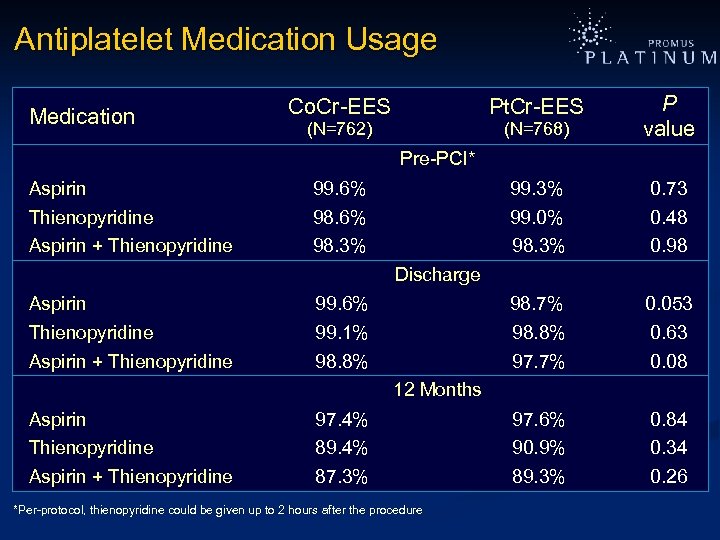 Antiplatelet Medication Usage Medication Co. Cr-EES Pt. Cr-EES (N=762) (N=768) P value Pre-PCI* Aspirin 99. 6% 99. 3% 0. 73 Thienopyridine 98. 6% 99. 0% 0. 48 Aspirin + Thienopyridine 98. 3% 0. 98 Discharge Aspirin 99. 6% 98. 7% 0. 053 Thienopyridine 99. 1% 98. 8% 0. 63 Aspirin + Thienopyridine 98. 8% 97. 7% 0. 08 12 Months Aspirin 97. 4% 97. 6% 0. 84 Thienopyridine 89. 4% 90. 9% 0. 34 Aspirin + Thienopyridine 87. 3% 89. 3% 0. 26 *Per-protocol, thienopyridine could be given up to 2 hours after the procedure
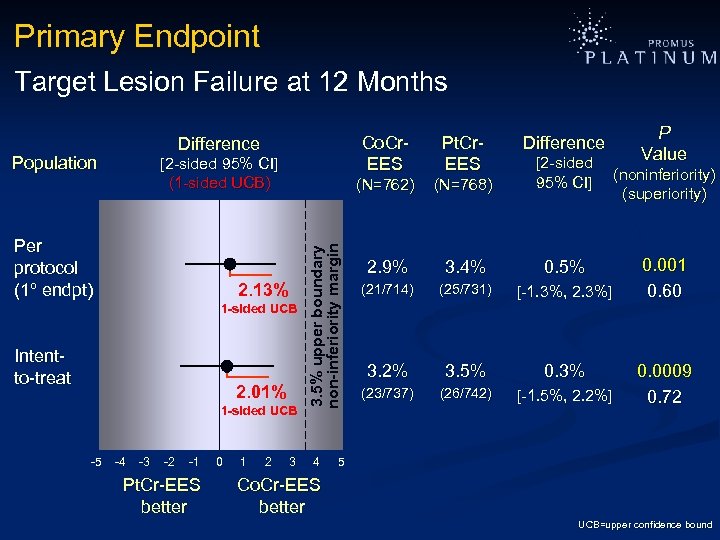 Primary Endpoint Target Lesion Failure at 12 Months Co. Cr- EES Population Per protocol (1º endpt) 2. 13% 1 -sided UCB Intentto-treat 2. 01% 1 -sided UCB -5 -4 -3 -2 -1 Pt. Cr-EES better 0 1 2 3 3. 5% upper boundary non-inferiority margin [2 -sided 95% CI] (1 -sided UCB) 4 Pt. Cr- EES (N=762) Difference (N=768) 2. 9% 3. 4% 0. 5% (21/714) (25/731) [-1. 3%, 2. 3%] 3. 2% 3. 5% 0. 3% (23/737) (26/742) [-1. 5%, 2. 2%] P Value [2 -sided 95% CI] (noninferiority) (superiority) 0. 001 0. 60 0. 0009 0. 72 5 Co. Cr-EES better UCB=upper confidence bound
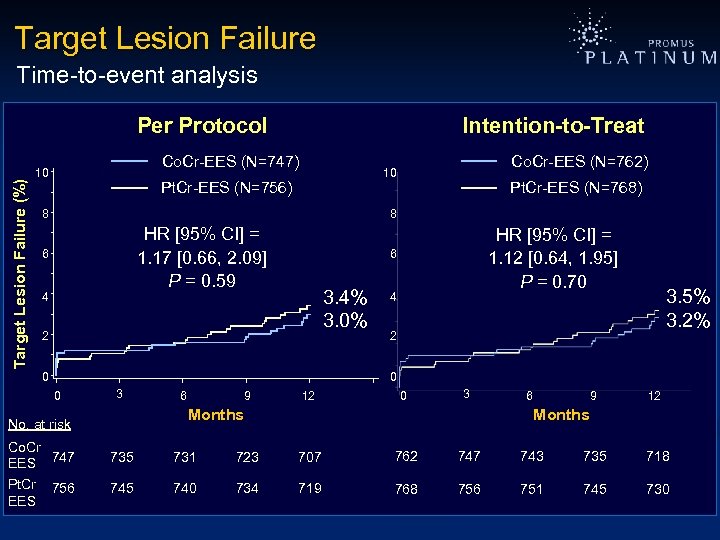 Target Lesion Failure Time-to-event analysis Target Lesion Failure (%) Per Protocol Intention-to-Treat Co. Cr-EES (N=747) 10 Co. Cr-EES (N=762) 10 Pt. Cr-EES (N=756) 8 Pt. Cr-EES (N=768) 8 HR [95% CI] = 1. 17 [0. 66, 2. 09] P = 0. 59 6 4 HR [95% CI] = 1. 12 [0. 64, 1. 95] P = 0. 70 6 3. 4% 3. 0% 2 0 4 3. 5% 3. 2% 2 0 0 3 9 12 0 3 Months No. at risk Co. Cr EES 747 Pt. Cr 756 EES 6 6 9 12 Months 735 731 723 707 762 747 743 735 718 745 740 734 719 768 756 751 745 730
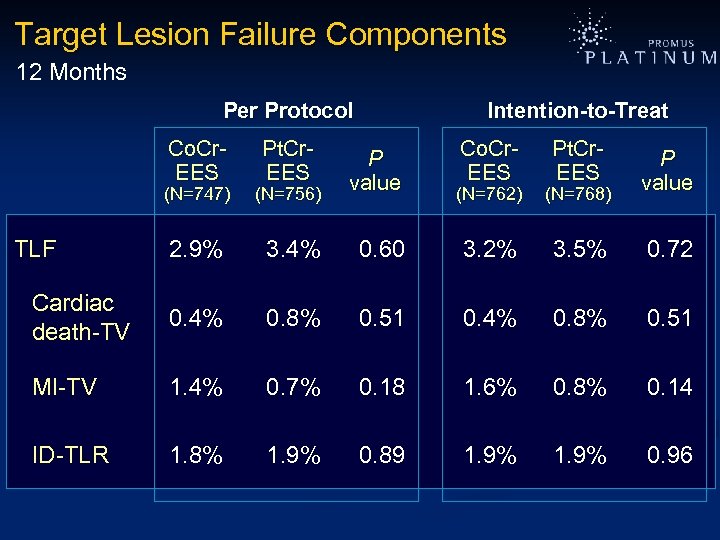 Target Lesion Failure Components 12 Months Per Protocol Co. Cr. EES (N=747) TLF Pt. Cr. EES (N=756) Intention-to-Treat P value Co. Cr. EES (N=762) Pt. Cr. EES (N=768) P value 2. 9% 3. 4% 0. 60 3. 2% 3. 5% 0. 72 Cardiac death-TV 0. 4% 0. 8% 0. 51 MI-TV 1. 4% 0. 7% 0. 18 1. 6% 0. 8% 0. 14 ID-TLR 1. 8% 1. 9% 0. 89 1. 9% 0. 96
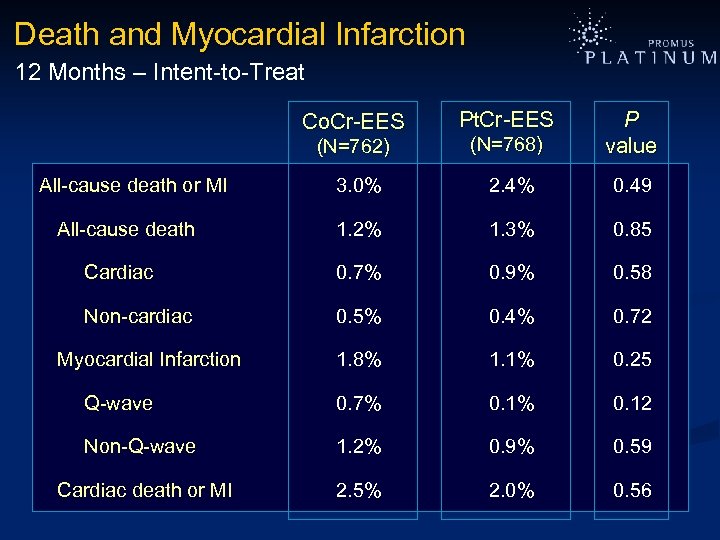 Death and Myocardial Infarction 12 Months – Intent-to-Treat Pt. Cr-EES (N=762) (N=768) P value 3. 0% 2. 4% 0. 49 1. 2% 1. 3% 0. 85 Cardiac 0. 7% 0. 9% 0. 58 Non-cardiac 0. 5% 0. 4% 0. 72 1. 8% 1. 1% 0. 25 Q-wave 0. 7% 0. 12 Non-Q-wave 1. 2% 0. 9% 0. 59 Cardiac death or MI 2. 5% 2. 0% 0. 56 Co. Cr-EES All-cause death or MI All-cause death Myocardial Infarction
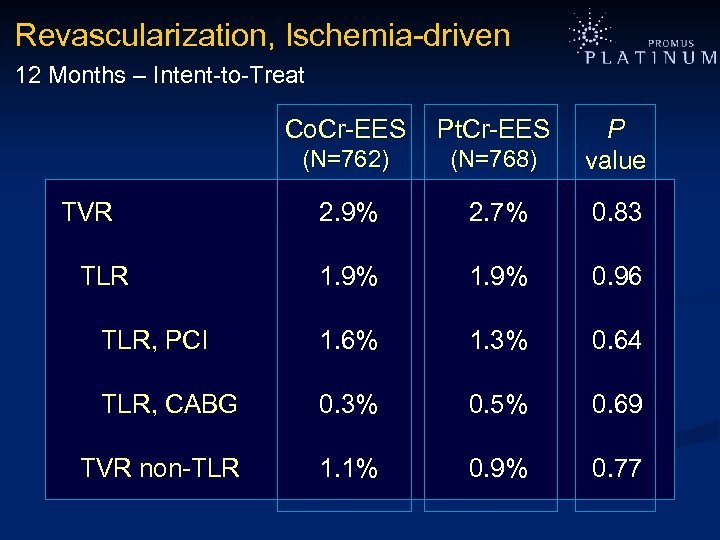 Revascularization, Ischemia-driven 12 Months – Intent-to-Treat Co. Cr-EES Pt. Cr-EES (N=762) (N=768) P value 2. 9% 2. 7% 0. 83 1. 9% 0. 96 TLR, PCI 1. 6% 1. 3% 0. 64 TLR, CABG 0. 3% 0. 5% 0. 69 TVR non-TLR 1. 1% 0. 9% 0. 77 TVR TLR
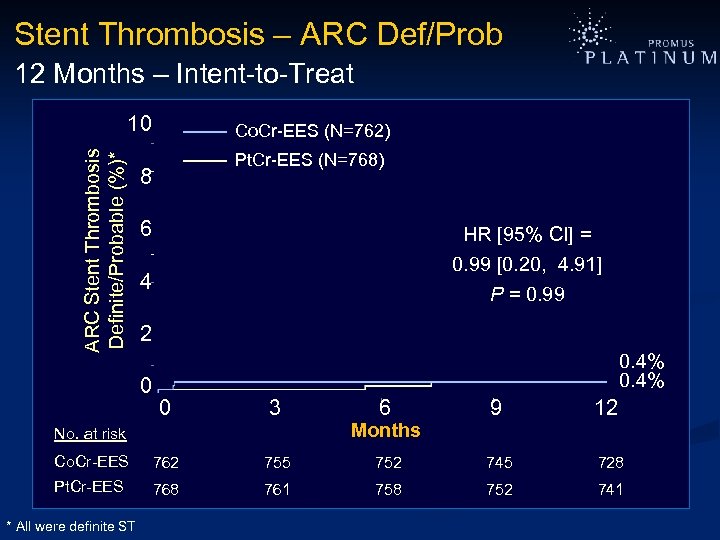 Stent Thrombosis – ARC Def/Prob 12 Months – Intent-to-Treat ARC Stent Thrombosis Definite/Probable (%)* 10 Co. Cr-EES (N=762) Pt. Cr-EES (N=768) 8 6 HR [95% CI] = 0. 99 [0. 20, 4. 91] 4 P = 0. 99 2 0 0. 4% 0 3 6 9 12 Co. Cr-EES 762 755 752 745 728 Pt. Cr-EES 768 761 758 752 741 No. at risk * All were definite ST Months
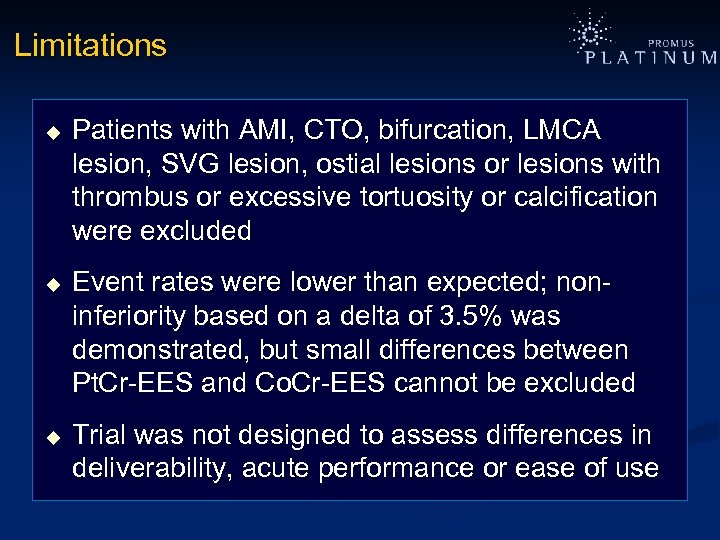 Limitations u u u Patients with AMI, CTO, bifurcation, LMCA lesion, SVG lesion, ostial lesions or lesions with thrombus or excessive tortuosity or calcification were excluded Event rates were lower than expected; noninferiority based on a delta of 3. 5% was demonstrated, but small differences between Pt. Cr-EES and Co. Cr-EES cannot be excluded Trial was not designed to assess differences in deliverability, acute performance or ease of use
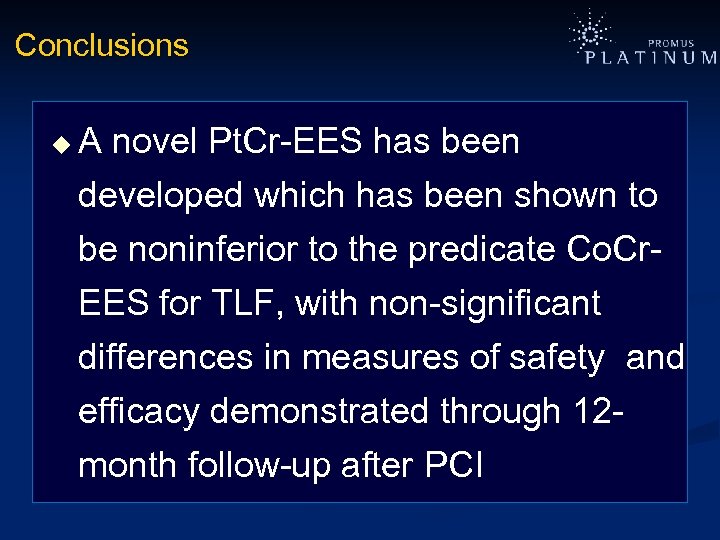 Conclusions u A novel Pt. Cr-EES has been developed which has been shown to be noninferior to the predicate Co. Cr. EES for TLF, with non-significant differences in measures of safety and efficacy demonstrated through 12 month follow-up after PCI
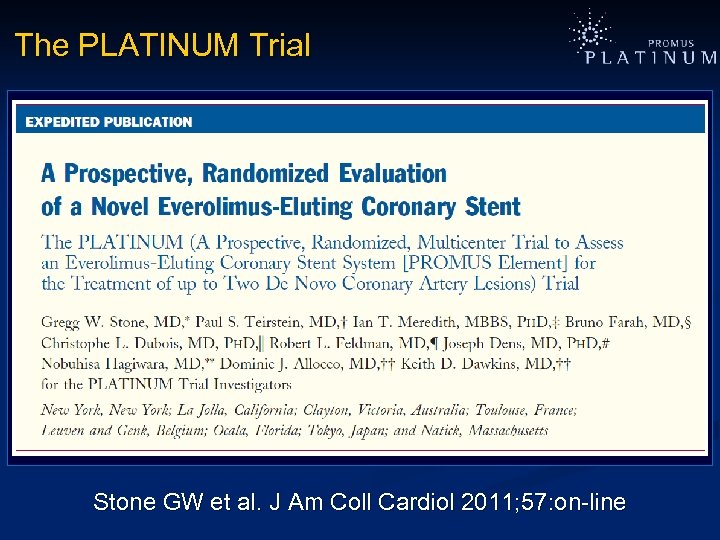 The PLATINUM Trial Stone GW et al. J Am Coll Cardiol 2011; 57: on-line