


 Скачать презентацию A Primer on Cal STRS Plans for Adjunct
00e8a2762b91874b760fa534b3d11ace.ppt
- Количество слайдов: 25
 A Primer on Cal. STRS Plans for Adjunct Faculty By Phyllis Eckler Spring 2010
 What Are the Choices? California State Teachers’ Retirement Defined Benefit Plan (Cal. STRS DB) California State Teachers’ Retirement Cash Balance Plan (Cal. STRS CB) – only available if it is has been bargained
 Cal. STRS Defined Benefit (DB) Uses a formula based on years of service, age and average equivalent full-time earnings to derive the monthly benefit amount. Monthly retirement payments (or benefits) are lifelong and can include other family members. Employee contributes 8% of salary while the district contributes 8. 25%, tax deferred Vesting requires 5 years of service credit, each “year” should be set (in contract) as a number of hours. (approximately 5 -10 years for Pters to vest) Go to www. calstrs. com to calculate your virtual benefit
 Cal. STRS Defined Benefit Supplement (DBS) A supplement to the Cal. STRS DB plan. Similar to a 401 K or Cal. STRS Cash Balance Plan If one earns more than one year’s service credit (by teaching over 100% of FT load) , employee contributes 8% while the district contributes 8%, tax deferred Immediate vesting Benefits are paid out in a lump sum or can be annuitized if over $3, 500 in account (go to www. calstrs. com to calculate your virtual benefit by using the DBS calculator)
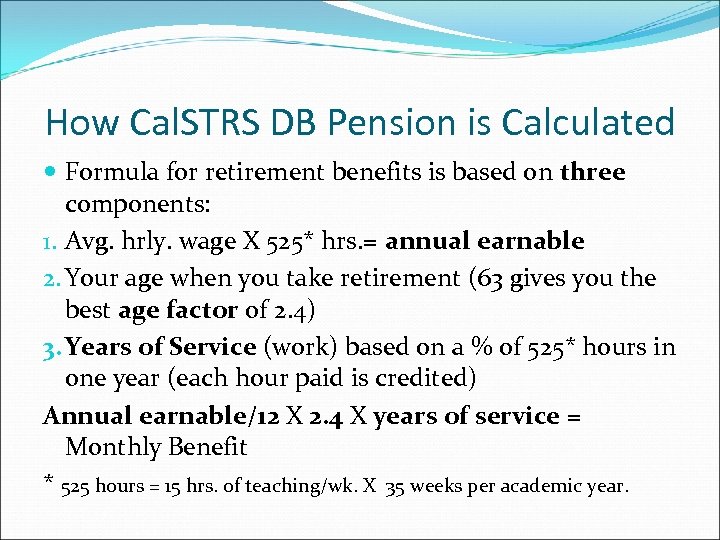 How Cal. STRS DB Pension is Calculated Formula for retirement benefits is based on three components: 1. Avg. hrly. wage X 525* hrs. = annual earnable 2. Your age when you take retirement (63 gives you the best age factor of 2. 4) 3. Years of Service (work) based on a % of 525* hours in one year (each hour paid is credited) Annual earnable/12 X 2. 4 X years of service = Monthly Benefit * 525 hours = 15 hrs. of teaching/wk. X 35 weeks per academic year.
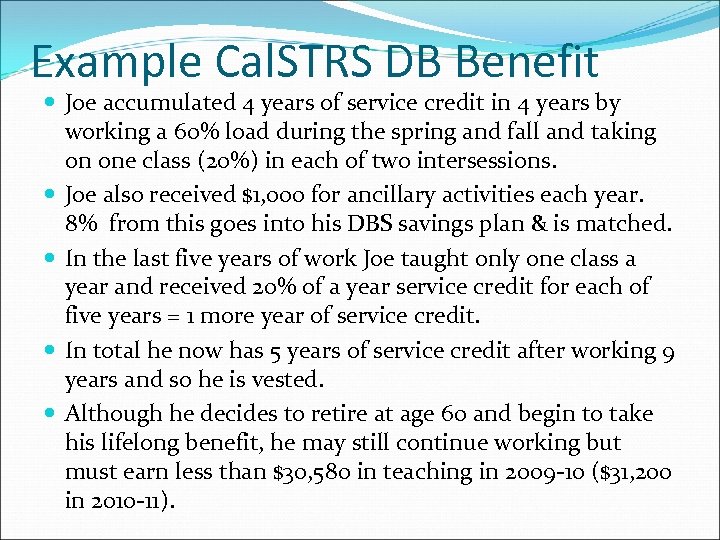 Example Cal. STRS DB Benefit Joe accumulated 4 years of service credit in 4 years by working a 60% load during the spring and fall and taking on one class (20%) in each of two intersessions. Joe also received $1, 000 for ancillary activities each year. 8% from this goes into his DBS savings plan & is matched. In the last five years of work Joe taught only one class a year and received 20% of a year service credit for each of five years = 1 more year of service credit. In total he now has 5 years of service credit after working 9 years and so he is vested. Although he decides to retire at age 60 and begin to take his lifelong benefit, he may still continue working but must earn less than $30, 580 in teaching in 2009 -10 ($31, 200 in 2010 -11).
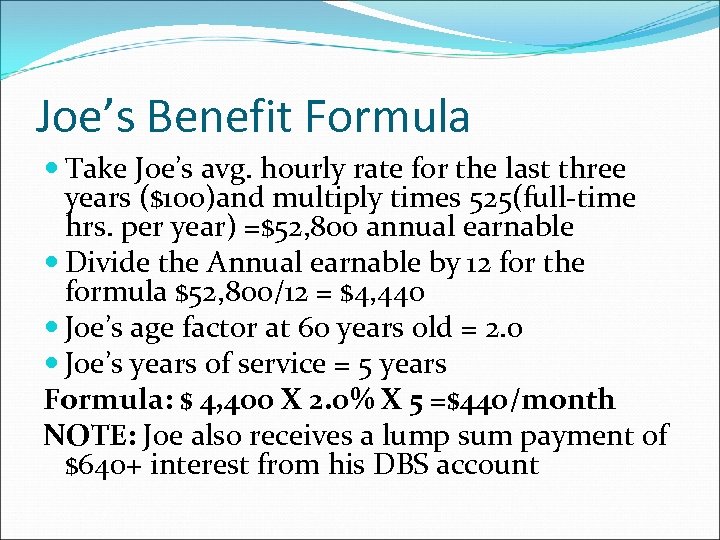 Joe’s Benefit Formula Take Joe’s avg. hourly rate for the last three years ($100)and multiply times 525(full-time hrs. per year) =$52, 800 annual earnable Divide the Annual earnable by 12 for the formula $52, 800/12 = $4, 440 Joe’s age factor at 60 years old = 2. 0 Joe’s years of service = 5 years Formula: $ 4, 400 X 2. 0% X 5 =$440/month NOTE: Joe also receives a lump sum payment of $640+ interest from his DBS account
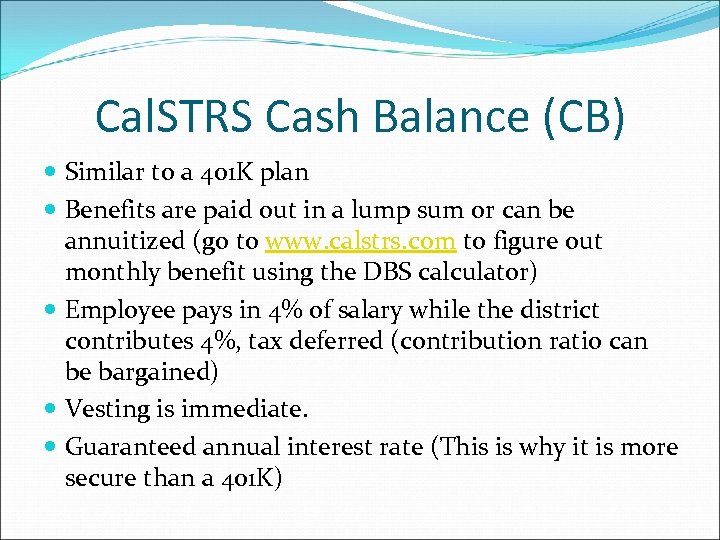 Cal. STRS Cash Balance (CB) Similar to a 401 K plan Benefits are paid out in a lump sum or can be annuitized (go to www. calstrs. com to figure out monthly benefit using the DBS calculator) Employee pays in 4% of salary while the district contributes 4%, tax deferred (contribution ratio can be bargained) Vesting is immediate. Guaranteed annual interest rate (This is why it is more secure than a 401 K)
 Example Cal. STRS CB Benefit Jane also works four years teaching 60% in spring and fall and 20% for each of two interesessions. She also slows down in her last few years and only teaches 20% of a load for five years. In total, she and the district have put away $21, 120 at the end of the nine years plus interest totaling $1, 056. Jane decides at age 60 to retire. Jane may take all of her $22, 176 out at one time or she has a choice of annuities.
 Jane’s Benefit Amount According to the chart Jane ends up receiving around $173/month from her Cash Balance Lifetime Annuity. She has to take at least one year off with no teaching before she teaches again or her CB annuity will stop.
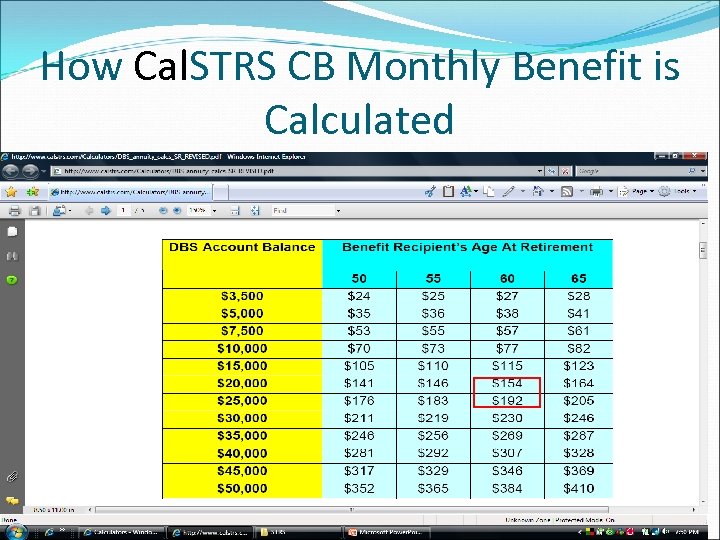 How Cal. STRS CB Monthly Benefit is Calculated
 Social Security Requires 40 “credits” (in 2010 each credit = $1, 120 earned) in order to vest Monthly retirement benefits are lifelong. There is a spousal benefit. Employment Taxes: 6. 2% from employee, 6. 2% from employer, and not tax deferred
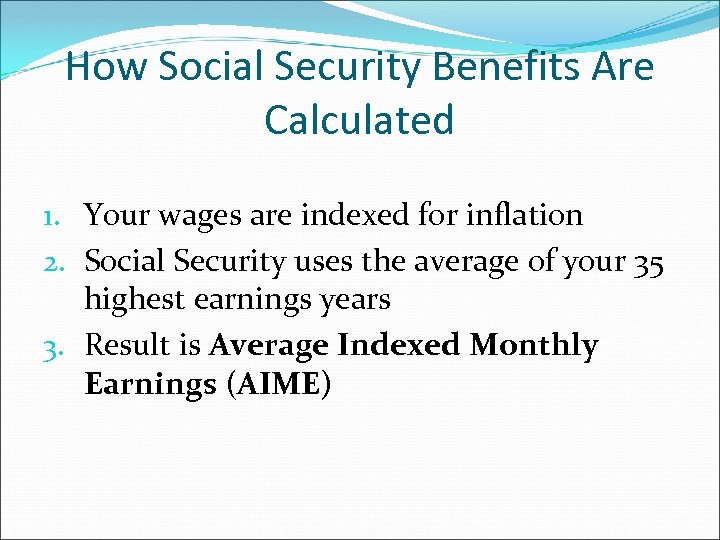 How Social Security Benefits Are Calculated 1. Your wages are indexed for inflation 2. Social Security uses the average of your 35 highest earnings years 3. Result is Average Indexed Monthly Earnings (AIME)
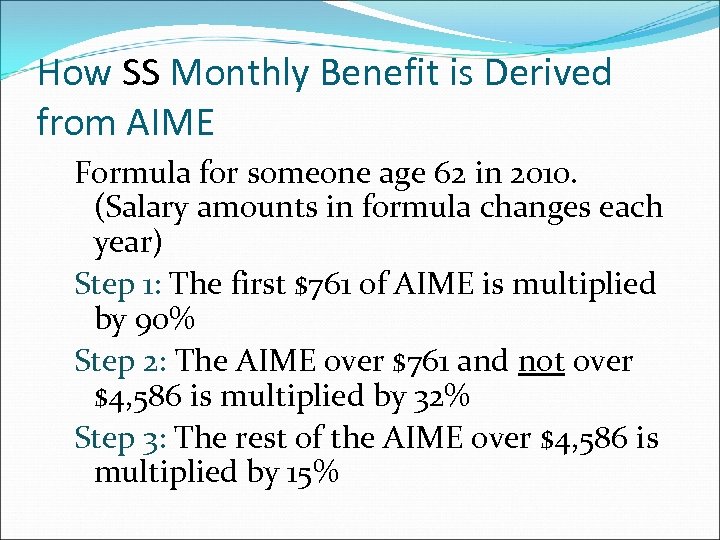 How SS Monthly Benefit is Derived from AIME Formula for someone age 62 in 2010. (Salary amounts in formula changes each year) Step 1: The first $761 of AIME is multiplied by 90% Step 2: The AIME over $761 and not over $4, 586 is multiplied by 32% Step 3: The rest of the AIME over $4, 586 is multiplied by 15%
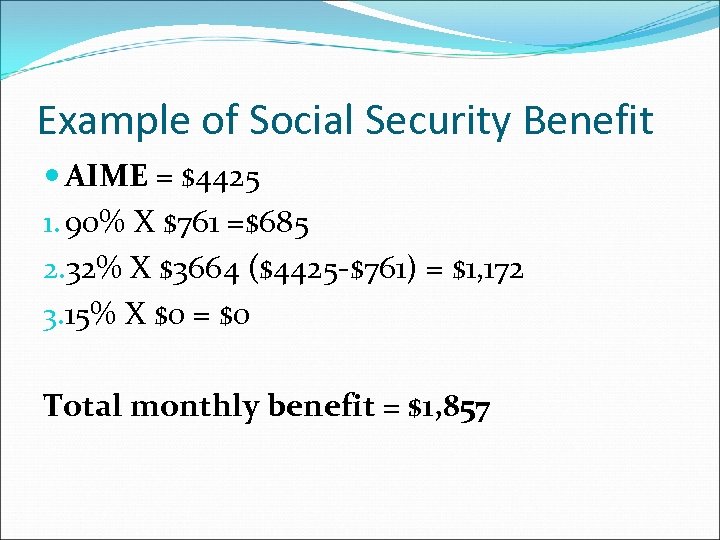 Example of Social Security Benefit AIME = $4425 1. 90% X $761 =$685 2. 32% X $3664 ($4425 -$761) = $1, 172 3. 15% X $0 = $0 Total monthly benefit = $1, 857
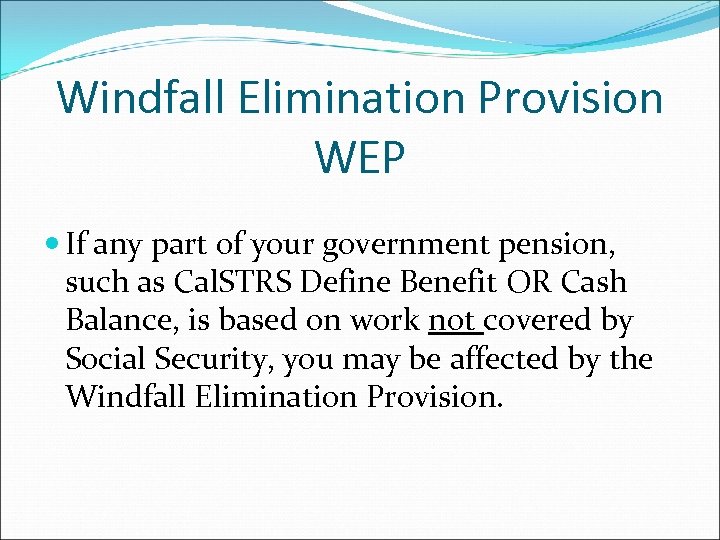 Windfall Elimination Provision WEP If any part of your government pension, such as Cal. STRS Define Benefit OR Cash Balance, is based on work not covered by Social Security, you may be affected by the Windfall Elimination Provision.
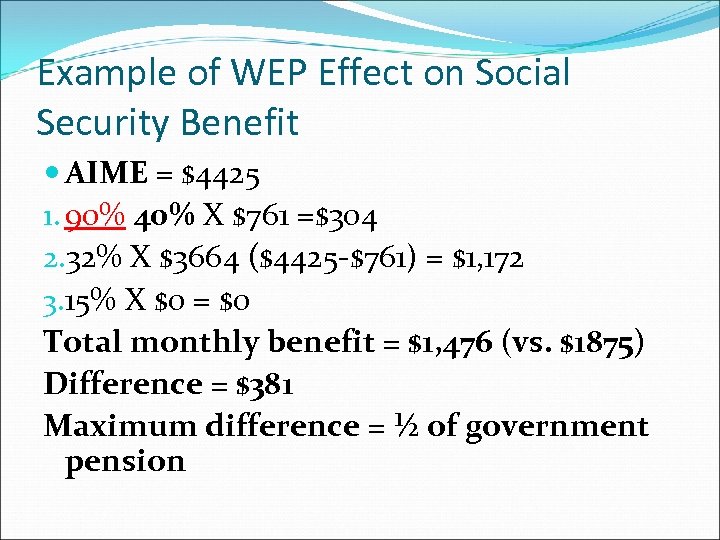 Example of WEP Effect on Social Security Benefit AIME = $4425 1. 90% 40% X $761 =$304 2. 32% X $3664 ($4425 -$761) = $1, 172 3. 15% X $0 = $0 Total monthly benefit = $1, 476 (vs. $1875) Difference = $381 Maximum difference = ½ of government pension
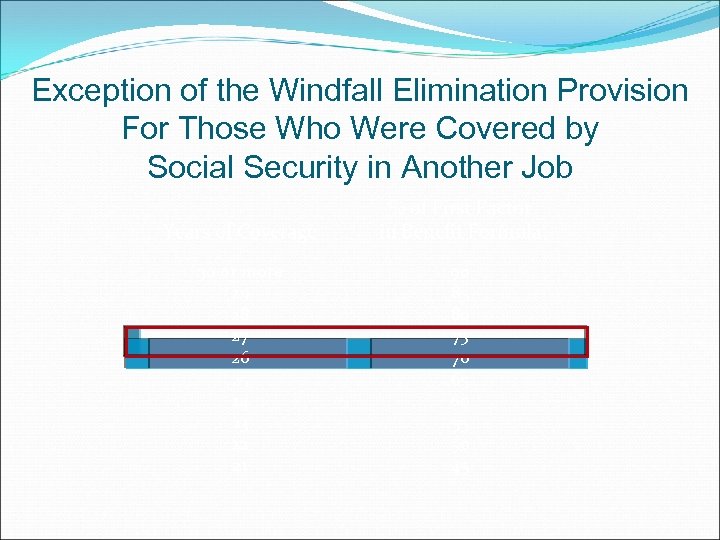 Exception of the Windfall Elimination Provision For Those Who Were Covered by Social Security in Another Job Years of Coverage % of First Factor in Benefit Formula 30 or more 29 28 27 26 25 24 23 22 21 90 85 80 75 70 65 60 55 50 45
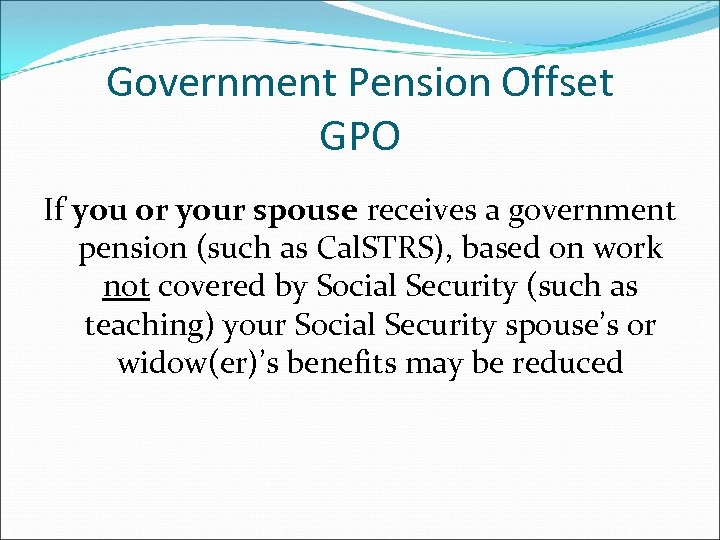 Government Pension Offset GPO If you or your spouse receives a government pension (such as Cal. STRS), based on work not covered by Social Security (such as teaching) your Social Security spouse’s or widow(er)’s benefits may be reduced
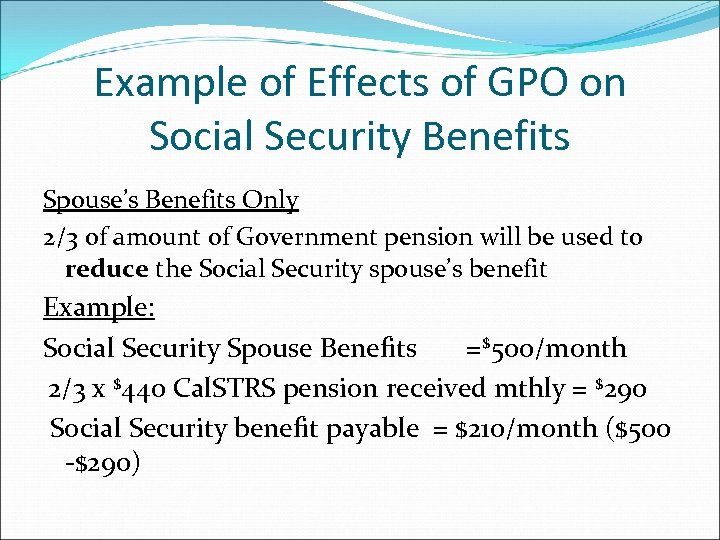 Example of Effects of GPO on Social Security Benefits Spouse’s Benefits Only 2/3 of amount of Government pension will be used to reduce the Social Security spouse’s benefit Example: Social Security Spouse Benefits =$500/month 2/3 x $440 Cal. STRS pension received mthly = $290 Social Security benefit payable = $210/month ($500 -$290)
 Other Issues to Consider If one is in Cal. STRS CB or DB program when one retires and also in the district’s health benefits program, one can require the school district to continue to offer health benefit group plans to the exemployee and his/her spouse on a “buy in” basis. The Cal. STRS DB program offers 85% purchasing power over the life of the pension (not guaranteed). Once in Cal. STRS CB you can move into Cal. STRS DB but you cannot switch from Defined Benefit (DB) into Cash Balance (CB), Social Security or PARS.
 Frequently Asked Questions Q: If I am really expecting to get most of my pension from Social Security how do I avoid the WEP or save my spouse from being subject to the GPO? A: You can either not receive your retirement from Cal. STRS at all or not sign up for Cal. STRS in the first place. Your spouse is affected by the GPO only if he/she receives part of your government pension (i. e. Cal. STRS). What you do, does not affect the GPO unless you option part of your Cal. STRS benefit to your spouse. If you take just your DBS funds, you could get affected by the WEP because it includes both employee and employer contributions. If you were eligible to receive a pension and take a refund, you could still be affected by the WEP.
 More F. A. Q. s Q: What if I expect to get a full-time job in the community colleges eventually, which retirement program should I go into? A: When you get a full-time teaching job you will be required to contribute to Cal. STRS DB. If you have already begun contributing to Cal. STRS Cash Balance your money will stay there until you retire or can be rolled over to buy years of Cal. STRS DB service credit but at a considerable cost
 More F. A. Q. s Q: What if I don’t vest by getting my 5 years of service credit in Cal. STRS DB? Do I get anything? A: Yes, you will receive your 8% contribution along with any interest on that money. However you will not receive the district’s 8. 25% contribution. You will also receive any DBS funds in your account.
 The End