



 A P. O. Is a C. E. © 1998, 2007 by Peter Berck
 What Is It Good? • Sum of surplus and profits allows for policies that make income less evenly distributed. • A dam that increases banana plantation owners incomes by more than it decreases native American’s incomes increases surplus profits. • We can do better.
 Pareto Optimal (Easy Definition) • An allocation is Pareto optimal if there is no way to make any agent better off without making some other agent worse off.
 The First Welfare Theorem • A Competitive Equilibrium is a Pareto Optimum • But first an example to introduce the machinery
 Smoker and Asthmatic • In this example there are two consumers, smoker and asthmatic. • There are two goods, clean air (CAS) and chocolate available in fixed supply. • The initial allocation of the goods makes a big difference for how clean the air is. • The initial allocation makes a big difference for how much each agent gets.
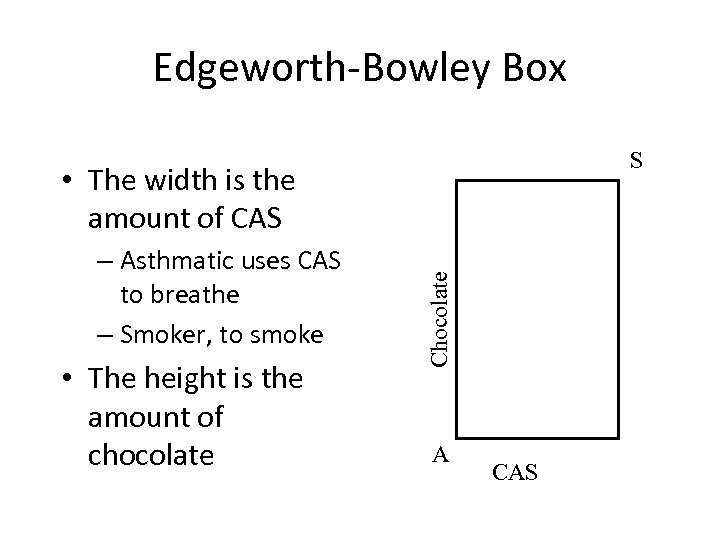 Edgeworth-Bowley Box S – Asthmatic uses CAS to breathe – Smoker, to smoke • The height is the amount of chocolate Chocolate • The width is the amount of CAS A CAS
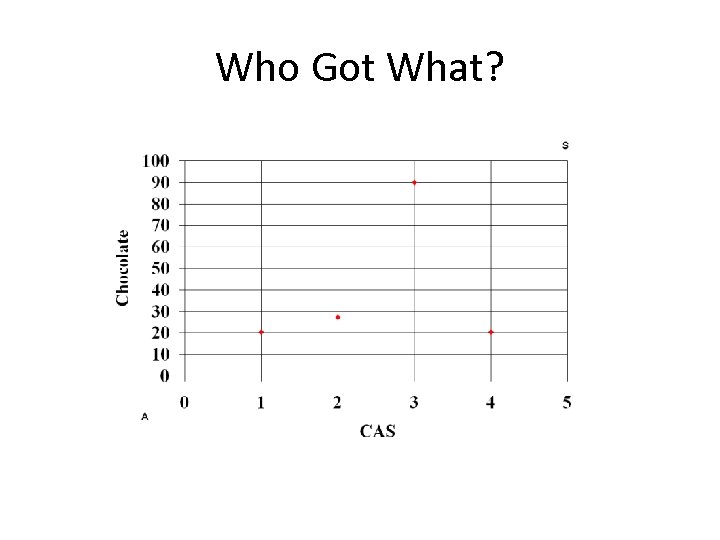 Who Got What?
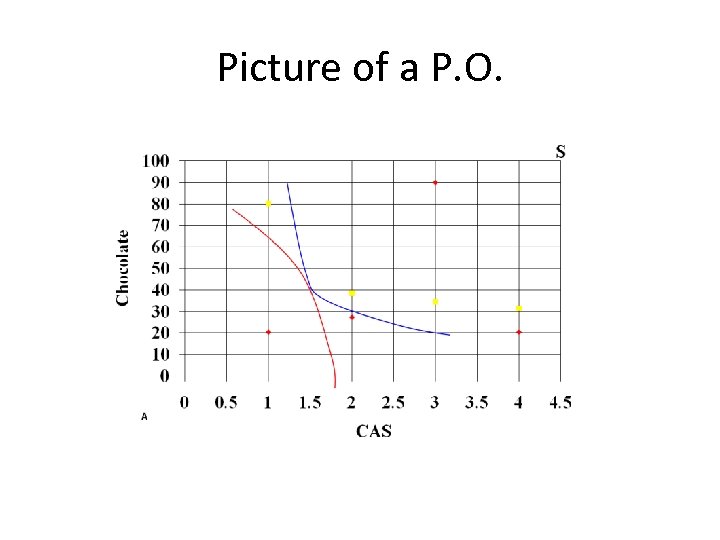 Picture of a P. O.
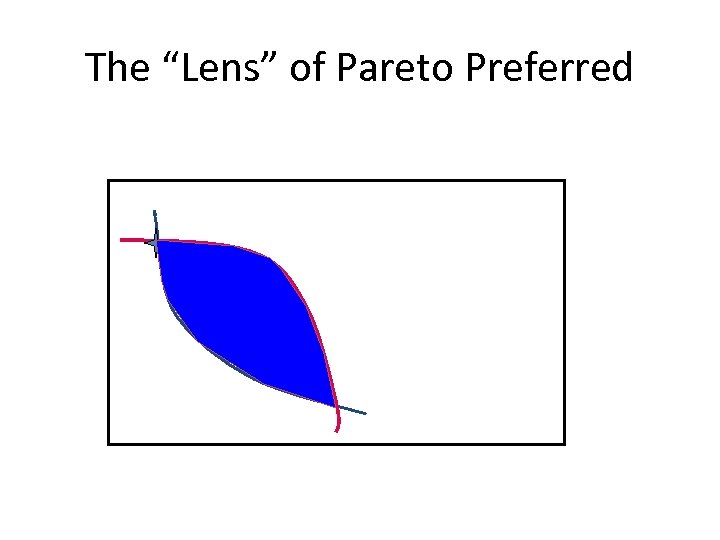 The “Lens” of Pareto Preferred
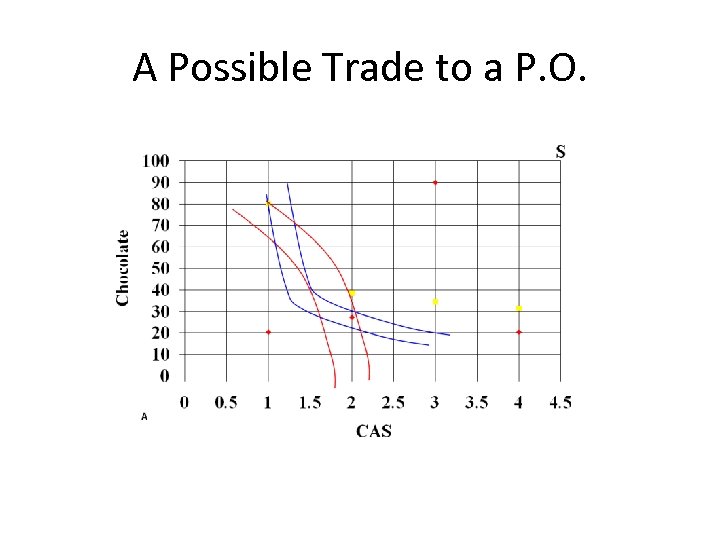 A Possible Trade to a P. O.
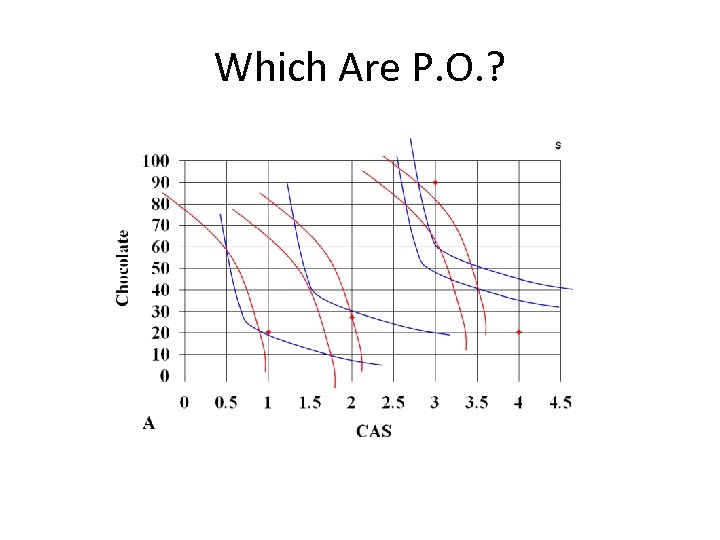 Which Are P. O. ?
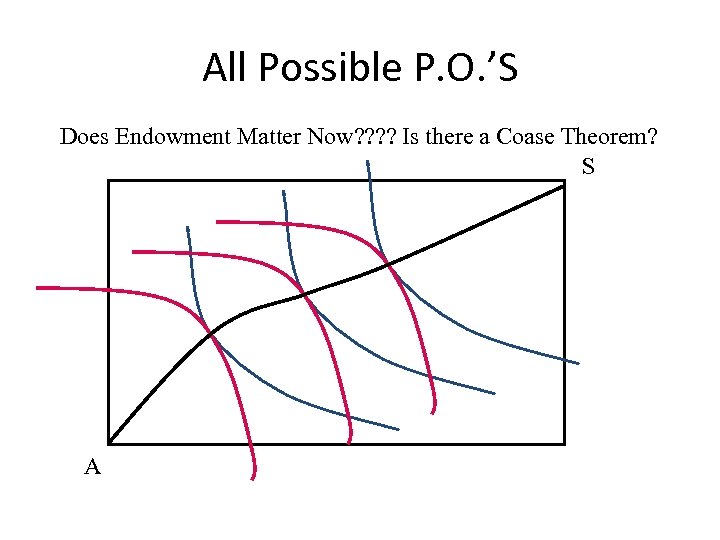 All Possible P. O. ’S Does Endowment Matter Now? ? Is there a Coase Theorem? S A
 Coase Theorem (Revised) • When changes in income don’t change the demand for the environmental good. • And the costs of transaction between agents is small. • And the property rights in clean air services are defined. • Then, trading in clean air will lead to a unique amount of clean air and pollution.
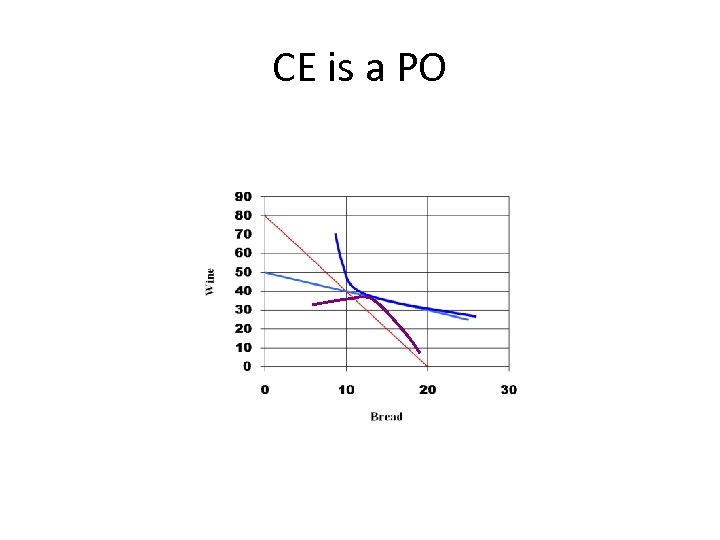
 The First Welfare Theorem • When all the goods are freely traded, a competitive equilibrium is a Pareto optimum. • There are many Pareto optima. – All of them can be achieved as competitive equilibrium starting at SOME initial allocation. • Agent’s have very different incomes in the different Pareto optima.
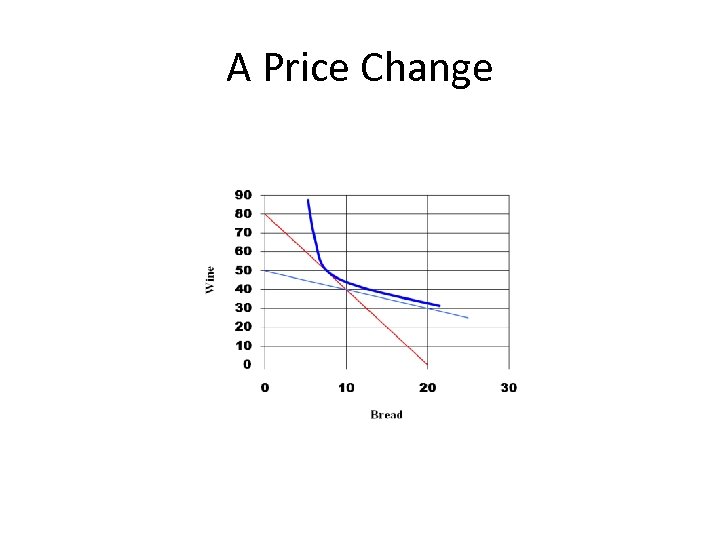
 Graphical Proof for 2 consumers • Preliminary: • Suppose consumer starts with (e 1, e 2) quantities of the two goods. • Then income is y = p 1 e 1 + p 2 e 2 • Budget constraint is • p 1 e 1 + p 2 e 2 = p 1 x 1 + p 2 x 2 • Budget constraint goes through point (e 1, e 2) and has slope –p 1/p 2 as usual.
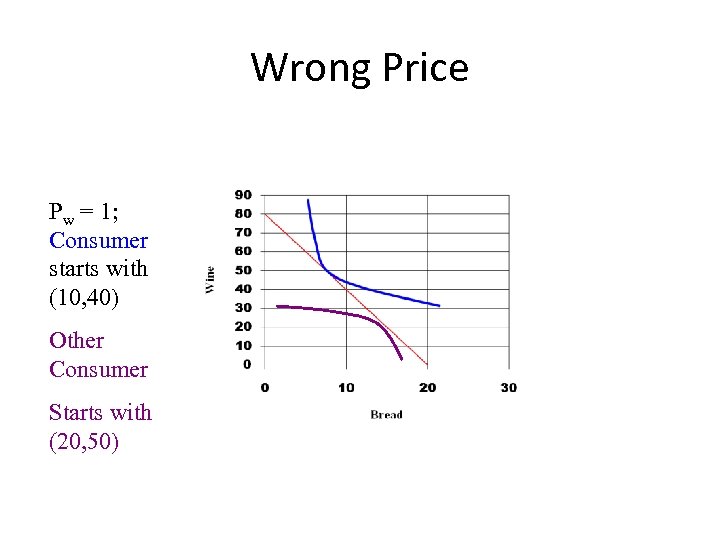 Wrong Price Pw = 1; Consumer starts with (10, 40) Other Consumer Starts with (20, 50)
 A Price Change
 CE is a PO
 First Welfare Theorem and Pollution • The theorem applies to goods that are traded. • Consumers’ demand for clean air isn’t effective because: – Costs to much to trade small amounts of CAS. – Benefits from buying it do not accrue only to the consumer who bought it. • Government is needed to assure clean air.
 Free Rider Problem • When I buy a candy bar, who benefits? • When I buy an SO 2 certificate and retire it, who benefits? – Do all the beneficiaries contribute to the cost of buying and retiring the certificate?
 Gloria’s comment: • An economy can be perfectly (Pareto) efficient and perfectly disgusting.