


 Скачать презентацию A novel method for analyzing grain facility heat
a3f15d024a9f505351f7aa93d88d104b.ppt
- Количество слайдов: 19
 A novel method for analyzing grain facility heat treatment data Hulya AKDOGAN Mark CASADA Alan DOWDY Bh. SUBRAMANYAM
 A novel method for analyzing grain facility heat treatment data ~ Introduction ~ § Management of Stored Product Insects (SPI) in grain processing facilities (chemical methods versus high temperatures) § Heat treatment - a viable alternative to chemicals § Target temperature 50 o. C, typically 50 o to 60 o. C § Temp. , duration of exposure, species, stages of development, RH determines insect survival. 1
 2 A novel method for analyzing grain facility heat treatment data ~ Materials/Methods (1/2) ~ § Pilot flour mill & cleaning house at KSU (6/99 & 8/99) § Two heating systems: gas & electric § Gas heating: heaters outside the building; hot air delivered inside the building through nylon ducts § Electric heating: heaters within the building; power & monitoring cables running outside the building § Fans used for uniform temperature distribution § Time/temperature/RH recorded every 10 min at floor level; 16 -22 data loggers per room.
 A novel method for analyzing grain facility heat treatment data ~ Materials/Methods (2/2) ~ § Effectiveness of heat treatments compared by surface area method § Surfer software used to calculate the surface areas § % floor surface area < 50 o. C as a function of time (duration of the heat treatment) and % floor surface area maximum floor temperature § Contour maps of maximum floor temperature 3
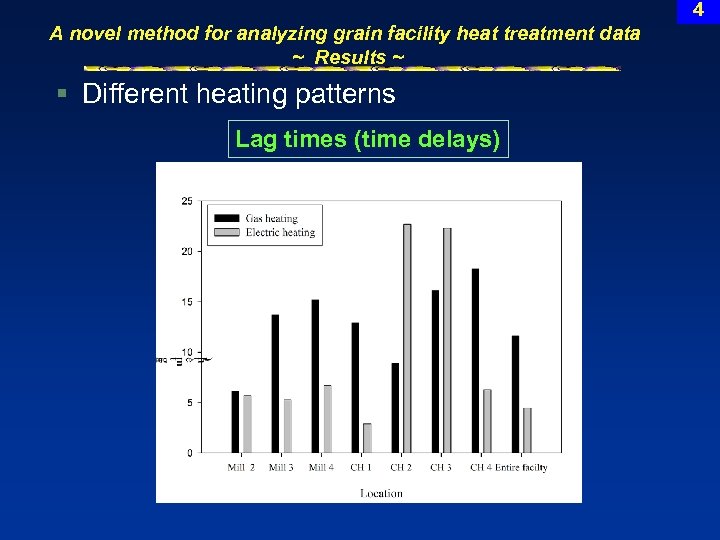 4 A novel method for analyzing grain facility heat treatment data ~ Results ~ § Different heating patterns Lag times (time delays)
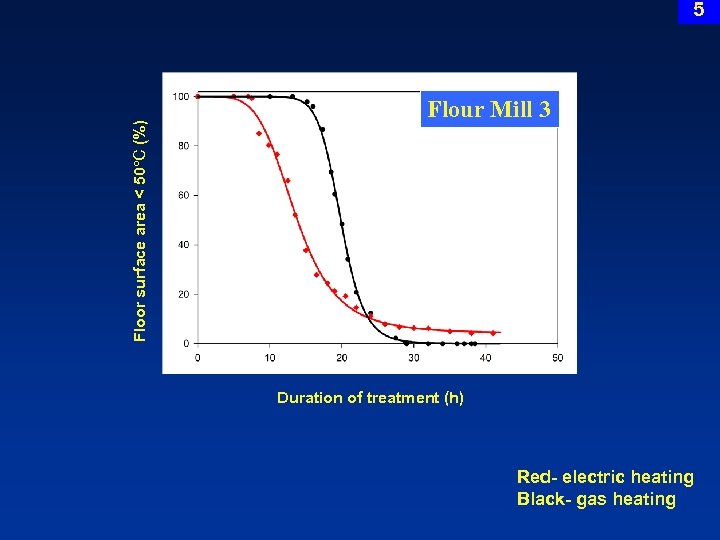 Floor surface area < 50 C (%) 5 Flour Mill 3 Duration of treatment (h) Red- electric heating Black- gas heating
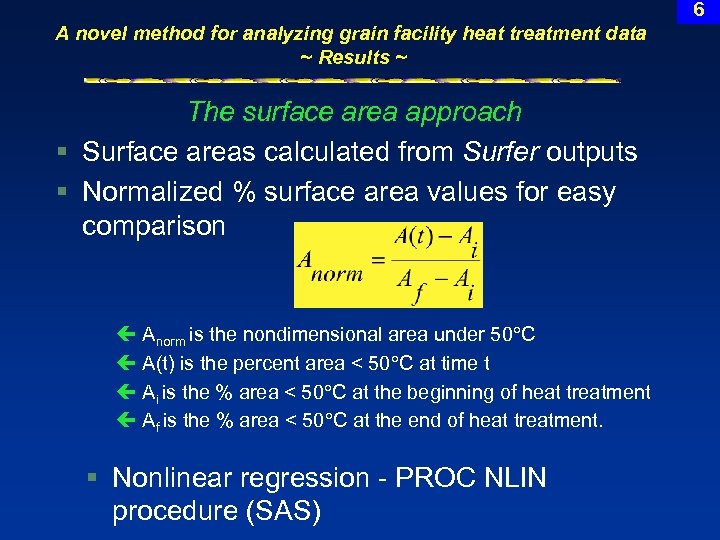 6 A novel method for analyzing grain facility heat treatment data ~ Results ~ The surface area approach § Surface areas calculated from Surfer outputs § Normalized % surface area values for easy comparison ç Anorm is the nondimensional area under 50 C ç A(t) is the percent area < 50 C at time t ç Ai is the % area < 50 C at the beginning of heat treatment ç Af is the % area < 50 C at the end of heat treatment. § Nonlinear regression - PROC NLIN procedure (SAS)
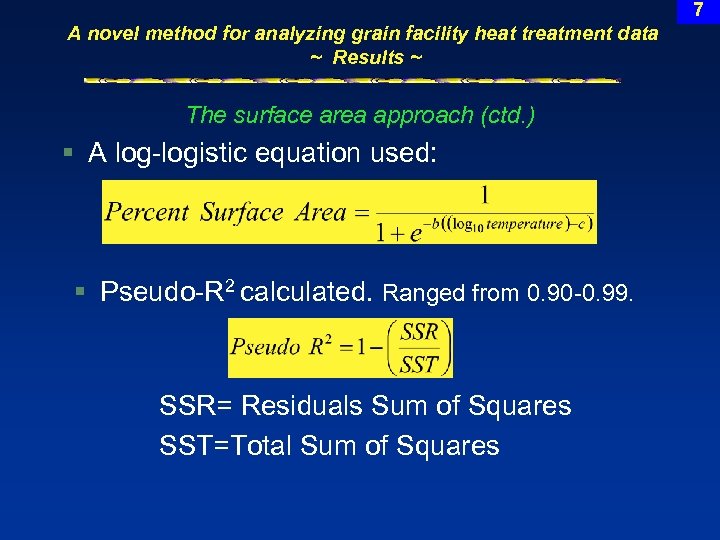 7 A novel method for analyzing grain facility heat treatment data ~ Results ~ The surface area approach (ctd. ) § A log-logistic equation used: § Pseudo-R 2 calculated. Ranged from 0. 90 -0. 99. SSR= Residuals Sum of Squares SST=Total Sum of Squares
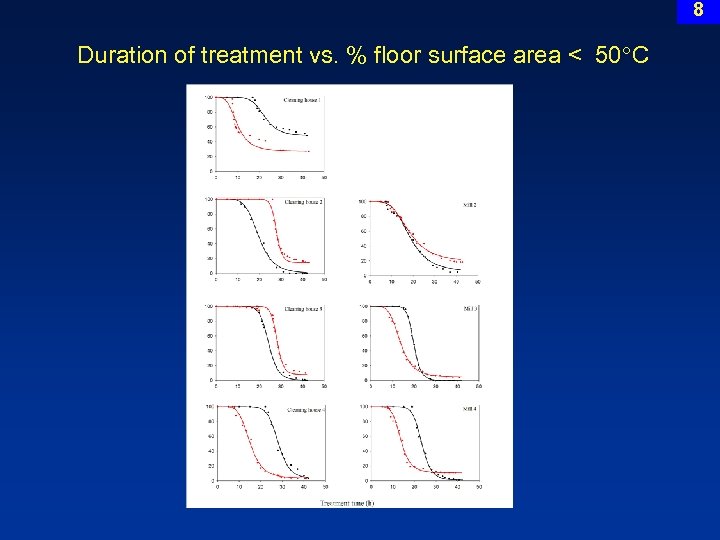 8 Duration of treatment vs. % floor surface area < 50 C
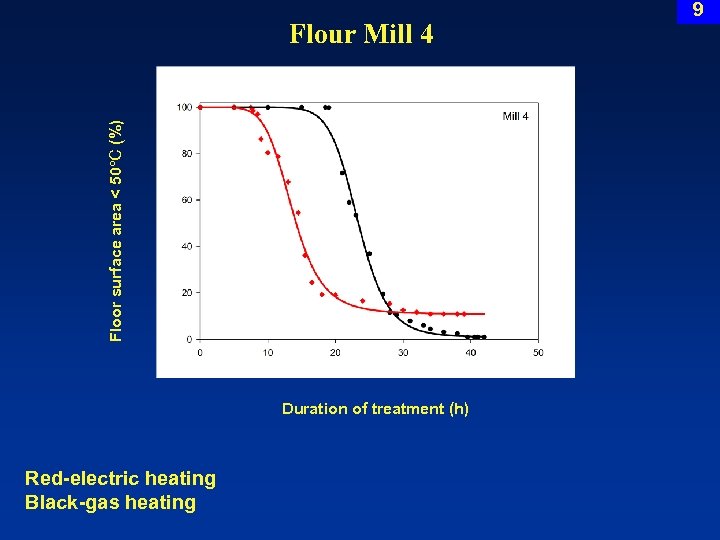 Floor surface area < 50 C (%) Flour Mill 4 Duration of treatment (h) Red-electric heating Black-gas heating 9
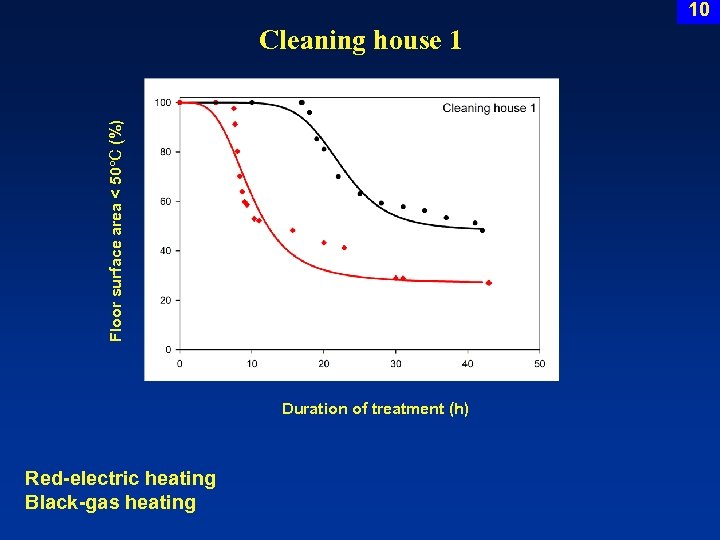 10 Floor surface area < 50 C (%) Cleaning house 1 Duration of treatment (h) Red-electric heating Black-gas heating
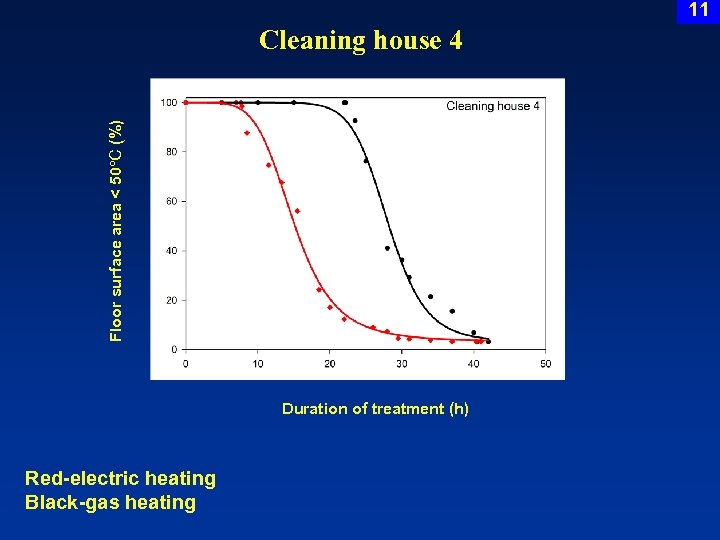 11 Floor surface area < 50 C (%) Cleaning house 4 Duration of treatment (h) Red-electric heating Black-gas heating
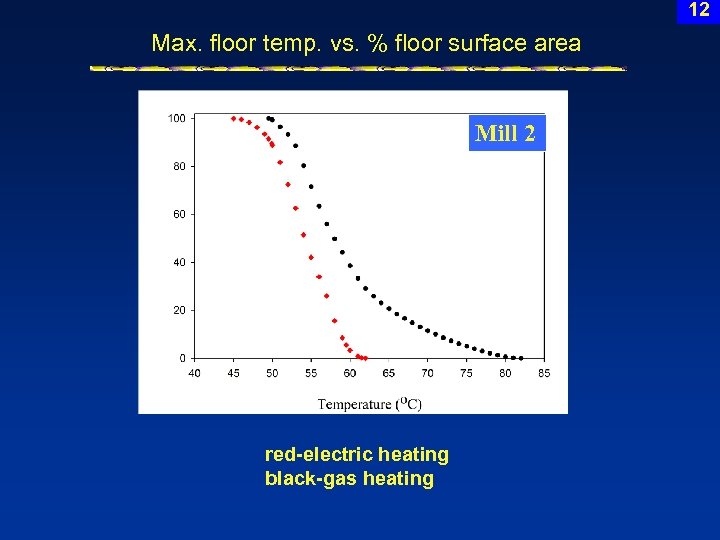 12 Max. floor temp. vs. % floor surface area Mill 2 red-electric heating black-gas heating
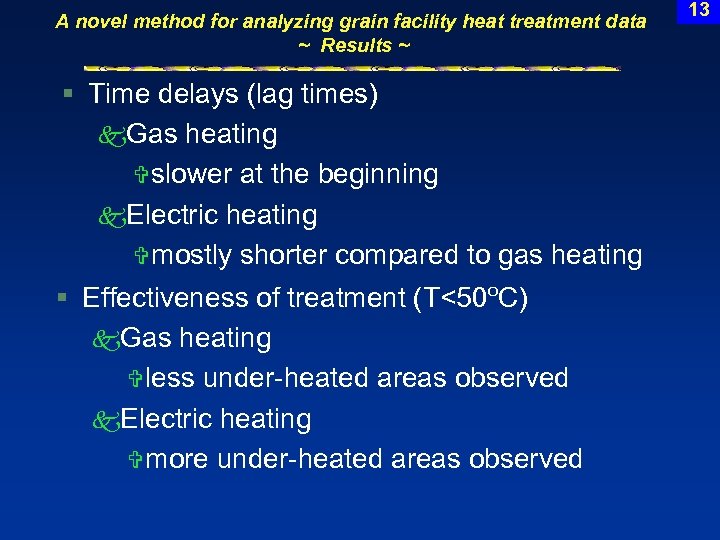 A novel method for analyzing grain facility heat treatment data ~ Results ~ § Time delays (lag times) k. Gas heating V slower at the beginning k. Electric heating V mostly shorter compared to gas heating § Effectiveness of treatment (T<50 o. C) k. Gas heating V less under-heated areas observed k. Electric heating V more under-heated areas observed 13
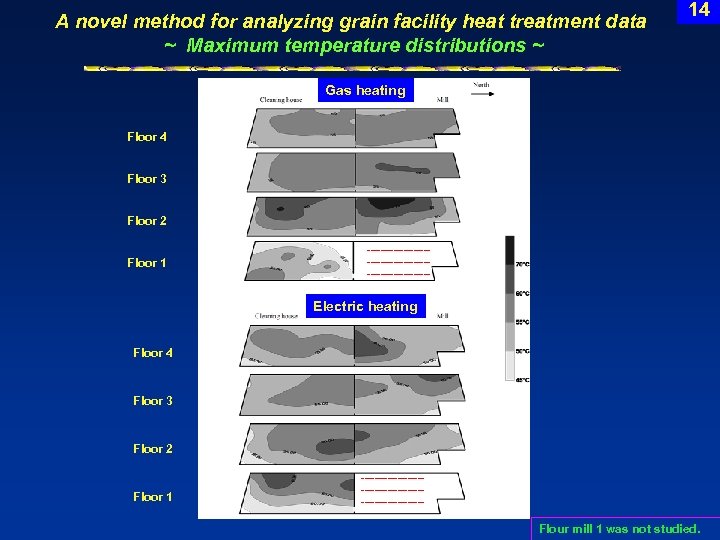 A novel method for analyzing grain facility heat treatment data ~ Maximum temperature distributions ~ 14 Gas heating Floor 4 Floor 3 Floor 2 Floor 1 ---------------------------- Electric heating Floor 4 Floor 3 Floor 2 Floor 1 ---------------------------- Flour mill 1 was not studied.
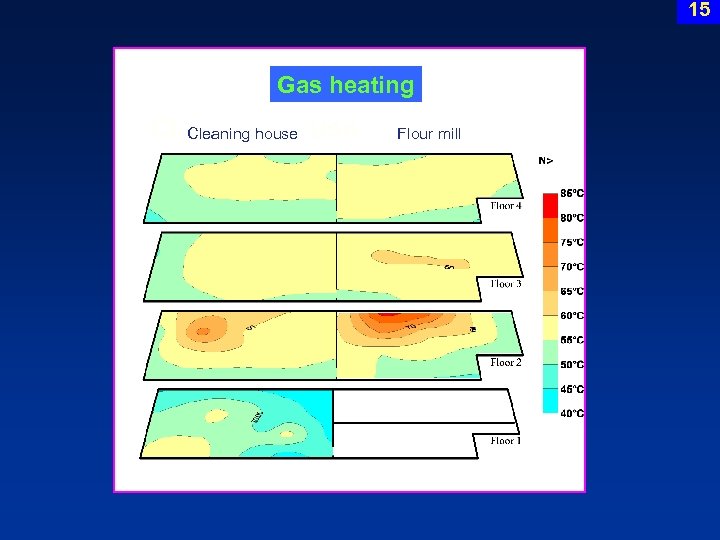 15 Gas heating Cleaning house Flour mill
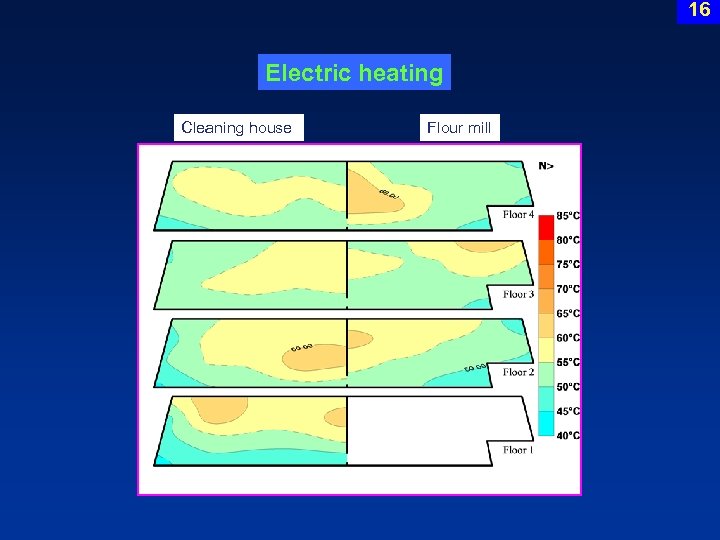 16 Electric heating Cleaning house Flour mill
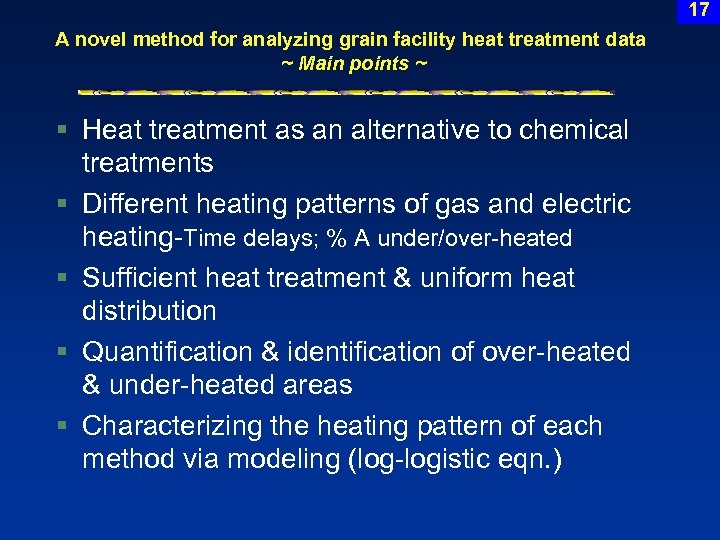 17 A novel method for analyzing grain facility heat treatment data ~ Main points ~ § Heat treatment as an alternative to chemical treatments § Different heating patterns of gas and electric heating-Time delays; % A under/over-heated § Sufficient heat treatment & uniform heat distribution § Quantification & identification of over-heated & under-heated areas § Characterizing the heating pattern of each method via modeling (log-logistic eqn. )
 Thank you The End