


 Скачать презентацию A new impetus for Europe s energy efficiency policy
7ca0a0d64e7ddc88ea9514d45f7af454.ppt
- Количество слайдов: 12
 A new impetus for Europe's energy efficiency policy Paul Hodson Head of Unit DG Energy, European Commission 09/10/2012
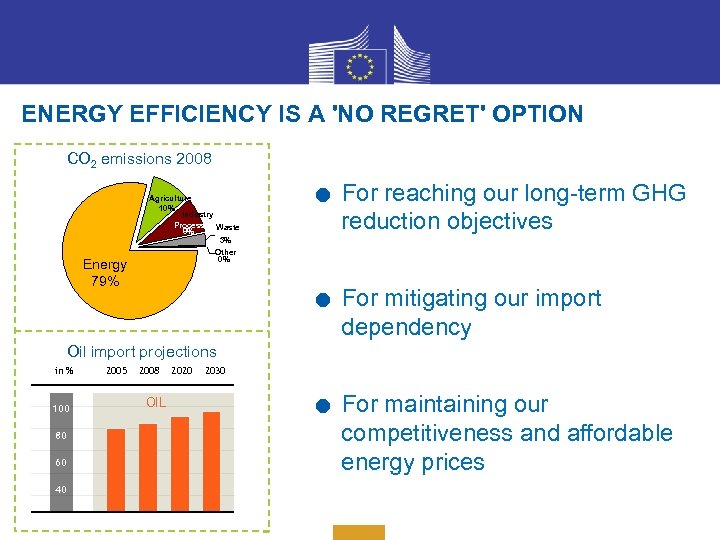 ENERGY EFFICIENCY IS A 'NO REGRET' OPTION CO 2 emissions 2008 Agriculture 10% Industry Processes Waste 8% 3% Other 0% Energy 79% 100 80 60 40 20 2005 For reaching our long-term GHG reduction objectives For mitigating our import dependency Oil import projections in % . . . 2008 OIL 2020 2030 For maintaining our competitiveness and affordable energy prices
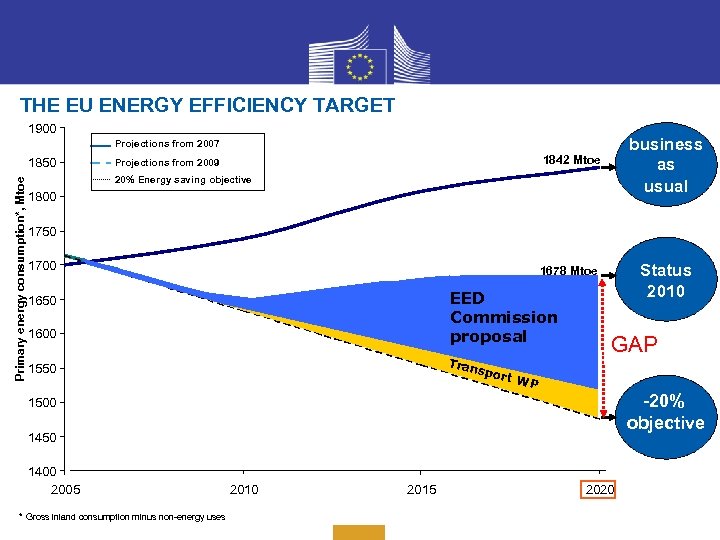 THE EU ENERGY EFFICIENCY TARGET 1900 business as usual Projections from 2007 Primary energy consumption*, Mtoe 1850 1842 Mtoe Projections from 2009 20% Energy saving objective 1800 1750 1700 Status 2010 1678 Mtoe 1600 EED Commission proposal 1550 Tran 1650 GAP spor 1500 t WP 1474 Mtoe 1450 1400 2005 * Gross inland consumption minus non-energy uses 2010 2015 2020 -20% objective
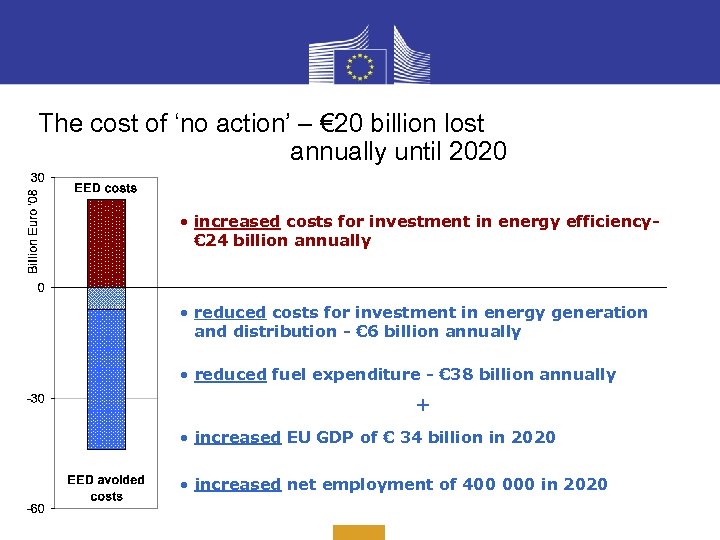 The cost of ‘no action’ – € 20 billion lost annually until 2020 • increased costs for investment in energy efficiency€ 24 billion annually • reduced costs for investment in energy generation and distribution - € 6 billion annually • reduced fuel expenditure - € 38 billion annually + • increased EU GDP of € 34 billion in 2020 • increased net employment of 400 000 in 2020
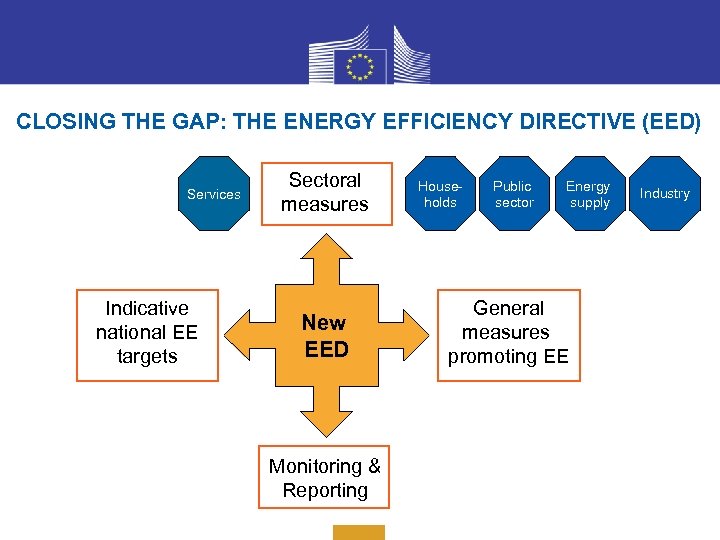 CLOSING THE GAP: THE ENERGY EFFICIENCY DIRECTIVE (EED) Services Indicative national EE targets Sectoral measures New EED Monitoring & Reporting Households Public sector Energy supply General measures promoting EE Industry
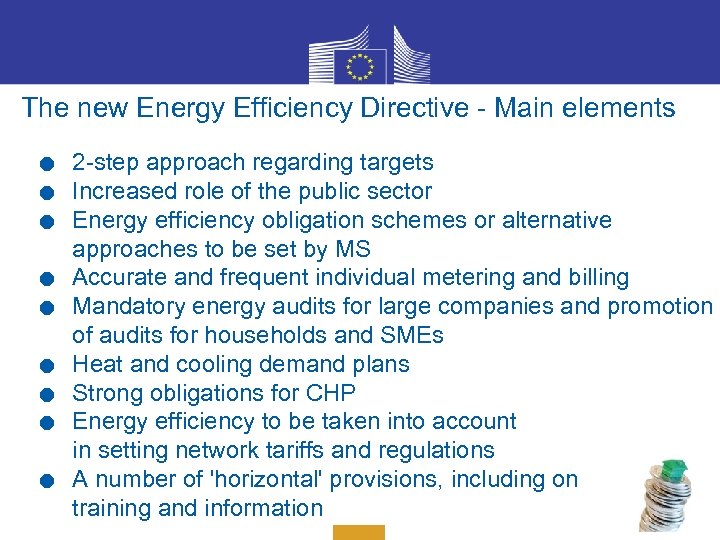 . . The new Energy Efficiency Directive - Main elements 2 -step approach regarding targets Increased role of the public sector Energy efficiency obligation schemes or alternative approaches to be set by MS Accurate and frequent individual metering and billing Mandatory energy audits for large companies and promotion of audits for households and SMEs Heat and cooling demand plans Strong obligations for CHP Energy efficiency to be taken into account in setting network tariffs and regulations A number of 'horizontal' provisions, including on training and information
 Article 16: Availability of qualification, accreditation and certification schemes . . Member States to consider whether the national level of technical competence, objectivity and reliability is sufficient. If not sufficient, Member States shall ensure that by 31/12/2014 certification/accreditation/qualification, incl. training programmes, become or are available. These schemes shall be made publicly available, provide transparency to consumers, be reliable and contribute to national EE objectives. Member States shall cooperate between themselves and with the Commission on scheme comparison and recognition.
 Article 17: . Information and training Member States shall: » » » . » Ensure that information on EE mechanisms/ financial and legal framework is transparent and disseminated to all relevant market actors; Encourage the provision of information to banks/fin. institutions on possibilities for financing EE; Establish appropriate conditions for market operators to provide info/advice to consumers; Promote suitable info/awareness raising/training initiatives to inform citizens. The Commission shall: » » Encourage European social partners in their discussion on EE, and review whether its support to platforms also fosters EE training and take measures if needed. Encourage the exchange and dissemination of information on MSs' best practices.
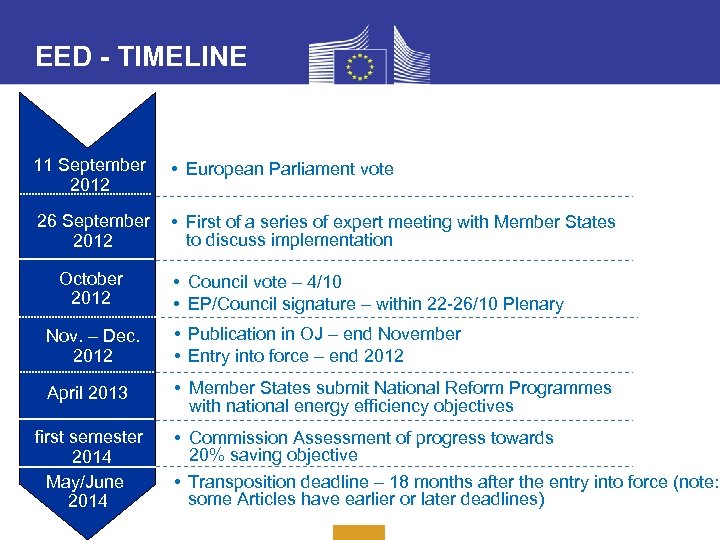 EED - TIMELINE 11 September 2012 • European Parliament vote 26 September 2012 • First of a series of expert meeting with Member States to discuss implementation October 2012 • Council vote – 4/10 • EP/Council signature – within 22 -26/10 Plenary Nov. – Dec. 2012 • Publication in OJ – end November • Entry into force – end 2012 April 2013 • Member States submit National Reform Programmes with national energy efficiency objectives first semester 2014 May/June 2014 • Commission Assessment of progress towards 20% saving objective • Transposition deadline – 18 months after the entry into force (note: some Articles have earlier or later deadlines)
 The need for skills in the building sector . . EPBD recast, EED and RES Directive all require a step change in the ability of the building sector to deliver the new generation of buildings Today, about 1. 1 million qualified workers are available, while it is estimated that 2. 5 million will be needed by 2015 (mainly for low or intermediate skilled workers) € 33. 7 billion by 2020: costs of unskilled buildings workforce In the response the Commission launched "Build UP Skills" under the Intelligent Energy Europe programme
 Build Up skills . . . "Pillar 1": Mapping exercise, funding has been made available under the IEE Call for proposals 2011 to set up national qualification platforms and roadmaps to 2020 National projects of all Member States approved! “Pillar 2”: Focus on implementing of the roadmaps
 Thank you!!!