 Скачать презентацию A multi-component clinicbased intervention to improve young men s
6797ae8b3ef289bb96df0c72aca4d847.ppt
- Количество слайдов: 22



A multi-component clinicbased intervention to improve young men’s sexual health Bruce Armstrong, DSW Molly Franks, MPH Pedro Alicea Debra Kalmuss, Ph. D Gabrielle Hecker, MPH David Bell, MD Center for Community Health & Education Heilbrunn Department of Population & Family Health Columbia University Mailman School of Public Health New York-Presbyterian Hospital
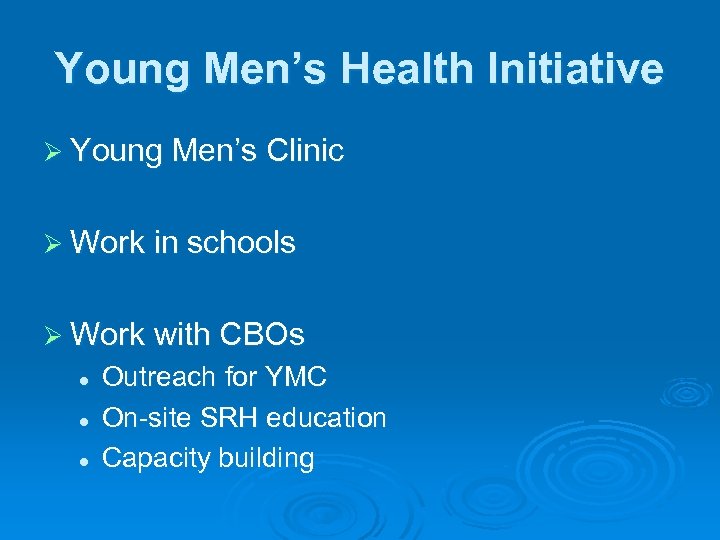
Young Men’s Health Initiative Ø Young Men’s Clinic Ø Work in schools Ø Work with CBOs l l l Outreach for YMC On-site SRH education Capacity building
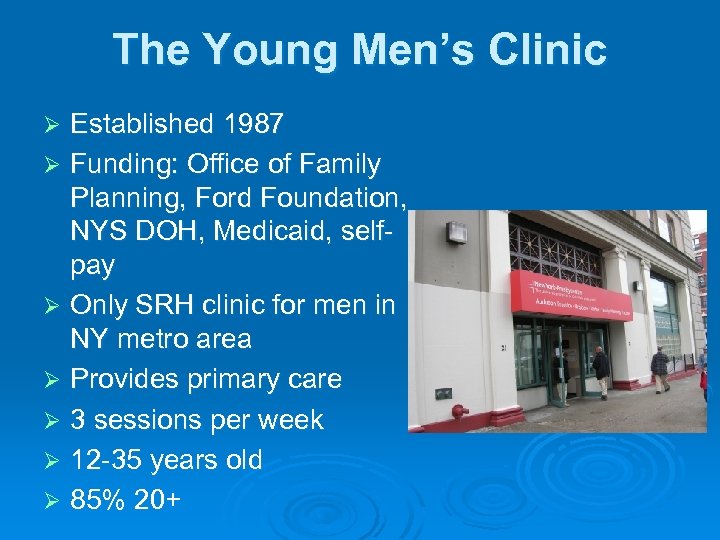
The Young Men’s Clinic Established 1987 Ø Funding: Office of Family Planning, Ford Foundation, NYS DOH, Medicaid, selfpay Ø Only SRH clinic for men in NY metro area Ø Provides primary care Ø 3 sessions per week Ø 12 -35 years old Ø 85% 20+ Ø
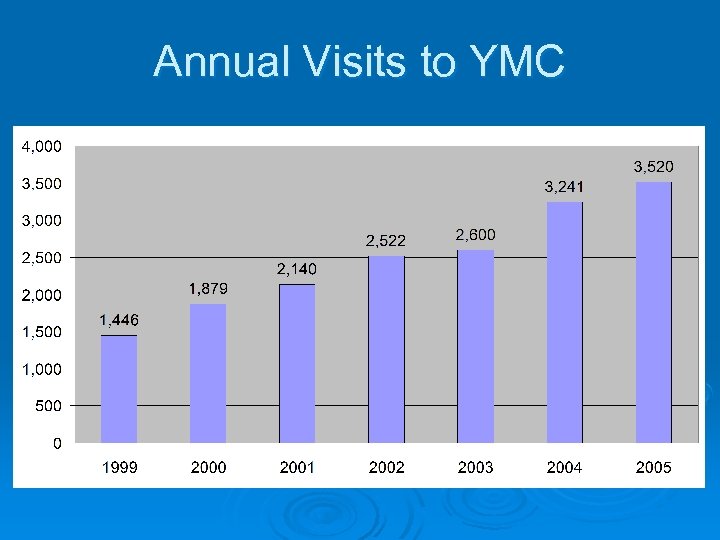
Annual Visits to YMC
YMC Services Ø Medical Ø Social Work ØHealth Education ØIndividual ØGroup Ø“leaderless” groups
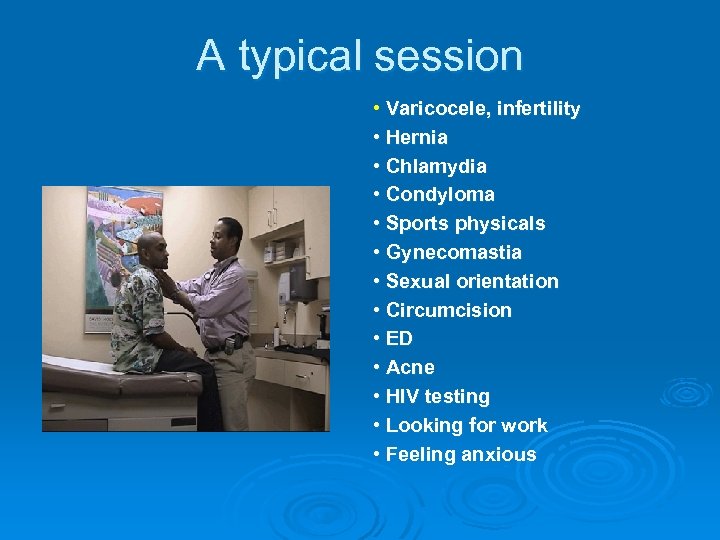
A typical session • Varicocele, infertility • Hernia • Chlamydia • Condyloma • Sports physicals • Gynecomastia • Sexual orientation • Circumcision • ED • Acne • HIV testing • Looking for work • Feeling anxious
Formative Work Ø Problem (evidence-based) l l l Young adult males have inadequate access to SRH care “Teachable moments” are missed when men access care “Down-time” in clinic waiting rooms can be used better Ø Project Development • • • Defining objectives Developing instruments (e. g. “slide”, “wifey”) Developing intervention (length, focus, teaching aides)
Study Outcomes Ø SRH knowledge Ø SRH attitudes Ø SRH behaviors
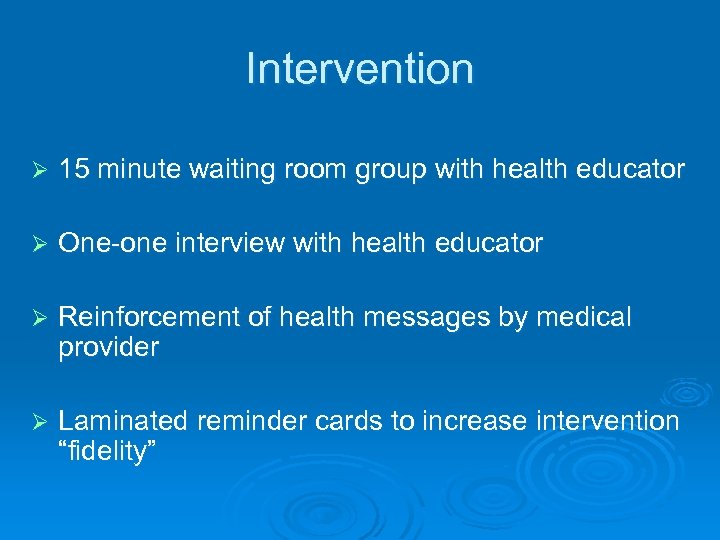
Intervention Ø 15 minute waiting room group with health educator Ø One-one interview with health educator Ø Reinforcement of health messages by medical provider Ø Laminated reminder cards to increase intervention “fidelity”
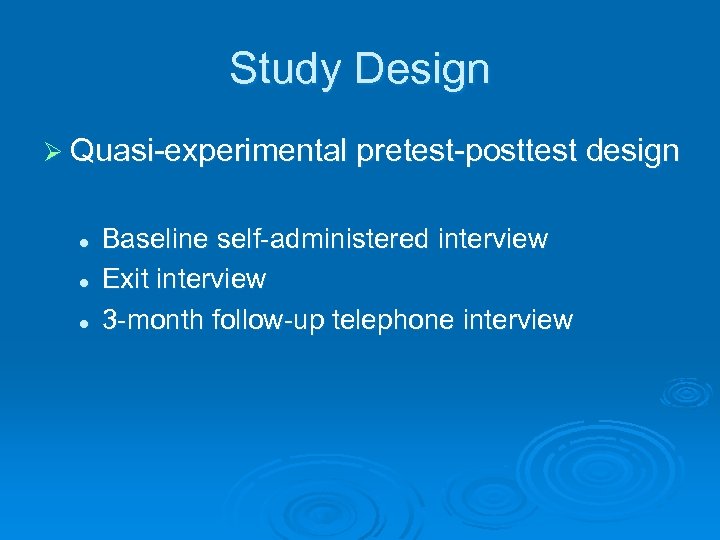
Study Design Ø Quasi-experimental pretest-posttest design l l l Baseline self-administered interview Exit interview 3 -month follow-up telephone interview
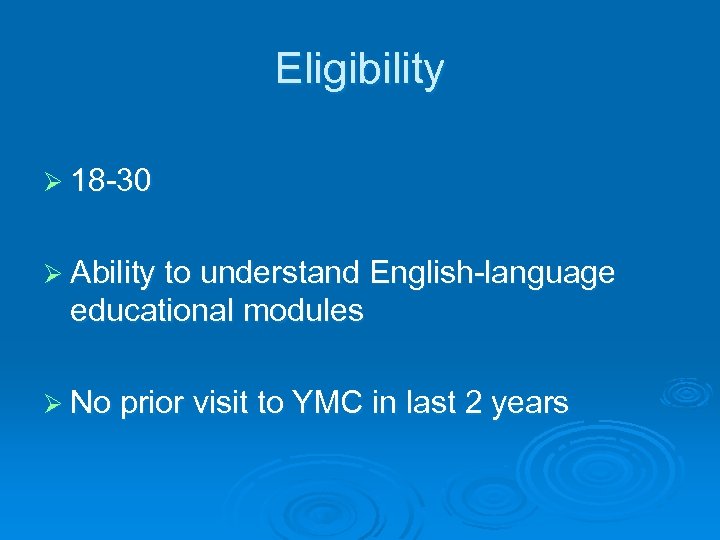
Eligibility Ø 18 -30 Ø Ability to understand English-language educational modules Ø No prior visit to YMC in last 2 years
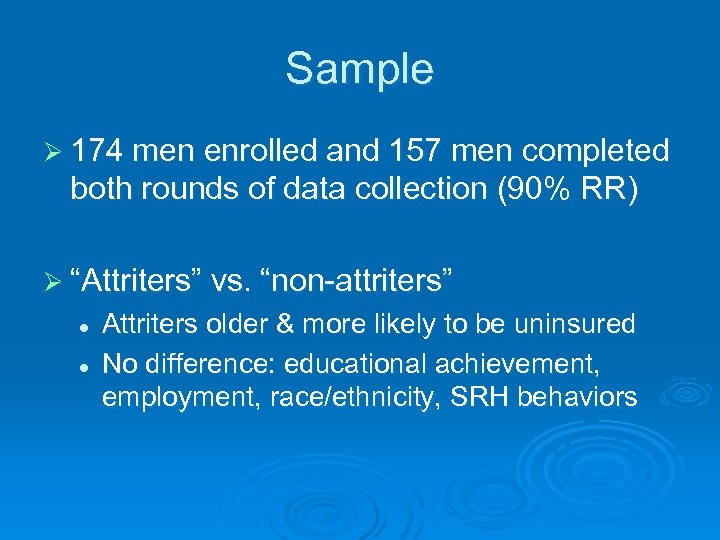
Sample Ø 174 men enrolled and 157 men completed both rounds of data collection (90% RR) Ø “Attriters” vs. “non-attriters” l l Attriters older & more likely to be uninsured No difference: educational achievement, employment, race/ethnicity, SRH behaviors
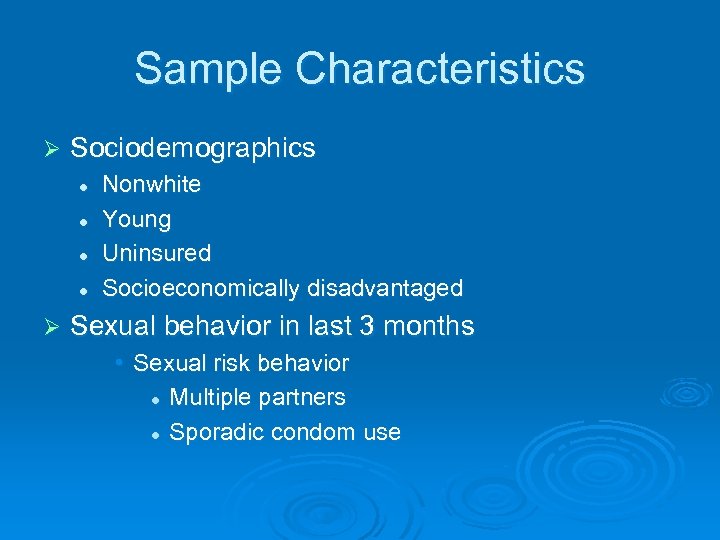
Sample Characteristics Ø Sociodemographics l l Ø Nonwhite Young Uninsured Socioeconomically disadvantaged Sexual behavior in last 3 months • Sexual risk behavior l Multiple partners l Sporadic condom use
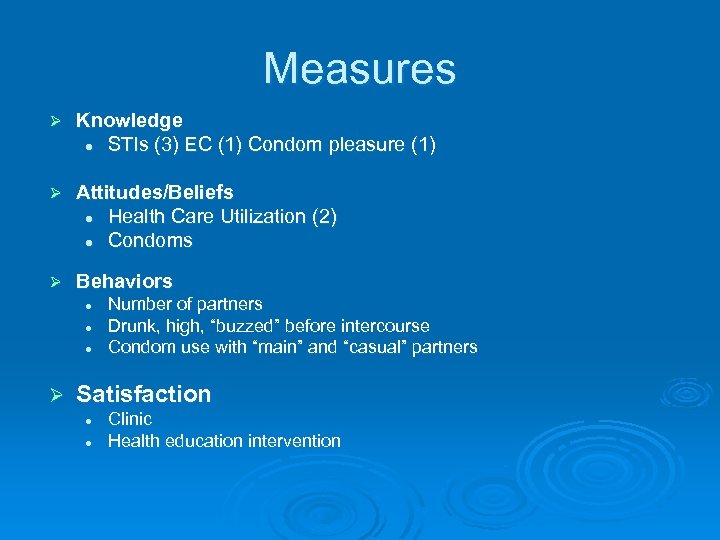
Measures Ø Knowledge l STIs (3) EC (1) Condom pleasure (1) Ø Attitudes/Beliefs l Health Care Utilization (2) l Condoms Ø Behaviors l l l Ø Number of partners Drunk, high, “buzzed” before intercourse Condom use with “main” and “casual” partners Satisfaction l l Clinic Health education intervention
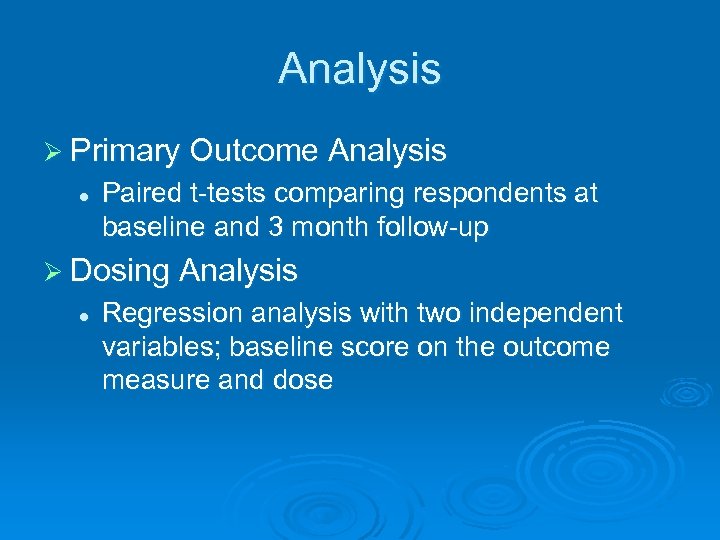
Analysis Ø Primary Outcome Analysis l Paired t-tests comparing respondents at baseline and 3 month follow-up Ø Dosing Analysis l Regression analysis with two independent variables; baseline score on the outcome measure and dose
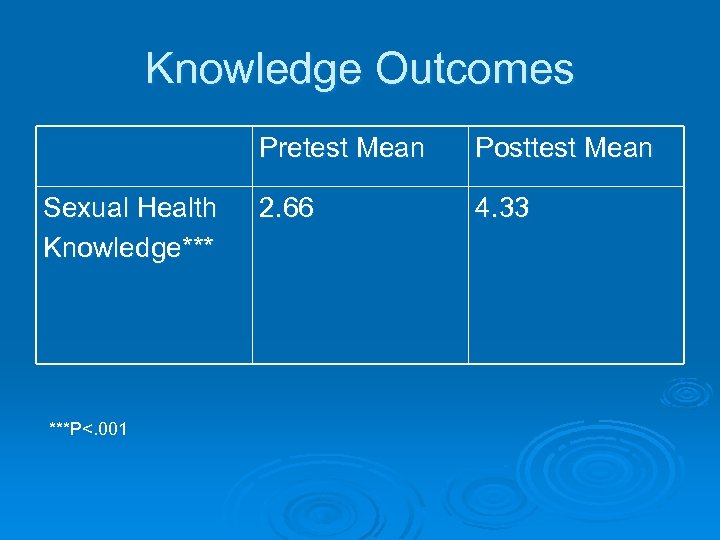
Knowledge Outcomes Pretest Mean Sexual Health Knowledge*** ***P<. 001 Posttest Mean 2. 66 4. 33
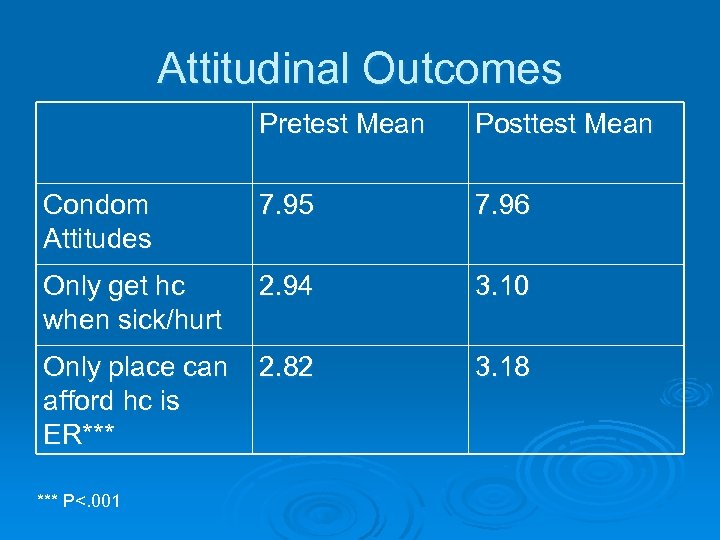
Attitudinal Outcomes Pretest Mean Posttest Mean Condom Attitudes 7. 95 7. 96 Only get hc when sick/hurt 2. 94 3. 10 Only place can afford hc is ER*** 2. 82 3. 18 *** P<. 001
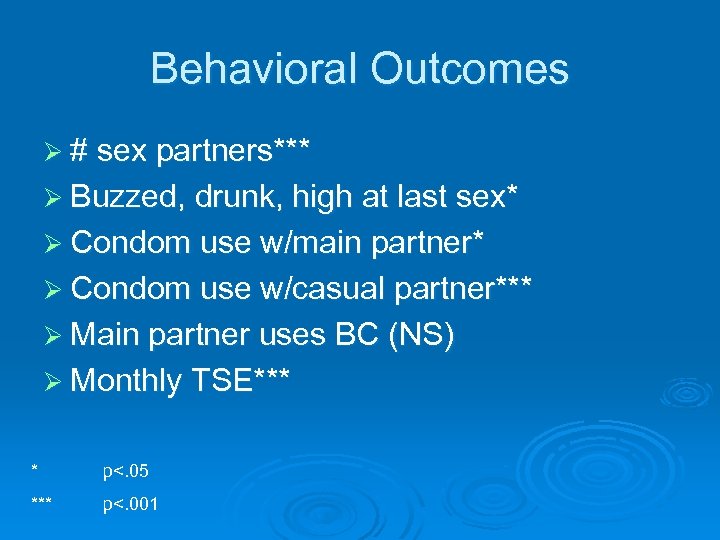
Behavioral Outcomes Ø # sex partners*** Ø Buzzed, drunk, high at last sex* Ø Condom use w/main partner* Ø Condom use w/casual partner*** Ø Main partner uses BC (NS) Ø Monthly TSE*** * p<. 05 *** p<. 001
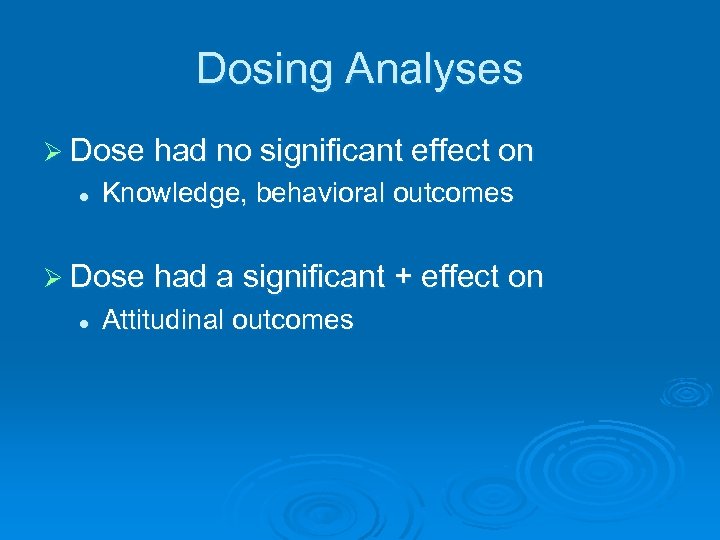
Dosing Analyses Ø Dose had no significant effect on l Knowledge, behavioral outcomes Ø Dose had a significant + effect on l Attitudinal outcomes
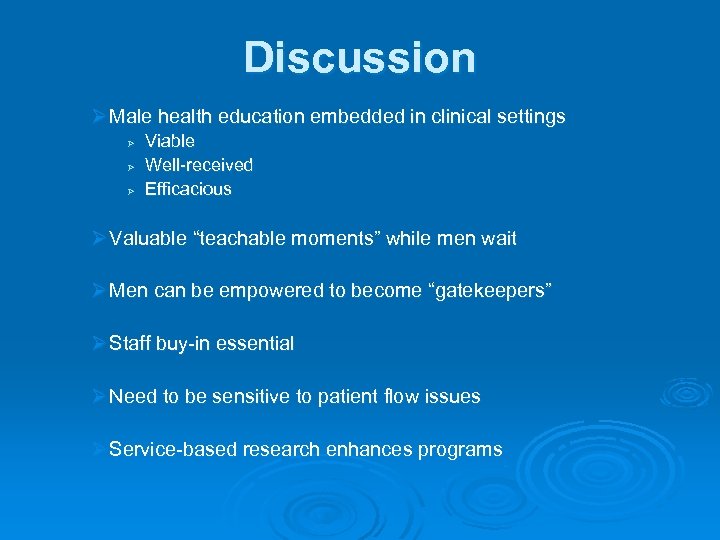
Discussion Ø Male health education embedded in clinical settings Ø Ø Ø Viable Well-received Efficacious Ø Valuable “teachable moments” while men wait Ø Men can be empowered to become “gatekeepers” Ø Staff buy-in essential Ø Need to be sensitive to patient flow issues Ø Service-based research enhances programs
Discussion (cont’d) ØLimitations Ø No control group Ø Self-report

www. youngmensclinic. org
Скачать презентацию A multi-component clinicbased intervention to improve young men s
6797ae8b3ef289bb96df0c72aca4d847.ppt